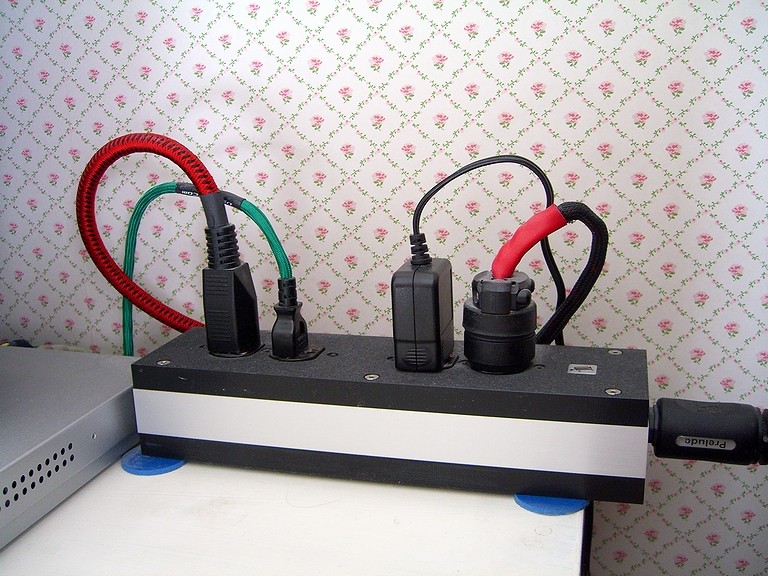
Continuing from the Zonotone 6NPS-3.5 Meister power cable article. Some of you who have been swapping power cables in and out for comparison listening may already have noticed this, but are you aware that plugging the same cable into different sockets on a power strip can make it sound quite noticeably different, even with exactly the same cable and equipment? In some cases, the difference between socket positions can actually be larger to the ear than the difference from polarity.
Even when people are particular about the type of power cable, the power strip, or polarity, the question of “which cable goes where?” tends to get decided rather casually — based on whatever order things were plugged in first, or how far the cables reach. But this “where exactly to plug in!?” turns out to be surprisingly important. Within my own limited experience of trying a handful of different power strips…
Sockets closer to the cord end of the power strip (the side connected to the wall outlet) have a stronger sense of energy
The further a socket is from the wall outlet, the more strongly the power strip’s own sonic character comes through
Broadly speaking, I feel there is a tendency along these lines. Note: the impression may vary depending on the nature of the power strip and, in particular, the type of cable connecting it to the wall outlet.
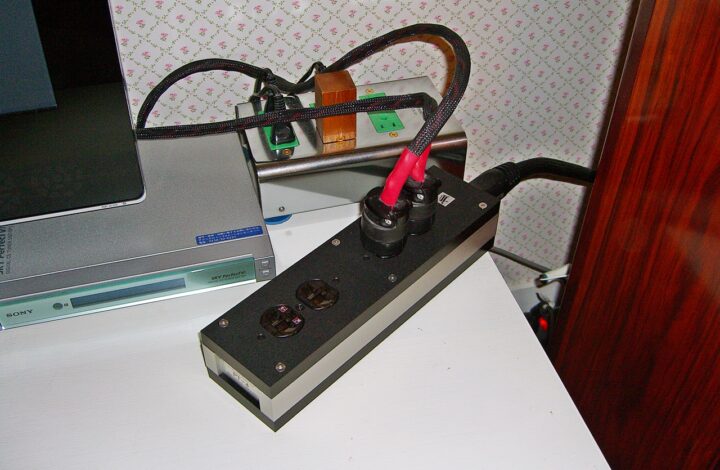
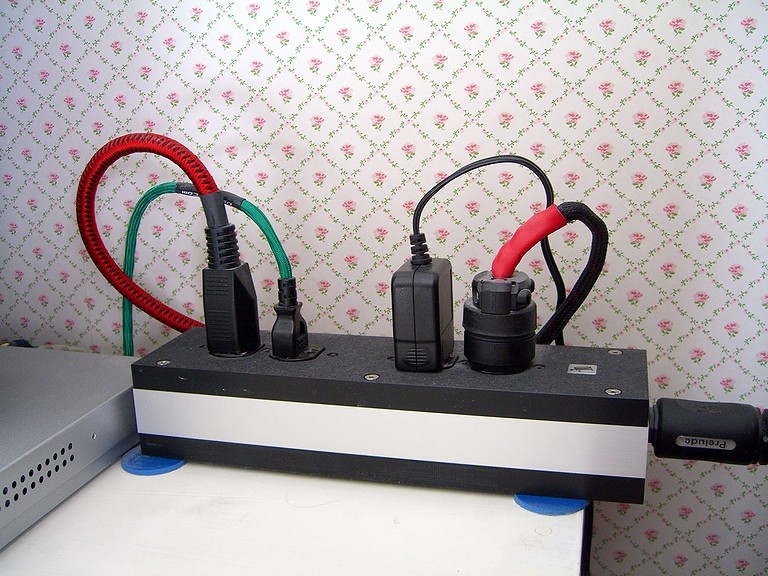
With a power strip like the J1 Project PT-4 — one that improves the perceived S/N — the further back the socket, the quieter the background of the sound becomes, and you get the PT-4’s characteristic dense, tight imaging. On the other hand, expressiveness feels more neatly organised and a touch of vitality is lost, though the frequency response takes on a flatter character, which is not at all bad in its own way.
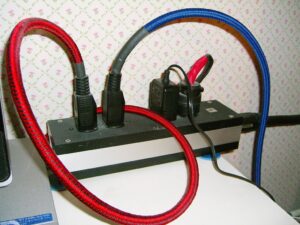
With the Ortofon PSC-3500XG currently connected to the TAG McLaren 60i, unless it is plugged into the socket furthest from the wall outlet — as shown in the photo — the PSC-3500XG’s colouration and lushness becomes too overbearing and the sound turns rather odd.


Conversely, when the integrated amplifier’s power cable is connected to a socket close to the wall outlet, the sound becomes more lively in relative terms, but in exchange the surface of the sound grows rougher and the overall refinement suffers. The character of the PS Audio Prelude XPD/1.8 Mk2 — the power cable running between the power strip and the wall outlet — also becomes more audible. Since I personally rather like the distinctive sound the J1 Project PT-4 produces, it seems best to connect the component most strongly influenced by the PT-4 — that is, the integrated amplifier — to the socket furthest from the wall outlet.
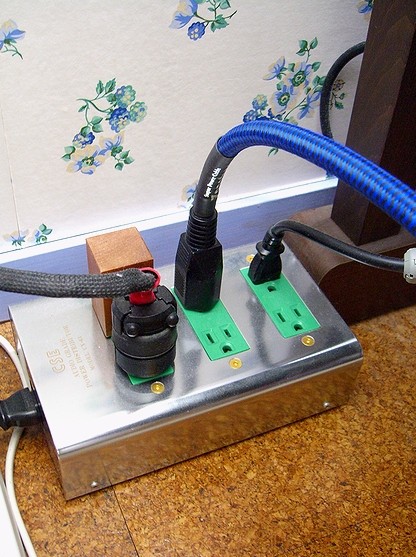
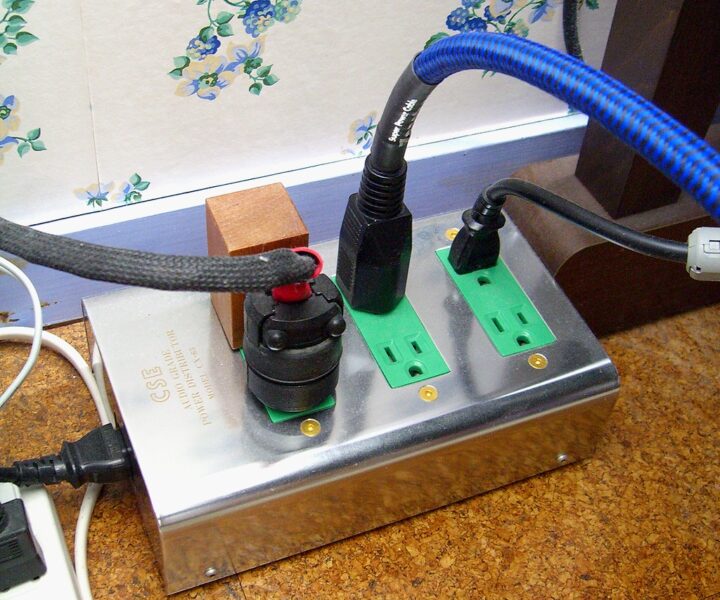
The CSE CX-63A, which I use for the sub-system and digital piano, is a power strip with a smooth, bright, moist sound with a faintly warm tonality. In this case, the rear sockets (right side in the photo) make the power strip’s character come through even more strongly, but the downside is that the drive and momentum of the sound is reduced, it becomes subdued, and the impression is one of insufficient information. This is not a power strip with a sharp, high-resolution character to begin with, but in order to balance its smooth character with an adequate sense of quality, I find it generally works better to connect both the amplifier and the player to sockets closer to the wall outlet cable — or to choose something in the middle as a compromise. (The wooden cube plugged in at the upper left is the Audio Spice ACC18.)
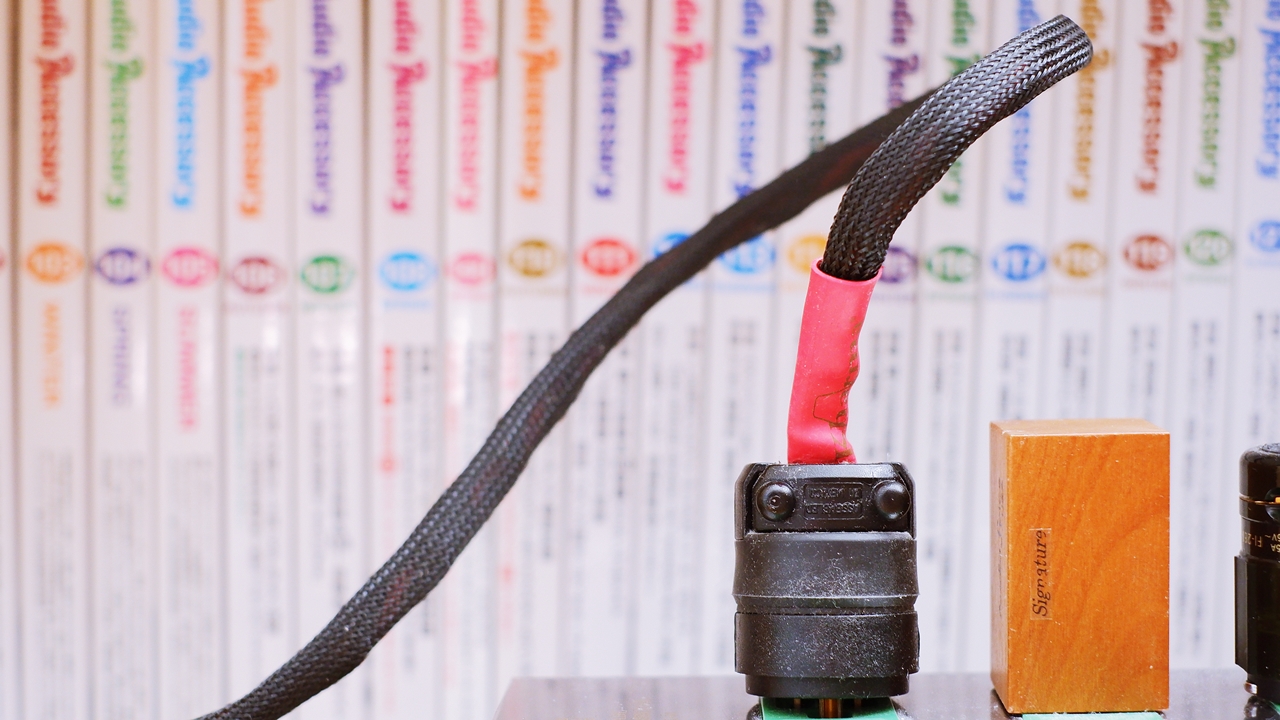
Based on all of the above, as a general rule it seems best to connect amplifiers — which need a sense of perceived power — to sockets closer to the wall outlet, while components where you want the power strip’s character to come through strongly, or where you want to improve the perceived S/N, are better placed further away. That said, exactly which position is most appropriate will ultimately vary from system to system depending on each component’s sonic tendencies and the overall tonal balance, so this is no more than a rough impression. In practice, things are case by case for each individual setup, so for those who are interested, by all means experiment and see what works.
One word of caution, though. Repeatedly inserting and removing plugs weakens the grip of the socket contacts and gradually changes the sound — so if you are after a tight, well-defined sound with good transient clarity, rather than going through endless trial and error, it may be better to approach the whole exercise with enough focus to find the best position in as few attempts as possible.

 ポチップ
ポチップ
Of all the power cables for high-end audio currently available domestically, the one I find myself most drawn to at the moment is probably PAD’s AC-IOTA… ← The copy on the distributor’s page reads like literal poetry from Jim Aud, which is very PAD somehow. Part of it is that I already use a PAD CRYOMAG on the wall outlet in my main system, but I also remember hearing an AC Dominus that an acquaintance brought along for a listen once — it had this unrealistically sweet, lingering quality to it, quite fascinating. A sound that was agreeably pleasant to the ear in a way entirely removed from any kind of hi-fi realism. That extreme I would rather decline, but if the AC-IOTA could offer just a touch of that PAD nuance while still maintaining spatial resolution and a sense of clarity, it might be rather interesting to try. Note: I did eventually acquire the AC-IOTA.
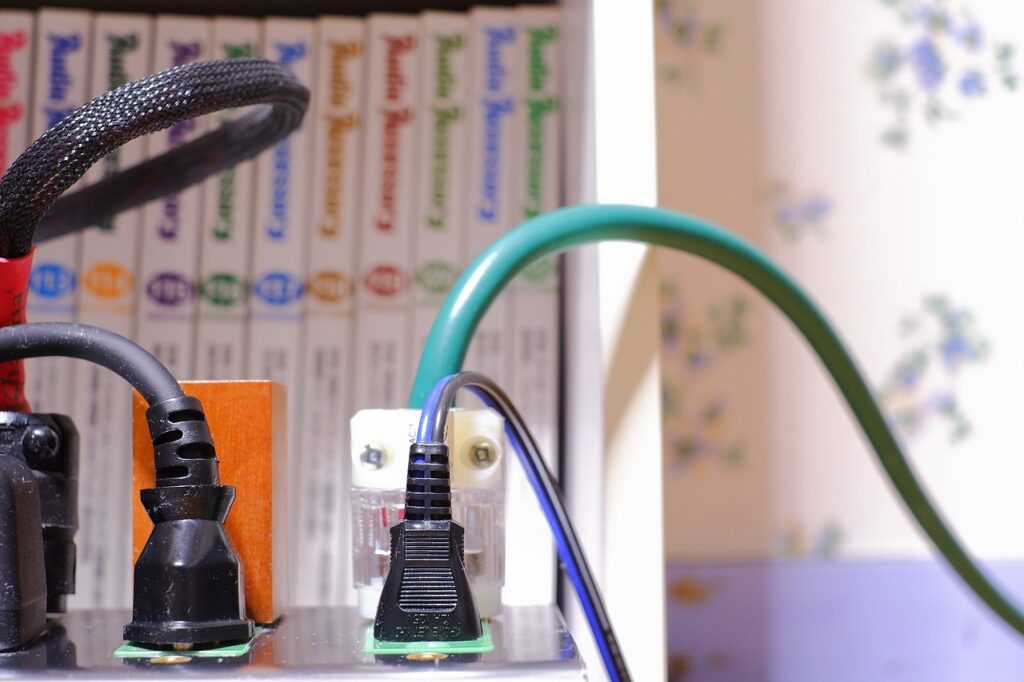
Speaking only of the audio equipment I have at home, the component that most strongly reflects the character of a power cable or power strip — sonically speaking — is, in most cases, the integrated amplifier. (I cannot say so with certainty since I do not have a separate pre/power setup, but I would guess it is the power amplifier rather than the preamplifier.) Next comes a one-box CD player or DVD player or similar playback device, and last of all a standalone D/A converter. The tendency seems to be that components with higher power consumption show more clearly audible differences. For example, if the system as a whole lacks a sense of drive, using a power cable with a conductor of over 3.5 sq mm — such as the Oyaide TUNAMI — on the amplifier can compensate to some extent for dynamic expressiveness. Conversely, if the sound is too aggressive or you want to reduce bass heaviness, using a power cable of 3.5 sq mm or below that is rated for soundstage resolution, frequency flatness, and transparency rather than low-frequency weight on the amplifier should help rein in any sense of the sound overflowing its boundaries.

For components with low power consumption such as CD players, rather than fitting an extremely thick cable, using a thinner-conductor cable with a good reputation for tonal quality, transparency, and resolution — or a power cable that brings out delicate nuances — should help add depth and realism to the sound of the system as a whole. (Note: everything written here is based solely on the author’s own subjective evaluation within the author’s own environment, and is not a guarantee that any of it will apply in individual setups.)


Auto Translated by CS4.6

List of comments (7)
まぁ、当然そう言うことはあるでしょうね。
アンプの電源ケーブルでもたった1.5mで激変するのですからそう言うことになりそうです。
それにしても、電源ケーブルにはそれほど多くの音声信号が流れていると言うことなのですよね。
この前私の作ったアンプも、電源にはずいぶん注意をして、そう言った影響が極小になるようにしたつもりでも全然でした。
実際、正直、電源ケーブルでここまで音が変わるともう開き直って電源回路の構成を思いっきりシンプルにしたくなります。
MJで安井さんがそんなことをやっていますけど、今度私も試してみるつもりです
yurikamomeさんこんばんは(^^)
>電源ケーブルにはそれほど多くの音声信号が流れていると言うことなのですよね
RCAケーブルやスピーカーケーブルではありませんから、電源ケーブルに音声信号は流れていないことになると思いますが、全ての機器を動かす電力の供給元に繋がるホースである以上、導体やシールドで電気的ノイズ及び外来ノイズなどの透過性に僅かながらも違いがあり、余程大がかりな電源装置を噛まさない限り、上流の影響からは免れないという事でしょうか。。。(…電気知識はからっきしですので、雑誌の受け売りですみませんm(__)m)
オーディオ機器は、ソフトからデジタル若しくはアナログの信号を拾い、回路が電気で動作して、最終的にスピーカーのユニットを動かすという電気理論の視点からではきちんと説明できない、訳の解らない要素が多いと思います。
ただ、電気が解らない私は、それらを楽器と同じ視点で捉えることにしています。スピーカーをはじめ各装置から発生し、接続された同士や接地部分を介した物理伝達、そして音震動として外側から受け取る震動等々が絡み合い、糸電話の如く各装置間を行き来する複雑な震動の反射がオーディオ装置それぞれの個性的な音色や歪みを生んでいるという風に捉えています。大きなピアノであっても、小さな弦楽器でも、ほんの小さな部品の0.1ミリ以下のパーツ位置の違いや、素材の違いや状態など物理特性の変化で音色ががらっと変化したり、調律がメチャクチャにずれたりしますよね。オーディオ機器は楽器のようにそこまで装置として洗練されたものではありませんが、だからこそ、各エレメントが複雑化し、一体何が聴感上感じられてしまう再生音の変化の原因なのか訳が解らなくなってしまうのだと考えています。
電気回路としての真っ当なアプローチはオーディオ機器の作り手側にお任せするとして、現状、ダイナミック型のスピーカーが原音を再現するという理想からは程遠く、むしろ楽器に近い構造と素材で、半ば工芸品、楽器製造的なセンスで設計された物である以上、それに連なるケーブル類や各オーディオ装置の素材、ラック、部屋なども含めて、室内空間の空気を震わせつつ、自らも震動するトータルな楽器がピュアオーディオシステムという感じで捉えています。
そして、オーディオ機器を楽器として捉えた場合、発生する外乱&内部震動が電気回路に悪さをしないよう押さえ込むという発想のみならず(これも条件によって必用な事ですが)、それぞれの物理要素を良い音で響かせる事が、実用上、人間にとっての心地よい再生音に繋がると考えています。消しきれない不要震動は外へ逃がす、どうにもならない震動は殺さず人間の耳に心地よい震動モードで響かせる、、、響かせるというのは歪ませると同義ではありますが、楽器と同様に捉える事が出来れば、心地良い響きは、仮に原音…元信号に忠実とならなくとも、原音楽…音楽の本質を再生側で蘇らせる事が出来るという風に考えています。
オーディオ機器を楽器として捉えるというお考えはとても良いお言葉だと思います。良く調律された楽器のように、オーディオ機器が鳴るようにすることですね。基本となるCDP,アンプ、SPとそれを取り巻くアクセサリー群(オカルト含む)の選択。原音再生・あるいは原音の定義を考えると、頭が痛くなりますが?音楽家の意図している音楽が理解できればそれで十分かと。意図というのもこちらの勝手な妄想・決め付けかもしれないですが。結果として気持ちよい、感動させる音楽が再生できればと思います。それが難しいのですが。わたくしごとですが、お気に入りのDALIメニュエット(ピアノフィニッシュ)よりグレードアップを今考えておりまして箱庭から少しはずれますがロイヤルタワーを考えてます。色はピアノフィニッシュ。いささか、変わり映えしない感じもしないではないですが、価格、音色、環境等々検討した結果です。では、またお邪魔します。お体お大事に。いつもセンスの良いブログ記事楽しみにしてますので。
ネットの辺境で電ムぅ波♪を飛ばしているだけですのでお言葉とか言わないようにw
>原音再生
良く考えれば(考え無くても)、生演奏が録音されて段階で数多くの加工が施された結果がソフトであり、それを前提に再生装置を組む以上、再生オーディオに原音再生はあり得ないのが本当の所ですから、再生というのは加工された料理をより美味しく食べる方法♪なんだろうと思うのでした。
>音楽家の意図している音楽が理解できればそれで十分かと。意図というのもこちらの勝手な妄想・決め付けかもしれないですが。
その通りですね♪妄想でも決めつけでも音楽自体が本質的に感覚であり主観ですから、本質的にそれでも良いんじゃないかしらと。音楽家も色々で、自分に合う音楽を奏でる人とそうでない人がいて好き嫌いも千差万別、弾き手と聴き手の数だけ主観的な正解と好みが存在します。
オーディオや音質へのこだわりについても、音楽家にはもの凄いハイエンドシステムを組んでいる硬派なオーディオマニアもいれば、全く無頓着で更にオーディオマニアを非難する人、或いはカラヤンのように録音段階からあらゆる点に口出しをし、ずぶずふのオーディオヲタクだったにも関わらず、他のマニアの在り方を非難する同族嫌悪型の人も居ます。その辺も含めて音楽の解釈も人の数だけ深くて広い、だからこそ皆さんそれぞれの取り組み方へは広い心を持って接したいなと。
私がオーディオを楽器として捉えることについては、例えば、3点/4点で支えるだけの小さなインシュレーターの持つ素材音が、再生音のニュアンスにけっこうな聴感上の影響を与えることからも、スピーカーに始まり震動が伝達するあらゆるオーディオ機器を構成するパーツやシャシーの素材、ケーブルの素材などが、全て共鳴して不協和音を奏でているのがピュアオーディオ♪と捉えることで、ある種の電気オカルト論への解にならないかと感じるのです。
導体を流れる電気特性云々はさておき、ケーブルでも何もかも、素材的な意味での震動干渉はするよね?と思うのです。導体にしても、純度云々以前に、精錬と引き方で硬さや響きは違うよね?と思うのです。大袈裟に云えば色々と種類があるピアノ線や金属弦のように。それらの影響を否定しちゃったらオーディオ再生の本質であり、もっとも大きな干渉エネルギーである「音」の存在を真っ向から無視した話になりますから。
そしてその干渉レベルの大きさは、素材の大きさ、質量、位置、スピーカーからの距離、接地面との関わり、ラック、部屋、隣り合う他の素材との干渉など何処までも影響しつつ境界線を引くことは難しいものです。勿論、震動モードへの影響力が強く、効果的な部位かそうでないかで再生音へ与えるニュアンスの変化の差は違ってくるでしょうが、これを的確に解析するのは難しい。むしろ楽器と同じで音を出しながら耳を頼りに感覚的にポイントを探っていくしかないのではないか?それがオーディオアクセサリーなどを試行錯誤する意味なのでは無いかと。。。
異論がある方もいらっしゃるでしょうが、私の場合はこんな風に捉えています。私のオーディオ機器選びを見ても、理屈より見た目と触り心地、スピーカーなどは特に、Vienna AcousticsやDALI、ソナス・ファベール等を絶賛しているところからもお判りのように、論理回析の産物よりはヒアリングによる主観的な楽器工芸のアプローチで作られた物を好むみたいですから♪
>箱庭から少しはずれますがロイヤルタワーを考えてます。色はピアノフィニッシュ。
DALIの最高傑作はロイヤルタワーでしょう!楽器的な意味での完成度はヘリコンより断然優れていると思います。ユーフォニアは知りませんけど(…きっと別格)。ピアノフィニッシュとリアルウッドでは、濁りも含めて弦楽器の暖かみ心地よく再現するのがリアルウッド。単純に音が良いのがピアノフィニッシュ。私なら…・敢えて日本で販売されていないホワイト!が欲しいかな。
最終的には部屋に置いたとき、家具としてどっちの色合いが好きか?で決めた方が良いと思います。