【Legendary Trio of Japanese Hi-Fi】
Sansui Electric|Legendary Trio?|Pioneer|Merger with ONKYO
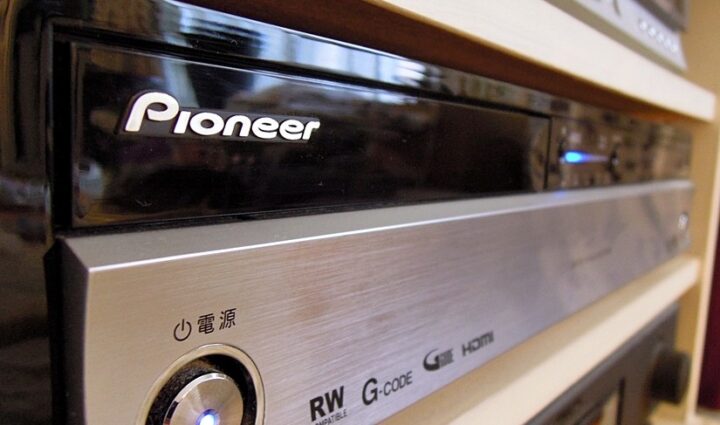
As mentioned previously, Pioneer was somehow still managing to put out a trickle of pure audio products as of 2014, but following its withdrawal from plasma televisions in 2007, the company had been steadily scaling back, and things finally reached the point where negotiations were underway in 2014 to sell its audio, visual, and AV divisions to Funai Electric… a proper fall-from-grace, sell-off situation. There had been whispers on Twitter over the winter and spring that a certain very well-known Japanese audio manufacturer was about to pull out of pure audio altogether — could that have actually been PIONEER they were talking about?
 Funai Electric, of all companies… a consumer electronics maker focused mainly on exports, best known for VHS video decks, whose core business is OEM supply of DVD players and recorders — as an audiovisual brand, sorry to say, but the image is firmly rock-bottom, a third-rate name. (Note: as an OEM manufacturer, it is in fact a major company. This is purely about its standing and brand image among consumers in the Japanese domestic market.) Naturally, I was quite ready to declare proudly that there isn’t a single Funai product in my home — being the home electronics obsessive that I am — but when I looked more carefully, there was one after all: [On the performance of the DX Antenna US100A FM/terrestrial digital antenna.] DX Antenna is now a subsidiary of Funai, so in a sense one could call it a Funai product. Anyway, this news broke on 15 May 2014, with negotiations reportedly aiming for a conclusion by around July — but then when the lid was finally lifted, it turned out that…
ONKYO and Pioneer merge… into a joint operation
In the end, a business alliance with Onkyo was confirmed on 24 June! Such a sudden turn of events — I was so astonished I couldn’t close my mouth.
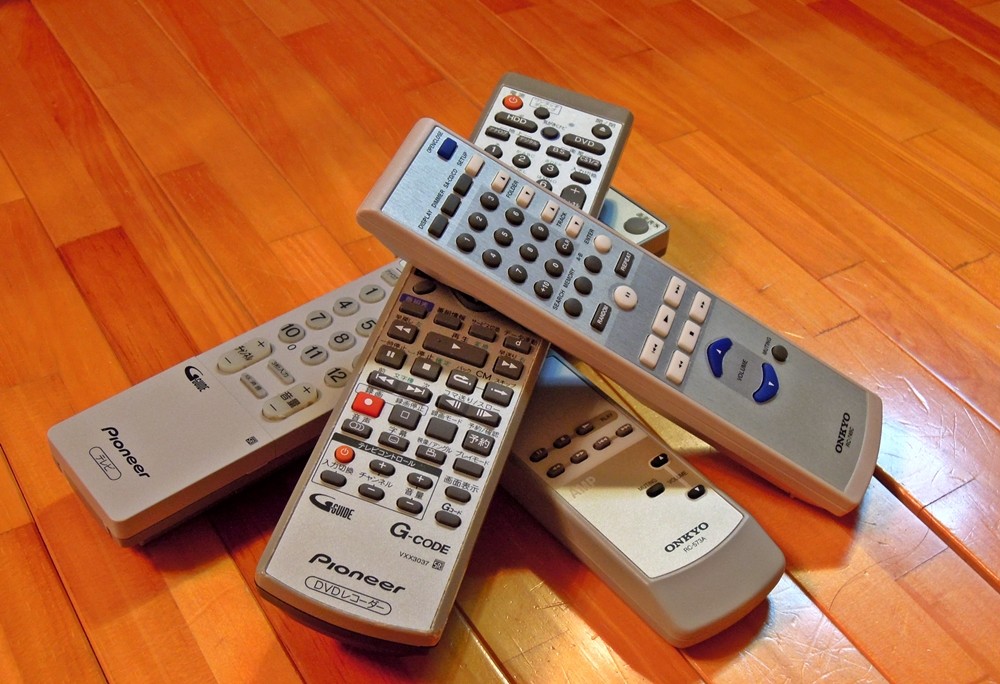

It takes the form of a capital and business alliance, but in practice amounts to a transfer of the business through a share sale — still,  ONKYO has always been a commercially astute company, and even through the prolonged recession it kept rolling out new consumer products without a break — covering everything from portables to pure audio, handling design and production in-house throughout, and in 2012 entering into a capital and business alliance with TEAC/TASCAM, each taking a 10% stake in the other — there is a certain sense of timing and momentum to the way they keep up with the latest business trends.
The Pioneer brand has had the technical ability but has somehow always lacked that decisive edge — its sales and PR instincts have been a little off, and it has been languishing for quite some time. Perhaps this will be the moment it finally revives? I find myself harbouring that faint hope. The one thing that does give me slight pause is that 51% of the stake is held by a Hong Kong investment fund, Baring Private Equity Asia. (Are those Hong Kong and China-connected types quite above board? Are they really? I do wonder.)
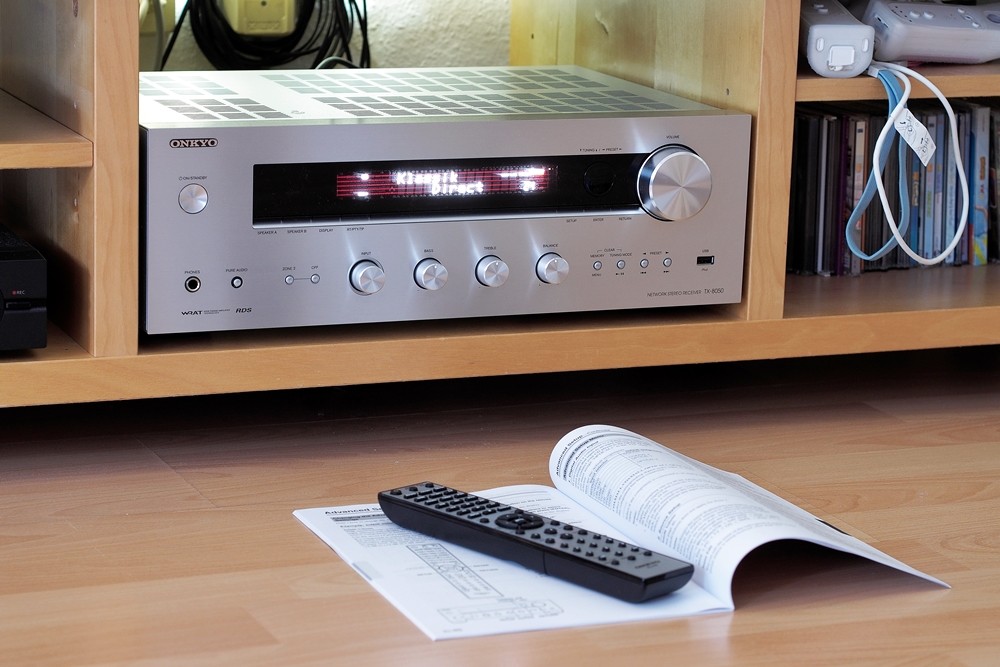
Even so, what this essentially amounts to is Onkyo absorbing Pioneer‘s entire AV audiovisual business wholesale — and in an earlier era one might have expected the giant Pioneer to swallow up a mid-tier ONKYO, not the other way around, yet here we are with Onkyo coming to Pioneer’s rescue. Times do change, don’t they. Incidentally, the “Pioneer” brand name is apparently staying as it is. The arrangement would seem to follow the model of Denon and Marantz (under D&M Holdings) and JVC/KENWOOD, where management is integrated but design and development operations are kept clearly separate. (I do hope the Exclusive brand and the separately incorporated TAD are also left intact.)
What kind of company is ONKYO?
Onkyo, the company absorbing Pioneer’s operations, is a mid-sized Osaka-based manufacturer that has traditionally steered clear of expensive high-end audio. It has always maintained a solid lineup of pure audio equipment at popular price points from top to bottom, and alongside that has kept a full range of mini systems and home theatre products stocked in high-street electronics shops — a mid-tier brand that has steadily and quietly built a certain level of recognition and market share not only among enthusiasts, but among the general public as well.
In pure audio, Onkyo was among the early adopters working to put digital amplifiers into practical use, and has continued to produce integrated amplifiers, separates, SACD/CD players, and its own in-house speaker designs — something increasingly rare now that foreign competition has thinned the field. (Regrettably, domestic factory production was discontinued in 2012.) On the other hand, Onkyo has always been weak on the visual side — televisions, video recorders, that sort of thing — and has largely stayed out of that territory, making it a truly pure audio company in the literal sense. One could say it has built its reputation not on the prestige of a luxury brand image, but on strong value for money, practical sound quality, and a knack for reading what users actually want without becoming overly niche.
Pioneer was a major company that played a significant role in Japan’s audiovisual industry
PIONEER, by contrast, was a large-scale, comprehensive AV equipment manufacturer leading the world in both audio and visual products — as typified by the LaserDisc format, whose standards it led. After posting substantial losses in 2008 it withdrew from the unprofitable plasma television business, and its prized DVD player/recorder division ground to a halt on new product development and has been quietly fading away. The PC optical drive business, which once dominated the market, was merged with Sharp. Pure audio ticked along without distinction. The only real remaining source of revenue was the Carrozzeria-branded car audio business — a situation that rather symbolises the prolonged downturn, with one retreat following another. It may be the archetypal case of commercial acumen and technical quality moving in opposite directions.
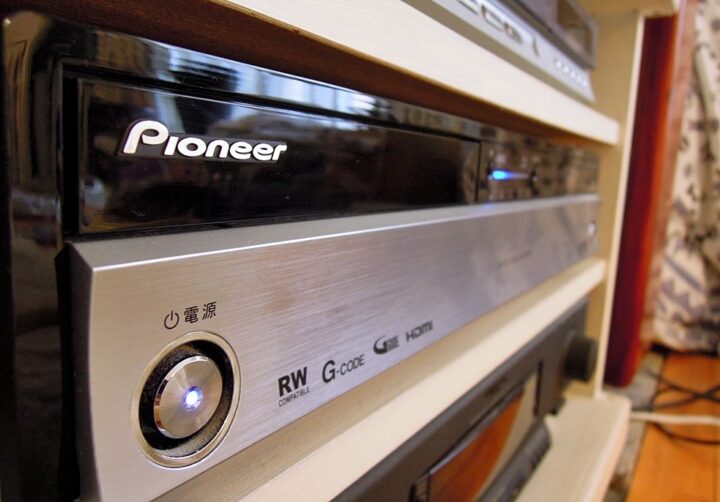
Pioneer’s withdrawal from the plasma television business was, I think, a tremendous loss for visual technology and for consumers who care about picture quality. I still use a Pioneer PureVision plasma television from seven years ago, and I have yet to encounter a consumer LCD display in any shop that surpasses the picture quality of the higher-end KURO models that sat above it… A flat, featureless 4K panel is no match for the sheer realism of a KURO.


 ポチップ
ポチップ
ONKYO and Pioneer compared through the eyes of a Hi-Fi enthusiast
Comparing ONKYO and PIONEER side by side like this, even though both are audio manufacturers, the areas each brand has excelled in and the customers they have attracted are actually not all that similar. PIONEER was a company that carried everything from professional equipment and the high-end TAD loudspeakers and Exclusive-branded flagship products at the top, right down through a complete lineup of mid- and lower-priced equipment. And in AV amplifiers and home theatre, it consistently led the industry across the full price range from budget to premium. TAD and Exclusive have a weighty, imposing character — the sort of thing that looks at home in a top executive’s office — the kind of presence that, frankly, makes me want to take a step back.
ONKYO, on the other hand, is a company that has its strengths in mini systems through to high-quality compact systems, entry- to mid-priced pure audio, and compact bookshelf loudspeakers at accessible prices. In the mini system segment — from low-cost all-in-ones to premium compact systems — ONKYO I think is overwhelmingly strong, and in recent years Onkyo has also been more adept at developing its pure audio business. As for loudspeakers, the lineups look at first glance as though they overlap, but when you look carefully they don’t overlap nearly as much as you might expect.
 ポチップ
ポチップ
What remains of PIONEER’s pure audio loudspeaker lineup — setting aside the high-end TAD, which doesn’t overlap with Onkyo’s products — amounts to the Pure Malt speakers (beloved of the whisky-addled, though I jest) released in 2006, the S-A4SPT and S-PM300, and the hi-res compatible S-CN301-LR launched in 2012, which could be thought of as an entry-level TAD of sorts — barely clinging on in one corner. Everything else in the lineup is essentially home theatre speakers. And yet, searching through it all, they did at least have speakers spanning from bottom to top. Even so, as someone who considers himself an audio enthusiast, I find their presence somehow easy to overlook — which is quite the opposite of the flashy, attention-grabbing way that Carrozzeria (which I’m currently using for car audio) presents itself.
 ポチップ
ポチップ
Pioneer has a longer history in headphones and earphones, but the high-margin DJ headphone business is apparently not being transferred to ONKYO. Onkyo is relatively new to portable audio, but from 2013 it has had the ONKYO HF Player for iOS (which I use myself), and has been steadily pushing into the space with high-quality headphones and earphones aimed at audio enthusiasts, and the portable headphone amplifier DAC-HA200 (TEAC HA-P50SE), their first co-developed product with TEAC. 《These two models, similar as they look, differ in the fine-tuning of details such as op-amps, and have distinctly different sonic characters.》 The ONKYO/TEAC desktop compact audio and portable audio products of recent years are all ambitious releases whose quality exceeds their price, so do give them a listen if you get the chance.
~ Summary ~
 ポチップ
ポチップ
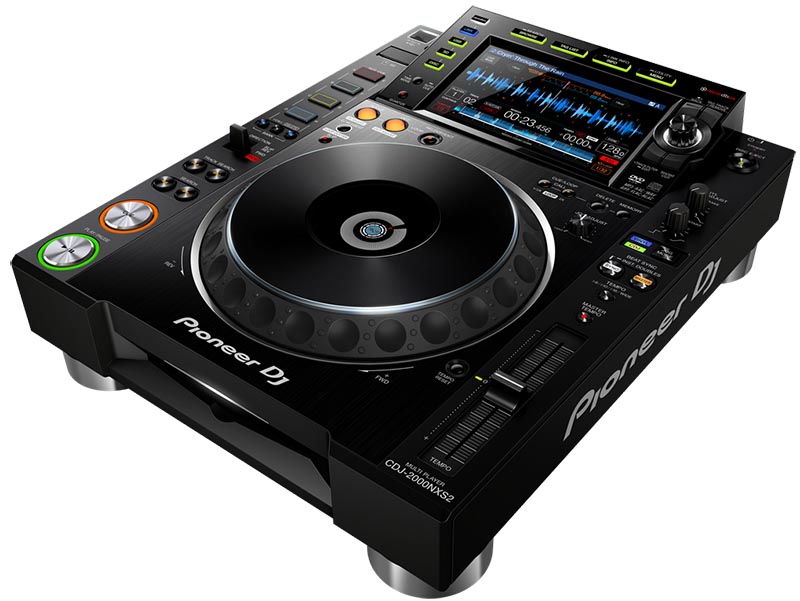
In the end, it seems Pioneer is also considering divesting its prized DJ equipment division. When I think about the people working there and what lies ahead for them, it is not something I can welcome without reservation — but speaking as the author of this blog, two brands that have given me so much in the world of home Hi-Fi audio and visual equipment, ONKYO and PIONEER, are now coming together, and I find myself wanting to view that with cautious optimism — nervous excitement, you might say, rather than dread.
【Legendary Trio of Japanese Hi-Fi】
Sansui Electric|Legendary Trio?|Pioneer|Merger with ONKYO
Auto Translated by CS4.6
List of comments (5)
いつも楽しく拝見させていただいております。私は、93年発売のPIONEER S-UK3というシンプル構造のスピーカーを愛用しておりますので、この件は、関心を持っておりました。私的には、とてもいいスピーカーなのですよ。ちなみにアンプは、LUXMAN SQ-N100,CDプレーヤーは(PIONEERのAV部門を吸収した..笑)ONKYO C-7000Rです。ONKYOのプレーヤーは、前作C-1VLでほれ込み、代替えしました。
今後、ぜひ両ブランド共存共栄をのぞむところです。とともに、独立性を保ちながら、得意分野を活かすということでPIONEERお得意のディスクドライブメカを取り入れた、ONKYOブランドのプレーヤーなど、難しいでしょうかね~。
どうなるのでしょうか。
これからも楽しみに拝読させていただきます。
柳都マンさんはじめまして&コメントありがとうございます。
S-UK3はパイオニアが開発しイギリス人評論家のジョン・バンフォード氏が音決めをした一連のシリーズのスピーカーですね。昔お店で聴いた事があります。あのころはONKYOからも同じくイギリス人エンジニアに設計を任せたA-1E C-1Eシリーズが出ていたりして、悲観的安価なオーディオが選り取り見取りで楽しい時代でした。
ONKYOはドライブメカをいつもどこから調達してくるのか?機種によってボトルネックになってる場合もあったりなかったりしそうですし、たしかにPIONEER機と部品共有できたら面白そうですね。それならSACDプレーヤーの後継機も作れそうですし。
返信いただき本当にありがとうございます。最近お書きになった記事も拝見しましたが、DALI ZENSOR1,3とも私も試聴して、他ブランドと比較もし、値札を確認して驚いた一人です。実は、私のS-UK3も20年選手ですから、近いサイズのZENSOR3にグラッときてしまいました。
ただ、スピーカーで創業したPIONEERが、まだ高級機種でなくとも日本国内でつくっていたS-UK3。そして、ウーファーもネットワークレスで、いわばフルレンジプラスツイーターというシンプル設計。だからでしょうか。独特の厚みの感じられる音。
ZENSOR3は現代のスピーカーとしてやはり本当に素晴らしいですが、味わいとしては、S-UK3、まだいけると思ったりします。それで、買い替えを具体的にする前にと思い先日若返り作戦を決行しました。ネットの画像からしてこの機種の欠点、ツイーターのさびた取り付けねじ(希少なサイズM4×6)をプロ用のお店で探して交換。ブラックねじではなくなり一般的なメッキねじになりましたがモニター用的外観とも…。
ウーファーのゴムエッジと振動板を化粧用コットンパフとシリコーンスプレーで塗布ししばらく置いてから乾いたコットンでやさしく磨くケア。
ウーファーのフレームの樹脂カバーを固定していたブチル(ユニットを外すことを考慮されていないよう)をはがして、現代の(笑)、はがせるが強力接着という両面テープで、後々のことを考え、対角線上に4箇所のみで固定。仕上げに乾いたマイクロクロスで、キャビネットを丹念に拭き上げ。しばらく鳴らし込み。見た目はもちろん、不思議と音もレスポンスが向上…。今のPIONEER設計陣が見たら聴いたらどう評価するか知りたくなるほど…愛機S-UK3です。
すみません、管理人体調不良につきコメントへの返答は後日になります。ご了承下さいませm(__)m
どうぞくれぐれもお大事に。お気になさらないでください。いつでも結構ですので。私も統合失調症で…。お互いゆったりゆっくりですよね。…それでは。
追伸:柳都マンコメントをご覧の方、UK-3の振動板は針葉樹パルプを黒色樹脂でコートした素材、エッジもゴム、フレーム樹脂カバーも軟質樹脂…ゆえシリコンスプレーケアが可能でした。いわゆる経年によりどうしても失われていくゴムや樹脂の油分をある程度復活できるゆえ塗布後しばらく置いて乾いたパフで磨くと外観も黒々、エッジも動きやすくなるようです。しかし、素材がパルプそのままの場合などは当然ではありますが、エッジのみに塗る際も、付着しないようマスキングが必要です。失礼致しました。