【Various Listening Sessions】
Introduction Plan|Speakers|Budget integrated amplifiers
Now, the main event: choosing a budget integrated amplifier. Throughout, the SACD player remained the DENON DCD-1650AE, and the monitor speaker was the DALI ROYAL TOWER, which came out on top in the speaker comparison sessions. As the reference amplifier, I used the stylish, slim, mid-class Italian integrated amplifier Audio Analogue PUCCINI SETTANTA.


 ポチップ
ポチップ
The impressions below turned out to be rather candid, and if anyone finds them disagreeable, I do apologise in advance.
CEC AMP3300
 The new C.E.C AMP 3300R was not on display, so I listened to the older model with its distinctive volume knob instead. This particular unit had a problem with crackling noise when the volume was turned — a rather prototype-like finish unusual for a Japanese industrial product, and one that stirred no small amount of debate at the time. I had heard it on several occasions before, and compared to the other three Japanese models on hand, the way this one produces sound is closer in character to a mid-range amplifier, giving a more orthodox sonic image. However, the issue lies in purity. There is a general sense of muddiness throughout, and I am left with the impression that it does not quite achieve the level of clarity one would expect from a pure Hi-Fi component.
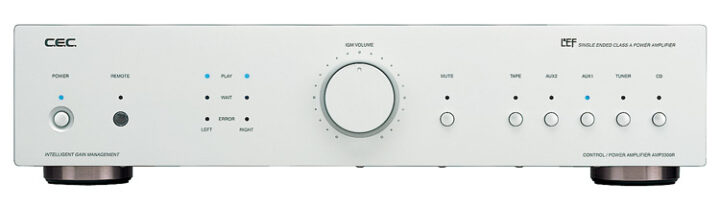
This is, as ever, a design by Carlos Candeias, and for a budget model it features an exceptional quantity of components — quite extraordinary, really. But it may be that within the cost constraints, the sheer number of parts is working against it. For this class, the bass end is relatively well-developed, and there is an analogue-like, natural, and relaxed quality to the sound that is genuinely attractive. The expression itself, however, is rather matter-of-fact, and it does not quite rise to the point where one feels a particular musicality. When paired with the DALI Royal Tower or the QUAD 11L/12L, one cannot help but feel it lacks a certain expressiveness. That said, when I heard this amplifier on a previous occasion paired with the Italian ZINGALI horn model (the OCM-106II if I recall correctly — a mid-sized bookshelf selling in the low hundreds of thousands of yen) and with the Vienna Acoustics MOZART T-2, it delivered expressiveness well beyond its price. Outside of such well-matched partners, however, it feels as though you only get what you pay for. It is a shame I was unable to compare the AMP3300R — the successor model that is said to have been improved — and see how much ground it has gained in terms of purity.
 ポチップ
ポチップ
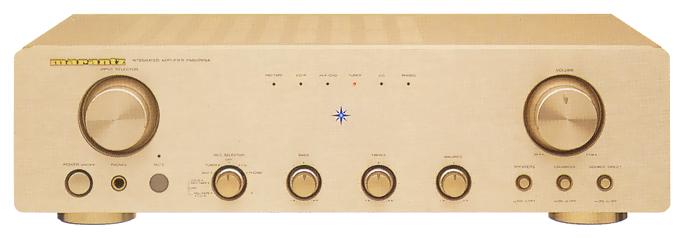
MARANTZ PM6100SA ver.2
 ポチップ
ポチップ
Compared to the other three models, this one has a simple and uncluttered tonal character, with a notably restrained bass end. Paired with the tall-floorstander Royal Tower, its weakness in that area is inevitably exposed. And yet, that very simplicity and clean-cut directness works in its favour: the melody line comes through with a refreshing, uncomplicated clarity, and I find myself thinking this might represent Marantz’s own answer to the question of what a budget amplifier should be. The shallowness in the bass, for its part, means it should be quite enjoyable at low volumes in environments where loud playback is not possible — late at night, for instance. Taking advantage of its speed in the mid-to-upper frequencies and its straightforward brightness, it suits compact bookshelf speakers that do not demand deep bass. Within my own listening experience, it sounded beyond its price when paired with KEF’s older CRESTA range and with the ASW GENIUS100.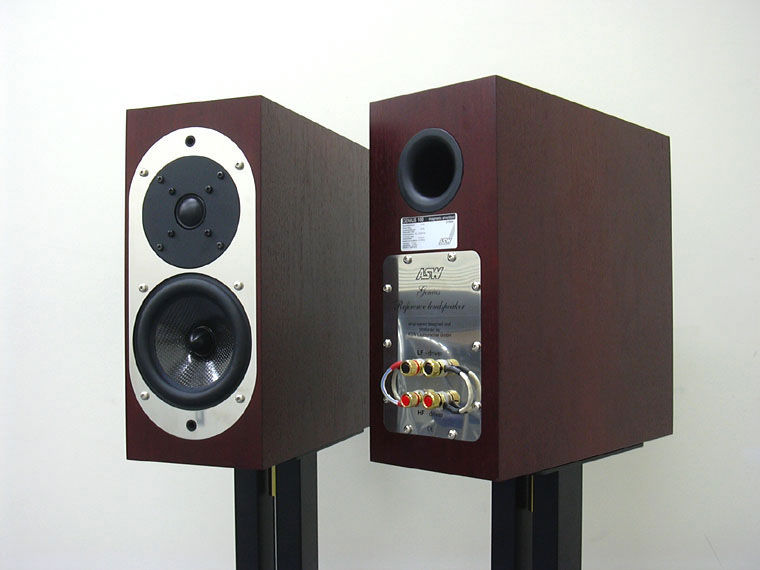 It also seems to partner rather well with the audiopro Image12 and the QUAD 11L. The frank, unambiguous voicing — clearly aimed at compact bookshelf speakers — is rather cute and charming in its own way. The MARANTZ PM6100SA, I think, is one of those reassuringly safe choices as an entry-level amplifier.
The current-generation successor is the PM6007, which received a five-star award from the UK’s WHAT Hi-Fi in 2022.
 ポチップ
ポチップ
PIONEER A-D5X
 ポチップ
ポチップ
The PIONEER A-D5X is a long-running model that covers the key bases of an integrated amplifier: MOS-FET output devices and a toroidal transformer power supply. Below it in the range sit the PIONEER A-D1 and PIONEER A-D3. With the flat frequency response and moist, resonant quality typical of Pioneer products, this is a refined, slender, and — for want of a better word — distinctly Japanese-sounding amplifier. Personally, I find this tonal character to my liking. However, when you start comparing it to other models across factors such as drive capability, sound quality, frequency range, and expressiveness, it comes across as middling in every respect — no obvious faults, but nothing that stands out either, and it lacks a compelling reason to choose it over the others.
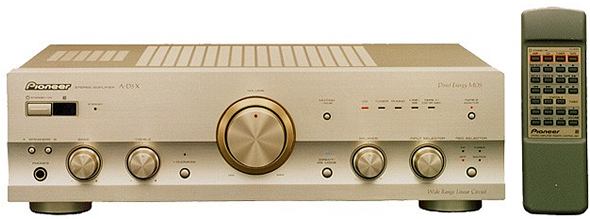 If the A-D5X had a little more depth and sculptural quality to its sound, it would become a good deal more attractive. Within this group it does have a certain refinement, so if you audition it alongside other amplifiers in the same class and find that the Pioneer sound appeals to you, it would certainly be worth considering. Even so, I find it hard to understand why Pioneer felt the need to offer three models in the same basic sonic mould at under 50,000 yen. It would make more sense, to my mind, to consolidate that segment into the A-D5X alone and put another model at around 100,000 yen…
 ポチップ
ポチップ
DENON PMA-390
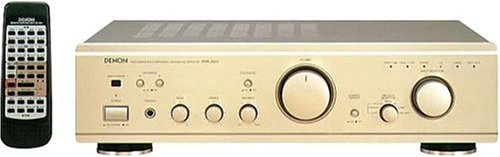
The version on hand at the time of listening was the PMA-390IV. I went into the comparison thinking, surely we’re not seriously considering the PMA-390 with its ageing basic design — but among the four Japanese models I compared, this one actually came out with the best sound quality. What does give me pause is a slightly pronounced mid-range that juts forward in a kamaboko-like hump, which to my ears makes the frequency response sound less than flat — a characteristic I associate with DENON products of a previous era. My own DENON FM/AM tuner, the TU-1500-N, has a similar colouration in that region, and it is a quirk I find slightly difficult to ignore personally. For pop music or jazz trios it might actually work in the amplifier’s favour, but with classical recordings, where a sense of depth and soundstage is particularly important, it could introduce a slight sense of unease.
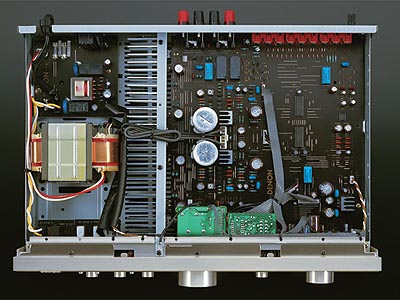
That said, the transparency is considerably better than the other models, and the mid-bass is sufficiently present without being excessive. Precisely because this is a budget-class amplifier, the bass does not become as overblown or forward-thrusting as it can on DENON’s higher-tier models, and strangely enough, that works in its favour here.
 ポチップ
ポチップ
The original PMA390 was launched in 1991 and received effusive praise in Europe, including from Germany’s STEREO magazine. Since then, the front panel has changed with each generation, and the circuitry has seen incremental revisions, yet the fundamental design has been carried through all the way to the latest PMA-390AE — a run of over fifteen years — and even now it holds its own against the latest models from other manufacturers. That alone suggests that the original design was fundamentally sound and well executed.
It stops just short of the point where I would single out its musicality or artistic quality for special praise, but the expressiveness is there in ordinary measure, and there is a glimmer of genuine musical depth that none of the other three models in this comparison could quite muster. Of course, set against amplifiers in a higher class there are various shortcomings, but when choosing on the basis of overall sound quality and usability within a tight budget, this is the one I find myself left with after eliminating the others. A certain jazz Hi-Fi magazine named it best buy among integrated amplifiers under 100,000 yen, and indeed, within the constraints of its price it does seem to punch rather hard. As an entry point into pure Hi-Fi under 50,000 yen, if you are uncertain which integrated amplifier to choose, starting with one of the successive DENON PMA-390 models is likely to be one of the most sensible options available.
 ポチップ
ポチップ
From mid-March 2006, this model was updated to the fifth generation, the PMA-390AE. (Note: as of 2017, the current model is the PMA-390RE.) Sadly, the toroidal transformer that featured in the original did not make a return, but comparing the specifications, it appears that this iteration once again largely continues from the preceding PMA-390IV, with refinements to the finer details. The most significant change is a completely refreshed front panel. The gold finish has gone, replaced by silver and black, but the overall sense of quality in the design has increased, making it an even more appealing integrated amplifier.
AUDIO ANALOGUE PUCCINI SETTANTA
The Puccini Settanta from Italy’s AUDIO ANALOGUE. To begin with the street price: it is in the region of 200,000 yen — somewhere between five and seven times the cost of the models above. Needless to say, hearing it directly in comparison makes the gulf feel even larger than one might have imagined. The Audio Analogue house sound has a somewhat distinctive Italian flavour that may or may not suit every listener’s taste, but the stability of its soundstage — evocative of high-end components — the ample information retrieval commensurate with its price, the fundamental transparency, the driveability, and above all the richness of musical expression: all of these place it at a level that is clearly and comfortably several steps above anything in the entry-level class.
AMP3300 ≒ PM6100SA ≒ A-D5 ≦ PMA390Ⅳ <<<<< an uncrossable wall <<<<<< Puccini Settanta
…To be honest, that is more or less how it felt.
This “uncrossable wall” is about sound quality, certainly, but what is even more striking is the difference in expressiveness. Whether there is music there or not. Whether living, breathing music flows, or whether sound is merely being produced. I only intended to use it as a benchmark, so a direct head-to-head comparison is perhaps not entirely fair — but if you want to experience music more vividly as part of everyday life, it may be that the amplifier needs to be a class or two higher.
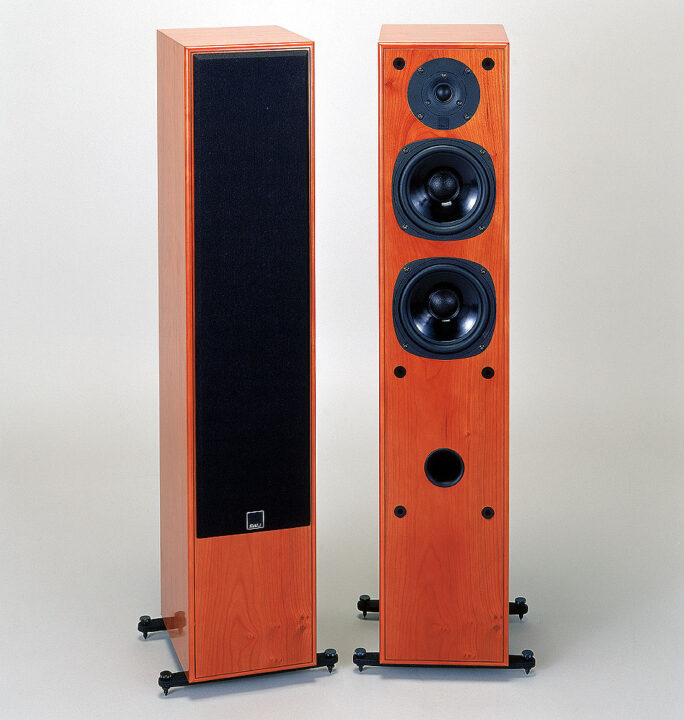
It should be noted, however, that this comparison was conducted with the DALI Royal Tower as the monitor speaker throughout, and so any conclusions regarding compatibility are heavily dependent on that particular speaker. As it happens, DALI is distributed in Japan by DENON, and the SACD player used was also DENON’s own DCD-1650AE, which means the PMA-390 may well have had a listening environment that favoured it in terms of component synergy. That said, as a general rule, speaker and amplifier pairings more often than not yield results that are neither particularly good nor particularly bad — middling, in other words — and within that range, in most cases the price of the equipment and the sound quality obtained do tend to correlate, at least in relative terms.

When you have settled on a single specific speaker, the amplifier choice becomes correspondingly focused and clear — which is a pleasant situation to be in. But if you are considering changing speakers in the future, or factoring in scenarios where you might drive more than one pair, then beyond mere compatibility, the standalone potential of the amplifier itself becomes important, and in that sense, choosing an integrated amplifier with solid fundamentals and genuine quality will, I think, give you greater peace of mind in the long run. Even so, everyone has their own limit as to how much they are willing to spend on Hi-Fi equipment…
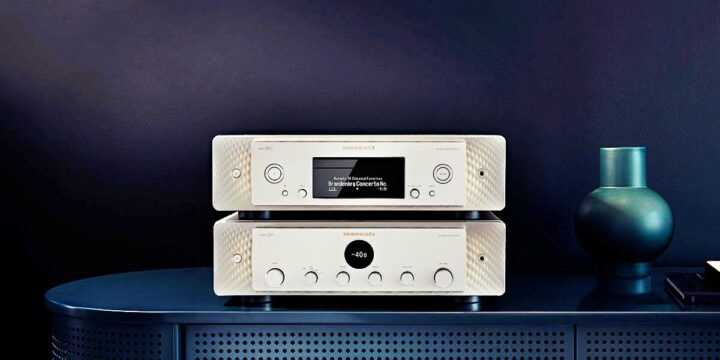
I gave examples with the CEC AMP3300 and MARANTZ PM6100SA, but even a budget model that sounds relatively cheap in isolation can, when the synergy with a speaker clicks into place, open up in a way that feels almost like a camera snapping into focus — producing lively, distortion-free sound that belies the price. Ideally, one would find exactly that kind of above-its-price pairing for each speaker and amplifier combination. In practice, the constraints of a listening session make that difficult, but this is precisely what makes choosing individual Hi-Fi components both demanding and fascinating, I think. Hi-Fi components are by no means an inexpensive purchase even at the budget end, so when the time comes to buy, I do hope everyone takes their time, thinks it through carefully, and finds a wonderful combination that genuinely excites them.
【Various Listening Sessions】
Introduction Plan|Speakers|Budget integrated amplifiers


List of comments (6)
はじめまして
いつも、きちんとした記事をありがとうございます。
私は、Spendor classic seriesのSP3/1Pで弦楽四重奏を中心に楽しんでいるのですが、そうは言ってもオケも聞きたくなります。このSPを中古購入する時点で、オケは捨てると心で決めて購入したのは私で、SPが悪いわけではありません。何とかと思い、Siltechのケーブルを中古購入しました。清水の舞台から飛ぶのに、貴兄の記事にドォーンと背中を押して頂きました。大変感謝しております。
それでもオケを聞くには、「越えられない壁」があるのは否めず、最近SP探しを始めました。ところが、爽やかな白ワインではなく、ボディのしっかりした赤ワイン系の音を目指すメーカーが見つかりません。貴兄の目指されている音と方向性が違うとは思うのですが、誠実に音を聞いていらっしゃる貴兄から、Spendor、Herbeth以外のメーカーで試聴対象をご紹介頂ければ幸いです。
Kentaさんはじめまして。
こちらこそ、いつも駄文の上に長文で心苦しいのですが、当方の拙い記事を読んでいただいてありがとうございますm(__)m あと、貴兄と呼ばれる程のモノではございませんので敬称は普通に「さん」でお願いします。パステル・ぱすてる・pastel_pianoなどHNの呼び方は適当に書きやすい物でOKです。
フルオケの再生は大変難しいです。ウーハーのサイズとクオリティの両方が必要になり、アンプもそれなりのものを使う必要がありますし、結果的に満足のいく音にする為にはとてもお金が掛かります。
うちのブログのコンセプトは、「箱庭(小音量・日本家屋)」「バジェット(廉価)」なライフスタイルオーディオになっています。本物のハイエンドやスケールの大きなオーディオについては、私自身が実現出来ていない以上偉そうにアドヴァイスできる立場にはありません。まずその点をご了承頂いた上での提案になりますが、室内楽用途にスペンドールをお使いで白ワインより赤ワインとのご希望となると、B&Wの様なモニター系やPMCの様な現代的なサウンドのスピーカーは対象外ですよね…。
まず、スピーカーのサイズの問題として、私が普段挙げているような小型ブックシェルフスピーカーでオーケストラを不満無く再生するのは難しいと思います。Kentaさんの予算と住環境にもよりますが、最低限それらしく鳴らすためにも、トールボーイスピーカー+それなりのスペースが必要になると思います。個人的に候補になると思うのが、ダリのヘリコン400以上、ウィーンアコースティック T-2G以上、ソナス・ファベール Grand Piano以上。この辺りが最低線ではないかと…。この3つのブランドはそれぞれかなり欧風の濃い音がします。T-2は私の音質/予算の妥協点だった訳ですが、、このクラスでも低域の量と質両面の問題からフルオケで満足できる再生は残念ながら無理です。まともにオーケストラを鳴らす場合T-3からでしょう。NHTのサイドに大きなウーファーが付いている変則3WAYのトールボーイ等は安価な割に例外的にフルオケにも割と堪えるスピーカーの一つですが、微妙にアメリカンな音色ですので、同じ赤でもカリフォルニアワインの赤になります。とはいえ、ちゃんと低域がカバーできないとオケ物はどうにもなりませんから、この手のアプローチは結構合理的ではないかと思います。更にクラシック音楽で高い次元でまとまりのある妥協点を探るとなると、これらのスピーカーにしっかりした音のアンプ…上記のスピーカーペア価格以上のクラスのプリメインかセパレートの中から、相性の良い物を探し出す必要が出てくると思われます。
パステル様
早速にご助言を頂き恐縮です。
当方の買換え計画は2年計画となっておりまして、予算は、今後2年間でどれだけ奥さんの目をかすめられるかに掛かっているため、現時点では本人にも判らないのが実状です。400~700円程度の昼食費から考えても、資金の調達可能規模には超えられない壁が存在することが予想されますが。住宅事情も資金と同程度といったところです。
お教え頂いたあたりを中心に試聴していきます。最後に、未だ聞いたことが無いのですが、ステラメロディーは、やはりオケ再生には無理がありますでしょうか。
今後ともよろしくお願いいたします。
色々ご苦労されていらっしゃるみたいですね。アコースティックラボのステラメロディはそれこそ箱庭的なスピーカーです。高域の美音が最大の魅力。弦楽器よりはピアノのリアリティ、バロック音楽や小編成のモーツァルト程度でしたら大丈夫でしょうが、フルオケをそれらしく聴くスピーカーではないです。ただ、音の純度や精度などトータルクオリティはSP3/1Pを上回ると思います。ステラメロディ/ステラハーモニー共に何故か今かなり安く売られていますので、この磨かれた美音と箱庭的にポッと浮かび上がる音像とステージに取り憑かれたら、他のスピーカーはとても使えないくらいの魅力があるスピーカーです。ちなみにSILTECHのケーブルにもとても合うと思います。アンプは中古のオーラデザインとか。
あ、Acustik-labにピアノが合うというのはあくまで私の主観です。ヴァイオリンの倍音などはそれこそSpendorやHARBETHの方がそれらしいと思うのですが、基音の艶やかさはSTELLAシリーズでしょう。以前、アメリカのヴァイオリニスト、ローラ・フラウチさん曰くSTELLA MELODYが欲しい云々という記事を何処かで読んだことがありますが、弦楽器奏者でもこういう音色がありなんだなぁと思いました。
パステル様
本当に丁寧なアドバイスをありがとうございます。
SPの向き、不向きの議論はその人の好みの問題があるので難しいですね。
ただ、パステルさんは、目指していらっしゃる方向を丁寧に説明して下さるので、恐らく目指す方向は異なる無学な私にとっても非常に参考になるアドバイスが頂けました。
今、Michelangeli氏を聞きいています。SpendorでMichelangeli?Siltechのおかげで結構アリです。ステラメロディーにはまってしまい、オケは後回しになるのが怖い気もしますが。オーラデザインのAPも含めて是非聞いてみるようにします。