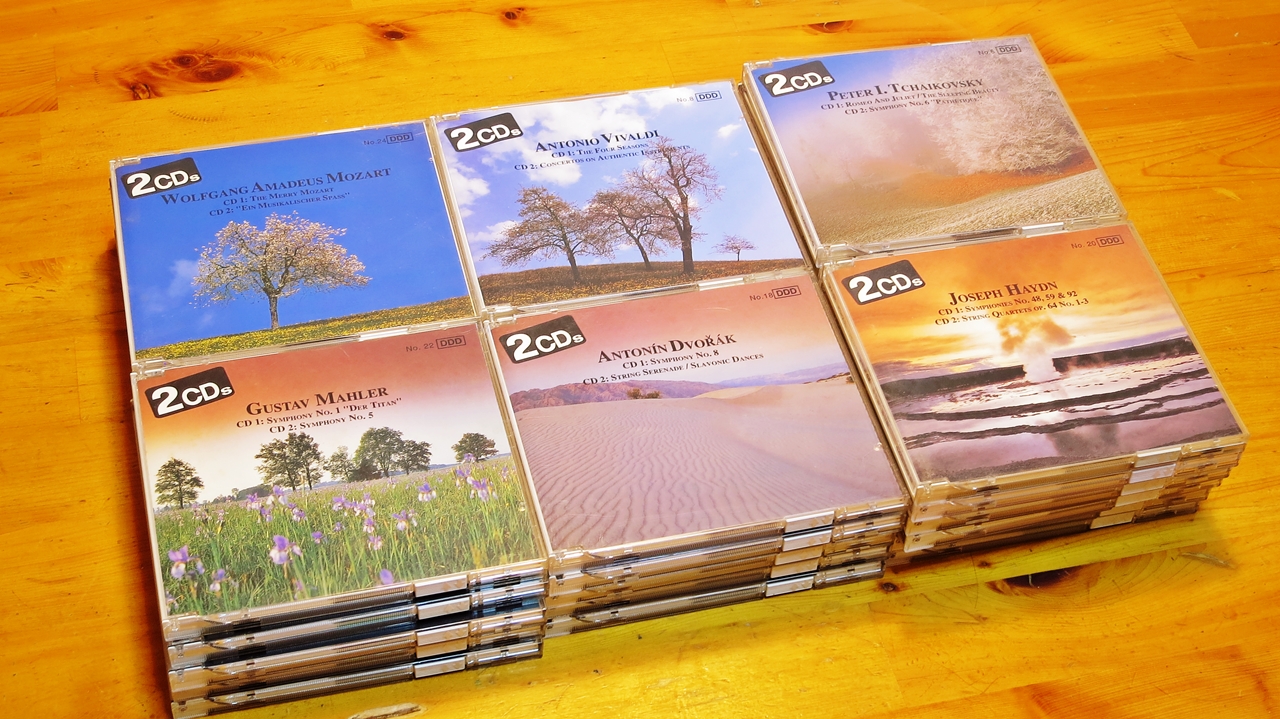
My student days… this was in the early 1990s. It was at an outdoor bargain wagon set out in front of Nagasakiya Machida — a general goods shop that nowadays would look like a faded remnant of a department store — that I first came across the PILZ label’s classical CDs, the Vienna Master Series. The 2-CD sets in those slim double cases, still quite a novelty at the time, were priced at just 300 yen a set. The price was so startling that I remember buying up every title they had on display in one go, duplicates aside.
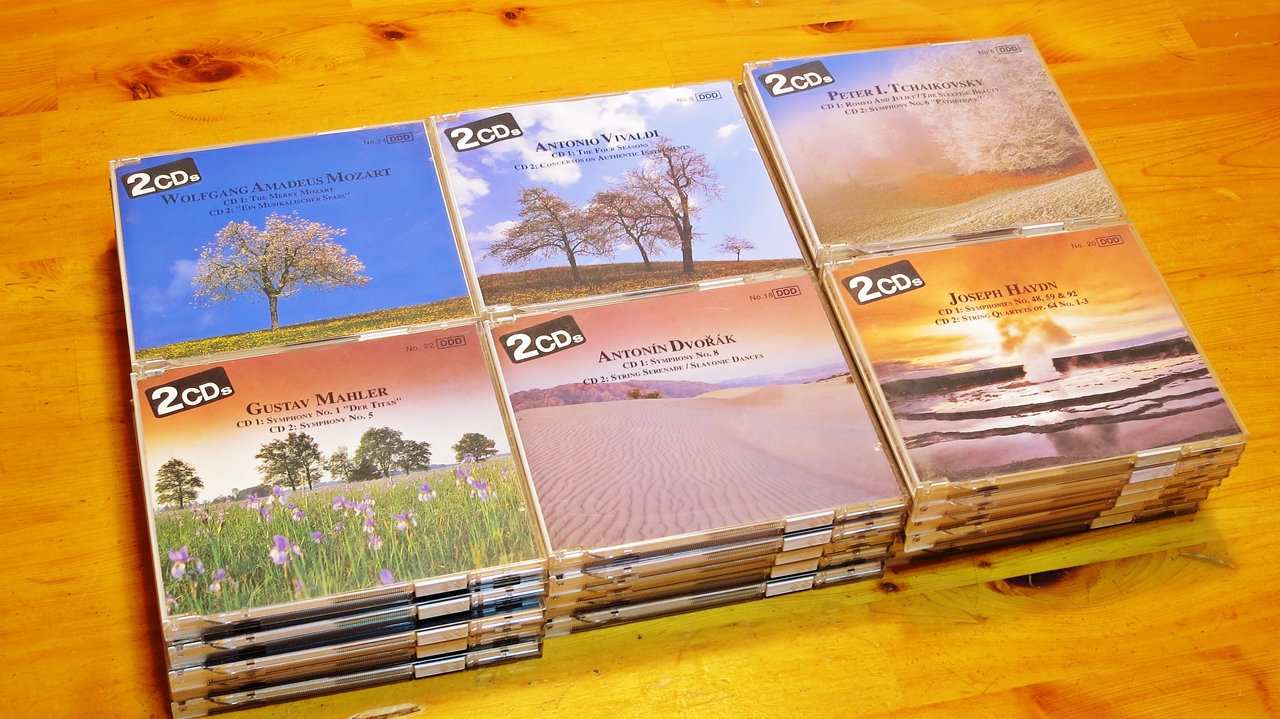
Thirty-two sets in all — sixty-four discs (note: of those still in my possession; a few may have gone missing). I think that was the one and only time in my life, before or since, that I ever spent 10,000 yen in that tatty old Nagasakiya, with its distinctly Showa-era atmosphere. Nowadays it is hardly unusual, even among major labels, to find classical music CDs in box sets at 100 to 300 yen per disc — but back then, a new domestic CD release would set you back 3,000 yen per disc, a budget reissue around 2,000 yen, and a box set could run into the tens of thousands. Just building up a collection of CDs to learn the repertoire cost a fair amount of money, so the PILZ Vienna Master Series was a genuine find — a godsend, really.
And yet, the more I looked at this PILZ label, the more something seemed off… This was just after the end of the Cold War between the US and the Soviet Union. The cultural assets of an impoverished Eastern Europe were beginning to flow westward at virtually no cost. The address printed on the back gave PILZ’s location as Kranzberg, near Munich, and the discs themselves were stamped Made in Germany — but every conductor and performer listed on them was someone I had never heard of. I naively assumed at the time that it must be some obscure Eastern Bloc orchestra paired with unknown musicians from East Germany or elsewhere in Eastern Europe, but it turns out there was quite a story behind all of this…
When I looked into it years later, the conductors and performers credited on those discs were not merely obscure — they appear to have been entirely fictitious, and PILZ went on to be regarded as something of a pioneer in the use of what came to be called ghost conductors, ghost orchestras, and ghost performers. ※ Needless to say, at the time I had absolutely no idea any of this was going on.
The real story, it seems, is that Alfred Scholz — a German music producer and conductor of sorts — acquired various recordings from the Austrian Broadcasting Corporation (ORF, which was of course a Western institution), credited them to fictitious conductors and performers (including pseudonyms of Scholz himself), and launched the PILZ label as an ultra-budget enterprise. In short, it was an elaborate scheme — alchemy of a kind, really — to avoid paying royalties. According to Wikipedia, PILZ subsequently went bankrupt and splintered into labels such as POINT, ONYX, and MEDIAPHON. Reading that, I thought to myself, oh yes, I’ve got some ONYX discs as well — and with that little pang of nostalgia, I find myself sitting here writing this piece while listening back to several of those PILZ albums I bought all those years ago.
Given all of this, with PILZ it is first and foremost the case that many of the credited performers are fictitious, so one genuinely has no idea who is actually playing. In terms of performance quality, it feels as though recordings by fairly well-known artists are probably included in reasonable numbers, but it is very much a mixed bag, and there are some dreadful performances in there too. It would be rather interesting if one could identify who is actually who. Meanwhile, by contrast with NAXOS — another budget label of the same era whose discs were sold from similar bargain wagons outside shops, but which properly credited its recording production and performers throughout — PILZ really could not be more different.

As for sound quality — these are digital recordings acquired from ORF, but the audio is frankly not very good. The sound is light, thin, and bright, and I remember being genuinely taken aback at the time by just how poor this pressing sounded, coming from a diet of mostly domestic releases. Strangely enough, listening back now it does not strike me as quite so terrible — though I suspect that is partly because the direction of my audio system has changed since then, and more than anything because my hearing sensitivity has declined with age, and my tolerance for different kinds of performances and recordings has broadened considerably compared to when I was a teenager.
And so, among the many CDs in my collection, these ended up being treated as little better than rubbish, left for years in the worst possible storage conditions in the CD shelving at home. After twenty-five years, the state of them is really something — mould growing thickly across the disc surfaces, particularly on the label side, and the single-sheet printed sleeves mottled and discoloured on both sides. Honestly, the sleeves are beyond recovery at this point…
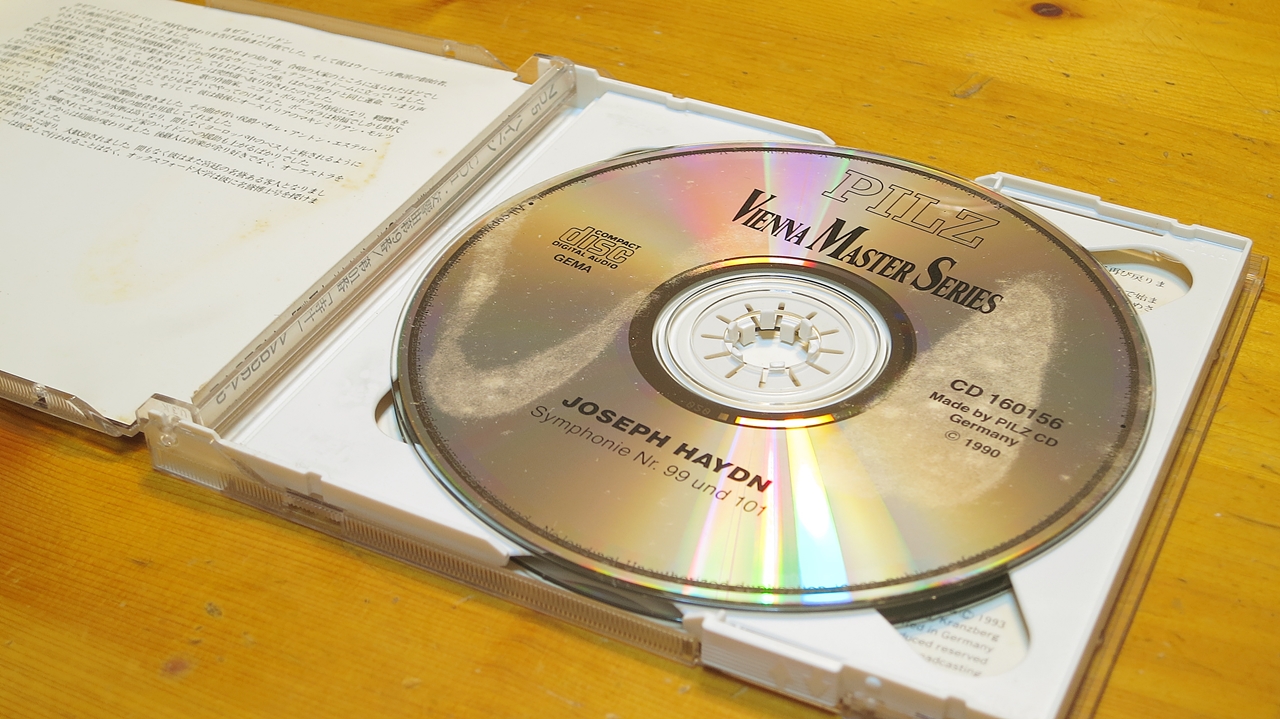
After washing the CDs in an ultrasonic cleaner, the signal sides all came out completely fine. The label sides, which are thinner than the signal sides, were mostly all right too, though one or two discs showed faint pinholes that appear to be mould-related. Also — these are German pressings — the material on the label side seems to differ from the polycarbonate on the signal side, because when I sprayed some ethanol on the mouldy label surface and wiped it with a Silcot pad, it scratched quite badly. I had completely forgotten that wiping a mouldy CD without cleaning it first can drag the contamination across the surface and leave scratches. The signal side, wiped in the same way, appeared undamaged to the naked eye — presumably because the polycarbonate there is a different material.
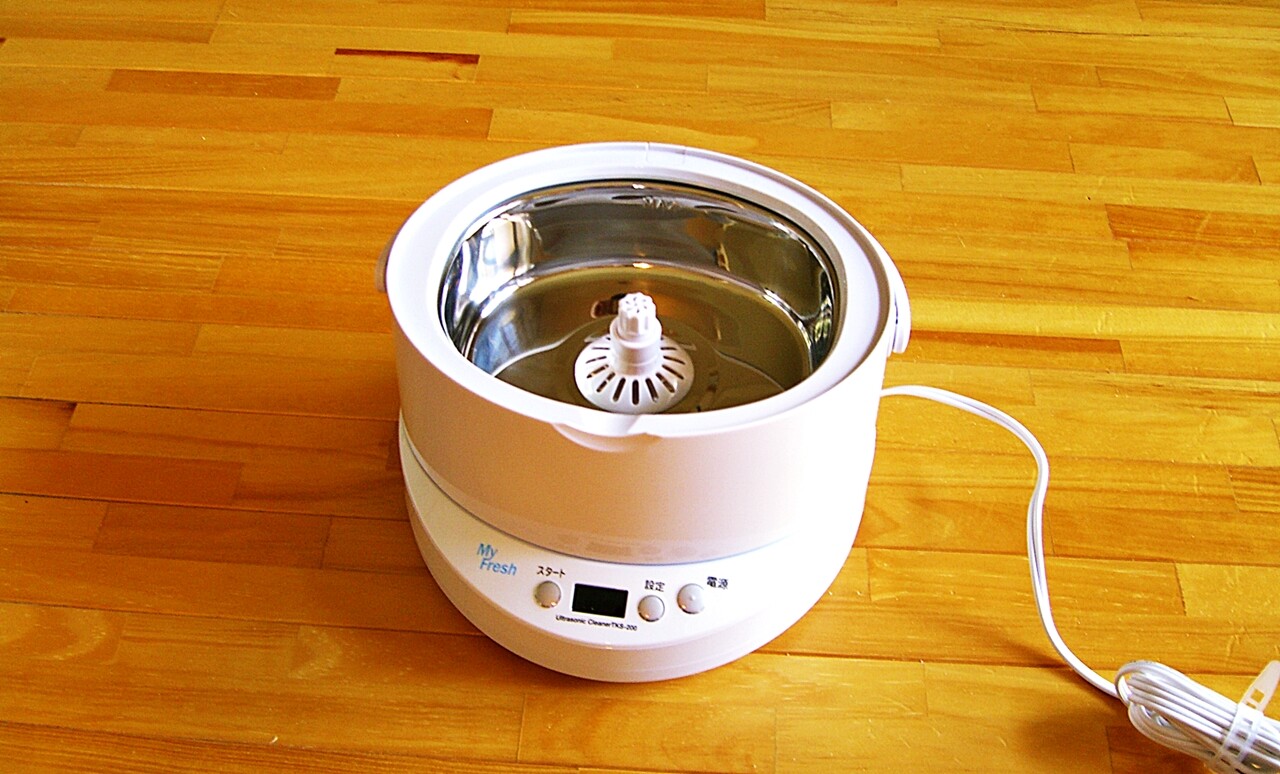
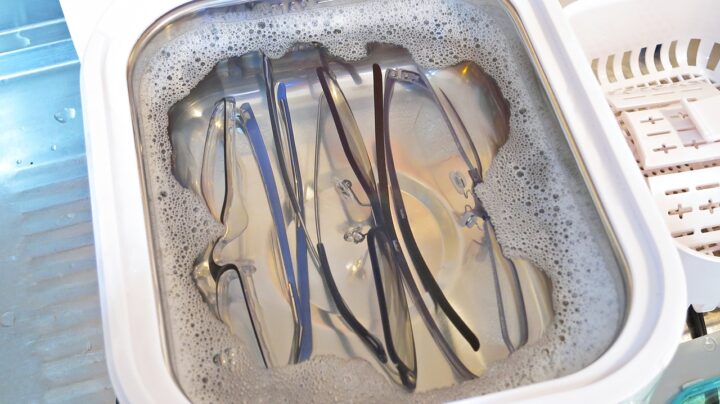
I carelessly scratched the label sides of a couple of discs, but for the remainder I washed them carefully in the ultrasonic cleaner with warm water and a little neutral detergent, after which no further scratching occurred. When mould is this heavy, a few minutes in the ultrasonic cleaner alone is not enough to shift it properly — so the approach I settled on was: two minutes of ultrasonic cleaning to loosen things up, remove the disc and wipe the mouldy surface gently with a fingertip under running water, then two more minutes of ultrasonic cleaning as a finishing pass, followed by a warm-water rinse. That sequence got everything off cleanly.
Ripping the PILZ Vienna Master Series with EAC
The truth is, the reason I dragged the PILZ Vienna Master Series out of its mouldy corner after all this time is that the remaining free space in my CD shelving at home had already dropped below ten percent — in other words, they were in the way, and the plan was to get rid of them. After this much deterioration they are not fit for resale, and given how dubious the provenance of PILZ discs is in the first place, their value on the secondhand market would be negligible anyway. That said, even if I was pulling them out to make room on the shelves, they do carry some memories, and they have a certain curiosity value. I almost never bother ripping the CDs I own — too much trouble — but if I convert them to digital files, sixty-four discs comes to around 30 GB or so.

Incidentally, when I tried ripping via EAC’s secure mode using the optical drive in my main machine — an ASUS VivoMini VC65 — “HL-DT-ST DVDRAM GUE1N ※ Hitachi-LG Data Storage”, the playback itself did not skip, but the majority of CDs produced read errors during ripping, with some tracks coming in at 99.9% quality rather than 100%. (These are C1 error corrections, so the final data is not technically compromised — but still…)
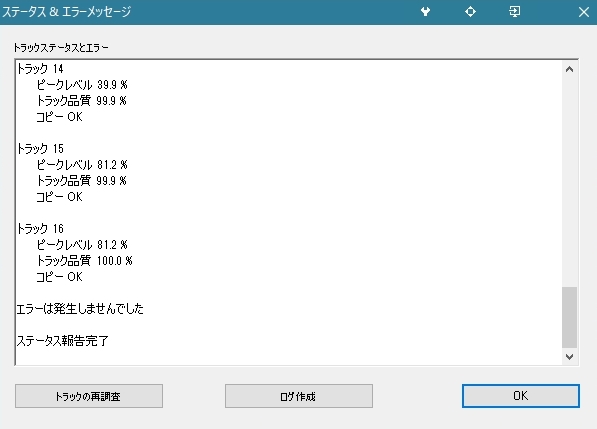
Though with these discs, since the pressing quality was suspect to begin with, it is honestly difficult to say whether the errors are due to deterioration or were always there from the start…
 Exact Audio CopyInstalling and localising the ripping software Exact Audio Copy (EAC)
That said, one thing I was genuinely grateful for with EAC (Exact Audio Copy) is that information for every single one of these obscure PILZ CDs was already up on the database server, and for some of them the original sleeve artwork was included as well. There was some information that could only be found from the Japanese domestic sleeve notes, so I did consider keeping scanned images of the covers — but since almost everything was already up on Discogs anyway, and scanning felt like too much effort, I settled for typing up the key details from the Japanese text by hand into a Notepad file, then copying and pasting the data and cover images from Discogs into the same file and saving it alongside the audio.

EAC is set to rip in high-quality, low-speed secure mode, but almost every disc snagged on some track or other and slowed to a crawl, meaning each disc was taking thirty to sixty minutes to rip. Sixty-four discs at that rate turned into a solid two days of work, and I will be honest — even with only sixty-four discs, it was thoroughly tedious. On top of that, by the time I had got through the first twenty discs, five or six of them had tracks that simply could not be salvaged due to read errors and sync errors. Five of those problem discs could at least be extracted in burst mode, but one disc skipped even in burst mode and was a complete failure. I tried lens cleaning on the drive in case that was the culprit, but it made no difference. Whether the issue is age-related deterioration or the pressing quality from the outset (probably the latter) is unclear from the disc’s appearance alone — but the ripping process is so punishing that honestly, on a personal level, I always find myself thinking I really cannot be doing with this. And yet, even CDs in such poor condition that they refuse to rip properly will play back without a hitch on a standalone CD player…
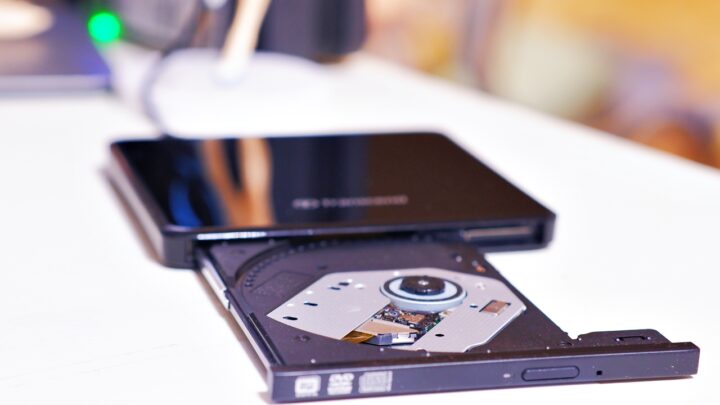
Because the ripping was going so slowly, partway through I brought out a Transcend USB external DVD drive, the TS8XDVDRW-K, which I do not normally use, and set up a two-drive parallel ripping arrangement (EAC itself can be run as multiple simultaneous instances, provided the PC has the processing power for it). With the same secure mode settings, the Transcend TS8XDVDRW-K was consistently about twice as fast as the built-in drive — and discs that the HL-DT-ST DVDRAM GUE1N in the PC had thrown errors on and refused to complete would sometimes rip without any trouble on the Transcend TS8XDVDRW-K. It is a reminder that even now, the difference in ripping capability between drives is greater than you might expect.

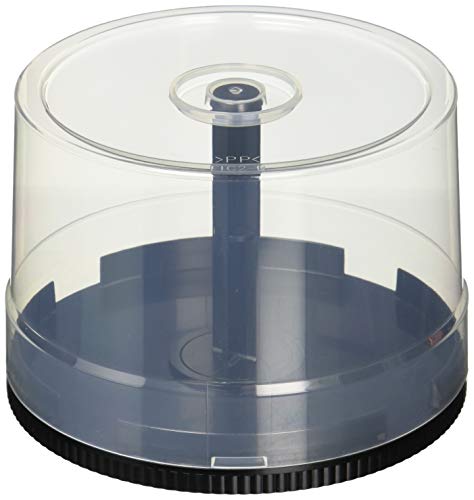
From the point where I added the Transcend TS8XDVDRW-K, the ripping work did move along more smoothly. Not every disc could be ripped with a clean bit-perfect result — some required the assistance of burst mode and remain in a slightly uncertain state — but as a matter of principle, as a collector, I have no intention of discarding the physical discs themselves. The plan is to consolidate everything into slim cases or a spindle case left over from BD-R recordable discs for the Blu-ray recorder. As this whole episode has demonstrated, a disc that simply will not rip correctly in one particular environment can sometimes be read without any problem on a different drive or with different ripping software.

 ポチップ
ポチップ
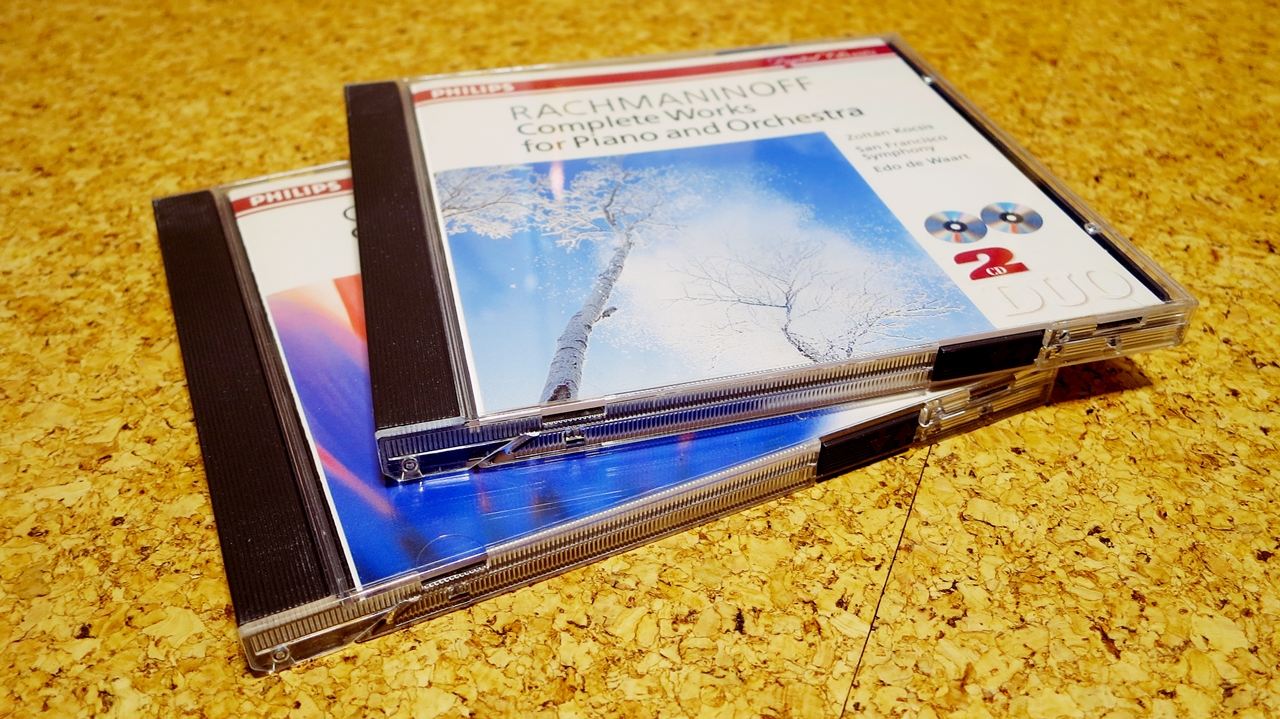
As for the double slim cases and the mould-covered Japanese printed sleeves — those I have decided to throw away. Had these been the original German sleeves, they would have retained some value and I would not be treating them this way, but this series was, rather thoughtfully, fully Japanised for the domestic market, even though the discs inside are German pressings. The cases themselves are the same slim double-disc format that was used for the PHILIPS 2DUO domestic releases — still a relatively uncommon format at the time — so any 2DUO cases I own with cracked hinges will get replacement parts from the PILZ remains. Beyond that, I’ll hold on to a few spares for future repairs.
And so — the ripping of the PILZ Vienna Master Series is, more or less, complete. It is hardly a distinguished body of recordings, and this is purely a self-indulgent exercise, but there is something curious about the way even source material that was universally — and justifiably — regarded as rubbish at the time takes on a certain historical interest as the years pass. This has been a kind of aide-mémoire: a record of the fact that there were once labels like this in the world — ghost conductors, ghost performers, and one thoroughly brazen operation that cheerfully trampled over copyrights and got away with it for a while.
 Budget Classical CD Box Set ChroniclesAudio Racks and Storage

Auto Translated by CS4.6