The sound of CREEK… one might describe it as a restrained musicality underpinned by a deep understanding of music… it is not quite as globally and modernly neutral in its aims as fellow British marques TAG McLaren/AUDIOLAB or ARCAM, yet nor is its musical expression the same as the lustrous, song-forward sensuality of Musical Fidelity — perhaps one could call it “a mature balance that understands the virtue of the middle path“…
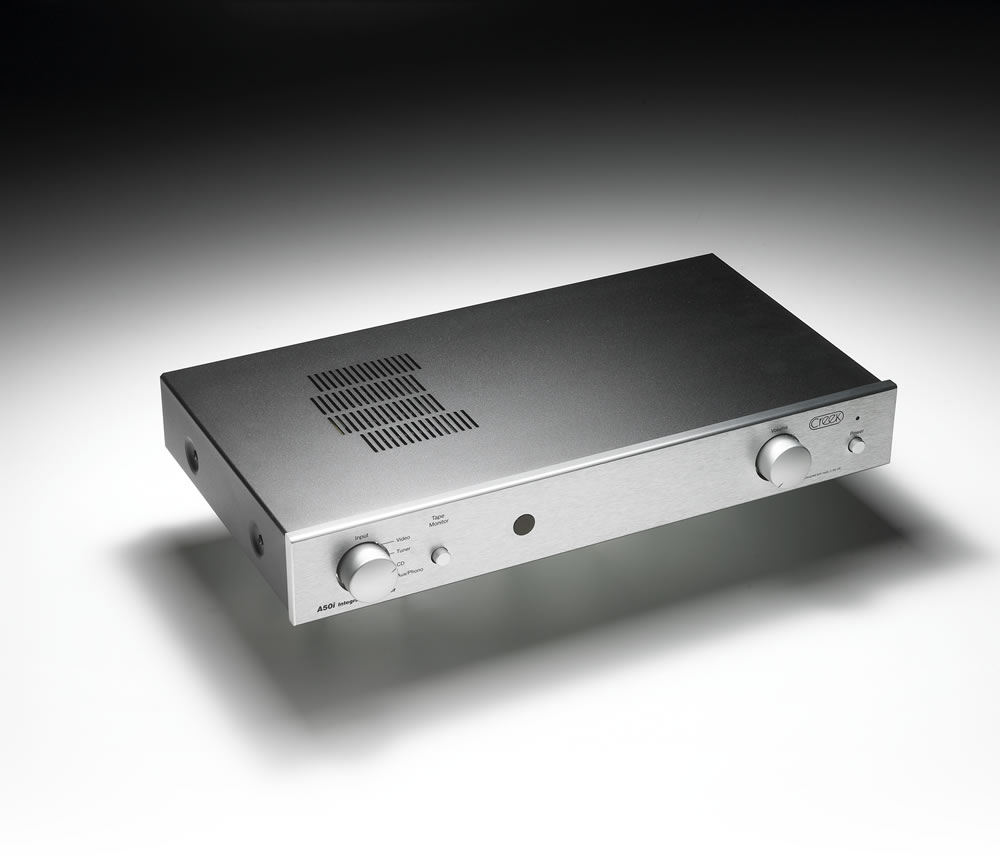
A tonal character that recalls the mingled sweetness and bite of a fine Scotch whisky — delicate yet not overwrought, warm and cool at once, capable of rendering the play of light and shadow within a gentle darkness — a flavour that carries the restraint and dignity of the traditional English gentleman. This is a sound for those who are not seduced by audiophile spectacle or hollow pleasures devoid of substance, but who truly understand what music is. That, and nothing less, is the sound of CREEK.
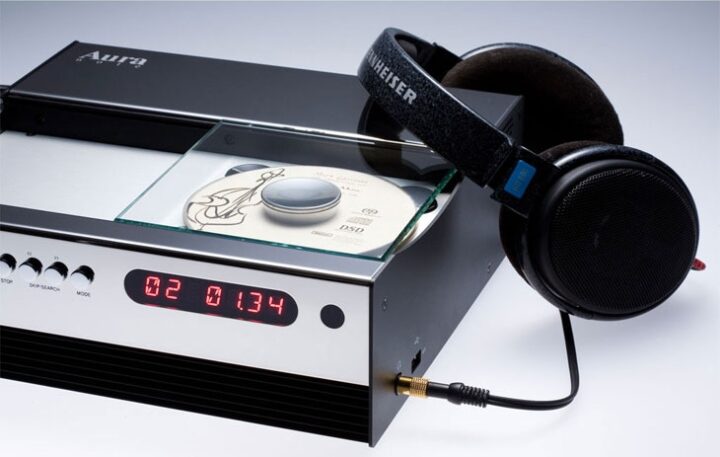
My first encounter with the work of Mike Creek, on the shop floor, was through the integrated amplifier 4040S3 and the CD player CD60. A slim-line chassis only 23 centimetres deep — something you could tuck onto a small bay window shelf — a discreet, understated integrated amplifier in a matt-black case with a green logo standing out against it… The sound of Creek in those early days was wonderfully lively and warm, and I — who at that point had known nothing beyond the domestic best-buy products — was quite shaken by that hot, expressive musicality spilling out from within a distinctly British, muted palette, and by the sheer realism of the soundstaging, so utterly unlike anything from Japanese manufacturers. The level of musical expressiveness was fully a match for — and at times surpassed — the VA50/VA100 of Aura (Aura Design), the rival of the day. If the Aura’s tonal character was like the cool, relatively colourless light of a mercury lamp that appeals to everyone, Creek was a contrasting palette overflowing with a European sensibility, evoking the warm glow of a lamp’s flame. Both had their own allure and were hard to give up, and I recall agonising greatly at the time over which to choose — Aura or CREEK.
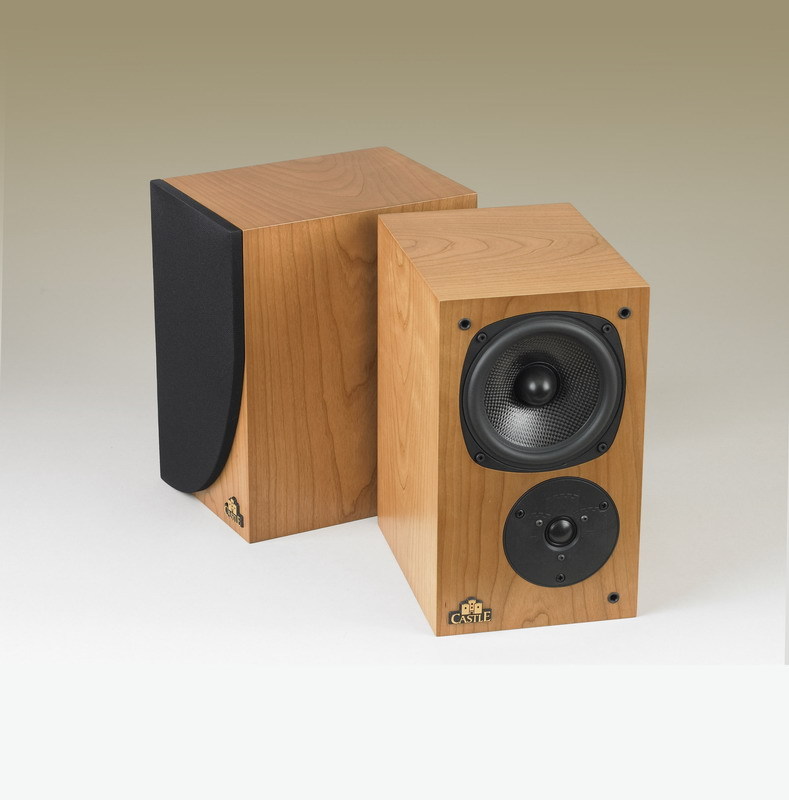
After causing no end of inconvenience in shops up and down the country as a teenage student, putting everything through its paces in audition after audition, I was ultimately drawn by how beautifully it paired with CASTLE speakers — then available in Japan — particularly the ISIS and the Durham900, and the first foreign-made integrated amplifier I ever owned turned out to be the Creek 4240.
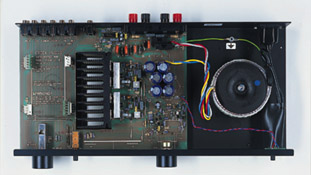
The interior of the Creek 4330. In the preceding CREEK 4240 & 4240SE, there were only two electrolytic capacitors at the centre, making it even simpler.
The CREEK 4240 was the integrated amplifier that represented the first major departure from the original 4040 series, a new lineup for its time, and in terms of sound quality it moved on from the foregrounded warmth and liveliness of its predecessor, gaining in purity and a quietly refined dignity. The sound of today’s CREEK products feels like it takes this as its foundation, evolving the drive capability and Hi-Fi qualities with the times… The exterior has barely changed from the 1990s, retaining the front panel design of that era, but alongside the black & green logo, a silver-face model was introduced, and since then only the silver model has been sold in Japan. Personally, I rather prefer the black face with the green logo standing out against it… (Note: outside Japan, the original black & green logo specification is also available.)
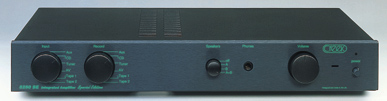
The internal circuitry of the 4240 is strikingly simple even by comparison with the current 50xx series — the component count is low enough to be countable — and despite the compact chassis there is a fair amount of empty space inside, yet concealed within that simplicity is a drive capability that effortlessly surpasses the ONKYO A-917, a unit several times its weight and volume — something that genuinely shocked me at the time. The CREEK 4240 offered a pure, transparent sound with excellent stage clarity even at low volumes, and by comparison, the ONKYO Integra A-917 — which I had bought and used up to that point, trusting the magazine reviews — sounded like it merely pushed sound forward in a murky, ill-defined blur.
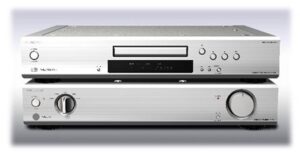
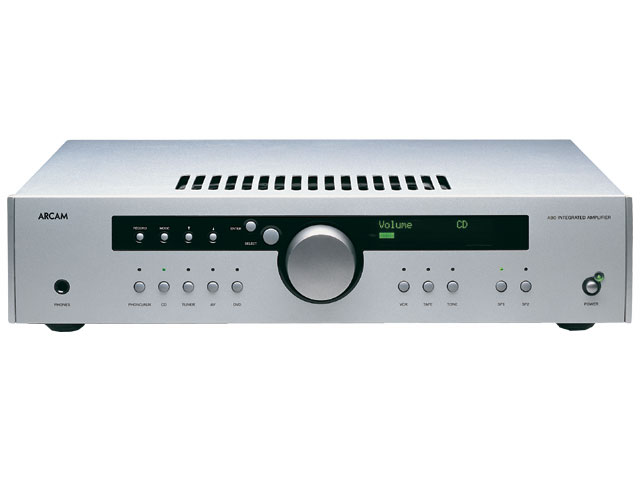
More than ten years ago now… Hi-Fi in those days was still dominated by the massive, ultra-high-end Japanese amplifier, and QUAD / EMF (Creek’s upper-tier brand) / ARCAM / Musical Fidelity / Cambridge Audio / Aura Design / Naim Audio / Rega / Cyrus / LINX (a New Zealand brand, the audio component division of Wharfedale) and others — British amplifiers with slim, practical designs — were not particularly well regarded in the Japanese market, and I used to work myself into a quiet fury reading the unfairly low scores they received in audio magazines when set against domestic products. These days I can take such magazine criticism in my stride, reading between the lines for the adult politics at play — but it was rather a lot to ask of a middle-school student who took every written word at face value.
One of the unsung virtues of CREEK’s integrated amplifiers across the generations is the notably fine sound quality of the headphone output (Note: the 4240 in particular). The sound is uncannily real — as though one has been transported to a concert hall — and it far surpasses what you would expect from a standalone headphone amplifier of similar standing. At the time I was listening through this amplifier with the legendary Philips portable CD player “PHILIPS AZ6829” connected to it, and these two made a wonderfully expressive pairing, sharing a similar warm, European tonal character. I still find myself thinking: if only one could fit the AZ6829’s circuit, power supply, and drive mechanism directly into the phono board space of the 4240, and add the tuner CREEK T40 (same chassis as the amplifier, but the internal circuitry is roughly the size of a business card) into it as well, all in a single enclosure… I am fairly confident that if it could be realised, it would comfortably surpass a certain well-known all-in-one model from British manufacturer L〇NN.



Beyond the OBH series, CREEK also has a lineup of palm-sized ultra-compact audio components — headphone amplifiers, DACs, passive preamplifiers, phono equalisers and the like — which go by the name of the OBH Series, and carry a distinctly British sense of playfulness. Small as they are, the quality is astonishing, and once you have heard them, you cannot help but wonder what on earth all those imposing dimensions and elaborate circuitry are really for — and to recognise the error in one’s conventional assumptions about Hi-Fi.

CREEK’s products — not only the OBH series, but the full-width 42cm regular-size lineup as well — are united throughout by a thorough commitment to simplicity as the highest virtue, a pursuit of how far the component count can be reduced in order to achieve an honest, highly musical sound quality. The result is a masterly realisation of exactly that principle. The parts count and circuit simplicity are, frankly, below what you would find in many a mini-system. And the components used are entirely ordinary — nothing especially costly. Yet the sonic quality far surpasses that of large, heavy domestic products. Moreover, the sound is not merely a high-purity, straight-wire-with-gain sort of affair devoid of character; it carries a firmly Creek-flavoured tonal identity — a rich European tone as its foundation, with a deep, accommodating versatility that handles any recording regardless of its nature. As a musical playback instrument, it never exposes raw Hi-Fi excess, but steps back to let a well-balanced, considered equilibrium breathe within — and above all, the fact that it is an exceptionally practical product for the music lover is, I believe, CREEK’s one truly irreplaceable virtue.
Continues in: CREEK A50iR / CD50 mkII CD Player


Auto Translated by CS4.6

List of comments (1)
管理人がド肝抜かれたと言うクリーク4240買ってみました。
僕も度肝う抜かれました
これ絶対に値段と音が合ってないですね
中古2万で買いましたが70万のEAR869と同レベルの駆動力、真空管のプリ機構合わせてかなり近い音が出ます
半導体アンプの中でも最上位レベルの音じゃないでしょうか?