Did you know that the sound quality of car audio can actually change dramatically depending on the battery?
This happened a few days ago. On the way back from the hospital, I stopped as usual at my regular Shell petrol station to fill up. It is a self-service station open 24 hours with the cheapest fuel in the area, but during the day there is a full maintenance crew and a good range of pit services on offer. In the summer I had them do a full-day hand-applied G’ZOX body coating — the complete course — and since then I have been bringing the car in once a month for a wash using G’ZOX coating-specific maintenance products.
The station’s interior has been done up as a pleasant little café, and my usual routine while waiting for the work to be done is to order a pasta or espresso and get through whatever office work is left on my Let’s note. A wash and maintenance visit takes a surprisingly long time, so having somewhere to use the wait productively matters. This particular visit had gone exactly as usual — fill up, drop the car off for a hand wash — but on this day the car was taking far longer than normal to emerge from the pit. I was beginning to wonder what on earth was going on when the mechanic came into the café area and said…
……W-what do you mean…
A Sudden Dead Battery Away from Home
Come to think of it, when did I last replace the battery? I am fairly diligent about maintenance, so it could not have been all that long ago. I checked under the bonnet and found the replacement date written on the battery itself — it had been one year and eight months since the last change. It was a battery from a well-known Japanese manufacturer, and tucked inside the service booklet was a warranty certificate clearly stating two years or 60,000 km — yet here it was, giving up the ghost before the two-year warranty period had even expired.

I have been driving for over ten years, and this was actually the first time I had ever experienced a flat battery. I was lucky it happened to die inside my regular petrol station rather than out on the road. If the engine had cut out while driving, I would have had to call out a roadside assistance service again — …which, truth be told, I have had to do a handful of times before for other reasons…


 ポチップ
ポチップ
The Japanese battery that had failed due to insufficient voltage was what you would call a budget standard-grade unit. Ever since my previous car I had always used German BOSCH (heavy, large, and expensive as they are), but as I recall, at the time of the last replacement I happened to be a bit short of cash and found some excuse about reducing front-end weight to justify fitting a Japanese battery — two sizes smaller than the BOSCH (※ the size specified as standard by the car manufacturer) — at roughly half the price of the Bosch.
Sound Quality Degradation from a Low-Capacity Japanese Battery
That, it seems, was a mistake. The thing I noticed almost immediately after fitting that battery was that the sound quality of the Nakamichi car audio had taken on a strange quality. Normally, when you replace an ageing battery whose voltage has been running low with a fresh one, the voltage recovers significantly and the sound gains energy — it plays louder and seems to improve in quality — but what I got instead was something sluggish and dull, with a rounded-off top end.
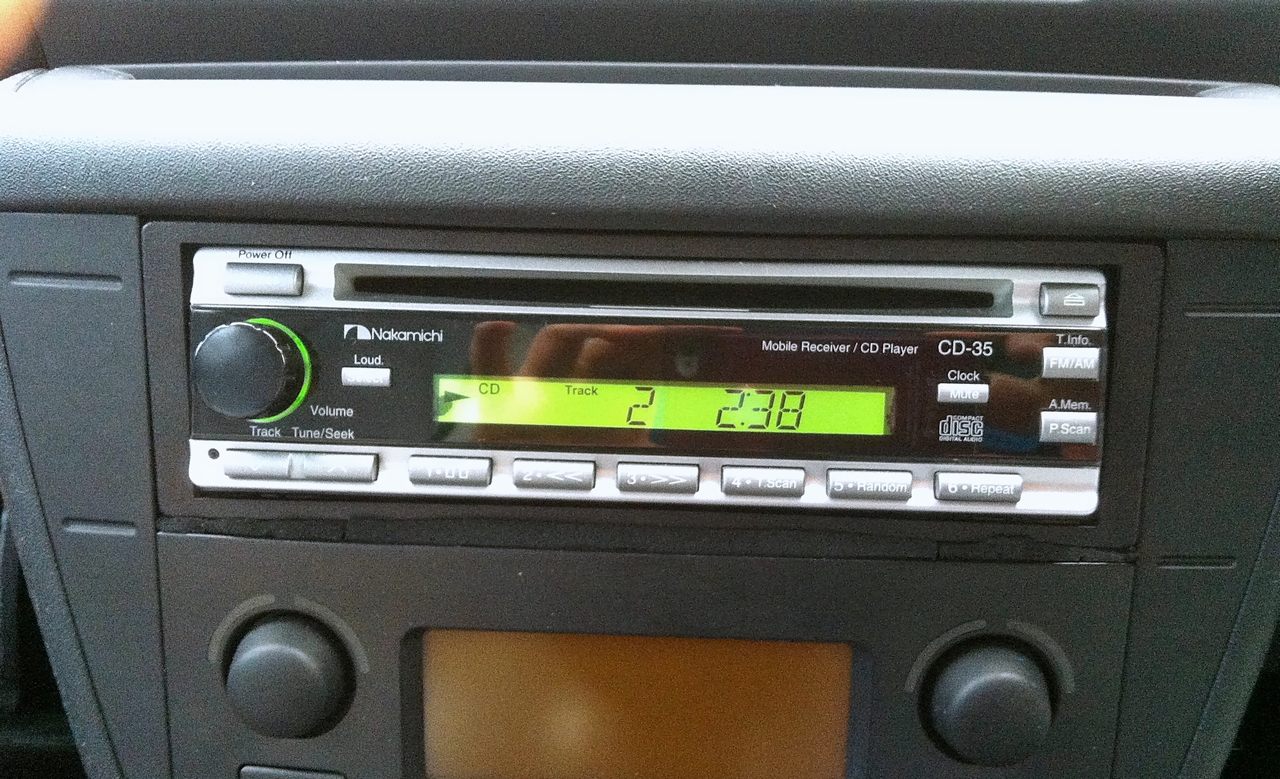
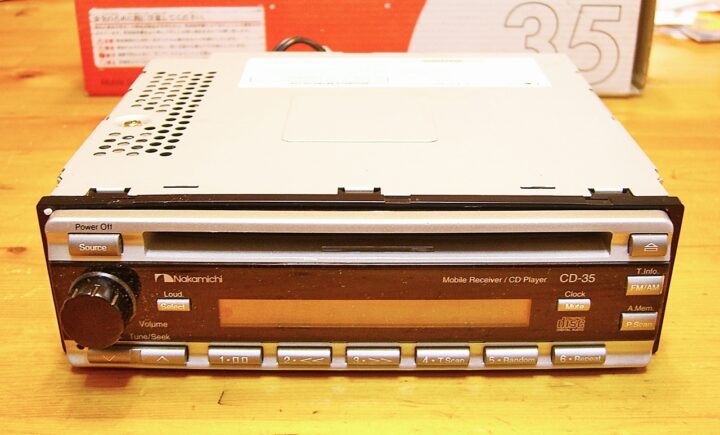
I carried on feeling vaguely puzzled — thinking, well, perhaps this is just how it is — but switching batteries just for the sake of the car stereo sound felt a bit extreme, so I left things as they were and made do. A few months later the next problem appeared: the Nakamichi in-car head unit. It is a CD head unit that was never designed to play CD-Rs in the first place, but with discs I had copied on a MARANTZ CD-R630 for in-car use, certain discs had occasionally skipped during playback.

That skipping got worse day by day, and more recently a good number of CD-Rs had taken to stopping and going into repeat mode mid-playback. At that point I simply could not face listening to CDs in the car any more. Without really thinking about it, I had started tuning to FM almost exclusively. Given all of this, I had been vaguely wondering whether the laser pickup in the Nakamichi head unit was nearing the end of its life.
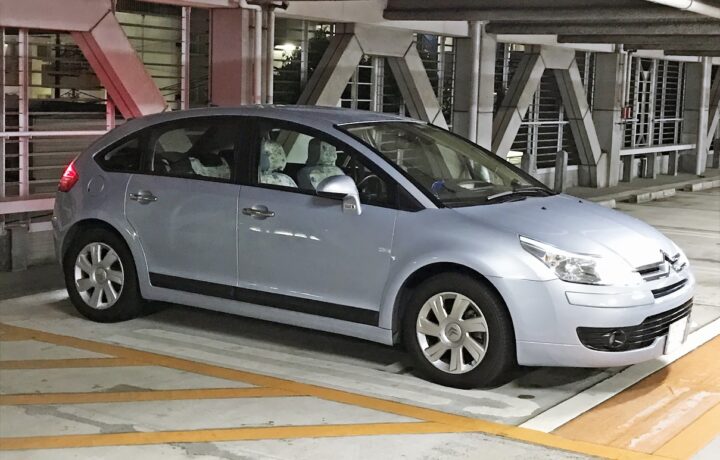
Back to the petrol station.
So, how much would a new battery be?
Around several thousand yen.
Oh, that’s reasonable. But since I’d rather not have another flat, what would the top-of-the-range option cost?
He went off to check with the manager and kept me waiting for some time before coming back with the summary: the high-grade battery in the right size was not in stock, and ordering one in would cost X tens of thousands of yen — at the full list price, mind you. That was simply far too much. I mentioned that Autobacs sells BOSCH batteries for less than half that, at which point he went off to check with the office again, and came back saying they could knock about 20% off. Either way, the only battery they could actually fit right then and there was an inexpensive standard-grade unit. (And if I were going to go with a cheap standard battery again, the proper thing to do would be to take the failed one back to where I bought it and get it replaced under warranty anyway.)
 ポチップ
ポチップ
The price quoted was simply out of the question, and I was at a bit of a loss — but the mechanic handling the work was a genuinely pleasant fellow. Since all I needed was to get the engine started so I could drive to a nearby car parts shop that stocked BOSCH batteries, he offered to do that free of charge, brought out a set of jump leads, and got the engine going.

Switching to a BOSCH Battery Transforms the Car Audio Sound Quality
I drove straight from the petrol station to the nearest Super Autobacs, pulled in with the engine still running, went inside and explained the situation. They were able to fit a BOSCH MEGA POWER battery — the successor model to the one I had used before. (If I recall correctly, the previous one was called the SRX or SRXX and had a slightly smaller capacity.) Unrelated, but the item to the right of the BOSCH battery in the photo is a Quickle Wiper Handy — I have a full review of it further down the page.

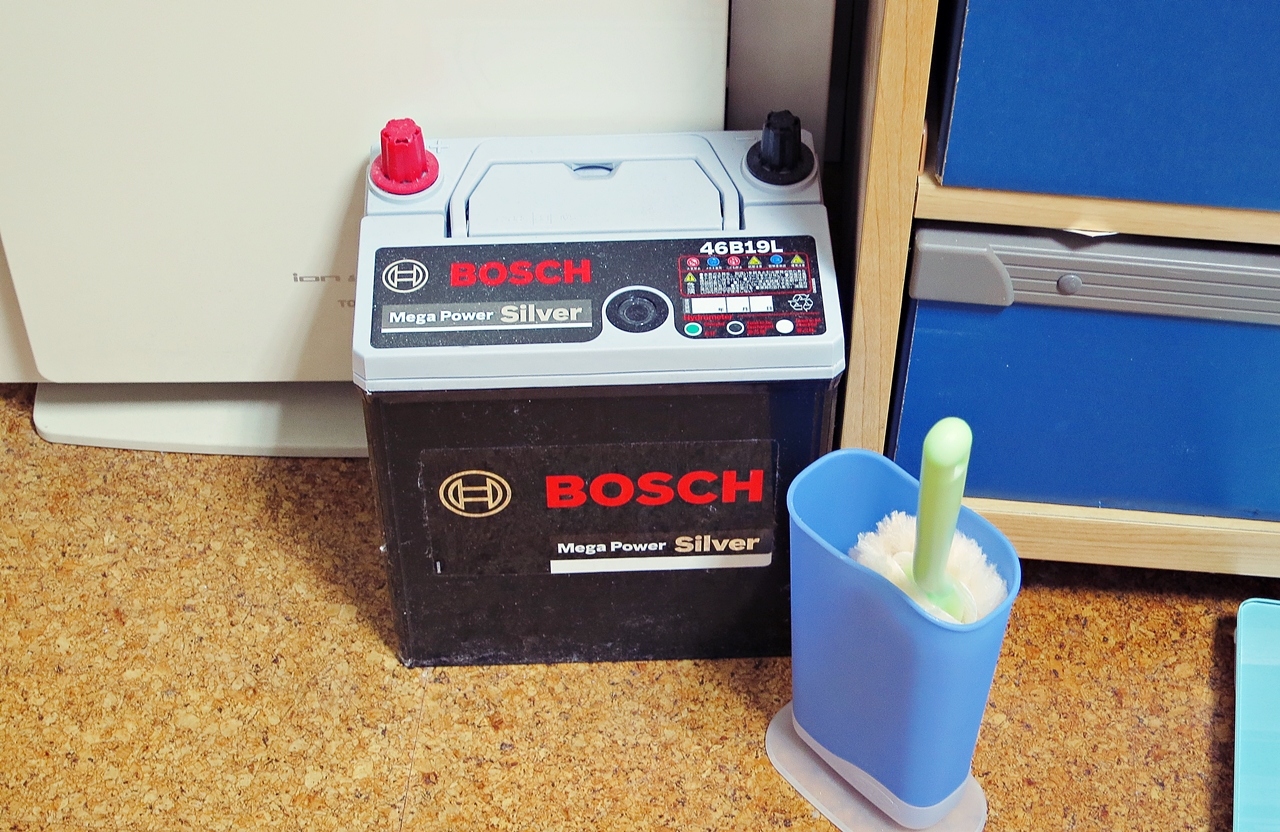
When the work was done I signed off, sat in the pit, and started the engine. The first thing I noticed was that the halogen headlights were noticeably brighter. (I have been using PHILIPS CrystalVision bulbs for years, by the way — see the review here.) Pulling away from the pit there was a smoother, more substantial surge of torque. This was feeling rather good. And then I put on a CD-R — a copy of a Deutsche Grammophon disc from my study, Ivo Pogorelich playing Haydn piano sonatas. I will be honest: by this point I had completely forgotten about the battery’s effect on sound quality — so what came out of the speakers stopped me short. It sounded utterly different from before.
 ポチップ
ポチップ
The tone colour was simply different… and yes, this was a familiar tone colour — the one I had been hearing as a matter of course until two years ago. A high end with real clarity, weight in the bass, a well-defined and richly constructed sense of image, the fine detail of every movement readable at a glance, a lively, breathing quality to the music that pulled my attention in without any conscious effort. I found myself being made to realise, rather belatedly, just how feeble a sound I had been tolerating from the car audio all this time.
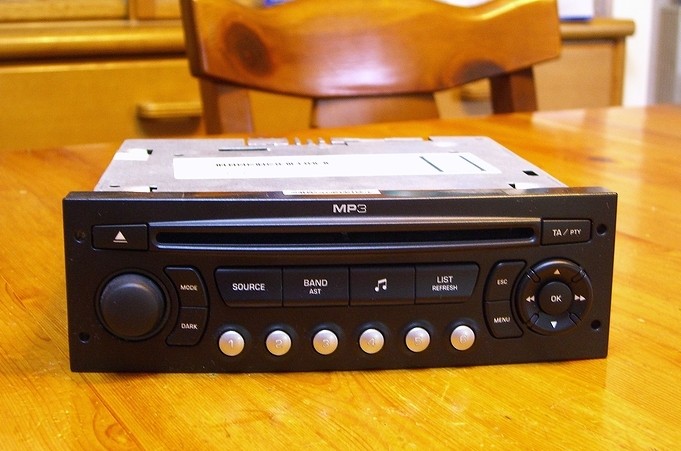
And there was one more surprise. This particular CD-R had been stuck in an endless repeat loop at the same two spots every single time I played it recently — yet this time it played through the entire disc without a single hint of skipping. Same result with the other problem CD-Rs. In other words, it was not that the laser pickup in the Nakamichi head unit had been wearing out — it was that the weakened battery had been causing unstable voltage, which in turn had been destabilising the CD player’s servo tracking. Now it looks like I can enjoy CDs in the car again, without having to put up with skipping.
 ポチップ
ポチップ
It is only a battery — and yet it is never only a battery. Do not assume you are fine just because you are still within the warranty period. Running well past the replacement date without changing it is even more reckless. If you care about car audio sound quality at all, I would strongly encourage everyone to fit a high-grade battery. And do not forget to replace it regularly — at least every two years, at each vehicle inspection. If sound quality is a priority, replacing it every year to maintain higher voltage is not unreasonable. Beyond the audio side of things, the single most common reason for a JAF emergency callout — now as always — is a flat battery.

While searching for information to write this article, I noticed that on Rakuten and Yahoo! Shopping, the very same BOSCH batteries can be had for considerably less than even the discounted in-store price at Aut○bacs or Yell○w Hat… Next time, I really must replace the battery myself before it goes flat, and order online properly. What a waste.
American AC Delco Batteries Are Also Powerful and Worth Recommending
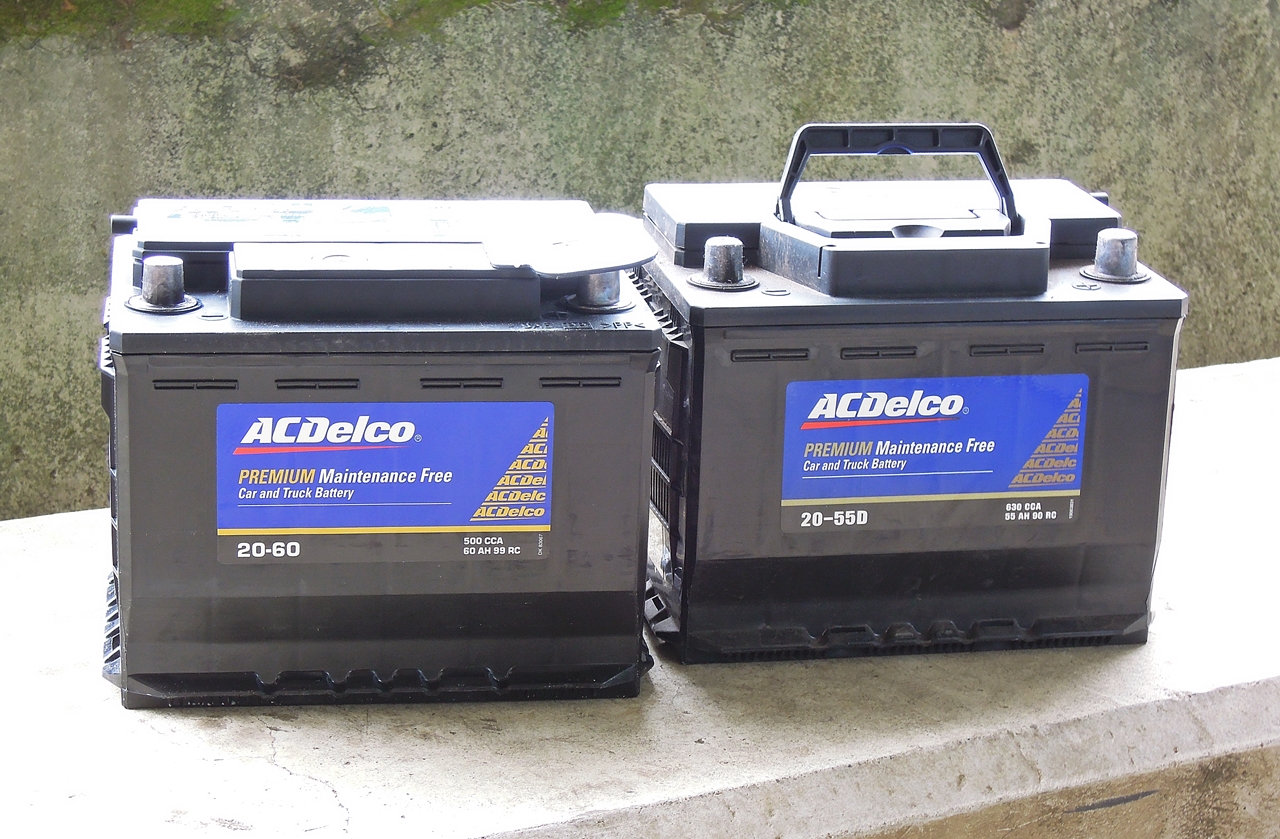
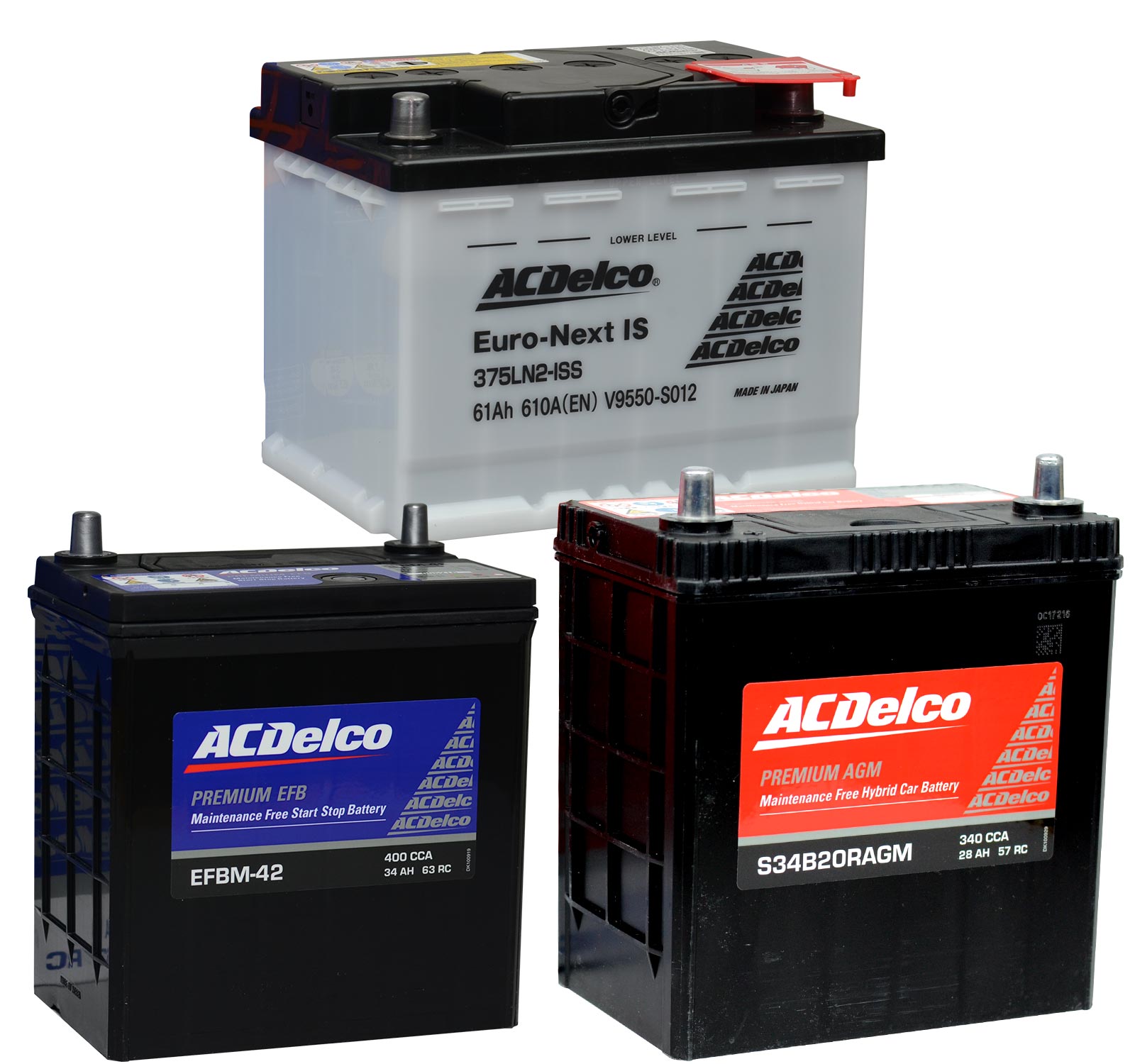
As the image at the top of the article shows, since then I have also tried American AC Delco batteries alongside the German BOSCH. I replace them on a two-year cycle, and of course I buy them cheaply online and fit them myself as a DIY job. I compare prices each time and go with whichever — BOSCH or AC Delco — happens to be better value at that moment. Being batteries made for overseas markets, they are large and heavy, but they are powerful and sound quite good, and I have come to regard AC Delco as an equally fine choice alongside BOSCH. Incidentally, for the Citroën C4, unless you live somewhere with severe winters, I think the 20-60 is the better choice over the 20-55D.
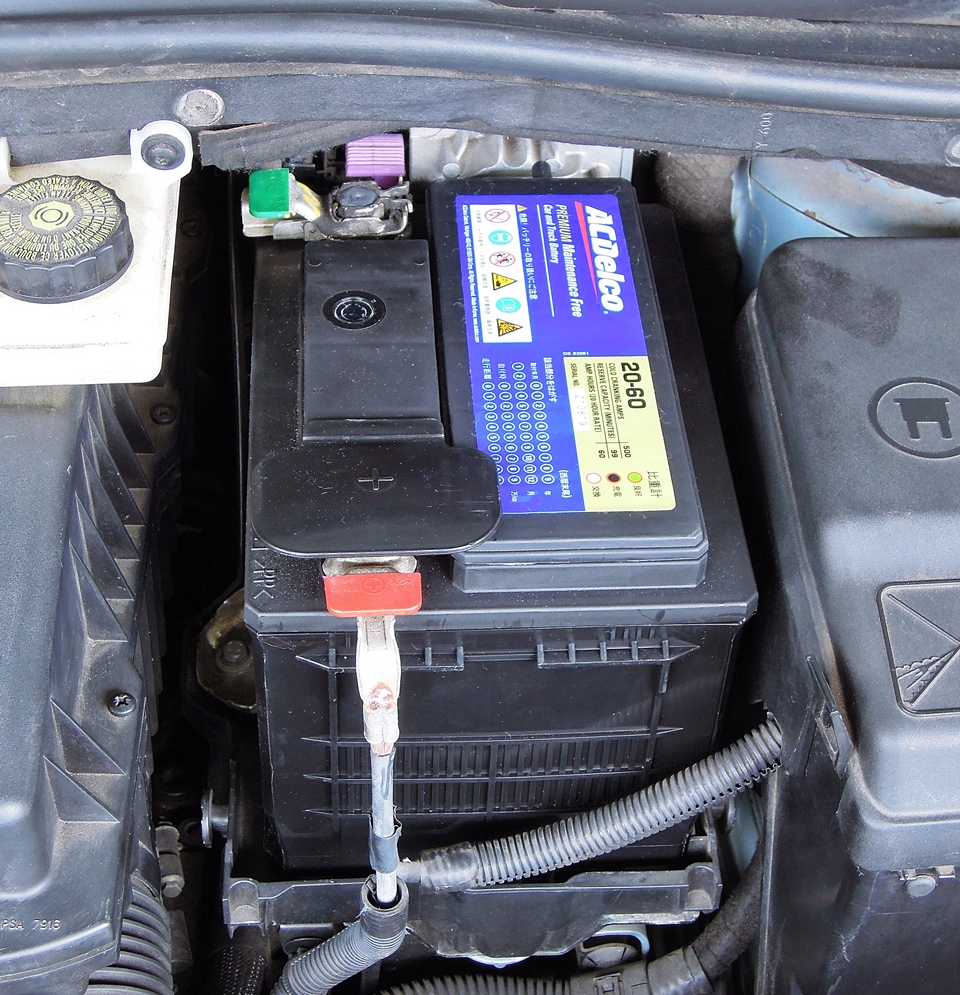
Summary
When choosing a car battery, bear in mind that the standard-fit size specified by the manufacturer is often on the small side as a cost-cutting measure. I would recommend choosing the largest size that will physically fit in your vehicle. With overseas brands such as BOSCH or AC Delco in particular, it is usually possible to select something close to that maximum capacity. A larger capacity means the battery takes longer to deplete and voltage drop is delayed, which works in your favour both for starting performance and for car audio sound quality. The downside is that it adds weight to one side of the front axle, which may have a slight negative effect on handling — so it is not ideal if you are chasing sporting performance, but if sound quality from the car stereo is the priority, it seems a worthwhile trade-off.
 ポチップ
ポチップ
Since that incident, I have been buying car batteries through inexpensive online shops. Fitting a battery yourself is straightforward (the battery itself is rather heavy, but that aside), and the key rule to remember is simple: disconnect the negative terminal first and connect the positive terminal first. The only real issue is the old battery you end up with. Since it is a recyclable resource that should go through the proper collection channels, I take mine to a large car parts shop near me where I have the car serviced and maintained — they take it off my hands there. It can feel a little awkward dropping off a battery at a shop you did not buy it from, but they are legally obliged to accept it, so I have never been turned away. It is also worth knowing that a used lead car battery, weighing over ten kilograms, can actually fetch a reasonable price if you take it directly to a battery recycler — so the shop is almost certainly not losing out.
Auto Translated by CS4.6
List of comments (2)
pastel_piano様
こんばんは、ハンコックです。
いつも拝見させていただいております。
リンクですが、張っていただいてかまいません。
今後とも、宜しくお願いいたします。
ハンコックさん、只今リンク貼り作業終了しました。
http://blog.so-net.ne.jp/watt3pappy2/
うちのオーディオの紹介記事はローエンドからミドルクラス中心ですが、
何とかハイエンドのテイストに近づきたいと頑張っています。
ハンコックさんのようなハイエンドシステムは羨ましい限りです♪
今後とも宜しく御願い申し上げますd(^_-)