At the recent Goto Sogo Onkyo listening session, the single greatest personal find for me was the opportunity to sit down and properly audition the new Bowers & Wilkins small bookshelf speaker, the B&W CM1. In this article, I would like to write up my impressions of this mini monitor speaker, which I imagine many of you have been keeping an eye on.


 ポチップ
ポチップ
The model designation CM1 brings to mind a similarly conceived small bookshelf speaker that was released about fifteen years ago, when Nakamichi was B&W’s import agent in Japan — the CONCEPT90 CM1. That original CM1 also had a companion speaker stand-type stereo subwoofer, the CM2 (CM Column), and when the two were combined, the ensemble took on the appearance of a floorstander. The stylish modern design of that older model was the work of the prominent British industrial designer Kenneth Grange, also known for designing the mirror-finish amplifier exteriors for AURA. Rather than representing an entirely new concept, the new CM1 released this time — judging by the model number — might well be understood as a continuation of the old CM concept.
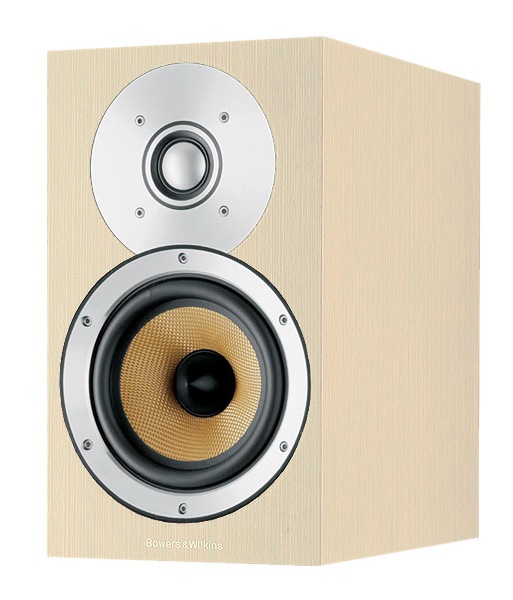
First, the appearance of the CM1. The finish on the actual unit is really quite beautiful. With overseas-made wooden cabinet speakers, there are quite a few brands where, on closer inspection, the finish around the drive units, on the rear panel, the veneer work, and the balance of the grain pattern are all rather slipshod — but this is B&W, after all. With the Danish-made enclosure paired with a Kevlar cone drive unit made exclusively for the CM1, the construction is visually impeccable and executed with remarkable precision. Unlike the traditional B&W 800 Series, which prioritises acoustic engineering to the point of adopting avant-garde design akin to a Formula 1 car, at first glance this is simply a square, conventional two-way bookshelf speaker — but look more closely, and you notice the simplicity of the magnetic grille attachment that does away with the four corner holes entirely, the two-way drive unit with a metallic sheen that exudes refinement, the square and clean baffle edges, a cabinet colour and finish that would blend naturally into a contemporary modern interior or with modern furniture, and the Bowers & Wilkins logo that expresses the brand’s values quietly and without fuss. The attention to detail extends to every last element, and before you have even listened to it, there is a certain indefinable quality and understated stylishness about it that makes you simply want it nearby.
 ポチップ
ポチップ
The system used for the listening session was the same as described in the earlier article: a MARANTZ SA-15S1 SACD player, with a ROTEL separate amplifier (note: both Goto-tuned). For comparison, I used the B&W 805S Goto-tuned version, as well as the CM1 in both standard and CM1 Goto-tuned forms.
Within moments of starting to listen to the CM1, it is immediately clear that this is a rather good-sounding speaker. The tonal character is bright and transparent. In terms of its overall tendency, it is decidedly contemporary — no longer the kind of speaker one would discuss in terms of British cultural character or anything of that sort — a straightforward, mainstream model that delivers a universal, modern sound alongside monitor-like accuracy. That said, it does not hit you with the kind of impact you get from the traditional B&W 800 Series — that sense of a fundamentally different order of high fidelity that makes you sit up straight with the sheer tension of it — this is more like, shall we say, a thoroughly likeable good sound that one can feel comfortable with. The CM1’s development began at the same time as the 805S, yet it went through an extended period of listening tests before reaching production — which makes me wonder whether, even within the same Nautilus family, the CM1 might have had a different designer from the 800 Series. There is none of the thinly drawn, nervous quality that characterised previous Nautilus tweeter-equipped models; it plays in a manner that is surprisingly open, bright, and unconstrained. If the traditional 800 Series is a working tool for professional musicians and recording engineers who need to face sound with absolute seriousness, then the CM1 is, one might say, the speaker for those same people when they have been released from that tension and are simply relaxing at home. Here is a new B&W sound character that knows just the right balance — possessing sufficient refinement, yet without the excess of analytical scrutiny or relentless transparency. That is precisely the impression it gives.
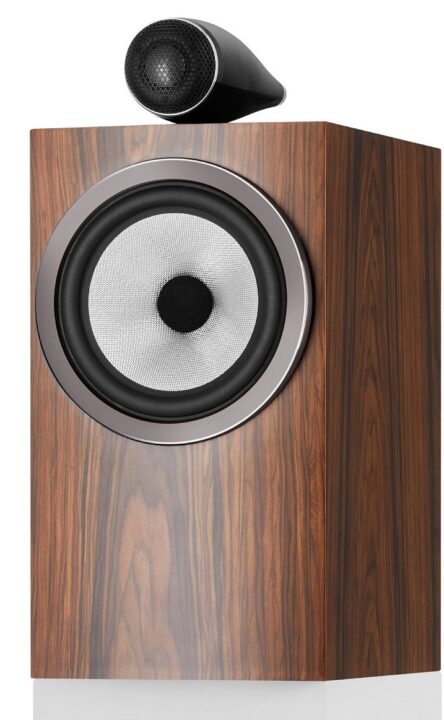
The Nautilus tweeter that protrudes from the top of the cabinet — a defining feature of the B&W 800 Series — is, in the CM1, housed within the cabinet in the conventional manner, and right away this tonal character is somewhat different from that of the traditional Nautilus tube. It is fundamentally a metal dome tweeter in character, yet there is a smoothness and a certain moistness to its resonance, and the way sounds blend and spread into the space around it is genuinely beautiful and pleasing. Rather than the sharply focused, tight stereo three-dimensional imaging of the 805S — with its precise, taut soundstage extending behind the speakers — the CM1 places primary emphasis on the musical beauty and sense of resonance that the metal materials produce, including reflections from the metal plate surrounding the tweeter, with monitor-like precision following along at an appropriate degree. Because the tube does not protrude externally, the way the soundstage opens up is closer to that of a typical small bookshelf speaker, and in terms of three-dimensional imaging and focus it does not achieve the same rigorous precision as the 805S. Placing the two side by side, one can clearly perceive how effective the external tweeter design is in terms of sound diffraction and reflection.
 ポチップ
ポチップ
As for the Kevlar cone woofer handling the mid-bass range — this has been very carefully refined, and the overtly Kevlar-ish character of previous B&W speakers has been admirably eliminated. When compared directly with the CM1, the 805S reveals quite a pronounced dry, papery colouration characteristic of Kevlar, and until one acclimatises to that tonal quality it does introduce a certain sense of discomfort. Regarding driver integration, the 805S gives the impression of a highly coherent presentation centred on the high-speed tweeter, with the Kevlar woofer working hard to keep pace — whereas with the CM1, despite the fundamentally different tonal characters of the tweeter and woofer, there is a sense of unified cohesion centred on the midrange, and the frequency balance sounds more natural than the 805S, visually as well as aurally. The 805S naturally extends further in both the bass and treble, offering a wider overall bandwidth — but across the middle frequencies that cover the core of musical sound, the CM1 has an openness and approachability, and there is an allure to the tone itself — a beauty-of-tone quality — that draws the listener in.
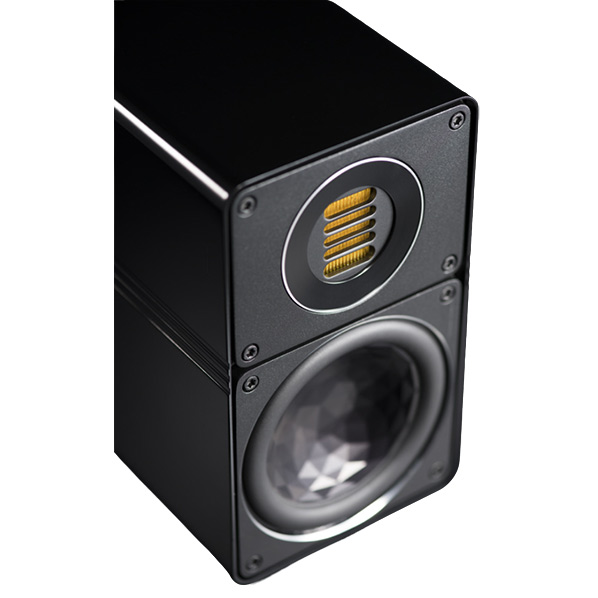
In terms of resolution, the 805S is naturally superior. But the CM1’s information retrieval is likely to rank at the very top among current small bookshelf speakers under 200,000 yen. In terms of a rival that could compete with the CM1 on monitor-like sound quality, the only one currently featured in my sidebar that comes to mind is the ELAC CL310.2 JET. There are of course various other options when it comes to musical expressiveness and tonal appeal — but as a speaker that excels at faithful, balanced reproduction of recordings without shortcomings in either direction, the B&W CM1 strikes me as being fully capable of serving as a reference and benchmark among current budget speaker offerings.
The B&W CM1 is priced at one-third of the flagship 805S, yet monitor-grade quality at one-third is not what you get at all. Despite its compact size, with its Nautilus tube, Kevlar woofer, B&W-commissioned Mundorf capacitors made in Germany, and the extensive period of listening tests it underwent, the CM1 has been brought to a superb finish as a well-rounded, all-round exemplary speaker. To put it the other way: the product quality and sound you get for around 100,000 yen represents extraordinary value — this is a level of quality where a retail price of 200,000 yen a pair would not seem at all unreasonable — yet all of this can now be had for the equivalent of ten 10,000-yen notes, and one can almost picture the pained expressions on the faces of rival manufacturers. Almost. For someone using a speaker from another brand, it does inspire a mildly envious and conflicted feeling. How fortunate one would have been to use a speaker like this as a student. It also occurred to me, in passing, that with a speaker this accomplished now in the lineup, the future raison d’être of the company’s own DM600 Series might now be in question. For anyone considering that range, I would strongly encourage you to stretch the budget a little further — thinking ahead — and secure the CM1 instead.
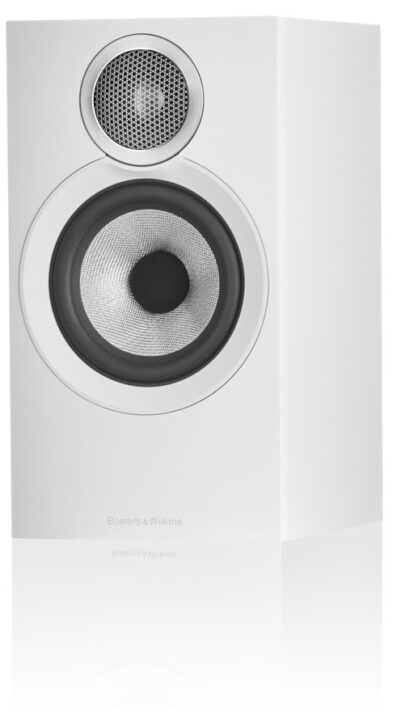
If I were to name a weakness, it would be in the bass… The 13 cm woofer size means that truly low frequencies do not appear to extend very deep, but given the visual size of the cabinet, the sense of bass weight is more than sufficient, and even with orchestral music there is no obvious feeling of constriction in playback. This represents perfectly adequate reproduction for typical room sizes in Japan, and in a flat or apartment where one cannot really turn the bass up loud, it would actually be rather convenient.
That said, if one keeps listening for a while with an ear deliberately tuned to finding faults in the sound quality, there is a faint muddiness in the bass register — a slight insufficiency of information — that begins to nag. It is hard to describe precisely, but where the Kevlar colouration has been removed, a somewhat dense, blurred quality from the MDF cabinet seems to take its place — not box resonance as such, but more an impression that the cabinet is so rigidly inert that it paradoxically dulls the tonal response. This quality — generous in description, a woody texture — is a character I sense in quite a few of the recent European manufacturers’ lower-priced multi-line AV speakers, and because of this particular trait the response to fine distinctions of tone in deeper layers of the music becomes somewhat vague. One cannot help wondering whether B&W has at last begun to consciously follow current trends in sound character. However, with the CM1, the moist resonance and beautiful tone of the tweeter end envelops the whole, which helps prevent the overall tonal character from tipping too far toward a monotone, dry presentation — and the result, taken as a whole, is a well-balanced sound.
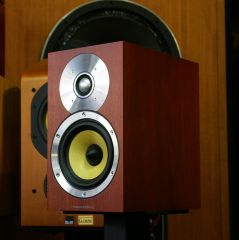 Now, regarding the CM1 Goto-tuned version, which I auditioned in direct A/B comparison with the standard model — this is considerably good. The slight sense of informational insufficiency mentioned above, and the marginal softness in sharpness that one notices when thinking of it as a monitor speaker, are both improved, and images within the soundstage line up with a crisp precision. By comparison, the standard model has a wider sense of stage spread that comes from the sound sitting a little higher, but the imaging focus becomes soft and vague and rather unreliable. If one has built a system around the CM1 and then wants one further step up in tautness and monitor-like information retrieval and descriptive power, adding the Goto tune will reliably address that remaining shortfall. Personally, I feel the easygoing CM1 is better suited to tuning than the already highly strung 805S taken even further. For users who want to listen to all of their music through this one speaker — rather than using it as a bedside or study sub-system — the tuned model in particular should deliver a higher overall level of satisfaction.
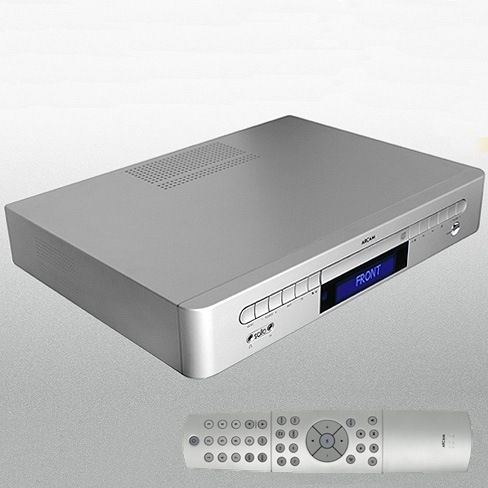
At the bold price point of 100,000 yen, this is a speaker that achieves a remarkably high level of sound quality even by the standards of serious purist Hi-Fi, and it seems likely to respond well to careful positioning and accessory optimisation — so there is certainly room for the kind of enjoyment that a dedicated Hi-Fi enthusiast would appreciate. Ideally, an amplifier somewhat exceeding the speaker’s price would be the better match for the CM1, but it would seem to hold its own with a budget amplifier in the tens-of-thousands-of-yen range as well. Alternatively, for those who do not wish to go too deep into Hi-Fi knowledge but simply want a quality lifestyle audio setup, combining the CM1 with something like an ARCAM SOLO Neo receiver and simply placing it in a corner of the room should, with no further effort, deliver a quality of sound that easily surpasses the output of any half-heartedly assembled separates system.

Of course, compared with other speakers in the same price bracket from rival manufacturers, the CM1 can be called a highly precise, monitor-like speaker without any reservation — but compared with the company’s own 805S, it is fair to say that its standing as a monitor speaker does fall one level short. In that sense, the CM1 has its natural limits. And besides, if a speaker at one-third the price sounded the same, the owners of the 805S would have every right to feel aggrieved. In marketing it is sometimes described as a mini 805S, but although it shares the Nautilus family, the CM1 represents a different vector from the traditional B&W 800 Series — a new B&W sound character in its own right — and the key to evaluating it fairly is to resist treating it as a budget version of the 805S, and instead to consider whether one can embrace the CM1’s own sense of moderation and tonal balance. At its core it is a type of speaker that is faithful to recordings rather than one that impresses through expressiveness or individual character — yet equally it is not a cool, resolution-obsessed monitor. When comparing it with other speakers, I think it is worth keeping all of this clearly in mind and reflecting carefully on what it is you actually need. That said — if I were offered a straight choice between the 805S and the CM1 right now, I would almost certainly choose the CM1. As a sub-system it is more appealing both aesthetically and sonically, it already has more quality than one could feel comfortable relegating to sub-system duty, and yet unlike the 805S it is not a money pit when it comes to positioning and partnering equipment, with no risk of fraying one’s nerves through endless trial and error.

Auto Translated by CS4.6


List of comments (8)
どうしても記事の影響を受けるので個人レビューを書く前にその機種の雑誌記事は読まないようにしています。という事で、レビューをうぷしたので今オーディオアクセサリ誌120号の冒頭にあるCM1レポートをやっと読んでます。はてさて、びくびく。。
Y氏の批評読み終わりました。クリスティアン・ペテルセンという若手のエンジニアが作ったそうで、おおーこれは印象が当たってる。ちなみに試聴時のバスレフポートのチューニング様スリーブの有無は知りませんでした。スリーブがあること自体知らなかったです_| ̄|○
音の印象についてはピアノや室内楽~以降は同感。てかプロの物書きは流石に聴き方が細かくて凄く勉強になる。但し805Sとの比較については確かに雰囲気は似てるけど、実質似て非なる物。CM1と805Sでは音場の精度がまるで違うと思います。全体的なバランスの良さは同感。音楽性はどうだろう?私には割とふつーに思えました。
凄いですね、気になりますね。ケネス・グレンジもかつてTOTOのキッチンをデザインしてたので好きなんです。付け足そうかな。。。
bydさんこんばんは。ケネス・グランジではなく、ケネス・グレンジ氏なのですね。ググってみたのですが、色々な企業と仕事をされていて、インダストリアルデザイナーとしては有名な方のようですね。その他にも書き下ろしで誤字脱字の嵐だったので一通り訂正しました。まだ間違いが潜んでいるかもですがご了承をm(__)m
ダリのロイヤルタワーと比べてどうか~?となると、私ならロイヤルタワーが欲しいかなぁ。特にクラシック中心のリスナーさんで、しかもオーディオをある程度追い込む手腕がある場合はDALIの方が相応しいと思います。でもVSメヌエットの場合なら私はCM1が欲しい♪
ただ、恐ろしいことにアーカム・ソロの他に、AUDIO ANALOGUEのPRIMO或いはENIGMAとか、LINNのCLASSIKでもいいや、こういうデザイン重視のコアでサクッとシステムを組んだ場合でも、CM1を持ってすれば30万以内で舶来クオリティの上質なピュアオーディオシステムが組めます。なんというか、ライフスタイルオーディオの核心を突ける。BOSEやJBLでなくこんなシステムをさり気なくリビングや書斎の傍らに置かれると、通だなぁと一目置いてしまう感じです。
そうですか、TOWERはそんなにいいですか。ほかと比べたことあまりないもんで。私はクラシックファンながら今はクリアでエッジの少し利いた音に憧れ中です。
そんなに良いというか、クラやボーカル限定で単に私の好みというか…(滝汗) タワーの使いこなし面はウィーンアコースティックT-2と一緒っぽく個人的に追い込みやすそうってのもあります。ROYAL TOWERに限らずDALIはアコースティックな甘さが持ち味ですし、反面B&Wはアキュレートさが身上ですから、ソースに対する対応力も含めて音質対決をしたらTOWER≦CM1かも。ただ、スタンド込みでRoyalTowerとCM1はほぼ同クラスですし、音質の違いに通じる外観の好み@リスナーの人柄で選ばれると案外間違ないかなと。
ロイヤルタワーは後藤チューンをするとクリアでエッジの少し利いた音になると思います(悪魔の囁き。。。)非可逆ですのでかなり勇気は要りますが。(デメリットとして甘さから来るアコースティックな広がり感や開放感は減少すると思います。)
http://homepage3.nifty.com/audio-goto/dalisp.htm
>T-2と一緒っぽく個人的に追い込みやすそうってのもあります
具体的に追い込みとは?チューンはしたくないですね。。
具体的なスピーカーのセッティングの遍歴はウィーンアコースティックのカテゴリ別ページに追記するつもりなのですが、続きを半年以上放置したままだったり。。。(滝汗) 気が向いたときにトップに上げず隠し記事的に少しずつ追記するつもりです。
セッティングやアクセサリの取捨選択の話なのですが、T-2で苦労した分タワーも似たようなスピーカーですのでそのノウハウが使えるかもと。(具体的には…bydさんのシステムを具体的に存じ上げませんので提案しにくいかも(^^;)CM1はVienna AcousticsやB&W800系と違い、この辺さほど苦労せずに済みそうな割とカジュアルなおおらかさのある音でした。
実は私もT-2とTOWERは購入時検討しました(タンノイのスターリングも)。どちらも温もりのある音ですよね。