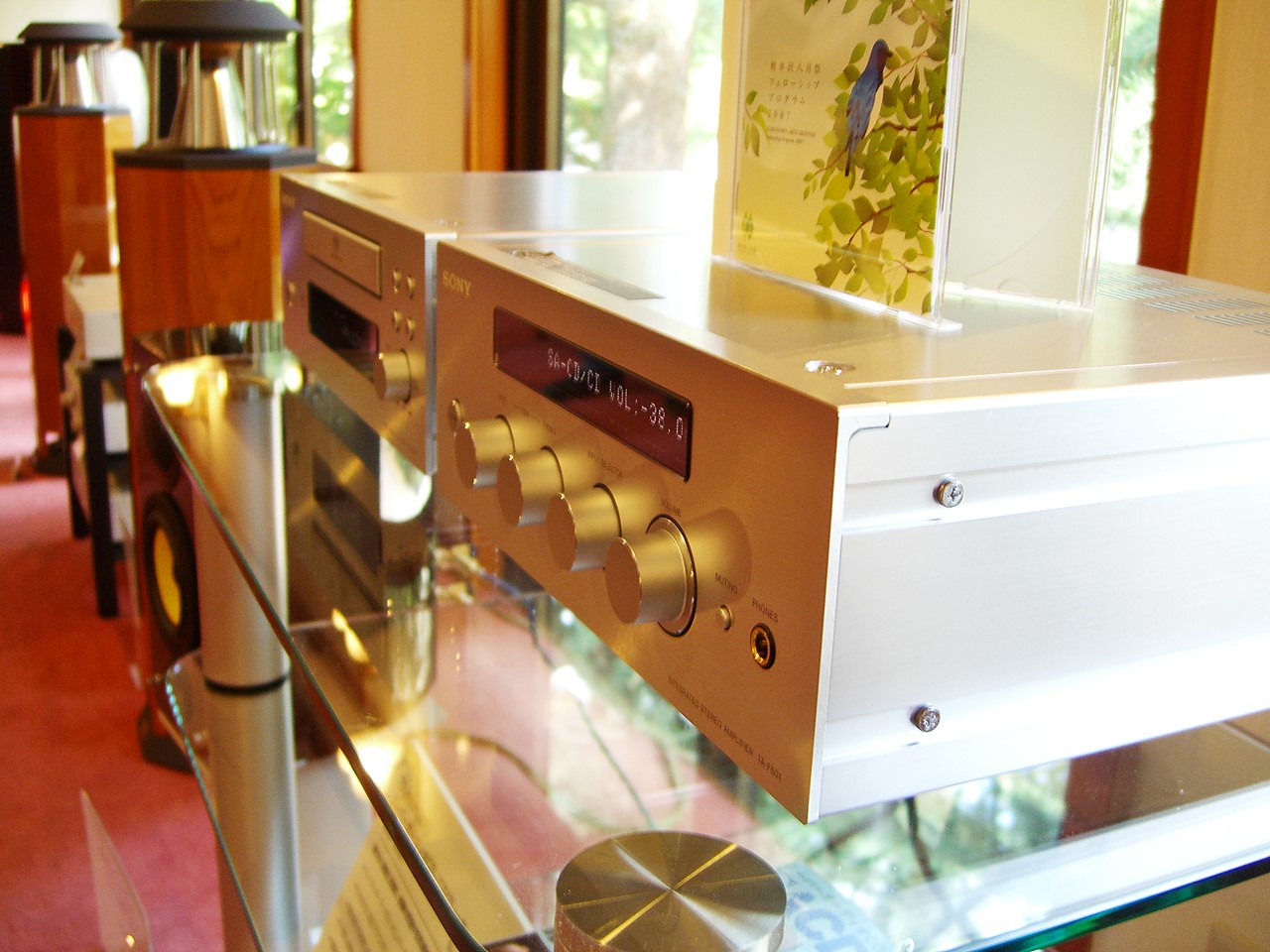
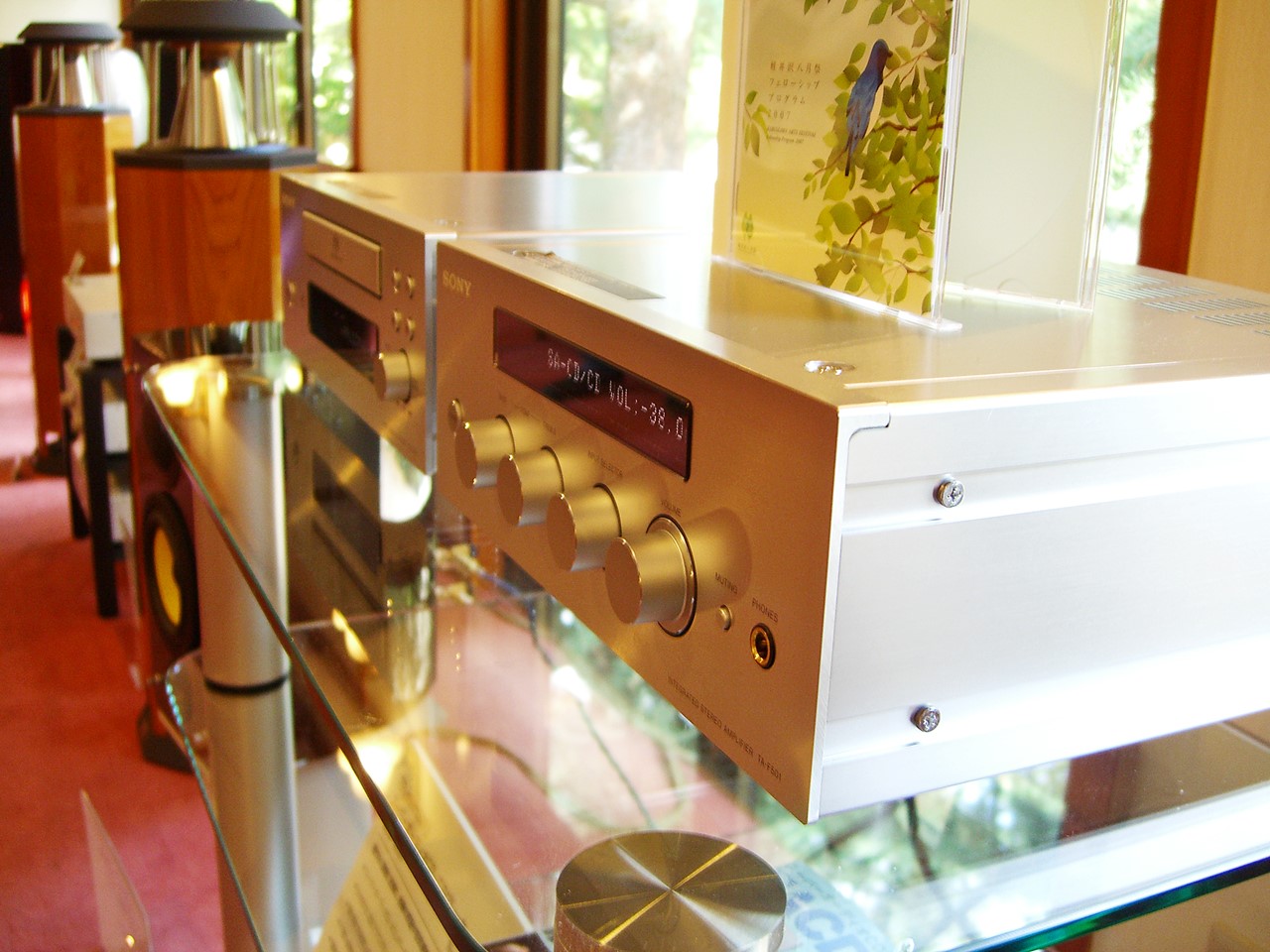
So, what shall I write about today… Well then, here is a listening report on Sony’s compact hi-fi product, the System501 — a little late to the party, admittedly. This covers the digital amplifier TA-F501 featuring S-Master PRO, the SACD player SCD-X501, and the bookshelf speaker SS-K10ED that comes as the matching set.
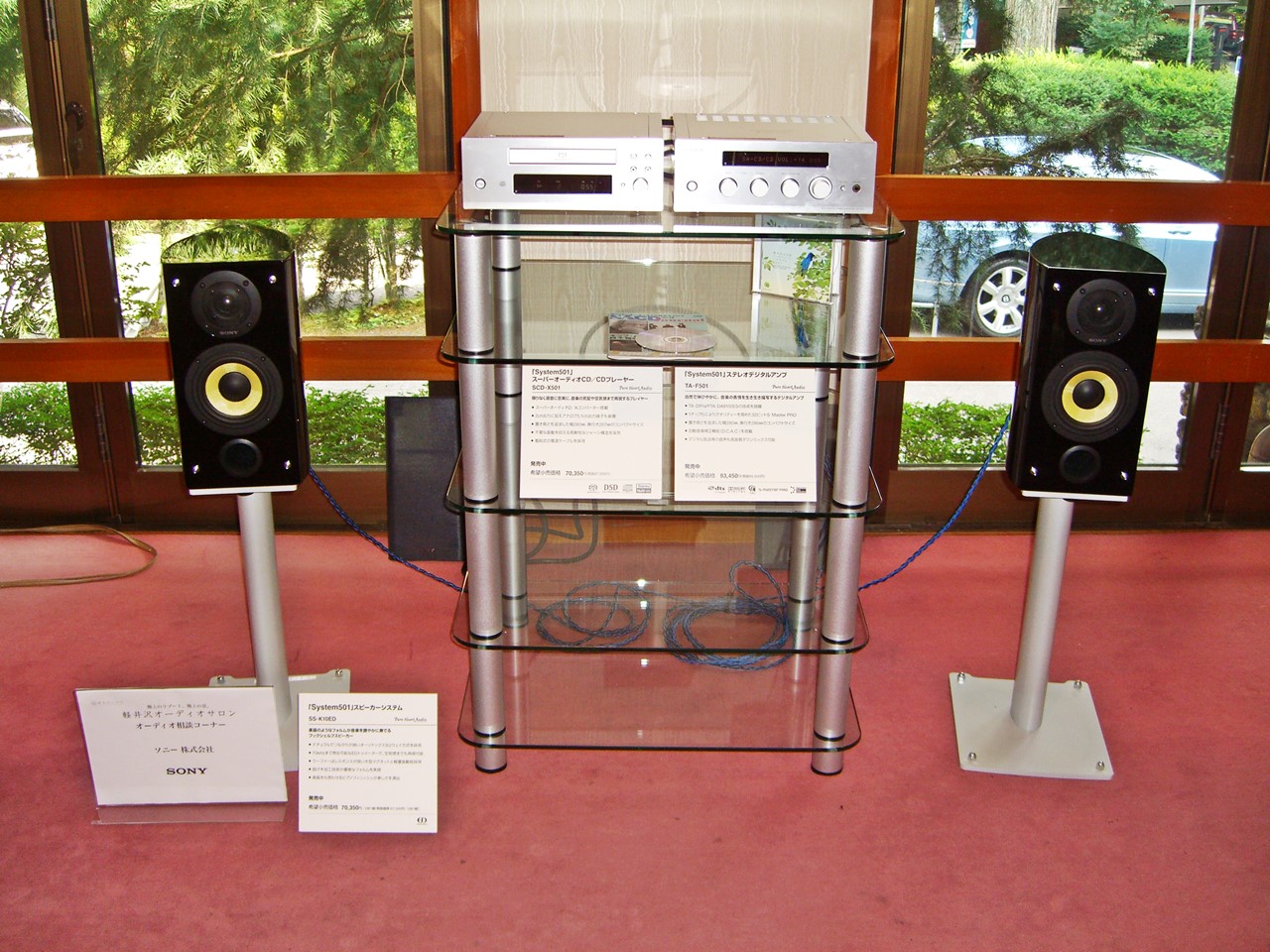
When the System501 was first announced, I remember thinking “what on earth is this” at its uncompromisingly square, no-nonsense design. Seeing it in person, though, it has a certain quality to its finish that makes it look rather good — it may well be a product that loses out simply because it photographs badly. The design reminds me somewhat of the KENWOOD K’s series from a decade or so ago, though Sony’s aluminium panels here feel brighter and a touch more refined. The speakers, finished in a high-gloss piano lacquer, look positively premium. Half-size components though they are, nothing about the build quality suggests entry-level audio gear retailing as a set for under ¥200,000.


 ポチップ
ポチップ
When I listened to this system, the SS-K10ED — the matching speakers — were connected throughout, so I cannot speak to how it sounds with third-party speakers. With that caveat in mind, what follows are my impressions of the system as a whole. There is no shortage of promotional technical literature, of course, but none of that means much until you actually hear the thing, so please bear with me.
The sound of the System501 is characterised, at its core, by a clarity that is distinctly Sony. It is not exactly natural, but there is a freshness to it, with little sense of any peculiar colouration. The sense of range is moderate — bluntly put, it is on the narrow side. Rather than a vast soundstage extending in depth and height, what you get is a miniature-garden-like presentation where small, clearly defined images form between the speakers even at low volumes. Piano, for instance, has a lustrous, evenly rounded quality that is genuinely appealing. In general, this bright, surface-clear tonal character dominates the mid-to-high frequencies, and one does not come away with any strong impression of great information density or sheer quantity of detail.
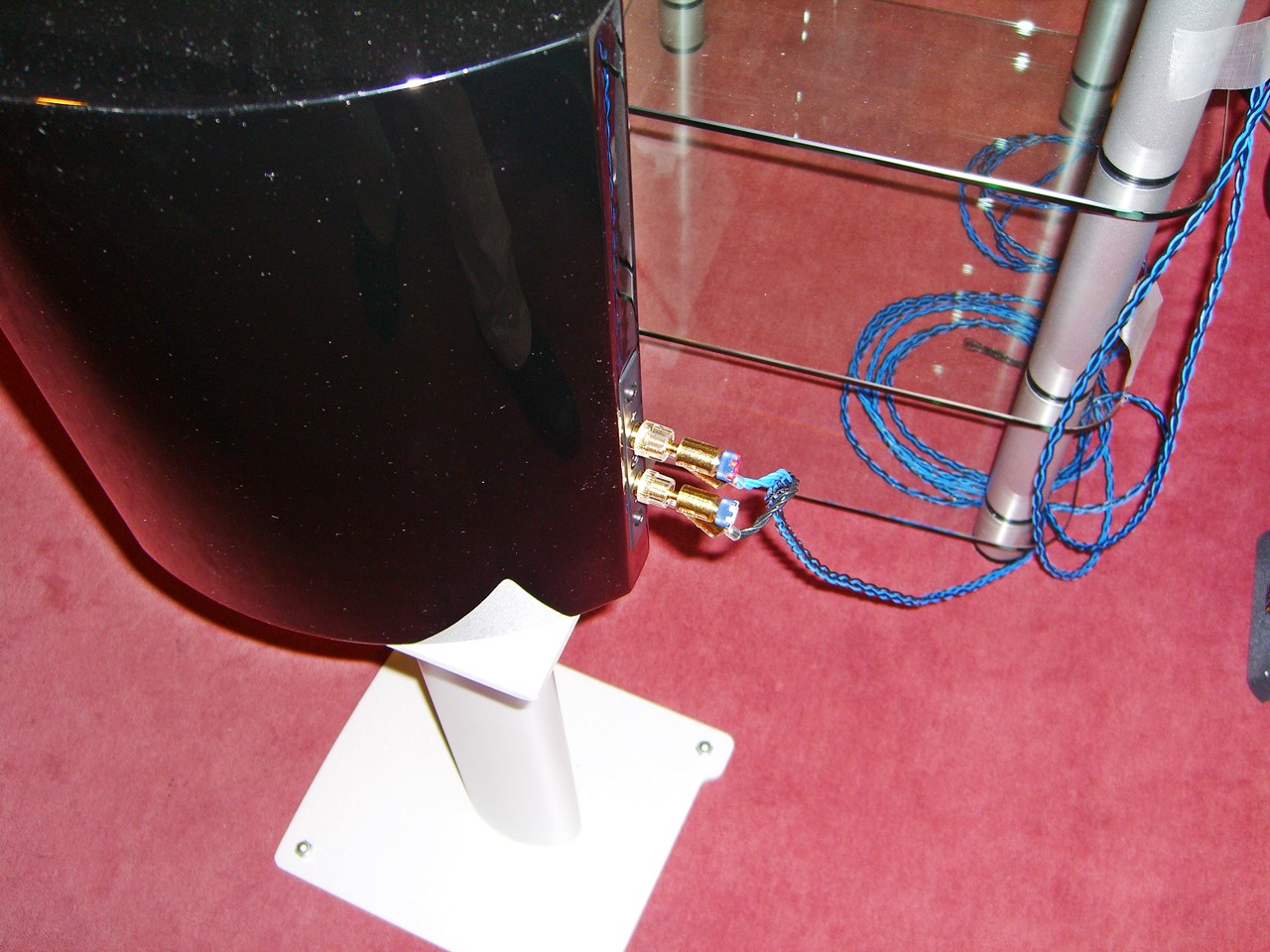
For those seeking greater scale, the larger step-up model SS-K30ED is also an option
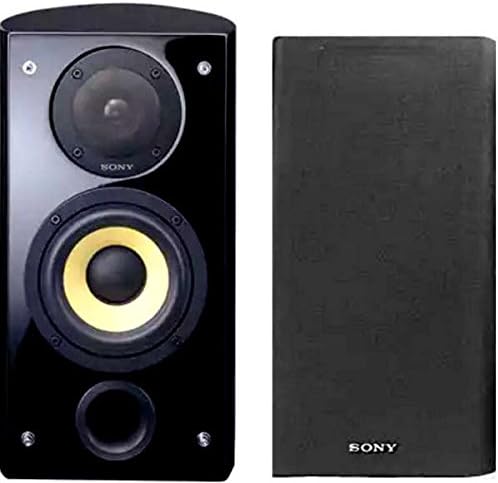
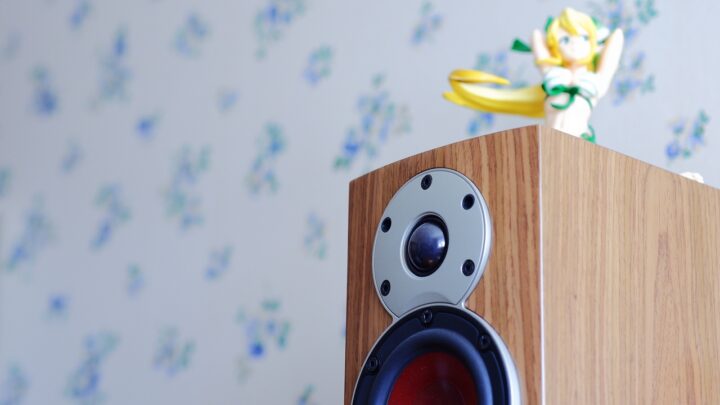
The speaker design is somewhat reminiscent of the B&W Nautilus 805S, with a ship-hull-shaped, rounded enclosure made using bent-wood construction to reduce standing waves. That alone represents a level of engineering not easily replicated elsewhere. At 348 mm in height the cabinets are on the large side for bookshelf speakers, yet the soundstage they produce is a touch more compact than the cabinet dimensions might lead one to expect.
Rather than chasing Hi-Fi virtues such as deep bass, wide frequency range, or sheer information density, the point here is that any CD or SACD, regardless of recording quality, is presented with a consistent tonal character — tidily and clearly. The tagline is “a component system for grown-ups,” and the impression one gets is that the aim has been to build in a practical, usable sound quality — one where listeners coming from a music-lover’s or general-user’s perspective are unlikely to be troubled by compatibility issues with particular recordings, rather than trying to satisfy the more obsessive Hi-Fi enthusiast.
Because the system is well-behaved and unassuming, never pushing itself to the fore, there are inevitably moments — particularly in the inward-looking, micro-dynamic expression that high-end audio can do so arrestingly, or in fine detail retrieval — where the presentation becomes somewhat one-dimensional, as one might expect at this price. That said, it never falls into the trap (one that Sony products occasionally do) of being so lacking in musical communicativeness as to be truly unsatisfying. The charm of this system, I think, lies in being able to enjoy music at a genuinely good quality level, in a relaxed and approachable way, without the audio equipment itself ever demanding your attention.
On first listen it has that digital-flavoured Sony tonality, but the longer you listen, the more you notice something rather un-Sony about it — a warmth and humanity that, true to the Pure Heart Audio tagline, goes beyond what specifications alone can convey. Incidentally, there is nothing particularly striking about it simply because it is a digital amplifier. If anything, a relative absence of colouration may be characteristic of digital amplification in general, but the sound this system produces has been thoughtfully worked out in an analogue-minded sense, and there is nothing dry or clinical about it — it never loses sight of the music in favour of making surfaces shine.
 ポチップ
ポチップ
During the listening session I compared it directly against several high-end systems totalling anywhere from a few million to over ten million yen, and to be honest, in terms of simply and effortlessly enjoying recorded music — as opposed to analysing sound — the balanced, middle-of-the-road sensibility of the TA-F501/SCD-X501/SS-K10ED combination, never straining or overreaching, has an appeal that no high-end model with a more pronounced character in one direction or another can quite replicate. For a music lover with no particular obsession with audio, I found myself feeling that they would be better served putting together a SONY SYSTEM501 rather than venturing into expensive Hi-Fi and becoming hopelessly lost. There are, for instance, certain radio-cassette players and BOSE products that, precisely because of their limited detail and narrow range, can be listened to enjoyably for hours on end with any recording in any room — the System501, I would argue, is a product that retains those practical virtues of more affordable, non-audiophile equipment, while raising the standard of sound quality to a properly contemporary hi-fi level.
The obvious rival is Denon’s PMA-CX3/DCD-CX3/SC-CX303, and compared to that combination, the DENON is frankly the better-sounding system. Both share a Japanese-product character — clear, relatively uncoloured — and in basic personality they are not entirely dissimilar, but in terms of decay and sustain, soundstaging, frequency range, and information density, the PMA-CX3/DCD-CX3 does feel a class above. That said, the System501 retails as a set for around ¥110,000–120,000, while the DENON CX series runs to ¥180,000–200,000 (excluding speakers) — a price difference of nearly double, which makes for a less than entirely fair comparison. Even so, the gap in cost does seem to translate directly into a gap in quality.
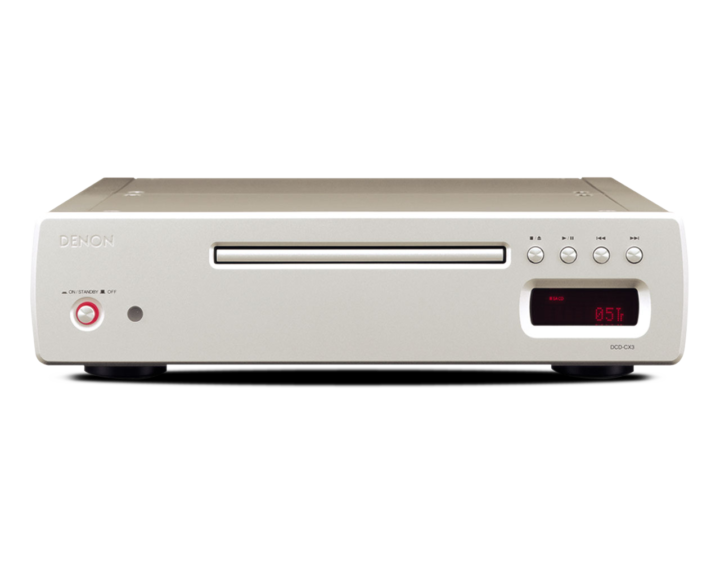
If you are looking for a domestic-brand system for near-field listening at low volumes in a study or bedroom, or as a secondary system, either would serve you well without any fundamental misgivings. That said, the author’s own feeling is this: if budget permits, or if this system is to serve as a main system, go with the DENON CX series. On the other hand, if you already have a full-size Hi-Fi system or home cinema elsewhere, or if you would rather put your money into building a CD/SACD collection than into the equipment itself, or simply if you have no confidence at all in setting up and optimising audio gear — in those cases, the Sony System501 is what I would recommend. The Denon, in all likelihood, is the sort of system that can lead you down something of a rabbit hole when it comes to setup and optimisation.
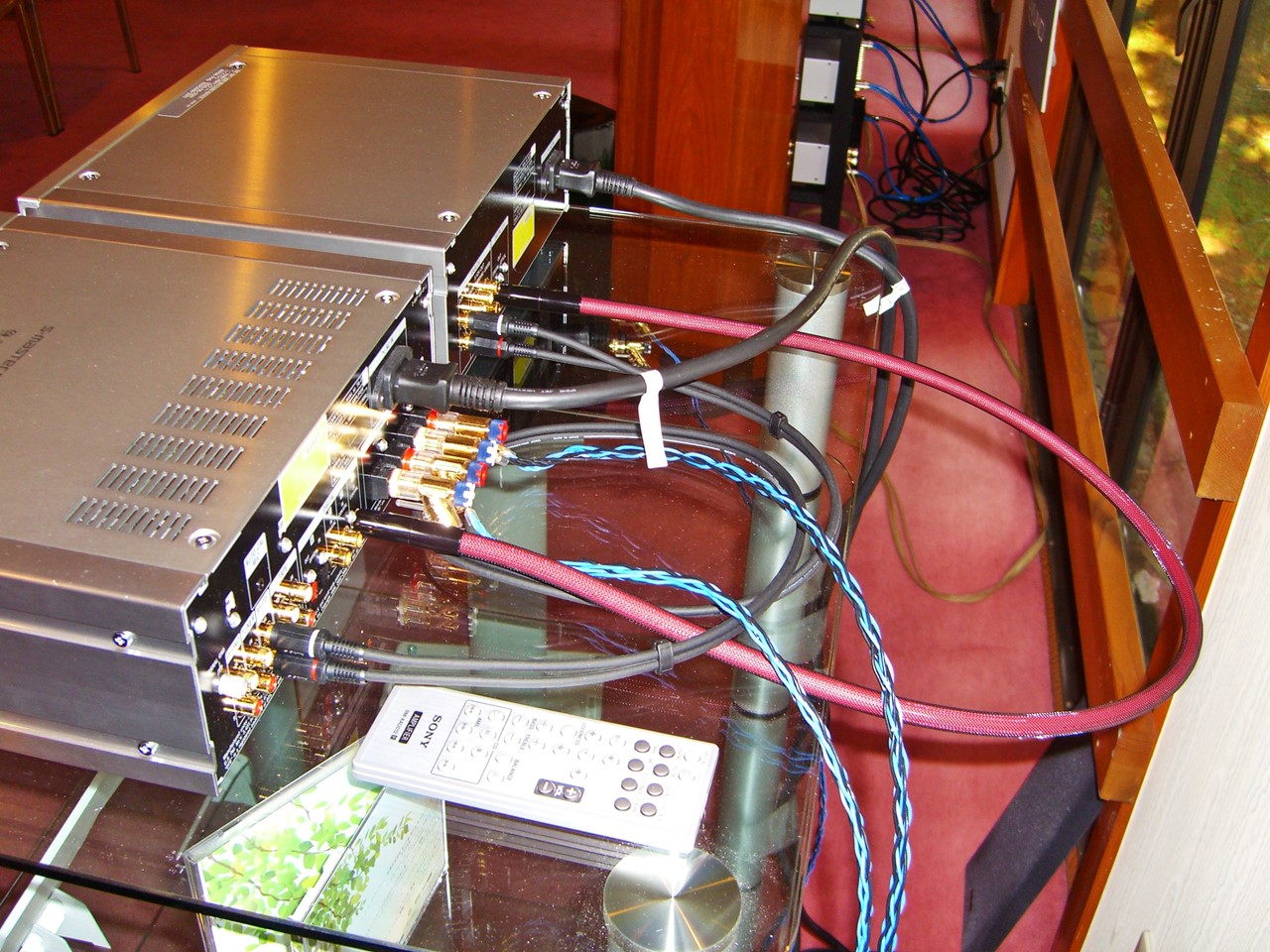
I was not able to check this during the listening session (various high-end cables had been fitted throughout, and I suspect the manufacturer’s representative had also applied room correction in advance), but the TA-F501 does include an automatic room correction function — D.C.A.C. It measures speaker distance, volume, and polarity using the supplied stereo microphone, then applies a 6-band parametric equaliser to correct frequency response and minimise the effects of standing waves and the like on sound quality, thereby improving stereo imaging and ambience and allowing the equipment to perform to its full potential. This feature is designed to make the best of settings that are not ideal for audio — on top of a bookshelf, a chest of drawers, or a bay window ledge, for instance — so that music can still be enjoyed properly in the kinds of constrained, everyday domestic spaces where conditions are far from optimal.
 ポチップ
ポチップ
And then there is the Super Audio CD player, the SCD-X501. At a retail price of around ¥50,000–60,000, it may well be one of the better hi-fi SACD players in its price bracket. To begin with, there was absolutely none of the poor CD-layer sound quality that has been reported of certain Sony models (the review above was conducted almost entirely using CDs). And it seems likely to sound considerably more respectable than a universal player in a similar price range built on a DVD transport. I have not compared them directly, so I cannot say anything too definitive, but — taking into account the benefit of its compact footprint — for someone who cannot quite stretch to a high-end SACD player capable of truly demonstrating what the format can do, yet finds the sound quality of a multi-format player under ¥100,000 simply too much of a compromise, this strikes me as quite an interesting option even as a secondary machine dedicated to SACD playback.

Auto Translated by CS4.6


List of comments (20)
これくらいのオーディオで高音質が実現したら、苦労がなくなりますね。ヨシダエンの CR-D1 のチューン品は聞かれましたか? 高精度クロックを付けても低価格ですね。
Kさんおはようございます♪
>これくらいのオーディオで高音質が実現したら苦労がなくなりますね。
結構皆さん普通に実現されてませんか?…。
私、システム501の価格帯前後で、(私の主観で)より魅力的な音質の製品をいくつか思いつきます。吉田苑さんのチューン品は残念ながら聴いたこと無いのでしたm(__)m
> システム501の価格帯前後で、(私の主観で)より魅力的な音質の製品をいくつか思いつきます。
またぜひ、そうした特集? をして、組み合わせを紹介してください。いつもレスをありがとう。
こちらこそ、いつもコメントありがとうございますm(__)mまた何かありましたら、何でもお気軽に書き込んでいって下さいませ♪d(^_-)
ぱすてるさん、こんにちは。
10年一昔といいますが、ソニーの#5000シリーズについて記事を書いてみました。私は、CDP-X5000のオーナーでもあるのですが、ソニーでも異端的?な突き抜けたモデルに関心があります。ご高覧ください^^?
拝見しました。CDP-X5000とCDP-X3000は、かないまるさんの作品ですね。完成されたデザインですから、この製品を内部をモデファイしながらSONYにはずっと作り続けて欲しかったです。
SCD-X501がCDP-X5000と近似したデザインでしたら10万でも飛ぶように売れるでしょうに。。。イマイチSONYも詰めが甘いです。もう金型とか残って無いのかしら。。。
どうも、早速トラバっていただいてありがとうございます。
そうですよね。でもやはりオーディオも日進月歩なので、新しい形で常に挑戦するということも必要なのではないかと思います。それか、完全に同じ形で、中身をリファインしていく、これが欧米のメーカー流ですね。それも日本ではなかなかできないことなので、日本の大企業がやったら、かっこいいことなのかもしれません。
ところで、このCDP-X5000は、1995年発売、2001年まで販売されていたようです。日本のメーカー品で5年以上もモデルチェンジせずに売り続けるとは、やはり完成度が高かったんですね。
わたしは、最低5年はモデルチェンジしないものがよいと力説していましたが、図らずも、このモデルはそのような性質のものだようです。
ではでは^^?
しばやんさん、是非そちらからもトラックバックお願いします♪
♯5000シリーズと♯3000シリーズにしても、新しいSystem501にしても、カタログスペックには現れない、或いは理論的には証明できない部分にまで切り込んで、聴感上の音質変化を元に色々とアプローチされていますよね。ソニーって理数系の典型みたいメーカーみたいに見えますけれど、中のエンジニアさんは色々な人がいるんだなぁと。
トラバ送っておきました。でも念のため、このURLにダイレクトリンクしておきます。
>ソニーって理数系の典型みたいメーカーみたいに見えますけれど、中のエンジニアさんは色々な人がいるんだなぁと。
そうですね。結構、意外ですよね。でもウォークマンプロやデンスケに対するエンジニアの懲りようをみると、東京芝浦電子工業の職人さん気質を感じますね。単なるハッタリのブランドではないというか、好きな人がつくっているいい意味での日本の企業を感じます。今では、すっかりグローバル化してしまって、売れ筋だけに走っているというか、コアなファンを無視したような言動が見られますが…。
SONYは伝統的に他社より小さいものを作ってなんぼのメーカーですよね。ですから、ソニーらしい良い製品ってのは重厚長大型ではなく、Walkmanも含め、こういったコンパクトな製品にこそ他より良いものが作れるんだと感じます。
pastel_pianoさんこんばんは。ご無沙汰しております。アーカムの記事以来です。あの後レスが付いてましたが、先ほどまでまったく気がついておりませんでした。
ごめんなさいごめんなさいごめんなさいごめorz
さて、前にも触れましたが、TAF501は現在も親のシステムで稼働中です。CDPがDCD-1500AE、SPがLS-K1というのも変わっていません。
この組み合わせ、何も狙ったわけじゃなくて、自分のシステム組んだら、残ったのが、この3点だったのです。
TAF501は、買った直後こそ平凡な音でしたが、慣らしてやると高域が弾み、低音がドスンと出てくるようになりました。デジタルの妙でしょうか、激しいヴァイオリンの旋律も「おっ」と思わせるような応答性があります。『冬』など聞いていると楽しくなってきますね。
親はこれで十分満足しております。
ただ、これ一つでCDP、PC、DVDを繋げていますので、アクセサリーで四苦八苦してるのが現状です。親の話を良く聞いてみると、どうやらONKYOっぽい音が好みらしいのですが(爆)
>go_cat_pinokoさん
お久しぶりです~(*^-^*)
>アーカムの記事以来です。
https://www.audiostyle.net/archives/16029951.html
これですかっ♪私も遅レス大魔王ですし、コメントに気付かず長期放置してしまったことが何度もあります。人のことは言えませんのでお気になさらないで下さいませ(^^)ゝオンキヨーっぽい音ですか・・・なかなか難しいリクエストです(滝汗) ONKYOも製品によって音質が違いますし、今のデジタルアンプ群とそれ以前のアナログアンプでは傾向が全然違います。具体的にどんな点が不満なのか書いていただけると何か提案できるかもです!?(あまり期待しないでね♪)
親を事情聴取した結果、「輪郭がはっきりしていて、高域が五月蠅くなく、低域はあっさりして、躍動感を感じたい」とのこと。
でも低音の厚みが無いと気分がノラないらしいので、抜けの悪い低音が苦手なんだと思います。
ちなみに電源アクセは、
コンセント~タップ間がPSオーディオのXPL
タップがチクマのPS-60HGT
アンプ用がタップに付属してたコード
CDPは標準ケーブル
DVDはゾノトーンのマイスター1.8
SPケーブルはオーテクAT6138
インシュレーターは先日チクマのYUGEN-VCに変更。以前はコルク+fo.QのG51。
うーん、見事に自分が切っては捨て切っては捨てして残った物ばかりorz(マイスター以外は)
なんだか十分良いアクセサリーを使われていて私の提案程度で生きるかどうか・・・(滝汗) クッキリしていて躍動感ですか~。その好みでしたらたしかにA-1VLです。
>「輪郭がはっきりしていて、高域が五月蠅くなく、低域はあっさりして、躍動感を感じたい」
これを全部満たしていると思います。ただ、買い換えではなく既存の機器のままアクセサリーでとなると、まずはスピーカーケーブルの交換は如何でしょうか。
>インシュレーターは先日チクマのYUGEN-VCに変更。
これは私も興味有ります。モニター販売されていたので。モニター価格も中々でしたので躊躇してしまいましたがどんな感じになりましたでしょうか?
チクマのYUGEN-VCは、モニターの報告と大差無いと思います。LS-K1に3点支持で使用
しましたが、音が軽やかになったのが、第一の印象。金属系のインシュレーターということで、高域がキンキンするかと思いましたが、そのような傾向は無かったです。
一本入ったスリットの方向を変えると若干音色が変わるので、意外と懐が深いというか、お得というか。
このYUGEN-VCの出来には親も気に入ってます。ただ、お値段が結構張るんですよね、コレ。付帯音が無いという宣伝文句ですので、機器本来の音色を引き出す事ができるのかもしれませんが、結果好みの音になるかは別問題、という意味では他のアクセと変わりませんねぇ。
インプレありがとうございます。アルミ素材ですので、アルミ特有のパリッとした明るさと軽さがサウンドにどんな影響を与えるのか興味がありました。ただ、上のコメントを書き込んだ次点でモニター販売は既に終了・・・。今更通常価格で購入するのは気分的にイヤです…。
先日、オンキョーのINTEC205の旧アンプが型落ち価格で売っていたので購入し、本日までエージングして親に聞かせてみました。
で、好みとしては好みだそうですが、軽やかさが足りないと言われてしまいました。主旋律が前に出てくるとダメらしいです。
ちなみにYUGEN-VCを導入してから、かなり好みの音に変わったそうです。
SPケーブルはORBのINNOVA TS7を使ってみたんですが、これも「滑らかすぎる」と言われてしまい、どうすればいいやら(汗
CD~アンプ間にはオヤイデのACROSS750RRを使っていて、コレは気に入っているようなので、SPケーブルもオヤイデにするしかないかな、という状況なんですが、何かオススメありますか?
こんばんは~。
父君の要求は既に高度すぎます。そこまで好みが明確で聞き分けも出来るのでしたら、是非御自分でピュアオーディオの世界へようこそ♪みたいなd(^_-) オヤイデで気に入っていらっしゃるのでしたら、同社の同じラインナップ上のスピーカーケーブルを使うのが無難ではないかと思います。あんまりお役に立てなくてすみませんですm(__)m
色々と相談に乗って頂き、ありがとうございました。そんなに予算に余裕もありませんので、親のシステムはボチボチ試していこうかと思います。
安くなったらSCDX501か上位の1200辺りを試してみようか、とも思います。
次は自分のシステムの相談に乗っていただこうかしらんw
とりあえずSONYのお話はここまでとしますね。
>go_cat_pinokoさん
父君のシステムはそれぞれgo_cat_pinokoさんのお下がりという事ですが、結果的にケーブルも含め既にかなりグレードの高い物を使われていますよね。そうなるともう好みと組み合わせの妙の世界ですので、こちらとしても既にグレードアップしている部分のアクセサリーはお薦めしにくいです。入門者さんや初心者さんで、機器付属のケーブルなどを使われている場合には安くて音が良いものでこんなのは如何ですか?とは提案できるんですけれども。。。全く手を付けていない部分として、昨日エントリを上げたレクストのRS-SQUAREなんかは面白いと思います。滑らかすぎる感じは解消するかも知れませんし、高域が伸びてライブ感が増します。あとはスピーカーのインシュレーターとか。
>とりあえずSONYのお話はここまでとしますね。
了解しました。また何かありましたら(別に無くてもw)何でもお気軽に書き込みしていただけると幸いです♪