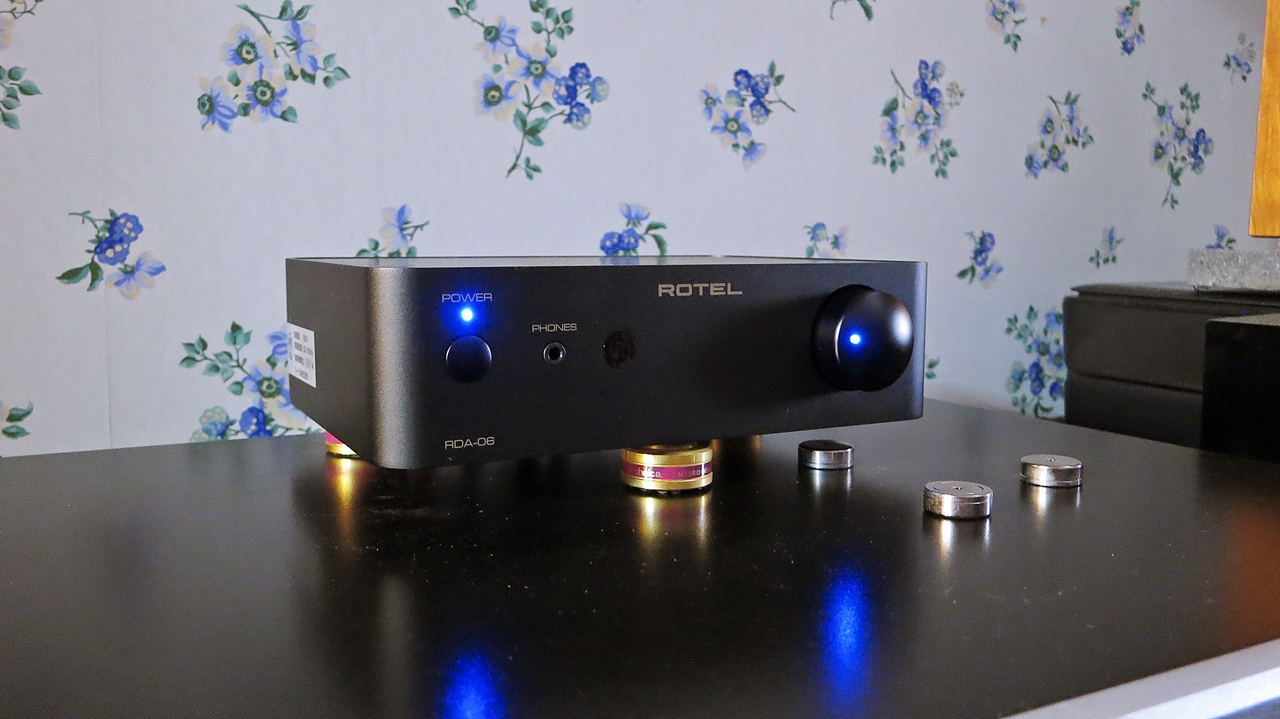
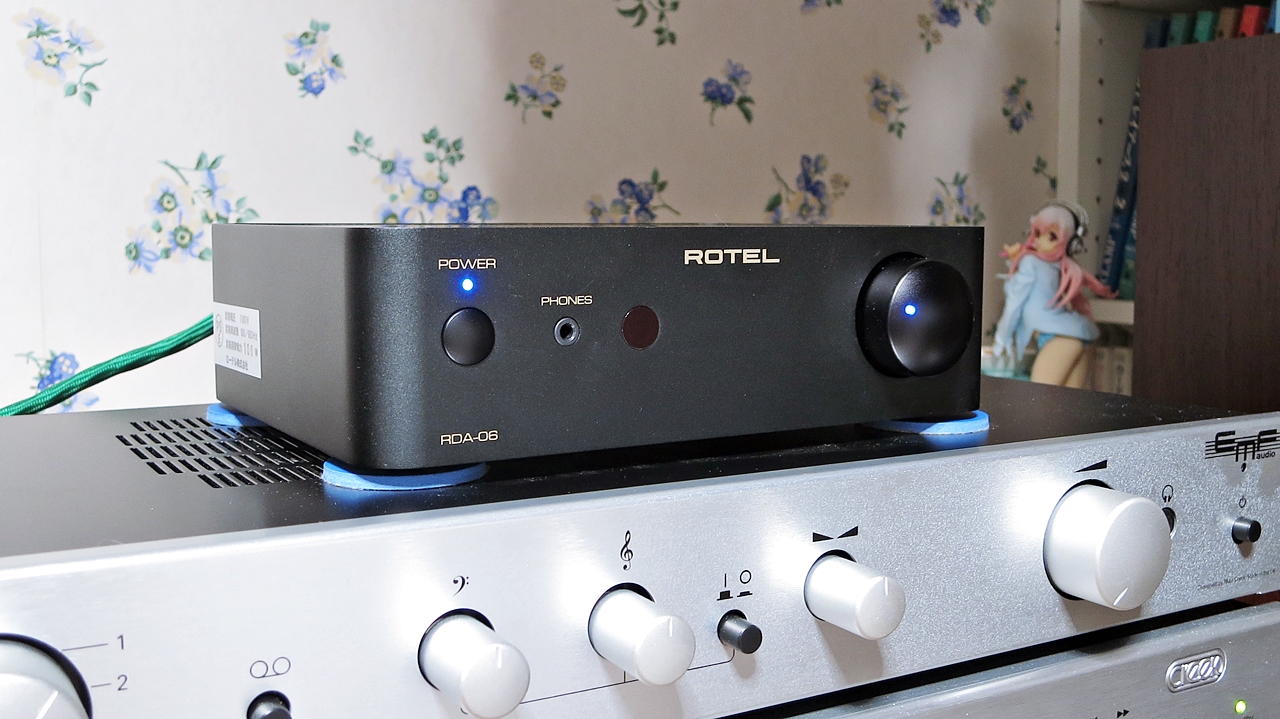
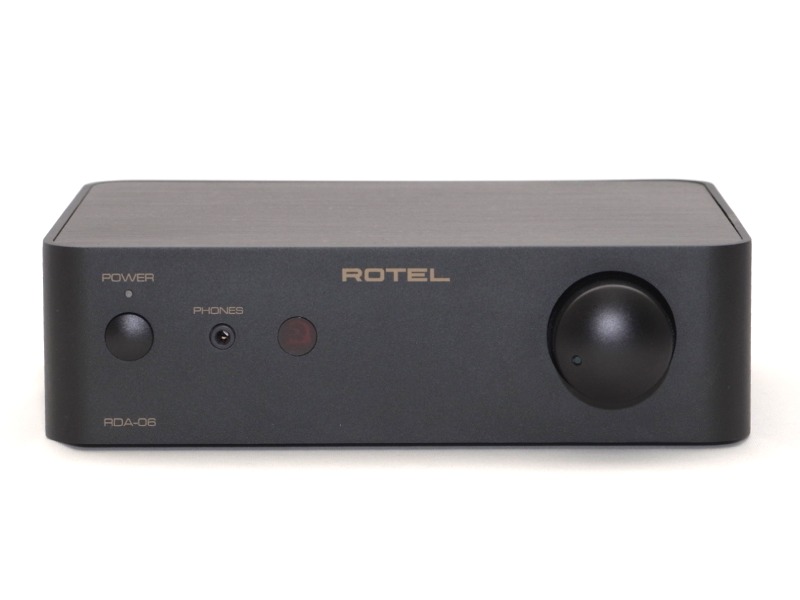
The integrated amplifier ROTEL RDA-06 is a digital integrated amplifier that a friend of mine from Twitter uses in his main system. I am always impressed by the sound of his system — even heard through PC audio recordings — and it just so happened that I was looking to upgrade the digital amplifier in my desktop PC audio setup when a bargain unit of the RDA-06 turned up at a certain shop, and I snapped it up on the spot (this was actually a year ago now). ROTEL itself is a brand I have been familiar with in shops since my teens, and it was always on my shortlist — yet somehow I never quite got round to actually buying one, which made the RDA-06 unexpectedly my very first Rotel.
Let me give a brief introduction to ROTEL here. It is a long-established Japanese audio manufacturer with a history stretching back over fifty years, yet within Japan it is treated as a minor, little-known brand — something of a reverse-import name that only those in the know are aware of. The original designs came from British engineer Tony Mills, and the current chief engineer is Darren Aust; its profile overseas is far higher than at home, and it is in fact a Hi-Fi manufacturer with wide recognition primarily in the UK, Europe, and the United States.
ROTEL: a Japanese product whose main market is in the West
Its sound character, too, points in a very different direction from the Japanese audio equipment that piles on the specifications — it draws on the tradition of British budget Hi-Fi, with a distinctly European flavour. Incidentally, ROTEL was previously based in Machida, Tokyo (now in Meguro), and I once visited the Machida office for a Goto Sogo Onkyo listening event.
ROTEL is also a Hi-Fi manufacturer under the umbrella of the well-known British B&W Group, and has long been recognised overseas as an official partner for B&W speakers. In B&W’s overseas manufacturer demonstrations, Rotel’s separates, integrated amplifiers, and CD players have been the partner of choice for many years — whereas in Japan alone it is MARANTZ, which also handles import distribution, that is used instead. For international demonstrations, ROTEL is paired broadly with B&W’s more accessible speaker ranges, while for the high-end line in North America, CLASSE amplifiers from Canada are also brought in.
If I were to describe the ROTEL sound in a single phrase, it would be something like a clean, unadorned sound with nothing added. It is cool and unfussy, free of audiophile affectation or embellishment; the sound takes on no unnecessary colouration, and the presentation has that intimate, miniature-garden quality of British Hi-Fi that lets you hear music in its natural state even at low volumes. The integrated amplifiers and CD players are lean and delicate; move up to the separates and you get a sense of drive, power, and density that seems hard to believe at the price. Across the range, though, the mysterious self-assertion, colouration, and ornamentation that audio manufacturers so often indulge in are firmly cut away, and the characteristic strength of the sound is that it lets whatever other equipment you pair it with speak in its own voice, honestly and without interference.


 ポチップ
ポチップ
If you are accustomed to the expensively flavoured, high-end-inflected world of audiophile sound, there is perhaps no denying that ROTEL’s presentation can feel almost too plain, a little lacking in allure. Yet precisely because it adds none of those strange biases that audio equipment so often imposes after the fact, it does not get in the way of the music and the performance as they actually are. This restrained sonic tendency is really more a sound for music lovers than for audio enthusiasts. In terms of similar tendencies, I find ARCAM, another British-sounding brand, to be close — though Rotel is even more delicate and slender than Arcam, more straight-and-flat, with a cleaner tonal quality. In recent years Cambridge Audio from the UK has been making a strong showing in this class, but comparing like-for-like products at the same price, I personally feel ROTEL still has the edge.
Rotel’s products tend not to actively project an audiophile sound quality but rather to draw out the music that is already there naturally — though there is a certain shallowness and sense of something missing that comes with being a lower-priced manufacturer, and particularly in the cheaper models the drive is limited and the character leans toward the delicate. That said, rather than adding unnecessary bias in an attempt to wring out the sound, there is a kind of straightforwardness at work — a willingness to accept that what cannot be rendered correctly within the cost of the parts should simply be left alone, without forcing it or papering over the cracks. I feel this is precisely what leads to that cleanliness that keeps you from tiring even after hours of listening, and that makes you forget the audio equipment is even there.
Featuring a Bang & Olufsen ICE Power Class D digital power amplifier module
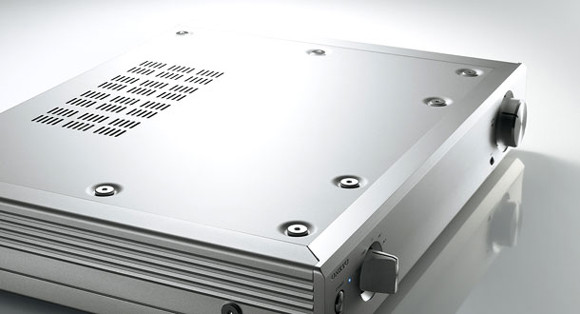
The first compact digital integrated amplifier and headphone amplifier that ROTEL produced was the RDA-06. A compact unit measuring just W200×H58×D184mm and weighing 1.57kg, it won a VGP award in 2015. Unlike the analogue amplifiers that Rotel has traditionally designed and manufactured entirely in-house, the power stage here houses the complete board of the Danish Bang & Olufsen ICE Power Class D digital amplifier module, the 50ASX2 SE.
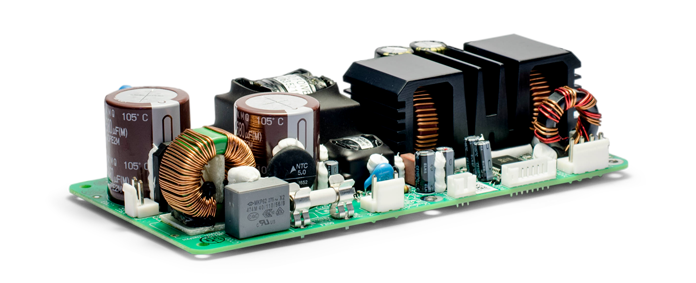
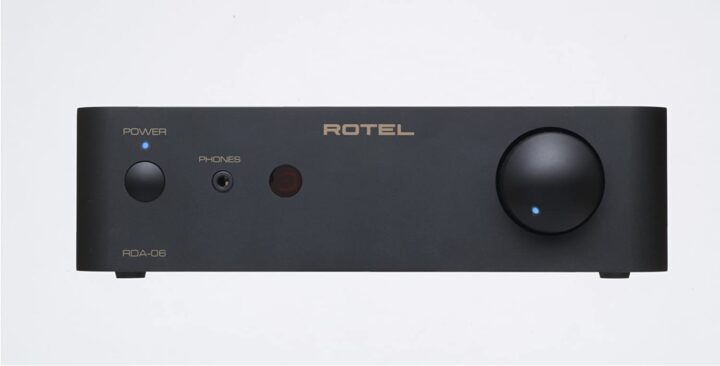
The RDA-06 is an unusual product: ROTEL has taken the ICE Power 50ASX2 SE and fitted it into an original aluminium enclosure, then built around it a compact and simple pre-stage to bring the whole thing together as a digital integrated amplifier. Incidentally, the same ICE Power ASX-series digital amplifier module is used in rival products such as the TEAC AI-301DA-SP and the TEAC A-H01. The top-of-the-range high-output variant, the 250ASX2 SE — rated at 125W×2 into 8Ω and 250W×2 into 4Ω — is the module used in the power stage of the Aura Note V2 by South Korean manufacturer April Music, and in the American digital power amplifier Jeff Rowland Model 125, which costs nearly ten times the price of the RDA-06.
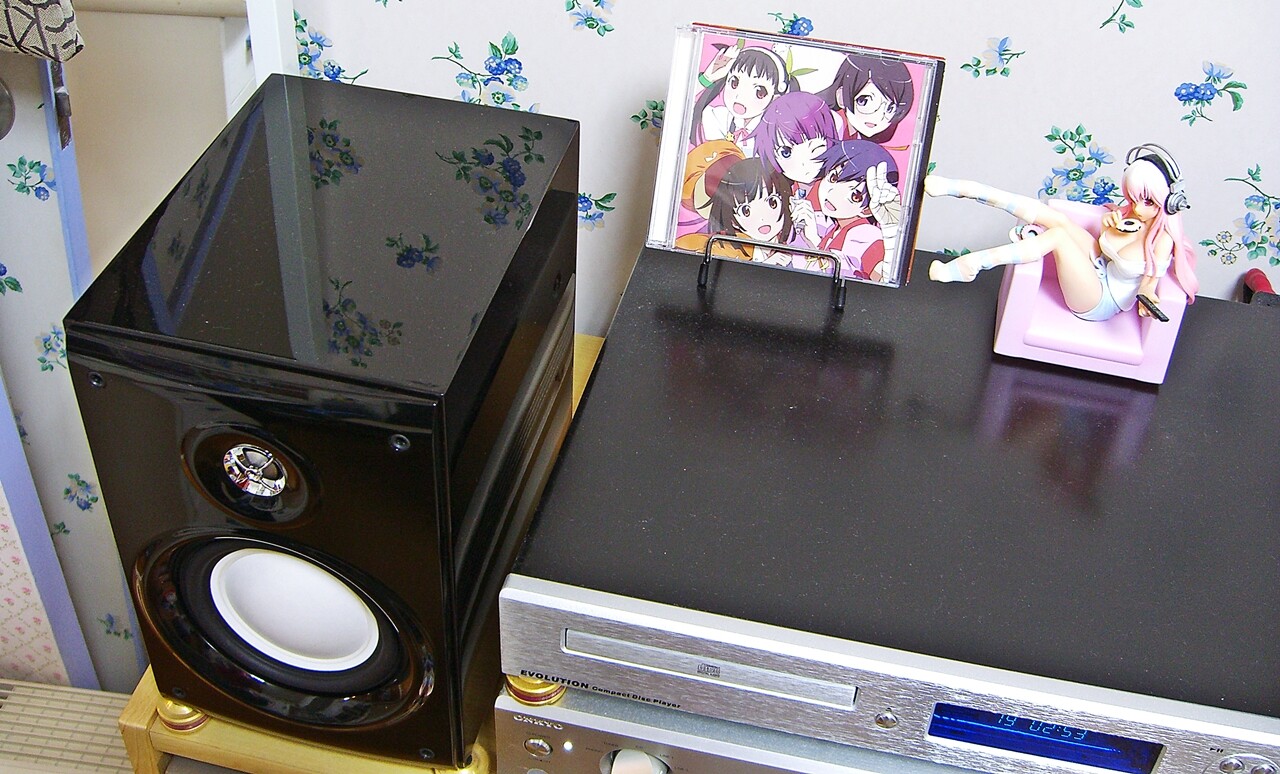
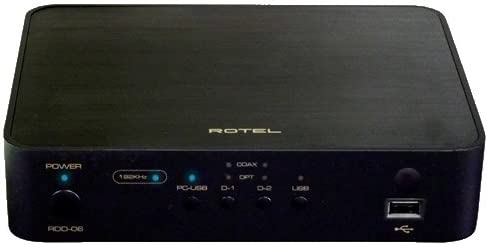
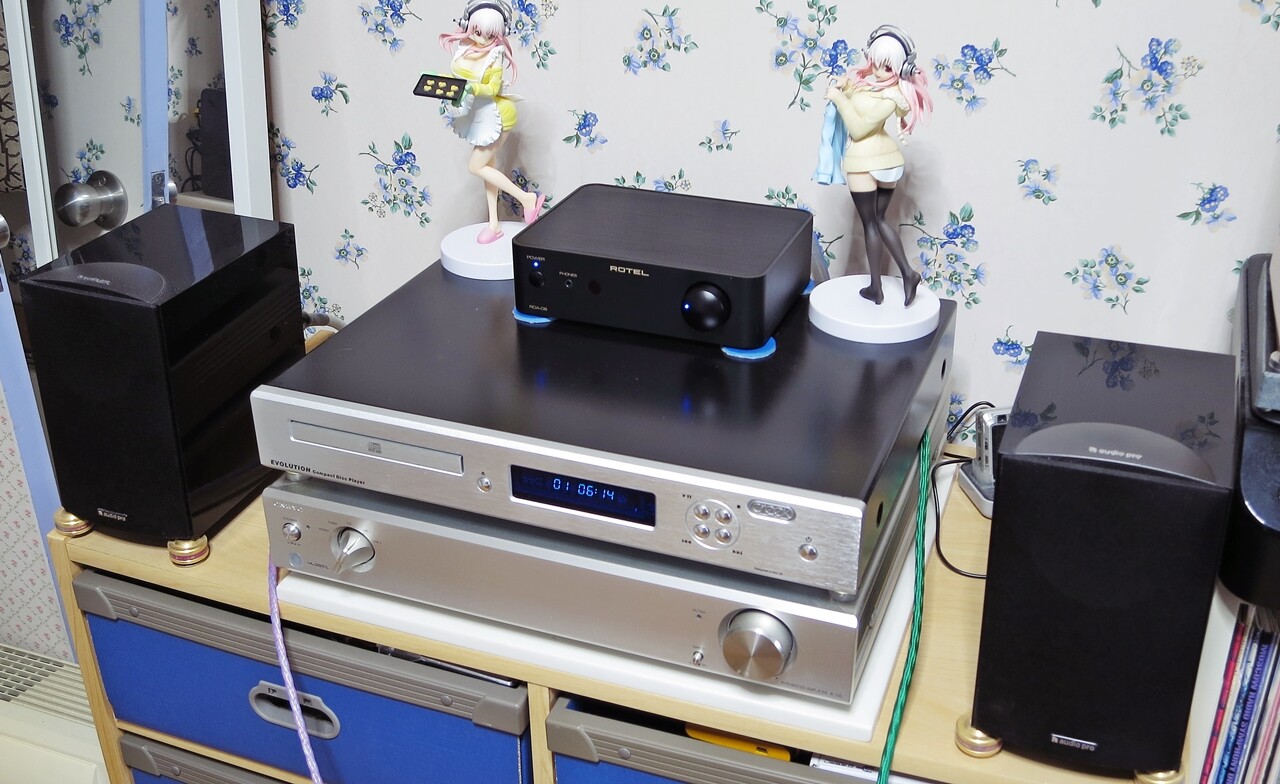
The ROTEL RDA-06 was apparently designed after the fact as a concept to complement the D/A converter RDD-06, which came out first as its natural partner. I had actually been wanting the DAC, the RDD-06, for some time as well — but having stumbled upon the more affordable RDA-06 first, I somehow ended up acquiring the amplifier before the DAC, which is a rather odd way round to do things… Incidentally, a silver finish is available overseas, but the units sold domestically in Japan come in black only. Given that this is a hairline-finished aluminium enclosure of some thickness, I think a silver finish would better show off the premium feel of the aluminium casing, which is a mild shame. The RDA-06 itself is about the size of a lunchbox; its rated power consumption is 100W, though my real-world measurement at normal listening volumes came in at 7W.
ROTEL RDA-06 — sound quality impressions
I have heard ROTEL’s analogue amplifiers and CD players at length in shops over the years, but I never once encountered the RDD-06 and RDA-06 together as a pair, and beyond the occasional room recording my aforementioned friend would post on Twitter, I had almost no sense of what to expect — making this a rather uncharacteristic blind purchase. When I first fired it up at home with some anticipation, the sound was, for better or worse, somewhat different in character from the familiar Rotel sound I knew. The point of commonality, the quality that still feels unmistakably ROTEL, is a lean, cool-running, clean sound.
Conventional full-size ROTEL components have a slightly loose quality to their sound — the kind of low enclosure rigidity you tend to find in inexpensive slim-line British Hi-Fi separates — but in the RDA-06, the boards are packed tightly into a small 3mm-thick aluminium chassis, and the physical rigidity of that enclosure comes through directly in the sound as a noticeable stability and solidity. It is a serious, no-nonsense sound with little in the way of spatial play, and the intimate, miniature-garden quality is pronounced. The ICE Power Class D digital power stage also contributes its effective drive capability: the pinpoint, direct, and perspectival imaging, the wide dynamic range, and the high-speed, flat, linear response to changes in volume level all mark a clear departure from the impression left by Rotel’s previous analogue integrated amplifiers, with their lean, gently floating quality of sound.
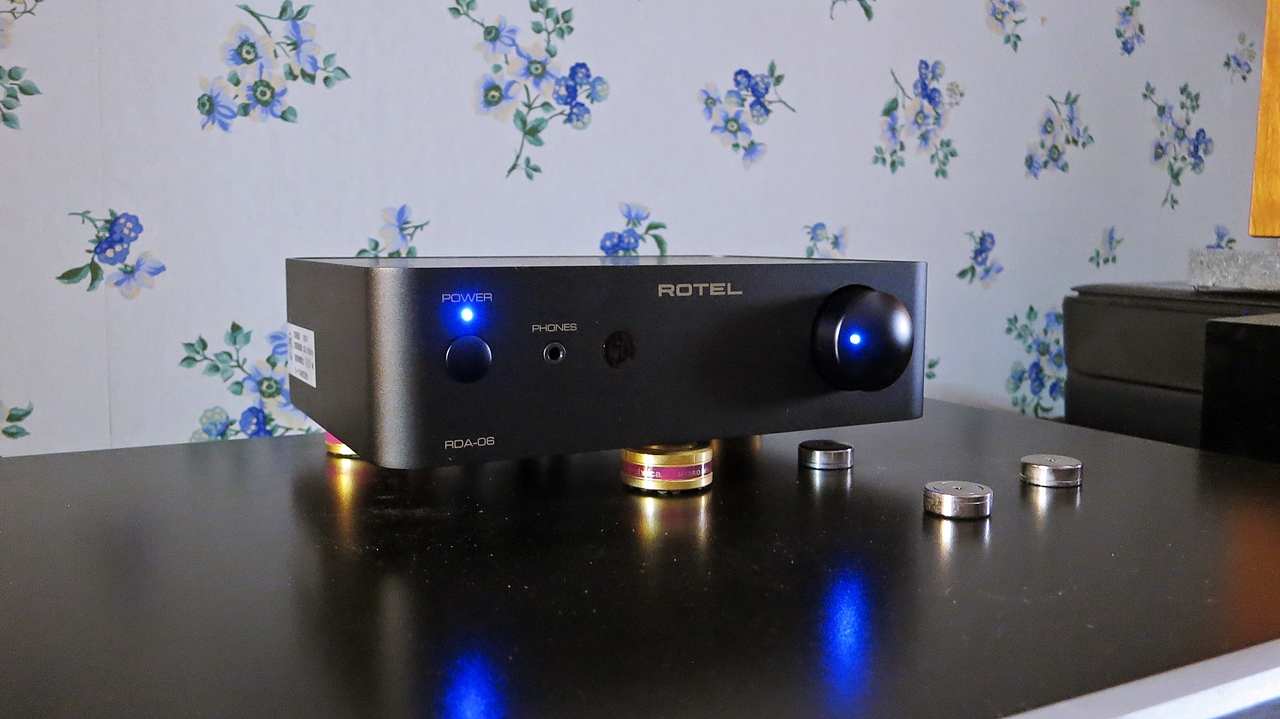
I believe the essential cause of this difference lies largely in the nature of the ICE Power 50ASX2 SE in the power stage, in addition to the high-rigidity enclosure — and particularly in terms of linearity, the way this amplifier delivers its sound is quite unlike any other digital or analogue amplifier I have here, which threw me considerably at first. It offers a remarkable 120 damping factor with 20W per channel, but speaker matching does seem to be quite critical: with speakers that do not suit it, the high frequencies become peaky, and the bass tends to miss the mark and fall short on weight and body.
Which speakers suit the RDA-06?
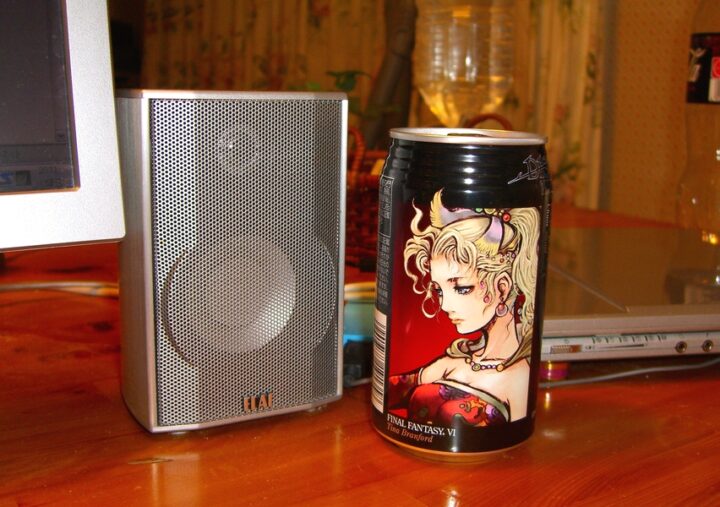
Many small speakers, constrained by their size, require some emphasis in the mid-to-low frequencies, but the RDA-06 maintains a flat response even there, driving from the high frequencies down to the deep bass in a linear, tight fashion with no peaks or dips. Consequently, with speakers that boost the mid-bass while rolling off the deep bass, the low end tends to thin out and the overall balance tips towards the top end — quite noticeably so. Unfortunately, the combination with the ELAC CINEMA 2SAT that I had originally intended to use in my desktop PC audio setup simply did not work: the drive characteristics were mismatched, the high frequencies turned peaky, and I had to abandon the pairing…
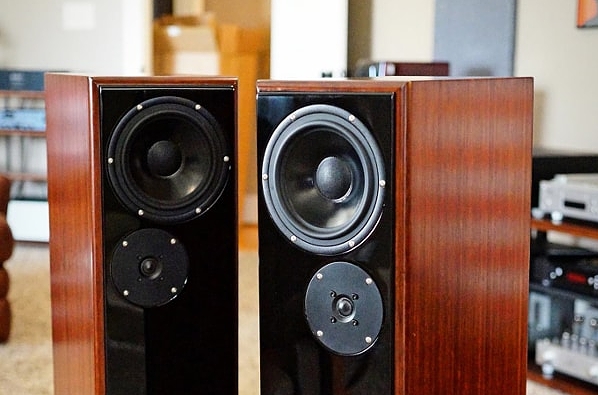
As one can also gather from the Ippinkan review, the Kripton KX-3P/2 is cited as a good match, and the friend of mine who uses this amplifier pairs it with the British ACOUSTIC ENERGY AE1 CLASSIC. Among small bookshelf speakers, my impression is that the RDA-06 is particularly well-matched with those whose woofers can keep up with its bass drive speed — speakers that excel in high-speed response and deep-bass driveability.
 ポチップ
ポチップ
From the midrange upward the sound is plain and monitor-like, with a clean quality, though the amount of detail retrieved is somewhat shallow and the rendering leans slightly to the sensitive side. The pre-stage is built to a near-minimum configuration — a motorised remote-control volume and a high-quality op-amp — with no input selector that might compromise the signal, so the signal path is designed to be exceptionally direct; even so, there is quite enough of ROTEL’s aesthetic to make itself felt. That said, the rigidity of the aluminium enclosure does work against the amplifier in certain respects: compared to other Rotel analogue amplifiers that inherently combine their charms with genuine musicality, this one can seem a touch cerebral and strait-laced, and one has the sense that coaxing it to sing through accessories and the like could take it considerably further…
 ポチップ
ポチップ
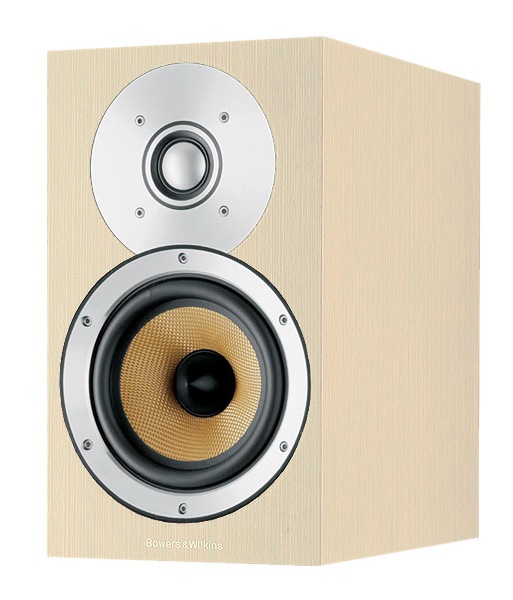
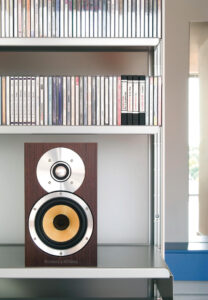
Should one give up on bass weight and instead push the clean beauty of the high frequencies? Or find a speaker that can make the most of the linear bass drive? There is a satisfying sense that this amplifier rewards careful matching and experimentation. I have never actually tested the combination myself, but given that Rotel uses B&W speakers in its design process, the most natural and straightforward pairing — tonally speaking — is probably with a B&W small bookshelf speaker. Among current models, the 707S2, the Bowers & Wilkins 607S2 (the entry-level model in the current small bookshelf range), used older models with yellow Kevlar woofers, or the CM1S2 and CM5S2 that I reviewed in the articles below — all of these seem likely to work well with the RDA-06.
~ Summary ~ Ideally, the matching RDD-06 DAC is something to consider
And really, since the RDA-06 is fundamentally designed as a pair with the D/A converter RDD-06, I have a fairly strong feeling when listening to it that you will not get the sound ROTEL intended unless you use the two together. In other words, because the RDA-06 has been tuned as a partner to compensate for the sonic shortcomings of the RDD-06, the slight sense of “something missing” one feels with the RDA-06 digital amplifier on its own might well be resolved quite easily by pairing it with the RDD-06… That kind of thinking has me musing, ever so vaguely, that I really ought to pick up the RDD-06 after all — but as things stand, the RDA-06 has been displaced from its regular spot in my system due to a lack of space, and is sitting in reserve duty, so goodness knows when that will actually happen…
Analogue integrated amplifier ROTEL RA-1520 — sound quality
My impressions of the ROTEL RA-1520 are based on an in-store audition only, but — ventilation slots across the top panel, an enclosure that could hardly be called high-end in its look, rows of tone control knobs in a classic style that makes one wonder what era this amplifier came from — and yet, coming from someone who has nothing but affection for the long-established ROTEL tradition, all of that is rather part of the appeal… This is still an improvement on the previous model, the RA-1062, with a number of small refinements to the exterior. Rotel’s full-size components were, I believe, offered predominantly in black in Japan for many years, though it seems that now — in contrast to the RDA-06/RDD-06 — only the silver model is available.
 ポチップ
ポチップ
The RA-1520’s sound quality is everything one would hope for from the traditional ROTEL sound — a lean, slightly cool presentation with a slender image, and just a touch lighter on its feet than the other mid-range integrated amplifiers I auditioned alongside it, yet it drives the B&W 805 D3 without any shortage of authority, making full use of the tweeter’s direct linearity and resolution without pushing things to the point of strain, all while maintaining a lively, charming atmosphere and producing music that feels naturally balanced. Among the other overseas integrated amplifiers I compared under the same conditions — the YBA Heritage A100 Integre, the ATOLL IN100SE, the PRIMARE I32, and the PRIMARE I22 (※ all of which are amplifiers I personally hold in high regard) — the RA-1520 is the least expensive, and there is absolutely none of the rich, high-end audiophile colouration or fragrance. And yet it is precisely for that reason that I came away with a genuine warmth for its direct, unaffected sound — the feeling that, for actually enjoying music as music, this might just be the most honest and natural option of all. It should also be noted that the ROTEL RA-1520 has a higher-specification limited edition sibling, the RA-1520S (identifiable by the Special Edition logo on the front panel).
ポチップ
The RA-1520 is by price point a mass-market integrated amplifier that one would not ordinarily pair with the 805 D3, yet it delivers drive and resolution with the higher B&W speakers without any real difficulty — which suggests it would be even more enjoyable paired with B&W’s more accessible speakers. Compared to the RDA-06, the RA-1520 apparently has a lower damping factor — meaning less raw speaker driveability — but in terms of sheer information retrieval, sonic depth, and expressive range, I felt that a well-made analogue amplifier built along traditional lines still has very much the advantage.
Listening reports covering B&W and ROTEL products.
Next time, if the mood takes me, I may write something about getting the most out of the ROTEL RDA-06 in a near-field desktop setup — rambling along as usual, as the spirit moves me.
 Category: Integrated AmplifiersCategory: UK / Bowers & Wilkins (B&W)

Auto Translated by CS4.6