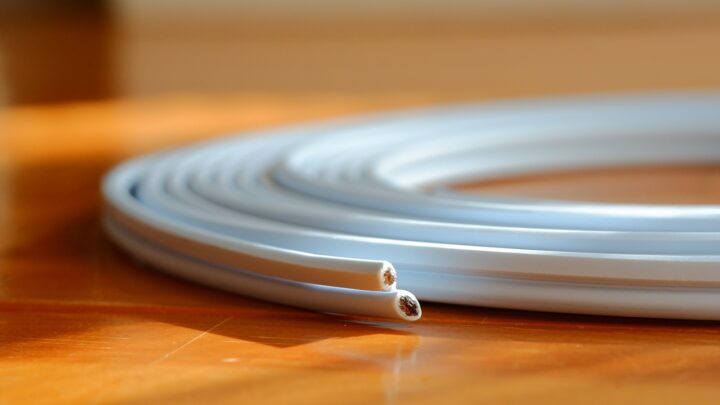
Among Zonotone‘s reel-cut speaker cables sold by the metre, the entry-class range priced under around 1,000 yen per metre currently comprises three models: SP-330 Meister, AVSP-1200Q Meister, and 6NSP-1500 Meister. In terms of positioning, the SP-330 Meister is the pure entry model, while the AVSP-1200Q Meister and 6NSP-1500 Meister differ in construction, so one would perhaps choose between them according to intended use and sonic preference. This time, from within this entry-class lineup, I purchased the Zonotone 6NSP-1500 Meister for use in a secondary system. It is a budget model, but like other Zonotone products, it is manufactured in Japan.
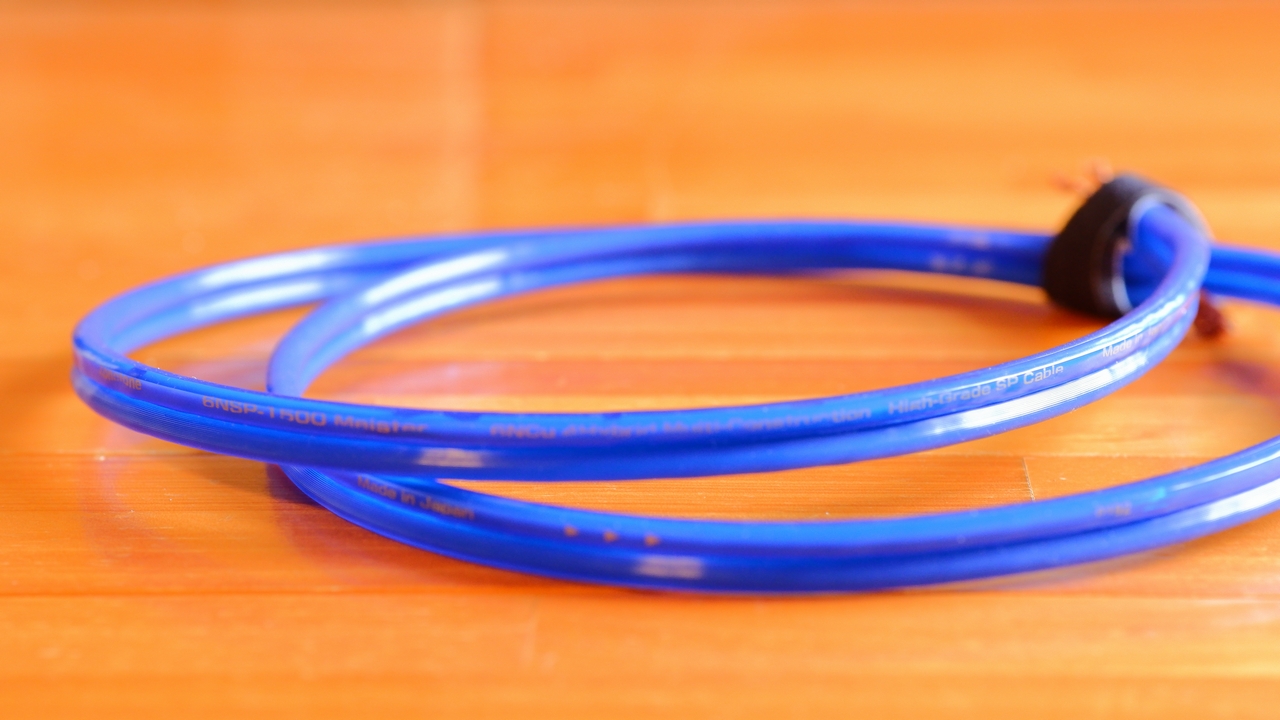
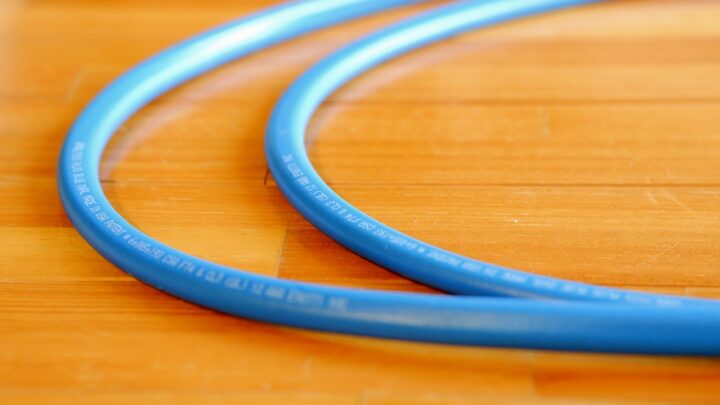
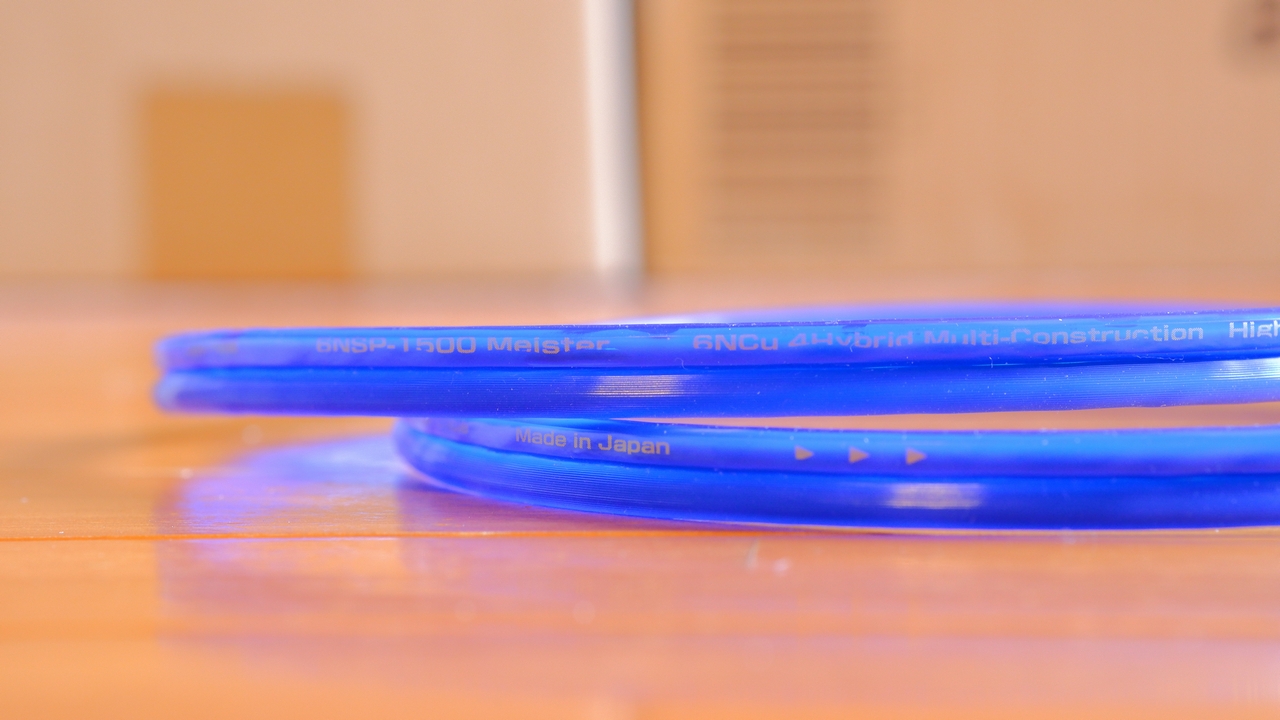
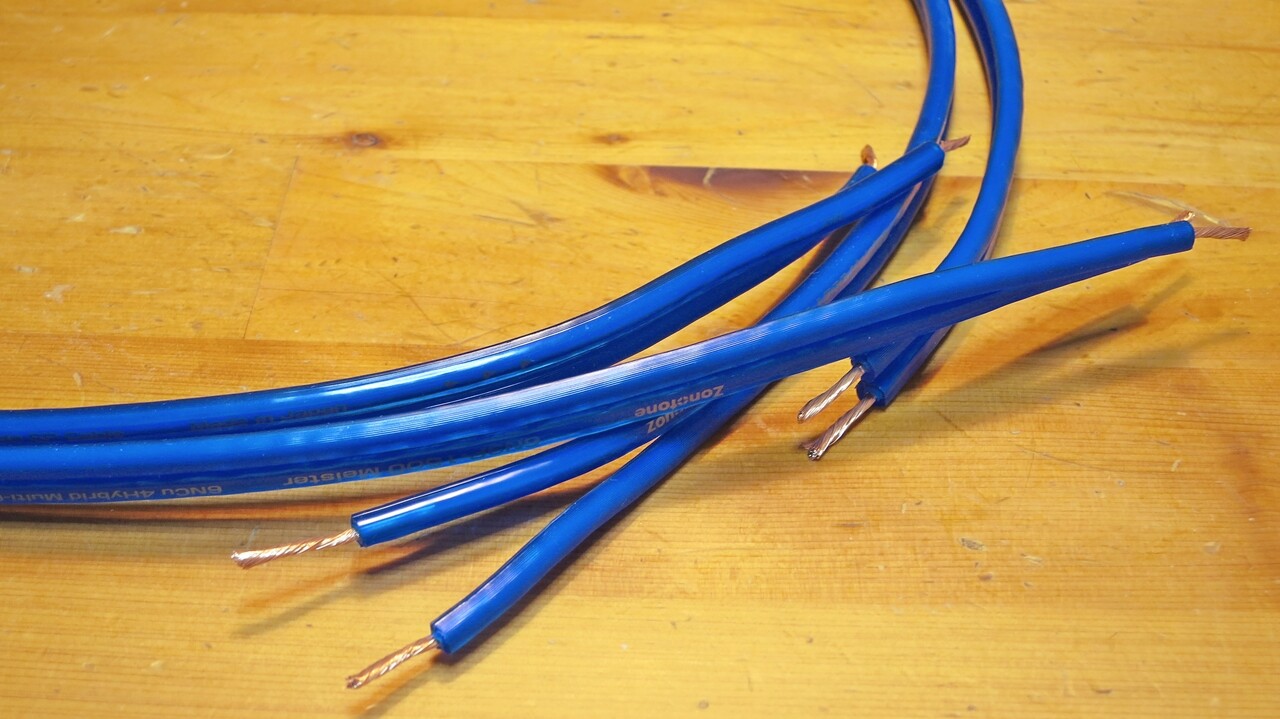
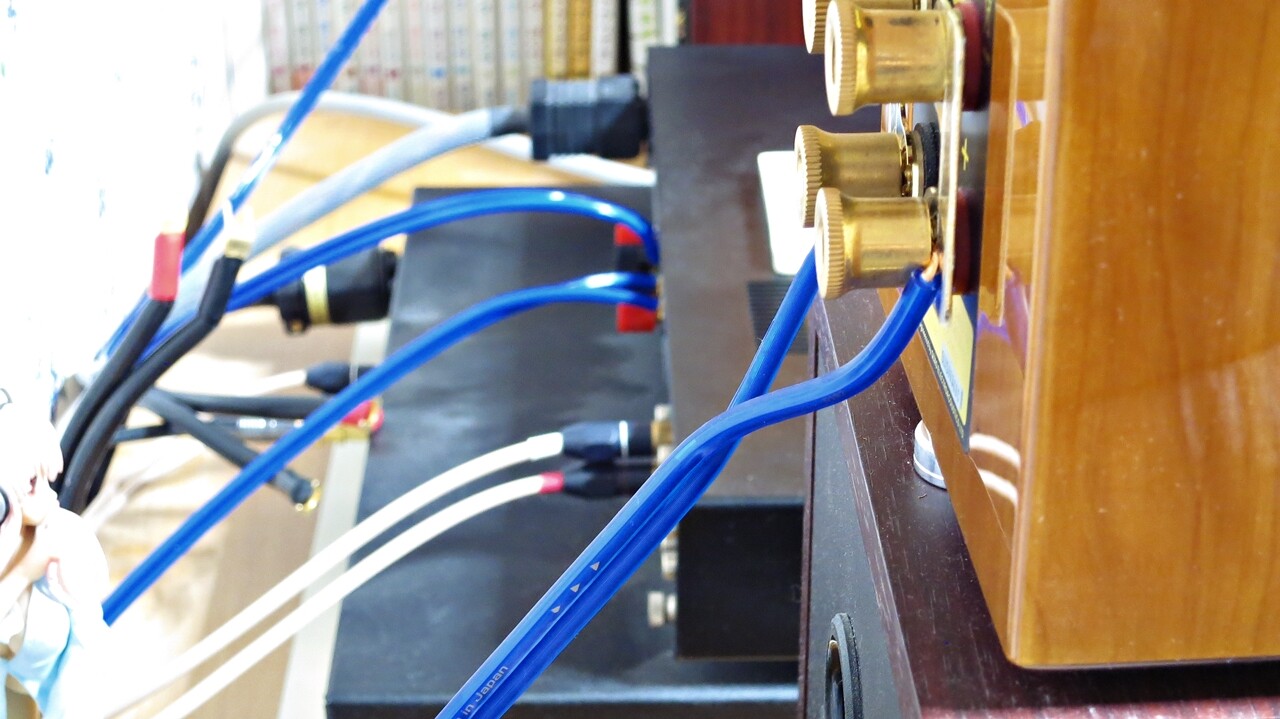
The jacket is a clear blue dual-layer construction of PVC and PE. Conductor cross-section: 1.55 mm² × 2. The conductors employ a four-way hybrid of ultra-high-purity 6N Cu, HiFC, tin-plated OFC, and OFC — a surprisingly elaborate construction belying the cable’s slim appearance. The 4.5 × 9.2 mm sheath is relatively thin and supple, so cable management should pose no difficulties.
Sound quality evaluation of the 6NSP-1500 Meister
This is a speaker cable that combines a supple, smooth character with a hi-res-like sparkling fineness of resolution and information retrieval, while extending the range in both directions — an assertive-sounding cable for its price. There is reach in the upper midrange and treble, with a generally bright quality. The hall tone is fresh and very slightly on the dry side, though stringed instruments convey an image that combines suppleness, an abundance of overtones, and a crisp sense of speed. Piano touch is clear, but the right hand tends to flip over into brightness a touch. Classical piano ends up sounding lively and impulsive, rather like jazz piano.
Compared to the Acoustic Revive SPC-AV that had been connected immediately before, there is more composure here, the eroticism of the midrange is reduced, and the initial impression — to the ear rather than the palate — is slightly dry, leading me to wonder at first listen whether the musicality had taken a step back. But on longer listening, this proves not to be the case at all; one comes to understand it as a well-balanced sound that skillfully reconciles the opposing qualities of a suitably settled soundstage and the brilliance of the performance. The result is high in information and sound quality, yet the expressive character is such that one’s attention slips quite naturally into the music — a testament, as ever, to the skilfulness of Mr Maezono’s tuning. The way it draws you in at this level feels almost like sleight of hand.


 ポチップ
ポチップ
Perhaps owing to its entry-class status, compared to the slightly more upmarket Zonotone power cables and RCA cables I have on hand, the analogue-tinged, jazzy richness and chiaroscuro of the higher models gives way here to a character dominated by brightness and crispness in the mid-to-upper midrange, along with transparency — a versatile and easy-going tendency, with a fineness of surface texture and a quietly refined aesthetic sensibility that stands out.
~ Summary ~
The tagline in Zonotone’s advertising — “a speaker cable that fundamentally overturns the conventional notion of a parallel cable“ — may not be entirely an overstatement. This is not merely a carelessly made budget cable; the Zonotone-specific approach to sound and its genuine sense of taste shine through, making it well suited to elevating the sonic performance of a system that — as entry-class systems often do — lacks a clear musical direction and sounds scattered and thin, and to giving it a coherent musical identity.
 ポチップ
ポチップ
 Category: Ortofon and ZonotoneCategory: Speaker Cables


Auto Translated by CS4.6