Despite the title being “A Recommendation for a Compact Imported Hi-Fi System”, the first system featured happened to be an ONKYO product — but this time I would like to write about the genuinely British Hi-Fi manufacturer Musical Fidelity.
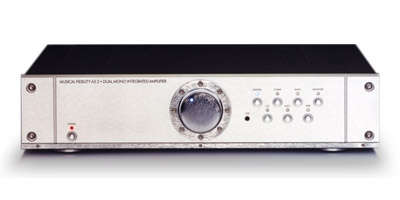
Musical Fidelity is an audio manufacturer born in Britain in 1982, founded by Anthony Michaelson, who is also a clarinettist. The defining characteristic of their sound is, as the name suggests, “musicality” above all else. If you are simply looking for a high-fidelity audio product, there are any number of alternatives to Musical Fidelity. However, if you try to find a system other than Musical Fidelity that brings music to the listener with this degree of realism and warmth — as music, in the fullest sense — many music lovers will find that this is rather more difficult than they might expect.
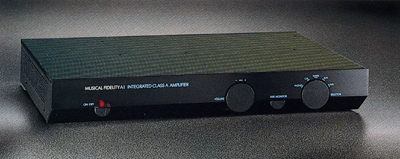
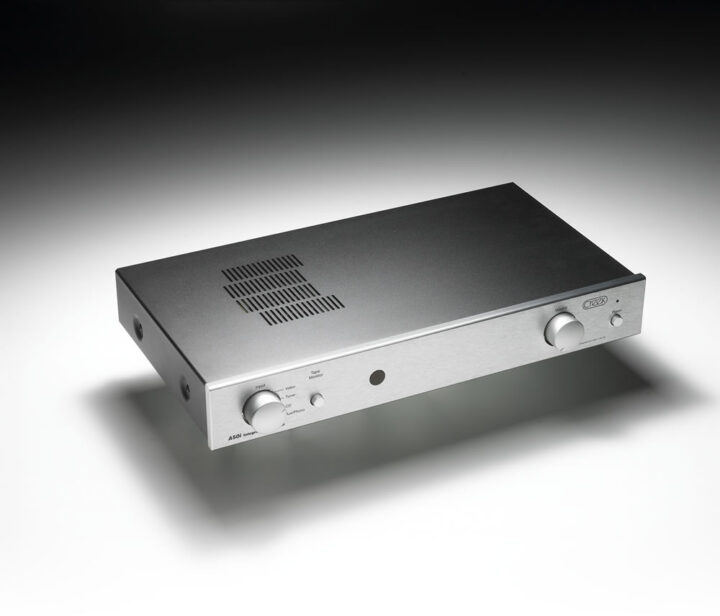
The A1 series — a pure Class A integrated amplifier born in 1985 and produced for nearly a decade thereafter — was something I once owned, in the form of the final model in the line, the “A1 JUNIOR”. Switch it on and after a while the chassis becomes hot like an oil-filled radiator, hence the distinctive design with the entire top panel formed into a wave-shaped heatsink; and on paper, a mere 20 watts per channel (note: its best-selling predecessor, the A1 Reference, was rated at 25W×2). Yet of all the integrated amplifiers I have owned, none has matched the A1 Junior in terms of real-world speaker-driving ability. It even effortlessly surpassed my ONKYO A-917, which was several times heavier and larger. It really is a fine example of why you cannot judge an amplifier’s ability to drive speakers from specifications alone. And the sound that the A1 Junior produced — so full of vitality, warmth, and a live, breathing energy — was, even setting aside certain roughnesses in the sound quality, a distinctly Musical Fidelity world of musical realism that no other amplifier could offer.


I imagine that when Anthony Michaelson was selecting components, he placed musicality — whether music would be conveyed through a given device without being spoiled — as his absolute priority over mere surface-level sound quality, and designed the A1 series amplifiers with listening impressions taking precedence over measured performance. If you approach a Musical Fidelity component purely from the standpoint of sound quality, ears accustomed to the transparency and sharply outlined Hi-Fi sound of certain other products may well find it somewhat old-fashioned and narrow in range, and wonder what on earth this is about. It is true that even at the time it was difficult to call it particularly high-fidelity compared to competing products at the same price point, and the original A1 series was perhaps the most extreme example of this — it would hardly be surprising if today’s Japanese Hi-Fi enthusiast, accustomed to inexpensive yet high-resolution sound, were to find it simply dated and utterly baffling.

 ポチップ
ポチップ
The sound of Musical Fidelity from that era was, so to speak, an analogue-flavoured sound. The perceived frequency range was by no means wide, and resolution was not especially high. And yet, even when playing back a CD, the sound emerging from the speakers had a density and richness of colour that made it feel as though you were listening to a vinyl record. This old-fashioned quality is somewhat different from “live sound” as such, but in terms of fidelity to the intention and breath of the performer, it is unquestionably genuine source reproduction. When I played back my own performances as a musician, I found that those pauses, those expressions, that breathing, that vivid articulation — all of it was reproduced without being spoiled. And that is precisely what makes Musical Fidelity — where Michaelson the performer himself shapes the sound — a truly outstanding reproduction instrument, one that no other manufacturer can match in its fidelity to musical expression.
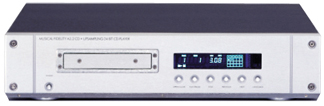
As Musical Fidelity’s products have passed through successive generations, their prices have crept somewhat higher for entry-to-mid-range systems. Even so, the current A3.2 — continuing the lineage of the original A1 in a series of ongoing refinements that form the core of the Musical Fidelity range — has retained the same musicality and driving power while newly achieving a more delicate and nuanced reproduction, and has evolved into a lineup that also matches modern high-quality recordings in terms of sound quality, with a dynamic range that sits naturally within a broader, more contemporary sense of Hi-Fi performance.
Having listened to the current A3.2 series integrated amplifier and CD player, if I were to offer one critical observation on the sound quality side, it would be that — unlike the original A1 series — there is an unavoidable sense that the relative weakness of the chassis translates into a slight lightness in the sound. To put it generously, it is in step with the current trend in modern British sound towards soundstaging over image projection, which is more or less true of other affordable British audio products as well, but it may be said to be an underlying weak point.
 ポチップ
ポチップ
As mentioned above, the A3.2 series is ultimately a system for listening to music, and is built on a set of values distinct from those of audio equipment designed purely to pursue sound quality. Compared to domestically produced equipment that is superficially “high-fidelity”, it is difficult to say it stands out in terms of cost performance when the sole criterion is “sound” in isolation. However, the deep-seated refinement and melodic allure that reveal themselves the more you listen, and the comfortable sense of ease that a warm, living sound close to music brings to the listener, will surely prove an unparalleled blessing for the mature music listener who has grown weary of chasing sound quality through Hi-Fi. Due to rising component costs, it appears that the importer (Heinz & Company) will be revising prices in June 2005, and the A3 series will only be available at current prices while existing stock lasts. The successor model, the Musical Fidelity A5 series, is expected to carry a domestic retail price of around 350,000 yen — roughly double that of the A3 series.

Later addendum: The successor to the A3.2 series became the A3.5, with pricing broadly comparable to before. The A5 series mentioned above sits as the upper tier of the lineup. The design has also been substantially revised, evolving into a more high-end-styled appearance with a greater sense of luxury. The weight and chassis size have grown to match large domestic integrated amplifiers, and compared to previous models it appears to have gained a contemporary Hi-Fi performance to complement its musicality.
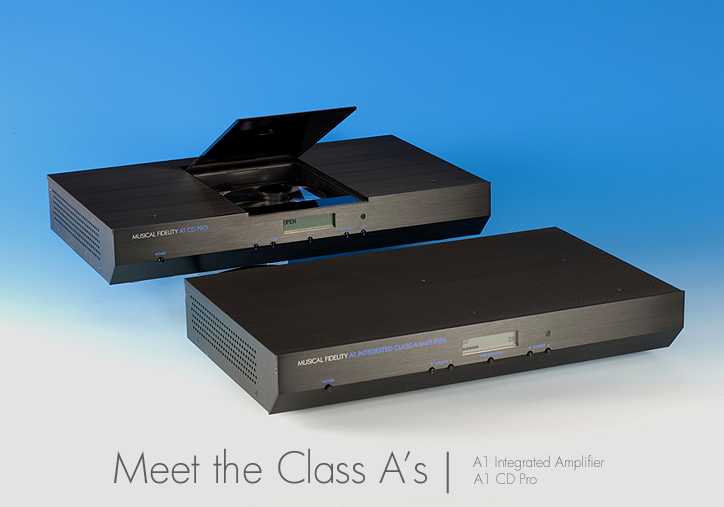
March 2009 addendum: Musical Fidelity has announced a return to its roots with the revival of the A1 series. The new models are the A1 INTEGRATED AMPLIFIER and the CD player, the A1 CD PRO.
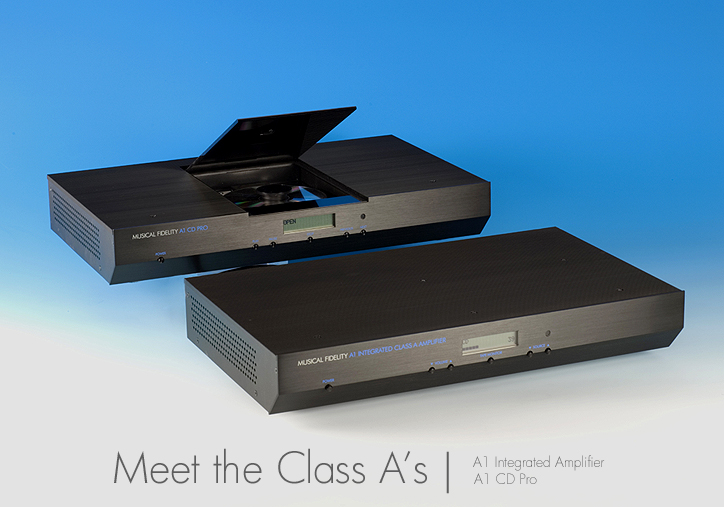
Musical Fidelity had been gradually moving away from the musical vitality and energy that defined the amplifiers of their early years, as the A3, A3.2, and A3.5 each gained a more contemporary, high-fidelity sound — but perhaps there had been demand in their home country too for a revival? The exterior follows the handcrafted look of the original A1 series, though on closer inspection it gives the impression of having been refined to a considerably higher level of precision as an industrial product. Limited to 300 units for Japan. Come to think of it, the A1 Junior was also limited to 500 units — for a niche product like this, that’s the kind of number you’d reach without needing to call it “limited” at all. That said, as a former A1 owner, I really would like to hear this somewhere. I wonder if anyone has it on demonstration.
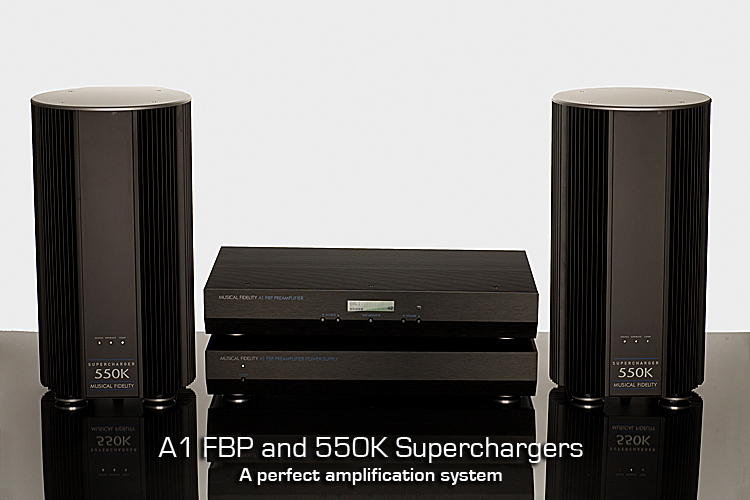
This is the new Musical Fidelity A1FRP. Above is the fully balanced preamplifier A1FRP, below is its power supply unit, and on either side are the monaural power amplifiers, the 550K. What is remarkable is how the design concept of the original A1, born in the early 1980s, has been transformed into something strikingly modern. What kind of speakers would be ideal to drive with this separate system, I wonder?
【PR】
■ Search for Musical Fidelity products on Yahoo! Shopping
■Search for Musical Fidelity products on Rakuten
Auto Translated by CS4.6


List of comments (2)
こんばんは、maidomaidoです。
当方のMF3.2(プリメイン)は、ますます心地よいサウンドを奏でてくれて、うれしいです。
マランツプロのPA01とは、全く異なる音調なのですが、中高域に艶が乗った包み込むような響きが実に音楽的で、こういう音は、MFならではの魅力でしょうね。
さすがに、低域の押し出し感や安定感では、PA01のモノラル使いと比べれば少し力不足の感もしましたので、試しに、MF3.2のプリアウトからPA01に繋いでみたわけです。そうしたら、互いのが良い面が狙い通りに発揮されて、逞しさと優しさを兼ね備えたような、深みと幅のある音になって、驚いています。変な組み合わせですが(爆)、これは意外とイケまっせ。
音色や音楽性をMFで、ドライブ力をMARANTZで補う感じでしょうか(^^)。
単体では正反対ですが、確かにプリとパワーの本来の役目を考えると、
結構理にかなった選択肢かも♪