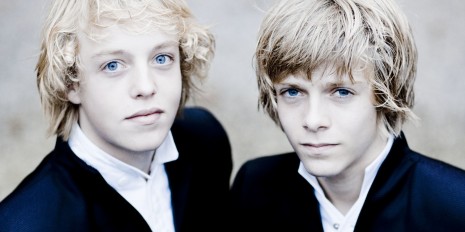
On the 9th of May, 2013, I attended a mini-concert by the young Dutch piano duo known as the Jussen Brothers, held at Philia Hall in Yokohama. It was their first visit to Japan.
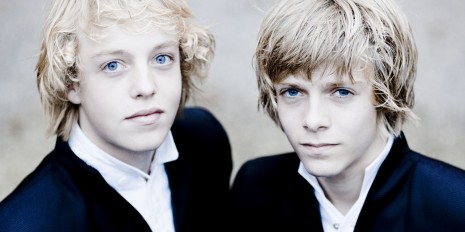
Arthur Jussen & Lucas Jussen — born in 1993 and 1996 respectively, just 20 and 16 years old. They are devoted pupils of Maria João Pires (Maria João Pires), and the two appeared as students in the NHK Educational Television series “Maestro Pires’s Super Piano Lessons“, broadcast in 2008–2009. Let me say this upfront: in person, the two are far more strikingly handsome than even their CD covers suggest. Female classical music fans should absolutely go and hear them for that reason alone. Their looks were so otherworldly that I could not help but feel rather acutely aware of the difference in calibre where men are concerned.

In truth, I had absolutely no prior knowledge of the Jussen Brothers. A few days before the concert, I happened to catch an advertisement while shopping at Aobadai Tokyu Square, and bought a ticket on a sort of vague, purely instinctive impulse. (Note: Tokyu Square is the department store that houses Philia Hall.) It was the 27th instalment of the weekday concert series “Good Music for a Nice Lunch”, tickets were just 1,500 yen, and being a one-hour mini-concert, it also seemed physically manageable given that I was unwell at the time.
《The boy on this cover is the elder brother, Lucas Jussen, aged 13 at the time. A write-up about the Super Piano Lessons programme may follow at some point.》


 ポチップ
ポチップ
I had watched the 2008–09 series “Super Piano Lessons: A Workshop with Maestro Pires” at the time, but had not retained the names of the students, and in any case the two of them were still in primary and middle school when it was filmed, some six years prior. That those same children would, just a few years later, make their debut on a major label and go on to receive such international recognition — even I had absolutely not seen that coming. It was also the first time I had encountered the approach of marketing both brothers individually as soloists while simultaneously promoting them as a piano duo — a three-in-one package, as it were. And making a professional debut on the strength of a master’s personal endorsement, bypassing the major piano competition circuit entirely, is not exactly a common path.
The hall was nearly full on the day. Music critic Yoshiko Ikuma was also in attendance, and her review from that occasion can be read here. I had not listened to any of the Jussen Brothers’ recordings beforehand, and arrived with nothing more than the vaguest of impressions — something like, they’ll be playing some of Schubert’s Impromptus. I walked into the concert hall without being able to tell which was the elder and which the younger, nor even which first name belonged to whom.
 ポチップ
ポチップ
This CD was recorded in 2009, so the Jussen Brothers were just 14 and 17 at the time. Remarkably, they became the first Dutch pianists ever to sign with Deutsche Grammophon. Back home in the Netherlands it was a major hit, earning both Gold and Platinum discs — they are already superstars there. The sound quality captures their soft, gentle tone faithfully and is, in true DG fashion, also very good from a Hi-Fi standpoint — well worth recommending. The concert was so wonderful that I went and bought it afterwards. There was a signing session, incidentally. Also, the Japanese first pressing comes in a high-quality SHM-CD format with a bonus DVD — an edition only available now, and absolutely essential for female classical music fans.
First to appear was the taller of the two boys — the one on the right in the opening photograph. Reading the programme, I found his name was Arthur. He is in fact the younger brother, though I mistakenly assumed at that point that he was the elder. He performed Impromptus D899, Op.90: No. 2 in E-flat major, No. 3 in G-flat major, and No. 4 in A-flat major. From the very first notes, the musical richness of the playing far exceeded any expectations — not that I had any. There was something like, wait, is this boy actually extraordinary? How to describe it — from a point at the centre of the keyboard, triangulated between his two hands and the furrow of Arthur’s brow, the playing felt like fine powder snow billowing upwards in great soft gusts, like confetti caught in a rising draft. To think such a sound could come from the Steinway at Philia Hall. Quiet, refined, cool and clear, and yet with a wonderful sense of song. The phrasing was careful and attentive to the silences between notes. The delicate tone and melody unsettled something in my consciousness, and sitting still in my seat became genuinely difficult.
Next, the elder brother Lucas appeared. He was small. At that point I mistakenly assumed he must be the younger — after all, he looked more slightly built and younger than Arthur. And apart from the height, they are remarkably alike. Three years apart, yet they look almost like twins, or copies of each other. His programme consisted of Impromptus D935, Op.142: No. 2 in A-flat major and No. 3 in B-flat major. Like Arthur, his playing was quiet, delicate, and refined — if anything, even more settled and still. The tone was quite different though: Lucas gave the impression of sound resonating from within a blue sea into which soft light was filtering. Compared with Arthur, whose melodic line was gently outward-facing and richly nuanced, Lucas played with a more passive quality, unhurried and composed almost to the point where the music seemed on the verge of stopping entirely. Beautiful, deep, yet inward-looking — a playing style stripped of any artifice. Arthur moved me personally, but the audience as a whole seemed to hold their breath and listen in an even deeper silence for Lucas.
The Schubert CD performed at this concert. Japanese first pressing only in high-quality SHM-CD format. The same atmosphere as at the recital.
 ポチップ
ポチップ
The final work on the programme was the Fantasie in F minor D940, Op.103, performed four-hands by Arthur and Lucas together. My own guess beforehand was that Arthur, with his gift for singing melody, would take the right, and Lucas, with his deeper tone, the left — but it turned out to be the other way around. (In the YouTube video below they have swapped positions, so it seems to vary by piece.) The encore consisted of pieces from Bizet’s “Jeux d’enfants”: No. 2 “La Toupie” (Impromptu), No. 3 “La Poupée” (Berceuse), and No. 12 “Le Bal” (Galop).
Even in four-hand playing, the two were perfectly in step — or rather, so natural together that “in step” hardly covers it. And they were not at all noisy, not even slightly. What the two share is a quiet, delicate, beautiful, careful, and thoroughly clean and refined style of playing. They are, to put it plainly, healing-type pianists. They attend to the resonance and colour of their tone from pianissimo all the way to fortissimo, and never produce a sound that turns sharp or breaks apart. (At the Dutch Embassy, incidentally, they play on a small Yamaha grand.)
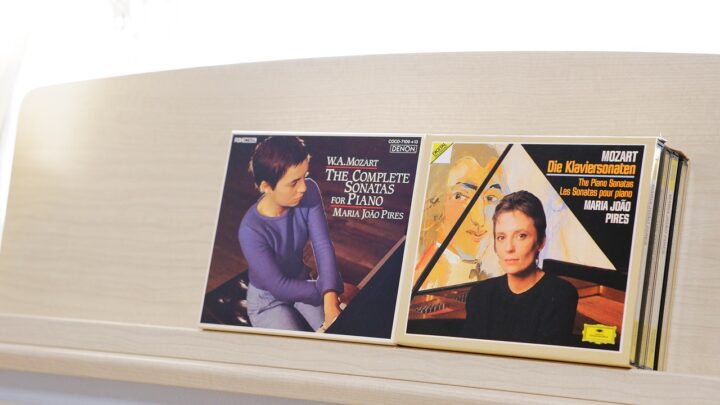
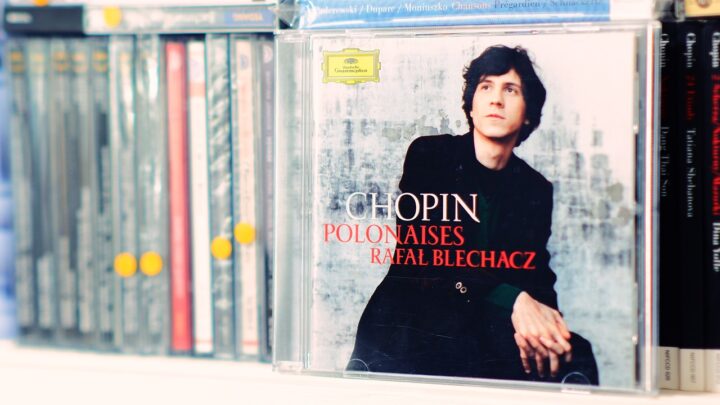
The influence of their teacher Maria João Pires seems to come through in the gentle, rounded tone quality (perhaps the use of the soft pedal?), but Pires brings a stronger sense of will in her touch, and at times her melodic expression can be almost garishly vivid and dramatic. The Jussen Brothers are gentle, inward-looking, and entirely natural in manner — there is no showiness, and yet they possess an elegance and beauty that simply wins the listener over. Musically, they bring to mind not so much Pires but rather Krystian Zimerman and Rafał Blechacz. On the instrument front too: Pires uses Yamaha, whereas the Jussen Brothers played on Steinway both at the concert and in their CD recordings.
 ポチップ
ポチップ
Their technical approach is also very well considered and shows real intelligence. The Jussen Brothers convey a noble refinement that is rare among pianists of recent years. It had been a long time since I had been treated to a performance so well worth following closely from here on. Please do go and hear them when they next visit Japan.
Some time afterwards, I went back and watched the recordings of the Jussen Brothers as children in the Super Piano Lessons series, and was struck by just how different — in so many ways, almost the opposite — they were from who they are today. I would like to write about that, along with my reflections on Pires’s workshop, if the occasion arises.


Auto Translated by CS4.6