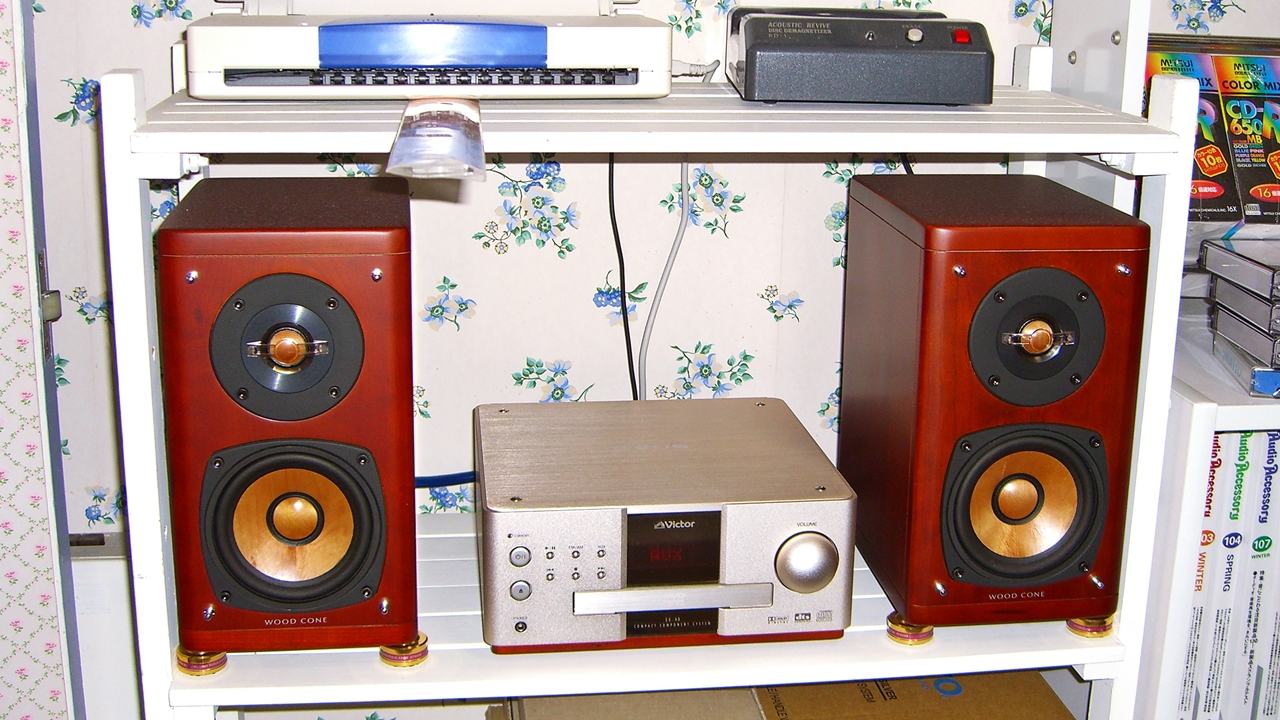
【JVC Victor Wood Cone Speakers】
Part 1|Part 2|Part 3
In recent years, the compact speaker market has felt very much like foreign manufacturers’ territory, but in truth there are several excellent speakers made by domestic Japanese brands as well. Among them, the one I have long held in particularly high regard for pure Hi-Fi speaker-making is JVC/Victor. These days, JVC/Victor is not as prominent as an audio brand as DENON or Marantz, nor has it consistently produced the kind of high-end, connoisseur-oriented machines that Accuphase or LUXMAN have, nor is it as cutting-edge as SONY, nor does it have the clearly defined identity in affordable pure Hi-Fi that ONKYO has built…
There is a lingering impression that the product lineup feels a little half-hearted, and that the brand carries less weight in the market than it perhaps should. And yet JVC/Victor possesses outstanding speaker manufacturing technology that is not widely known among general consumers — something quite distinct from other major domestic manufacturers. ※ Indeed, most other major Japanese manufacturers were either never capable of making proper speakers in the first place, or stopped doing so quite some time ago. At present, the only ones whose output can be seriously evaluated are Victor JVC, ONKYO, and YAMAHA, perhaps.
What the author values above all else about JVC/Victor’s audio products is that so many of them have traditionally possessed “high musicality.” In terms of “sound quality” — the most straightforward evaluative axis — the audio equipment produced by Japan’s major electronics manufacturers has led the world in quality over many years. And yet when it comes to the more sensory axis of “musicality… the power to convey the heart, the life, and the spiritual dimension of music,” it must be said, regrettably, that domestic products have in relative terms often fallen a step or two behind their overseas counterparts (※ there are of course many individual exceptions). This is the single greatest reason why the author — who wants music lovers to listen to “music” rather than “sound quality” through quality Hi-Fi equipment — has, on this site, tended to recommend foreign products above all others.
In the case of JVC/Victor, however, I feel they are one of the very few domestic manufacturers — even among the major Japanese audio brands with their tendency towards sound-quality absolutism — whose musicality is not merely a match for overseas products, but can genuinely be said to reach the very top tier. One reason for this may be that JVC had under its umbrella Victor Music Industries (now Victor Entertainment), a record label with recording standards among the finest in Japan, whose skilled recording engineers were deeply involved even in the development of audio equipment. I do not know who in particular, but I have long suspected that within Victor/JVC there has traditionally been someone with extraordinarily sensitive ears — someone who understands music intuitively and at a very deep level.
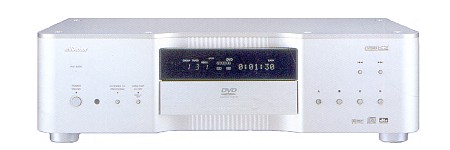
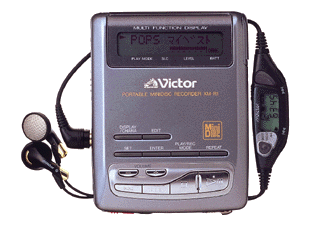
The character of JVC/Victor’s audio equipment has been consistent since the 1990s: a transparent, soft, and dynamically alive acoustic tone. From the portable MD player Victor XM-R1 that I own (at the time it was praised for sound quality comparable to a separate component, and without this portable machine I could never have brought myself to listen to MD at all), to the HMV series including the SX-V1 — high quality, yet somehow never followed through — to the high-end DVD Audio player XV-D9000 (outstandingly good sound, yet it never sold well due to the problems surrounding the DVD-A format, and in the end it was practically given away before disappearing altogether…) — there is no shortage of products that have left their mark. Despite a continued failure to achieve the market recognition they deserved, Victor kept making audio equipment through which living music could actually be felt, and I believe Japanese audiophiles ought to hold that achievement in far higher esteem than they do.
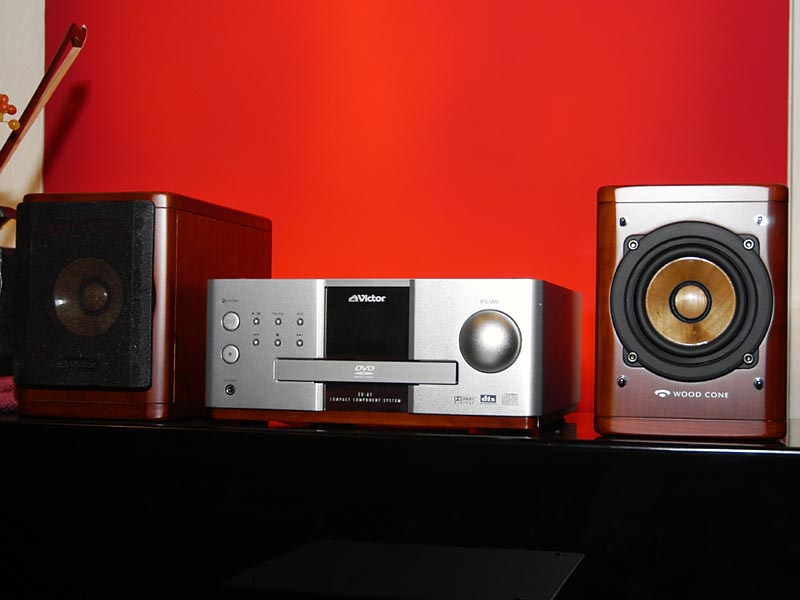
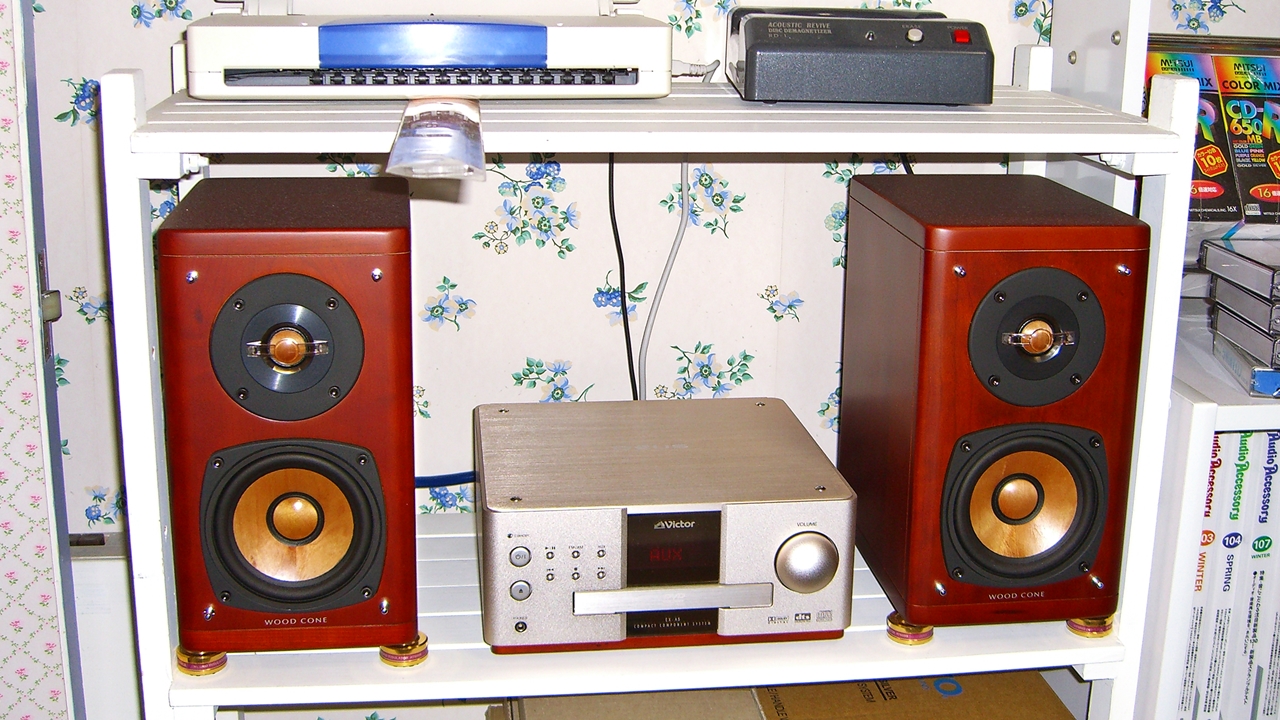
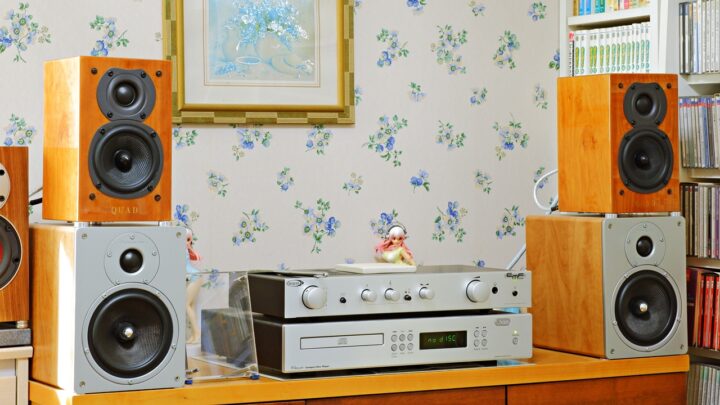
Released by Victor in late 2003 and more recently attracting considerable attention and praise in various quarters is the compact component system Victor EX-A1, whose speakers are also sold as standalone Hi-Fi units. Until I happened to hear the sound of the SX-WD5 — the standalone speaker derived from this mini system — the author had been watching all the glowing reviews out of the corner of one eye while privately thinking: what on earth are they on about??? and dismissing it entirely.
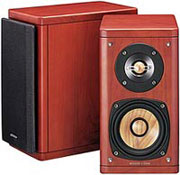
In the mid-1990s, Victor had a range of exceptionally musical speakers — the SX-A103, SX-V1, and SX-V05 — all fitted with cones made by the German firm Kurt Müller. The Victor SX-A103 in particular holds very fond memories for me, as I used it myself. Because the speaker lineup that followed these models moved in a more modern direction that I found rather less to my taste, it simply had not occurred to me that they would now come along with a genuinely high-quality speaker bundled with a mini system of all things — that is the honest truth.
My first impression upon hearing the new wood cone SX-WD5 was: the sound of the Victor SX-A103 has come back! (Note: a direct comparison reveals they are actually quite different.) That beautifully polished, bright tonal character distinctly Victor’s own, the dynamically alive expressiveness — a sound I had half resigned myself to never finding again except in the second-hand market — was there once more, revived and reproduced with real vitality. I had always assumed that these particular virtues of the SX-A103 were entirely down to the woofer units supplied by Kurt Müller of Germany. It seems, however, that was not the whole story, and what the SX-WD5 — fitted with newly developed wood cone units and a tweeter entirely unrelated to Kurt Müller — made clear is that this is equally the work of a refined sensibility handed down within Victor’s speaker development team.


The absolute prerequisite is, of course, that the amplifier paired with the SX-WD5 is a good match for it — but whatever the case, it is simply a very enjoyable sound to listen to. Being a small speaker with small-diameter drivers, one cannot expect much in the way of bass quantity. But in terms of the power to make music sing as living, breathing music — rather than mere sonic realism — is there really anything among domestic Japanese speakers that surpasses the wood cone? That is rather how it feels.
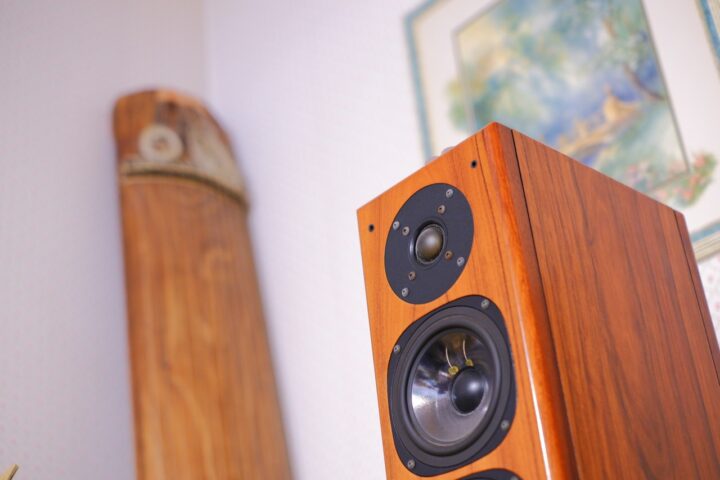
The wood cone speaker uses wood as the material for the driver diaphragm, and is manufactured through a laborious production process not unlike that of instrument-making. As one might imagine from this, it is a type of speaker that resonates in its own right and sings richly, like an instrument. In character, it is entirely different from the high-resolution, high-precision monitor speaker, whose ideal is accuracy — removing coloration, approaching the neutrality of an anechoic chamber. If one were to name overseas speakers of a similar disposition, they might include DALI, FOCAL/JmLab, Vienna Acoustics, Kharma KPL Reference/1a, OLS (Kharma), Acustik-lab, and the like. The wood cone speaker shares with these “beautiful-sounding” speakers a common characteristic: an acoustic, warm tonal quality.
To be frank, the tonal character of the wood cone speaker is, fundamentally, a form of colouration — of embellishment — and I imagine there are those for whom it simply will not suit. That said, the fact that it is not monitor-like does not mean it is unreal. If anything, it sounds as though the speaker’s own resonance is restoring the warmth of a voice, the texture of an instrument, the acoustic qualities of a piano or strings — elements that were lost at the recording stage.

 ポチップ
ポチップ
In this sense, the textural realism of the sound coming from the SX-WD5 is a vivid, immediate sound that easily surpasses the faceless speakers and monitor speakers one tends to encounter. Rather than listening straight to the dull, monitor-like sound from which so much of what matters in music has been stripped away in the name of sonic fastidiousness, would it not make for a far more enjoyable musical life in practice to listen through wood cone speakers, hearing music restored to something alive once more?
This acoustic quality of tone, I feel, is something that only a sound engineer who has had genuine, frequent contact with the real sound of acoustic instruments could ever achieve. Without the will to hear music as it truly is — to be close to the music itself — before any pursuit of high fidelity in the audio-specification sense, it would be impossible to produce that “realism of texture” that seems to leap over the audio equipment as an unnecessary intermediary.
【JVC Victor Wood Cone Speakers】
Part 1|Part 2|Part 3

Auto Translated by CS4.6
List of comments (5)
N響の根津さんが音楽再生について面白いことをかかれています。ちょっと長いですが引用しますね。
「今までオーディオの世界では音は基音の上に成り立つ倍音列で出来ているというのがごく普通の考え方です。(特にディジタルのオーディオの世界では…….)ですが今の結合音を考えると実際に弾いている音の下側にも音が鳴っているのです。2つの音程が近いほどその差の周波数は低くなるので、結合音は低音域に移ります。いずれにしても実際の演奏ではEとcisの重音しか弾いていないのに、Eの完全5度下のAの音が実際に鳴っているのです。オーケストラでたくさんの楽器が鳴っている時の結合音って一体どうなるのでしょう……」以下略
私思わず目から鱗が落ちました。
わぁ、この話題は私などよりEddieさんの方がずっと詳しそうです(滝汗) 私が普段使っているデジピはそんな感じです。サンプリングの問題だと思うのですが、弾いた音より低い方の響きが出てません。本来ピアノはそれ以外にも色々ゴチャゴチャと倍音やら雑音やらが絡まりますので、低い方の弦も色々と共鳴している筈なのですが、それが再現されていないので、デジピが薄っぺらい音色に聞こえるのかもです。最新のモデルは良く知らないのでどうか知りませんが。
あ、出来ましたら根津氏お話のの全文を読んでみたいです。。。
ねえ、こういう事も当たり前ですよね、考えてみれば。だから良質な低音の再生能力も大事なんですよね。なるほどでした。
根津さんのひとりごとは面白いです。URLはhttp://www.nezu.ms/tubuyaki.htmlです。
こちらのリンク、既にブックマークに入ってました…。
この方、オーディオにも凄くこだわりを持っていらっしゃるんですよね。
たしか、MYRYADのハイエンドCDP”MCD600″とグッドマンのポータブルをCDPをお使いだと、
以前の日記で読んだことがあります。MYRYADは羨ましいなぁ…、とても奇麗な音場の出るCDPです。
低音…大口径ウーハーを使ってドスドス、ボコボコと量を出すのは簡単なのですが、
十分な質を伴った低音はオーディオでなかなか聴くことが出来ないですよね。
低音が出ていても音が生と比べて変に重すぎたりして、この辺が難しいところです。
私がリンクを貼ってる手のひらサイズのスピーカーは、
サブウーハーでも追加しない限り、どれも低域の沈み込み、
臨場感は割り切って諦めている部分があります。
ただ、若者や都心部の日本人に多いマンション・アパート住まいの場合、
大きな音量や充実した低音は環境的に無理だったりするので、
その辺りも含め、うさぎ小屋に住むアンダー居住区住人達の為の
箱庭的バジェットHi-Fiを推奨するのがより皆さんの為にはなるかなと。
>うさぎ小屋に住むアンダー居住区住人達
これは勿論団地住まいのpastel_piano自身のことでもあります。