【JVC Victor Wood Cone Speaker】
Part 1 | Part 2 | Part 3
As announced previously, this time I would like to write about the SX-WD5, the beautiful-sounding wood cone speaker released by JVC/Victor. Apart from the SX-WD5, which is sold as a standalone unit, the wood cone speaker line is marketed as part of an all-in-one mini system called the “Compact Component DVD System ‘ETERNO'”, bundled with a small digital amplifier — commonly known as the “DEUS” amplifier — that includes a tuner, DVD, and DVD-Audio playback. This centre unit was originally developed to drive the 80mm compact full-range speaker SX-WD1, which came with the earlier-released EX-A1.
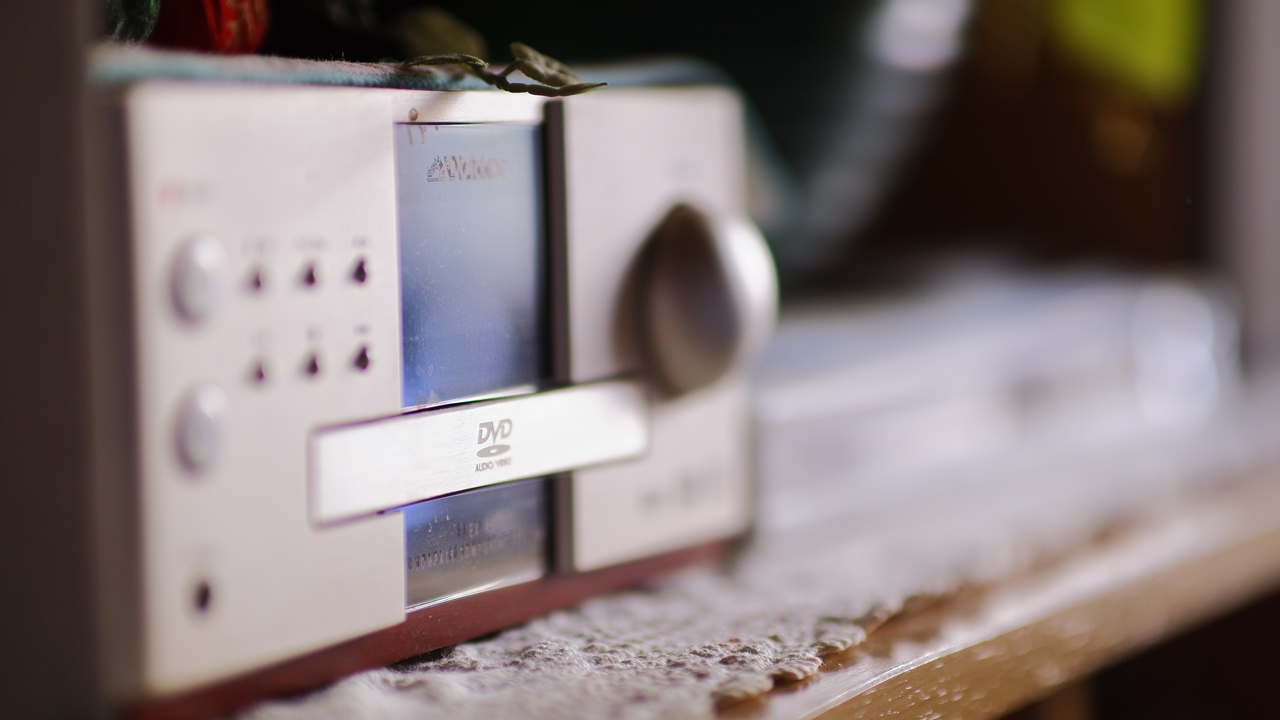
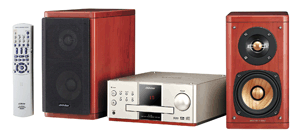
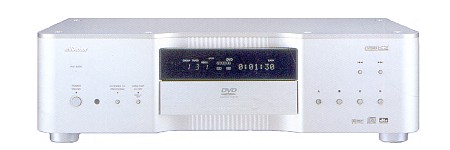
The design of the DEUS amplifier, which serves as the head unit for both the ETERNO EX-A5 and the EX-A1, directly inherits the visual identity of Victor’s celebrated CD/DVD-Audio player, the XV-D9000. In terms of sound quality, while its driving power is admittedly modest, it produces a refined character — a smooth, moistened resonance that spreads gently across the soundstage — and it fully lives up to the name of a JVC/Victor pure Hi-Fi product.
The sound of this DEUS head unit paired with the 8cm full-range wood cone SX-WD1 has the kind of freshness and immediacy you would expect from a single full-range driver — and the vividness of strings and vocals in particular is simply first-rate. The combination of an 8.5cm single full-range driver with no crossover network at all, a wood cone unit of beautiful resonance, and a cherry wood cabinet — all working together at maximum effect — produces a raw, strikingly real sound that even high-end large speakers cannot match. It is entirely understandable that these speakers are used as monitor speakers in Victor’s own recording studios.
That said, the very freshness of a single full-range driver comes at a price: depending on the recording, sibilants in vocals can become pronounced, and the limited bandwidth of the small driver means piano tones can come across as bright and somewhat chiselled-sounding. The shortcomings that come with a restricted frequency range are undeniable. For that reason, the JVC/Victor SX-WD1 is not a speaker meant to be driven at high volume — its proper enjoyment lies in low-volume listening or near-field use. As long as one understands that much, I am quite sure anyone who hears this speaker will be surprised by the extraordinarily live and immediate realism of its tone, as if a performance were taking place right there in the room.
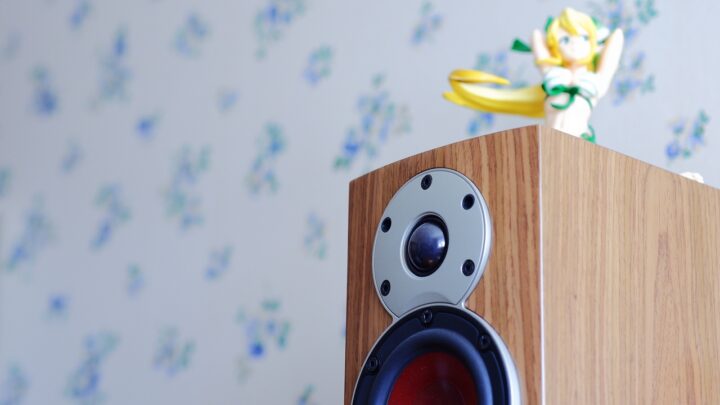
The SX-WD5, adopted for the later EX-A5, uses the same material (cherry wood) as the full-range SX-WD1, with a cabinet roughly two sizes larger, and adds a wood cone tweeter via a crossover network, making it a compact 2-way bass-reflex bookshelf speaker. Apparently the SX-WD5 had a different development team from the EX-A1, with a younger engineer taking over the project.


In terms of sound quality, the SX-WD5 is a speaker capable of reproducing a wide range of recordings without complaint from an audiophile standpoint — it is more versatile in what it can handle than the full-range version. If the earlier report described Victor’s “beautiful sound” character, the SX-WD5 takes that quality and brings it into sharper focus. For my own part, having grown up with 2-way speakers and being less accustomed to full-range sound, I find the SX-A5’s presentation somewhat easier to accept on familiar terms and more comfortable to listen to over time. The flip side of that, of course, is that it cannot match the SX-A1’s full-range freshness and immediacy.
The DEUS amplifier in the EX-A5 — it looks identical to the one in the EX-A1, but apparently has been tuned differently to suit its different speaker, meaning the centre units of the EX-A5 and EX-A1 are not completely identical digital amplifiers. Comparing both speakers in their respective DEUS pairings, each has its own appeal and it is genuinely difficult to dismiss either one. And yet, that many people ultimately choose the EX-A1 for its musicality is, in a sense, something I can understand.

 ポチップ
ポチップ
When the two systems are compared side by side in the same environment, the EX-A5/SX-WD5 extends further at both ends of the frequency range and is unquestionably the superior system in terms of overall audiophile quality. And yet, when it comes to that quality of freshness that stops you in your tracks, and to what I consider the single most important thing in music playback — “musicality”, that is, passion — which one is simply more enjoyable to listen to? — for me, the EX-A1/SX-WD1 edges ahead of the EX-A5 on that point. The EX-A1 conveys a wonderful passion with a real, resonant quality that is genuinely exciting; when I switch over to the EX-A5, I cannot quite shake a slightly cooler, more detached impression, as though I have been pulled back a little into reality.
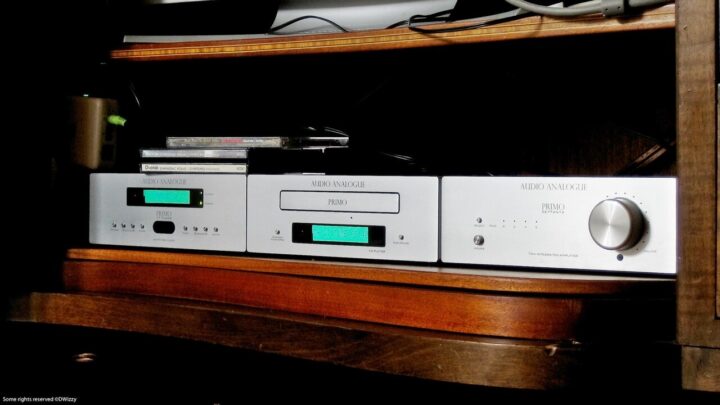
Does that mean the SX-WD5 is inferior to the full-range wood cone SX-WD1 of the EX-A1? That would not be quite right either. When comparing only the pairing with the modest DEUS unit, some may jump to that conclusion. However, before this test, the author had on a separate occasion heard the SX-WD5 on its own paired with a certain Italian amplifier, and in that combination the sound far surpassed either system in their stock pairings.
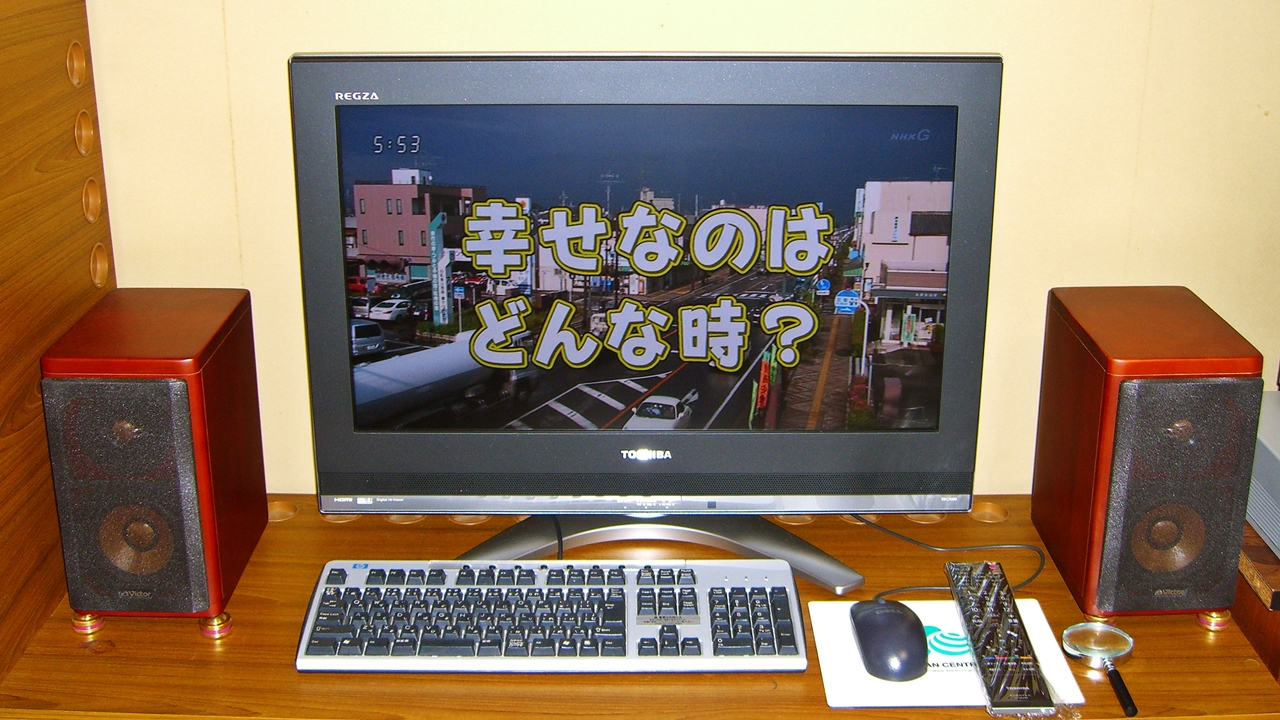
Listening to the DEUS amplifier with the SX-WD5, even accounting for the tuning done to suit that speaker, the impression of insufficient drive does not quite go away. The tone is lovely, but the vitality that music needs does not seem to be fully drawn out. The SX-WD5’s wood cone is physically heavy and its efficiency is very low; to bring out its true potential, a more capable amplifier with greater drive and refinement would really be the better approach.
With the EX-A1, on the other hand, the relationship between the DEUS amplifier and the full-range SX-WD1 is like that of a long-married couple — each one indispensable to the other. The DEUS amplifier was originally designed with the EX-A1 combination in mind, and there is a view that even if you were to connect another pure Hi-Fi amplifier to this small full-range speaker — setting aside compatibility — it would be difficult to achieve the same level of synergy, freshness, and balance. It makes me wonder whether the fact that Victor has never sold the SX-WD1 separately might also have something to do with this.
My conclusion, as the author of this small-scale Hi-Fi blog, is this: if you are using the system strictly with the DEUS amplifier, I recommend the EX-A1 without hesitation. The EX-A5 is the one to go for if you have plans to upgrade the amplifier at some point in the future. If you intend to use it purely as a mini system with no thoughts of upgrading at all, then again the EX-A1 is my recommendation. Personally, if I could, my ideal would be to buy the EX-A1 for desktop audio use and also purchase the SX-WD5 separately as a sub-system — though wanting something and being able to buy it are, of course, two different things.
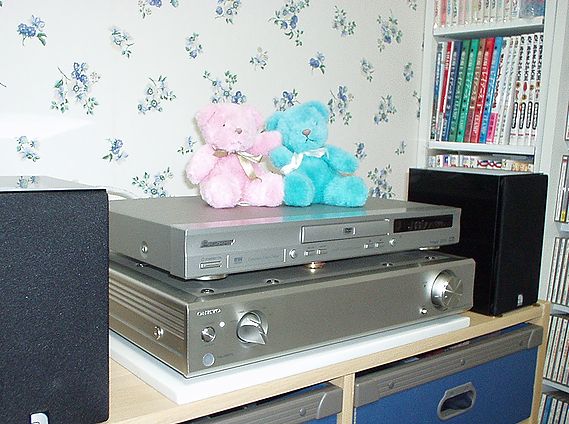
 One note of caution. The DEUS amplifier has no built-in timer, meaning it cannot be used as a wake-up audio alarm. This is, if I am honest, a rather glaring oversight on JVC/Victor’s part. Surely there are many people who would like to use this system at the bedside. Incidentally, the early DEUS amplifier models included a cooling fan, but from the 2005 production run onwards they were revised to a fanless design. The removal of the fan will no doubt have brought sonic improvements as well. One hopes that a future minor revision might also add a built-in timer.
 ポチップ
ポチップ
If you are considering a Japanese-made mini system in the 50,000–60,000 yen price range, I would unhesitatingly recommend the JVC/Victor EX-A1 or EX-A5. You need not know anything about Hi-Fi. But for the sake of today’s children, who are awash in poor-quality compressed audio, and who deserve to encounter music of genuine quality — music reproduced by a system that, even at a modest price, supports SACD and DVD-Audio with their extended high-frequency reproduction, and that has a musicality in an entirely different league from a radio-cassette player or an ordinary mini system — having the ETERNO nearby for them is not a luxury. It is, one might say, an obligation of any caring adult. Should you ever find yourself buying a radio-cassette player or mini system as an entrance-ceremony gift (perhaps a little late for that now) or a birthday present, please do not be swayed by flashy appearances, advertising, or magazine reviews — I strongly encourage you to listen to the wood cone for yourself before making your decision.
 Continued in: “AUDIO ANALOGUE PRIMO — A Recommended Pairing to Bring Out the Best of the JVC SX-WD5”
【JVC Victor Wood Cone Speaker】
Part 1 | Part 2 | Part 3

Auto Translated by CS4.6

List of comments (1)
相互リンクありがとうございます。こちらもクリックしておきました。w
今後とも宜しくお願い致します。