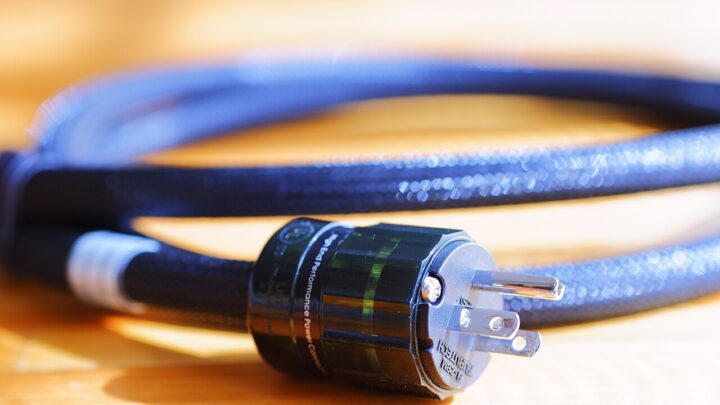
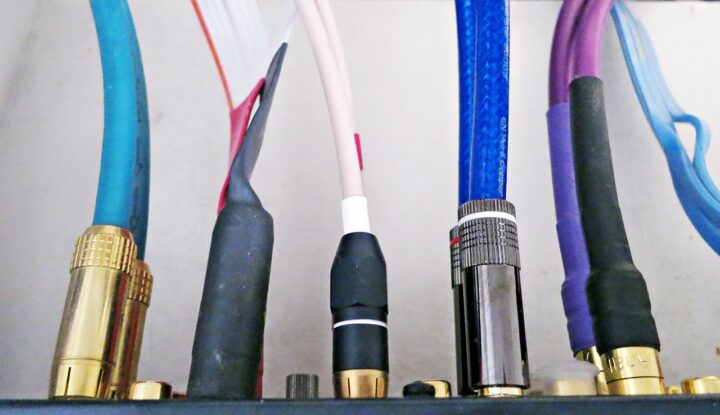
Today I want to deliberately touch on what is something of a taboo in the Hi-Fi industry — a topic I have, if I am honest, not been particularly keen to address. In the world of pure Hi-Fi, audio cables costing tens of thousands of yen a single cable are commonplace, and in recent years the market has been flooded with cables running into the hundreds of thousands, some even exceeding one million yen, alongside insulators and various accessories priced in the tens of thousands.
When I first became deeply absorbed in Hi-Fi, some seventeen or eighteen years ago, the high-end audio cable was still in its infancy — prices ranged from a few thousand yen up to, at most, a few tens of thousands. An American-made cable at fifty thousand yen felt like something from the outer reaches of the ultra-high-end; today that price bracket is considered mid-range. What now gets called high-end typically refers to models in the hundreds of thousands of yen, making this, by any global measure, an extraordinarily bubble-like market.
In an earlier era it was largely American brands that led the field —  PAD, Transparent, Kimber Kable, AudioQuest, WireWorld, Acoustic Zen, NORDOST, and so on. More recently, European brands have been steadily making their presence felt — SILTECH, Goldmund, Jorma Design, Crystal Cable — with top-of-the-range models now exceeding one million yen for a single set. Whether any of this is genuinely worth the money in terms of performance is a question that goes beyond raw material costs; there is, in addition to any audible sonic difference, a considerable premium for development, design, and a certain atmosphere or prestige — which is, I think, fundamentally no different from the high-end luxury brand business in any other field. I am not going to pass judgement on that here. How one weighs price against value is a deeply personal matter, and if the buyer is satisfied — factoring in sonic appeal, the pleasure of ownership, and everything else — then that is, in a capitalist society, a freedom that ought to be respected.
The question of whether a product’s price is justified is ultimately one for the market to answer, so I will treat that as a separate matter. The real issue here is this: most Hi-Fi enthusiasts — myself included — feel fairly confident that they can readily hear the differences between cables and accessories, yet those perceived differences are, from an electrical engineering standpoint, either too small to demonstrate convincingly or simply negligible. As a result, they are sometimes dismissed as placebo effects, and particularly since internet culture took hold, they have become a frequent source of heated debate around the world. In practice, the attempts — largely commercially motivated — to construct logical explanations for these perceived sonic changes have often resulted in dubious arguments built on unverifiable hypotheses, and these appear with some regularity in pure Hi-Fi advertising. Given all this — the industry’s tendency to sidestep scientific rigour, and the fact that Hi-Fi enthusiasts genuinely care about sonic changes that cannot currently be demonstrated with any clear logical proof — I think it is, in a sense, unavoidable that those who take a scientifically rigorous view regard pure Hi-Fi as a field that is, logically speaking, in the realm of the occult.
And yet, the reason so many Hi-Fi enthusiasts — I would prefer to call them music lovers, if possible — continue to fixate on the sonic changes brought about by individual components and accessories is, I think, twofold: first, that a great many people do genuinely experience those changes, however much individual sensitivity may vary; and second, that Hi-Fi equipment exists fundamentally as a tool for listening to music, and the pursuit of ever-greater musical enjoyment is the whole point — demonstrating technical accuracy or logical proof ahead of lived experience is not, and was never meant to be, the primary goal of music playback.
Personally — and this will come as no surprise — I am the sort of person who feels that something changes sonically no matter what you adjust, whether it is cables, insulators, or anything else in the Hi-Fi chain. I am neither an atheist nor a materialist; I am the sort of romantic who gazes up at the stars and gets excited by cosmological hypotheses, who believes that the world is full of phenomena — at both the microscopic and macroscopic level — that modern science has yet to explain.
Given that I am that sort of person, Hi-Fi enthusiasts who may be a little like me will feel that even in a circuit built to identical specifications, a difference in the manufacturer or quality of a single capacitor or resistor will produce some sonic difference; that tweaking the internal wiring, external cables, power supply, chassis material, insulator (footer) material, screw material, or the board on which equipment sits will always change the sound in some way, however large or small, and whether or not one can actually perceive it. As a result, one can easily lose all sense of proportion about where to allocate one’s budget relative to the magnitude of the changes, and priorities end up completely back to front — which is precisely how the Hi-Fi enthusiast ends up sinking ever deeper into the proverbial swamp, unable to see the wood for the trees. Ordinary users with little technical knowledge cannot very well go tinkering inside their equipment, which is why their attention naturally turns instead to things they can more readily address: interconnect cables, the mains supply, insulators, support boards, and the like.
And on the manufacturer’s side, too, while each company has its own technical theory at the foundation of its development work, the reality — beyond those logical underpinnings — is, I suspect, that they are confronted with real sonic differences that circuit design and electrical measurement alone cannot fully explain, and so they audition components one by one, draw on accumulated experience and methods that could fairly be called occult, layer up subtle differences and sonic signatures perceived by ear, and ultimately bring to market a product shaped by each individual’s subjective pursuit of an ideal. Would it be overstating things to say that Hi-Fi equipment is, in the end, finalised not only by measured specifications but through something called “voicing” — the maker’s own subjective, listening-based sense of how it should sound? This kind of approach, one that ultimately relies on human perception, may not be a scientifically rigorous method for an engineer. But given that the very nature of music — the ultimate end of all this — belongs to the domain of subjective sensibility, of what sounds pleasant or unpleasant to the ear, the brain, and the body, it has perhaps become the unspoken common understanding of the pure Hi-Fi world, accumulated over many years, that as long as lived experience and subjective results support a chosen approach, absolute logical proof is not necessarily required.
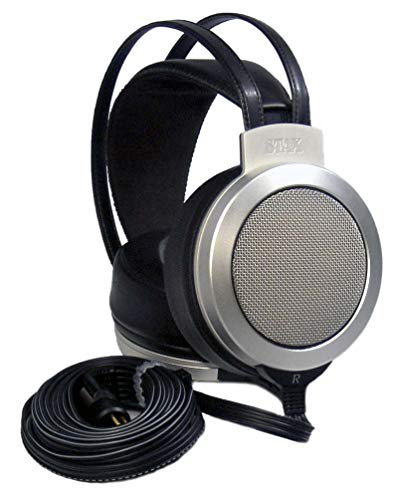


In truth, if logical rigour and cost-efficiency are what matter most, then pure Hi-Fi equipment — whose production tolerances are often questionable to begin with — is entirely unnecessary. These days, a computer can read data more accurately than most so-called high-end audio hardware, and a good pair of high-quality headphones will, in terms of measurable performance, outperform the vast majority of box-type loudspeakers. Those who are intelligent, earnest, and place logical proof above all else should therefore stay well away from pure Hi-Fi. It may scramble your thinking entirely, and you would be better off not touching it at all.
And yet, people continue to entrust their dreams of music reproduction to pure Hi-Fi — and I think it is because there is something that measurements and rational argument cannot capture, something that emerges from vibrations invisible to the eye, from the interplay of melody and harmony, the fluctuations in sound that call forth sensations, emotions, and a sense of the spiritual shared across humanity. The essential nature of music as an art — this desire to hear it, to feel it more deeply — overlaps with the half-scientific, half-occult approach of pure Hi-Fi, and like a shimmer on the boundary between the real and unreal in the mind, it seems to stir, almost unconsciously, the dreams and sensibilities of those who are drawn to the invisible world of the senses.
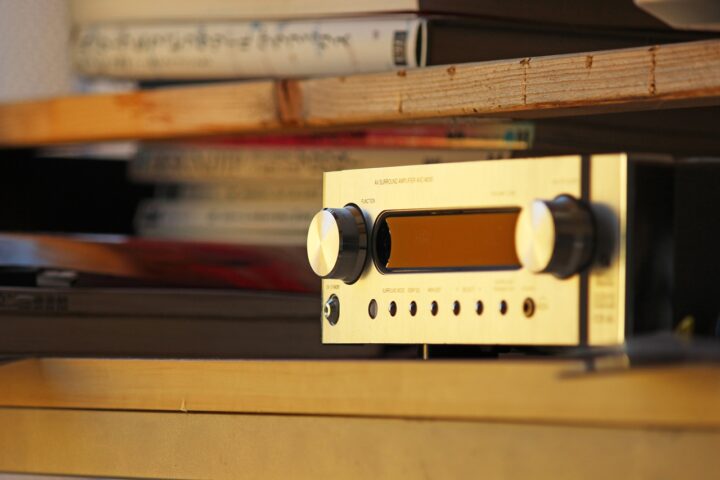
To enjoy the world of pure Hi-Fi in a truly deep and enthusiastic way requires, I think, not only the ability to perceive meaningful differences by ear, but also a certain mental spaciousness — the capacity to enjoy, without needing to rationalise, the ambiguity of experiences that may or may not be real. It also takes a degree of adult equanimity broad enough to accommodate the occasional whiff of pseudoscience in the advertising, and what one might call image pricing, without being put off by it.
That said, when all is said and done, the real protagonist of pure Hi-Fi is music. The proper role of Hi-Fi equipment is to serve as a bridge between performer and listener. Whether the theory behind it is occult or perfectly sound, what matters is never losing sight of that fundamental purpose: the relationship between people and music. Hi-Fi equipment exists for the sake of music. Remembering this always is, I have always felt, the single most important thing — the surest way to avoid being led astray by theories and nonsense, and making poor choices as a result.

Auto Translated by CS4.6





List of comments (6)
pastel_pianoさんのおっしゃるオカルトも含めて楽しむ心の余裕。とても良いセンスですよね。正気を失ったと考え、色々な言い訳を考えながら買ったケーブルで音を聞いてニヤニヤ。カモにされていると思いながら、音を聞いてニヤニヤ。
kentaさんこんばんわ♪
私達はお互い正気を失ってるつもりは無いと思うのですけど、
科学的に証明出来ないことで非難された場合、
便宜上、正気じゃないことにしておこう(^^;と。
それで済むなら不毛な水掛け論をするより良いと思ってます。
>買ったケーブルで音を聞いてニヤニヤ
いつもこうだと良いのですが、数万円もするアクセサリーを購入して音色が自分好みに合わず、失敗してガーン!!!という事も多々ありますので、そこがオーディオ選びの難しいところです。
確かに不思議な世界ですよね。ケーブルもそうですが、機器の足に、ちょっとゴムなり木をはさむだけで何か実際に変わった気がする。
まあ、ほどほどに楽しむのがいいんでしょうね。気分転換といってはなんですが、チューニングのつもりでいいケーブルにあたったりするとラッキーという感じです。
あといわずもがなですが、やはり実物を聴いてみることですね。こちら(マニラ)の専門店でRCAケーブルを買おうとしたら、実際の店頭で使ってるケーブルと新品の袋をわざわざ破って聴かせてくれました。今は硬いけど、何時間したらこんな感じって説明してくれました。
まだ大きな賭け(投資)はしていないので、外れても、まあかわいい趣味だと楽しんでいます^^?
しばやんさんお久しぶりです。(私はまた心臓の具合が悪くなって今週死んでます。さっきから少し具合が良くなってきましたので遅レス深謝m(__)m)
そちらのオーディオマーケットでもアクセサリでの音質変化や経時変化は普通に認知されてるんですね。
私もご多分に漏れず購入後に好みに合わないorその時のシステムと合わなくて、結局お蔵入りしたアクセサリが沢山あるのですが、後々別の組み合わせに上手く嵌って活躍することもありますので、その辺は気長に楽しんでいます。日本国内の場合、好みに合わなくてもオークションや中古下取りに出す手もありますので結構救われるかも!?
丁度、約一年前、後藤総合音響さんが町田で試聴会を開いた後に投稿させていただきました。
その際は、RADIO WAVE CUTをPMC TB1に装着したら高域が繊細になったとコメントさせていただきました。覚えてくれていますか?
その後、箱庭さんは長いお休みがありましたが、私のほうは、コンパクト・ハイスピード・サウンドステージを念頭に、スピーカーをELAC330.3、アンプをゴールドムンド330ME(LUX570から)、そして最後にCDプレイヤーをMAJIC CD(LHH-700から)に買い換えました。
CDプレイヤーは国産のSACD対応にするか随分悩みましたが、もっぱら聴く音楽がJAZZなのでMAJICに決めました。
悩むときが一番楽しいわけですが、これからはしばらくアクセサリーで音の変化を楽しみたいと思います。
参考に見てますから、主観的なコメントで結構ですので忌憚のないところ頼みますよ!
Fudeさんお久しぶりです(fuchusato)さん?ですよね。凄い進化を遂げられてますねー♪聴感上の当たりが柔らかいロースピードモデルから、一気に現代的ハイエンドサウンドへの進化ですね。
うちのオーディオは低価格モデルばかり無闇に集めているせいで、さっぱりハイエンド風味になりません(^^;。実はブログ休止の合間にこちらもリビングルームのシステムに変更があったり、箱庭サブシステムが3部屋分に増えたりしているのですが、まだ詳細を記事にしていなかったりします。
色々野次もあってオーディオアクセサリの主観的なインプレは長らく縮小気味だったのですが、読んで楽しんでくださる読者さんがいるようでしたらぼちぼち再開したいと思います。今後ともヨロシクですd(^_-)