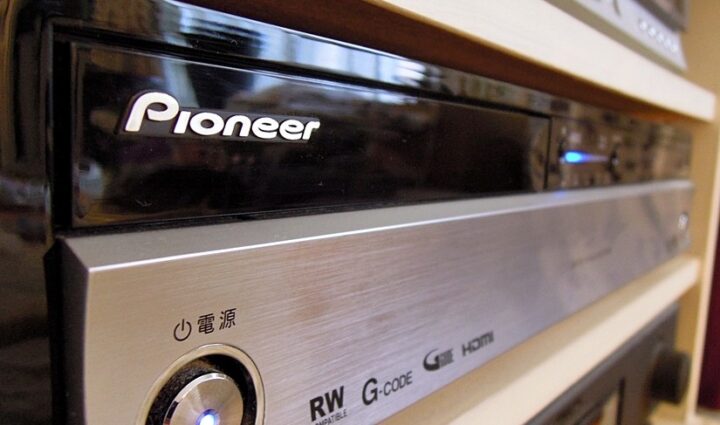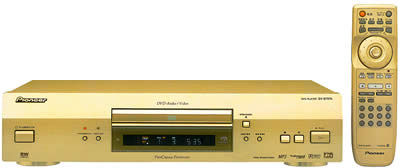
Pioneer has announced a new PDP (Plasma Display Panel) just 9mm thin, with zero pre-discharge and an infinite contrast ratio ← see the article here. Last year, Pioneer was pushing hard with a nationwide campaign targeting audiovisual enthusiasts, centred on the eighth-generation plasma television “KURO“, the successor to my own PureVision. Now they’ve announced an approach aimed at genuinely slimming down the form factor. The next generation of KURO — the one coming after next year — may not only deliver improved picture quality, but could well become Pioneer’s first proper slim wall-mount model. It’s getting ahead of ourselves, but before analogue terrestrial broadcasting ends in 2011, every manufacturer will surely be launching a wave of new slim large-screen televisions, so perhaps it will mean trading up from the PureVision to the new-generation Pioneer. I’m hoping for improvements not just in thinness and weight, but in picture quality too. The progression from the seventh-generation PureVision to the eighth-generation KURO was a genuinely fine evolution, so I’d like to see them stay the course on picture quality rather than change direction — just refine and polish what they already have.
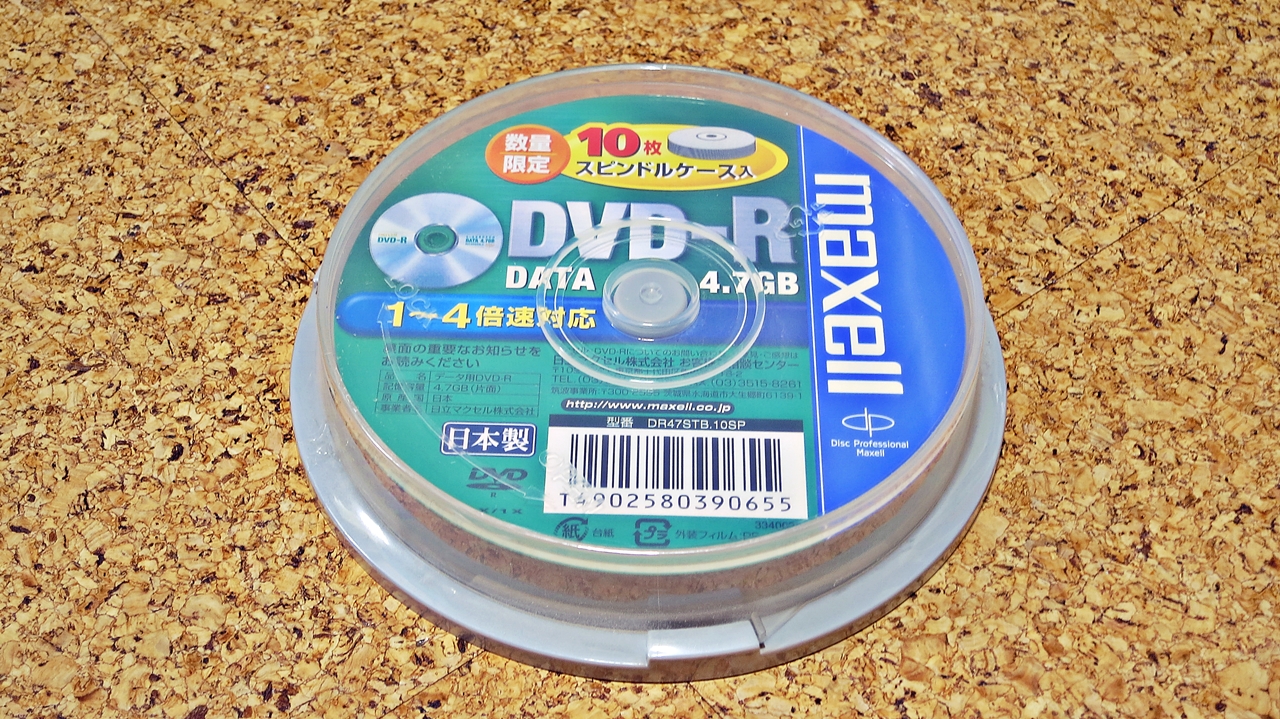
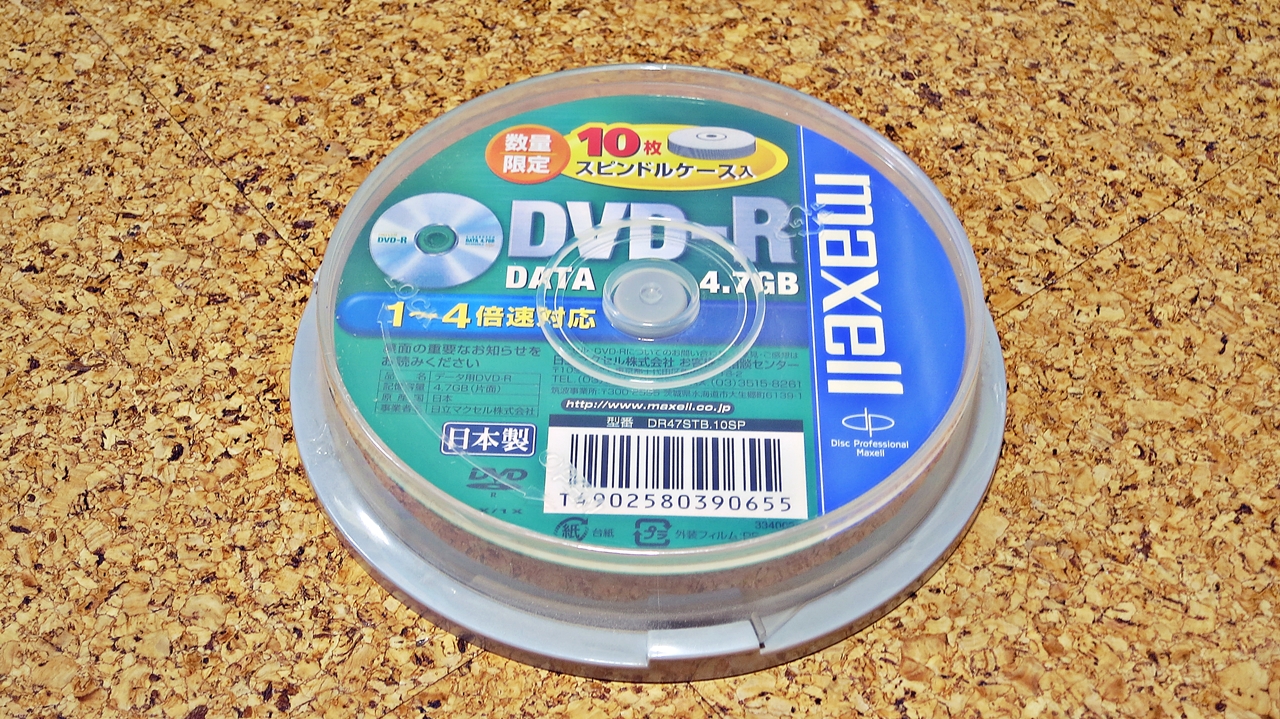
Today my supply of CPRM-compatible DVD-Rs for the PIONEER Sugureco DVR-DT100 was running low, so I stopped in at Yamada Denki on the way.


 ポチップ
ポチップ
The brand I always buy is invariably Maxell DVD-R. I don’t pay too much attention to things like error rates, which tend to depend on compatibility, but they are at least domestic-made. Going all the way back to the days of cassette tapes, S-VHS, and D-VHS for pure audio, I’ve always had a fondness for the clean, well-extended high-frequency response that runs consistently through Hitachi Maxell products — both in sound and in picture. ※This may well be just my imagination, but I find the same tendency carries over to their DVD-Rs.
 ポチップ
ポチップ
Since switching to DVD, I’ve occasionally used other things — like the OEM unbranded domestic discs (Mitsubishi Azo-type) that used to be sold at Media Emporium, or Ricoh — but even so, when I look at the anime and classical music DVD-Rs I’ve burned over the years on the Toshiba RD-XS40, about 70 to 80 percent of them have ended up being Maxell media without my even thinking about it.
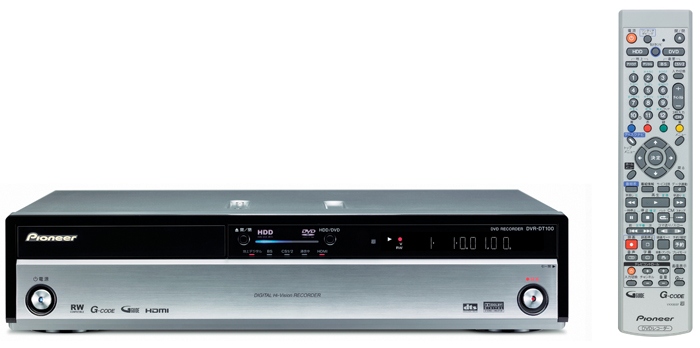
In particular, ever since I introduced the PIONEER Sugureco — a Hi-Vision recorder — about eleven years ago, I’ve been almost exclusively loyal to Hitachi Maxell for CPRM-compatible media for digital broadcast recording. As for the old Toshiba RD-XS40 with its notoriously problematic Panasonic drive — which was actually rather celebrated for its issues — I bought up a stockpile of Hitachi Maxell’s low-speed (1–4×) shiny-surface media in a sale before it was discontinued, and I have several hundred discs set aside. That slow-speed media burned beautifully on it.
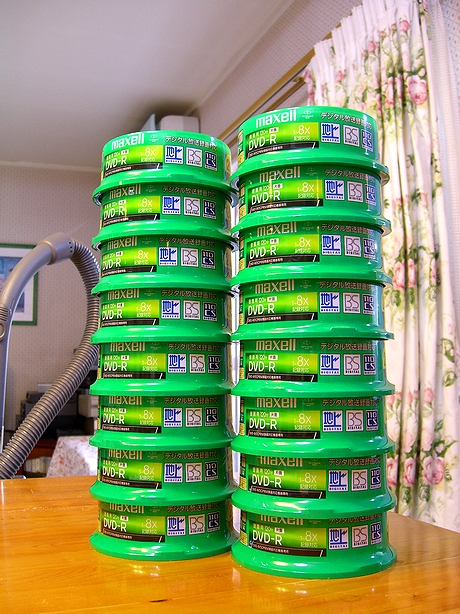
So, in keeping with all of that, what I bought this time was — as usual — from the nearby Yamada Denki: a Hitachi Maxell DVD-R 20-disc spindle pack. At a Yokohama branch, up until last year I’m fairly sure it was ¥2,180 including tax plus 10% points per pack (about ¥98 per disc), but when I checked today it was ¥1,580 plus 10% points (about ¥71 per disc). There was no special sale sign or anything, but perhaps because of the low price, the shelf there was looking rather bare. I bought up what was left — all two of them.
 This is the limited-edition equivalent. A 20-disc pack of CPRM-compatible recordable DVD-Rs supporting 8× recording speed and recording of “one-time recordable digital broadcasts.” The design is described as stylish, themed around this year’s trending colour — black. It uses a 5mm-thick black case. The label surface of the disc features a matte straight-black finish. A straight-line design that supposedly makes handwritten titles stand out nicely. Or so they say. Though you won’t be able to use a black marker on it…
The reason I always use the Maxell DRD120B.20SP comes down to the preference mentioned above, but also to the fact that for a CPRM-compatible media from a top domestic brand, the retail unit price per disc is relatively reasonable. Another reason is that a standard (non-white-printable) gold-label version exists. Honestly, what I’d really prefer is something even closer to a shiny surface with minimal printing on the label side, but those are virtually impossible to find in ordinary shops these days.
As a side note, Hitachi Maxell media comes with the Maxell Mileage Club — you register as a member, enter the point-seal numbers included with the products, and accumulate points that can be exchanged for prizes. It’s a bit like collecting Bellmarks, but I’m rather the sort of person who gets drawn in by that kind of scheme.
For the record, I absolutely cannot stand white printable labels on discs.
And yet the vast majority of commercially available DVD-R media now comes with white printable labels.
Non-printable standard media is gradually being pushed out of existence.
Even the budget-priced bargain media tends to be printable as a rule.
But no — even if it’s cheap, I won’t buy printable discs.
Does everyone really go to the trouble of printing labels? Personally, I almost never bother with printing labels from a printer — it’s far too much hassle. My basic approach is to write the title by hand with a Makkī or some other permanent marker.
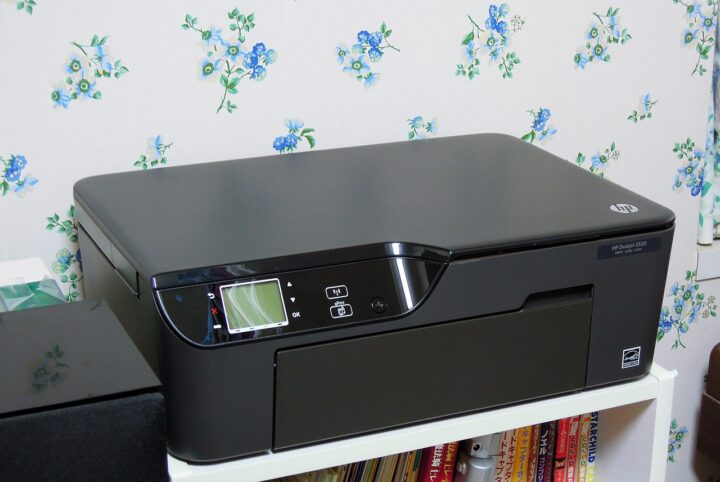
That said, when writing by hand with a permanent marker, I — being a rather careless sort — do occasionally write the wrong thing. Even so, permanent ink can be wiped off cleanly with alcohol and a tissue, and on a standard label or an unprinted shiny-surface disc, it is perfectly possible to write again over the top. Note: unprinted areas such as those on shiny-surface discs wipe clean completely, but on an ordinary printed label, a faint trace may remain. With a white printable disc, none of this is possible. If you write something wrong, that’s it — there’s no fixing it.
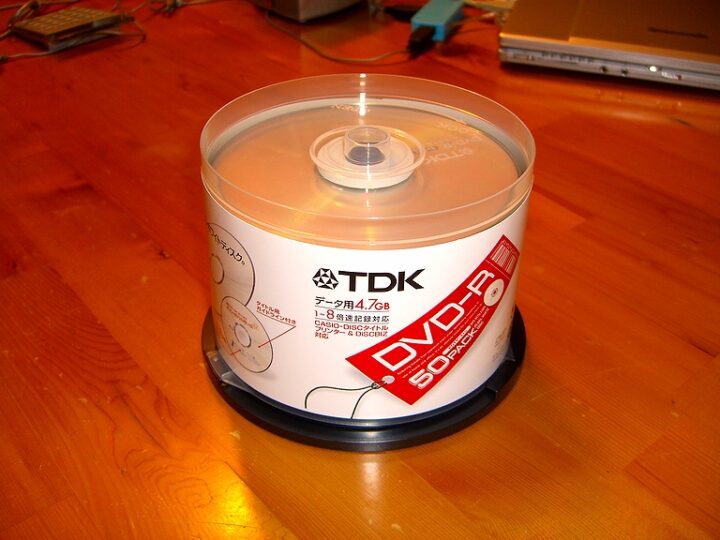
Now, from here we venture into the kind of occult territory this site is rather fond of: printable discs, even of the same media type, somehow tend to produce worse picture and sound quality in many cases. ※This is entirely subjective, so please bear with me. Taste plays a part too, but personally my favourite is a disc with no printing at all on the label side, or at most the bare minimum. I notice this most clearly with music CDs played on a proper dedicated system — the difference feels larger there — but as a matter of experience, I’ve come to feel that the greater the printed area on the label side, the worse the sound quality tends to be. First-press picture-label editions are unfortunately not good in this respect. The major classical labels — Decca and Deutsche Grammophon being the obvious examples — tend, with the exception of Philips, to have a larger unprinted area on their standard editions in many cases.
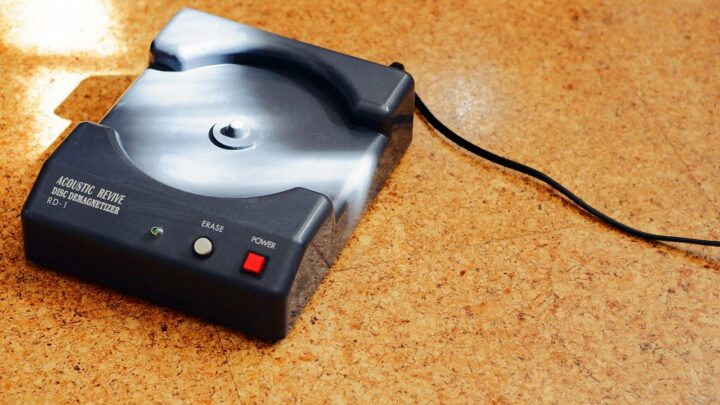
So that’s how things stand — when it comes to media that is domestically made, CPRM-compatible, reasonably priced, and not white-printable, Hitachi Maxell is currently my top choice. Once these run out, I’ll have to go hunting for another good media option all over again.

Auto Translated by CS4.6