So, two CDs arrived today from Amazon.co.jp — my first CD purchases of the year♪
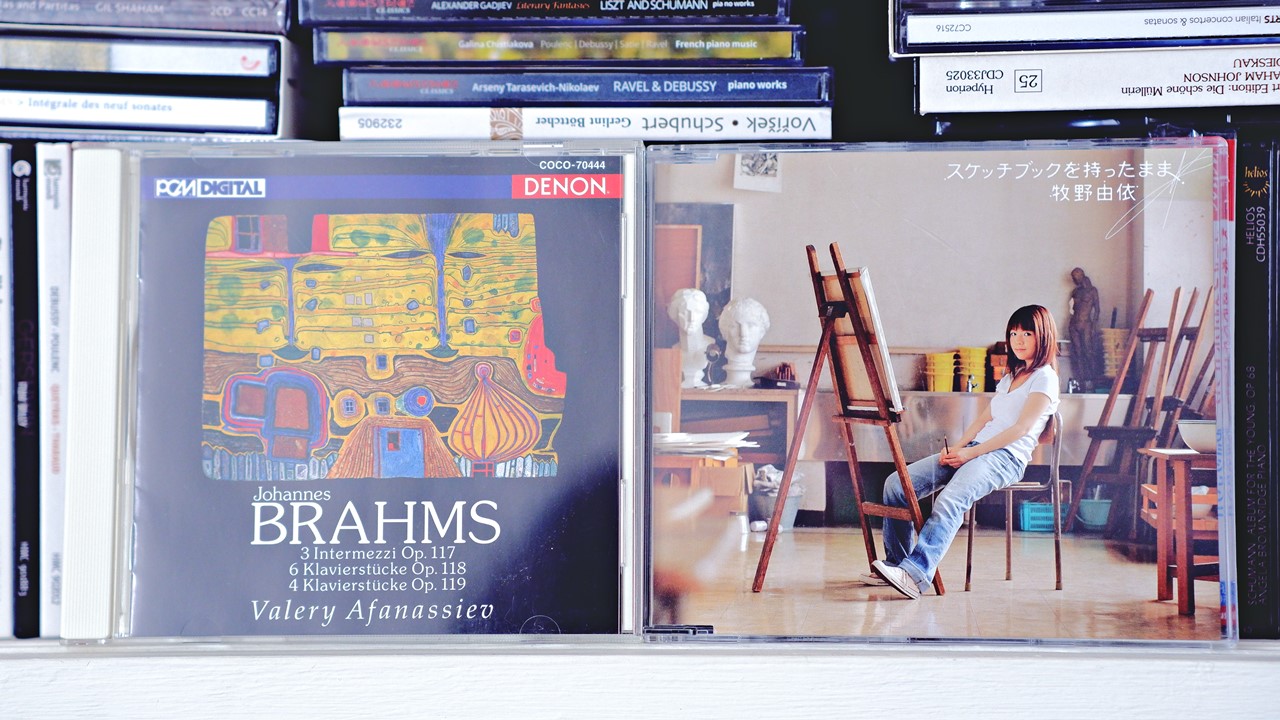
One is a single CD featuring two vocal tracks by Yui Makino — including the ending theme from the anime Sketchbook ~full color’S~ — along with a piano performance of Brahms’s Intermezzo Op. 118 No. 2. The other is a collection of Brahms’s late piano works containing the same piece, which I also picked up as a reference for when I play it myself. This one is performed by the great Russian pianist Valery Afanassiev, and won the Record Academy Award in 1992, also receiving a special selection from Record Geijutsu.
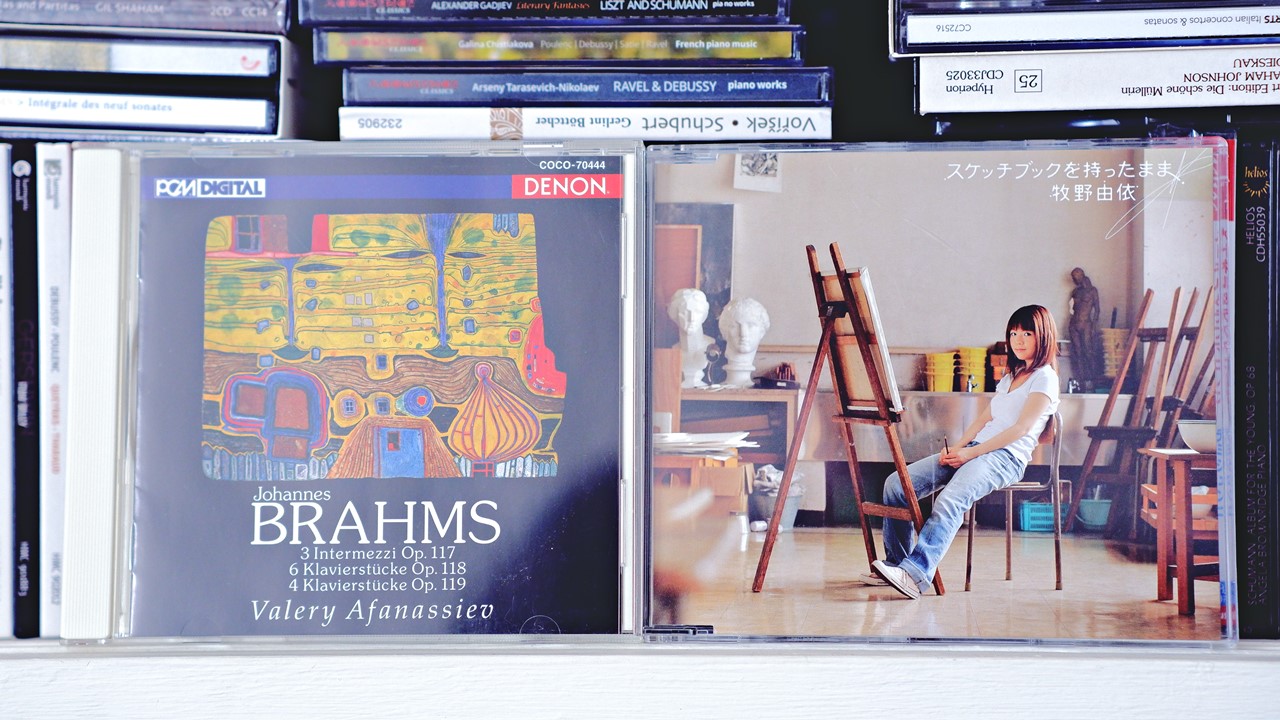
I’ve only listened to each disc once so far, but here are a few quick impressions. Still with the sketchbook in hand — the sound quality is, well, fairly standard for an anime song release, but fans of Yui Makino who know this work should find it easy to enjoy.


 ポチップ
ポチップ
The Brahms Intermezzo included as track 3 was, for some reason, only the first half rather than the complete piece. Hmm. The recording sounds like a private session done in a studio or somewhere similar, probably on a smaller domestic grand piano, with the microphone quite close to the instrument — so it’s a different quality from a normal classical recording. Even so, Makino-san really does have talent. It’s a question of talent even before technique comes into it. The way she sings out the melody, the nuance she brings to the arpeggiated left-hand figures — these are not things you can simply be taught.
 ポチップ
ポチップ
As for Afanassiev’s recording — well, as one would expect. He is a first-rate pianist, after all, and every single note is handled with extraordinary care. The pianissimo passages especially. You can almost see the touch — fingers drawing inward from the far end of the key, as if stroking it back towards you. And the overall dynamic level is held remarkably low, which is genuinely difficult to achieve. The tempo is also quite slow: he takes 7 minutes 53 seconds over this piece. And yet there is a proper sense of tension throughout; it never feels slack or unfocused. With some of the other tracks the slowness does make you wonder, but for Op. 118 No. 2, the conclusion I’ve reached is that a performance this unhurried may actually be the right answer for the character of the piece. Each note is addressed as though in conversation, yet the playing remains stable and unwavering. From what I’d read elsewhere I had imagined something more fluctuating and melancholic, but within the dynamic contrasts it is, I think, a dry and cool interpretation — one that deliberately holds back where holding back is called for. If it were me, I’d surely end up playing it in a far more swaying, sentimental way.
 ポチップ
ポチップ
Afanassiev has been conducting orchestras as well in recent years, and has released several CDs on EXTON/OCTAVIA Records. Being on the EXTON label, I’d expect the sound quality to be rather promising♪


Auto Translated by CS4.6