Today, I would like to explain, in the miniature-garden spirit of AUDIO STYLE, what historical recordings and standard repertoire actually mean — and why they matter. Come to think of it, I don’t believe I have ever, or at least very rarely, introduced a CD or SACD on this blog simply on the grounds that it is a “historical recording.” The honest reason is that I am not particularly interested in the so-called historical recordings that the world makes such a fuss over. And I enjoy classical music from a somewhat different angle than most mainstream classical listeners.
Having set out to become a classical performer, I naturally encountered that kind of recording during childhood, and growing up in a household where classical FM radio and TV programmes were on as a matter of daily routine meant that famous recordings and celebrated performances found their way into my ears whether I liked it or not. And in the days before the internet, getting a general grounding in classical music meant going through things like the major labels’ “100 Best Recordings” CD collections — those textbook-style anthologies — so I ended up hearing a great many of the performances the world calls “masterpieces.” Having listened to various recordings in that way — performances that had been selected by authorities, critics, and commentators of the classical music world, and had somehow been elevated to the status of sacred objects — I found myself realising, fairly early on and with some honesty, that I did not necessarily feel they were good performances myself. . .
Classical Music and Authoritarianism
Classical music is a world in which a particular kind of deification and credentialing — of composers and performers alike — has thoroughly taken hold. Interpretation ought, by rights, to be a matter of personal freedom, but for some reason classical music has an atmosphere of being an academic discipline, and as a result the gap in knowledge and experience between “people who think they know music” and “people who don’t know it well” tends to give rise to hierarchical thinking and the conferring of authority. In short, when someone with the right credentials praises a performance or a performer, many listeners who lack confidence in their own judgement tend to defer to that authority — because the authority says so — and end up deifying things far beyond what is warranted. And rather than bring their own personal likes and dislikes into it, everyone falls into line with that interpretation.


 ポチップ
ポチップ
Once a media authority stamps its seal of approval on something, certain recordings and performances in the classical world find themselves quietly deified, and an implicit consensus about the ranking of composers and performers gradually takes shape. Behind this, I think, is no small amount of commercial intent — a deliberate effort to build brand value through competition results, media appearances, contracts with major labels, the prestige of concert venues, ticket prices, and so on.
And I feel that many classical music listeners, for their part, find a kind of reassurance in going along with this authoritarianism and evaluationism — a sense of knowing good music properly — and that this is perhaps where classical music’s peculiar insularity, its sense of being something special, comes from. Let us call it the high-end ideology of classical music, perhaps.
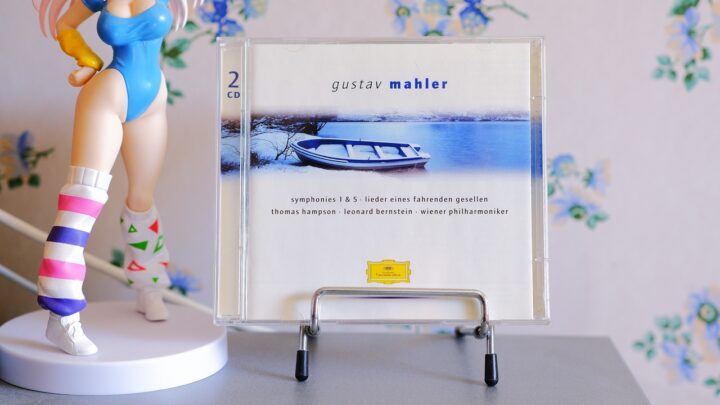
I am, at heart, someone who dislikes blindly agreeing with others’ opinions or deferring to authority. And I have my own quiet confidence in a musical sensibility that does not necessarily bow to famous recordings. For instance, back when I first started this miniature-garden AUDIO STYLE, I wrote a post in which I declared that Bernstein’s Mahler Symphony No. 5 — a recording recommended as a classic by a site I was exchanging links with at the time — made me feel queasy and I couldn’t listen to it, which rather dampened the enthusiasm of everyone who had been praising it to the skies. ※ I have nothing against Bernstein himself, I should say.
Are the Famous Recordings and Celebrated Performances the World Agrees Upon Actually the Real Thing?
I won’t deny that what gets called a classic recording or a great performance is, in most cases, genuinely a fine performance. If I put my mind to it, I could, as a kind of intellectual exercise, hold forth on why a famous recording is famous, and select a set of them to introduce on this blog. But if I am asked honestly whether I personally like a given performance, the answer varies considerably from album to album. In practice, there are performances among the so-called classics that I find difficult, performers I dislike, and pieces I struggle with. And there are plenty of performances where I can see that they are good but cannot feel moved by them — where something in me simply does not respond.
 ポチップ
ポチップ
If the standard of musical value one is using is ultimately someone else’s yardstick, handed down ready-made, then for a listener who lacks confidence in their own musical sensibility, it takes considerable courage to express an interpretation that differs from the already-established received wisdom. So what is one to do in order to keep listening to classical music? Does one become the kind of listener who accepts certain authorities without question? Or does one doubt one’s own sensibility instead, negate oneself, and retreat from classical music on the grounds that it is too difficult? Or does one become someone who, out of fear of being looked down upon, cannot share their preferences with anyone? That, I suspect, is where many people end up.
For the Individual, “Like or Dislike” Is a Valid Criterion
Why is it that I do not necessarily defer to famous recordings? For one thing, quite apart from the fact that the world has judged something “a classic recording,” I have always had my own clear internal standard — what I simply like or dislike in music.
Since I listen to classical music because I enjoy it and do so of my own free will, I value my instinctive, gut-level sense of preference — what I like and what I don’t — above objective performance technique, musical interpretation, depth or density of expression, and musical completeness, regardless of what others might think of me for it. That is why I almost never pick up a CD or SACD simply because the world has declared it a classic. More often than not, my reaction is: oh, that’s a classic, is it? I can hear it any time, anywhere, so I don’t really need it.
 ポチップ
ポチップ
Listeners with an authoritarian outlook might well mock my taste as eccentric, the musical equivalent of an oddly-shaped taiyaki, but I collect recordings by obscure or young performers without hesitation, so long as I personally take to them. These are, after all, recordings with limited distribution — many of them chance encounters that may never come my way again. I would rather have on my shelf a recording I find personally appealing, even if the playing is rough, than a celebrated performance that I can acknowledge is undoubtedly accomplished but simply cannot warm to on a gut level. . .
What Makes a Recording or Performance Great Is, at Its Core, Intensity and a Strong Personality
Incidentally, most of what the world calls classic recordings are, for better or worse, performances of great “intensity.” And that very intensity, turned the other way round, means they have strong quirks — and it seems to me only natural that they should divide listeners along lines of personal, gut-level preference (split opinion right down the middle). For instance: even with a celebrated performer, what do you feel when you encounter a dense, intense performance by someone you find humanly, instinctively off-putting? Try looking honestly at what is happening inside you.
Classical music has certain reference points for judgement built on knowledge and experience, and with a sufficient degree of experience it is possible to assess the technical level of a performance and the finer points of its interpretation to some extent objectively — bringing in intellectual and logical analysis alongside the strength of the sensory impression. Music competitions operate on exactly that basis, with senior performers, educators, and knowledgeable judges ranking the contestants according to a body of shared and accumulated wisdom. And yet human beings are fundamentally subjective creatures when it comes to feeling music, not objective ones — and I think it is quite understandable that for an individual listener whose temperament simply does not match a particular performer’s, what the world calls a great performance may at times be something they cannot like, or may even produce a kind of physical discomfort — a sense of wrongness, or something actively repellent. Or perhaps not actively disliked, but exhausting.
 ポチップ
ポチップ
A performance that gives certain people a powerful sense of recognition and sympathy can, by the same token, be an unpleasant one for those who don’t feel it — and that is not so strange. There are performances in classical music that are recognised and embraced by virtually everyone, but I find myself wondering whether most of what gets called a classic recording in the classical world truly fits that description. At the risk of being misunderstood, if I am to say what I really think: much of it, I suspect, is simply a style of performance favoured by a particular kind of listener, elevated to the status of canonical classic by a certain commercial logic — marketing — and presented with an air of authority. That may be looking at things rather too obliquely, but it is a feeling I come back to often.
Knowing the famous recordings and being able to appreciate them may, in the narrow world of classical music as a hobby, connect to a certain display of intellectual and social status. But I myself, even if a recording is a famous one, cannot hold forth learnedly on a performance I dislike or cannot warm to as though I were a sympathetic appreciator of it — and I have no intention of, and no desire to, pretend I understand something I don’t. That said, nor do I intend to lecture anyone and dismiss music I myself cannot grasp.
Musical Evaluations Are, in Large Part, a Fiction Skilfully Constructed by Authoritarianism and Commercialism
There is something else about this reverence for historical recordings that I find troubling: the way certain past performers and composers become deified through being excessively celebrated. Perhaps deification is necessary to justify the reverence, but performers and composers are, in the end, simply human beings. They have their peculiarities of character, and no small number of them are, frankly, rather hopeless as people. Overseas performers in particular tend to be treated in Japan as maestros, as gods almost — and yet when I hear from teachers from those same countries about the same individuals’ personal conduct, their chaotic private lives, their casually dismissive remarks about music, and find out how thoroughly their reputations have collapsed at home on a human level, I am put in mind of Jesus Christ’s words about a prophet not being honoured in his own country. The same applies when composers are the subject: they were not gods. Does it really mean anything to line up multiple performances of the same work as if kneeling before a deity, and argue over which is superior?

And then there is the fact that people are sometimes more superficial than they themselves realise — and this is especially suspect when it comes to those who habitually see things through an authoritarian lens. In the world of classical music as in the art world, it has happened time and again: works that were ignored or unknown during their creator’s lifetime, in whatever rarefied community — concert hall or gallery — were later brought into the light and reassessed following some chance trigger, while artists and works that had succeeded and made a name for themselves in their own time fell into obscurity in later generations.
 ポチップ
ポチップ
The trigger for such a reassessment might be a remark by a critic, or a word of praise or an act of rediscovery by a later artist — and given all that, can what is called a classic recording or a celebrated performer in a given moment of our present age really claim to be something of lasting, universal worth? And as for the mass of listeners whose numerical judgements sway those authoritative evaluations — surely the quality of that audience has not changed so very much from one era to the next?
I am, as a basic disposition, sceptical of music that is valued by the general public — setting aside what it might represent as an expression of “the spirit of an age.” At least from a musical standpoint, records do not sell because the music is of superior quality. If popular support and record sales were the measure, then AKB48 and Morning Musume would be the greatest music in existence, surpassing all classical music. Are classical listeners smarter than that? Well — they are the same human beings. They hold their heads a little higher, perhaps, but in terms of the average quality of their judgement, they are no different from anyone else. If I were to call them a thin-skinned lot walking around dressed in delusion and pride, I would probably get a good thrashing for it — and having said this much, I am quite prepared to accept the retort that I am describing myself.
What Makes Music a Hit, in Any Era, Is Essentially “Accessibility”
The truth is that what makes music a hit, in any era, is essentially its accessibility. This is no different at its core in classical music: when a performance receives high praise in real time during its own era, I believe the key is that it offers some form of simplified, immediate accessibility to the audiences of the day — to many listeners. Conversely, no matter how musically or artistically accomplished something may be, if it is difficult to grasp at first encounter, or represents something deeper and more demanding, or is too meticulously wrought, fewer listeners will be equipped to understand it — and in a world where mass commercialism holds sway, it will not be rated highly.
Above, under “What Makes a Recording or Performance Great Is, at Its Core, Intensity and a Strong Personality,” I wrote that the key point is that a heavily flavoured, strongly self-assertive, bold performance is, in a sense, “accessible” to anyone.
As I noted earlier, the people who ride the wave of commercial authority and believe themselves capable of defining what counts as a classic recording — of conferring that authority — are few in number to begin with, and the more superficial a listener is, the more readily they are drawn to that authority. And even among the critics and commentators who are the source of that authority, while those who are themselves former performers or musicians are at least understandable, there are not a few who are, well, rather hard to place — people who, if the truth be told, cannot even read a score, listeners pure and simple. In other words, what we are dealing with is ultimately just the musings of ordinary people who have, somewhere along the way, draped themselves in the title of “critic” or “commentator” in media outlets around the world — and to give the game away: the authority itself, at its core, is perhaps nothing more than a kind of delirium, conjured by commercial copywriters backed by the industry and media — or so I sometimes feel.
 ポチップ
ポチップ
The general public inevitably ends up entrusting its fundamental value judgements to authorities who seem to understand music — and this tendency is all the stronger in a world like classical music, which has drifted away from straightforward entertainment and, with the passage of time, has taken on the flavour of authority and academic discipline. The result is a ready-made, top-down set of values. The kind of superficial, sensibility-poor intellectual who receives music as “musicology” — as knowledge processed through the head — before feeling it as lived art, as something subjective and bodily; who prizes narrow technical argument and interpretive wordplay; and through whose one-sided value judgements, used as a filter, and through the benefits of commercial promotional campaigns of all sizes, the historical classic recording is made — is that too jaundiced a way of seeing things?
Break Free from Authority — Choose Music More Freely
Let me return to the main point. I am not dismissing historical recordings as such. Among those so called, there are many I personally love, and some that make me recoil. What I question is not the music itself so much as the passive stance of a certain kind of classical listener, who deifies these recordings under the banner of authoritarianism and treats them as absolute. And the value of a recording being called a historical classic is something I personally do not set much store by.

Because there are, in fact, many performances in the world that suit my taste better and that I find more appealing than the historical recordings. Music is, after all, the kind of thing where you might sit through a concert by someone the world calls a great performer and find the playing rather poor on the day, and feel thoroughly deflated by the rapturous applause of an audience (not blessed with particularly discerning ears) — and then, on another occasion, find yourself moved by the honest, sincere performance of a little-known musician whose technique may be unpolished, a ticket you happened to come by.

If someone were to call me foolish for valuing obscure albums and recent low-budget performances without knowing the famous recordings properly, I would want to ask in return: are those values really yours? Are you not simply copying wholesale a ready-made, authoritarian set of values that someone else handed you?
The true classic recording for each individual is not necessarily the same as the classic recording the world agrees upon.
The mountain of obscure, cheap import discs with almost no name recognition, piled up for sale in their thousands at TOWER RECORDS and HMV. Not called classics, not played by celebrated performers, with no guarantee of ever being repressed. Hidden among them, here and there, are performances that make you want to press them to your cheek, and mysteriously fine-sounding pressings. Isn’t that the real pleasure of collecting classical records, CDs, and SACDs? At least, it is for me.
If You Could Take a Few CDs to a Desert Island…

If I myself were to take a few CDs to a desert island, I am quite certain they would be recordings with no relation whatsoever to the opinions of distinguished authorities — recordings that overlap with memories from my early childhood, or from my youth. And for that matter, when it comes to record reviews, a passionate piece of writing by an amateur on the internet, about a recording or performer they love — famous or obscure — is far more interesting to me than a stiff, learned review piling up received wisdom about historical classics. ※ The reason I wrote this post was that I had come across a music teacher somewhere online who was making fun of amateur classical music criticism on the internet.
 ポチップ
ポチップ
And that, surely, is one of the virtues of online opinion. If you simply want to know about historical classics, you can go to a bookshop and buy any number of books in which well-known music critics have carefully listed their selections. Or you can easily enough find that kind of authority-laden, biased reviewing on the internet today. But there are people who have had enough of all that, or who never wanted stuffy classical music in the first place. The value of online opinion, as the word “long tail” suggests, is that individuals can shine a light on small, personal classics that exist inside their own experience. There, unconnected to social evaluation or authority, are voices of assessment rooted in each person’s own upbringing and experience. As long as writers and readers don’t bring their own warped authoritarianism into it, I think that is perfectly fine — even if the criticism is occasionally outlandish or eccentric — unless things go really rather badly wrong.
~ Addendum ~ A Brief Word on the Significance of the Digital CD Medium
Incidentally, something I did agree with when I visited that particular site was the point about OIBP remastering being dreadful — that I can endorse wholeheartedly. Though it isn’t only OIBP; other labels’ remasters, ART and SBM among them, are often even worse. If you want to preserve the freshness of the music, there is no need to upconvert early digital recordings that were originally recorded at 14–18 bits using a DDC to a high sampling rate. And yet they go to the trouble of upsampling to 20–24 bit, recompressing the data, and forcing it onto a CD — which is why some strange character from the digital processor gets baked in and the sound turns murky. There are cases where a remaster does come off well, I should say, but they are the exception.
However —
“Is a CD player not a device unsuited to serious music listening?”
This I cannot agree with. Calling it scrap metal or junk — is that a declaration of war? Provided the mechanism and disc are not damaged, playing back at real-time single speed, the data itself is read properly, 100% of it. Anyone who says it isn’t should prove it. The problems with sound quality in digital playback — jitter of various kinds, loose time-domain management, the analogue instability that follows D/A conversion — lie elsewhere, I think. That said, this too is a hypothesis that is not entirely easy to prove, so to anyone of a rigidly logical bent it will sound like so much eccentric raving.
 The Non-Negligible Differences in Sound Quality Due to CD Pressing Country, Era, and Remastering — Part 1Problems Inherent in Recordings and Remaster Sources @ Twitter Log 4SHM-CD — What Is That, Exactly? Part 1Miniature Garden Pure Audio: Category — CD/SACD Players
(The above was originally written in March 2008. However, the critical quotations from other bloggers’ posts that appeared in the original version were, on reflection, rather an improper thing to do, and depending on how one reads them could amount to defamation — so I have revised and substantially reworked the content.)

Auto Translated by CS4.6


List of comments (2)
pastel_piano 様
こんばんは。
クラシックは林檎に歯形を付られるくらいにしか窘めせんでおりませんが、擦り切れるくらい聴いた、とある指揮者、楽団のLP“ショスタコーヴィチ交響曲第5番”がCD化されないのは、やはりクラシック評論家や大多数の愛聴家の評価が得られなかったからなのでしょうね。。。泣
話は変わりますが、pastel_pianoさんのC4はご健在でしょうか? 私のC4はなんとか稼働していますが、これから先、部品調達等を考えると買い替えも検討している最中です。国内販売されている現行citroenラインナップには魅力的なモデルがなく、他社イタフラメーカ―に浮気するか?などと、ほくそ笑んでおります。
第九は第九にしか聞こえない
指揮者も演奏家も歌ってる人も違う筈なのに