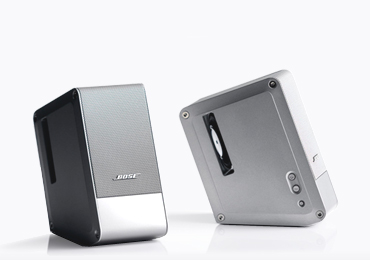
【BOSE Computer Micro Music Monitor M3 Review】
M3 vs M2|vs Wave Music System & 125 Westborough |M3 Discontinued|M3 Limited Return
The BOSE Micro Music Monitor (M3) — an ultra-compact desktop speaker that has been featured in the sidebar of this blog ever since it launched two years ago. As a battery-powered active speaker (powered speaker) with a built-in digital amplifier that fits in the palm of your hand, it was met with a storm of praise everywhere from PC-related websites to pure Hi-Fi magazines, right from the moment of its release. I too was swept along by that enthusiasm, and after actually auditioning it in a shop to confirm the sound quality for myself, I decided to feature it on the blog — though at ¥49,800, sold only through BOSE’s own direct retail channel at full list price, it was quite a steep ask for a desktop speaker intended for PC use, and at the time I never quite got as far as actually buying one myself.
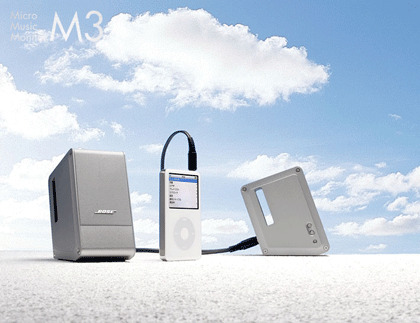
Now, this Micro Music Monitor (M3). As it happens, since around the end of last year a younger sibling model has been added to the range: the M2 Computer MusicMonitor, priced at roughly ¥10,000 less than the M3. (Released November 2007. Discontinued 2018.) The external dimensions of the M2 Computer MusicMonitor are 65.0(W) × 122.0(H) × 123(D) mm — almost identical to the M3. The main difference is that the existing M3 can run on AA batteries, making it easy to take travelling to places where mains power is unavailable, whereas the M2 has no battery option and is designed purely for desktop use such as with a PC. There are a few other minor specification changes, but in terms of functionality that is really the only significant difference.
What’s more, the M2 Computer MusicMonitor is available not only through the BOSE official store but also through computer shops, consumer electronics retailers, and online shopping platforms, meaning anyone can pick one up without any fuss — and at a price more than ¥10,000 cheaper than the direct channel. Which is to say, I honestly found myself thinking: well, there’s really no point in buying the M3 any more, is there… And so, without even doing a proper listening comparison, I went and pulled the M3 link from the blog and replaced it with the M2.
As for this new model, the M2 Computer MusicMonitor — I had assumed it was simply a budget version of the Micro Music Monitor (M3) with essentially the same specifications, released for general retail once demand for the M3 had settled and direct-channel shipment numbers had started to hit their limits. However, according to BOSE, the story goes rather differently: following the strong sales performance of the M3 in Japan, they considered launching it in its home US market as well, but concerns arose that American consumers would not accept a $500 price tag for such a tiny desktop speaker. It was apparently at the direction of Dr Amar G. Bose at the US headquarters that a model was developed with $100 worth of cost reduction — and that model is the M2.
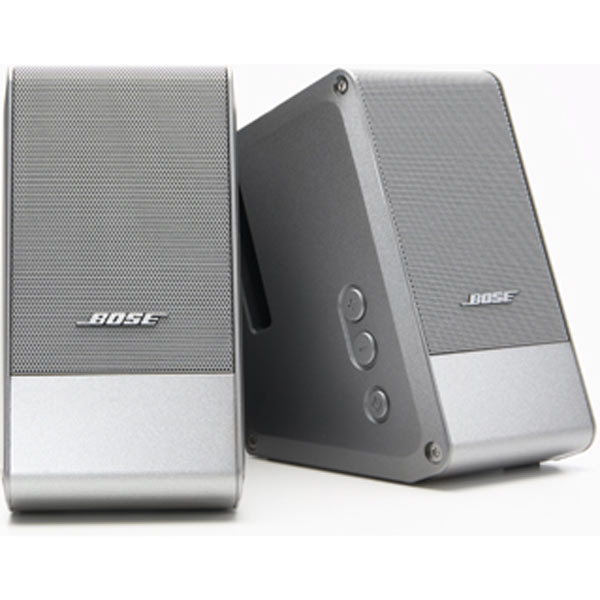
So, the Micro Music Monitor M2 is a US-specification model. The M3, by contrast, was developed and voiced by Japanese BOSE engineers from the outset — a Japan-market-only model sold exclusively in this region. Apparently the sound tuning differs between the M3 and M2 to suit each country’s sensibilities. Of course, this is BOSE we’re talking about, a brand marketing powerhouse, and one can never be entirely sure where the truth ends and the sales pitch begins — but better late than never, I decided to actually sit down and listen for myself to find out whether there is a genuine sonic difference.
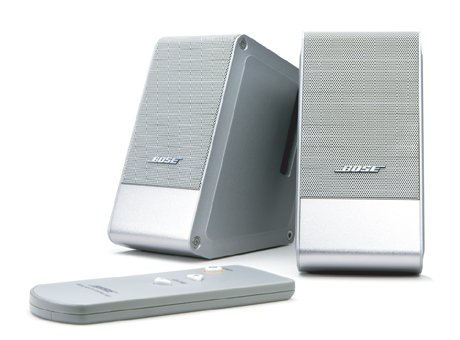
Both units use a 5cm full-range driver with a powerful neodymium magnet. Both are magnetically shielded, naturally. In the M3, one enclosure houses the digital amplifier and the other the battery compartment, so the weight of each side is broadly similar at around 600g (without AA batteries). The M2, however, has a noticeable weight imbalance: the right enclosure containing the digital amplifier weighs 600g, while the left — including the speaker cable — weighs 500g.
One of the most distinctive features is the large slits cut into both sides of the enclosures. At a glance they look like a kind of bass reflex port, but given their dimensions, there is clearly no room for a bass-amplifying port along the lines of the company’s Acoustic Wave Guide. Looking inside the slits, one finds a pair of BOSE’s own circular metal passive radiators — called Hyper Resonators — mounted facing each other. It seems this is the decisive element behind the rich sound quality that sets the M3/M2 apart from other small speakers on the market. (To be continued.)
BOSE Micro Music Monitor (M3) — Sound Quality Review
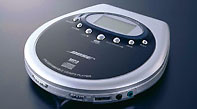 Now, to the all-important question of sound quality. First up: the original model, the Micro Music Monitor M3. The source was the BOSE portable CD player CD-M10, auditioning at the direct retail store with A/B switching. The CD-M10 (its predecessor was the CD-M9) occasionally turns up as a freebie with promotional campaigns, but sadly it is not available for general purchase. It does pop up on Yahoo Auctions! from time to time, and I must confess I do rather want one. The Micro Music Monitor (M3) is extraordinarily clear through the midrange and into the treble — piano in particular sounds strikingly vivid. The tone is lush and beautiful. Rather than a purely neutral monitor sound, the impression is that the metallic freshness of the aluminium enclosure is being actively exploited to add resonance and life. The cramped quality, the dry, murky congestion and vagueness that are so common in PC speakers are essentially nowhere to be found here.
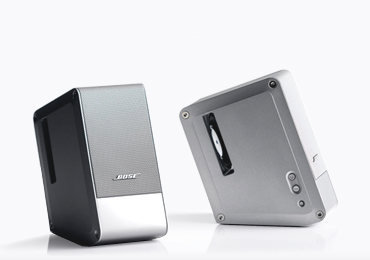
The large slits on the sides house BOSE’s own passive radiators — the Hyper Resonators — mounted facing each other in a distinctive bass reflex arrangement, and thanks to that, the low-frequency reproduction is just as abundant as the reputation suggests. It is certainly not the effortless bass of a large speaker, but there is a curiously rich sense of weight that feels like a naturally amplified fullness. Playing at a somewhat higher volume is where this lush, resonant quality really comes alive and makes its best impression.
And while I say it resonates, the cabinet itself is small and extremely rigid in construction, so this is nothing like the box colouration you might associate with the Acoustic Wave Guide approach. Rather, the impression is that the Hyper Resonators facing each other inside those side slits are generating bass of a quality that utterly defies the enclosure’s size, and conjuring a lively, spacious soundstage that seems to exceed what the physical dimensions could reasonably produce.

 ポチップ
ポチップ
Come to think of it, the sound is considerably more lush and open than when I auditioned it shortly after launch. Back then the midrange and treble were more heavily emphasised, giving a stronger metallic impression with not quite enough openness — so whether this is a matter of the shop display unit having had time to run in, or whether there have been minor circuit-level specification changes along the way, I cannot say, but compared with that earlier audition the sound quality is now markedly better. (The M3 was subject to a battery leakage recall in 2006, so it would not be surprising if there are some differences between production batches.) Incidentally, at moderate volume the spacious soundstage described above comes into its own, but turn it down and the presentation becomes leaner and more delicate — pinpoint and miniaturised, with a precise, focused sense of imaging.
BOSE M2 Computer MusicMonitor — Sound Quality Review
Next, the M2 Computer MusicMonitor. Hmm…? For some reason it sounds like the volume has dropped. I adjust the remote control each time to bring the perceived level to roughly the same position, yet the impression does not change. In a word, the frequency response curve simply feels different. The M2 presents its sound with the midrange at the centre, whereas by comparison the M3 digs deeper into the bass and has greater clarity in the upper frequencies — in short, a wider range. Because of this, when the midrange levels are matched, the M3 with its more prominent bass and treble registers as having higher overall sound pressure. Turn the volume up and the gap only widens further.
In terms of soundstage, the M3 has considerable depth, while the M2 spreads things out more laterally, with the vocal range pushing more to the fore. For that reason, with classical recordings that demand wide frequency extension, the M3 is in an almost entirely different league. The difference in sound quality grade is so pronounced it almost makes one wonder whether the digital amplifier components inside are simply of a different class. The M2, on the other hand, is narrower and more midrange-centred compared to the M3, which means that for recordings with some harshness, or for rock and pop where you want the vocals to stand out over the instruments, the M2 can actually be easier on the ear and leave a more favourable impression. The M3, wide-ranging from vocals to instruments and dense with sonic detail; the M2, accompaniment pulled back, vocals and voices brought forward. That is roughly how it feels.
 ポチップ
ポチップ
The gap between the M2 and M3 was rather larger than expected…
Hmm. Whether this difference in sound quality is worth ¥10,000 is ultimately a matter of personal judgement, so I can’t say categorically — but my own personal impression of the Micro Music Monitor M2 is something like: “Well, that’s quite a nice sound actually… I might pick one up if I came across a second-hand bargain.” Whereas with the M3, it’s more: I want this badly enough to pay ¥50,000 out of my own pocket. The M3’s clear, wide-ranging sound carries a sense of astonishment — like watching a magic trick — quite beyond what its tiny dimensions would lead you to expect. The M2 comes impressively close, but the sound somehow stays within the range one might reasonably imagine from its appearance.
If the M3 didn’t exist, the M2 would get a very warm reception on its own merits. But given that the M3 does exist, I cannot shake the impression that BOSE has quite deliberately differentiated the two tiers. Whether a ¥10,000 difference in cost actually underlies that sonic gap — well, in all likelihood the bill-of-materials difference is fairly modest, just a touch of different tuning and component choices here and there. But since the results in practice diverge so considerably in sound quality, one finds oneself with little choice but to go along with BOSE’s strategy… If you’ve already bought the M2, I would suggest, for the sake of your peace of mind, that you probably shouldn’t listen to the M3.
【BOSE Computer Micro Music Monitor M3 Review】
M3 vs M2|vs Wave Music System & 125 Westborough |M3 Discontinued|M3 Limited Return

Auto Translated by CS4.6

List of comments (9)
http://www.watch.impress.co.jp/av/docs/20071026/np027.htm
私も秋葉原でM3を試聴したときはびっくりました!
M2が登場したときは、マジで欲しい!!
と、大喜びしましたけど、↑の記事を読んでM2は買えないかな、、、、。と感じましたね、、、。
M3が5万円なら安いと思います。
101シリーズの音を想像していると、全く違いますよね?
かなり緻密な感じがしました。
ご紹介のAVwatchの記事、私と殆ど同じ事が書いてある。。。(^^;
101というか、M3の音質は(77WER/78WERを除くと)既存のボーズ製品とは全然違います。設計した日本人エンジニアが、日本限定の局地仕様と云うことでボーズトーンを全く意識しないで作ってしまったのではないかと…。 そしてそれが成功している。M2は米国仕様と云うことでM3をベースにあちらのエンジニアがモデファイしたのだと思いますが、既存のボーズの音色を加味しようとした結果、レンジが狭まってしまったのかなぁと。
M3の音って、デジタルアンプ+フルレンジの音なんですよね、、、、。
デスクトップで音楽を楽しんでいる人々の多くは、デジタルアンプ+自作のTD系のフルレンジに落ち着いて行くようです。
大概は、塩ビ管のyoshiji9の縮小コピーみたいな感じですけど。
横から、失礼m(__)m
昔から使ってるメイン以外にデスクトップをと
考えると普通コンパクトを求めてミニコンに走る?
もしくはラジカセ?…一般の普通の人はそぅじゃないですかね?
確かに、音質を求める方達はデジタルアンプ+フルレンジかな.。o○
高価すぎるB&0は論外としてCR101ってな手もありますよね
http://www.marantz.jp/ce/products/life/personalcd/cr101/index.html
CR101は少しの期間使用しましたが 便利さ以外は
私には役不足でした。音場の広がり感はないけど
結構いぃ音なってましたよ~♪
入力がどうの 配線がどうのって悩む女性や
普通の人は こういう機器に簡単に流れ
そこである程度の満足感を得、ピュアの入り口に
たどり着く前に納得してしまうんでないでしょうか?
オーディオ人口が増え。安価でもよりよい製品が
切磋琢磨されてでくる環境には程遠い現在ですね><
>でくのさん
>M3の音って、デジタルアンプ+フルレンジの音なんですよね、、、、。
このサイズでまともなアンプとなると、やっぱりデジタルアンプを採用するのが賢明なのかも。なんて言ったらFirestoneのBigJoeはどうするんだ!?って感じですけど(^^;M3ってフルレンジなんですよね。でも音的にフルレンジとは思えないほど高域が奇麗に出ているのです。この秘密は、低域負担を軽くししてるハイパーレゾネーターとの変則2WAYだって事で納得してます…。
PCオーディオ高音質化計画ですが、KA-S10って正直どうかしら?私じゃ満足できない可能性があってそこが怖いのです。昔のTRIOはともかく、近年のKENWOODの音って実は苦手です。妙にアナログチックで濃くて暗い音ってイメージ。濃くても良いのですが、このトーンの暗さはなに?みたいな。K’sとか、現行のKシリーズレシーバー、カーオーディオのヘッドユニットなど、みんなそんな感じの音です。
ちなみに一昔前に絶賛されていたAVINO VH7PCも、これはA級アンプの滑らかでウォームなサウンドで決して暗い音ではないのですが、時間軸方向の流れのたるい音質が気に入らなくて1週間で手放してます。当時薦めてくれたCD92さんとこの件で険悪に…w
>グレアムペンギン♂さん
一般人はラジカセかミニコン。ホントそうですよねぇ。。。まぁ一般人は音質を求めていないって言ってしまえばそれまでですが、大抵のミニコンは店頭効果のあるデザインと何処までコストダウン出来るかが勝負であり、音質は二の次というより、音なんて出れば良いくらいにしか考えてないような、あまりに酷い音がするモデルが多すぎます。こんなものが長年氾濫していて、しかも見た目に誤魔化されて、そこそこ高音質が手に入っているような錯覚を消費者に与えますよね。このミニコンやラジカセ、圧縮ポータブルプレーヤーの氾濫が、若い人達のまともな音質に出会う機会を奪っているというか、低次元の納得と思考停止の元になっている気がします。
ボーズ製品もピュアオーディオ系の人々からは白い目で観られがちですけれど、このラジカセ・ミニコン市場の音質の酷さを鑑みると、BOSEの方が遙かに良心的です。そんなこともあって、M3も含めて、BOSEがピュアオーディオに目覚める取っかかりになればなぁと。
MARANTZのCR101は、音響専業メーカーのマランツだけあって、ラジカセの割に音が良いですよね。前にデパートで聴いてちょっと驚きました。まだラジカセにしてはお高いCR101を買うくらいの人々は良い意味でマシな方々じゃないかと。ちなみにココだけの話、BOSEのアコーステッィクウェーブミュージックシステムより実はずっと高音質ではないかと思ってます。
http://www.rakuten.ne.jp/gold/clionet/marantz-cr101/
実は過去に、パナのSB-6という平面SPの低音不足に辛抱できず
BOSE301を購入し長年使用してきました(^^ゞ
オーディオから遠ざかっていたし 強い不満もなかったんで
エッジ破損がなければ 昨年暮れにG総合音響に行くこともなかったし
熱が再び蘇る事もなかったでしょうね きっと
そこそこの音で満足していたかもしれません
ポップス系を聴くにはBOSEで充分でしたからぁ!
でも CM1の音を耳にすると「買うしかない」って判断する私がいました。
アコース…は 非常に興味ありますが いかんせん
値段が高すぎます。左右に分かれて音がはっきりと出るBOSEは
CR101のほぼ1ヶ所から出るのよりは ステレオ感だけは優位でしょうね
リンク見ました^^参考になります。
PS ダンタイソンもココの見て1枚買っちゃいました(^^ゞ
B&W CM1とPrima Luna ProLogue1でしたら、BOSE301に低域の迫力も負けず、しかもずっと高解像度な音が得られてそうですね♪
>ダンタイソンもココの見て1枚買っちゃいました(^^ゞ
お買い上げありがとうございます♪なんて(^^)。
ダン・タイ・ソン先生はpastel_pianoが一番好きなピアニストです。今までリリースされたCDは全て持ってますが、一押しなのがショパンのバラード集と即興曲&スケルツォ集です。
タイソンさんはCHOPIN:4BALLADESを購入でした。
実は今日誕生日なんで 自分へのご褒美として
HMCD(高音質盤?)BALLADSを地元で購入しました。
こっちは いまさらながらですがCOLTRANEの名盤です^^
クラシック系は強くないので これからも参考にしますね
どんどん お薦めをアップお願いいたします。
BOSEの音質は ピュアオーディオ系の人達から
しょせんなにをやってもBOSEの音って言われる訳が
CM1を購入してから 意味がわかりました。
高解像度を求めず 雰囲気で聴くなら いまでも
いぃSPだと思いますけどねぇ^^
…低音 充分出てます 勿論大型フロア型SPの様な
ゆとりある 迫力じゃないですが 問題ないですよ^^
グレアムペンギン♂さんお誕生日でしたか。おめでとうございます♪
HMCDは私もクラシックを数枚購入したのですが、なんかあちこちで喧々囂々みたいなので、反応が怖くてレビューしてません(滝汗)。間違いなく普及はしないと思いますので手に入れるなら今って感じでしょうか。
>しょせんなにをやってもBOSEの音
これは確かにあります。上で書いた125等はまるきりボーズサウンドですので、独特の雰囲気を楽しむスピーカーになってます。ただM3に関してはイイ意味でBOSEの音色ではありませんので。うちのブログでも敢えて取り上げてみました。