Amazon Music Unlimited HD. In response to the lossless and hi-res launch of Apple Music that was released the other day, Amazon Music HD — Amazon’s own lossless high-quality streaming service — has been effectively reduced in price, with no additional ¥1,000 surcharge on top of the compressed-audio Amazon Music Unlimited. What was previously ¥1,780/month (tax included) for Prime members and ¥1,980/month (tax included) for non-Prime members has been effectively reduced to ¥780/month (tax included) and ¥980/month (tax included) respectively. ※As of June 2021

On top of that, there was a campaign at the same time offering 4 months for ¥99 upon new sign-up (until 22 June, when Prime Day ended). Swept along by all the fuss surrounding the annual Prime Day sale held in June 2021, I ended up signing up for Amazon Music HD rather belatedly. Those already subscribed to Amazon Music Unlimited can switch to Amazon Music HD at no extra charge. So for those with an environment capable of streaming in high-quality, high-bandwidth audio, I would recommend switching to HD hi-res from the Amazon Music app or your playback device’s settings.
Hi-res quality in Amazon Music HD, Ultra HD, and Amazon Music Unlimited
The sound quality of the standard Amazon Music Unlimited is lossy compressed audio at up to 320kbps (AAC). By contrast, Amazon Music HD delivers lossless audio (uncompressed), with “HD” meaning 16-bit 44.1kHz (minimum sample rate) at an average bitrate of 850kbps — the same resolution as CD. The fact that it bothers to note “(minimum sample rate)” alongside 44.1kHz makes me wonder whether 48kHz sources are mixed in as well. And then for select tracks labelled “Ultra HD” — Ultra High Definition — the spec becomes 24-bit/44.1kHz–192kHz at an average bitrate of 730kbps, making it genuine hi-res quality.
My own position on streaming subscriptions
※Feel free to skip this section if you have no interest in the author personally. As I have long declared myself a fundamentalist record-spinner and committed physical-media absolutist, I had never taken out a long-term subscription to any flat-rate music streaming service. Whenever a new streaming service appeared, my standard practice was to use only the free trial period before cancelling. Up until now, I had used Amazon’s streaming audio exclusively to listen to thirty-second sample clips before buying CDs or SACDs — aside from MP3 files purchased as downloads.
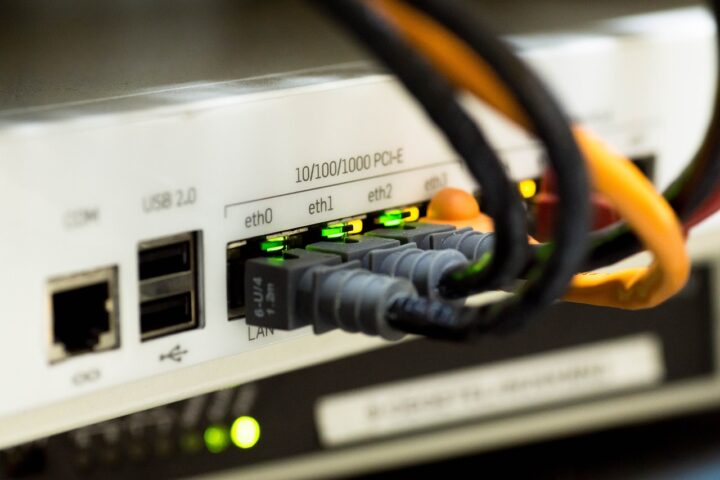

I have considered adding a network audio player to my Hi-Fi system on several occasions, but so far I have not actually gone ahead and introduced a dedicated network audio player into either my main system or my sub system. A large part of the reason is that the CD/SACD collection I have built up over the years is so vast that I already own more music than I could ever listen to without paying a perpetual streaming subscription. Beyond that, digital playback is an area where the actual difference in sound quality between players (network audio/CD/SACD players) is significant, and I feel that for my own circumstances, continuing to invest in managing and preserving my existing physical media — and in strengthening and updating my CD/SACD playback setup — yields far better sound quality and far more meaningful results than spending several hundred thousand yen constructing a new streaming environment.
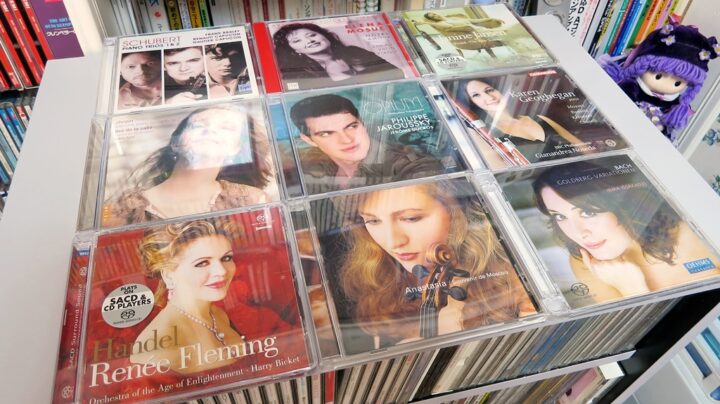
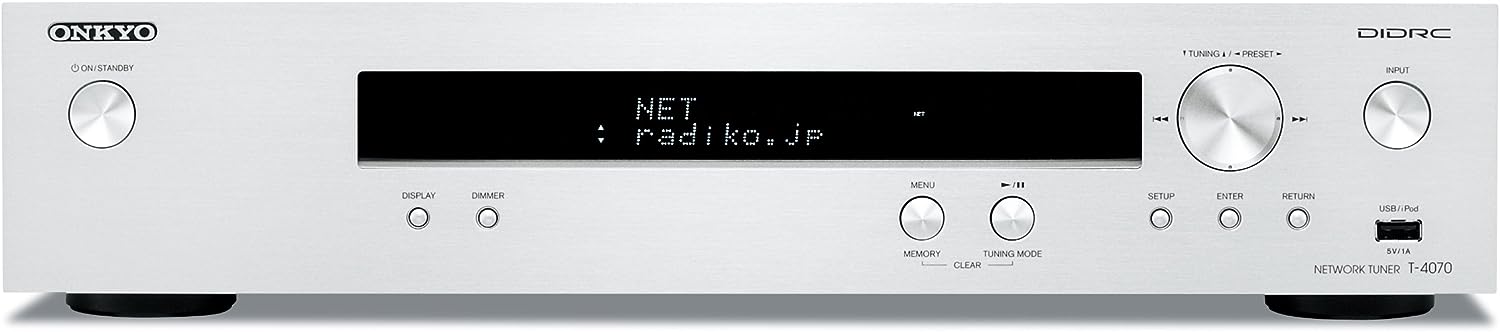
I have touched on all of that in the entries above and on Twitter from time to time, so I will deliberately set it aside for now and write up my initial impressions of the sound quality when playing the newly subscribed Amazon Music HD through a desktop PC audio setup. After downloading and installing the Windows 10 desktop version of the Amazon Music app for the first time in a while, I searched for several recordings I had been listening to recently on the CD players in my main and sub systems, and compared them with the same sources played through the service.
Amazon Music Unlimited HD — a sound quality review
Right, on to the usual sound quality review — first impressions… oh, that’s viscerally off-putting. Never mind hi-res HD for a moment — this is a sound that somehow refuses to settle, making you feel restless as you listen, oddly cloying and slick. I thought it might be a compatibility issue with the desktop PC audio environment, so I tried playing it through the iPad mini‘s built-in speakers, which have a reasonably clean sound — but the same sense of wrongness was there, if anything even worse. Does everyone really listen to music that sounds like this? Is that alright? Does nobody feel queasy? I sat there staring blankly at the app screen and fiddling around, and then I discovered the exclusive mode setting.
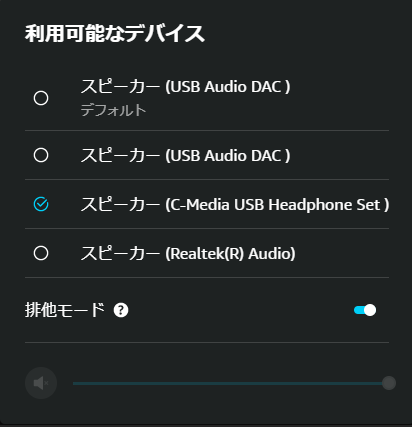
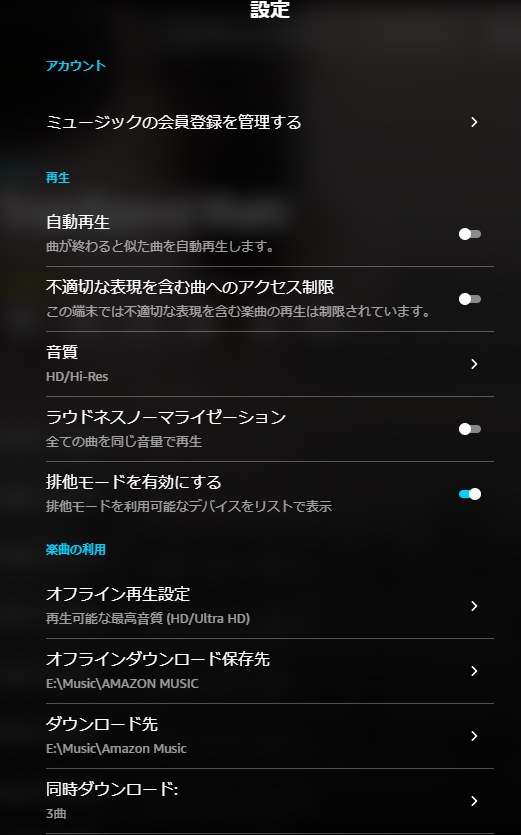
Turning on the exclusive mode setting brought about what I would describe as a fairly dramatic improvement — roughly 70–80% of that visceral, hard-to-put-into-words wrongness simply receded. It did not vanish entirely, but it settled to a level of discomfort that was at least manageable. Whether this unease originates in the dedicated playback app itself, or in the normalisation applied to Amazon Music Unlimited’s stream data as such, I cannot say — but I am curious whether it would also be noticeable through a high-end dedicated network audio player. One minor inconvenience is that exclusive mode resets to off every single time you quit the music app on the PC. Setting that aside, the overall sound character is lively and bright, and I feel the musicality is actually fairly high.
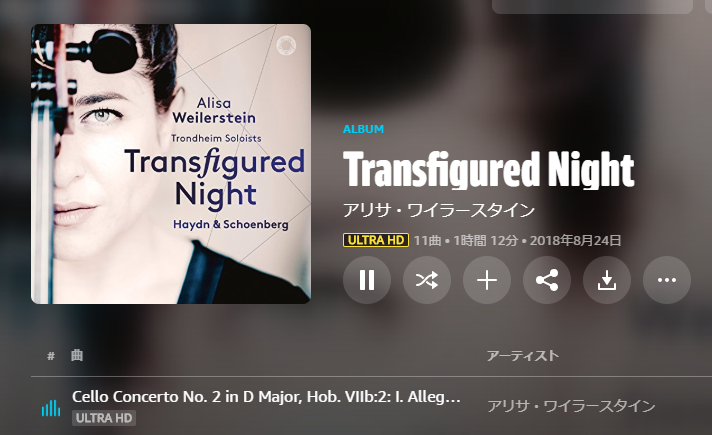
In terms of sound quality, there is a great deal of fine detail and relatively little high-frequency distortion — a thoroughly hi-res-ish, contemporary sound. Well, it is not actually hi-res in the HD tier since that is CD-equivalent, yet the sound quality through the app itself has a distinctly hi-res flavour… (curious). Even comparing HD against the same source ripped from a CD and played back through KORG AudioGate, the HD version clearly has more information — (an illusion, I know). Whether this holds true for every track remains to be seen, so there is more to explore. It would be nice if the app displayed the spec and bitrate of the currently playing track, but all you get is a yellow “HD” or “Ultra HD” label with no specific figures to be found. In moments like this it would help if the DAC could show the sampling frequency of the incoming signal — but the Firestone SpitFire 24-bit DAC I use for desktop PC audio is a model where you cannot tell the input sampling frequency just by looking at it… orz
Playing back via USB wireless transfer on the sub system
I dug out the ONKYO UWL-1 USB Digital Wireless System that I have hardly touched lately, connected it to the Pro-Ject DAC Box DS, and tried playing Amazon Music HD through the DALI MENUET × Miuaudio MKTP-2.
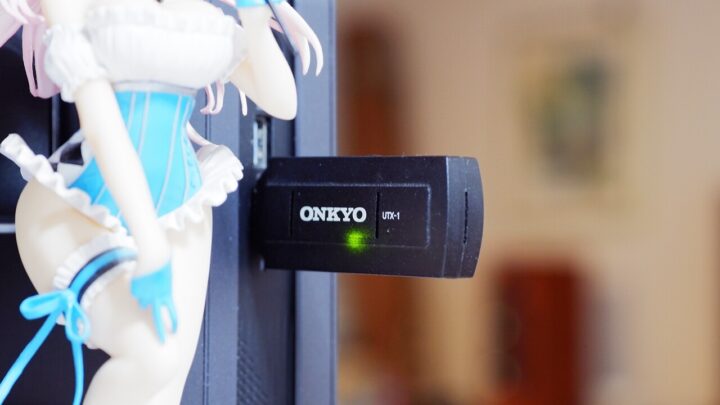
The ONKYO UWL-1 is a product from 2006 with USB 1.1 — practically a fossil in terms of spec — but unlike Bluetooth it can transfer digital audio data from the PC to the receiver in real time over the 2.4GHz Wi-Fi band with no compression. You can connect the receiver to a Hi-Fi system that is completely physically isolated from the PC and still play back audio via PC audio.
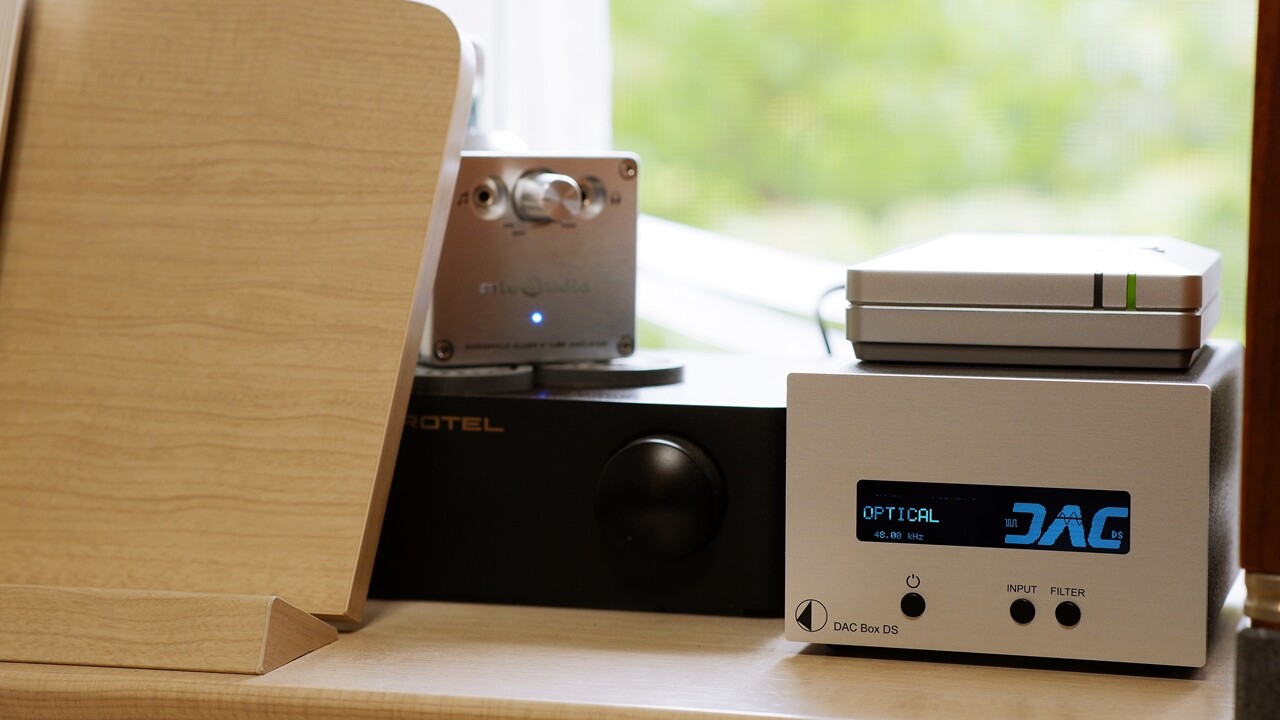
By plugging the transmitter unit of this USB wireless system into a spare USB port on the PC, you can stream PCM digital data from the desktop PC audio setup to the receiver on the sub system side, wirelessly and without any compression.
The sound quality of the UWL-1 receiver’s built-in DAC is about what you would expect for the price, but connecting the receiver’s digital output via a TOSLINK (optical digital) cable to a better stand-alone DAC gives a worthwhile improvement in sound quality. Looking at the display on the Pro-Ject DAC Box DS connected via the UWL-1, all playback — whether HD or Ultra HD — appears to be running at 48kHz rather than 96kHz. That is simply a limitation of the UWL-1, which tops out at 16-bit/44.1kHz or 48kHz PCM. For some reason I have yet to come across a track that shows as 44.1kHz — could it be that Amazon Music HD actually has more 48kHz content than 44.1kHz?


Here too, the sound has a lot of that extra-detail, slightly muddy quality. That said, the UWL-1 is by nature a lean, somewhat sparse-sounding unit, so the character of Amazon Music HD fills in the gaps in a pleasantly rich way — rather more lavish than you might expect. It is a case of the two averaging out nicely. I had the audio-technica AT-OPX1 connected as an optical digital cable — whatever was to hand — but upgrading that cable looks like it could tune things further in a preferred direction. The unsettled, cloying unpleasantness that was quite noticeable on the PC is still slightly present here, but it feels as though it is actually contributing to musicality rather than detracting from it. To put it plainly: it has a sensuous quality.
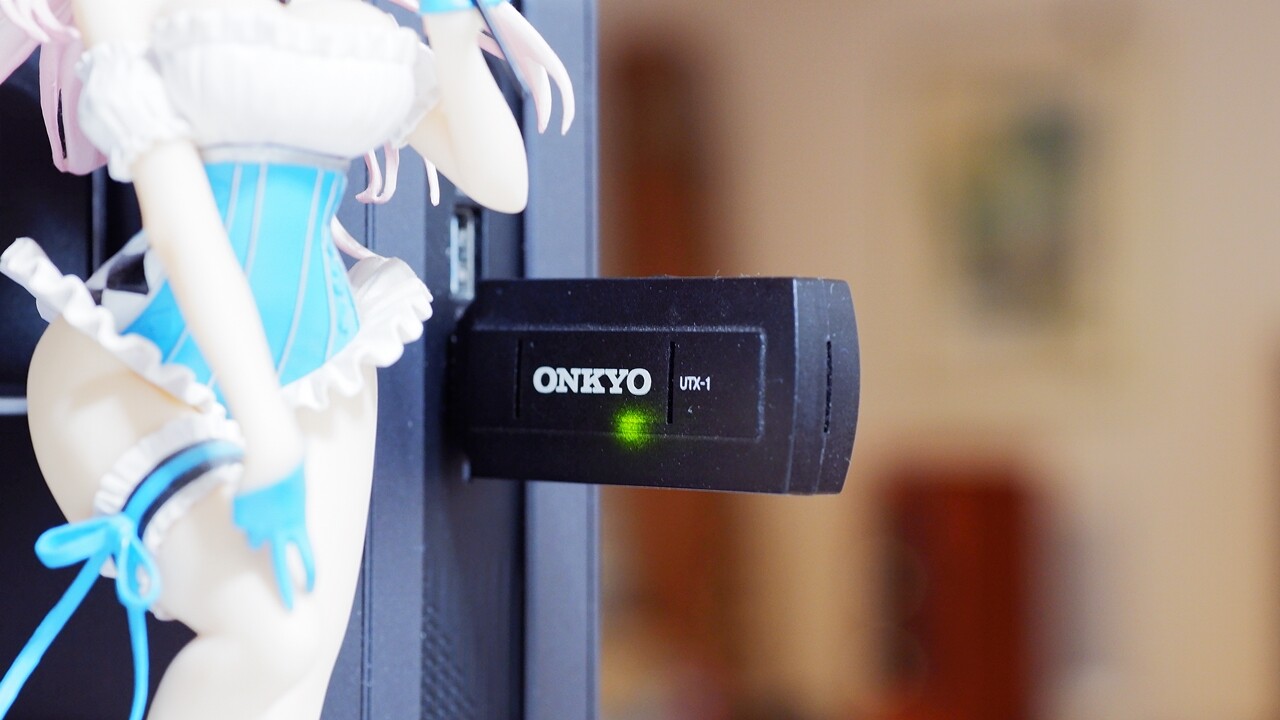
Someone might point out that converting an Ultra HD source down to 16-bit/48kHz PCM rather defeats the purpose, and they would not be wrong — but here is the thing: audio that has been downconverted from a hi-res source in real time tends to have a distinctly hi-res-like character, even though it technically is not hi-res anymore. It takes on a “hi-res-ish” flavour that is quite different from what you get with CD or native 44.1/48kHz 16-bit data fed straight into a DAC without any sample rate conversion. Whether that is a good thing or a bad thing is another matter… Ideally what I would want here is a wireless USB audio solution supporting uncompressed hi-res transfer — DLNA, Air Hi-Res Link Technology, or something along those lines. Does anyone know of a reasonably priced option that fits the bill?

Swapping in the AUDIOTRAK GlassBlack2+ optical cable
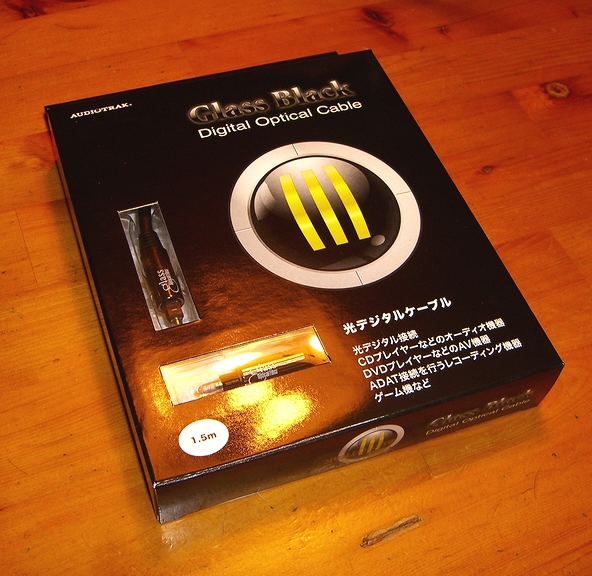
Since the sound via the ONKYO UWL-1 was actually rather enjoyable, I swapped out the hastily connected audio-technica AT-OPX1 optical cable for the WireWorld Supernova 7 (STO7), a top-grade audiophile optical cable using glass fibre. The price difference is more than tenfold. Compared to the AT-OPX1, the Supernova 7 brings a greater sense of depth and width to the soundstage, with improved transparency and a cleaner overall impression — a slightly restrained, refined sound that is somewhat uncharacteristic of WireWorld. However, as a total package it did not strike me as a significant improvement over the audio-technica AT-OPX1, and in terms of value for money I would say it does not justify the cost. So I switched back to the inexpensive audio-technica AT-OPX1 fairly quickly. With the ONKYO UWL-1 × Pro-Ject DAC Box DS combination, the plastic-fibre audio-technica AT-OPX1 is actually more straightforward, carries more detail, and simply sounds more engaging and musical.

 ポチップ
ポチップ
For a reasonably priced optical cable with good sound, I also have the AUDIOTRAK GlassBlack2+ — a glass fibre cable I use on the main system. The GlassBlack2+ has a distinctly hi-res-ish character of its own, a type of sound where the soundstage seems filled with shimmering fine particles. I half expected that using it with Amazon Music HD might prove excessive, causing the soundstage to become muddled — but when I actually tried it, it was in fact an absolutely perfect match. The sound quality took a clear step up compared to the audio-technica AT-OPX1 mentioned earlier, and it surpassed the WireWorld Supernova 7 completely.
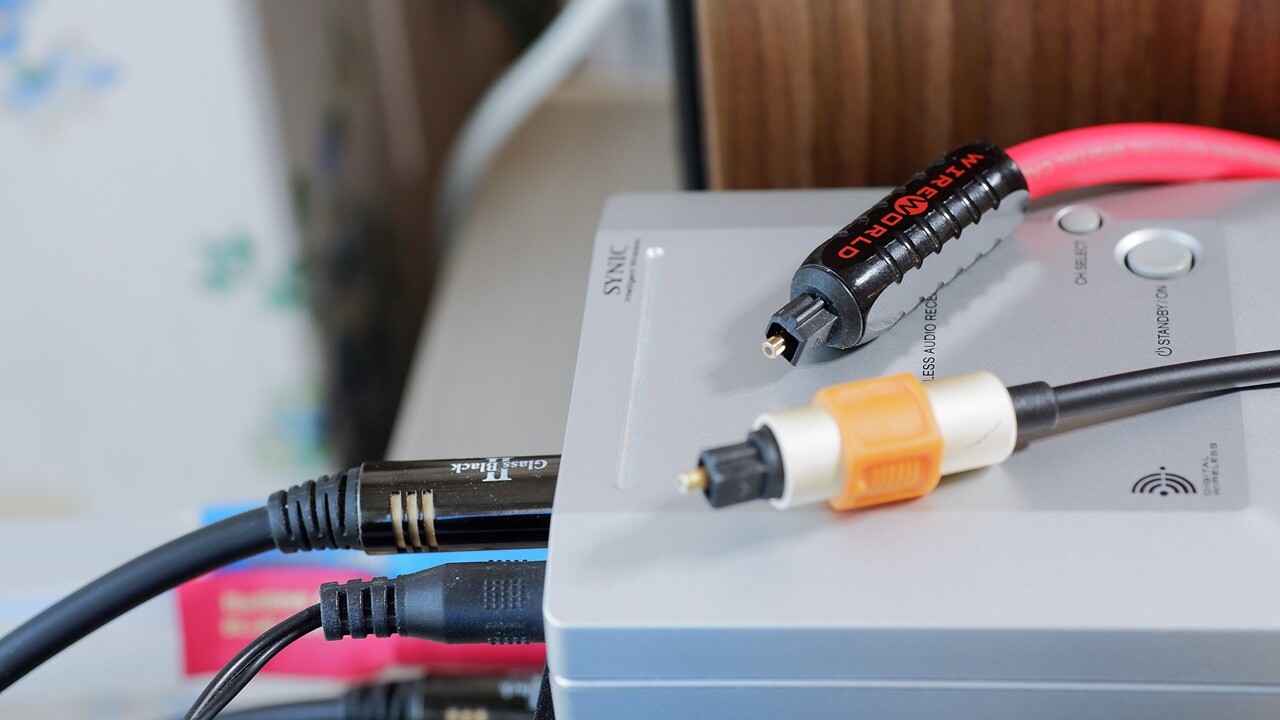
In my experience, which of the Supernova 7 and GlassBlack2+ comes out on top depends on the system — but in the Amazon Music HD → UWL-1 × Pro-Ject DAC Box DS combination, the GlassBlack2+ wins decisively. Its high freshness, dry, sharp character in particular adds a vivid, lively quality to the somewhat cloying, slightly muddied sound of Amazon Music HD, while doing a great deal to dispel the sense of wrongness. Despite the increased detail, there is no muddiness. Improved imaging and better high-frequency resolution are also notable. Connecting it proved to be exactly the right call.

Sound quality comparison: Amazon Music Unlimited HD vs. CD player played simultaneously
The Pro-Ject DAC Box DS has three digital inputs — TOSLINK, coaxial, and USB — and I had the CREEK CLASSIC CD and ARCAM CD72T connected as CD transports to the coaxial and TOSLINK inputs respectively. For this test, I temporarily removed the CD72T from the TOSLINK input and substituted the ONKYO UWL-1 in its place, then compared the sound quality from the coaxial digital output of the stand-alone CD player — the CREEK CLASSIC CD — against the TOSLINK optical input from Amazon Music HD → UWL-1, playing the same source simultaneously with matched timing. I also threw in a third comparison: the same CD ripped and played back via AudioGate → UWL-1.
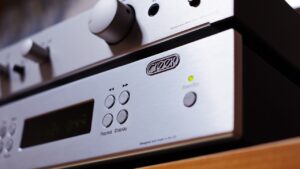
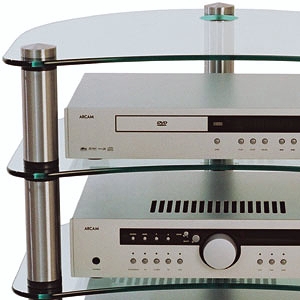
Since both signals go through the same DAC, one might assume the difference attributable to the digital output would be small — but from past experience, I have found that the digital output and digital cable side somehow exerts more influence over the sound than the DAC itself, and in terms of what you actually hear, the digital transport tends to matter more than the DAC. The CREEK CLASSIC CD’s transport — that is, its digital output — is among the lower tier of my CD players in terms of quality, and lacks the overwhelming sense of presence you get from C.E.C.’s belt-drive machines, but it is still incomparably more respectable than feeding audio directly from a PC via USB. ※To give you a sense of it objectively: think of it as sitting somewhere in the middle of the pack among CD players in the ¥50,000–¥100,000 range — decent enough, but neither particularly strong nor particularly weak. It follows logically that if Amazon Music HD cannot beat this, it would stand no chance whatsoever against mid-range or high-end CD/SACD players and stand-alone CD transports with higher-quality drive mechanisms costing over ¥100,000.
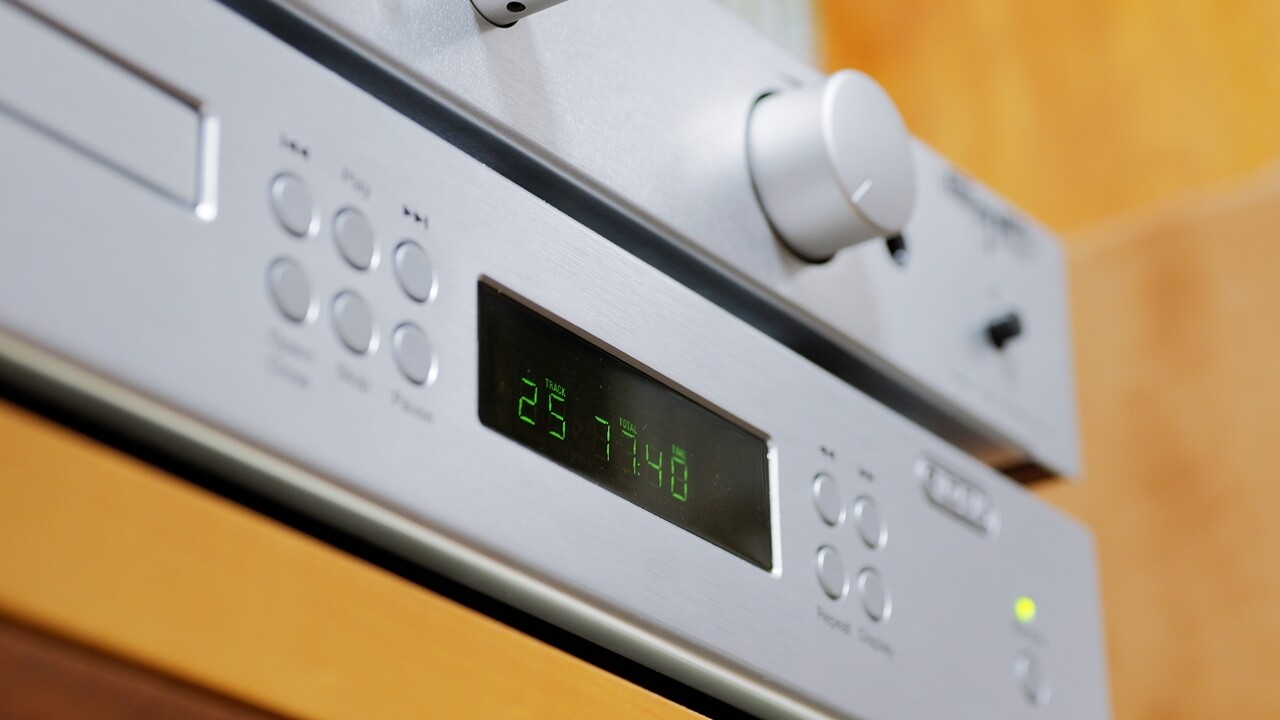
Playing Amazon Music HD (Ultra HD) and the CREEK CLASSIC CD simultaneously with matched timing, the Amazon Music HD → UWL-1 sound comes across as open and positive in character, with surprisingly high resolution — it actually surpasses the CD player’s digital output in terms of sheer information density in certain respects. There is a slight sense of electronic enhancement, possibly related to latency, but the decay of reverb tails is brought into sharper focus, and the Amazon Music HD side may actually have the edge when it comes to the sense of presence and immediacy on stage. That said, it lacks a degree of depth, with a tendency for the image to come slightly forward, and both attack and fine detail feel somewhat softened. The CREEK CLASSIC CD side, by contrast, is clean with a good signal-to-noise ratio, has depth, and delivers a precise, crisply defined sound. Switching back and forth several times, the CREEK CLASSIC CD clearly sounds more correct and more accurately rendered. And yet, the gap in quality was not as dramatic as I had expected.
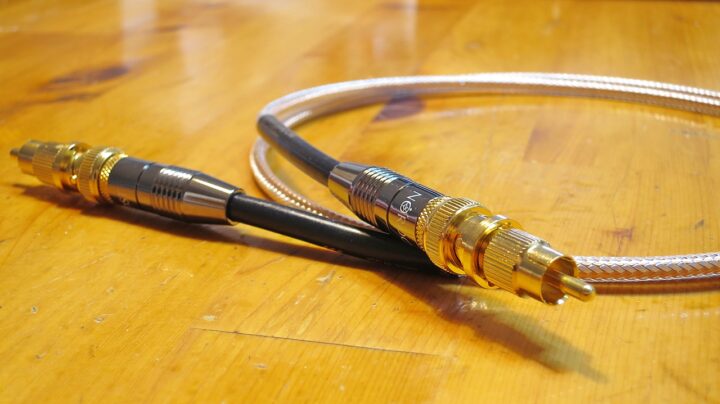
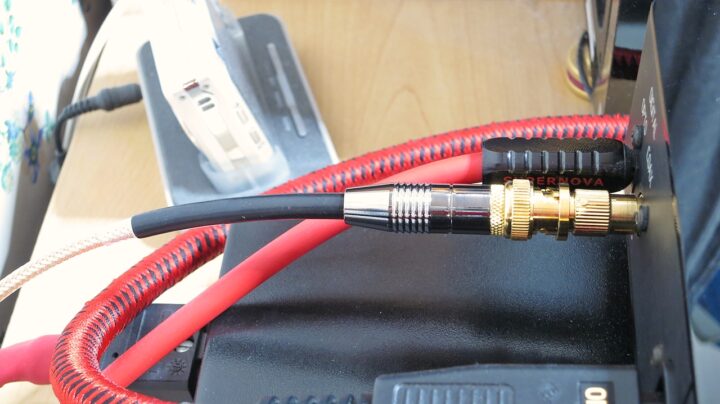
The digital cable connected to the CLASSIC CD’s coaxial digital output is a Nordost Silver Shadow. At this point, the Amazon Music HD → UWL-1 side was using the audio-technica AT-OPX1, which admittedly felt a little unfair — so I connected the glass-fibre AUDIOTRAK GlassBlack2+ to the UWL-1 and ran the same comparison again. And — well — this time the Amazon Music HD → ONKYO UWL-1 sound was transformed: high-speed, crisp, and eye-opening compared to before. When a digital cable can shift the quality this much, it becomes rather hard to know what actually matters anymore. The unnatural softness in timing and detail that had bothered me with Amazon Music HD was not entirely eliminated, but substantially reduced — and as a result the quality gap with the CREEK CLASSIC CD narrowed, while the charming brightness and informational richness that Amazon Music HD had already shown over the CD player became even more pronounced. At this point, it is genuinely difficult to call either one clearly superior, and the advantage that (entry-level to mainstream) stand-alone CD players hold in terms of digital output is, honestly, starting to look rather shaky.
The CREEK CLASSIC CD transport × Nordost Silver Shadow still has the edge when it comes to the fundamental depth and transparency of the soundstage, which stems from a genuinely better signal-to-noise ratio — so if pressed to name an outright winner, I would give it to the CREEK CLASSIC CD. But the appeal of the Amazon Music HD → UWL-1 × GlassBlack2+ output is not easy to dismiss, and the sheer informational richness with its distinctive hi-res-like quality feels well worth using alongside the CD setup. If the playback PC were not a general-purpose machine but one purpose-built for music playback with proper noise reduction measures, the balance of power might well tip the other way.
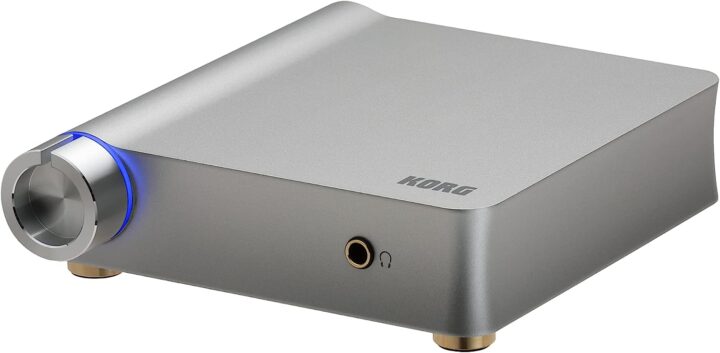
Incidentally, when I ripped the same source into the PC, sent it wirelessly via KORG AudioGate → ONKYO UWL-1 + GlassBlack2+, and compared it simultaneously with the CLASSIC CD + Nordost Silver Shadow digital output through the Pro-Ject DAC Box DS, the ONKYO UWL-1 + GlassBlack2+ side sounded somewhat subdued, with fewer notes and a slightly forlorn quality. This is clearly less appealing than CD playback via the CLASSIC CD + Nordost Silver Shadow, and it is one of the reasons I have never been particularly motivated to rip my collection. ※Connecting the PC directly to the DAC via USB cable can introduce considerable tonal colouration depending on the USB cable’s character — but to my ears that only amounts to applying make-up after the fact to disguise the fundamentally poor output quality of the PC, the “PC audio smell” if you will, and it never strikes me as a convincing reason to stop using a good stand-alone CD player.
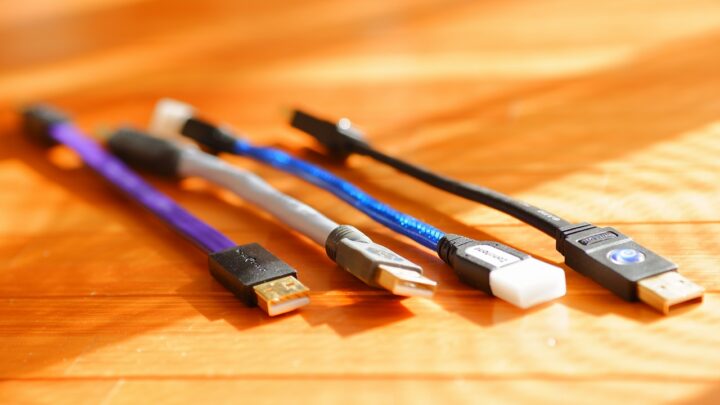
In that respect, the Amazon Music HD → UWL-1 + GlassBlack2+ output has a character added to it that might be described as “over-the-top dramatisation” — something quite different in nature from playing back a ripped source. As a result, even going through the UWL-1 it does not come across as forlorn; if anything, the strange coloration from the artefacts seems to thin out, and the overall balance actually improves.
In the end, I cancelled — though I may well subscribe again
A long list of similar-looking entries like this stretches down the screen. The display order shifts around from session to session, the categories are far too broad, and the same albums keep appearing in multiple sections over and over…
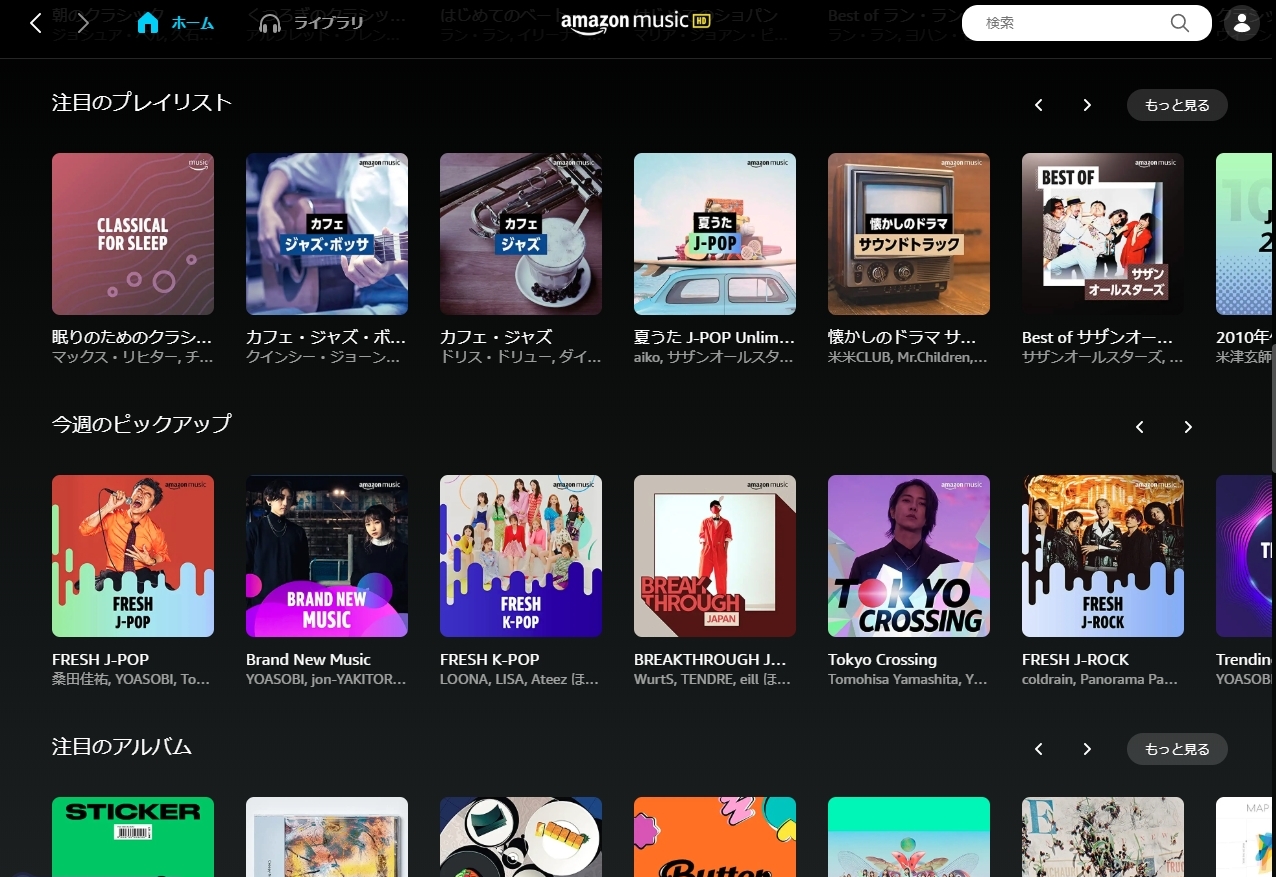
As regular readers will know, I am a fairly deep-dyed classical music obsessive who rarely listens to anything else. Yet more than half the albums force-displayed on the app screen are from genres I have absolutely no interest in — that is to say, the popular mainstream albums with the highest play counts. Even the classical music selection is clearly aimed at newcomers to the genre, a line-up of titles that any serious classical enthusiast would completely ignore. Frankly, it is quite irritating.
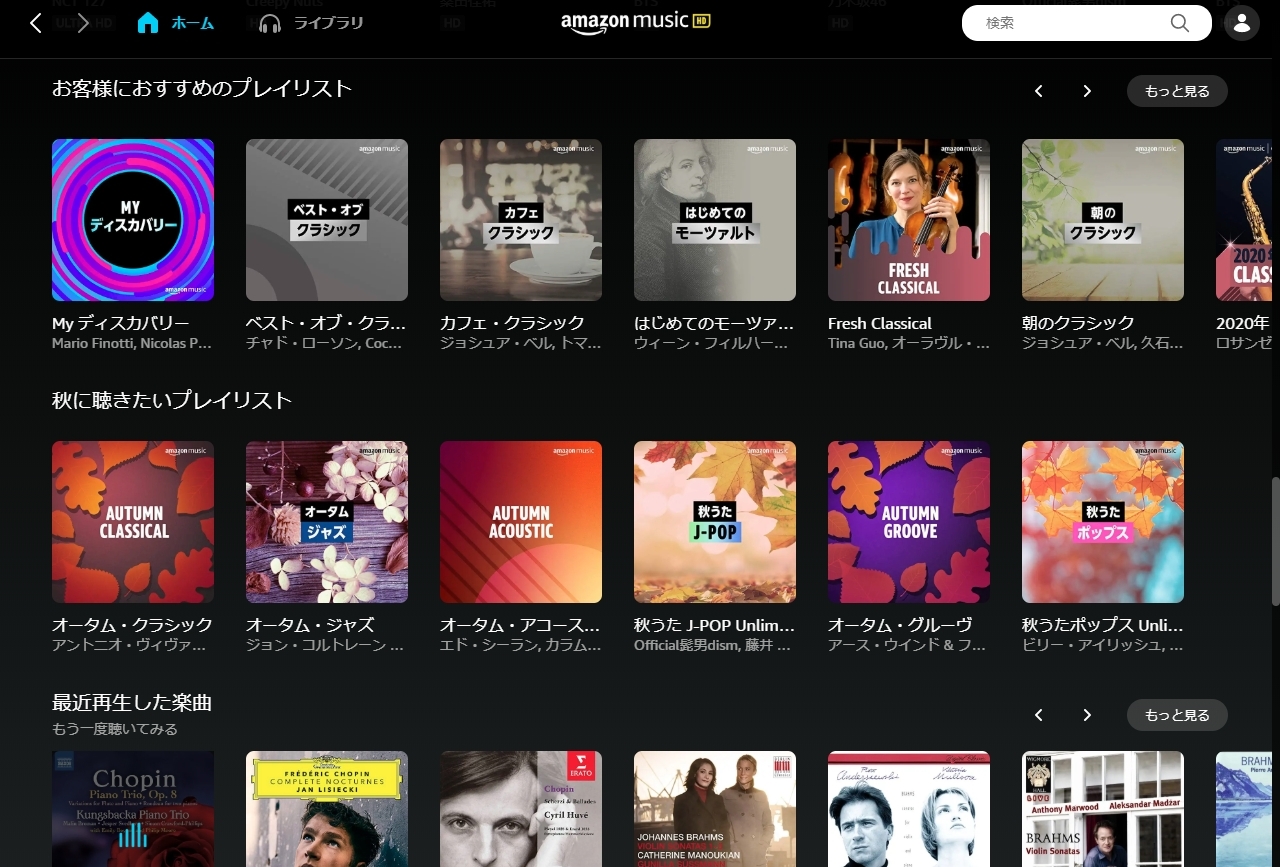
What I find particularly inconvenient is that “Recently Played Tracks” — the section I click on most — is buried deep down the page, forcing me to scroll through all that clutter every single time just to reach it. It would be nice if you could at least hide sections or rearrange them in whatever order you liked. Note: I was subsequently told that going via the Library tab → Recent Activity is faster than hunting for it on the Home screen.
The album search — rather poor in various ways
This caught me off guard, but the search engine within the Amazon Music app is a different beast from Amazon’s main site. Classical music in particular has a huge amount of duplication in track names and performer names, and searching by work title, performer, or composer — in Japanese, English, or other languages — through the Amazon Music app turns up nothing at all for a huge number of albums.
When searching directly within the app, it appears that Amazon Music’s side presents a curated selection of perhaps 50–70 titles, but there is duplication between albums, and it does not seem to be simply ordering things by past sales or name recognition either — all of which is rather baffling, for various reasons.
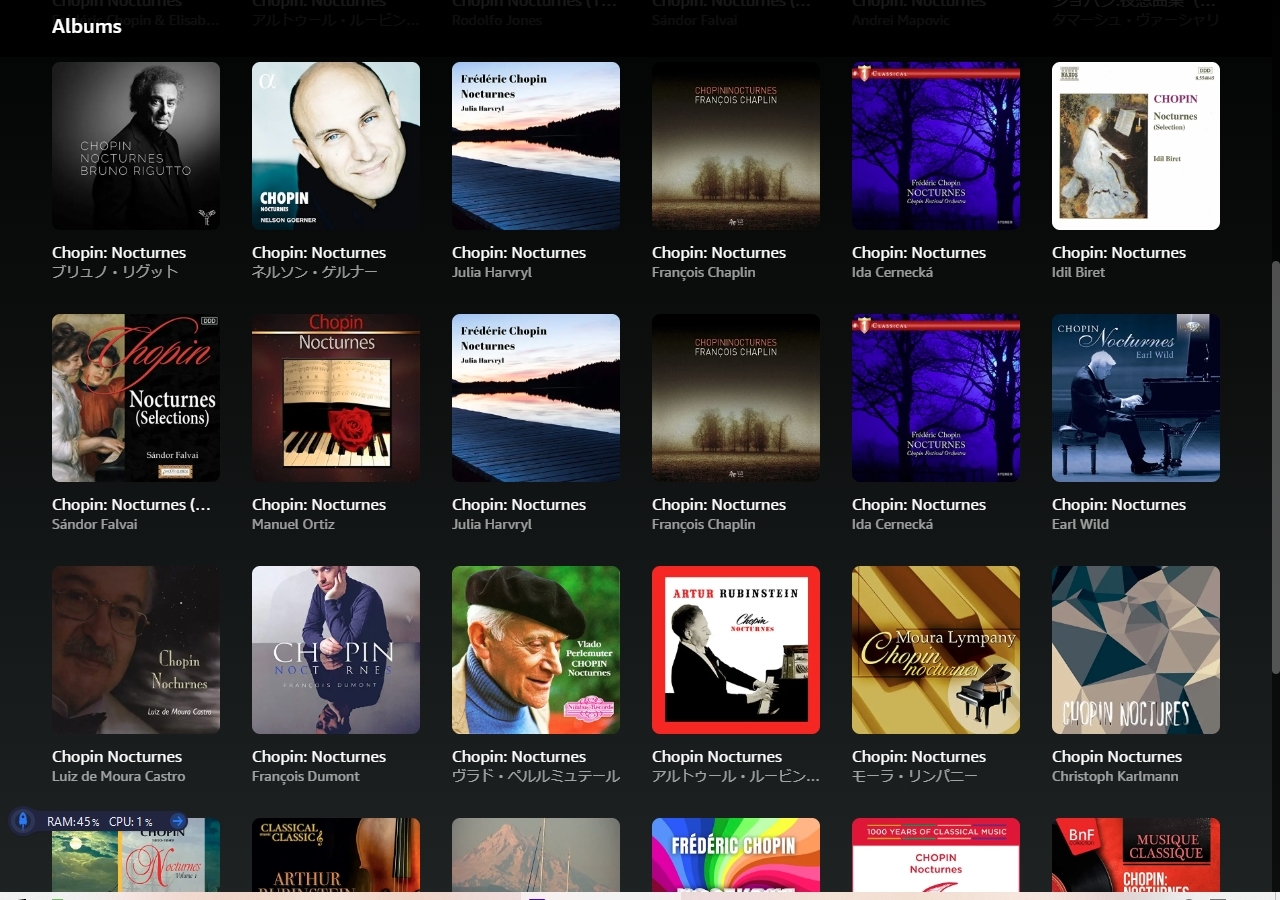
After some trial and error, I found that by copying the album title as listed on Amazon’s various national storefronts and pasting it into the Amazon Music app, albums that exist but are somehow hidden and won’t appear can finally be brought up. Albums that only surface this way are, I suspect, far more numerous than the titles the app automatically displays on its own. Honestly, if they would just improve the search comprehensiveness within the app it would be quite a fine subscription service, but for niche classical music fans it’s neither one thing nor the other, at least for now.
Going the other direction — when you find an album you like within the app and want to look into it further — you cannot select and copy the text displayed in the Amazon Music app by mousing over it, which means you have to type everything out by hand in a browser every single time, and that gets quietly tiresome. It would be so much better if at least one click could take you straight to the download or CD sales page on Amazon.co.jp, but even that is not possible.
Addendum: How Does It Sound as a Music Player?
Amazon Music Unlimited does of course have its good points. If you can learn to use it in combination with searches via the main Amazon storefronts (including those outside .co.jp), you can cover playback of a great many albums that are registered on Amazon to begin with. This means that as a way of sampling before buying a CD, a considerable proportion of albums can now be heard in higher quality than before, and in full from start to finish.
It is also quite convenient that you can approach things by searching for good performances of a specific piece of music — track by track — with a fair degree of flexibility. The pleasure of jumping back and forth between various recordings of the same work, comparing performances, and discovering which album you want to own is genuinely enjoyable. One slight irritation is that the click response when starting playback is poor and requires a double-click every time, though this may be down to the download of uncompressed audio and the connection speed in my environment (somewhere between 50 and 90 Mbps).

Using this approach I ordered several CDs over the past two months. However, when using Amazon Music HD as a way of sampling before buying, the difference in sound quality compared with the actual CD is not something you can entirely ignore. As mentioned earlier, the comparison from the DAC onwards is under identical conditions, but playback via the Amazon Music app renders every album in an ear-friendly, somewhat stylised way — lively, smooth, and polished. By contrast, playback through a dedicated CD player sounds more transparent, deeper, sharper, and wider in range. And this holds true even when the comparison is Hi-Res Ultra HD versus CD at 16-bit/44.1kHz.
When using the Amazon Music app’s playback as a sample before buying a CD, unless you mentally allow for this difference in sound quality to some degree before placing your order, there were a few cases where the album arrived and sounded different from what I had been expecting — a bit of a “hang on…” moment. The sound quality of the original source (the CD) is surprisingly difficult to judge this way, and for that purpose the sample tracks on AllMusic seem to give a more reliable result. Those are compressed audio with an excessive number of tedious banner advertisements, so I can hardly recommend them without reservation either, but…
~ Summary ~
This is a review from less than three months into my Amazon Music HD subscription, but in my system, while playback via PC audio leaves me with a fair amount of unease, through the sub-system via the ONKYO UWL-1 it sounds better than expected and feels like something I can genuinely enjoy in its own right. So there is a possibility — maybe — that I might continue after four months… or there might not be. (Fifty-fifty.) That is roughly where I stand.

There is something a bit silly about the way I mostly end up grazing through recordings I already own on CD and channel-hopping all over the place, but I can quite understand why so many people, once they get used to this laziness of never having to swap discs, find they can no longer go back… And being able to graze on new release CDs and SACDs at premium prices one after another in near-equivalent quality without actually buying them does feel like rather good value. That said, to flip that around — and this is not limited to Amazon Music Unlimited — subscription services honestly look nothing like a system that distributes fair compensation to the smaller, less prominent performers and artists at the far end of the chain, and when I think about the future of the music industry, I find it hard to embrace wholeheartedly. That is partly why, as a small-scale pure Hi-Fi enthusiast, I fundamentally advocate buying physical media — CD, SACD, LP — and spinning the actual disc. That said, in my case it is already looking very much like I am going to get completely sucked into the endless loop of “find something I like on Amazon Music HD → immediately order the CD”…
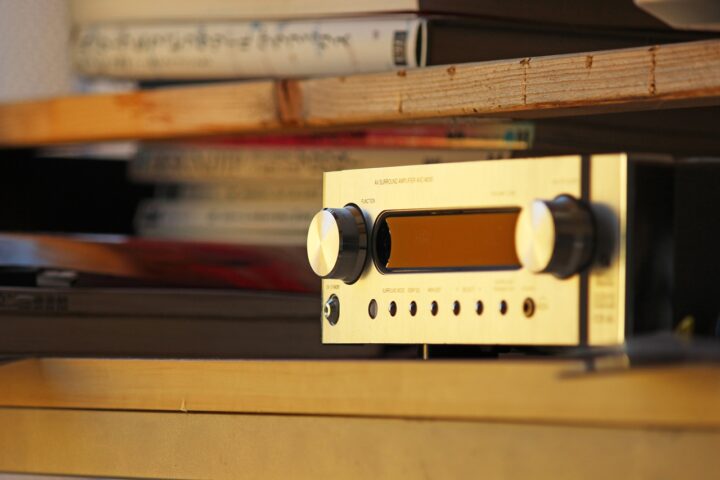
And from the perspective of a Hi-Fi enthusiast out on the periphery, doing a straight 1:1 comparison with the same source and the same DAC does confirm that — yes — the sound of a CD read directly from the drive mechanism of a decent standalone CD player sounds higher in quality and more fundamentally correct than Amazon Music HD running through a PC. It was reassuring in a separate sense to reconfirm through this exercise that being a disc-spinning advocate is not mistaken. Also, the somewhat pushy zapping structure of the Amazon Music app suggests that Amazon Music Unlimited is optimised for the majority of mainstream users and is not really designed to scratch the itch of niche Hi-Fi enthusiasts or deep music fans — for now, at least, it feels like it is aimed squarely at casual listeners.

As a pure Hi-Fi purist, what it comes down to in the end — alongside the sheer number of tracks available in one’s preferred genres — is this: comparing Amazon Music HD, Apple Music Lossless, Spotify, TIDAL, and other subscription services against each other, and — taking into account one’s playback software and any compatible network audio player one already owns — working out which subscription service’s sonic character suits one’s taste is the key to deciding whether to keep subscribing. The latest picture of high-quality streaming with subscription services and network audio players is covered in some detail in issue 181 of Audio Accessory magazine, which just came out the other day, so I am thinking I might sit down and read it properly.
 ポチップ
ポチップ


Auto Translated by CS4.6