A moment ago, an acquaintance suddenly sent me a message along the lines of “TIDAL is great, you know?” — and my first thought was, what’s that, is Tidal perhaps those German high-end speakers? So I googled it, and it turned out to be a new American music streaming service.
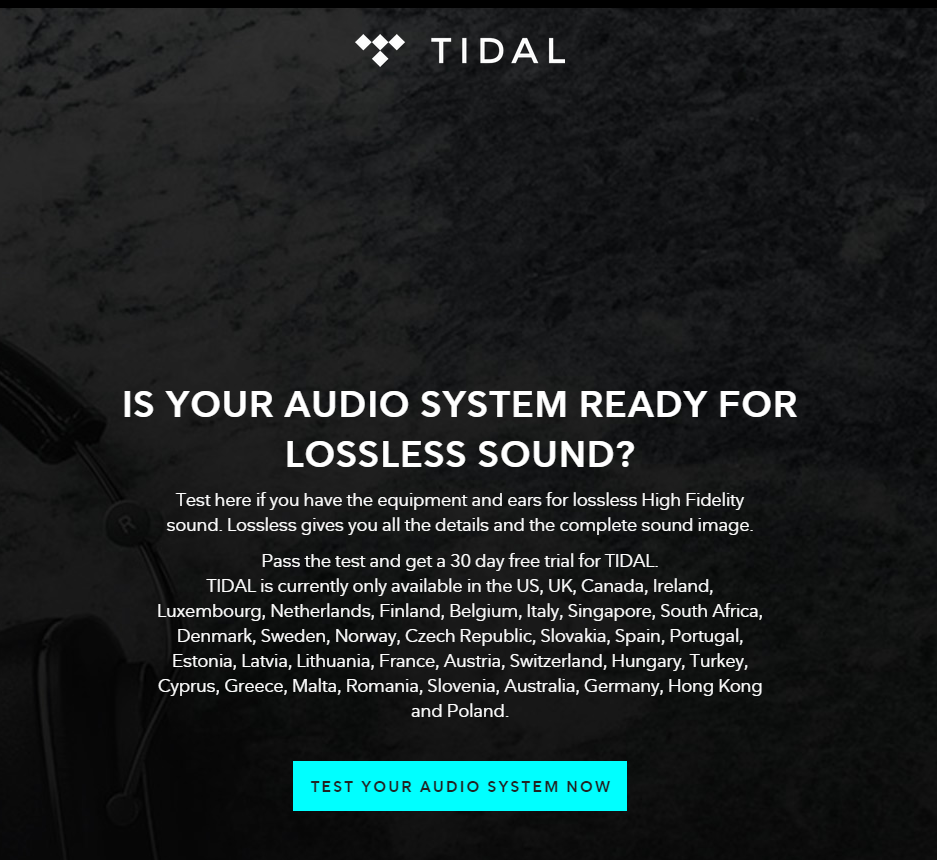
Apparently this one is pronounced “Tidal” rather than “Tidal” in the Japanese sense. What sets TIDAL apart from conventional cloud-based music streaming services like Spotify is that it streams losslessly at the same level as CD/WAV — 44.1kHz/16bit, 1411kbps. Speaking just between us, coming from someone who, upon receiving a compressed 320kbps audio file, immediately hurls the iPhone out the window along with it — this might actually, just possibly, be rather appealing!?
That said, TIDAL’s monthly subscription fee is $20 (as of 2015). In Japan that works out to ¥2,400 at ¥120 to the dollar… what, that’s expensive! Because in my admittedly cynical reading of the situation, this has the distinct feel of a new automated revenue-collection system put together by America’s money-grubbing music celebrities — the sort who dance in a sea of gold and silver treasure every single day. On top of that, Japanese IP addresses can’t access it at the moment without doing something that feels vaguely like jailbreaking — just like Spotify. (At this point, everyone in Japan’s enthusiasm is already in freefall…)


When it comes to hi-res music streaming and downloads, I’m personally perfectly satisfied with Japan’s e-onkyo music, which has a strong catalogue in both classical and anime music, and TIDAL at the moment seems to be primarily Western pop in terms of content — so honestly, for someone like me who lives in the classical world, it’s neither here nor there. That said, what is rather interesting is that TIDAL has thoughtfully provided a test page where you can find out in a short time whether your ears and audio equipment are the sort of celebrity-grade system worthy of listening to lossless audio, and whether you have the golden ears of a Beyoncé who can actually tell the difference. What unnecessary kindness!
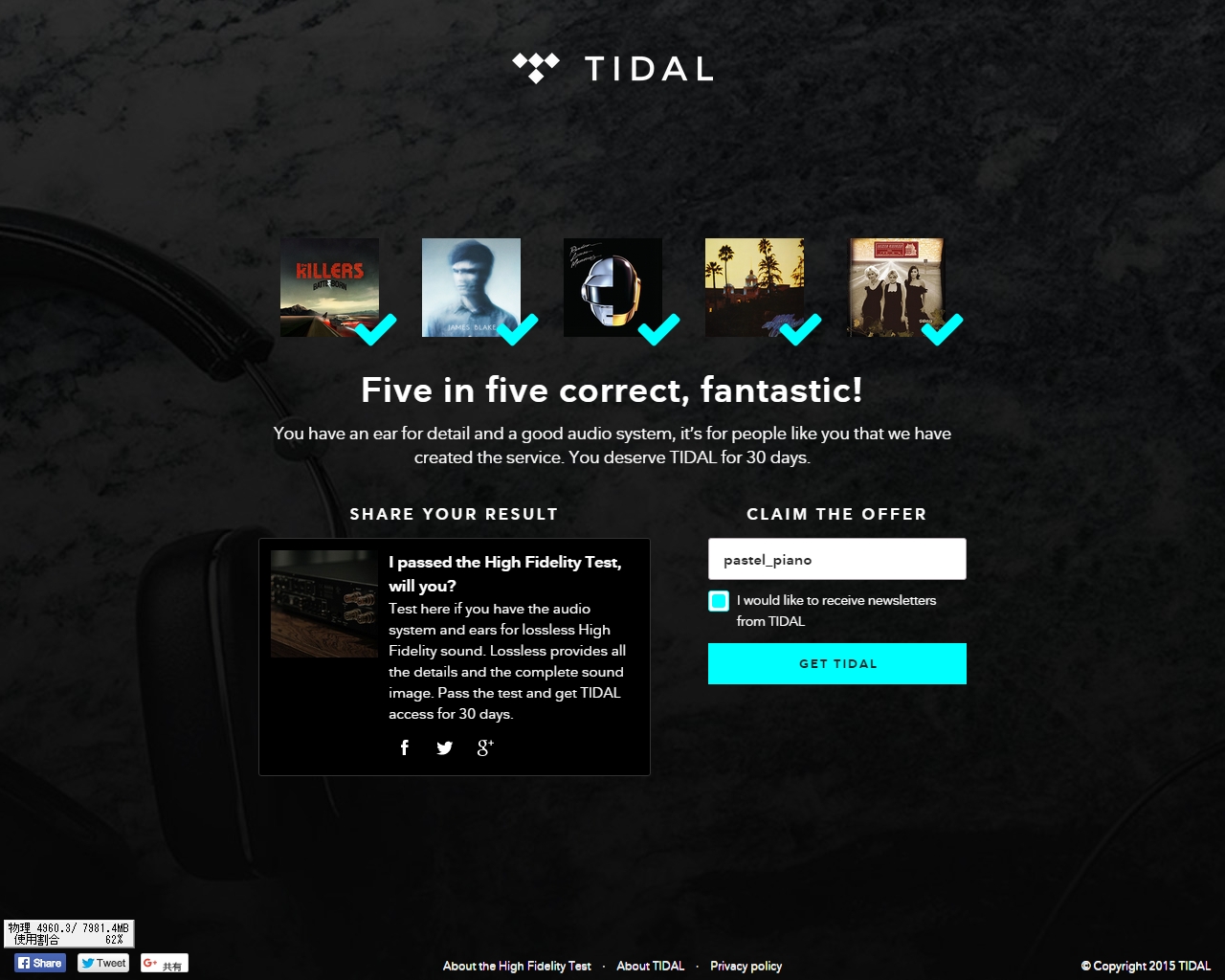
So, while I have absolutely minus-ten-thousand percent intention of paying for any such subscription, I thought I’d give just the test a go as an experiment. d(^_-) Frankly, I have no confidence whatsoever. After all, the test environment is the desktop PC audio setup — the one in my system with the worst sound quality and the hardest to pick out subtle differences, with the speakers placed right behind the LCD monitor. ← (I’m deliberately hedging my bets here in case I fail.) Also, for some reason the test doesn’t work in Windows Internet Explorer, so you’ll need to use Google Chrome or Firefox, please…
The test samples are five clips taken from well-known Western pop songs…… let’s see — I only recognise Hotel California…. You listen while freely switching between A and B during playback, then click whichever one you think is the uncompressed version at the end. If you’re not sure, you can replay as many times as you like.
The results……!
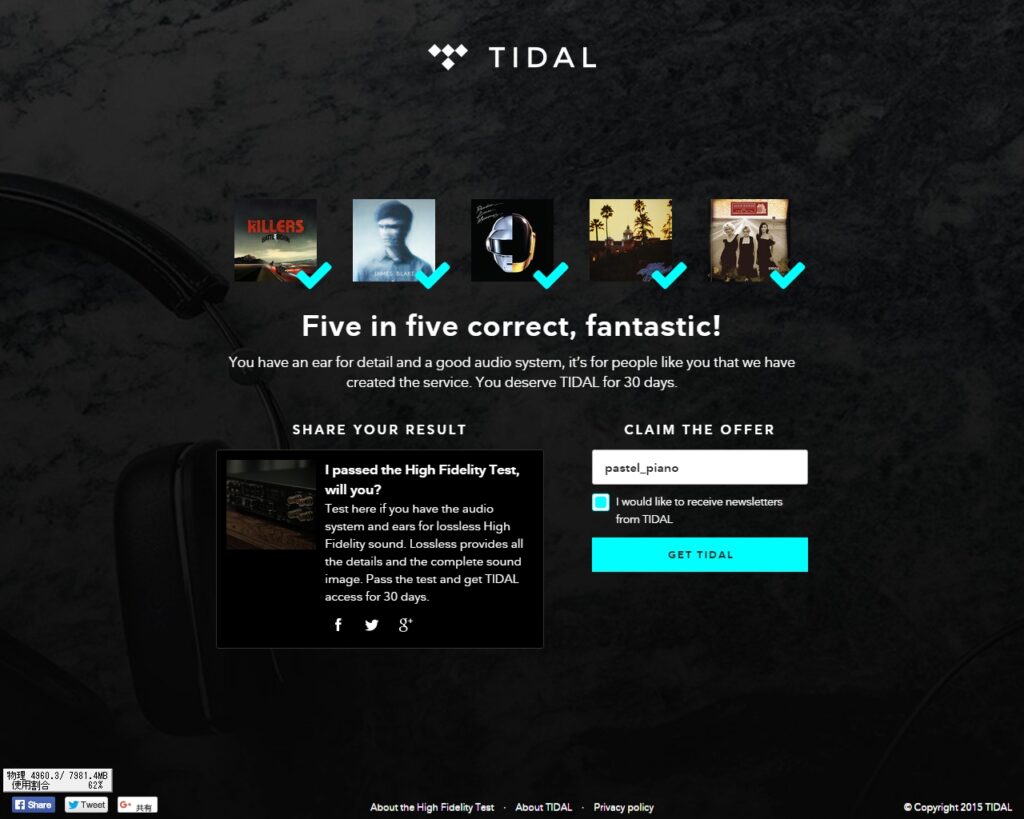
Against all odds, a perfect score. Well, aren’t I clever. (Kotomin pulling an impossibly smug face)
Around the third track, what I noticed was that this test seems like the sort of thing where you’d either get them all right or get them all wrong. Rather than thinking of one as compressed and the other as lossless, all of them sounded as though they differed in the same direction, the same kind of vector — so it wouldn’t be surprising at all if someone ended up with either a clean sweep or a perfect score simply depending on their preferences.
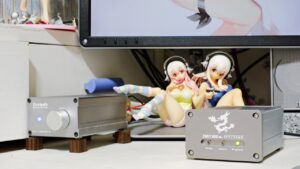
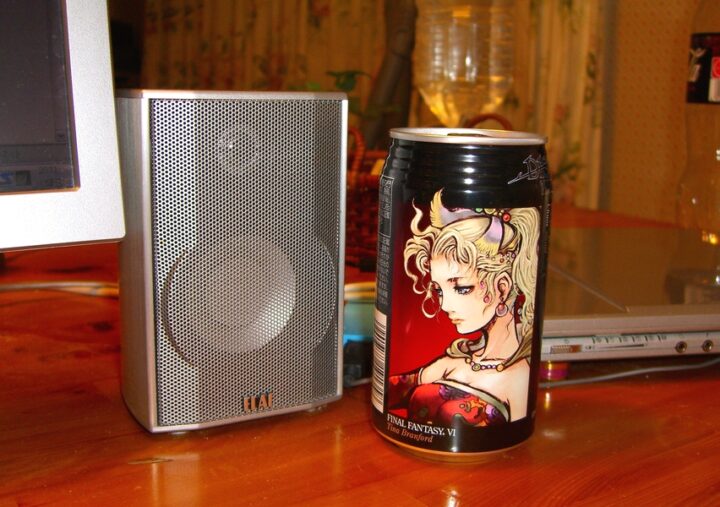
And also — the desktop PC audio system I’ve put together really is not up to scratch for hi-res, as I thought. It has a full-range kind of sound, and the tonal character of the combination is rather monochrome as well, so it doesn’t meet the requirements for hi-res in terms of measured performance either, and despite having written something about “mastering the desktop PC audio setup,” it’s completely unsuited to fine-grained comparisons of this kind. Honestly, in normal use it’s basically just for playing back the odd online video on the PC, and for auditioning CDs and SACDs purchased from TOWER RECORDS and HMV ONLINE using Amazon Music Unlimited HD and ALL MUSIC to browse beforehand. The sound quality differences with compressed audio are extraordinarily subtle — look away for a moment and you’d have no chance of telling them apart. To be blunt: listening on my current PC audio system (totalling about ¥50,000 all in), the difference is only about as significant as “oh, couldn’t care less, really” — truly the most nitpicking of nitpicking exercises. Getting a perfect score was probably partly luck, and I can say with confidence that if there were more questions, the correct answer rate would steadily drop…
For those of you who couldn’t tell any difference at all — well, it’s either that the audio equipment or headphones you used are on the modest side, or you’re simply not accustomed to distinguishing sound quality in a wine-tasting sort of way, or you’re simply a person with a healthy brain that can’t distinguish between differences below the threshold of human perception. Almost certainly one of those. And for those who got every single one wrong — you could argue that you were simply choosing based on a different preference, and in a sense, that actually means you were hearing the difference too, doesn’t it!?
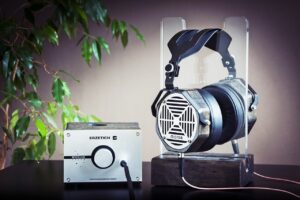
TIDAL is also touched upon in the blog “Kotono ha no Ana” by audio critic Sakaki. As a fellow Hi-Fi enthusiast, I find it very easy to relate to — or rather, the pros and cons of lossless streaming having now arrived are explained there far more clearly than I could manage.

I’ve written about this myself several times before, but compressed audio was fundamentally a technology born in the early days — from the 1990s through to the early 2000s — when the storage capacity of PCs and DAP devices was extremely limited, and when cloud service capacity and internet transfer speeds were also insufficient. In the era of large-capacity streaming and downloads now approaching, existing lossy compression formats — which sacrifice audio quality — will themselves become unnecessary relics, superseded technology. So let me go ahead and declare: within the next few years to ten years or so, lossless downloads and flat-rate lossless streaming will become the mainstream across virtually all music distribution services, not just TIDAL.
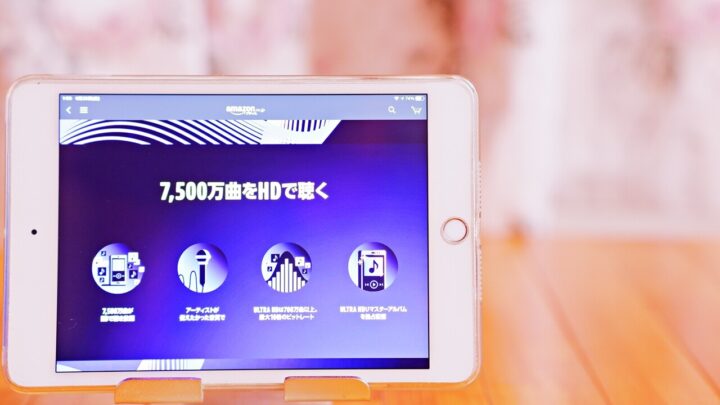
Whether TIDAL as first-mover will be able to take the lead in the global music cloud distribution market going forward remains to be seen — but for my part, I’m essentially a collector-type eccentric who can’t rest easy unless the music I’ve purchased is sitting close at hand on physical media: CDs, SACDs, LPs, and so on. So no matter what anyone says, spending one’s days as a vassal with the rights to play back one’s own music held hostage by a streaming provider gives me a restless, fidgety, uncomfortable feeling. I don’t want music to be “everyone’s, as long as you keep paying ♪” — no, all of it should be “once bought, mine personally and mine alone ♪.” Depending on how you look at it, that might make me a fool with not a shred of social cooperativeness — but that’s fundamentally what otaku and collectors are, isn’t it.
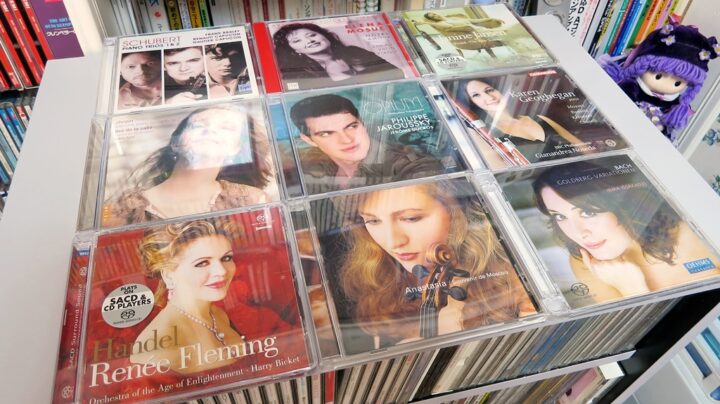
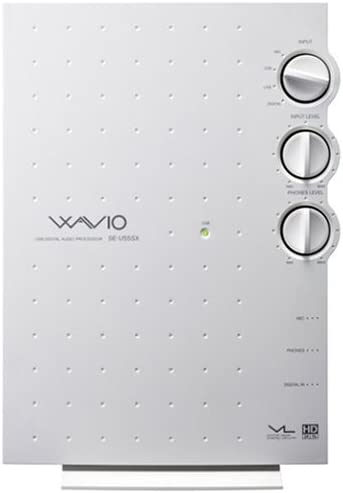
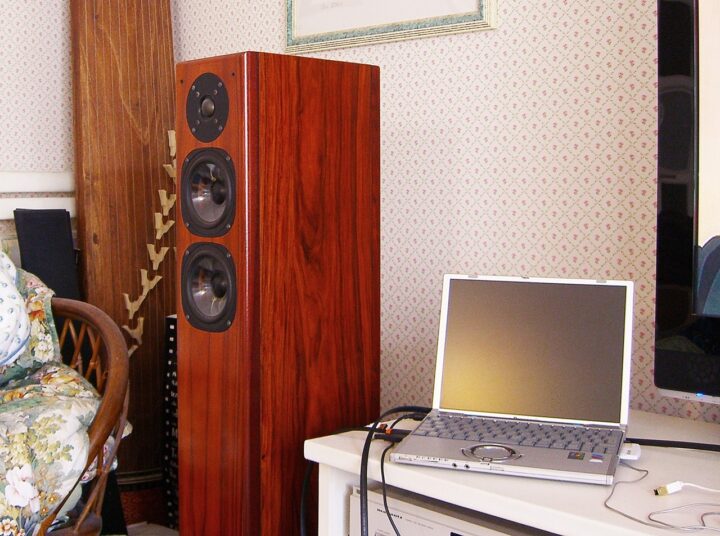
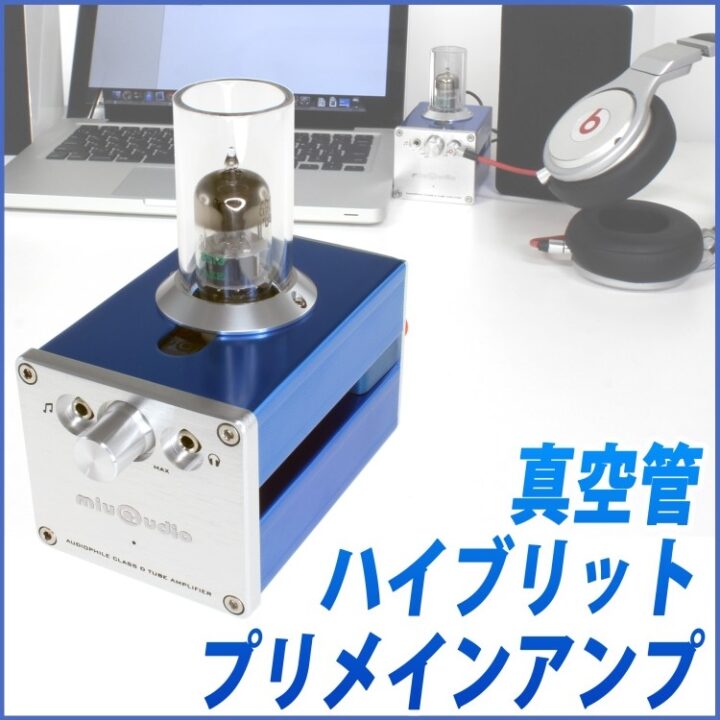
Come to think of it, I haven’t updated the blog content on the desktop PC audio side for years, so you probably don’t know what system I’m using at the moment. The speakers and amplifier are the same as before, but various smaller things have changed along the way. For the record, it’s of course still very much a work in progress — still flailing around at a level nowhere near “mastered.” So, in October, I’d like to try writing, bit by bit, about where things currently stand with the desktop PC audio setup — the Hi-Fi-in-a-box kind. Well, as ever, subject to the usual condition that I have the energy and stamina to do so…
Auto Translated by CS4.6