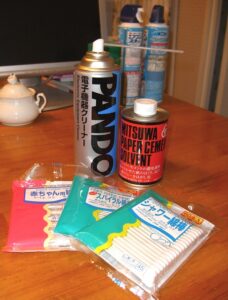
I wrote a few years ago about using artist’s paper cement solvent to clean the terminals of audio equipment, but what I have been using as my main cleaner for the past several years is PANDO 29D.
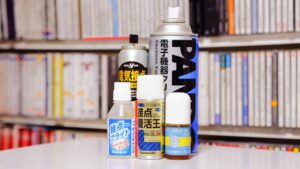
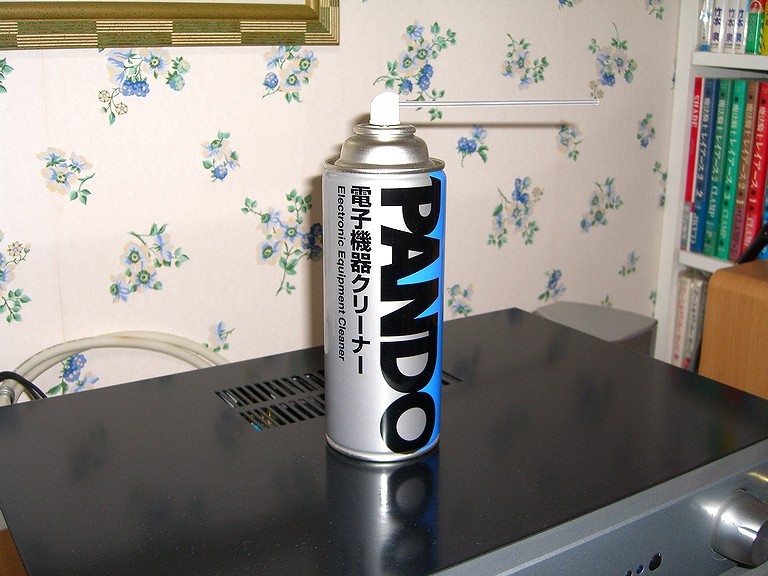
The well-known ThreeBond PANDO 29D. This is an electronic equipment cleaner that critic Mr. Fukuda has frequently introduced in Audio Accessory magazine and elsewhere — in cable impression features, regular columns, and at Fukudaya. It appears to be classified as an industrial or commercial product, and despite being a fairly common sight in audio publications, it sees relatively little distribution in ordinary home-improvement stores, making it surprisingly hard to get hold of. Some people apparently go out of their way to buy it at parts shops in Akihabara or Nipponbashi. Below is the product’s description of its properties.
PANDO 29D is a non-CFC electronic equipment cleaner that quickly and easily removes contamination from electronic devices. Being aerosol-based, it can clean intricate equipment without the need for disassembly. It has powerful cleaning action, dries rapidly, and contains absolutely no non-volatile components, meaning no impurities are left behind at the point of application. Moreover, it is not subject to regulations under the Organic Solvent Poisoning Prevention Rules, making it safe and straightforward to use.
 ThreeBond PANDO 29D Safety Data Sheet (Note: PDF)
The main components of the cleaner are cyclopentane at 35–45% and ethanol at 1–2%, with the remainder being non-CFC propellant gas. It is fully volatile and leaves nothing behind on treated surfaces. In this respect it is similar to paper cement solvent, but it does not evaporate quite as instantaneously as solvent does — it dries quickly, yet evaporates at a more moderate pace, which makes it easier to work with. There is also something about using PANDO 29D that just feels less hard on the body.
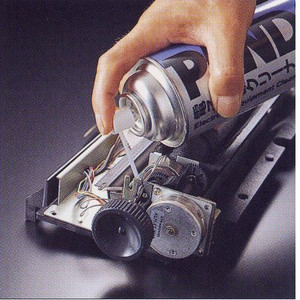
In terms of where it can be used, it covers a wide and versatile range: input/output terminals on all manner of audio equipment, RCA cable connectors, speaker cable terminals, mains plugs and inlets, circuit boards inside audio equipment, top panels, and metal surfaces generally. The 420 ml capacity seemed a bit daunting at first, but as noted above, there is no shortage of places to use it, and I have found it very handy not only for terminals but for removing grime from metal surfaces all over audio equipment, inside and out. (Postscript: it took me roughly four years to get through a can.)
PANDO 29D contains no surfactants, rust removers, contact conductors, abrasives, or oil-based components whatsoever, which means — on the flip side — that its cleaning power is not especially aggressive; but by the same token it is very safe for plastic parts, and unlike oil-based contact conductors it will not have any irreversible effect on sound quality. If a stubborn oxidation layer has formed on a terminal, it may become necessary to use something like the American-made CAIG, but CAIG can damage plastic parts if applied carelessly, so it demands considerable care. For equipment that is kept in good condition through regular maintenance, PANDO alone should be sufficient.


 ポチップ
ポチップ
It is also effective for promptly removing oil-based contact conductors or cleaners — such as squalane — from terminals without leaving residue behind. For terminals that have had oil applied, I recommend spraying on a generous amount of PANDO 29D and then carefully degreasing with a cotton bud. Various expensive oil-based contact conductors are sold for use with audio equipment, but I will not name specific products — I had a terrible experience with one in the past (the plastic parts around the terminals softened and cracked afterwards, or the contamination soaked in and became impossible to remove) — and I cannot recommend them under any circumstances. If you want to keep your audio equipment in good condition for the long term, the basic principle of not doing anything unnecessary is what I would call the box-purist’s creed.
PANDO 29D is a high-safety product, but one point to note is that it should not be used in large quantities on rubber or plastic parts. Among resins, it is stated to be unsuitable for use on polystyrene and PPO (polyphenylene oxide). From experience, with the common resins found in audio equipment, incidental contact during the cleaning of metal parts is generally nothing to worry too much about — but as a rule, I recommend restricting use to metal surfaces only.
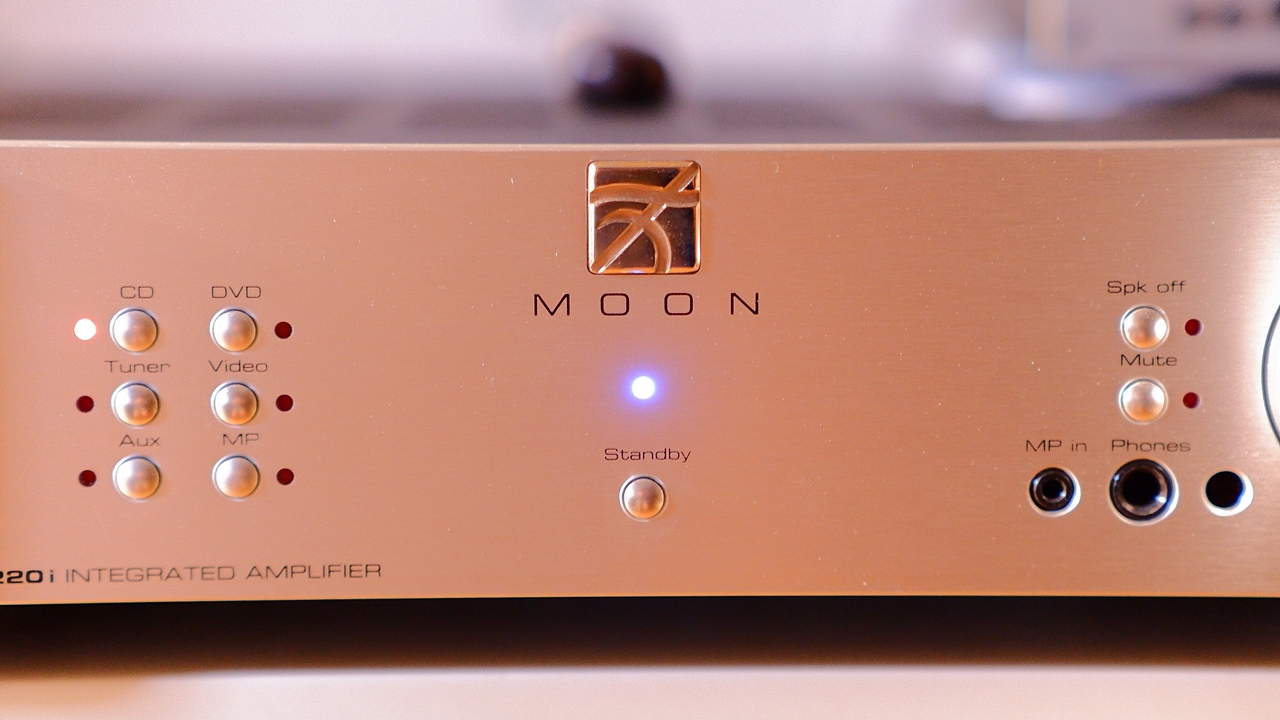
As I touched on in that entry, some audio equipment — including certain SOULNOTE products — uses PPE resin (polyphenylene ether), sold under the name “Xylon,” in IEC power sockets and similar components on sonic grounds, and there appear to have been incidents in which plastic parts cracked and broke after a cyclopentane-containing cleaner was used on such equipment. I have no personal experience of this, not being a SOULNOTE user myself, but I should note that certain resins can be strongly attacked by such cleaners, and caution is warranted.
A similar product available at a more accessible price is Sunhayato’s contact cleaner New Relay Cleaner RC-S201. It is a cleaner for contact-related parts — relay contacts and the like — removing contamination and improving conductivity. The capacity has been increased from the earlier version and it now comes in a 200 ml can.
 ポチップ
ポチップ
The ingredients of RC-S201 are ethanol, n-propyl alcohol, cyclohexane, and isohexane. With alcohol as the main component and relatively low resin aggressiveness, it seems to be a comparatively safe cleaner. I do think the sonic character when using this one differs from that of PANDO 29D, so I intend to write a usage report if the opportunity arises. Addendum: ※ Since 2017, I have personally switched from PANDO 29D to Sunhayato RC-S201. Whether this product is safe for the PPE resin mentioned above has not been verified either, but there are resins that cyclohexane cannot be used on, so caution is likewise required here.


Auto Translated by CS4.6


List of comments (7)
うちは定番ケイグの赤を使ってます。
効果はよくわかんない。
ケミカルが立派でも主人が糞耳じゃだめですね。
お久しぶりでーーーす。
私もパンドー常用です。
コレ無しでは我がオーディオは駄目駄目。
それにしても、端子は直ぐに汚くなりますね。
本当に綺麗になります。
とくにデジタル系の端子とケーブルの接点に効果的なのはなぜ?でしょうか。
デジタル信号ってのは、なかなかシビアのようです。明らかに磨いたあとの音のピュアなことは、私の駄耳でも区別が付きます。まぁ、綺麗になったというプラシーボもあるかと。
使いこなし的には、極細綿棒との組合せですが、ガラスの小皿(ガラス蓋付き)に吹き付けてから、綿棒を浸して、蓋をすると意外と揮発せずに何本もの綿棒を浸せて掃除が出来ます。
—
間違っても機器に直接スプレーは厳禁。
まぁ、当たり前ですけれどもね。
なおケイグは、使用当初は、抜群の冴えを見せますが、時間経過とともに音に鮮度が無くなるような気がします。それもかなり早い段階でそうなるような…。
家のオーディオには怖くて使えませんが、カーステにはコンタクトX使ってます。
結構効きますね。
>Sugarさん
おひさです~。いつもすみませんm(__)m 恒例行事になってますが3ヶ月ぶりに再開してます。
端子、そういえば何で汚れるんでしょうね?デジタルケーブルは端子部分でかなり波形が乱れているのかもです。以前何かの本で各種デジタルケーブルの出力波形を見たことがありますが、値段に関わらず75Ωが出ていなかったり、波形の山がかなり歪んでいたり。キャラクターの強いケーブルはどうもジッターを意図的に乗せているみたいな感じでした。同軸ではありませんが、TOSも端子がユルユルなので挿し方で結構音質変わります。
>機器に直接スプレーは厳禁
布に含ませて天板(金属)の内外を拭くのに使ったりしてました。大丈夫かな。。。
>ガラスの小皿(ガラス蓋付き)
おお。蓋付ってのが良いですね。私はしょうゆ皿使ってました(滝汗) 100均で良さそうなの見繕いますかwあるいは理科の実験道具売り場か…。
>なかたさん
実はケイグを一度も使ったことがなかったりします…。 油性なのでしょうか? 酸化皮膜でどうしようもない端子を磨くのには良さそうですよね。ケイグで処理して仕上げににパンドー29Dで脱脂すれば機器を傷める危険性も低そうですし。コンタクトXって何でしょうか?
コンタクトZでした。すいません。
http://www3.coara.or.jp/~tomoyaz/higa0202.html#020223
鉛筆の芯です。
なるほどナノカーボンよりおりこうかもしれません。
やっぱり三菱ハイユニが良いのかな?…。
ハイユニはだめです。
ありゃポリマー配合なので。
安物のほうがいいそうです。