【Audio USB Cable Comparison】
2|3|4|WireWorld Chroma|ELECOM|6 Models|SUPRA
The title alone may prompt a weary sigh, but a regular reader posted that the American brand Belkin‘s USB cable had been getting some attention online for its supposed high-quality sound — and so, reluctantly, I decided to put it to the test and actually find out whether a USB cable really does change the sound quality. (※ Or rather, whether it sounds as though it does.) I tried it with my desktop PC audio setup.
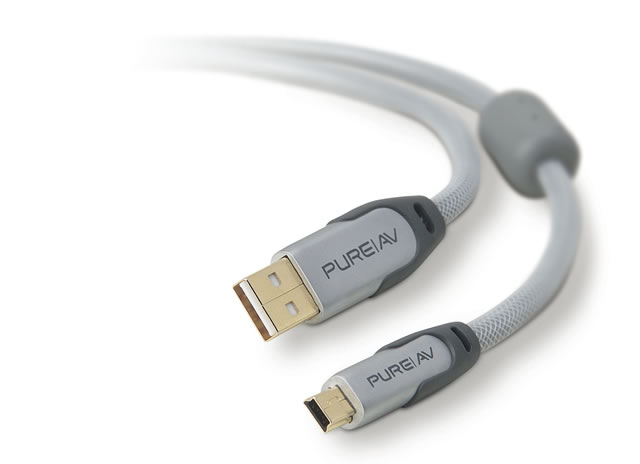
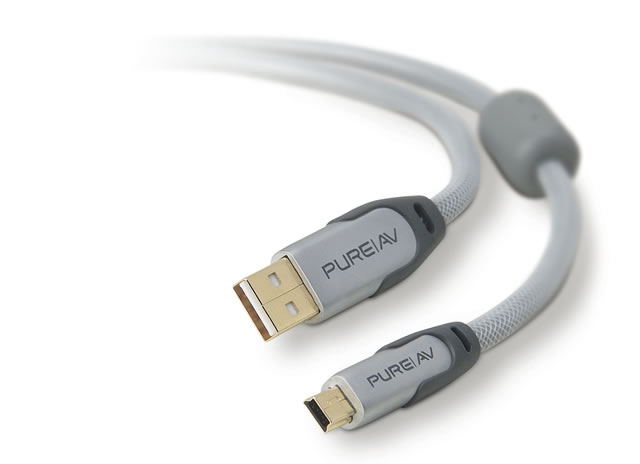
I should say upfront that, unfortunately, I do not own a Belkin USB cable. Pioneer was the Japanese importer for Belkin and brought in various higher-grade products, but sadly the USB cables PAV52200-06 / PAV52201-06 appear to have been discontinued and are no longer available. Beyond their thick, premium appearance, they were reportedly tuned for pure Hi-Fi use in various ways — silver-plated OFC conductors, careful attention to shielding, and so on. Whether the “high sound quality” claim refers to analogue audio signal transmission or to the digital signal carried via isochronous transfer is not entirely clear, but from the look of reviews in audio accessory magazines and the like, it seems to be interpreted as referring to the digital signal. ※ On checking, it turns out that USB 2.0 does not carry analogue audio signals at all. It appears that with USB Audio Device Class 3.0, introduced with USB Type-C in 2016, analogue audio signals can indeed be superimposed.


 ポチップ
ポチップ
Incidentally, the Belkin USB cable that has been generating buzz online for its sound quality is the F3U133-06-GLD — a general consumer-grade PC product from the same company, but with OFC conductors and a line-up that includes both standard (nickel-plated) and gold-plated connectors. Apparently the gold-plated version sounds better…
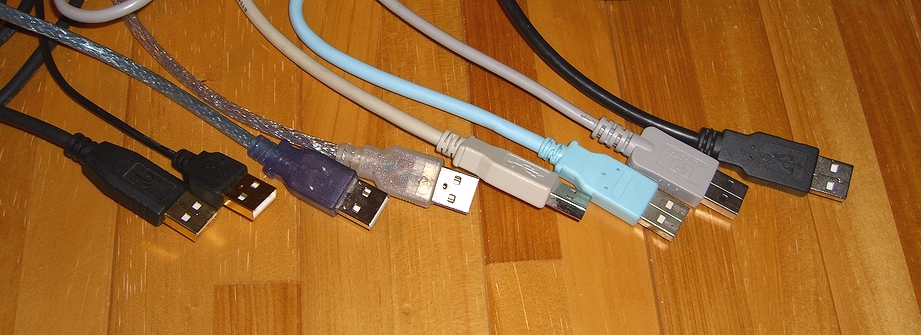
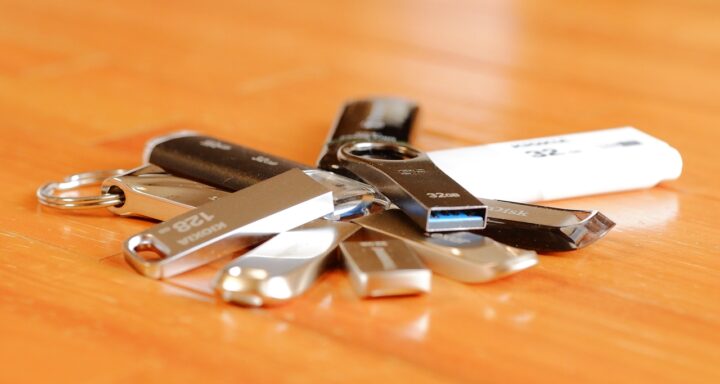
So — does the digital signal flowing through a USB cable (not an analogue audio signal, but a digital one — an isochronous signal with no error correction) really affect sound quality? Thinking about it normally, this seems like the kind of claim that shouldn’t be possible, which is precisely why I had been deliberately ignoring it and, frankly, not wanting to think about it too hard. And yet, when it comes to building a PC audio setup with genuinely good sound and a proper Hi-Fi sensibility, it is not a topic one can simply sidestep. On top of which, it only just occurred to me that I actually own quite a lot of USB cables. All of them are plain PC-use cables with no connection to audio, but since they differ in manufacturer, materials, and sheathing, if there were to be any audible differences between them, there ought to be some kind of sonic character to each — quite apart from whether any of them would count as “high quality” in a Hi-Fi sense. As for the technical arguments around isochronous transfer and the question of jitter, this author, being of the “head-in-the-cosmic-rays” persuasion, will, as usual, be deliberately not thinking about any of that.
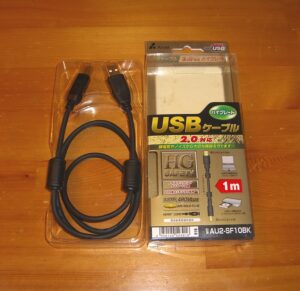
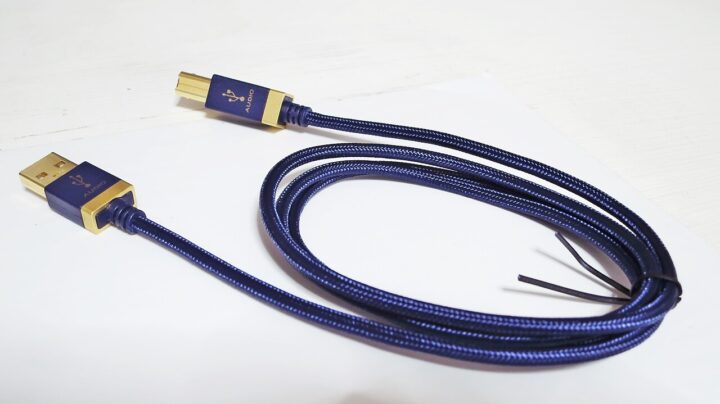
I have eight USB cables to hand for this test. There are probably more lurking in various drawers, but it felt like enough to be getting on with. And since testing nothing but ordinary PC USB cables would be a bit dull, I also prepared the iBUFFALO (Arvel) AU2SF10BK — featuring gold-plated connectors, a double ferrite core, and built-in noise clipping diodes — which I picked up as clearance stock at some shop for 200 yen. Apparently a utility model patent application is pending.
The playback software is ASIO4ALL + Lilith. The source material is a selection of familiar classical music pieces, along with the Shamanic Princess Original Soundtrack Vol. 1 — which ranks among the top three anime music CD albums I have ever heard.
 ポチップ
ポチップ
Fully expecting, as usual, that nothing would change, I started by swapping out the generic USB cable I had been using more or less without thinking for the Arvel AU2SF10BK.
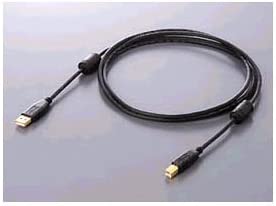
Oh no. To my considerable dismay, right from the very first listen it sounds different to my ears. I switched back to the original USB cable (next page, cable №7), then swapped again, going back and forth several times — but the impression was the same each time. Compared with the original cable №7, the Arvel AU2SF10BK shifted the tonal balance towards the bass, reduced the sense of distortion, and improved the perceived S/N ratio — it was clearly a different-sounding cable altogether. On the next page I will go through the sonic characteristics of all eight USB cables, one by one.
■ Continued in Does a USB Cable Change the Sound Quality of PC Audio!? Part 2
【Audio USB Cable Comparison】
2|3|4|WireWorld Chroma|ELECOM|6 Models|SUPRA



List of comments (1)
ちまたでデジタルだから0101だから変化はないはず!オカルトだというのがありますが…はい変わります
ノイズだらけなんですよ
まあこれ読んでください
http://www.cybernet.co.jp/eda/mailmag/minami_study/15/tech.html
http://www.cybernet.co.jp/eda/mailmag/minami_study/16/tech.html