【Audio USB Cable Comparison】
1|3|4|WireWorld Chroma|ELECOM|6 Models|SUPRA
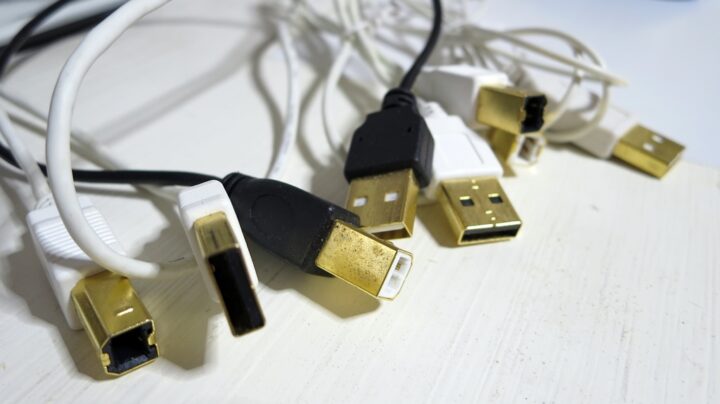
The following are listed in order of my personal sound quality rating.
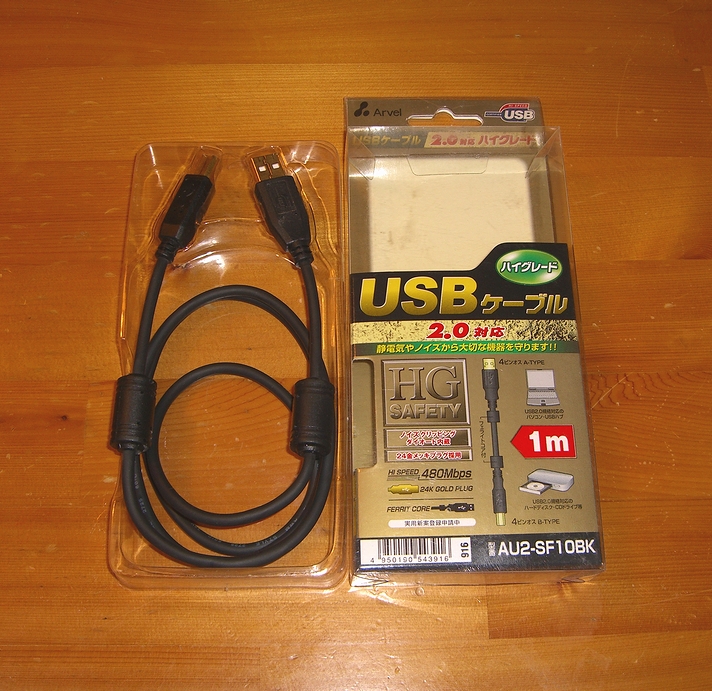
(1) Arvel (iBuffalo) AU2-SF10BK 1m
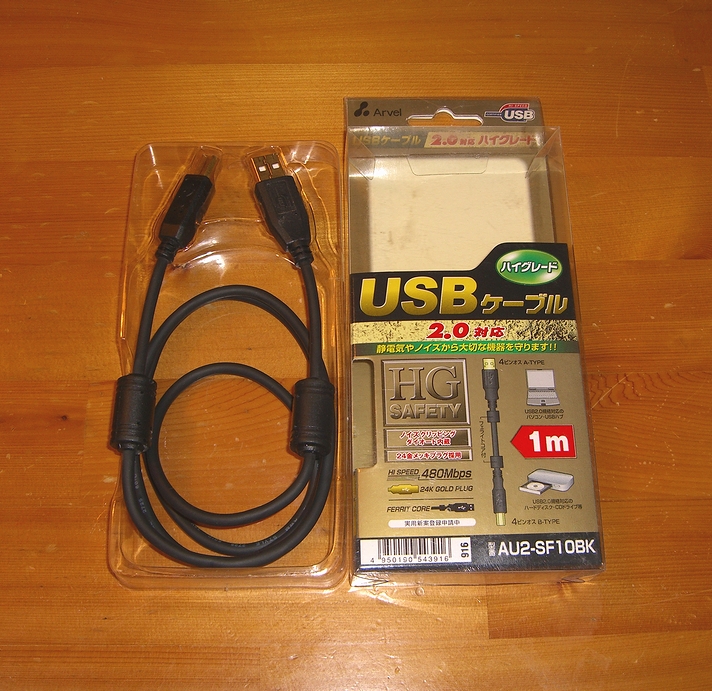
Among the seven USB cables, this is the one with a clearly different tonal balance — it is the only cable that produces a bass-heavy character. On the other hand, sharpness of attack, brightness in the upper frequencies, and a sense of expansive resonance are not particularly noticeable. Stereo imaging is good. The perceived S/N is excellent, with no sense of noise whatsoever. It has a proper, honest way of presenting sound, and depth of image is also present. The timbre carries a soft, yielding nuance reminiscent of rubber-type Hi-Fi insulators such as Hanenite, and the overall tone is on the dark side. Colouration is on the stronger end. It is a quiet, unassuming sound, but objectively speaking it may well be the highest-quality performer among all eight cables in this test. Possibly because the treble does not spread out, the volume seems ever so slightly lower compared to the other cables.
(2) ELECOM USB2-X03BK 30cm
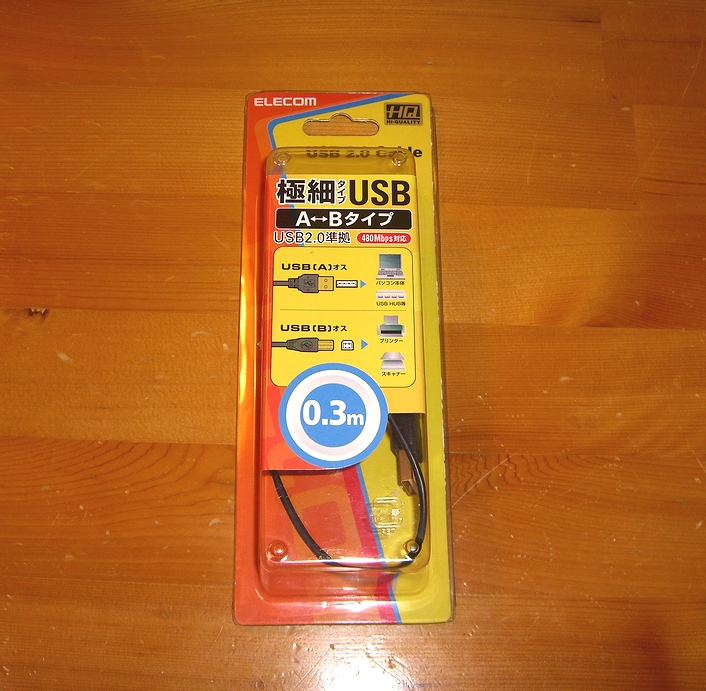
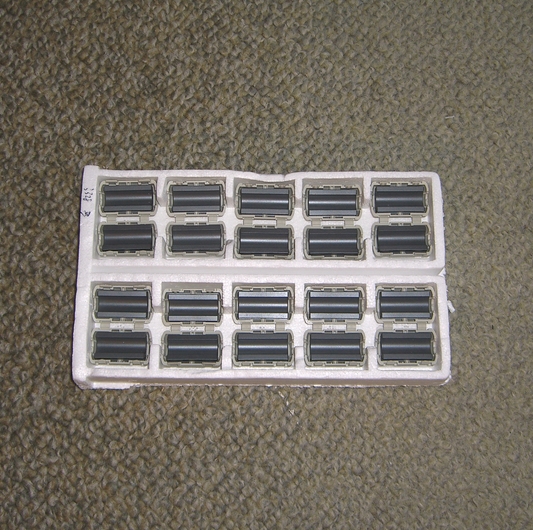
The contents look like this. There were some discussions online suggesting that thinner and more flexible USB cables are preferable, so I picked this one up to try — effectively free, exchanged for a coupon from Yamada Denki’s extended warranty scheme. At 30cm, it is the shortest cable in this test. I would have preferred white, but only black was available in stock. The connectors are gold-plated and, despite the slim profile, it has double shielding. Sound quality is crisp and refreshing, centred on the upper midrange, with an elegant character — like the effervescence of sparkling wine. This is the cable with the least colouration of the lot. Bass weight is not particularly abundant, but noise is low across the full range and it can genuinely be called high quality. That said, when it comes to ultra-slim USB cables, the best-sounding one is apparently not the ELECOM USB2 but the Arvel USB Slim Cable AUS05WH/AUS05BK, so I plan to try that at a later date. The successor model to the ELECOM is the U2C-AP-BX.


 ポチップ
ポチップ
(3) Trends Audio UD-10.1 Bundled Cable 1m
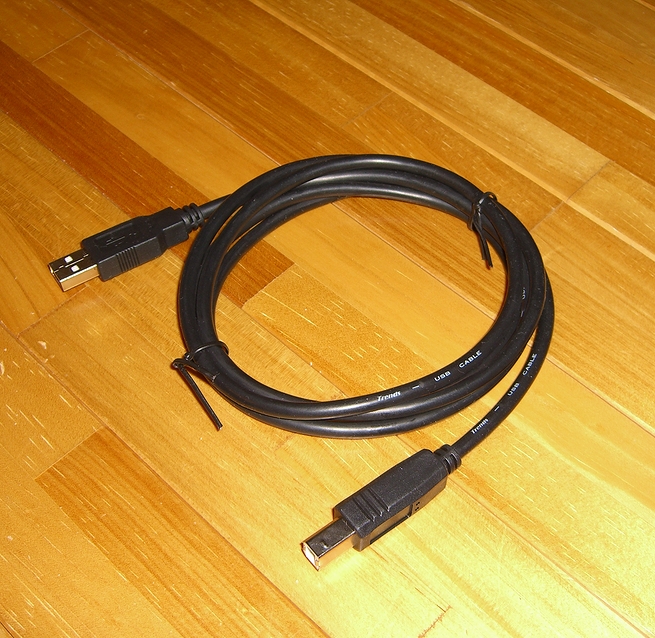
The bundled cable that came with the Trends Audio DAC/D-A converter. With bundled accessories, it is generally assumed that the manufacturer cuts costs and throws in the cheapest option available — yet this one is printed with the word “Trends“, for what that is worth. Whether that means the sound quality has actually been considered is another matter entirely. Among all seven cables, this one has the tightest, most dense image with a strong sense of presence. It is a little rough around the edges and slightly blunt, but it is a clear and easy-to-understand sound. At this level of performance, I think it is fair to say it does not spoil the UD-10.1’s sound too badly.
(4) Semi-Transparent Blue USB Cable 50cm
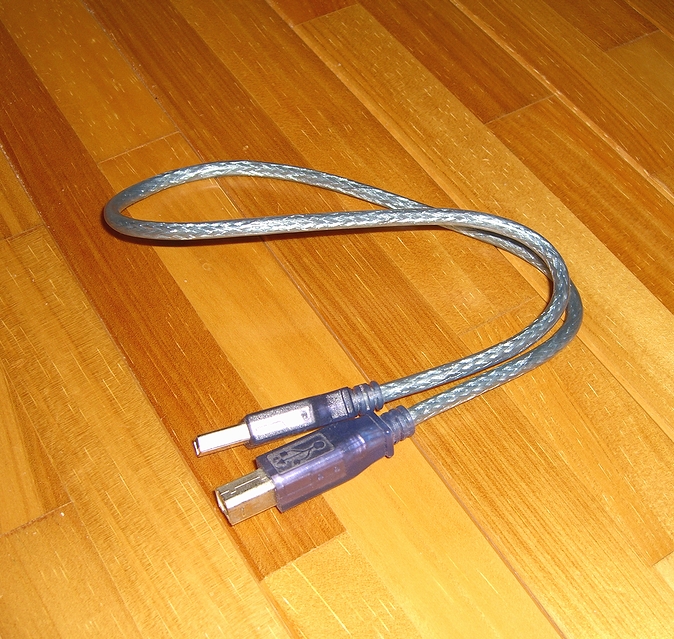
Manufacturer unknown. Most likely purchased at LAOX around 1999–2000, and probably a product from a Japanese supplier. It may even be a USB 1.1-era item rather than USB 2.0. It is semi-transparent, and you can see the braided shield through the outer jacket. The printing reads something like “AWM” followed by text too small to make out. Contrary to what its cheap appearance and blue sheath would suggest, the sound is bright and coloured in a way that calls to mind silver conductor cables, and music comes through with a lively, expressive character. The treble resonance and sense of spaciousness are its defining traits, yet any sense of harsh distortion is, curiously, entirely absent. In terms of sound quality, transparency is a step behind the ELECOM USB2, and compared to the Arvel AU2-SF10BK the bass is weaker and the image a touch limp — which could be seen as a weakness… though depending on one’s preferences, that might not necessarily be a bad thing.
(5) Light Blue PC USB Cable 50cm
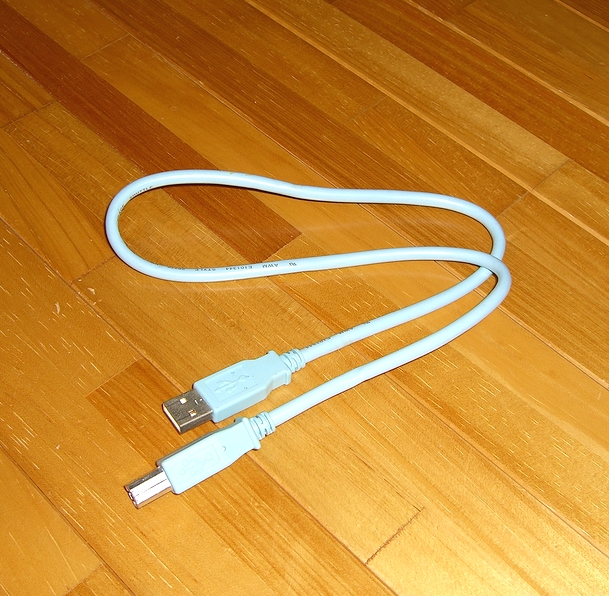
This one is also most likely from a domestic supplier, purchased at a consumer electronics retailer — though I can no longer remember which shop. It is printed with: AWM E101344 STYLE 20276 VE-1 80℃ 30V SPACE SHUTTLE. The sound quality is quite close to the see-through blue cable above, but this one has tighter imaging and greater transparency in the soundstage. On the other hand, there is a slightly distorted quality that is not present in (4), which is a drawback.
(6) SUPERPRO DAC707 Bundled USB Cable 1m
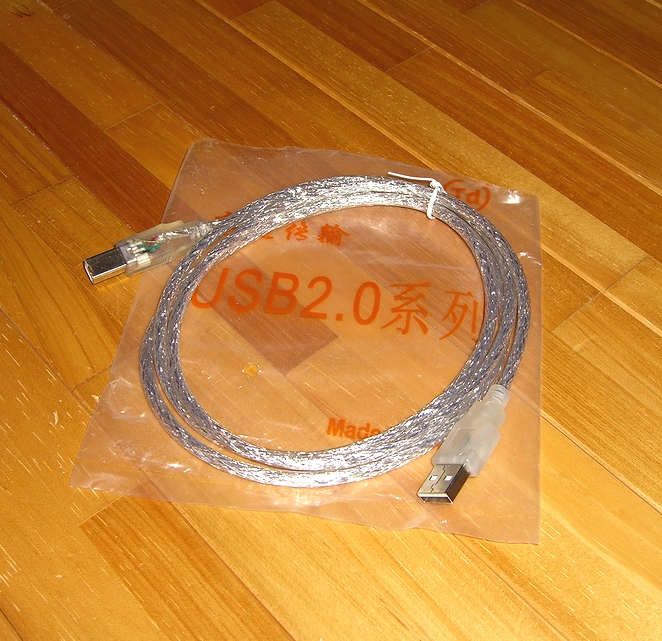
The bundled cable from a rather obscure Chinese-made DAC called the SUPERPRO DAC707. That said, it was a USB DAC made in the early days of the technology, so it was quite an expensive purchase at the time (I imported it personally from a US audio shop). The bundled USB cable is also Chinese-made and see-through, so the innards are visible. It is quite thick. The shielding is most likely tin-plated, though it looks for all the world like a silver-plated braided shield — flashy appearance notwithstanding, the sound is quite dreadful: noisy somehow, confused, and impossible to follow. Transparency was so poor and the overall impression so unpleasant that I removed it almost immediately.

(7) The USB Cable I Had Been Using for No Particular Reason 50cm
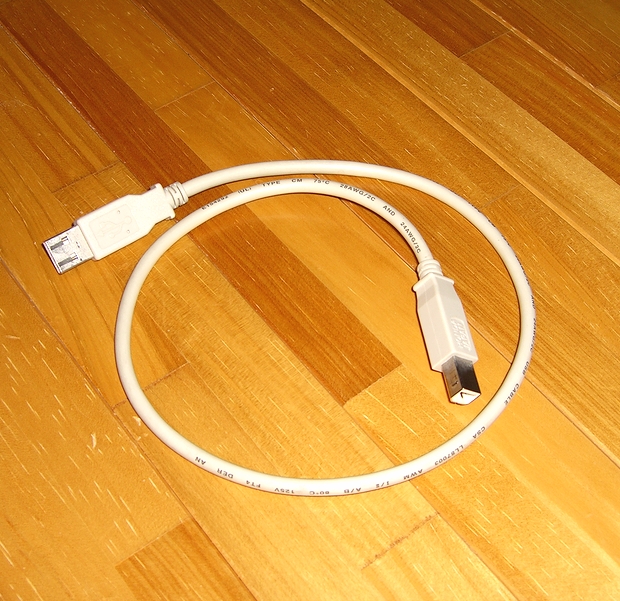
This is also most likely from a Japanese supplier. The connector is marked “HONDA”, though it does not appear to have any connection to the car manufacturer. The sound quality is not particularly good. I had been using it for PC audio without giving it a second thought, which was rather foolish of me. Not only does the image float upward, the sound is noisy, gritty, and feels muddy. It seems this cable was one of the contributing factors behind the lingering sense that my PC audio setup was never quite sounding its best.
(8) HP Photosmart C4175 Bundled USB Cable 2m
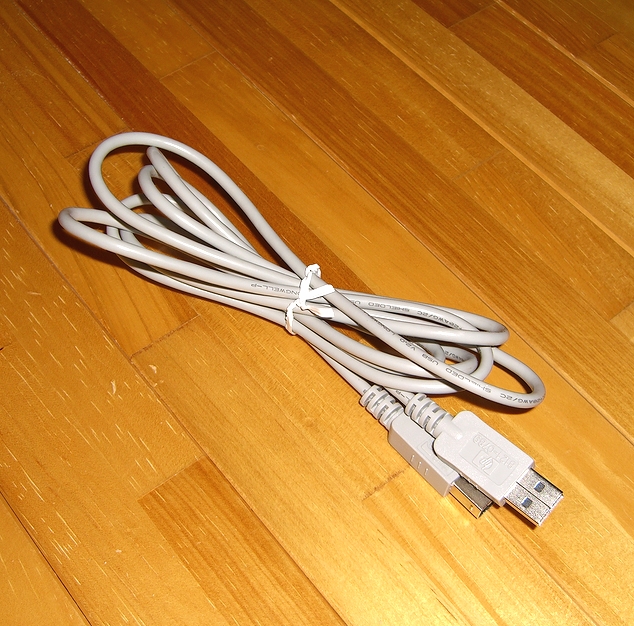
The bundled cable from the Hewlett-Packard printer HP Photosmart C4175. The connectors carry the HP logo. The conductor sheath is on the slender side. Sound quality is the worst of this test — simply put, it is distorted throughout. The 2m length may be having a detrimental effect, but this cable is really not something one could use for audio. I realise that writing such things is rather unfair on Hewlett-Packard, who never designed it for audio use in the first place. Note: for what it is worth, I have been a long-time user of HP printers, and as of 2017 I am on my third generation — the HP ENVY 4500.
~ Summary ~
Above I have listed the cables in order of perceived sound quality. The results are, as ever, thoroughly subjective. Reading through the impressions, it may seem as though the differences are enormous — but these are, in the end, only subtle differences in nuance. The differences are not as clear-cut as those produced by speaker cables or RCA cables carrying analogue signals, though they are perhaps just about impossible to ignore for the dedicated enthusiast. In a confined listening environment such as a desktop PC audio setup, accessory-driven changes in sound quality are simply not as critical as they would be in a full-scale pure audio system aimed at life-size acoustics. Beyond that, the digital data itself never changes with a USB cable, so if there is any sonic difference, then — as with HDMI cables — the causes must lie elsewhere: perhaps vibration travelling through the conductor and making its way, however faintly, to the speakers; or perhaps the influence of jitter and ground noise transmitted from the PC alongside the signal… and so on. In truth, I cannot give a definitive answer at this point, so please bear with me as always.
The Arvel AU2SF10B with its bass-forward, composed, and richly coloured sound; the ELECOM USB2 with its crisp, refreshing character and minimal colouration; and the see-through blue cable, a step behind the USB2 yet musically expressive and engaging — I found myself torn between these three, but in the end the ELECOM USB2 and the iBUFFALO AU2SF10-BK pull just slightly ahead. For those who prioritise treble, I would personally recommend the ELECOM Ultra-Slim USB Cable A-B 0.3m Black USB2-X03BK; for those who prioritise bass, the Arvel (iBuffalo) AU2-SF10. That said, audio cables tend to be better both sonically and aesthetically when kept short — and on that note, the sheer practicality of running a clean 30cm connection through the air between a DAC and a laptop is rather appealing. In the end, I settled on the ELECOM ultra-slim USB2 as my final choice for now. That said, depending on how the tonal balance develops going forward, I may well switch to the Arvel (iBuffalo) AU2-SF10BK — that part is entirely down to mood.
For reference, comparing stiffness by feel: Stiff: 5 > 6 > 4 > 3 > 1 > 7 > 8 : Flexible. Conductor sheath diameter: Thick: 5 & 7 & 8 > 2 & 4 & 6 > 1 > 8 > 2 : Thin. Interestingly, there does not appear to be much correlation with the sound quality impressions, though ultra-slim types do seem to offer some sort of advantage. I plan to test the Arvel (iBuffalo) USB Slim Cable — said to outperform the ELECOM USB2 — once I get hold of one. As for the BELKIN U133-06-GLD, which enjoys the highest praise in the enthusiast community, I am not yet sure what to do about that.
 ポチップ
ポチップ
Another well-known USB cable with high-quality audio in mind is the EDIROL CUSB-M1. The interesting thing is that it is manufactured and sold not by an audio company but by Roland, a musical instrument maker. It looks entirely unremarkable as a USB cable goes, but it appears to incorporate sound-quality measures that rival those of the Belkin cable.
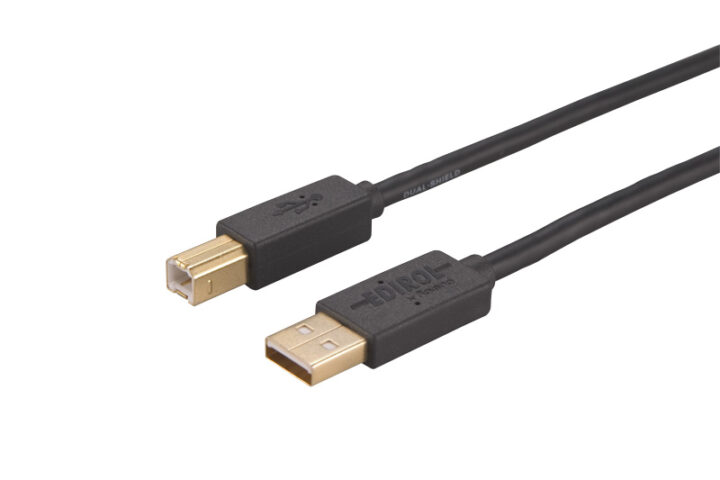
The Edirol High Quality Cable Series consists of USB and FireWire cables used to connect audio interfaces and MIDI interfaces. These cables deliver the high reliability demanded in music production environments, including enhanced audio quality and stable MIDI data transfer.
■Reliable Double-Shield / Twisted-Pair Construction
Every cable in the High Quality Cable Series features a thoroughly high-fidelity design. A double-shield construction is employed, with an aluminium shield applied inside a high-density copper braided shield. This minimises sound quality degradation caused by transmission errors resulting from both low-frequency and high-frequency noise.
Furthermore, the twisted-pair construction, in which two conductors are twisted together, causes magnetic flux to cancel out and reduces external noise.■99.996% Purity OFC (Oxygen-Free Copper) Conductors for Reduced Transmission Loss
The conductors use 99.996% purity OFC (Oxygen Free Copper), which also possesses excellent characteristics for digital signal transmission. This suppresses the generation of signal distortion and makes it possible to reduce transmission loss to an absolute minimum.
■Low-Resistance 24-Carat Gold-Plated Pins
The connectors employ 24-carat gold-plated pins, which resist corrosion and keep contact resistance low. The use of gold-plated pins — as found in high-end audio cables — enables high-speed data transfer to be carried out with greater fidelity.
■Pb & Cd-Free Safe Insulation
In order to reduce environmental impact, the cable uses insulation free of lead (Pb) and cadmium (Cd). Furthermore, lead-free eco-solder is used throughout, making this a cable that can be used with complete peace of mind, containing none of the environmentally harmful substances lead or cadmium.
As you can see, the EDIROL CUSB-M1 has specifications broadly similar to those of the Belkin. The OFC (high-purity oxygen-free copper) conductor is the kind of detail that will appeal to the audiophile instinct. Even so, it is priced a touch on the high side for a USB cable, which makes it a slightly difficult decision.
【Audio USB Cable Comparison】
1|3|4|WireWorld Chroma|ELECOM|6 Models|SUPRA

Auto Translated by CS4.6
List of comments (16)
本当に本当に、そのあくなき探究心・分析魂には恐れ入ります。お疲れ様でした。今回も、参考にさせていただきます。差異が確かにありそうですので、理論的なことは頭が痛くなる・・のでおいといてUSB変えてみようかと思いますよ。。。えーと、次はLANケーブルですか?。。。その後、わたしもネット上を徘徊してみたところ、タイムドメインスピーカーのヨシイ9の紹介ホームページ?でバイオリン弾きの方が、その独特な文体でいろいろな実験紹介をしておりまして。ちょっと読むのに難儀しましたが。。中身はオンキョーのオーディオプロセッサー55Gxだったかを、2台つなげるとなぜか音質向上するとか?・?色々・・結局はヨシイ9はいいもんだということらしいですが…その中で、やはりUSBケーブルは細いものが良いということでArvelのものが推奨されてました。吉井博士の推奨らしいです。ちなみにタイムドメイン理論自体も良くわからないし、以前小さいSPを聴いたかぎりではごく普通?にしか聴こえなかった(低音が薄かった)。。。結局、自分好みの音にしていただける機器、アクセサリーならどんな理論でも全然OKなのですがね。。USBなら買って損もなし。まあ、お値段との兼ね合いもありますが。。
また前ホンダ(ブラウンGP)勝ちました。。バトンも生き生きしてます。ホンダファンとしては、その方がショック。。録画中継、絶対見ないつもりが見てしまった。。。。。。。。
こんばんわです。
極細USBケーブルのネタ元はご指摘のサイトさんのものです。HDMIはともかく直接リアルタイムに音楽データをやり取りしていないLANケーブルについては考えたくないなぁ・・・w インターネット回線用ではないですよね。上で書いた15mの屋内配線は太いものですが、モデムや無線LAN、ハブからPCへ繋げるインターネット周りのLANケーブルは極細タイプを使っています。細いケーブルで最短距離で配線するのが好みってだけの理由でしたが・・・。これらはあくまで屋内LANのケーブル。直接音楽信号が流れるLANケーブルってあるのでしょうか? ってうちみたいに無線LANを介在させているともはや関係ない気もするのですが。無線LANルーターやカードで音質が変わるとかになりそうですが、もうねぇw。無線LANルーターの性能で接続実行速度や接続安定性はかなり大きな個体差がありますし、無線LANカードも手元に違うものが4枚くらいあるのですが、同じ11g接続でも受信カードで接続速度に違いが出ますし、カードの消費電力がそれぞれ全然違いますから、電源の揺れ方とかで間接的に音質違うって事になったりするのかもなぁ・・・考えたくないですが。ちなみに802.11aを使っているのは11a接続にするとASIO4ALLのバッファを小さくしても音楽が途切れなくなるからです。って話が逸れてしまいましたね。
F1は、ホンダファンの人の反応は色々みたいですね。バナナGP。の快進撃を元ホンダとして喜んでいる人や、モグさんのように反BGP派の人・・・そっちの方がファンとしては正常な反応ではないかと思いますが。昨年のアースドリームホンダは既にブラックリーと本田技研の意思疎通が取れていませんでしたし、モーターホームのでっかい地球地図も日本だけ塗りつぶされていたとか。。。それくらい関係は険悪だったようで。長くF1を見てきた方からするとSAF1のトルコ締め出し→撤退も含め、ここ数年はホンダにネガティブな情報しか入ってこなかったです。前にもちょこっとだけ書きましたが、シャシー設計も含めて純日本チームで一から参戦する気がないのなら、エンジンサプライヤーとしての立場以上のチーム運営に手を出すべきじゃなかったと外野ながら私は感じてました。
元ネタはあのホムペだったんですね。。あれって、非常に読みにくくて本当に難儀でした。結局、何をいいたいのか理解するのに時間かかったりして。。実はフライングしてまして今日、BELKINのUSBケーブル届きました。。さっそく、取り換え。。激変。。M-3がB&Wに変身したような。繊細で、、細かい音まで再生してくれますよ。ミニCM1みたいな。。多分、パステルピアノさん好みの音。。輸送代のほうが高くつきますが…。
ホンダF1については、当初チームとして参加予定がBARとの共同開発にトーンダウン、思うようにいかないためチーム買収、日英混成チームに。そして、余計混沌としたチーム状態に。。ついに撤退。。と思うようにいかなかったチームがいまやトップクラスの速さですからね。。かってのエンジン供給のみの第二期時代もホンダいじめがあったし、所詮F1はヨーロッパのものなんでしょうか???
地球地図の塗りつぶしの件は知りませんでした。そこまで・・。
バトンの優勝も今までの不遇を考えると良かったと思える反面、なにか切ないです。。
激変ですかっ(滝汗)。BOSE M3とUSBケーブルの接続関係を教えていただけると幸いです。BELKINは6ftは長すぎると思うのですが、金メッキはコレしかないんですよねぇ。ノーマルタイプは50cmがありますけれども。こうなったらむしろパイオニアが輸入していた高級品が欲しいですw
>所詮F1はヨーロッパのものなんでしょうか
そうですね~。自動車文化は向こうで発祥したものですから。F1は比較的新しいとは云えイギリスの国技と同じです。日本のチームについていつも感じるのは郷に入れば郷に従えという日本の諺です。剣道、柔道、相撲、色々日本の文化を代表するスポーツがありますけれども、外国人にはそれらに参加する為に日本のしきたりや心を理解することが求められますよね。それと同じでF1も欧州文化、それも比較的中~上流社会と密接に関わっているスポーツですから、F1の敷居を跨ぐときには相手の文化への尊敬と理解が必用なんじゃないかなぁと。莫大な資金を背景に日本的価値観のままF1で振る舞っていた部分が、実際には相当煙たがられていたように感じました。ホンダも故ハーベイ・ポスルスウェイト博士の意思を引き継ぎ、日本人に理解のある欧米人と協調しつつ、基礎から本当の意味での日本車とチームを作り上げて参戦すれば、このような酷い扱いにはならなかっただろうと思います。
私もやってみました。ベルキン15cm同金メッキの1.8m Yoshi9の人の推薦品と持ってた無銘品
結果はベルキン15cmの圧勝でした。こんなにも違うんですね。驚いたわ。
>>kobaさん
コメントありがとうございます。こんなにも違いましたか~。うちの小音量デスクトップPCオーディオ環境ではまぁ違う程度でしたけれど、投資金額が僅かでもケーブルの試行錯誤が楽しめるのでエントリにしてみました。ベルキン羨ましいなぁ。私は先日アーベルUSBスリムケーブルAUS05WHとAUS10WHを取り寄せたつもりだったのですが、間違えてMini-B端子のAUSM05WHとAUSM10WHを注文してました。届いた品物見てがっくり…。 携帯から注文するとコレだから・・・。仕方ありませんので、音質に関係あるかは怪しい位置ですが、ポータブルHDDの接続ケーブルにでもしてみます。
横から失礼します。
moguさん、kobaさん宅のUSBオーディオアダプタはどこの製品でしょうか。この種の製品によく使われるTI社のPCM270xシリーズがUSB信号の揺らぎに弱いかもしれないという話が別スレで出ていて、ちょっと興味深くあります。
ちなみにUSB的接続がイマイチという説のあるCEC DA53はTIのPCM2906を使って内部でS/PDIFに変換し、内部でPCM1796に食わせているようです(マイクとヘッドフォンはPCM2906の機能を使っているのでUSB接続時にしか動かない&評判イマイチ)。この構成じゃ音が落ちるわけがないだろうと思っていましたがPCM2906に同じ特性があるとしたら……?
やっぱDA-PortUSB試してみるべきかと思いつつTOSLINKと決別した今となっては激しく面倒くさく。USB2.0に対応してない(笑)し。
家はノートをサンバレーSV192Sの上にのっけてやってます。外部クロック注入してます。DACのカップリングコンデンサと真空管は換えてます。デンケーはオヤイデのEF-S2.0で自作 200Vを100Vに落としてからRGPC400PRO繋いでます。スピーカーがJBLのホーンと38で能率が106あります。能率が高いと情報量の吸い上げとでも言うのかな?高いようで色んな音の違いがよく出るんですよ。
情報ありがとうございます。
マスタークロック・ジェネレータ付きとなるとUSBケーブル品質のジッタ起因説の線はナシですね。SRC 4792なる石のスペックが分かればいいのだけれど……
こうなってくるとSATAケーブルとかもベルキン探さないといかんですね。ノートはいいとしてもデスクトップは中で使ってますからね。
インフラノイズに謝罪しなくちゃならんかもしれないですね。
>kobaさん
>>サンバレーSV-192S
もしやkobamanさんですね♪キット屋さんのSV-192Sをお持ちとは羨ましい。いつの間にか発売されてたんですね。私も色々とDAC導入を検討しているところです。SV-192Sは外部クロックでかなり違うとの話ですがそうなると価格2倍ですし芋づる式にお金が掛かりそうで・・・(滝汗)
>なかたさん
一応Trends UD-10.1もDAC前段に±10ppm以下のマスタークロックが乗ってますので、時間軸のジッターだけがUSBケーブルケーブルで音質が変わる原因ではないと思います。
あんりゃま あっちではどういう名なんでしょうか?産婆のDACはあの内容からすれば安すぎです。マスタークロックを合わせて買ってもほかより安いと思います。カップリングの交換はかなり効きました。今考えているのはFF800通してDACに入れるのとパソコンから直で入れるのと比べてみたい ということです。
>kobaさん
あっちってどちらですか??私はこのブログとリンク先や関連の個人ブログ以外では書き込みとか全くしてないんで。。。kobamanさんの事はPhile-webコミュニティの方でお見かけしましたので、もしかして同じ方かしら~と思いました。Phile-webの方も一応登録はしてあるんですが書き込みゼロの幽霊会員です。
お差し支えありませんでしたら、コメントを書き込まれる際にPhile-webコミュでのkobaさんのブログアドレスをURLの所に入れておいて戴ければ、私も含めて皆さん参考になると思いますd(^_-)
これを本気で言っているのだとすれば、疑い無くクルクルパー。