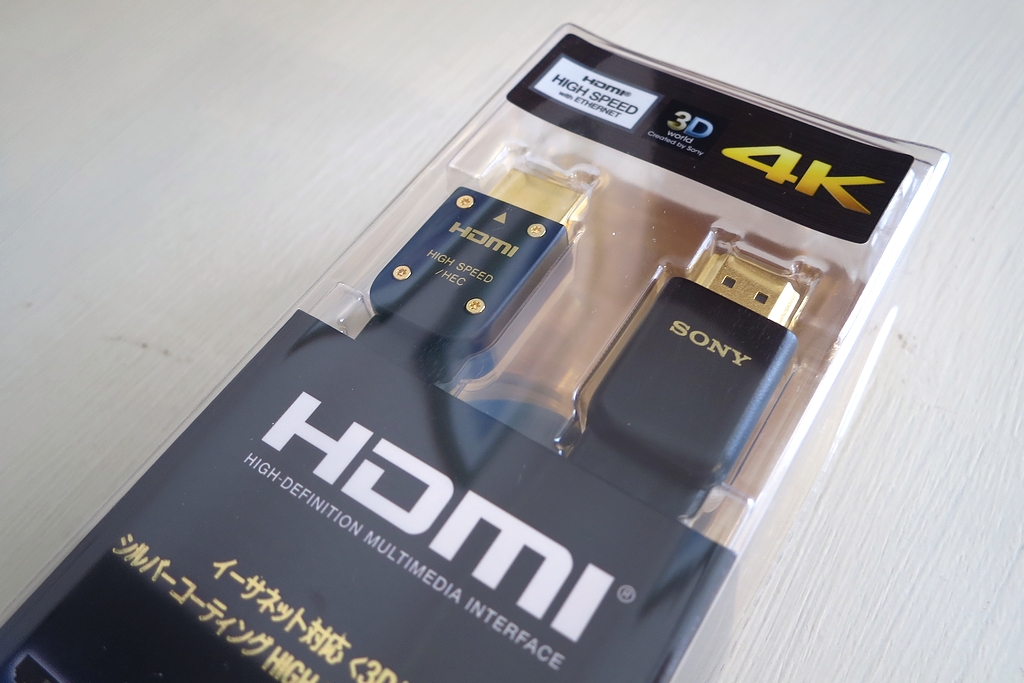
Continuing from the above. So, ordering an AIM cable again would likely solve everything in one go — but looking into it, I find that SONY’s core HDMI cable range, the DLC-HE10XF/DLC-HE15XF/DLC-HE20XF series, retails at around ¥3,000–5,000 and has quite a good reputation for the price. There are even reviews claiming it rivals WireWorld’s HDMI cables — now that’s something!
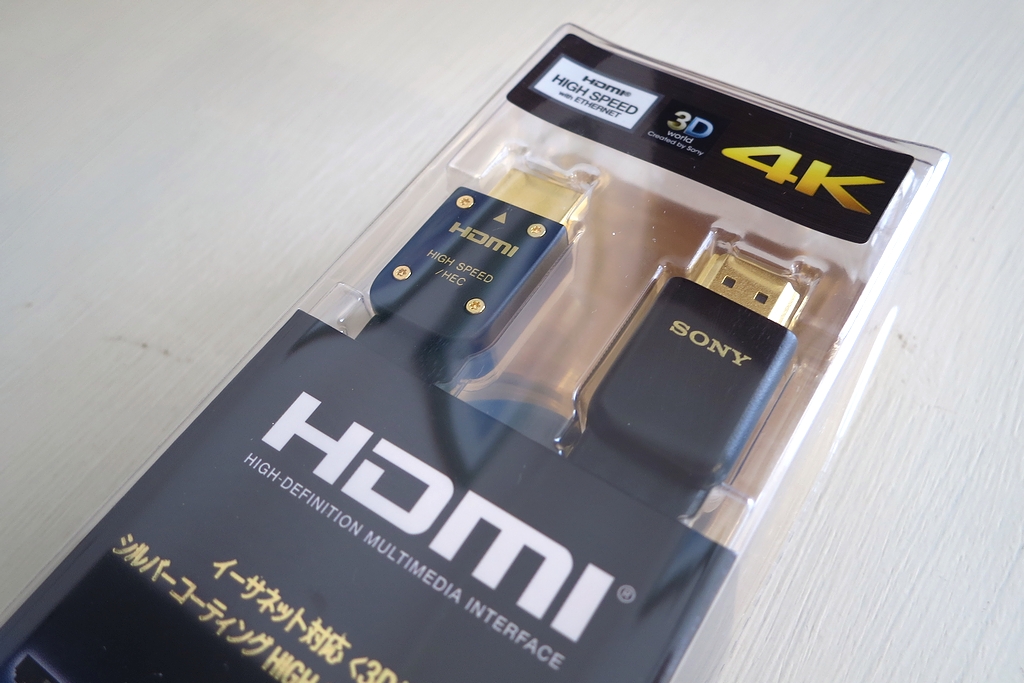
Affordable yet flat-cable construction with silver-coated conductors… as a devotee of budget Hi-Fi, this is naturally something I want to try. And besides, having gone to the trouble of bringing in a SONY BD recorder, surely you can’t properly assess its true picture quality without checking it through a SONY HDMI cable — that’s sort of how I felt anyway, so I decided to go ahead and use a Sony HDMI cable here… (a bit dramatic, I know). Though just between us, if I hadn’t already brought in the BDZ-EW1100, I, being the oddball cable enthusiast that I am, might never have touched something this straightforward. Incidentally, the DLC-HE10XF was the VGP Visual Grand Prix Gold Award winner for 2011.


 ポチップ
ポチップ
The other affordable HDMI cable I had shortlisted as a strong candidate was the  Forest2 HDMI and Cinnamon HDMI from American brand AudioQuest — the Cinnamon is red, and the name alone gives off quite the eccentric-cable vibe. What’s more, Ippinkan rates it highly for sound quality. The Forest2 uses copper conductors, while the Cinnamon uses silver-coated copper — so if I were choosing based on my fondness for silver wire, I’d naturally go for the Cinnamon. That said, reviews focus almost entirely on sound quality with very little mention of picture quality, and in my own setup sound quality isn’t all that critical either (note: I feed the BD recorder’s optical digital output into an external DAC) — so this one is more of a “maybe when I eventually get a second recorder, I’ll give it a try” situation.
 ポチップ
ポチップ
The Blu-ray recorder’s power cable is already an AudioQuest NRG-1 (page under construction), and the fact that I’ve never been entirely satisfied with its sonic character was another reason I held off on the Cinnamon. That said, if I end up not being happy with the SONY HDMI cable in terms of picture or sound, I’d like to try an AudioQuest HDMI cable next time — which feels more like me.
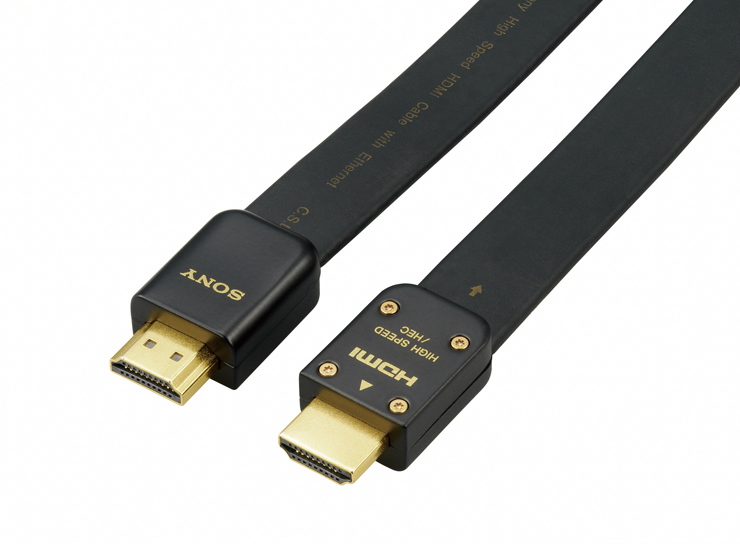
…… I was quite taken aback reading this. Whoever designed this at SONY has put an extraordinary amount of thought into the materials and construction for such a low-priced HDMI cable.
DLC-HE10XF/DLC-HE15XF/DLC-HE20XF Product Features
Sony Store
· Full compliance with new standards · Supports HDMI Ethernet Channel, enabling data communication alongside audio and video signals
· Supports Audio Return Channel, allowing TV audio signals to be sent back to an AV amplifier etc. via the HDMI cable alone
· 3D video compatible
· 4K resolution support, achieving approximately four times the resolution of Full HD
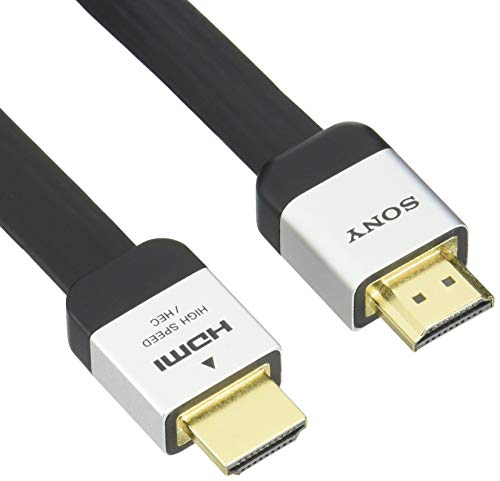
· Flat, slim-profile silver-plated copper cable combining high picture and sound quality with easy cable management · Silver-plated copper wire (silver coating wire) employed
· Newly developed wide, flat cable structure
· More flexible sheath material
· Vibration-resistant plug section with premium feel · Newly developed zinc die-cast housing
· Seamless zinc die-cast plug
· A proprietary joint structure has been adopted at the junction between the cable and plug — the section most susceptible to damage from repeated insertion and removal — improving both mechanical strength and transmission stability
· 24K gold plating adopted for the plug section, providing high reliability and durability while preventing degradation of transmission quality due to ageing
· Seamless plug adopted for the plug section, reducing external noise near the plug contacts and achieving stable, high-quality signal transmission
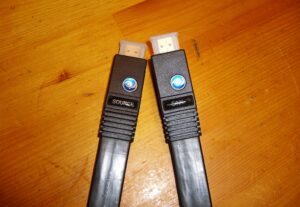
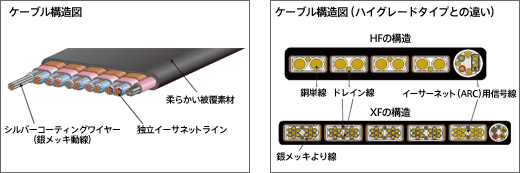
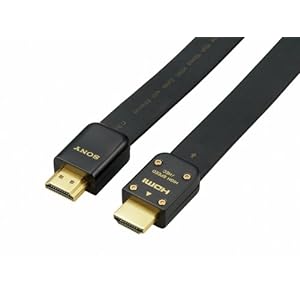
The plug and plug housing on the DLC-HE10XF are zinc die-cast — something you simply wouldn’t expect at this price point. Strangely, the step-up model DLC-HE10HF/DLC-HE15HF/DLC-HE20HF and the step-down model DLC-HJ7HF/DLC-HJ10HF/DLC-HJ15HF both use aluminium housings for their plugs. Also worth noting: the cable has directionality. The flat ribbon cable comes folded inside its compact packaging, so before fitting it, gently work out the creases as carefully as you can. I did not do the hot-water bath treatment recommended by Mr. Kanaimaru.
It turns out that Mr. Kanaimaru was at least nominally involved in the design and evaluation of the DLC-HE10HF/DLC-HE15HF/DLC-HE20HF, not just the top-of-the-range DLC-9150ES.
Now for my impressions of the DLC-HE10XF proper. The first thing that strikes you immediately is how rich the colour rendering is. The primaries in particular are so vivid it’s almost startling — honestly, they feel overdone, almost unnatural. Real footage ends up looking like game graphics or CGI. Noise is also considerably more controlled compared to the audio-technica AT-HMZ, though frankly that aspect didn’t quite live up to my expectations (note: perhaps it needs burn-in?). There isn’t much sense of depth or three-dimensionality. The rendering is rather LCD-like in character — well suited to animation. Colour temperature is high, the image is sharp right to the edges, wide in dynamic range, and gives an overall cool impression. The picture tuning shares something in common with SONY’s Blu-ray recorders — aside from the richness of the colour, this is a high-resolution, crisp, and cool-toned HDMI cable that feels very much in the SONY mould.
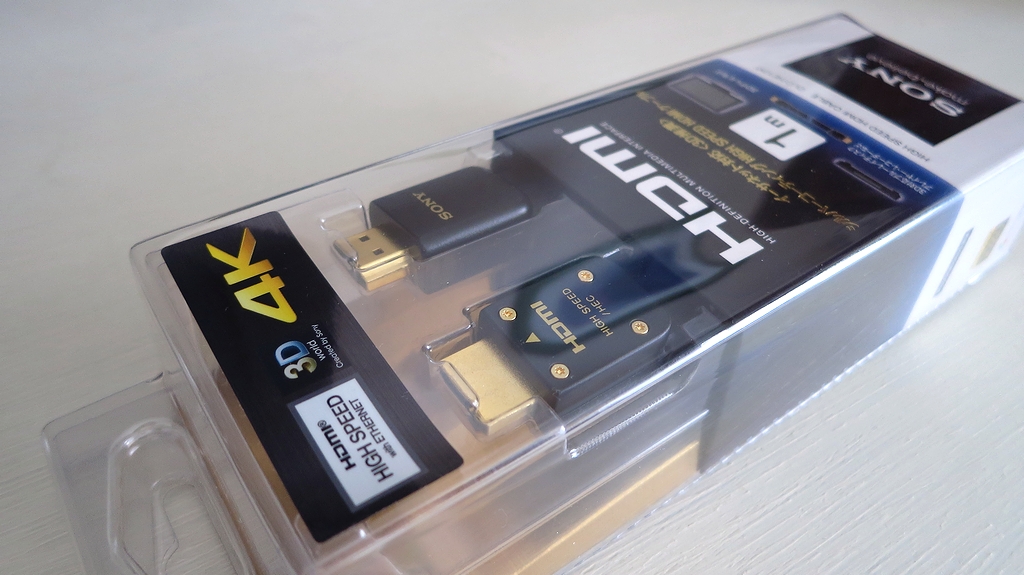
In terms of sound quality too, comparing the plasma display PDP-427HX‘s built-in tuner feeding its built-in speakers directly, against the same programme listened to via BDZ-EW1100 ⇒ DLC-HE10XF ⇒ PDP-427HX, the DLC-HE10XF path sounds smoother, sharper, and brighter in tonal character. Wide in dynamic range with a sense of density, tight imaging, and crisp, well-defined outlines. Dialogue is clean and articulate. The treble is attractively etched, and the bass extension is better too — the centre of gravity sits lower than with the audio-technica AT-HMZ. In terms of musicality, it doesn’t exactly sing, but it has a lively, lucid quality and avoids the detached, deadpan sound that SONY gear can sometimes fall into. It gives an impression of good time alignment — somehow (mysterious).
Even through the PDP-427HX‘s built-in speakers — which have a tendency to sound murky, dark, and rather congested — the grainy confusion and treble distortion are reduced, leaving a smoother and more intelligible presentation. Some listeners might find the mid-to-upper range a touch too bright… The DLC-HE10XF uses stranded conductors rather than the solid-core wire found in the DLC-HE10HF, and yet it has a tonal character reminiscent of high-grade solid silver wire in the audio cable world. Without prior knowledge, you might easily mistake it for a solid-core cable.
The spatial presentation of both picture and sound — which tends to concentrate inward rather than expand outward — presumably has something to do with it, but for some reason my 42-inch display, already a somewhat marginal size by current standards, appears to look even one size smaller than it actually is, which is peculiar… My family noticed and mentioned it unprompted. I think this comes down to the fact that the picture and depth rendering of the PIONEER PureVision PDP-427HX and the Sugureco DVR-DT100’s built-in tuner point in a completely different direction from what SONY considers high picture quality on their LCD BRAVIA televisions.
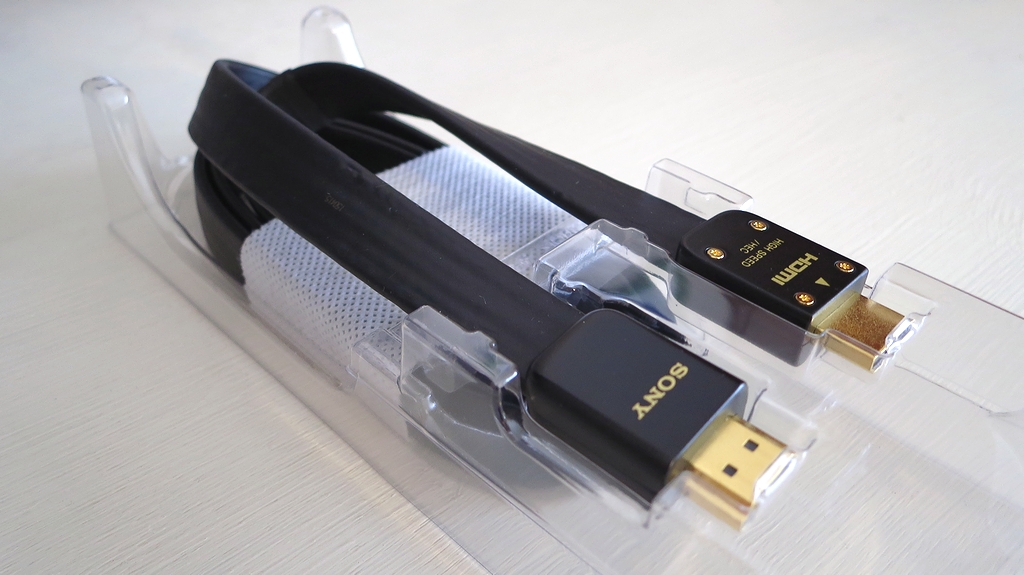
And even more baffling is the fact that the sonic character of the HDMI cable also carries over into the optical digital output right next to the HDMI terminal — audible through the TV’s built-in speakers just the same. I seem to recall writing something similar when I tried a different power cable on the PDP, but honestly, I have no idea what’s going on here. I had vaguely thought that connecting something fairly heavy and rigid to a light, small chassis might produce a barely perceptible change — but in my setup, the effect turned out to be at a level that’s rather difficult to ignore.
In the end, this is probably the same kind of thing as USB cables or LAN cables appearing to change the sound — not a matter of digital signal transmission method or accuracy as such, but rather that depending on which HDMI cable is connected, the electrical loop between the monitor and the recorder changes — the pattern of noise circulation differs — or alternatively, just as with Hi-Fi insulators, the indirect influence on the sound may come from the physical characteristics of the connected cable itself (which is quite heavy) and the zinc die-cast connector section, in the form of differing vibration modes. Whatever the mechanism, compared to the audio-technica AT-HMZ, the centre of gravity in the sound has lowered, dialogue in anime and so on no longer floats and scatters but comes through with crisp clarity, and while the picture quality leans cool and isn’t really to my taste, the overall sonic character has become clearer, brighter, and more hi-res-like — which I prefer to before, so I’ll take it.
※Sound Quality Impressions
Quoted from Ippinkan’s review
Sound comes through with body and solidity. A fair amount of energy too. The sound is clean and clarity is reasonable, but there is simply not enough depth or front-to-back expansion, and the soundstage feels flat. Rather than spreading out from the speakers, the sound seems pinned to a single point. As sound it is clean, but as music it is thoroughly uninteresting. Dialogue is hard to follow, and there is no sense of living, three-dimensional presence. The sound is better than the LDC-HD20, but the treble texture is quite unnatural, and the edges of sounds — the outlines — have a jangly, brittle quality. It feels as though certain elements have been magnified, which causes listening fatigue. The unnaturalness is enough to make one feel vaguely unsettled, and it becomes difficult to listen for more than a few minutes.
※Picture Quality Impressions
Compared to the HD20, outlines are sharper and apparent resolution improves. However, this comes at the cost of depth. Colours also lean toward the cool end of the spectrum, giving a cold impression.
This review is actually for the older model DLC-HD20HF, which uses unplated solid-core conductors and an aluminium grip, but reading it I sense that the tendencies are broadly similar to the DLC-HE··XF series. The impressions of both picture and sound point in almost the same direction, and yet when you come at it from a different vantage point, you can write about it in a completely different way — that’s rather interesting. The fact that my conclusions and Ippinkan’s differ so markedly comes down, I think, to the difference in the reference systems involved, and a significant gap in accumulated experience. My own experience is, without question, nowhere near sufficient. In my defence, I would say that with the DLC-HE··XF, the silver-coated conductors should bring some improvement in upper-frequency brightness, expressiveness, and musical quality compared to the DLC-HD··HF series. And I also can’t help wondering whether a zinc die-cast plug housing might actually sound better than a thin aluminium one.
 ポチップ
ポチップ
~ Summary ~
As for picture quality, while it is clear and sharp, the colours are too vivid and unnatural, so for the time being I’ve dropped the colour saturation on the BDZ-EW1100 by one step to compensate. The blown-out highlights I had been bothered by with the BDZ-EW1100 and AT-HMZ combination improved considerably once I switched to the DLC-HE10XF. Being a cable that pushes colours toward richness and density, it clearly isn’t the sort of HDMI cable that strips colour and makes clipping worse. As for depth and three-dimensionality, it seems to be the type where vivid, crisp impact takes precedence over smooth midtone gradation — which is to say, it tends toward flatness if you’re being critical, though with an LCD rather than a plasma this may not be especially noticeable. It’s been less than a week since I fitted it, so the unnatural colour and lack of depth may well improve as it burns in. I already feel the oddness diminishing day by day — though that could simply be me getting used to it. Sound quality made a good impression from the start.
 ポチップ
ポチップ
The DLC-HE10XF retails at around ¥5,000 or so — varying by length — for this level of quality, and it’s fair to say, objectively speaking, that the value is quite exceptional. I would quietly add the small caveat that you’d want to be someone who gets on well with SONY’s particular approach to picture and sound presentation, but at this price point, setting personal preference aside, there really is nothing else in the HDMI cable world that comes close in terms of sheer quality. On the other hand, if you can stretch to ¥10,000 or more, there are various overseas manufacturers offering HDMI cables with a different feel — better atmosphere, colour rendering, and sense of depth, albeit perhaps with less rigour in the build. That said, as I mentioned earlier, the AIM AVC-FL01 is a domestic product, and if my memory hasn’t been too kind to it, it was a more accomplished cable in picture quality on both the technical and expressive fronts. So for those who truly want to savour SONY’s vision of 4K picture quality and hi-res sound, the best course of action — budget permitting — is probably still to go straight for the DLC-9150ES/DLC-9240ES.

Auto Translated by CS4.6