Out of nowhere — I have gone ahead and reserved the record-awakening LUXMAN EQ-curve-adjustable valve phono equaliser kit LXV-OT10, going on sale on the 19th of January. Well — truth be told, I don’t actually own a record player. Even so, the moment the announcement came out for this LUXMAN valve phono equaliser kit bundled with Stereo magazine, I saw it and instantly wanted it. The mysterious signal came through loud and clear, as it sometimes does. It happens occasionally, doesn’t it — wanting something regardless of whether you’ll actually use it… though perhaps that’s not so common after all.
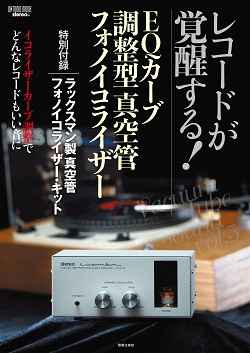
As it happens, this series of Stereo magazine mooks with bundled LUXMAN kits has been running for a while now — the first being the valve harmoniser LXV-OT10, the second a valve hybrid integrated amplifier LXV-OT6, the third a valve FM tuner LXV-OT8, and then the fourth — the only one I skipped — The Art of Final Tonal Adjustment: Exploring the Valve Graphic Equaliser. All the others I pre-ordered without hesitation (that’s how much I like this series). The blog has been on a long hiatus, so the only review I’ve published so far is the valve harmoniser one — I’ll get to the rest whenever I’m in the mood — but for now, let’s talk about the valve phono equaliser kit and choosing a record player.
The Valve Phono Equaliser and the EQ Curve Adjustment Feature
As for the standalone phono equaliser — it wasn’t actually something I desperately needed. My current main system’s integrated amplifier, the AUDIOLAB 8300A, already has a built-in MM/MC phono stage. And my secondary system’s ONKYO A-1VL also has an MM phono input. I’ve never used either of them, so I can’t say exactly how good they are — but they’re add-ons on a budget integrated amplifier, and I’d expect their quality to fall within predictable limits, rather than approaching standalone phono equaliser territory.
Reissued in 2023 due to popular demand


 ポチップ
ポチップ
 ポチップ
ポチップ
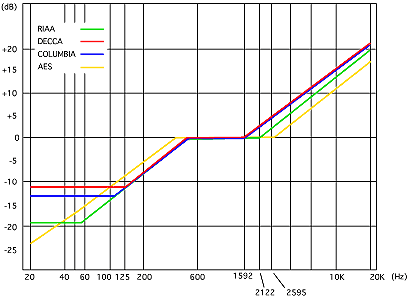
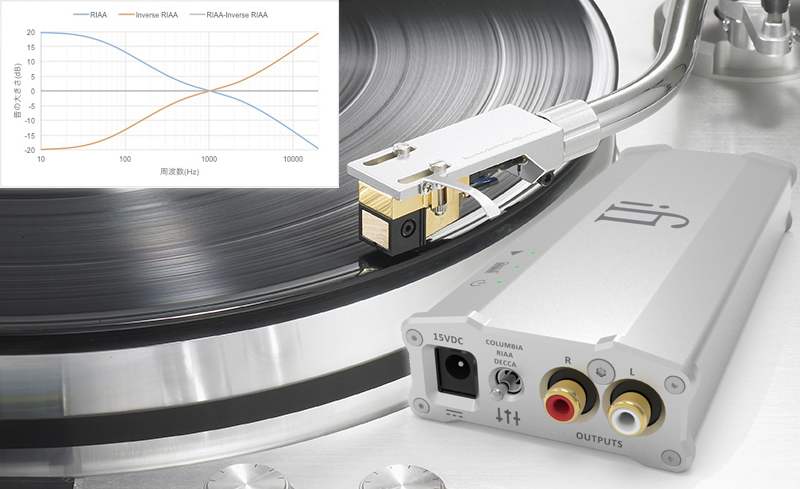
And then this appeared — the Stereo magazine supplement LUXMAN valve phono equaliser kit. For analogue playback, wouldn’t you agree it just feels right to have valves somewhere in the chain? On top of that, EQ curve adjustment is a rare feature. Surely there are many record enthusiasts out there who have amassed large collections yet continue listening with the frequency response slightly off — stuck with an uncorrected EQ curve — simply because they can’t afford high-end equipment. The LUXMAN EQ-curve-adjustable valve phono equaliser kit this time is priced at ¥19,800 as a book-bundled product, making it the most expensive in the LUXMAN valve kit series to date. Even so, at this price you simply cannot normally obtain a standalone phono equaliser with both valves and EQ curve adjustment. For that reason, as a Hi-Fi enthusiast, I very much wanted to get hold of one even before sorting out the turntable itself.

The AUDIO STYLE Author and Records: A Near Yet Distant Relationship
※ If you have no interest in the author’s personal background, feel free to skip this section. Incidentally, AUDIO STYLE — the desktop pure Hi-Fi enthusiast’s blog — has barely touched on the subject of record players or vinyl records in the sixteen years since it launched. Back in 2005, the LP had not yet enjoyed the revival it has today; analogue records were more or less a forgotten nostalgia hobby. CD and SACD and other optical disc formats were in full bloom, PC audio was just getting started, and streaming services didn’t exist — so being a Hi-Fi enthusiast who didn’t do analogue was not at all unusual.


In recent years, however, streaming services and network audio — enjoyable enough, but a touch soulless as hobbies go — have risen to prominence. As a result, sales of physical digital media such as CD and SACD have declined sharply worldwide, and perhaps as a reaction to that, analogue records have come back around full circle — becoming popular again not just in Japan but overseas, with record players and vinyl increasingly featured in Hi-Fi shops and elsewhere. If anything, the momentum abroad feels far more serious than here, and the budget Hi-Fi turntable market has seen a remarkable number of new products launched from Europe and America, with extraordinary energy behind it. The sheer variety of players in the sub-hundred-pound price range in particular has become almost bewildering.
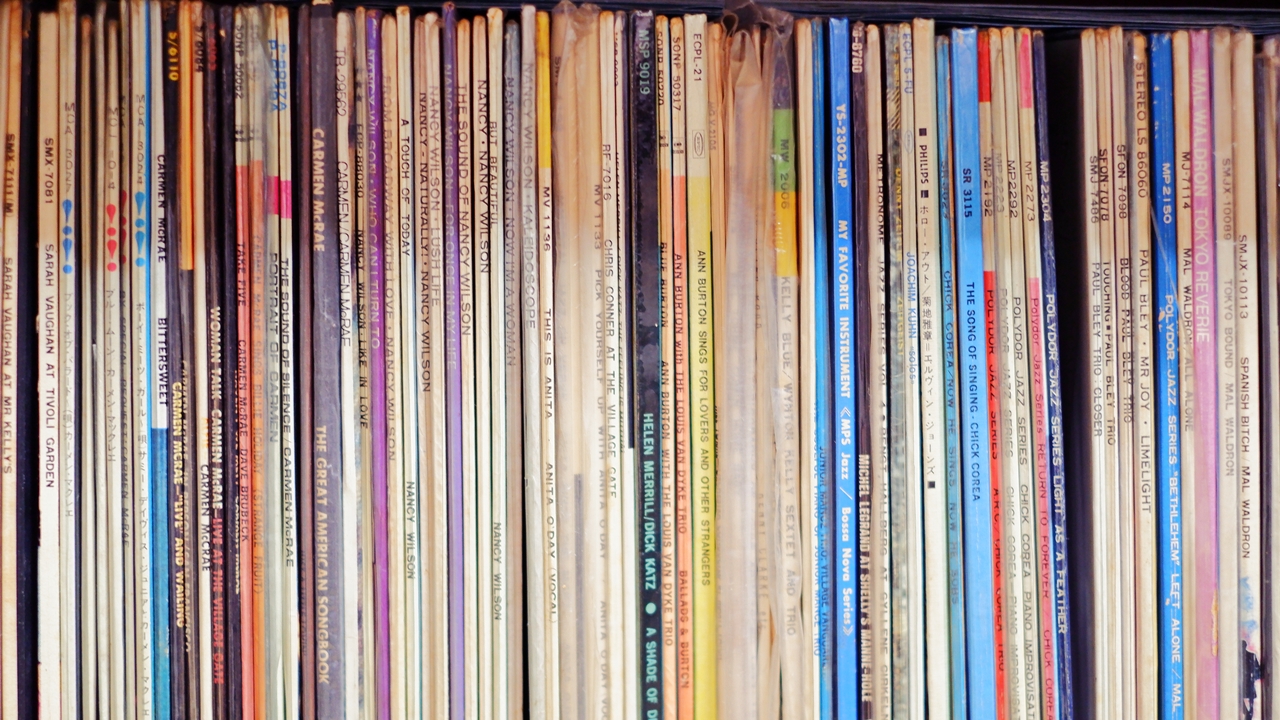
Coming back to the desktop Hi-Fi author — I actually already own quite a few records. Of course, I wasn’t collecting them without ever playing them. When I was a child, my father had built his own turntable at home, and on weekends he would put on all sorts of jazz records. When I was around primary school age, that turntable broke down, and for the thirty-odd years that followed, the several hundred records my father had collected sat quietly in the record rack, untouched by anyone. I haven’t opened them in so long — goodness knows what state they’re in now.
Then, some time in the early nineties — when I was a teenager — the late audio critic Saburo Egawa was running a series in Audio Accessory magazine on DIY near-field listening (essentially the forerunner of the desktop Hi-Fi concept). In that series, Mr Egawa introduced the AIWA PX-E800, an inexpensive and rather basic record player aimed at the mini component market, as an affordable option that nonetheless sounded good. I bought the AIWA PX-E800 myself, and for a brief period I remember rummaging through outdoor garage sales near Futako-Tamagawa station for classical records at around ¥300 each. The twenty or thirty rather unremarkable records I picked up then are still sitting in my study. The one record I bought brand new during that period was the Beatles’ red and blue compilation reissues, which I recall playing over and over again. That player too eventually gave up, and has been in storage ever since.
So as you can see, I already have more than enough reason to introduce a record player. These days, it seems there are young people all over the world who are starting from scratch — buying a new turntable and building up a collection centred on second-hand records — and that has been growing noticeably over the past few years. There’s an image of it as a slightly stylish and culturally rich hobby to get into.

Having written all that, I suddenly began to worry — what if the old records have deteriorated? I opened up a few to check. The result: the inner sleeves — paper and polythene alike — had turned a deep amber yellow and were covered in stains, but the records themselves appeared to be in perfectly clean condition visually. The inner sleeves do need replacing, though. Time to call on TOWER RECORDS accessories.
Honestly, the main reason I had always been hesitant about analogue record playback — despite knowing it sounds good — was that the whole ritual of it simply takes too much effort for someone in my physical condition to sustain. So if I’m going to take the plunge into analogue, my approach will not be one of sonic perfectionism but rather a search for the easiest possible way to do it. Looking at fellow enthusiasts on social media, I can see that once you start getting particular about record cleaning, it can become quite a rabbit hole — but my HP and MP, as it were, are roughly one-fifth of a healthy person’s, and keeping up with elaborate cleaning routines is probably beyond me. So I’ll need to find record cleaning techniques that are effective and relatively manageable, if not optimal.
Choosing My (First Proper?) Record Player — or Rather, Turntable
Back to the main thread. So — having rather impulsively put the cart before the horse by reserving the phono equaliser, I do need to find a decent turntable sooner rather than later, though I’m not especially well-informed on the subject. My basic criteria are, as ever, as affordable as possible — but not so cheap as to be a toy in mechanical terms. In other words, something that genuine enthusiasts would recognise as a product of at least minimum audiophile standing. Also, given the placement constraints on my audio rack, it must be a slim model that won’t clash with the plasma display sitting centrally above the intended space. Those are the hard requirements.
Within what I already know, the names that naturally come to mind are British Rega Research and Austrian Pro-Ject Audio Systems.
 ポチップ
ポチップ
If you search for record players under ¥50,000 (or $500) on Amazon or similar, you’re immediately buried in products from brands so dubious that any Hi-Fi enthusiast would do a double-take. From experience, those things carry the unmistakable scent of a landmine, and my pride as an enthusiast won’t allow me to touch them anyway. Rega and Pro-Ject, by contrast, are genuine dedicated audio manufacturers with genuine credibility among Hi-Fi enthusiasts worldwide — manufacturing in England and within the EU (Austria, Czech Republic, Slovakia) respectively.
As for why I’m not considering major Japanese manufacturers — it appears that some of their budget turntables are OEM products from Chinese manufacturers (Yahorng Electronic or Hanpin), and while straightforward manufacturing outsourcing is one thing, in recent years it’s become rather unclear just how much is their own design and how much has been handed over entirely. For that reason, I’d prefer a manufacturer that demonstrably handles everything from design through to production in-house.
As I mentioned, there are all sorts of attractively designed record players available for under ¥10,000 from rather questionable brands — the sort of thing that reels in newcomers — and I’m tempted to give one a go out of curiosity, but that’s a separate matter. If you happen to be new to Hi-Fi and are reading this blog, my advice as the author of this desktop Hi-Fi site would be: please do not buy a turntable from a manufacturer you don’t recognise. Beyond the sound quality being potentially quite poor, there is a real risk of damaging your records. Incidentally, I personally use the word “turntable” — rather than simply “record player” — when referring to a proper audiophile-grade machine, partly to make the distinction clear. ※ It also just sounds cooler.
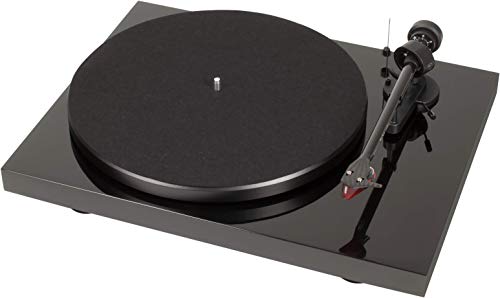
Rega Planar vs Pro-Ject Debut Carbon DC vs SONY PS-HX500
Back to Rega and Pro-Ject. I own two of Pro-Ject’s relatively affordable and compact D/A converters (the DAC Box DS and Head Box DS — reviews pending), both of which sound quite good and are currently serving as active DACs in my secondary system. With that in mind, I had vaguely assumed I’d probably go with Pro-Ject again when the time came to add a turntable. Auditioning them side by side would be ideal, but in this day and age there doesn’t seem to be anywhere that stocks all of them for direct comparison. So I turned to YouTube — and there it was: a video doing a head-to-head comparison of entry-level models from Pro-Ject, Rega, and SONY. ※ I listened via my desktop PC audio setup.

In terms of Japanese retail pricing, the order runs Rega Planar 1 < SONY PS-HX500 < Pro-Ject Debut Carbon DC. Having listened through the comparison, the Pro-Ject Debut Carbon DC came across as the least convincing sonically — detail was muddier overall compared to the other two. The Rega Planar 1, by contrast, sounded bright and detailed throughout, with a wide spatial range, and the music had a rhythmic energy and sense of enjoyment to it. It doesn’t sound particularly flat in tonal balance, but when you isolate it for comparison, it actually extends further at both ends than the other two. The midrange too is emotionally engaging. The PS-HX500 has a typically SONY flat and well-mannered sound, but the tone is slightly dark and it doesn’t grab you in any particular way. The built-in DSD-capable A/D converter and phono stage are welcome features, but in this video the pitch seems to wander slightly. All in all, the least expensive Rega Planar 1 comes out on top in the video — and I find myself in full agreement.
 ポチップ
ポチップ
Ian from the HiViNyws channel — Singapore-based, it seems — is a remarkably active reviewer. Without this video, I would quite possibly have ordered a cheaper Pro-Ject model from an overseas retailer, so I’m grateful to Ian. Though I do wish the voiceover wasn’t quite so loud relative to the music being played. Incidentally, in the video description Ian has added a note to say that the Technics SL-1200 outperforms the Rega Planar 1.
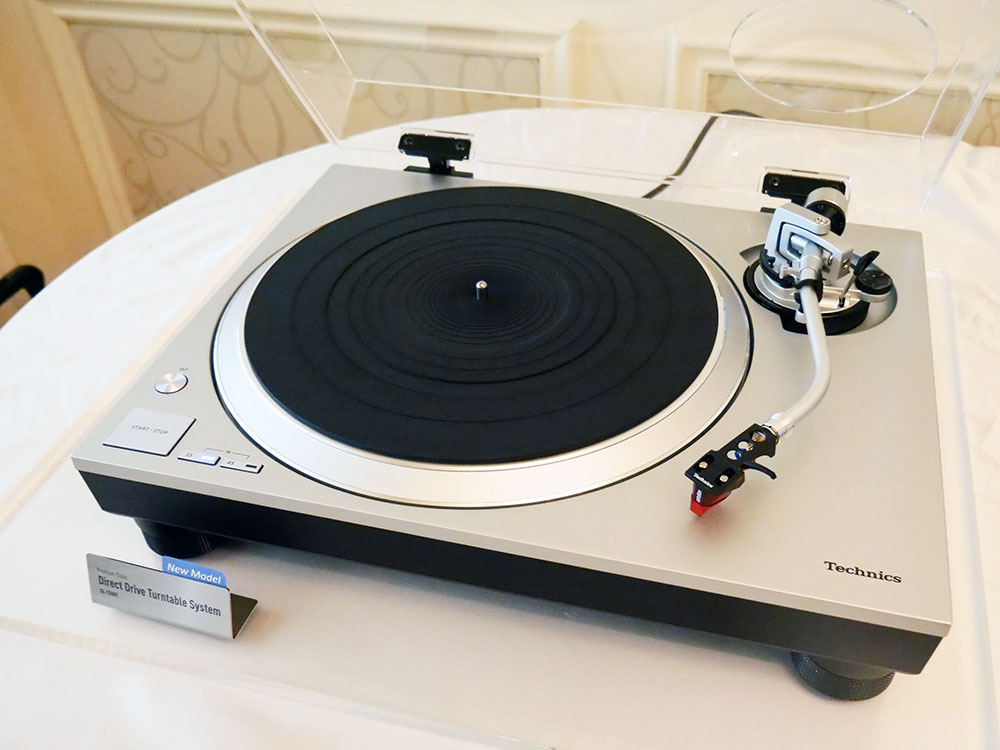
I have also had several analogue-savvy people on social media recommend the Technics SL-1200 or SL-1500C (even second-hand), but unfortunately the height of the SL-1200 and SL-1500C means they simply won’t fit in the available space on my audio rack. Even so, the superior sound quality is clearly audible in the videos — the resolution, tonal balance, and spatial perspective are all in a different class. Comparison videos show the Technics SL-1200 Mk5 comprehensively outperforming not just the Rega Planar 3 but even the Planar 6. If height and bulk aren’t an issue for you, the Technics SL-1200 or SL-1500C is probably where your money is better spent. The only area where Rega might have the edge over Technics is in rhythmic musical energy and the warmth of vocal reproduction. In my case, I generally prefer to buy new rather than second-hand, so the SL-1200 and SL-1500C are beyond my budget at their current prices anyway.
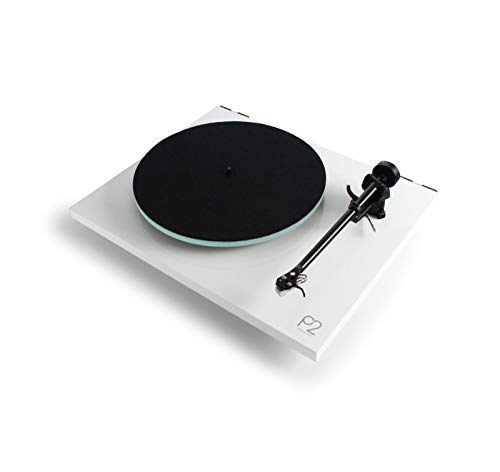
So, my target has narrowed down to the Rega Planar range — but the question is which Planar? Rega offers the Planar 1 (¥35,000), Planar 2 (¥56,000), Planar 3 (¥90,000 with cartridge / ¥70,000 without), and Planar 6 (¥180,000, no cartridge) ※ Prices based on a local electronics retailer with 10% loyalty points. The Planar 1 is the best seller, but from the videos I’ve watched, it leaves me feeling faintly unsatisfied sonically — and the lack of a glass platter is, if I’m honest, a minor disappointment. The Planar 2 occupies a somewhat awkward middle position and probably sells in smaller numbers, but at ¥56,000 with a cartridge included, the price feels about right. I couldn’t find any comparison videos for it, however. The Planar 3 passes muster sonically. At ¥90,000 with the Elys 2 cartridge it’s enough to bring me out in a cold sweat, though the cartridge-less version at ¥70,000 — hmm, the gap with the Planar 2 suddenly seems rather small. And so it goes — round and round I go, unable to make up my mind.
 ポチップ
ポチップ
I imagine the actual purchase of a turntable will probably be some time in spring, but between now and then I’d like to settle on which grade of Rega Planar to go for — or whether another manufacturer’s product might enter the picture. The Pro-Ject Debut Carbon DC was updated at the end of last year with the new Pro-Ject Debut Carbon DC Evo, though the price has jumped considerably from £325 to £449. In return, it might now be competitive with — or even better than — Rega sonically. Whether the Japanese importer DENON will actually make the effort to bring it in here, I’m not entirely sure. And then there’s the question of which cartridge offers the best value… I find myself instinctively glancing at the pavement on my walks, half-hoping to spot one lying there — but on that note, more to follow another time!

Auto Translated by CS4.6