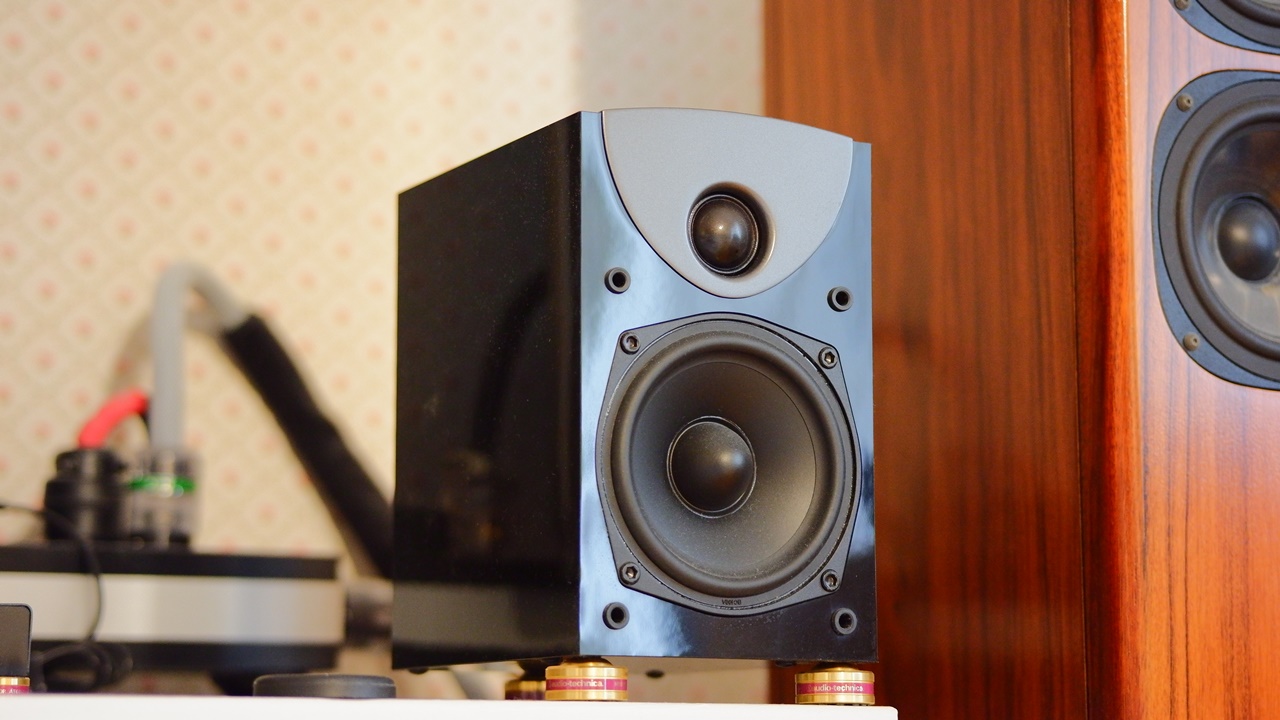
In Hi-Fi circles, speakers and audio systems have long been described, as a matter of convenience, in terms of sound image and soundstage. These two categories cannot be divided with a clean, precise line, but as one encounters a variety of speakers and audio equipment, a feel for the tendencies gradually begins to take shape. With that in mind, I would like to explain what sound image is, and what soundstage is — as a shared understanding I think it is worth having among Hi-Fi enthusiasts.


 ポチップ
ポチップ
What Is Sound Imaging?
Sound imaging — in Japanese, onzō — refers to the phenomenon in a stereo audio system where points or masses with a certain presence appear between the left and right speakers, in place of the visual image of instruments, vocals, and the like. This is what is called the sound image or stereo image. In a simple recording with balanced left-right levels and a primarily direct sound, the voice or instrument is essentially positioned at the centre — the midpoint between the two speakers, primarily along the line connecting the two tweeters.
In recordings of live performances that contain a large amount of indirect sound, the layout of the instruments means that each instrument’s position shifts left or right rather than sitting at the centre, and the spatial relationships with front-to-back depth become apparent visually. With an instrument like the piano, which is not a point source to begin with (the piano’s sounding position changes depending on pitch), the image shifts left or right and the apparent depth changes depending on where the recording microphones are placed; and with an instrument like the violin, where the player moves their body considerably while performing, a visual wavering of the image can sometimes accompany the sound.
Even in electronic music where no acoustic sound exists, it is possible during mastering to alter the L/R balance of the vocals and each instrument, deliberately shifting their positions left and right so that the sources do not overlap. The size of the image created depends on the speakers and the system, but those considered to have good stereo imaging in audiophile terms tend strongly towards a pinpoint, near-point-source quality; if the image blooms slightly, people describe it as being able to see the size of the mouth; and if it sounds larger still, comparisons such as “life-size such-and-such” are sometimes used.
With a modern pure audio system and reasonably accurate setup, this kind of visual sound image will appear between the two speakers — something that is both a first step in speaker placement and a fundamental goal in 2-channel stereo or multi-channel surround. In headphone systems, incidentally, small images tend mostly to localise inside and around the head.
What is soundstage?
A soundstage refers not only to the sound images that appear between the left and right speakers, but to the entire stage on which the music is performed — which manifests primarily in the space between those two speakers, along with that space itself. The size of the stage imaging produced here depends on the directivity of the speakers and on the choice and placement of the audio equipment; in some cases it is possible to extend well beyond the two speakers, spreading broadly in the up, down, left, right, and depth directions. In the case of live performance, this spatial spread of imagery is cultivated by the reflected sound of the concert hall or live stage that was captured in the recording. It is also possible to recreate a sense of soundstage after the fact — as though a wide stage were actually present — by making full use of DSP during playback, or of electrical echo and effects processing applied at the time of recording.
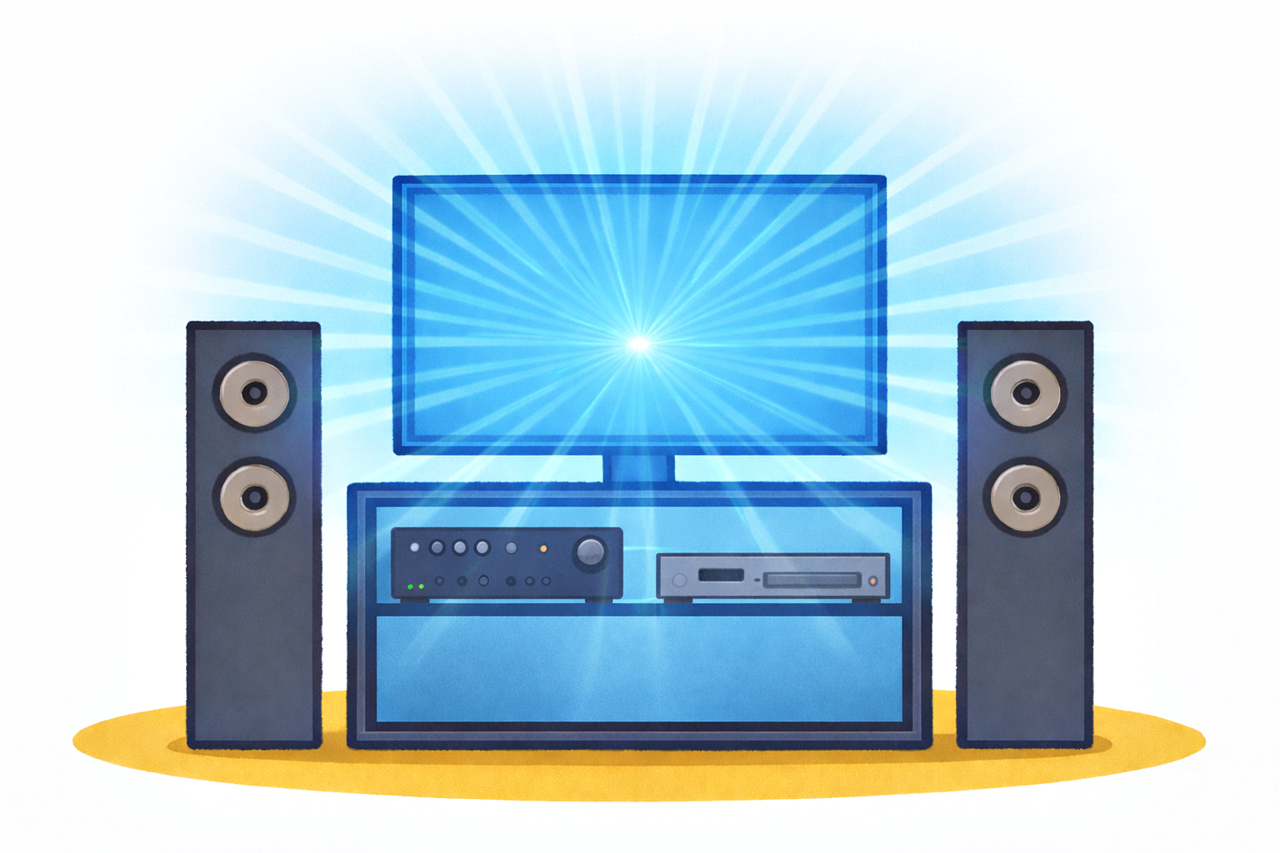
Incidentally, reproducing this stage imaging with greater clarity, accuracy, and expansiveness has become an implicit trend in contemporary pure Hi-Fi and high-end audio. While it is not possible to draw a clean dividing line between soundstage-type and sound-image-type, please think of this as an image expressing a relative tendency along a single continuum.
What Is an Imaging-Focused Speaker?
This refers to a speaker that, when reproducing music through a stereo audio system, places the direct sound from the elements contained in the music at the centre of the reproduction — sometimes emphasising that direct sound still further. Its defining characteristic is that it renders a visually distinct, densely focused sound image with clarity and precision, making the performance feel strongly present and tangible right before one’s eyes.
The advantage of a sound-image-type audio system is that, assuming an equal amount of acoustic energy, more of that energy is directed towards projecting the sound image — making it easier to achieve a musical presentation that has vitality and genuine presence. Because the listener’s attention is drawn to the direct, immediate aspects of the performance, the musical image is easier to grasp, and it becomes easier to focus on the music itself. On the technical side, there are various approaches involved: using drivers with sharp directivity, excellent response and damping characteristics, along with effective absorption of sound inside the cabinet and the thorough elimination of unwanted resonances and cabinet colouration.
When a design philosophy is oriented entirely towards pushing forward the direct sound, the trade-off can be that subtle indirect sounds and reverberant components become relatively subdued — bringing with it side effects such as a lack of spatial air and a tendency towards sound that is thin on musical detail. This tendency is particularly pronounced in lower-priced products where resolution is insufficient.
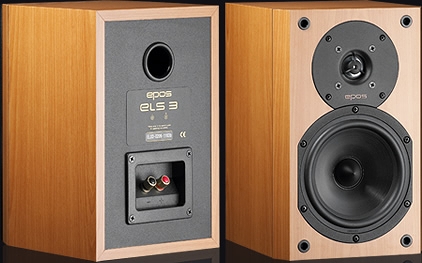
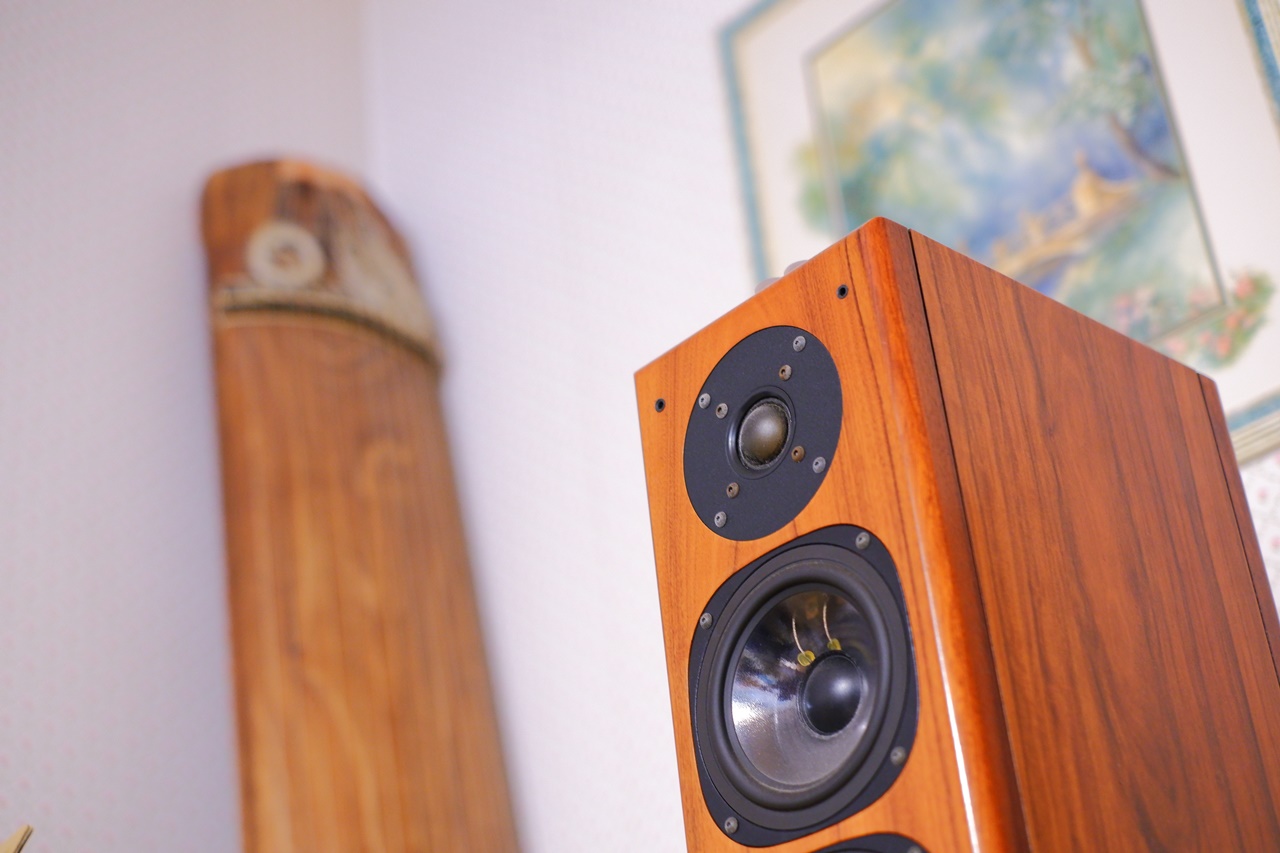
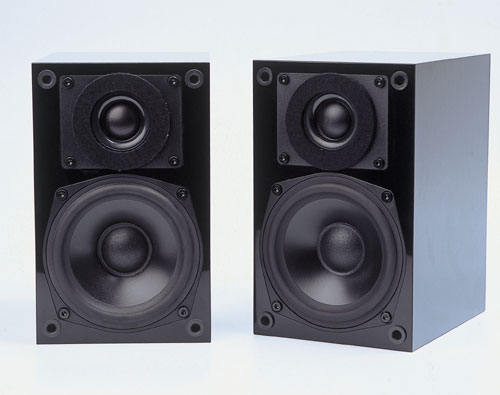
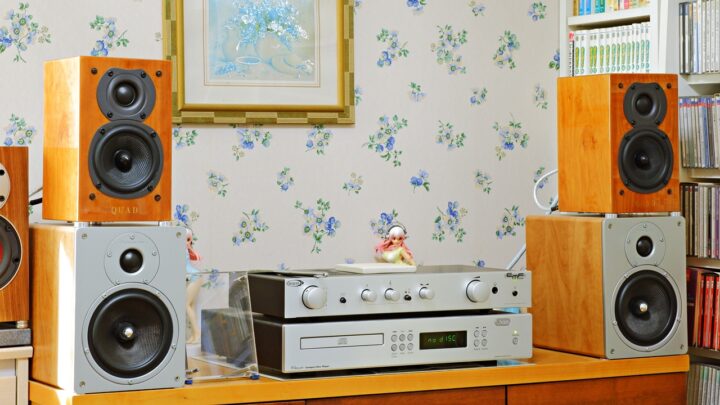
Among the compact speakers I own, one that could be called an imaging-type speaker is the EPOS ACOUSTICS ELS-3.
What Is a Soundstage-Focused Speaker?
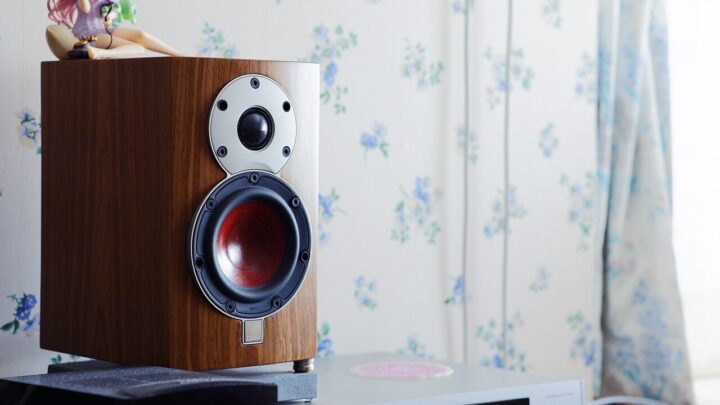
Conversely, by emphasising these indirect sound components or slowing the decay of the reverb, the ambient elements contained within the music itself are amplified, and the result is what is known as a soundstage-type speaker — one that conjures a wide, richly reverberant space. Products that place particular technical emphasis on this aspect are commonly found among satellite speakers for multi-channel surround systems, and high-end audio speakers with multiple driver arrays also aim to enlarge the stage image through acoustic amplification brought about by subtle timing delays and phase shifts between the drivers. Wide-dispersion drivers, the time-delayed bass amplification of the long-established bass reflex port design, and the addition of out-of-phase components through increased driver complexity are all means of creating an artificial sense of soundstage. A tuning approach that makes use of cabinet resonance with minimal internal damping material is also a technical direction often found in soundstage-type speakers.
The weakness of the soundstage type is that, assuming a fixed amount of acoustic energy, that energy is drawn not only into the sound image itself but also heavily into the reverb and ambient components needed to reproduce the soundstage — and in exchange, the sense of solidity in the direct sound tends to become thin. With designs that devote themselves entirely to emphasising reverberation, as some satellite speakers do, the image sounds relatively thin and diffuse; a similar sonic tendency can also be observed when an amplifier with insufficient power headroom is connected to such speakers.
Of course, imaging-type and soundstage-type are relative tendencies at best, and the degree varies considerably from product to product. Naturally, there are also many speakers that fall into a more neutral category, combining both qualities in a well-balanced way.
Also, I wrote “speakers” here as the representative example given their particularly dominant influence, but in practice, each audio component and accessory also carries, to a greater or lesser degree, a vector leaning toward either the soundstage type or the imaging type. Because of this, the overall system setup and combination can tilt the character of the reproduction toward a greater emphasis on soundstage, or conversely toward a greater emphasis on imaging.
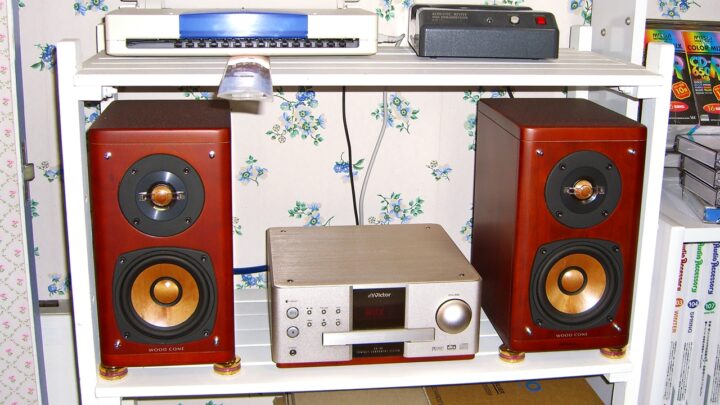
Just between us, the vast majority of the speakers I own fall into the soundstage category — and more than a few of them lean heavily toward throwing a full soundstage at all costs.
A Brief History of Soundstage Reproduction
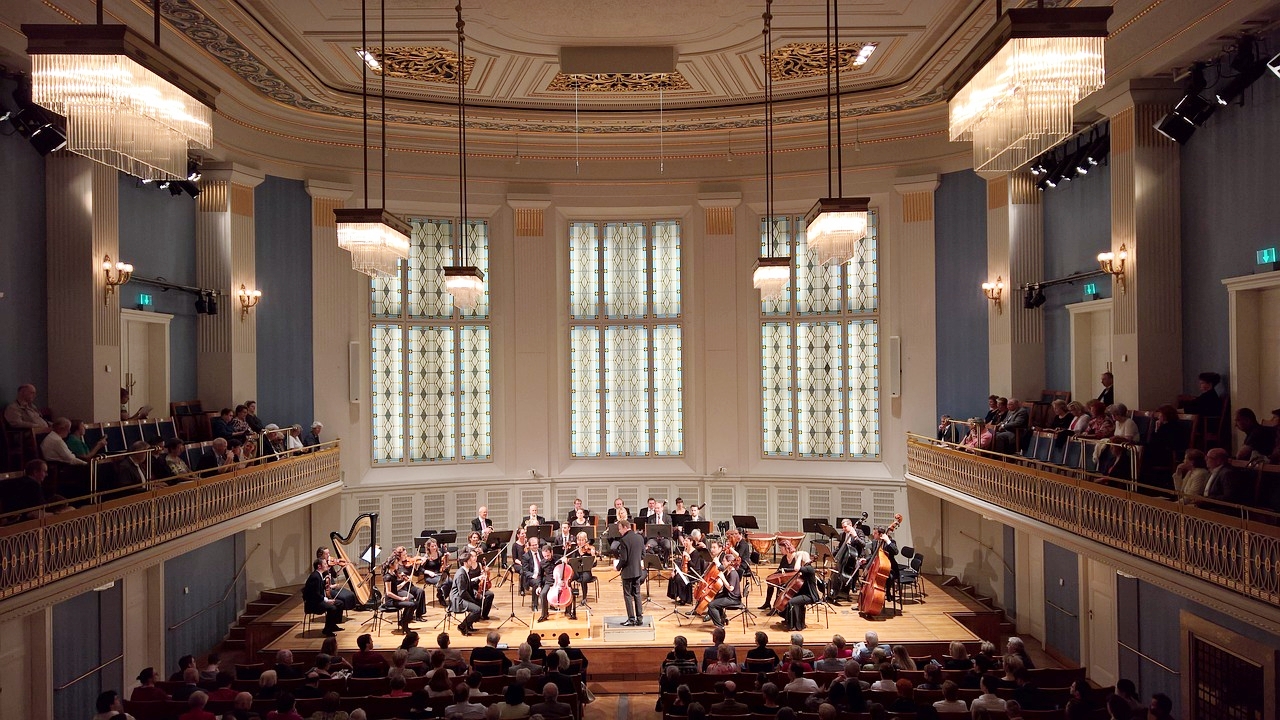
From the late 1960s through the 1980s, soundstage reproduction was already a critically important criterion among Hi-Fi enthusiasts listening to classical music. In some respects, it seems the pursuit of how faithfully to recreate the atmosphere of a concert hall was even more intense than it is today.
It is perhaps surprising that these concepts were already present at the time — but thinking about it more carefully, classical recordings made from around the time stereo recording began in the early 1960s onward reveal, through countless celebrated releases, that a vivid three-dimensional acoustic space was already being clearly perceived and meticulously captured, even when heard on a modern audio system.
In terms of concrete approaches to recording and playback,
Such trials and errors were already visible from that period. As a result, one-point stereo recording techniques such as the Decca Tree came to be highly regarded, and as the 1970s arrived, there was a period during which quadraphonic formats — CD-4, SQ, and other matrix systems — and four-channel stereo playback were being explored. In the age of analogue records, the recording method itself was directly linked to soundstage reproduction, and labels such as DECCA and Mercury Living Presence poured tremendous passion into capturing the atmosphere of the concert hall, from microphone placement to every aspect of recording technique. What is particularly interesting is that there is a real possibility that, before digitalisation, people’s sensitivity to what might be called “the continuity of analogue space” was altogether sharper.
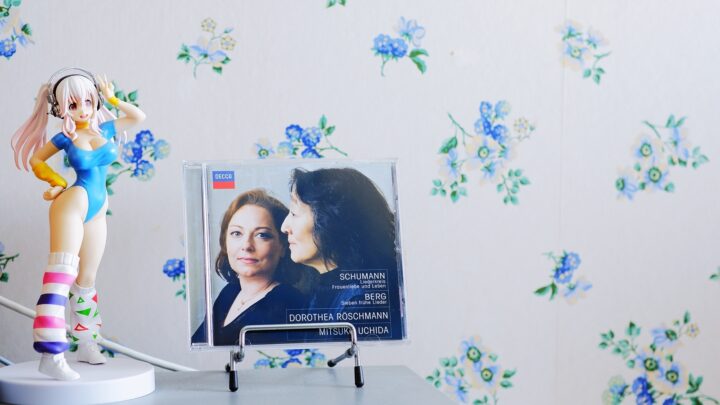
Classical music listeners of the 1960s and 70s may not have used the word “soundstage” as such, but they were in practice pursuing very much the same thing. The expressions of that era included:
and so on — and in audio criticism of the time, phrases such as “depth of the soundstage” and “clarity of the space” were already in use, all of which are essentially synonymous with what we today call “soundstage impression.”
In stereo reproduction of classical music, given the relationship between the concert hall and the musicians arrayed within it, the more faithful the recording, the more the unexaggerated recreation of the stage becomes, in a sense, an inevitable destination. With jazz and pop sources, however, the stage is inherently narrow and close, and it has always been perfectly normal for the stereo image to be exaggerated or processed in some way. Out of that comes a different orientation in playback — one directed not toward the accurate reproduction of soundstage or image, but toward being engulfed in the heat and energy of the music and the performance itself. The style once pursued by old-school Hi-Fi enthusiasts — driving large-diameter, full-scale speakers at close range — can be seen as one form of listening optimised precisely to get the most out of such sources.
 ポチップ
ポチップ
From the Advent of Digital Recording to the Present Day
Around 1980, digital recording — still a newcomer to the industry — swept swiftly into the mainstream, and with the arrival of the CD, albums recorded digitally began to spread rapidly. In the analogue era, reproducing anything close to the soundstage of a recording studio at home required a formidable amount of equipment, and even for dedicated enthusiasts the bar was high. But as digital equipment gradually became more widespread, it slowly became known that soundstage reproduction was achievable even with a relatively affordable domestic Hi-Fi system.
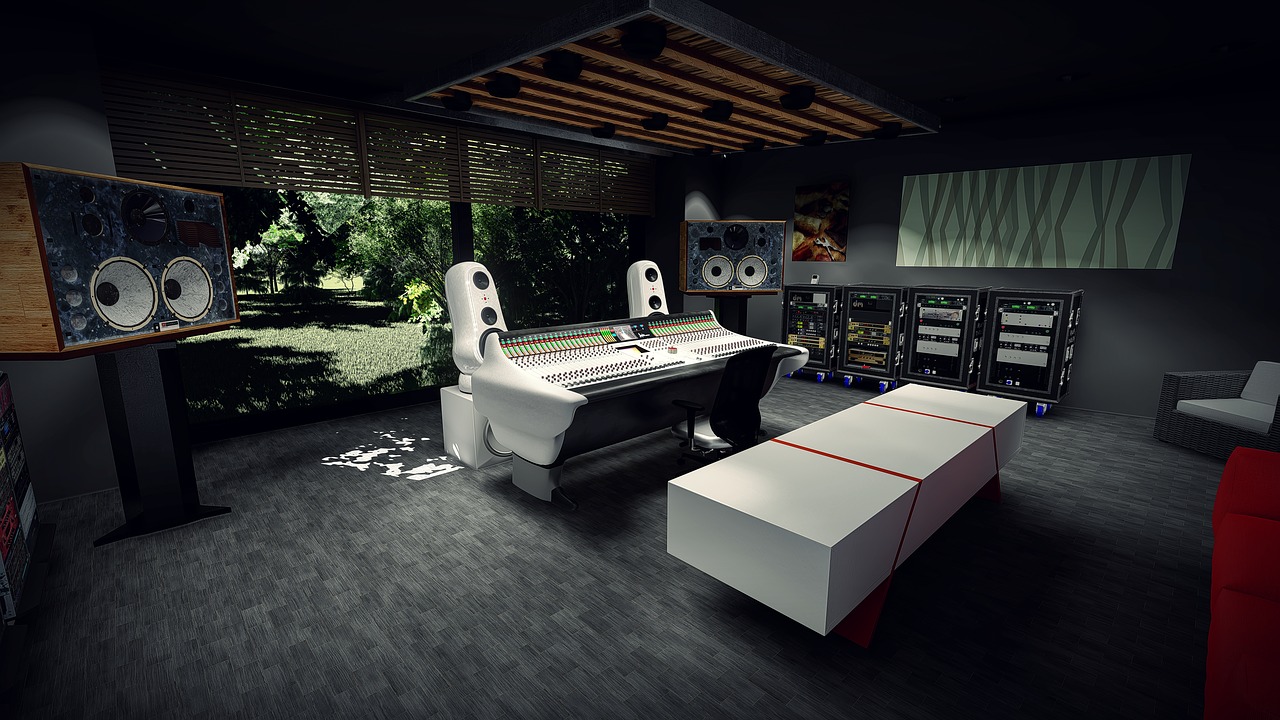
It was around this time that the style of directly receiving sound from large-driver speakers — as typified by JBL, Altec, and TANNOY — began to give way to a new aesthetic: a soundstage rising cleanly from empty space. This newer sound began to permeate a wider circle of Hi-Fi enthusiasts through in-store demonstrations and the audio press. The consumer recognition of high phase-accuracy monitor speakers such as the B&W MATRIX, YAMAHA‘s DSP technology, Dolby Surround, BOSE, and so on — three-dimensional soundfield reproduction gradually came to be celebrated as the new benchmark of high-quality sound in contemporary audio equipment.
In pure Hi-Fi, a consciously soundfield-oriented approach began to stand out from the 1990s onwards, I think. Throughout the nineties, equipment embodying both old and new design philosophies still coexisted, but from my own experience, around the year 2000 seems to have been the turning point at which new consumer Hi-Fi products shifted wholesale from sound-image-type to soundfield-type speakers and components.

In modern pure Hi-Fi, genuinely extracting the full stereo imaging potential of one’s equipment requires pulling both speakers well away from the rear wall to avoid the diffuse reflections that collapse the soundstage — and keeping televisions, equipment racks, and the like out of the space between them. This is, in a sense, an approach that places the equipment above the living environment. But once you go that far, you inevitably drift away from the approach I have long pursued here in my miniature-garden “AUDIO STYLE” — that of bringing the essence of the concert hall into the living room. The natural hierarchy between the inhabitant, the music, and the equipment in a living space ends up being turned on its head, so this is really a matter of knowing when enough is enough. A moderate approach and a sense of balance in all things — that’s what matters, isn’t it? Or something to that effect.

The Non-existence of Sound Image and Soundfield in Live Performance
From here I shall write from the experience of having attended more classical music concerts than I can count, of having performed myself, and of having heard jazz played live at close range.
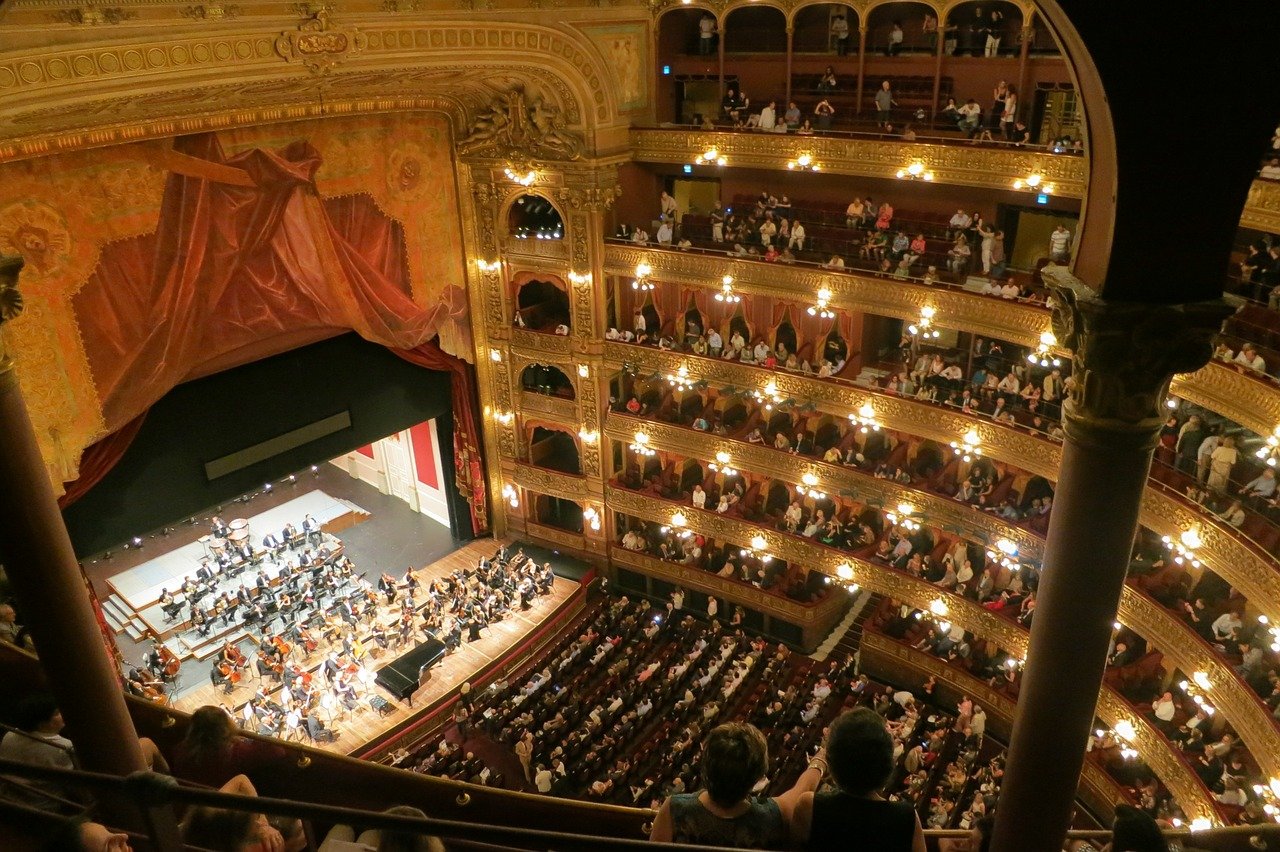
Having written all of the above, I must say this: the very concepts of sound image and soundfield are constructs re-created on the recording and playback side of things — they do not exist in live performance prior to any of that. ※ I mention this deliberately, as there are a great many people who are unaware of it.
A unified sound field does exist, shaped by the acoustics of the hall or stage, but the clearly defined sound images and neatly separated instrumental soundstages that Hi-Fi enthusiasts speak of are, in real live music, essentially never experienced. In a reverberant concert hall, even at close range the direct sound is heavily blurred, and the proportion of indirect sound reaching the audience is far greater than the direct sound. That is the reality. Therefore, if one is truly seeking faithful reproduction of the original sound or a realistic recreation of a live performance, the very appearance of sharply defined sound images with clear boundaries is, in the first place, nonsense.
Recording engineers work creatively within the mechanisms of microphone placement, mixing, and two-channel stereo playback, striving to bring the reproduced sound as close as possible to the live performance. So why does the artificial concept of “sound image and soundstage” exist in the world of recorded music? The answer lies in the fundamental constraints imposed by recording technology and the mechanics of playback. In the first place, the very method of recording with stereo microphones and playing back through two speakers is, by its nature, ill-suited to three-dimensional spatial audio reproduction. This point needs to be understood as the basic premise before anything else.
 ポチップ
ポチップ
From the 1960s, when stereo recording blossomed out of mono, through to today’s three-dimensional spatial audio···
Recording studios have, from those early days, been working within the technical and sonic limitations of stereo recording, experimenting with recording and mixing techniques to reproduce the physical reality of a stage or concert hall, in an effort to bring the recorded music as close as possible to a live performance. And from a certain point on, by making full use of multi-microphone and multi-track recording, it became possible to actively construct sound images and soundstages, and to artificially recreate the acoustics of a hall or stage. Then, taking that a step further, engineers began to realise they could create something that gave listeners the impression of an authentic acoustic space — and could generate that illusion — by more aggressively emphasising separation and placement in a visual sense.
Some recordings from that era went too far with cut-and-paste experimentation and the exaggeration is quite severe, but in classical music recording, the approach of capturing a concert hall whole — as if swallowing it entire — became mainstream relatively early on, and by the 1960s it was already the standard for major label releases. Nor is it uncommon for recordings to achieve acoustics that sound as if they were captured in a vast concert hall, when in fact they were acoustically reconstructed from studio sessions — Abbey Road Studios being one such example. The history of recording technology is, in a sense, a history of trial and error in pursuit of that recreation, and of the accumulated technical knowledge built up along the way.
At the same time, on the listener and consumer Hi-Fi side, this artificially created “precise imaging” and “instrumental separation” became the benchmark for sound quality, and sound that was more vivid and clear than a live performance came to be embraced as the standard of high fidelity — gradually winning the support of the Hi-Fi industry and Hi-Fi enthusiasts alike, who began actively pursuing it. This, in turn, led to the cultural creation of a concept that might be called the art of playback.
Taking all of this into account, strictly speaking, a recorded work is technically no longer a live performance. Listeners naturally wish to re-experience as much of the essence of the original live performance as possible without losing it, but in practice there is absolutely no escaping the various acoustic transformations and recreations that result from recording × mixing × loudspeaker playback. Realistic sound images, pinpoint stereo placement, three-dimensional acoustic spaces and so forth — these are, ultimately, the product of an electrically constructed virtual reality built up through layer upon layer of processing.
 ポチップ
ポチップ
This virtual-realistic audio technology leads, through years of advances in recording, playback technology, and equipment performance, to the modern audio equipment and high-end Hi-Fi that presents music in a form clearer and more grandiose than real live sound ever was. Yes — as an inevitable consequence of technological progress, the balance has shifted away from extracting from a recording the live music that was presumably there to begin with, and towards the pursuit of high fidelity sound artificially recreated through acoustic technology; and with the advent of digital sources, the central concern of Hi-Fi has slowly but surely been replaced — from music made with living breath, to a high sound quality fashioned in its image.
Whether that kind of approach is good or bad ultimately depends on each individual’s own position — whether one is a music listener whose foundation is the music itself, or a Hi-Fi enthusiast whose foundation is high sound quality. Though both appear to be doing the same thing through audio equipment, the two are in fact fundamentally and essentially different in their purpose. It is this kind of antinomy — the contradiction and dilemma that the Hi-Fi hobby carries with it in its never-ending trial and error — that makes it sometimes painful, and sometimes deeply enjoyable.
~ Summary ~
That said, there is a point I want to make as a music fan whose reference is live performance. A style that pursues sound imaging and soundstage excessively through audio equipment — much like applying heavy retouching to a realistic photograph — does not serve music reproduction well. This, I think, is the essential point that listeners who are after the music itself, rather than sound quality, need to keep firmly in mind. Given the technical constraints of multi-microphone mixed recording and two-channel stereo playback, any decent system will, whatever you do, generate a certain degree of sound imaging and soundstage quite naturally. Take that for what it is and enjoy it in moderation; be mindful not to obstruct the flow of the music itself, and hold onto a sense of balance. Accept the ambiguity of the world, and surrender yourself to the natural current that the marriage of the listening space creates.
 ポチップ
ポチップ
The more one sides with that artificial, unnatural direction — pin-sharp, dynamically vivid, three-dimensional soundstage recreation and all the rest — the further one strays from the richness and colour of the music one originally wanted to hear. Keep this close to heart. Knowing this alone, I have always felt, should make it possible to remain a music lover while still enjoying the world of Hi-Fi enthusiasm — without the two having to work against each other.
Auto Translated by CS4.6

List of comments (1)
あけおめ&お久しぶりです。
>現在のスピーカーにおける「音像型」「音場型」という分類には、
>ヘッドホンで語られる「バランス接続」「アンバランス接続」の話題と、
>どこか似た歴史的・文化的背景を感じています。
ここは切り分けておきたいのですが、
基本的に、バランスorアンバランスは単純な技術論ですので、良し悪し好み以前に技術的に違うものです。対してスピーカーの「音場型」「音像型」云々は、音作りの結果として生まれる音質傾向、性格的な偏りを、官能評価として解り易いように言語化したものです。前者は技術の話で、後者は感覚的主観の言語化です。
>音質を追求するための技術的な考え方や整理のための言葉
>音楽の楽しみ方そのものを分けるための概念ではなかったように思います。
歴史的には1960年代から現代に至るまで特に何も分かれていないと思います。音像も音場もステレオ初期に既に言語化、感覚的評価のために生まれた概念ですが、基本的には目に見えない音質を文字で説明するために創られた数多ある言語化の一欠片です。
>今では「どちらが正しいか」ではなく、「どちらがより心地よく音楽を楽しめるか」
>というニュアンスを含んで語られることが増えてきたようにも感じます。
「どちらが正しい」かの結論は、「機材環境に依る、聴く音楽による、使用者の好みに依る」です。相対指標ではありますが対立概念ではありませんし、正しいとか正しくないという二元論に落とし込むのは本質的に誤りでしょう。「どちらがより心地よく音楽を楽しめるか」も同様で、それは「個人の好みに依る。どんな音楽を聴いているかに依る」です。昔から対立軸には無かったし、現代でも対立していません。
技術的制約から全ての音源に対して一元的に最適化する事は現実的に不可能ですので、個々人の環境で、それぞれに好みの音楽が心地よくなるシステムを追求するのが最適解でしょう。
>その過程で、言葉が技術や科学から離れていき
>結果として「音質」そのものに意識が向きすぎしまって、
>音楽を楽しむという本来の目的が見えにくくなっていることもあるのではと感じます。
これは僕の見てきた世界とは真逆で、音質そのものに意識が向き着ているオーディオマニアの人達に、むしろ技術や科学に固執しているタイプが多い様に感じます。逆に技術や科学に興味が薄い音楽ファンや演奏家は、オーディオ的な基準で偏った不自然な音質にも興味が薄い。だからといって音質がどうでも良いのではありません。生演奏での音楽表現、そこに必要な音質にはとても拘る。録音・再生音質も出来ればそちら側に寄り添いたい。
僕は技術論的思考へ単純化されたオーディオ追求には強い違和感を感じてきたので、敢えて、音像も音場も現実の音楽には明確には存在しない事を書きました。極端な高音質指向は、根拠となる立脚点がそもそもリアルな音楽ではなくなっていませんか?と。
>音楽を楽しむという本来の目的が見えにくくなっている
少なくとも、血の通った音楽を電気工学で単純化し、頭でっかちで視野狭窄的な技術論のみに落とし込んだところで、音楽を楽しめるようには絶対になりません。音楽は先ず以て感覚的な世界ですから、主観的、感覚的な価値判断、自己評価が出来るか否か?が出発点であり全てです。
音楽を愉しむってのは感じることです。加えて聴感覚は感性の領域だからこそ、抽象的な言葉と結びつけて言語化も出来る。そして僕には個人的に言語としての抽象表現にこだわりがあります。そこでは単純化された電気技術だけでは測れない、曖昧で複雑な音の営みを、文学的表現によって幾許かでも他者へ伝える為の数少ない手段たり得るからです。