【About the audiopro Image11】
Prologue|Part 1|Part 2|Part 3|Re-release
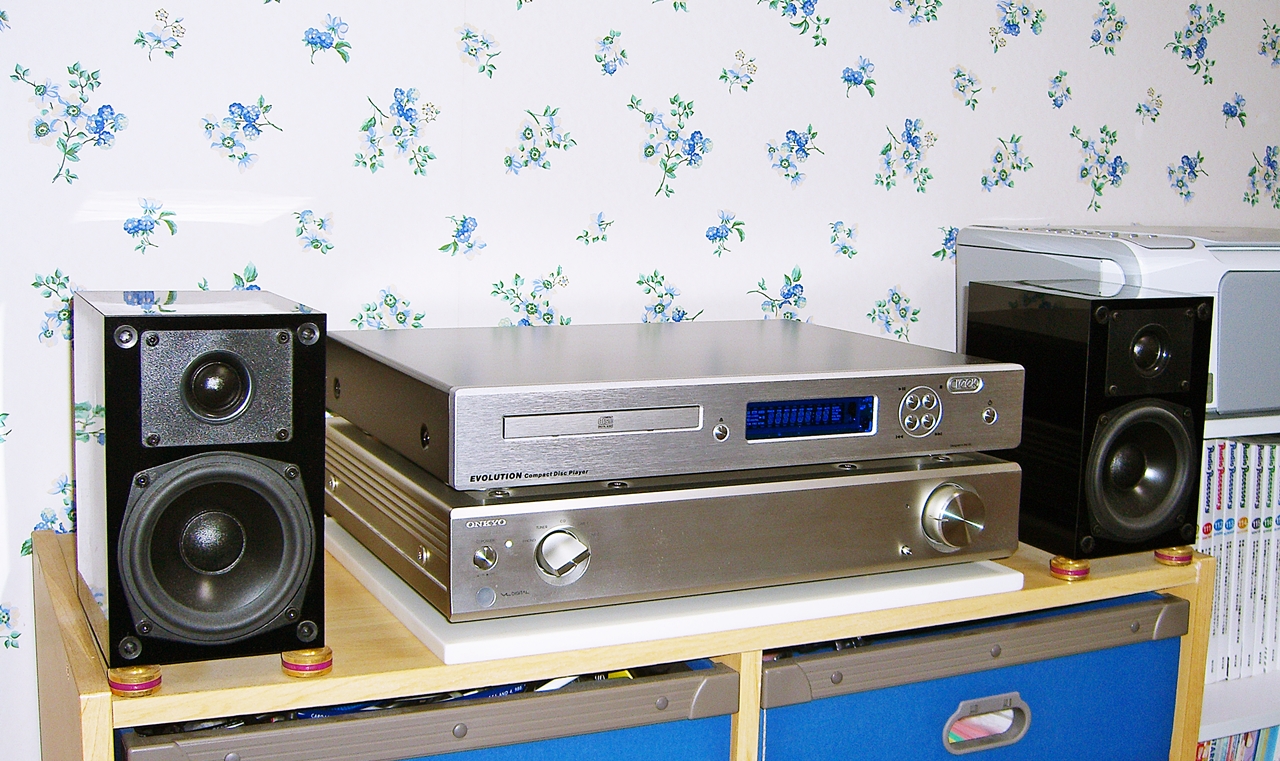
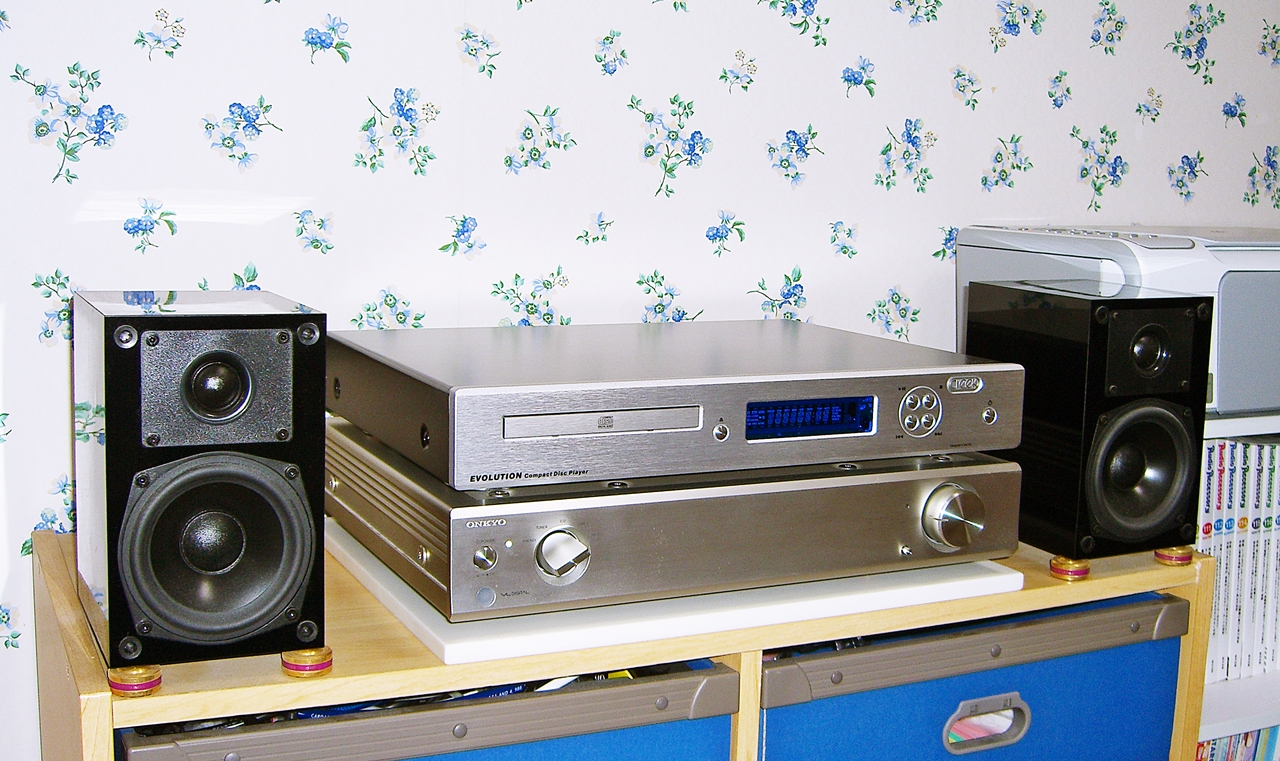
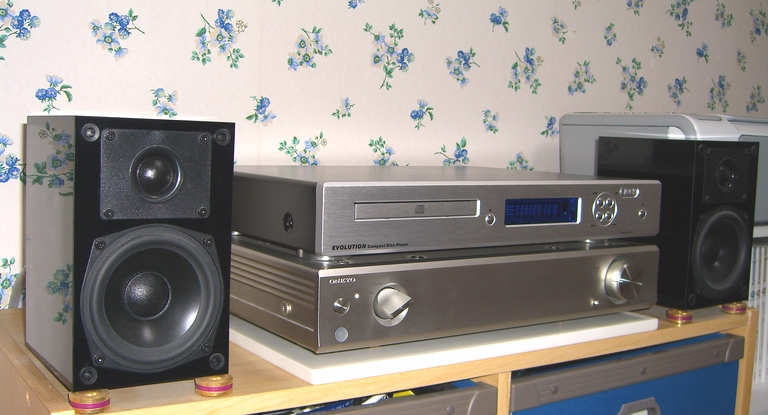
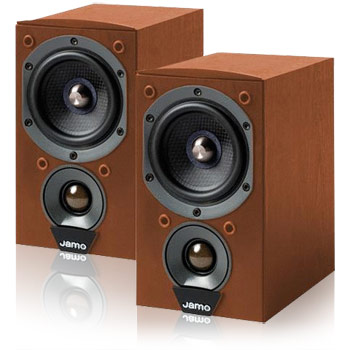
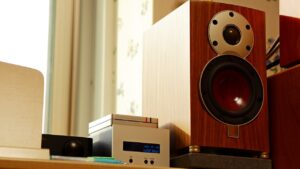
The audiopro Image11 is a cute little speaker that has been doing sterling work as the sub-system in my study — playing classical music behind me on the PC desk even as I write this very post. It is the smallest model in the first import series brought to Japan by Swedish speaker manufacturer audiopro, introduced to Japan some years ago. In Japan it tends to be treated as a small bookshelf speaker, but in origin it was actually designed as an audiovisual product — a satellite speaker for multi-channel use. →Japanese importer’s site ※ The photo shows the audiopro Image11 paired with the British CD player CREEK EVO-CD, and the latest ONKYO A-1VL digital integrated amplifier — a compact, miniature-garden-style sub-system.
Unusually for an imported speaker of this type, audiopro products were sold in Japan at conscientious prices not far removed from their European retail — which meant they came up in conversation fairly often among Hi-Fi enthusiasts online who were after high quality at low cost. In particular, Audio Ippinkan in Osaka were quick to spot the Image11’s sonic merits and actively promoted it, and I imagine there are now a great many audio enthusiasts and music lovers across Japan who have already had the pleasure of experiencing the Image11’s wonderful sound.
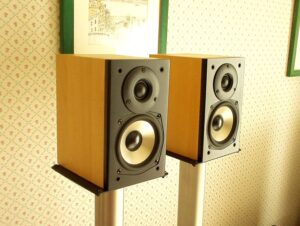
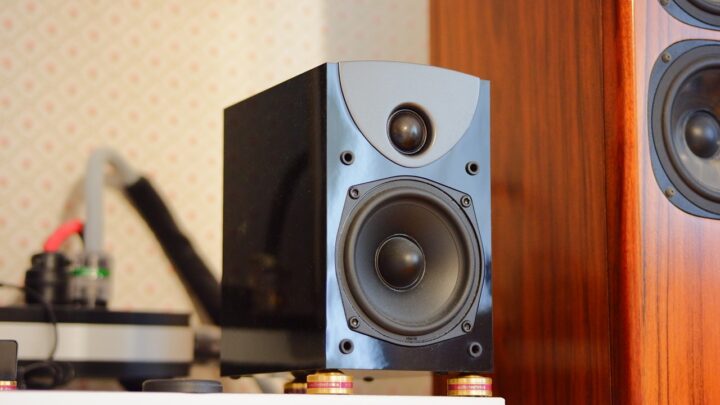
One of the defining characteristics of the audiopro Image11 is its honest, smooth, and clear tonal character. There is none of the artificially forced quality you often get with recent small, low-sensitivity speakers that wring sound out of powerful drive units by sheer brute force; instead it plays in a thoroughly natural and light-footed manner that calls to mind the high-efficiency speakers of an earlier era. The tone is smooth and subtly lustrous, refined and slim — just as the beautifully executed piano-lacquer finish might suggest — with a delicacy to the listening experience, excellent perceived signal-to-noise, and a clear, extended treble that evokes the air of Scandinavia. All of this makes it a particularly fine match for small-ensemble classical music and female vocal. Whether it is partly down to the piano-black gloss cabinet finish, actual piano tone reproduction has a realism that makes you feel nothing else will quite do. Beyond that, for all its bright and light-footed character on first listen, there is an inner composure and quiet sophistication to the sound, and it has a depth of character that lets you settle in and quietly savour more grown-up music — which is another part of its appeal. The time I spend listening quietly to music through the audiopro Image11 is considerably longer than with my main system, the Vienna Acoustics MOZART T-2, and its low distortion — which means it remains clear yet never fatiguing even over long listening sessions — makes it very well suited to background listening at low volume.
Ippinkan AIRBOW Image11/KAI
The weak point of the original audiopro Image11 is perhaps that it does not produce a great deal of bass. It is a sealed design, and the published frequency response figure shows the lower limit at 80 Hz, so below that the sound does take on a somewhat light character. Among the ultra-compact speakers that have become popular in recent years, this is probably the most lightweight-sounding in the bass. The solution to this problem is the AIRBOW Image11/KAI, a custom model from Audio Ippinkan. Comparing it with the original model I own (using a TAG McLaren 60i as the amplifier), the frequency balance struck me as quite different from the original — the AIRBOW Image11/KAI has been modified with internal bracing and other improvements so that even this small cabinet can produce a considerably more substantial amount of bass, and the body through the midrange down into the low frequencies, as well as what I would call the “sound quality” in a Hi-Fi sense, both appear to have been improved. The tonal character is also denser and deeper, and I think those who prioritise bass, or who — alongside Hi-Fi sound quality as such — prefer the rich, saturated colours of jazz, would likely find themselves preferring the AIRBOW Image11/KAI.



Even with a full orchestra, the original tends to become thin and top-heavy, and you simply have to make peace with a lack of weight and body; with the AIRBOW KAI model, however, it handles orchestral music with no particular difficulty. It was in a sense quite remarkable that a speaker this small could manage to play just about any kind of music. That said, in terms of treble presentation, the original model has a more delicate and bright tonal character, and its transparency and lightness of touch are distinctly impressive — so its particular appeal is certainly not to be underestimated. Since I have a main system elsewhere, I tend to use the Image11 in the study primarily for background listening — piano music above all, along with female vocal, small-ensemble strings, Baroque music and the like, all at low volume — and I did find myself thinking that the unmodified original perhaps suits my own lifestyle a little better.
Whether you are a newcomer looking to upgrade from a mini system, someone who already uses a small bookshelf speaker and has not quite been satisfied with the sound, or an experienced Hi-Fi listener seeking a sub-system — the audiopro/AIRBOW Image11 is a speaker well worth trying. Just please do not make the mistake of expecting it to deliver bass, sound pressure, and a sense of power; those qualities are exactly what this speaker is not about. For genres where those elements matter, there are plenty of other speakers that will be a far better fit.
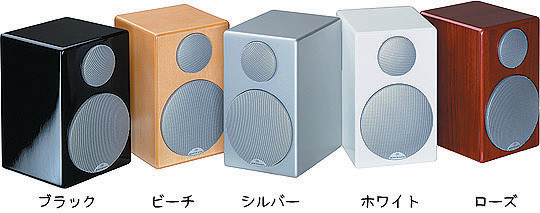
Incidentally, at the end of 2004 the audiopro Image11 was replaced by the new Image12, and production of the Image11 has already ended in its home country; in Japan too it has become difficult to find in shops. Remaining stock of the audiopro — the Image11/KAI, Image11/KAI magnetically shielded, original, and original magnetically shielded variants — appears to be held in limited quantities by Audio Ippinkan, who did so much to popularise these speakers, so if you are interested please do take a look there. →AIRBOW audiopro page
From the next instalment I plan to cover the tips and tricks for accessories with the Image11, and also to turn my attention to a worthy rival to audiopro — the German ALR/JORDAN Entry S — so do look forward to that.
【About the audiopro Image11】
Prologue|Part 1|Part 2|Part 3|Re-release


List of comments (8)
初めまして。金剛山と申します。先月、本記事を参考に逸品館に出向きImage11改3を購入しました。Pastel Piano様の解説通りの高音域に精細さと伸びの良さ、低音域も含めた明瞭さと、立体的表現の巧みさに魅了され即日購入しました。オンキヨーファンのためスピーカーはD-112EXLTDを使用してきました。解像度や立体的表現、低音の下限域はD-112EXLTDが優れているのですが、Image11改3には「細かいこと気にせんで良えやん」といった雰囲気の音の拡がりの豊穣さが心地良く、どちらも魅力的です。
Image11改3でオーディオプロのスピーカーに魅せられ、同社のWigo130を中古で購入しました。Image11改3をスケールアップさせて上品さを加味したような鳴り方です。嗜好にぴったり合致したため、俄然音楽鑑賞が楽しくなり、毎日4時間~5時間は音楽を聴いています。
オーディオプロはダリやエラックほど大手ではないため、本記事を読まなければ知ることもなかったろうと思います。良いスピーカーを紹介して頂いたことにとても感謝しています。
これからも様々な機器の紹介を楽しみにしております。
はじめまして。HNから察するに大阪の方でしょうか?わたし、病気療養と治療のため、以前にブログをお休みしていた間、数ヶ月間ですが富田林で暮らしていたことがあります。その時金剛山にも車で行きました。audiopro気に入っていただけて嬉しいです。
逸品館さんはどんだけ沢山仕入れたのか、今でも販売されていてびっくりです。箱ピュアでもノーマルのImage11とImage12が今も双方現役です(主にImage12の稼働が多いです)。唯一の弱点が80Hz以下の低域ですので、今更ですが当時純正組み合わせで作られていたB2.27 MK2サブウーハーを追加できたらな~なんて思っています。Wigo130は残念ながら試聴したことがなかったりしますが、どちらも良いものですので大切にしてあげてください。
はい。根っからの大阪人です。そのため、直接逸品館で試し聴きできました。
富田林に暮らしておられたのですね。金剛山はてっぺんに到っても眺望の得られない登り甲斐のない山ですが、登頂者数世界一を誇る不思議な山です。Pastel Piano様は横浜在住とのことですね。同じく横浜出身の小田和正さんと鈴木康博さんのファンなので親しみがあります。
逸品館はオーディオプロ本社に頼み込んで、現在でもImage11の生産ラインを残してもらっているそうです。社長がマランツマニアかつケンウッド、日本ビクター、オンキヨー、アキュフェーズ嫌いなので利用し難い点もありますが、オーディオプロ製品に関しては頼りになります。
Image11改3も極低音はすっぱり諦めています。ですのでヤマハの廉価サブウーファーと組み合わせて、ポップスや高音楽器中心の管弦楽ではImaeg11改3で、低音重視の管弦楽はWigo130で聴いています。両者共一生使うつもりです。購入時に「二十年先にエッジが経たったら修繕してもらえまっか」と尋ねたら、可能とのことでした。
さて、Image12は仕様ではかなり低い帯域まで再生できるようですが、実際の鳴り方はどのような感じでしょうか?蚊の鳴く程度の微かな鳴り方なのか、ある程度明瞭に鳴るのか、気にしています。因みに50Hz~のWigo130は大音量ではありませんが、どの楽器の音か区別出来る程度に正確に描写します。家族に机上サイズのスピーカーを贈呈する予定なので、気になっている次第です。極個人的な質問で恐縮ですが、お暇があればよろしくお願い致します。
それでは今後の更新も楽しみにしています。失礼致します。
こんばんは。大阪にいたときは入院とほぼ毎日放射線治療で、残念ながら逸品館に伺う余裕がありませんでした。学生時代から色々と参考にさせて貰っている&いくつか購入したこともあるので一度お伺いしたいところではあるのですけれども。
Image12はスペック上一応下は50Hzまで出るには出る・・・のですけれども、密閉型ですのでまぁあまり期待しない方が良いです。ノーマル同士での比較ですが、基本的にはImage11と同じ音色で上下に少しだけレンジが拡張されている感じです。そしてImage12の方が少し元気。僅かにドンシャリ(Image11比で)になるぶん、逸品館での評価は芳しくなかったのですけれども、実機を両方使っている身としては、Image12のほうが良い方向に正常進化していると感じます。音を聴く限り、設計したaudioproとしてもImage12の方がより高音質と思って作ったのではと推測。低域方向の改善よりツィーターが良くなってるように思います。
とはいえ、KAIになるとかなり音色がちがってしまうので、Image11ノーマルとImage12ノーマルの差よりも、Image11/KAIとの比較の方が、よりかけ離れていると思います。Image11/KAIとImage12比較した場合、逸品館のチューンする方向性と逆の明るい方向に進化しているので、社長的には受け入れがたかったのではと。
音質(レンジ感と解像度)と音楽性ではImage12が上。ほんのり懐かしいナチュラルな空気感が音色に残るのはImage11です。
こんにちは。詳細に解説頂いてありがとうございます。Image11改はオリジナル機とすこしく傾向が違うのですね。Image11改購入時に、店員氏が「ほぼ自社設計品です」と言っていた理由が分かった気がします。贈呈相手は父親で、嗜好も私と良く似ているので(正確には私が父に似ているので)、オーディオプロ製品なら合うだろうと考えていたのですが、簡単には決められなさそうです。
候補はImage12とBlacRubyなのですが、父の好みに合いそうなのはImage12だろうと思う一方で、アンプがアナログ時代のインテック205と非力なため、抵抗値8ΩのBlacRubyの向いているか、あるいはアンプ交換とセットでImage12にするか、考えどころです。
Pastel Piano様の解説はとてもためになりました。特にImage12は音楽性が向上している一方で逸品館改造機とは方向が違うという見解には、やはり音楽は人間が聴くものなのだなと感じ入りました。おそらくImage12+A-905FX2の組み合わせになりそうですが、分かり易く詳しい解説を頂けたことに感謝致します。
能率は気にされなくても大丈夫です。公称インピーダンス4Ω87dbですが、裏に8Ωのアンプに最適化されてるって英語で書いてあります。ユニットが軽くて鳴らしやすいので、アンプは小さなデジアンや真空管など、極々非力なものでも全く問題ありません。INTEC205のA-905FX2でしたらドライブ力は十分以上です。将来的にはシンプルな回路で透明な音がするアンプを奢ってあげると更にグレードアップ出来るかと思います。
アンプの件ご教示感謝致します。父の書斎にはA-933の設置すらままならないので、小出力のアンプでも能力を発揮してくれるのは、とても助かります。シンプルな回路で透明な音。といえばNmodeの音量調節可能パワーアンプX-PW1を所有していますので、C-705→DAC-1000で底上げ→X-PW1という組み合わせも面白そうです。
まずは父の書斎机の片付けから入らねばならぬので設置まで時間がかかると思いますが、とても有意義な助言をありがとうございます。
余禄
Image11改3は哀切や陰影をよく表現してくれますが、明るく陽気な曲は得意でないように感じます。逸品館社長の嗜好が想像されて興味深いです。オーディオプロ謹製のWigo130は基本は明るく軽快に(決して軽薄ではなく)、一方で哀切や陰影も表現してくれる奥深いスピーカーです。カール・リヒターとミュンヘン・バッハ管弦楽団による「ブランデンブルグ協奏曲」がよく合います。尚、上流機器はX-PW1+オンキヨーP3000R、パイオニアN70Aです。極めて主観的な感想で恐縮ですが、オーディオプロは良質の機器を安価で提供する良い会社だと思いました。
>明るく陽気な曲は得意でないように感じます
>逸品館社長の嗜好が想像されて
AIRBOWの音はまさにそんな感じですよね。チューンされると低域は出る反面、高域は暗い音色になる。MARANTZもaudioproも元の音色がハイ上がりで明るいのでバランスが良くなるとも云えますけど。オリジナルとの比較試聴、貸し出しが出来て良心的だとは思います。