[About the audiopro Image11]
Prologue|Part 1|Part 2|Part 3|Re-release
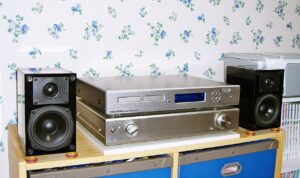
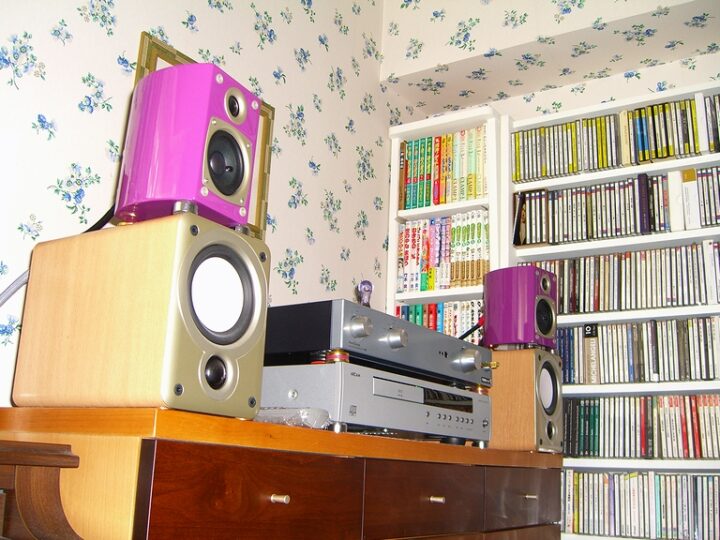
This time I will write about getting the best out of the Audio Pro Image11, as I previewed the other day. The AIRBOW Image11/KAI, as a result of its modifications, extends further down into the lower frequencies than you would expect from its size, so if the setup is not handled carefully the woofer moves too much and the sound becomes cloudy all the way up through the mid to high range. At first, with the speaker simply placed flat on the surface, it did not sound better than the original Image11 — which left me rather puzzled.
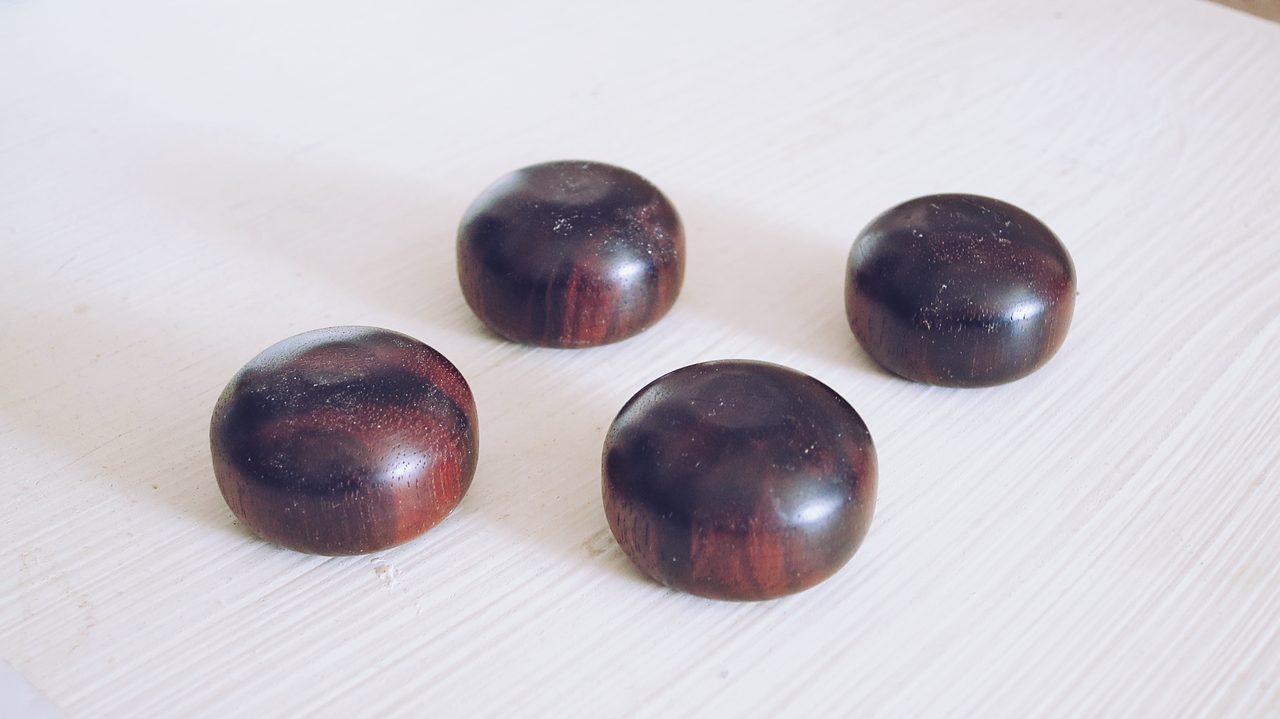
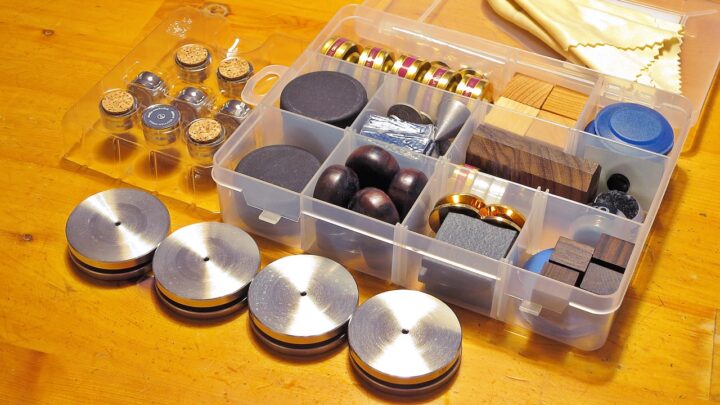
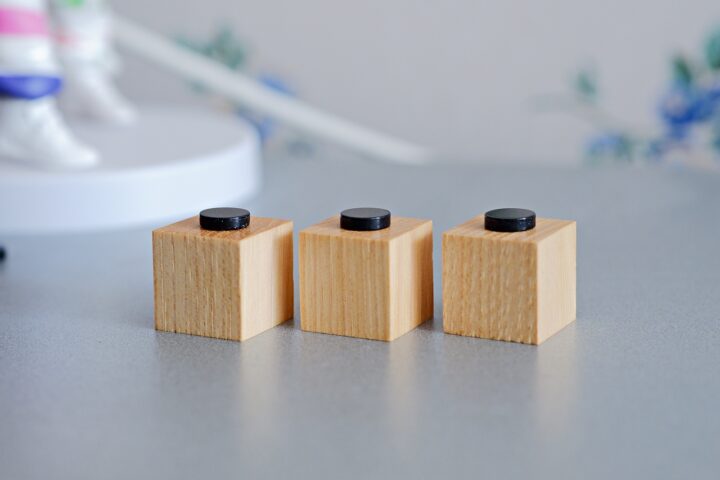
So I tried placing the shop-original product ebony insulators WOOD-BOY, made by Audio Ippinkan, in a three-point support configuration underneath — and it was a perfect match. The bass, which had been on the heavy side, gained a sense of control, and all at once the music took on a lively rhythmic energy, with delicacy, resolution, and a wealth of detail through the mid to high range. That said, the sound does not become sharp or aggressive — it is a high-quality sound that retains the natural tone of the ebony material throughout. One wonders whether the AIRBOW/Image11 “Kai” was perhaps tuned with WOOD-BOY insulators in mind from the very start.
Sound Quality of the AIRBOW WOOD-BOY Insulators
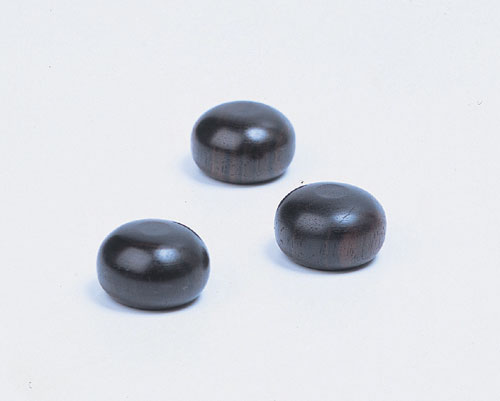 However. When I enthusiastically decided that the AIRBOW WOOD-BOY was a wonderful, natural-sounding insulator and tried placing it under the original audiopro Image11 as well — well, something strange happened. The bass, which was already on the light side to begin with, became even lighter… This goes beyond simply being nimble; it really is a bit too much. And this is precisely where the difficulty lies with tone-tuning accessories such as insulators. I am fond of the tonal character of ebony, a wood also used in musical instruments, and I use Shunmook’s Mappingo and ebony spike pads as well — and in terms of sound quality they do push things in a more acoustic and refined direction, so the AIRBOW WOOD-BOY is by no means a bad product. But when used with a speaker that is already on the bright side of neutral, I got the impression that you would need to compensate elsewhere — with speaker cable choices, for instance — in order to restore the tonal balance. Though one could simply argue that the bass on the original Audio Pro Image11 is too light to begin with.
Incidentally, the sound character of WOOD-BOY as an insulator on its own — whether used under speakers or equally under amplifiers or CD players as insulators beneath the component — tends toward a refined quality: natural in texture yet with little of the roughness or warmth one might associate with wooden products, portraying image placement and outlines in a slender, precise way, with a sparkling, cool-toned character through which the soundstage spreads delicately and naturally. The weakness, as one might expect, is in the quantity of bass. It suits systems where the bass is unclear or overblown and you want to bring things into better balance, but placing it under equipment that is already light in the bass will tip things further in that direction, so this is not something I would recommend in such cases.
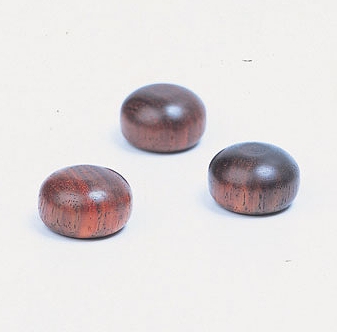
One final note on using the WOOD-BOY. Since the polished, rounded surfaces make contact point-to-point, the arrangement is physically unstable. In a three-point support configuration in particular, stability is reduced compared to four-point support, so please do take great care to guard against the speaker or component toppling due to accidental contact or an earthquake.


 ポチップ
ポチップ
[About the audiopro Image11]
Prologue|Part 1|Part 2|Part 3|Re-release

Auto Translated by CS4.6