I have hardly ever written about LUXMAN on this blog — partly because their enclosures tend to be unnecessarily large, and partly because their products sit at a relatively high price point, which puts them outside the concept of this site. That said, as someone who listens mainly to classical music, LUXMAN is actually a brand I find quite sympathetic in terms of sound character.
Up until around 2000 or so, MARANTZ and LUXMAN shared a somewhat similar tonal character — I always had the image of a warm, golden-hued sound with a soft, gently swaying outline. Marantz had something extra on top of that, a sort of buttery, Continental richness. Marantz subsequently shifted towards a high-balance, high-speed, slim-profile direction using the fast power supply module HDAM, transforming into a thoroughly modern sound that differs entirely in textural quality from what it once was — aside from a certain colouration in the sound. LUXMAN, on the other hand, still seems to retain something of that sweet tonal character and classical personality from those earlier days, at least to a fair degree. …Well, I haven’t auditioned their recent models all that much, so I can’t say anything too definitive…


 ポチップ
ポチップ
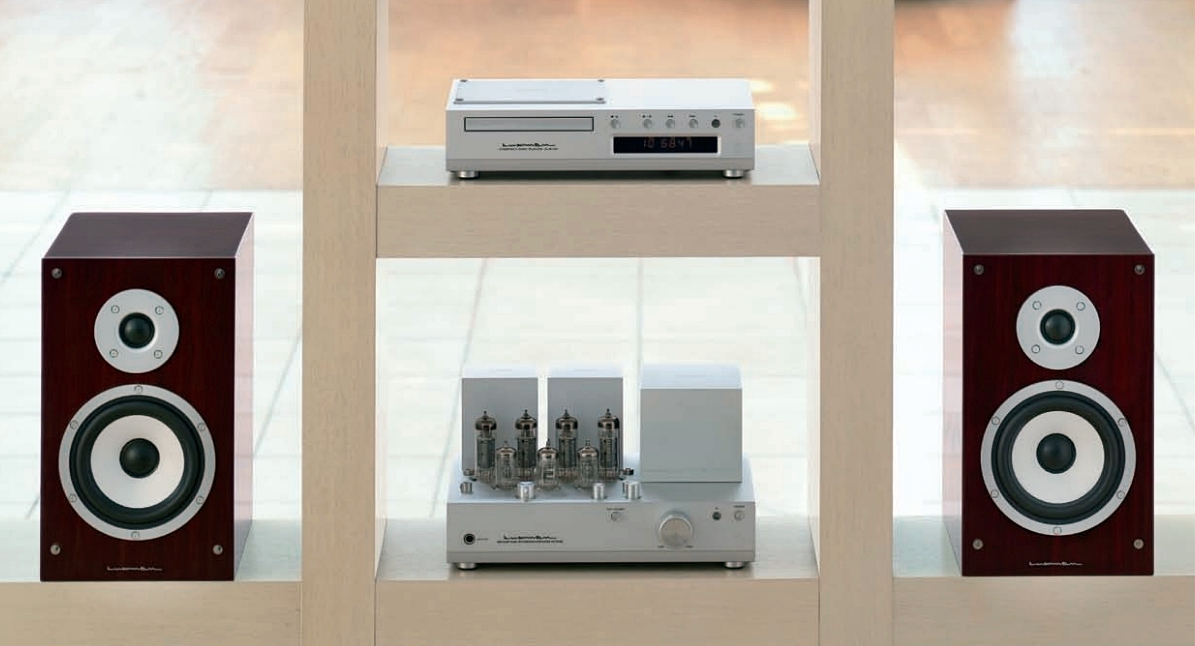
The “Neo Classico II” series, which stands taller than the original. I do wish it were SACD-compatible, but setting that aside, it is an extremely appealing product both in terms of design and as a music playback device.
 ポチップ
ポチップ
LUXMAN DA-200 USB D/A Converter | Successor: DA-250
First up is the LUXMAN DA-200. Released in late November 2010, so it came out about a year ago. In the hi-fi world, where time moves slowly, it still counts as very much a new product. It looks like a full-size component in photographs, but the actual dimensions are B4-width 364mm × height 81mm × depth 279mm — measurements you don’t often come across — making it a noticeably more compact enclosure than a typical piece of audio equipment. List price: ¥148,000. For a LUXMAN product — a brand that has long competed with Accuphase for dominance in Japanese high-end audio — this is a relatively affordable standalone D/A converter.
 ポチップ
ポチップ
 ポチップ
ポチップ
This is a company that used to call a ¥250,000 tank-like integrated amplifier or a CD player its “entry-level” offering, so it is genuinely pleasing to see them producing something as tastefully refined as this. Digital inputs are three: USB, optical, and coaxial. It has earned considerable respect among enthusiasts for its sound quality not only in the PC audio use the product concept targets, but also when integrated into a pure hi-fi system. Beyond its role as a standalone DAC, it also functions as a headphone amplifier and as a digital (3-input) and analogue (2-input) preamplifier, giving it strong overall value for money — and it has been selling steadily even in a difficult market for the hi-fi industry. The volume of reviews on Kakaku.com and on buyers’ blogs gives a clear sense of how popular the DA-200 is and how favourably its sound quality is regarded.
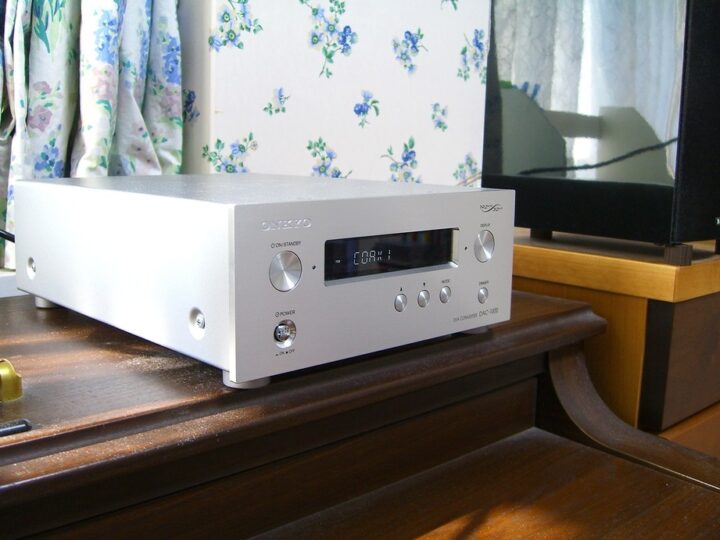
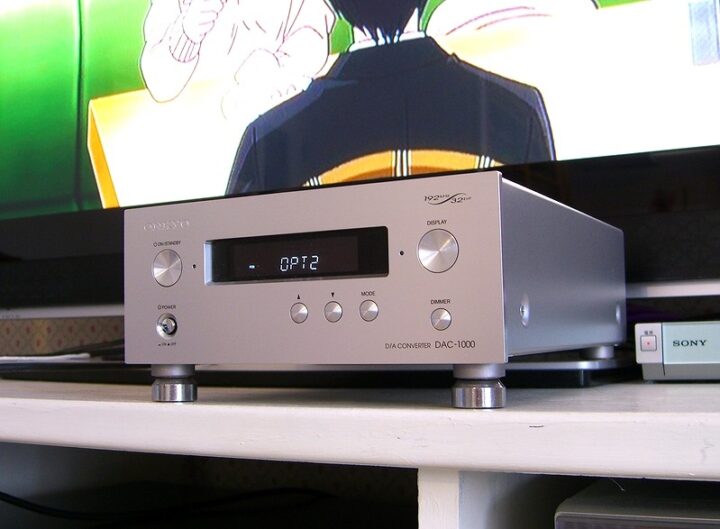
The DA-200 is, incidentally, quite different in character from theONKYO DAC-1000, which I reviewed in detail here on AUDIO STYLE some time ago and which leans towards a straight, uncoloured sound. The DA-200 apparently keeps the LUXMAN tonal character intact while presenting music in a coherent, well-organised way. The DAC circuitry and analogue stage are said to be equivalent to those in the integrated SACD player D-05, which costs roughly twice as much. The chip is a Burr-Brown PCM1792A. The standard supplied power cable is the JPA-10000. This is not sold commercially, but it can be purchased directly from LUXMAN as a service part at ¥5,250. ※ That power cable has since become available as a standalone retail product. It is now the improved model LUXMAN JPA-10000i.
 ポチップ
ポチップ
LUXMAN DA-100 USB D/A Converter | Successor: DA-150

Inputs are the same three as the DA-200: USB, optical, and coaxial. There is no digital preamplifier function, and analogue output is a single pair. The DA-100 does, however, include a headphone amplifier output — and the headphone output circuit appears to be the same as in the higher-ranking DA-200. It shows a good understanding of how users in the PC audio world, where headphone listening is common, actually use their equipment. The DAC chip is a Burr-Brown PCM5102, a newer 32-bit chip. If it is upsampling to 32-bit, there is a sense that it may actually be the more next-generation unit in terms of information retrieval, compared to the DA-200 above. It also offers a digital filter switching function — two settings — similar to the ONKYO C-S5VL.
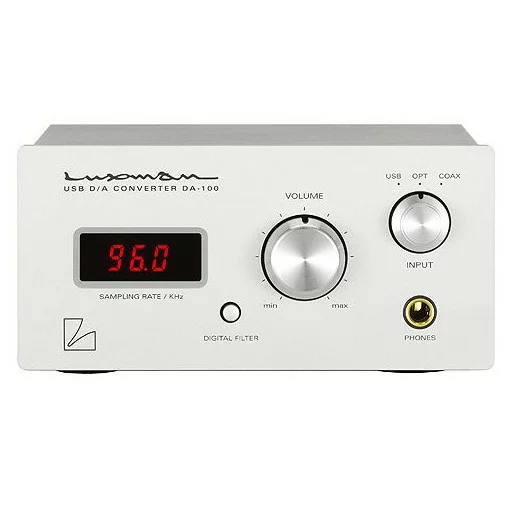
Just how capable it is cannot really be judged without comparing it directly against the higher-ranking DA-200 or the ONKYO DAC-1000, but one of the weaknesses of PC audio is that the sound can become harsh and edgy because of excessive noise contamination. I have a feeling that LUXMAN’s DAC (judging by the DA-200’s reputation) can compensate for this to a certain extent through clever voicing — and personally, I have fairly high expectations for it.
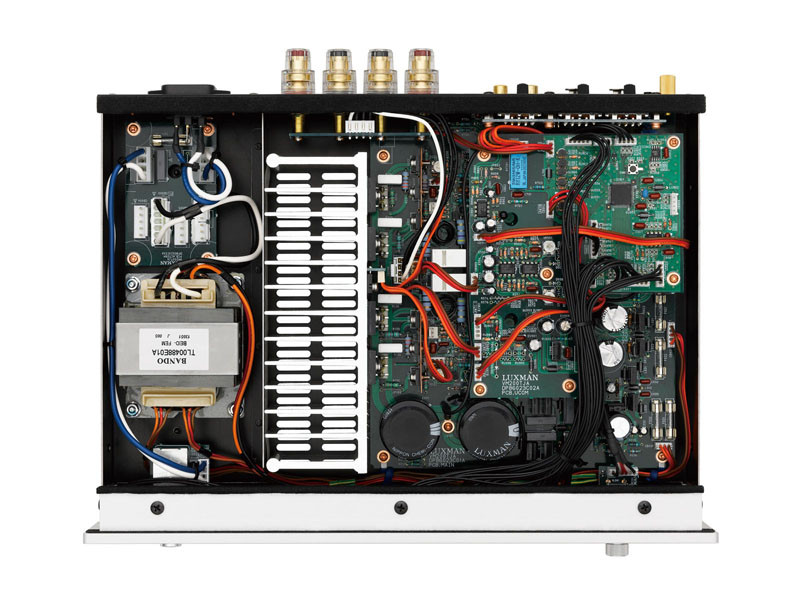
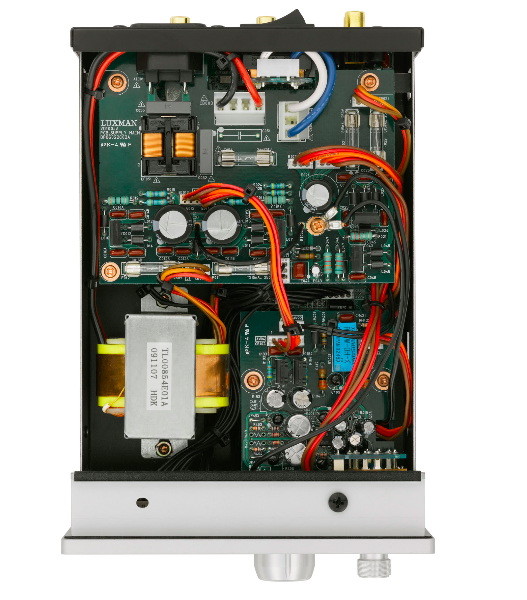 This is what the inside of the DA-100 looks like — apparently it is called a round-pattern wiring board. The interior of the DA-200 is even more extraordinary, but the routing of those orange power supply cables is quite something… Normally you would expect a PCB layout designed in CAD to eliminate unnecessary wiring or to keep traces as short as possible, but there must be some meaning or reason behind this — it is clearly deliberate.
Incidentally, the DA-100 was replaced in 2016 by its successor model, the DA-150.
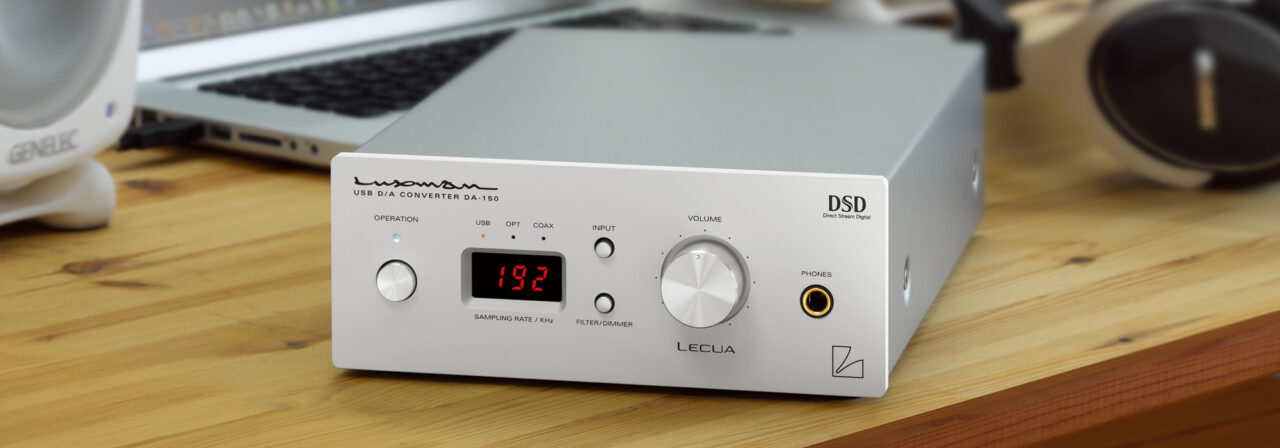
A compact B5-size USB D/A converter supporting DSD 5.64MHz
 ポチップ
ポチップ
LUXMAN M-200 Stereo Power Amplifier
The LUXMAN DA-200 can apparently be used as a high-quality digital preamplifier — and yet there was no matching dedicated power amplifier to go with it. Then, a year later, they duly released a B4-size power amplifier to form a proper pair. What is interesting is that the output is a mere 25W + 25W (8Ω). This is not a valve amplifier — it is solid-state at this low output figure. Clearly the design is aimed squarely at desktop PC audio and compact speaker use. And yet, looking at the substantial heatsinks and circuit components, it is clearly in a different league from the amplifiers found in mini systems or midi hi-fi separates — pure hi-fi quality is not in doubt. It also comes with the JPA-10000 as the standard supplied power cable.
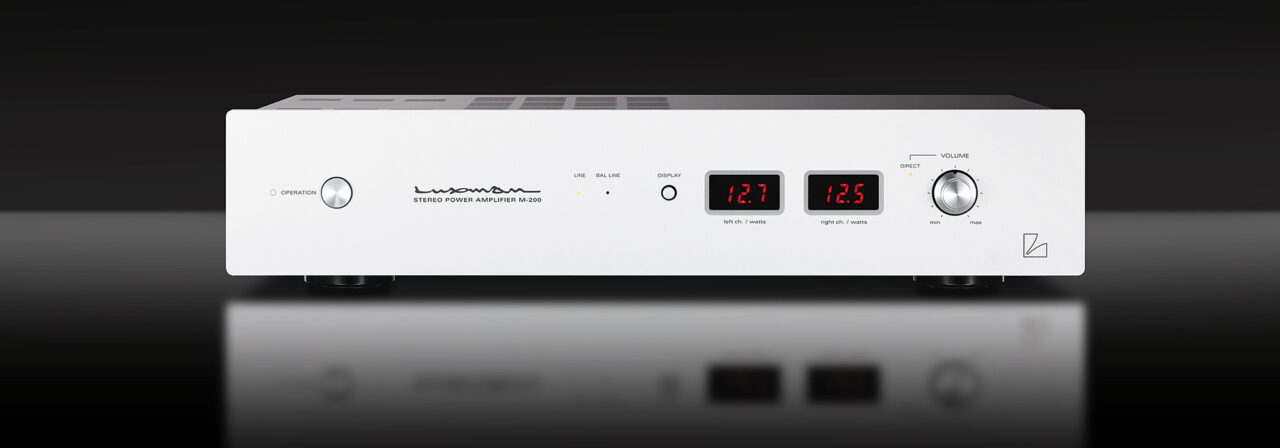
A compact B4-size stereo power amplifier
There is a tendency to assume that more power is always better in an amplifier, but in practice, unless the output is well-matched to the speaker in question, (with an amplifier that is over-powered) the result can be a congested, push-heavy sound or a tendency towards distortion, and the natural resonance and nuance that a recording should possess gets compromised. When sonic refinement matters, bigger does not substitute for better. Seen in that light, for a sub-system or near-field listening situation using relatively efficient compact speakers, this figure of 25W, paired with a high level of quality, could actually be quite a remarkable match. Among existing products from other manufacturers, even the most affordable slim-line European integrated amplifiers typically offer around 50W + 50W as a minimum. (In truth, there are various European amplifier manufacturers with integrated amplifiers offering less than 50W, but for some reason these never seem to make it to the Japanese market.)
The M-200 can also be used as a mono amplifier via BTL connection, yielding 70W (8Ω) per channel in that configuration. With my main system’s floorstanding speaker, the Vienna Acoustics T-2, anything other than an amplifier in the 60–70W class tends not to drive it well — too much or too little both cause problems — which means a compatible match is a rare find. This one, though, has a feeling it might just fit. I find myself daydreaming about using the TAG McLaren 60i (page under construction) as a preamplifier (a Class A pre), with two M-200s running in mono added to the system — I wonder what that would sound like… Ah, but at a list price of ¥134,400, two units would come to ¥200,000 or so… which starts to feel just a little steep.

Auto Translated by CS4.6