【ONKYO DAC-1000 D/A Converter Review】
Part 1|Part 2 |Part 3|Part 4|Transport (First Half)|Transport (Second Half)
In Part 2, I bring you a sound quality report brimming with poetic impressions in the audiophile vein. The ONKYO DAC-1000’s sound has a large amount of detail and a wide frequency range. From the flat, square appearance of its chassis I had half-expected a rather rigid and humourless character, but it was a pleasant surprise to find something bold and relaxed, with a warmth you might almost call human.
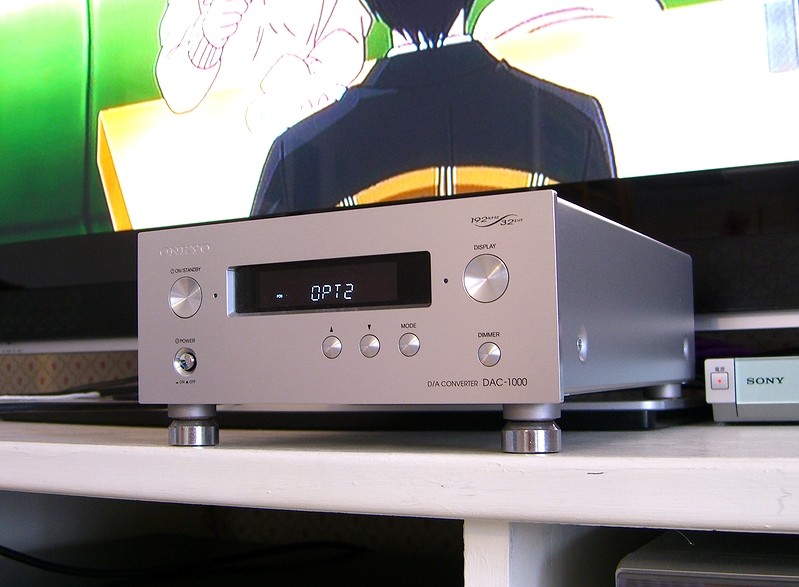
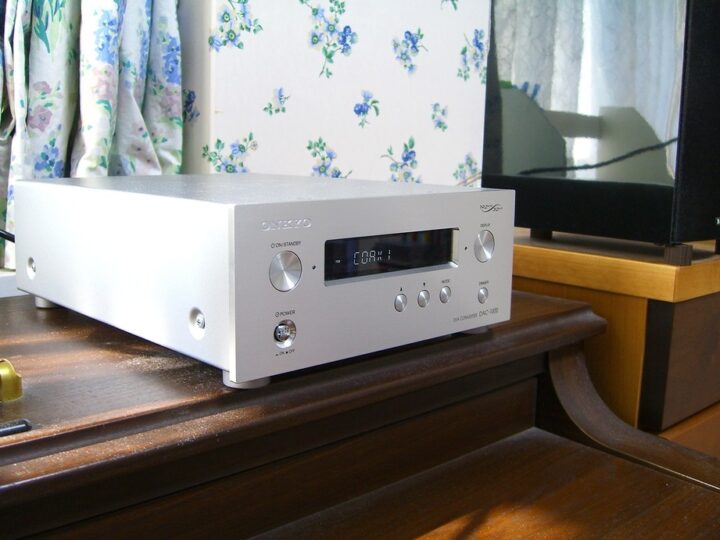
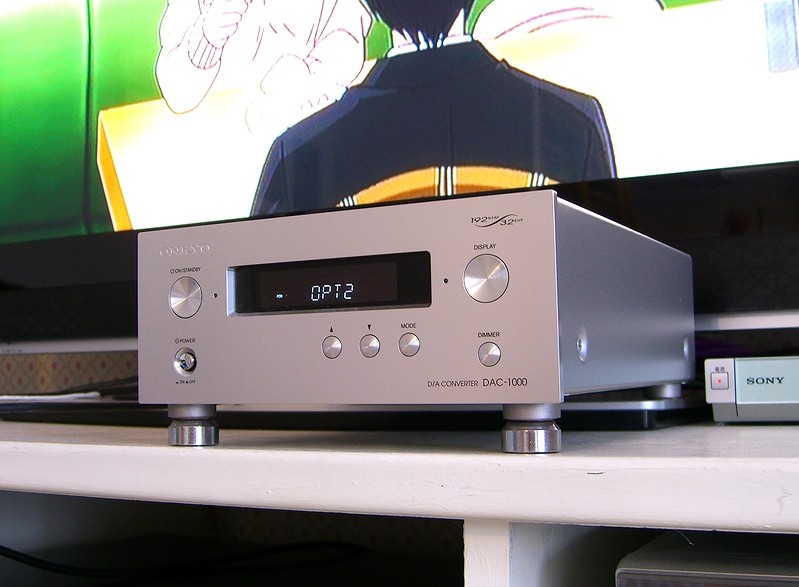
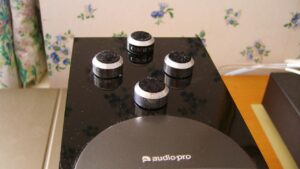
The thing I was personally most worried about was a “lack of musicality” — the sort of sound-quality-obsessed character that the looks seemed to suggest — but that concern turned out to be entirely unfounded. The linear visual impression created by those 5mm-thick aluminium panels and the actual sonic character of the unit are quite different things indeed. ※ By the way, the insulators used in the photo above are the ONKYO AS-258.
The ONKYO DAC-1000 presents a well-balanced tonal character with a wide range built around the mid to mid-low frequencies. The sound colour carries a bright lustre, and behind that there is a woody warmth and richness as well — making it closer in direction to the mid-to-low frequency texture of the integrated amplifier A-1VL than to the ONKYO SACD player C-S5VL. That said, the metallic colouration in the upper frequencies common to recent ONKYO products — including the C-S5VL and A-1VL — is more restrained here than in those other units.


 ポチップ
ポチップ
The SACD player C-S5VL has a feminine sonic character — as Mr. Kaiyama once put it, calling it a “slender beautiful girl” — whereas the DAC-1000 is, if anything, a masculine-sounding unit. The touch is full and stable, with a tasteful sheen in the upper frequencies, while underneath, in the mid-to-low range and down towards the stage floor, there is high resolution combined with a slightly dry quality. “Dry” may sound unflattering, but what I mean is simply that it has a monitor-like resolution.
 ポチップ
ポチップ
It is a well-worn thing to say, but through the DAC-1000 one hears all sorts of things from familiar CDs that one has never heard before. The clarity of pitch in the lower register of the piano — the left-hand range — is particularly striking: there is genuine weight and body, yet the resolution is high, and the reaction is something like, what on earth is this?! It may well be a fine example of what happens when a powerful power supply does its job properly and draws out the full informational potential of the latest-generation Burr-Brown PCM1795 chip.
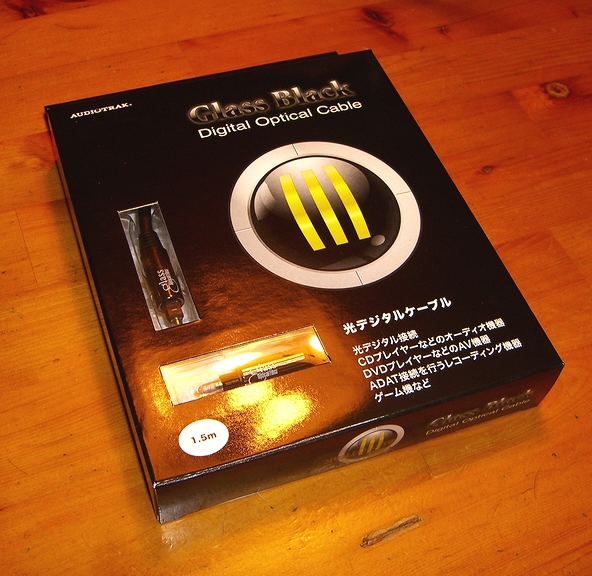

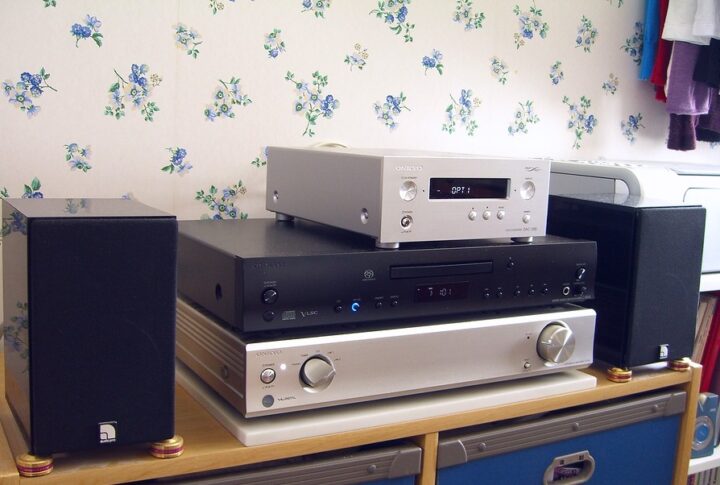
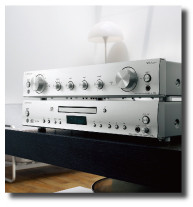 When connected to the C-S5VL via TOS optical digital (AUDIOTRACK GLASS Black ATC-GB24), the centre of gravity in the imaging drops noticeably compared to the C-S5VL’s analogue output, and the sound takes on a solid, stable character. The soundstage is also a size larger, and the depth greater. Images are stable and the underlying structure is firm — there is no sense of wavering whatsoever. Yet for all that, there is none of the exaggerated edge enhancement that modern-sounding equipment so often employs to create an impression of high resolution. The density and detail in image rendering feel genuinely accomplished — far beyond what you would expect from a product at this price. The result, for this price bracket, is a level of sound quality that leaves very little room for complaint.
The bass range in particular shows a marked difference, with a more solid and substantial rendering compared to the C-S5VL. Rather than a boomy sense of mass that misleads the ear, it is a deep, clear bass with well-aligned time coherence. Switch back to the C-S5VL’s analogue output and the soundstage shrinks by a size, and the presence filling that stage becomes thinner. Whether it is down to the mechanical weakness of the chassis typical of lower-priced units, the image outlines feel thinner and somewhat blurred. The C-S5VL’s fresh, nuance-rich presence is genuinely appealing, but there are moments when that feather-light touch works against it, leaving a sense of weakness and shallowness in the rendering — and that is simply the truth of it.
By comparison, the DAC-1000’s touch is denser and deeper — a more grown-up sound. It is not particularly sensitive in the direction of floating or singing, but the sound has a firm sense of energy and vitality to it — a positive sound. Rather than the artificially constructed virtual-reality high fidelity one sometimes gets from audio equipment, the image it conjures is closer to the tangible, physical sense of monitoring a live performance.
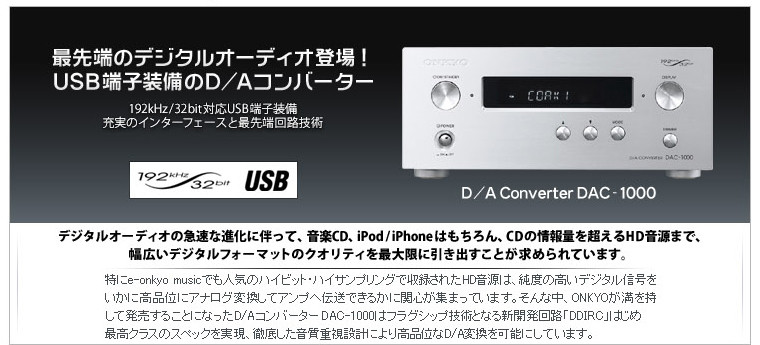
What about the effect of the DAC-1000’s built-in sample rate converter, with its 2× and 4× upsampling options? Having heard upsampling on several other DACs, I had a rough idea of what to expect — and indeed, it brings a softer direct-sound touch, a sudden increase in detail, and a finer surface texture overall. On the less flattering side, one might say it tends towards over-processing: the surface of the image becomes somewhat clogged with too much information, giving a slightly sluggish feel. And for some reason the hall tone also becomes more tidied-up. There will be those for and against, depending on whether you prioritise the detail in the direct sound or the transparency of the soundstage, but to be honest, the upsampled sound moves away from what I personally prefer.
To put it another way, I imagine upsampling will be off-putting for listeners who find the dense, thick-sounding high-bit remasters of CDs — such as SBM “Super Bit Mapping” releases — difficult to enjoy. But I can also understand why some people love that kind of sound. It is therefore quite considerate of ONKYO to allow the sample rate converter to be switched on and off, and the multiplier to be selected, according to the listener’s preference and the source material. Even for listeners like me who leave the SRC off by default, there are occasions when it produces an unexpected effect on poor-quality sources — so it is worth trying the SRC again for recordings you would not otherwise want to listen to in direct mode. For compressed sources from portable digital audio players it goes without saying, but especially for low-bitrate sources such as Blu-ray players and digital broadcasts, actively engaging upsampling adds body to the sound and also softens the harshness of sibilants in the vocal range, so I think it can be quite effective there.
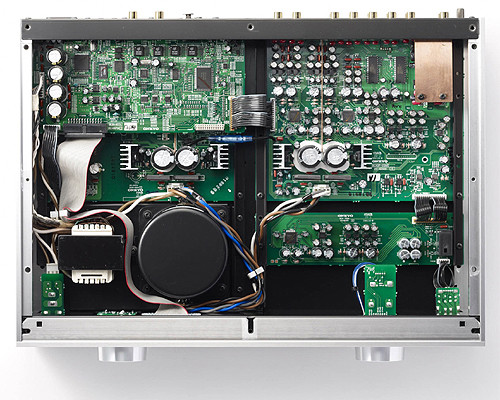
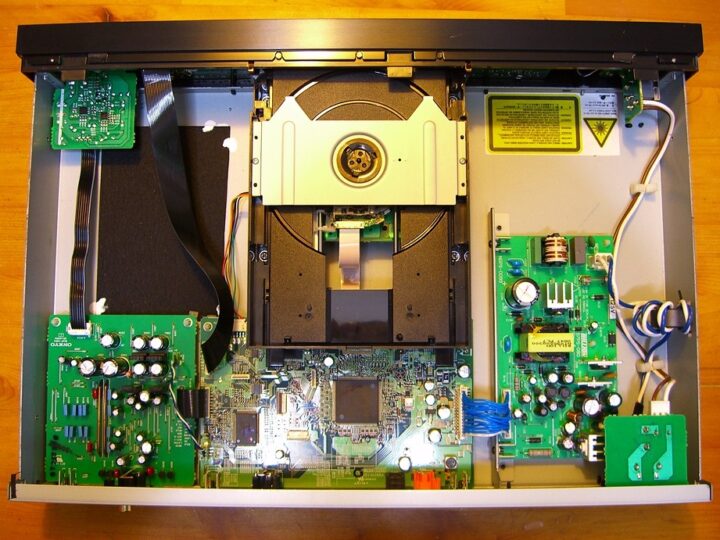
The newly released preamplifier ONKYO P-3000R also has a built-in DAC, and looking at the specifications on the official site along with the internal photos, it really does look as though a circuit equivalent to the DAC-1000 has been fitted wholesale into the left half of the unit, transformer aside. I want this. If I had noticed sooner, I would have bought the P-3000R instead… Because the A-1VL is also quite excellent as a power amplifier, so the two could be used together as well…
 ポチップ
ポチップ
This is getting rather long, so as usual the article continues in ONKYO D/A Converter DAC-1000 Review|Part 3.
【ONKYO DAC-1000 D/A Converter Review】
Part 1|Part 2 |Part 3|Part 4|Transport (First Half)|Transport (Second Half)

Auto Translated by CS4.6