【Nakamichi Car Audio — Known to Those Who Know】
C4|Old Stories|Head Unit Disassembly|Dark Rumours|Speakers
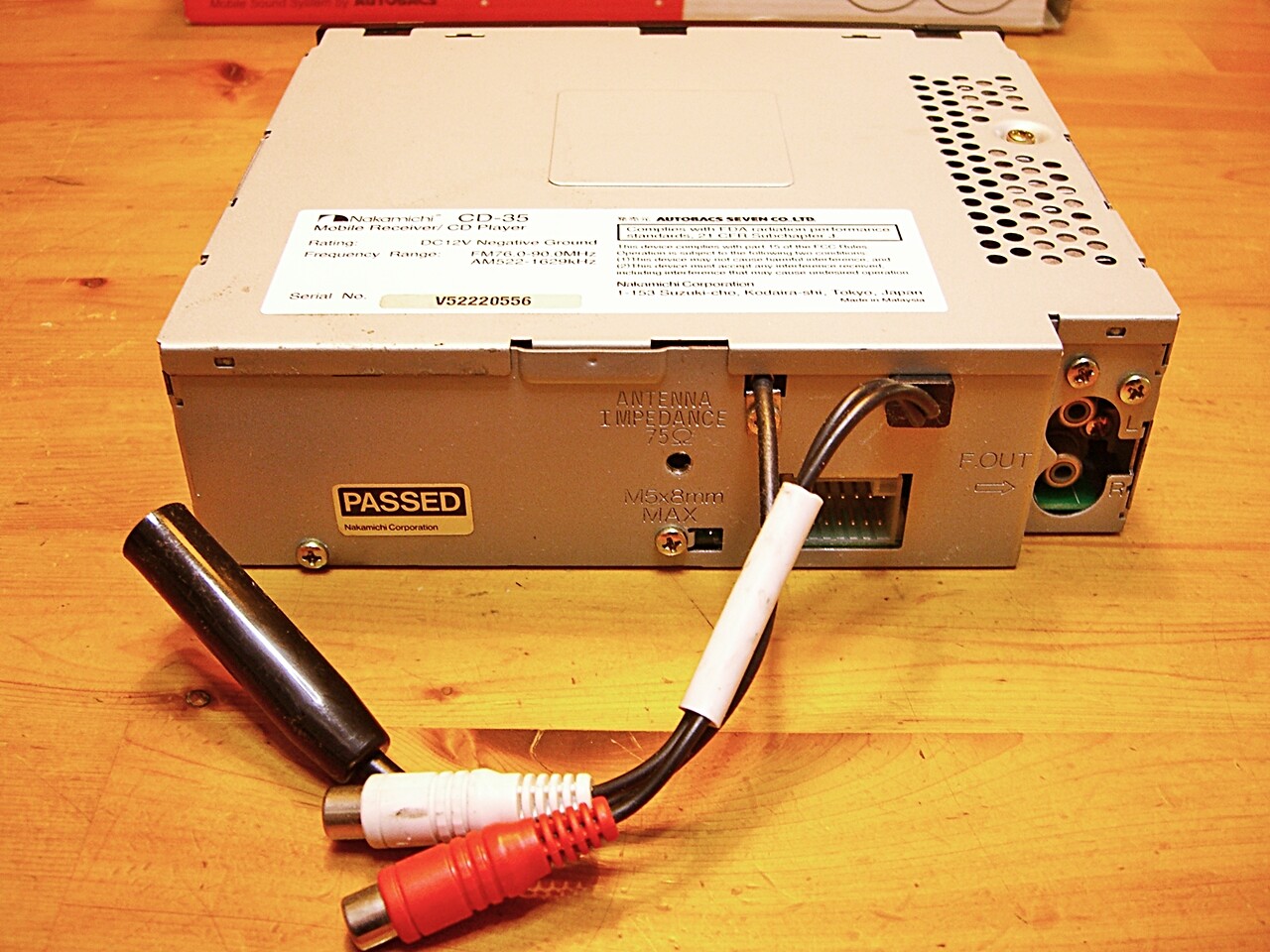
The 1-DIN CD receiver I have used for many years, the Nakamichi CD-35, was purchased at the time for the rather remarkable price of ¥29,800. There is a small trick behind this: at the time, it was one of the models sold exclusively at Autobacs as part of Nakamichi’s budget lineup. There was criticism that Autobacs had picked up Nakamichi’s budget products cheaply after the company ran into trouble, but since it appears that sales of Autobacs-original products had actually been going on continuously since 1994, I suspect that version of events is not quite accurate. As I recall, at the time Autobacs stores in the greater Tokyo area had dedicated Nakamichi display fixtures, and until a few years ago James stores — while not stocking Autobacs-exclusive models — also had their own original Nakamichi dedicated fixtures.
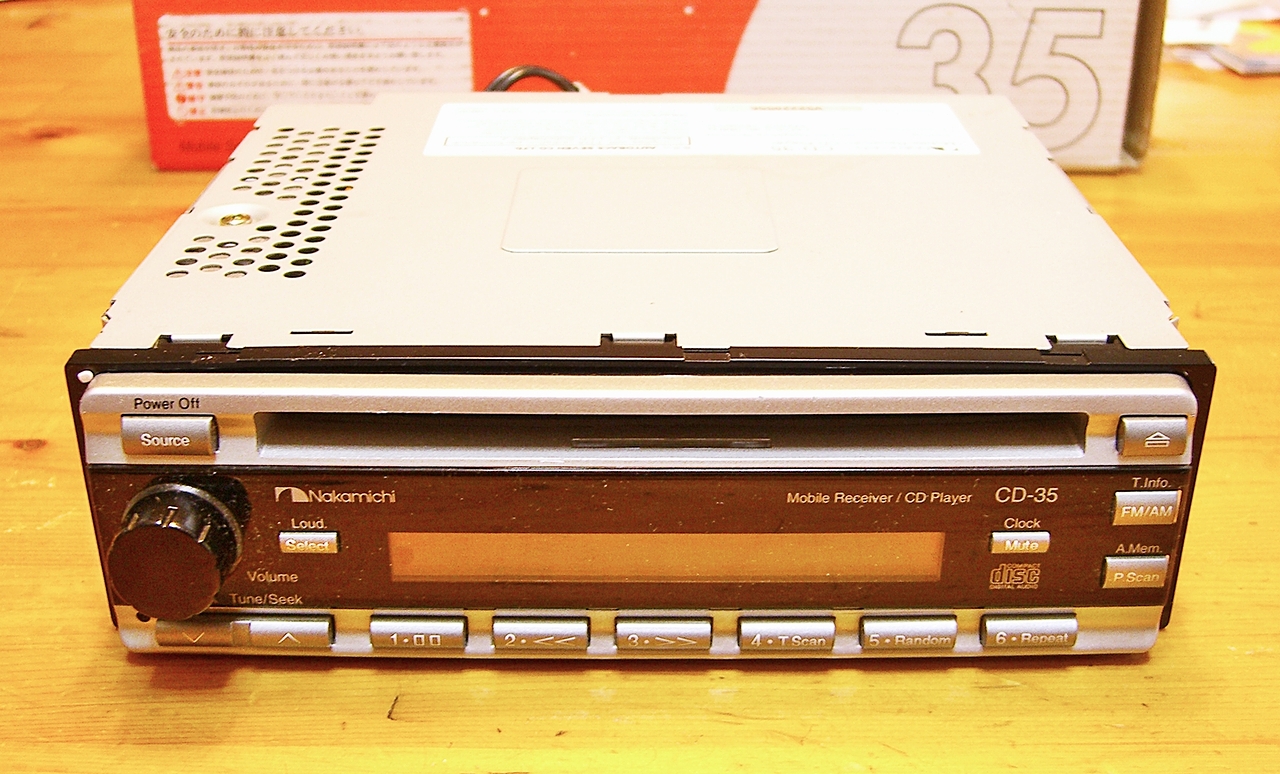
I had assumed the CD-35 was a successor to the older CD-350, but looking into it, the internals turned out to be somewhat different. The CD-35 as an Autobacs-exclusive model (along with others such as the MD player MD-20 and the 2-DIN MD-85) occupied the lowest-priced position in Nakamichi’s head unit lineup. Whereas the standard Nakamichi models came only in black, these models had a black and silver two-tone finish, which makes them easy to tell apart. In addition, the Autobacs-exclusive models did not come with a remote control.
That said, the internals of the CD-35 are almost identical in spec to the genuine Nakamichi CD-40Z, so it is possible that a remote control from that model might work with it as well…
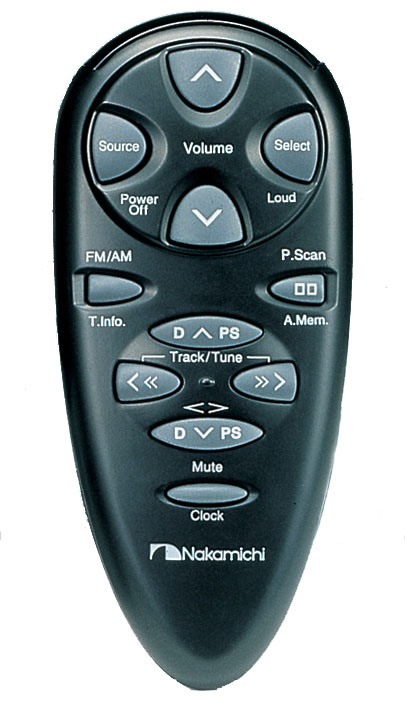
Differences Between Standard Nakamichi Head Units and Autobacs-Exclusive Models
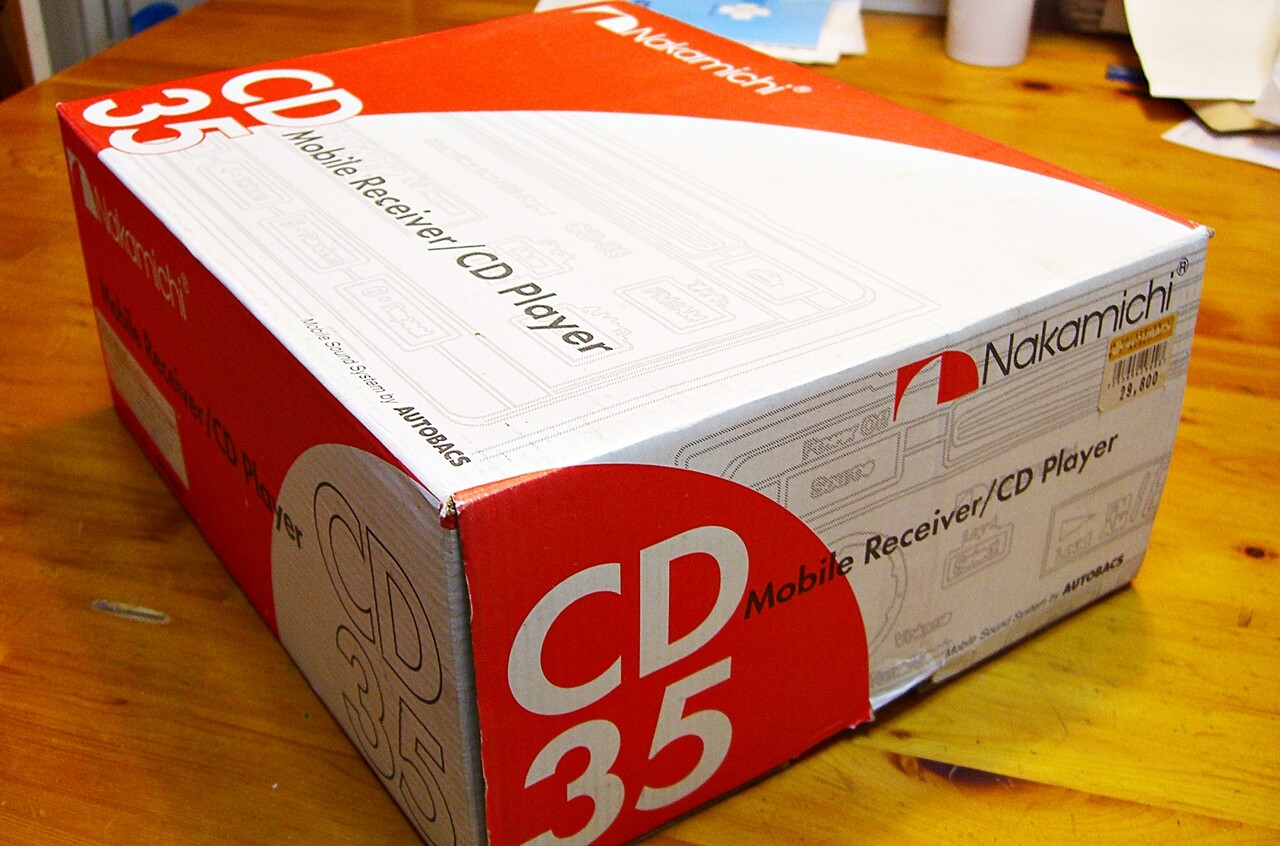
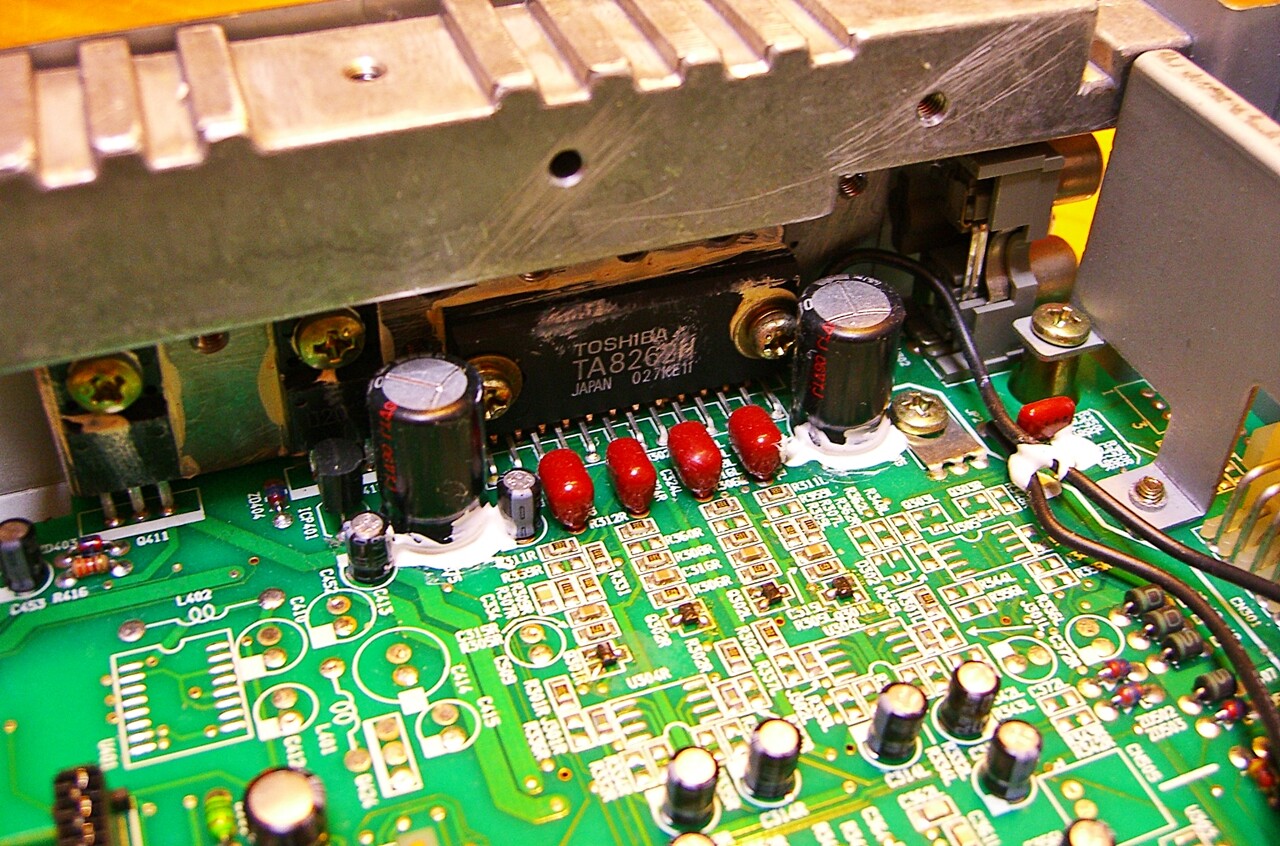
Even among the higher-end standard Nakamichi models, those sharing the same or a colour-variant face panel button layout as the CD-35 can reasonably be assumed to share the same manufacturer and basic design. However, as you move up the range, differences appear — the DAC chip on the board may be a different make, and the transistor amplifier output steps up from 43W to 47W. The CD-35 is manufactured in Malaysia. The 2-DIN MD-85 in the same lineup (the Autobacs budget version of the MD-95Z) was made in Japan and featured the MB MusicBank 6-disc CD changer.
The button layout and volume controls on the front panel are shared between the Autobacs-limited models and the rest of the range. The chassis and the terminal positions on the rear are also the same. Comparing internal images of the drive mechanisms and circuit boards found online, the CD-35 series and CD-40 series appear to be essentially identical. The CD-45 series also shares its mechanism and chassis with the CD-35. I was unable to find board images for the CD-45Z and other 45-series models, but since they are multibit, they may share the same board as the 400-series. The CD-400/500 series shares its chassis with the CD-35 but has a different drive mechanism and board. The MB-series CD changer units with the 6-disc MusicBank, and the top-of-the-line CD-700 series, are Japanese-made and are entirely different animals inside and out.
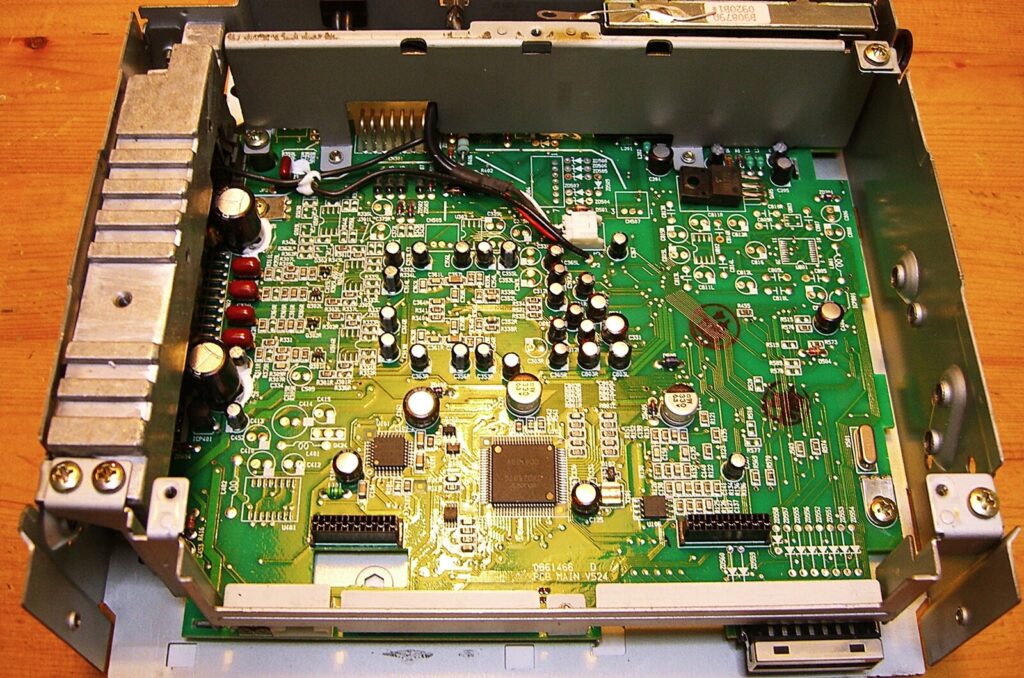
One significant difference in the circuitry is that mid-range models such as the CD-30Z, MD-30Z, CD-45, CD-45Z, MD-45Z, CD-400, MD-95Z, and CD-500 use the Burr-Brown PCM1704 multibit DAC chip — or possibly the PCM1702 — for D/A conversion. The lower-end models, however, including the CD-35, MD-20, CD-40, and CD-40Z, use a 1-bit DAC. In the CD-35, this is Sony’s CXD2587Q. In other words, the single-bit models and the 24-bit (20-bit) models have different board designs. My feeling is that the difference between the Burr-Brown and Sony chips likely has a considerable effect on fine detail and the rendering of individual voices within the music.
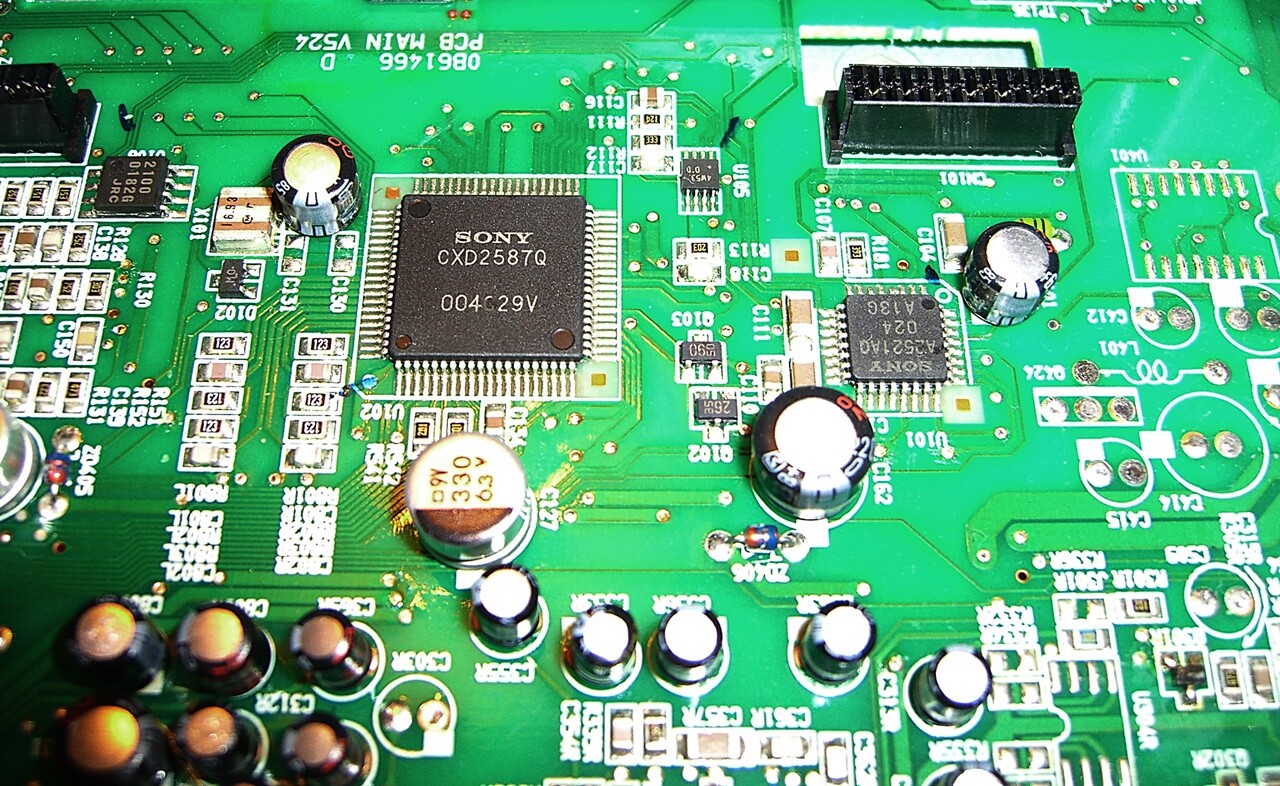
Nakamichi CD-35 Receiver — Sound Quality Review
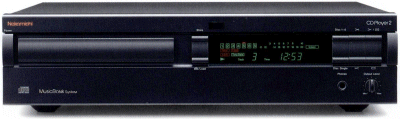
Now for the all-important question of the CD-35’s sound quality. Cost-reduced entry-level model though it may be, comparing it with the Nakamichi CD Player 2 home audio CD player I owned in the past, the sound quality feels fully within the range of what I would call the Nakamichi sound. It is a clean, colourless sound character that adds nothing superfluous and draws out the natural voice of the analogue amplifier. Serious, refined, and delicate. Gently cool — like distilled water. Bass is moderate. The treble is delicate, and can at times feel a touch edgy. Punch and drive are not its strong suits. It is the very opposite of pressurised, thick sound, so those who like a lot of bass may find it lacking.
The sound is wet and richly resonant, though this is entirely within the range of a straight, unprocessed signal with no DSP involved — so the high-speed sound of modern heavily DSP-corrected head units, or the wide soundstage produced by frequency correction, is simply not on offer here. The only adjustable parameters are L/R balance and a three-band (High/Mid/Low) tone control. There is no sense of it actively shaping the sound to impress; the sound quality feels more like the philosophy of pure Hi-Fi than car audio. If your ears have grown accustomed to a thick DSP sound, this may feel almost too clean, and leave you a little underwhelmed…
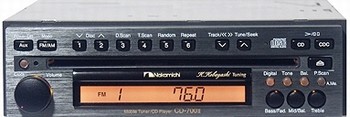
It suits acoustic sources — classical, Western pop, jazz — and tends to struggle somewhat with electronic or programmed music. Its musical character is subdued and even-tempered. In terms of information retrieval, it may fall one step behind higher-end models using multibit DACs, such as the CD-40, CD-40Z, CD-45, CD-45Z, and CD-400. On the subject of that almost nervously delicate treble — the high-end CD-700II I heard some time ago had a top end that was sharper and more sensitive still — perhaps three times as much as the CD-35.
The FM/AM tuner sound quality is not particularly impressive. Sensitivity is low, and in urban driving the signal is riddled with noise; on top of that, the bass is thin and the overall sound feels slightly shrill. When I was running it with the Nakamichi speakers described later in my previous car, this tonal character matched in a curiously clear way and sounded quite good — but in the different acoustic environment of the Citroën C4, the tuner in the standard Blaupunkt head unit has more density in the midrange and is considerably easier to listen to.
DIY Disassembly, Repair, and Maintenance of the Nakamichi Head Unit
In fact, less than a year after I bought it, a problem developed with the CD eject mechanism. Where the disc should come out roughly halfway, it would only emerge about 1cm at the tip — apparently a fairly common issue with Nakamichi head units. It caused no practical problem, so I left it alone for years, but when I took the unit apart to photograph it for the blog, I gave the upper and lower rubber pinch rollers a careful clean with a cotton swab soaked in Threebond electronic equipment cleaner PANDO 29D and surgical-grade ethanol, and that was all it took — the problem cleared up immediately.
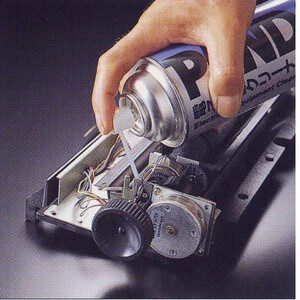
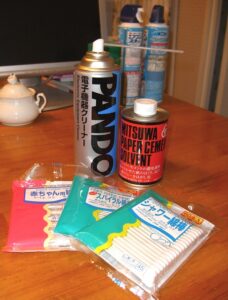
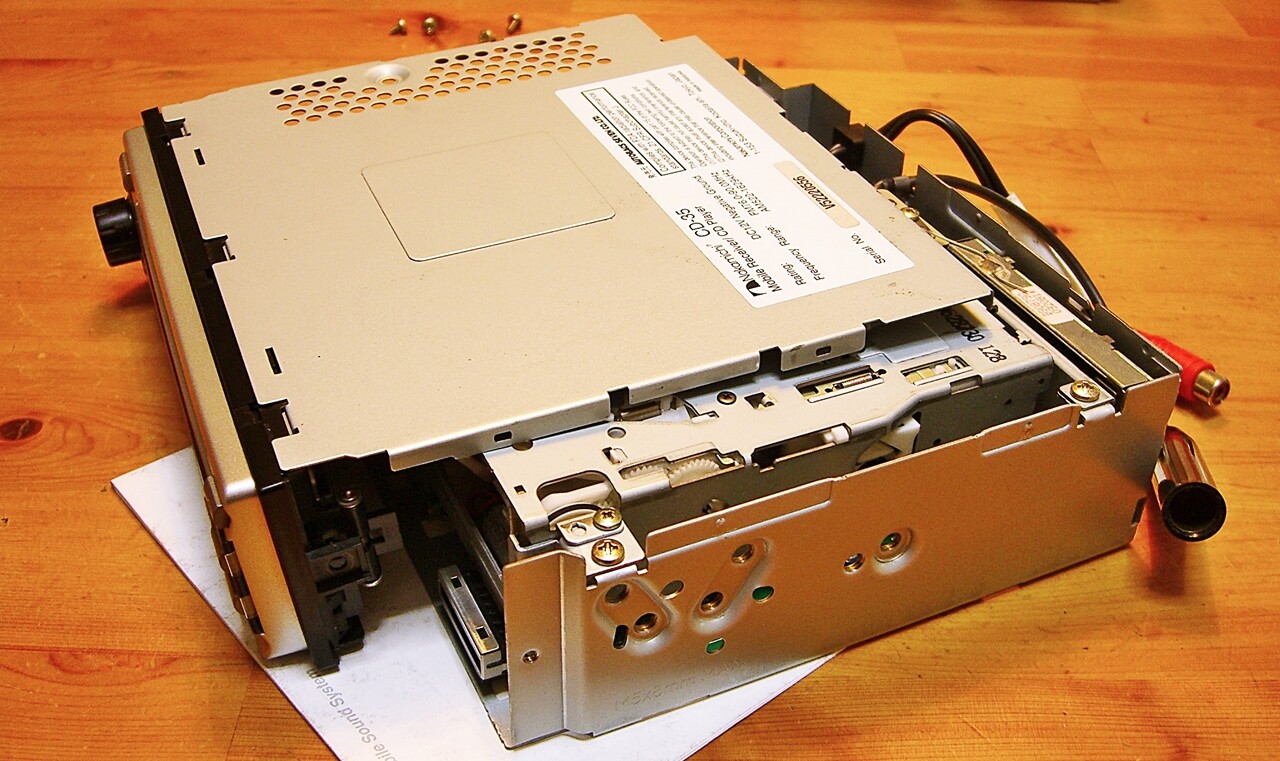
A faulty CD eject is not really a serious enough fault to send in for repair, so anyone experiencing the same issue might want to try a disassembly and clean first. Once you get into it, the whole thing can be done with a single screwdriver. While I was at it, I also cleaned the pickup lens with ethanol (or IPA). This improved the reading performance, and the disc skipping I used to get over bumps in my previous car has completely disappeared. Though one could also argue that is simply down to the Citroën C4‘s famously supple suspension…
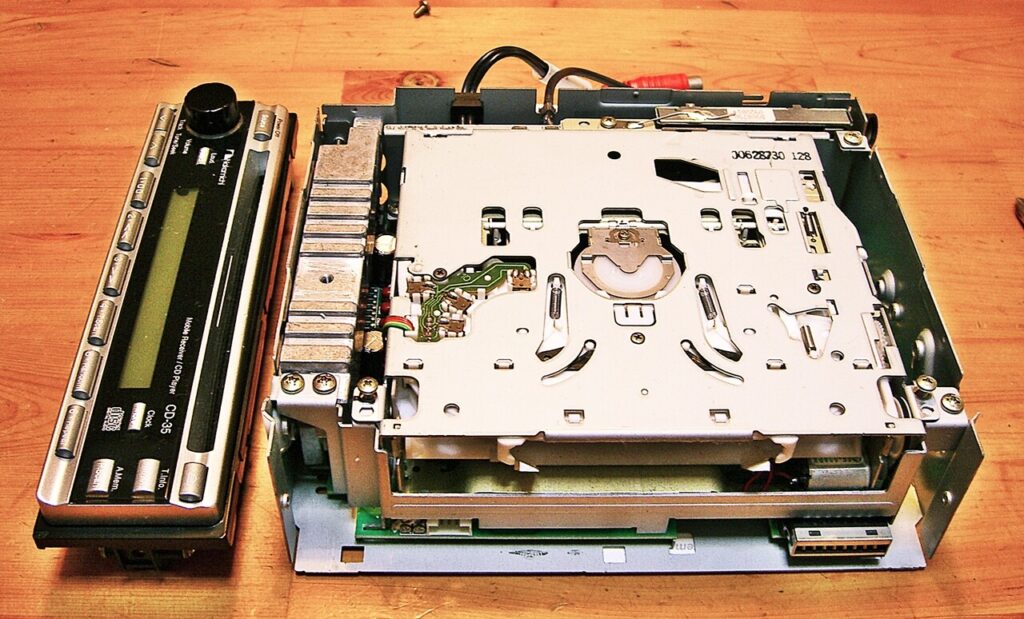
After years of use the clear plastic on the front panel was covered in scratches, so while I had the thing apart I got a bit carried away and tried polishing it with Polywatch — but despite not applying much force at all, a black stain appeared at the edge of the LCD… Fortunately it seeped into a position that barely affects the display. Hmm… it seems even fairly gentle pressure can crush the LCD inside, which makes panel polishing rather a risky business. When fitting or removing the unit, it is best to avoid touching anywhere near the LCD area. There is a real danger of it being damaged just from the pressure of a normal grip.


 ポチップ
ポチップ
~ Summary ~ … There Is a Compatibility Issue with CD-Rs
One more thing: Nakamichi head units apparently keep servo current to a minimum in the interest of sound quality, and as a result they occasionally skip when playing CD-Rs. This is by design, not a fault. It seems to depend on the quality of the burn and the reflectivity of the disc media, but that is something of a charming quirk of the 1990s vintage design… A periodic lens clean helps to some extent, and I myself don’t worry about it — I use home-burnt CD-Rs made on my MARANTZ CDR630 quite freely. I do not want to leave CDs sitting in a hot car in summer, after all. Also, it should be noted that MP3 CD-Rs are not supported, as one would expect given the era — it was not until the very last model, the CD-500, that Nakamichi finally released a receiver capable of playing MP3/WMA files.
So there we have it — perhaps a little late to the party, but this time I have opened up a Nakamichi CD head unit from that legendary car audio brand for all to see inside. Incidentally, used and junk examples of Nakamichi car stereos still turn up regularly on Yahoo! Auctions, and occasionally even new-old-stock examples appear. If you are after the same CD-35 I use, or perhaps something even better from the range, it is well worth having a look.
 Continued: The Dark Rumours Surrounding Autobacs-Exclusive Nakamichi…
【Nakamichi Car Audio — Known to Those Who Know】
C4|Old Stories|Head Unit Disassembly|Dark Rumours|Speakers

Auto Translated by CS4.6

List of comments (4)
突然のコメント申し訳ありません。MD45Zなのですが、音がバリバリこもり小さくなったり、なおったりするようになりました。ピックアップは清掃、LINE入力の音源もそうなので、基盤のどこかのハンダの接触不良あるいはLINE出力の接触不良などを疑っているのですが、もし考えられることがあれば教えていただくことはできないでしょうか?
健太様こんにちは。遅レス失礼します。
古いものですので既にあらゆる部分で故障が出ても致し方ない機種ではないかと思います。片側でしたらスピーカーかラインケーブルの配線接触不良。配線が問題無ければ内部のアンプ故障、両側でしたらそれ以外の中身やメカを疑います。本体故障が確定している場合は、修理するよりも中古品やジャンクを安くヤフオク!で入手して、ニコイチにしたりする方が安上がりではないかと思います。
・・・余りお役に立てそうになくて申し訳ございません。
管理人さま
コメントありがとうございました。
あれから外部アンプの電圧不安定とわかり、内部を清掃して接触部分をクリーニングの上再度配線したところ、現在のところ症状はおさまりました。古いものですので使えるだけ使ってまた考えようと思います。ありがとうございました。
令和に入ってから今更ですがコメントします
電源入らないナカミチ有るんだけど要る?と言われCD45Zが手に入り修理をしております。
SBDが熱割れしておりパターンも焦げ剥がれておりました。
SBDと最低限のコンデンサーを交換し祈る気持ちで電源を入れると無事起動ました。
ですがCDは入って行くのですが中で回転が出来ず排出されてきます。
英語のマニュアルを確認しながら格闘中であります。
話がそれてしまいましたが
本文中に書いてあるんですが CD35Z 40Z 45ZもCXD2587Qです。
35と45Z基盤も見た感じ同じ物じゃないかな?と思われます。
長文失礼しました