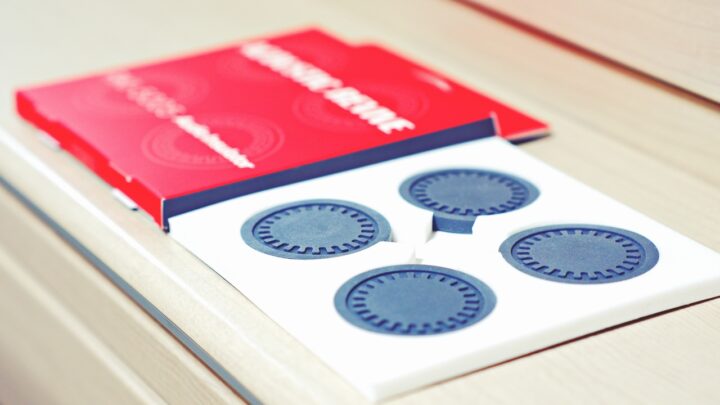
【audio-technica Hi-Fi Insulators】
AT6099|AT6098|Discontinued
Swept along by the current state of world affairs, the Hi-Fi industry has been hit by a relentless wave of price increases since the start of this year. There are simply too many brands and products raising their prices to cover in blog posts — and now, at last, the thing I had been dreading has happened…
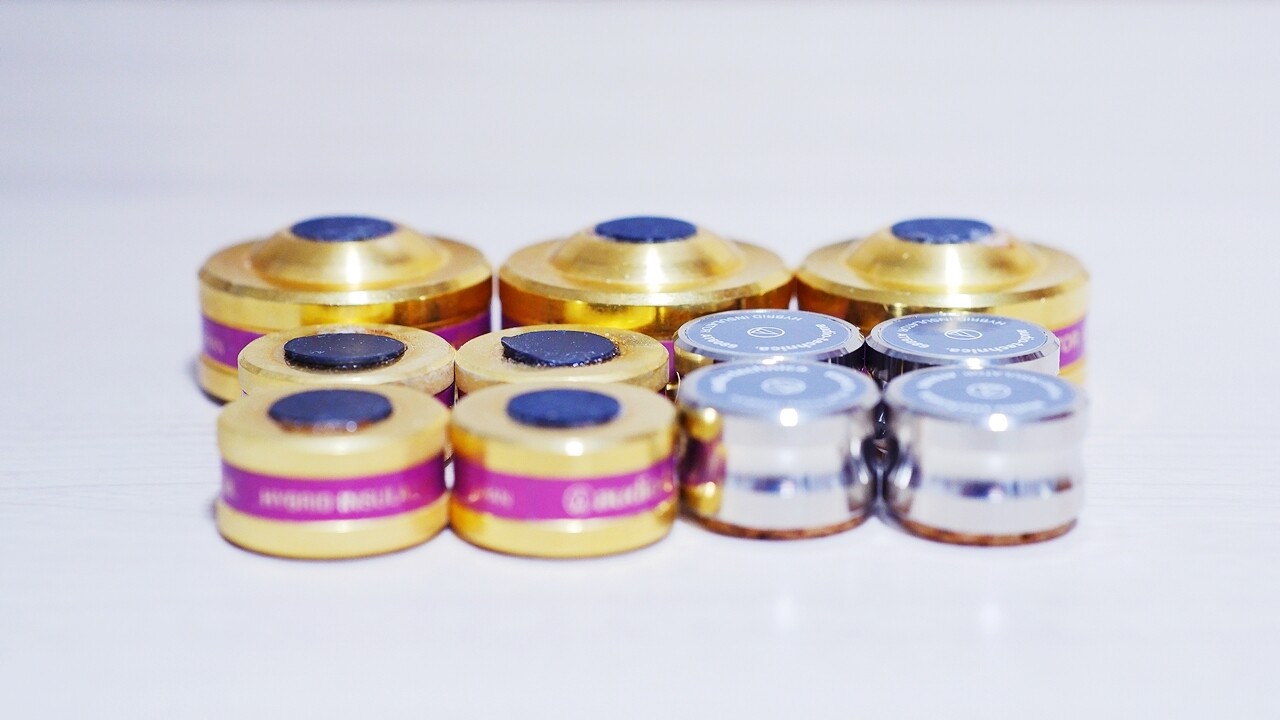
The entire range of audio-technica insulators — affordable yet highly effective products that have enjoyed enormous support among Hi-Fi enthusiasts over many years — have all been discontinued this summer. What makes this particularly shocking is not that the prices went up, but that we have been confronted, all at once, with the reality that every single one of them has been “discontinued”.
Discontinued Products: AT6099 | AT6098 | AT6089CK | AT6294
In Japan, audio-technica is the first name that comes to mind when you think of Hi-Fi insulators. Priced at a very reasonable ¥2,000–3,000 or so per set, these were products you could find not only at specialist Hi-Fi shops but on the shelves of consumer electronics chains all across Japan — occasionally even in the electronics corners of supermarkets. They were the most readily available insulators around, and had enjoyed a remarkably long run. It is my guess that their cumulative sales figures outstrip those of rival manufacturers’ insulators not by a few times, but by several hundred times or more. They had found their way into the hands of a wide range of people, from seasoned enthusiasts who had been devoted to the hobby for years, to those who had only just dipped a toe in — and any Hi-Fi enthusiast who had never once used an audio-technica insulator could fairly be called an impostor. That is how much of a standard product these were.
The insulators that have now been discontinued are as follows.
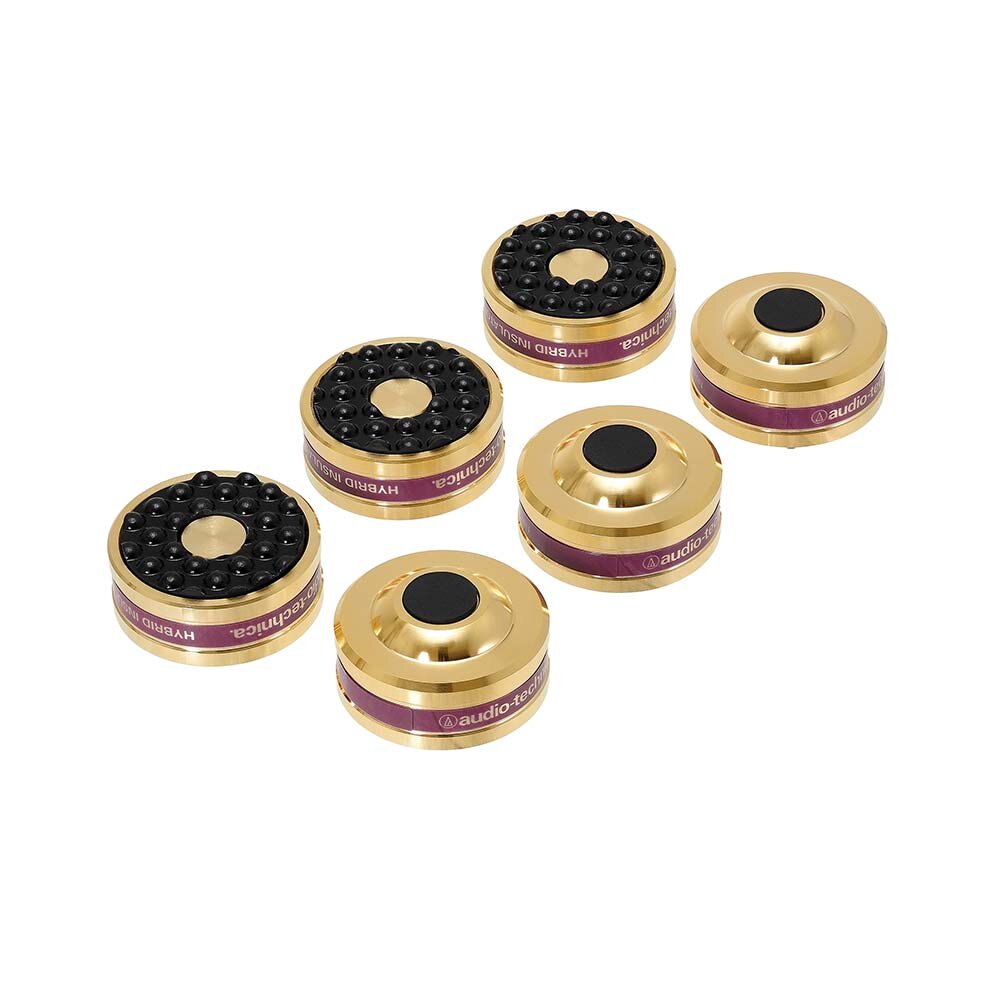
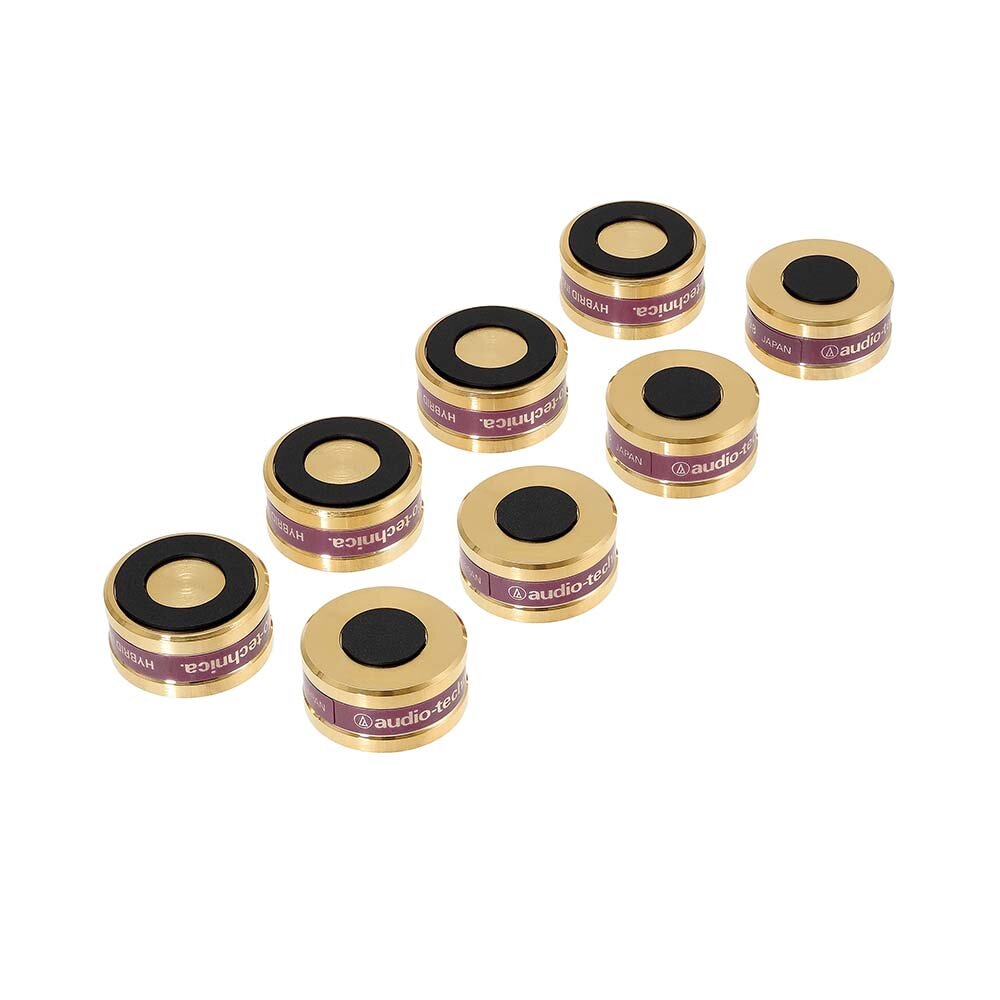
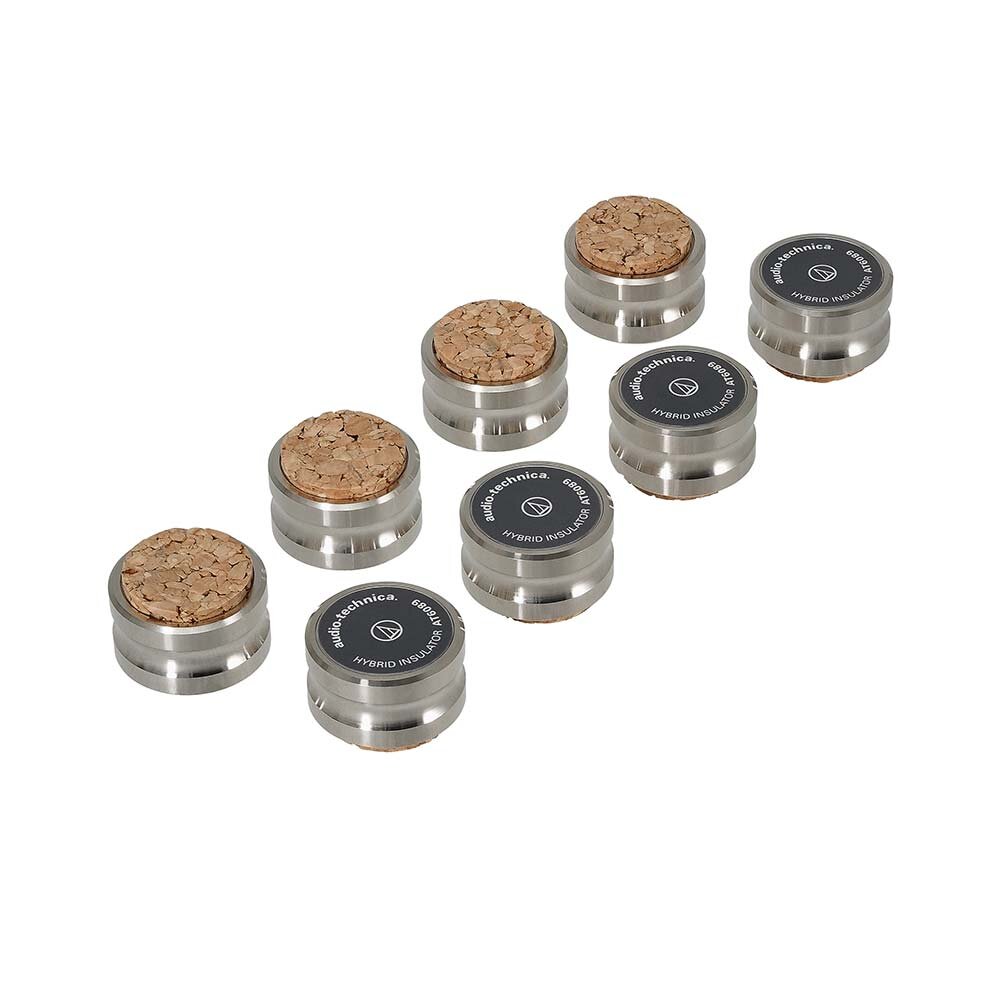
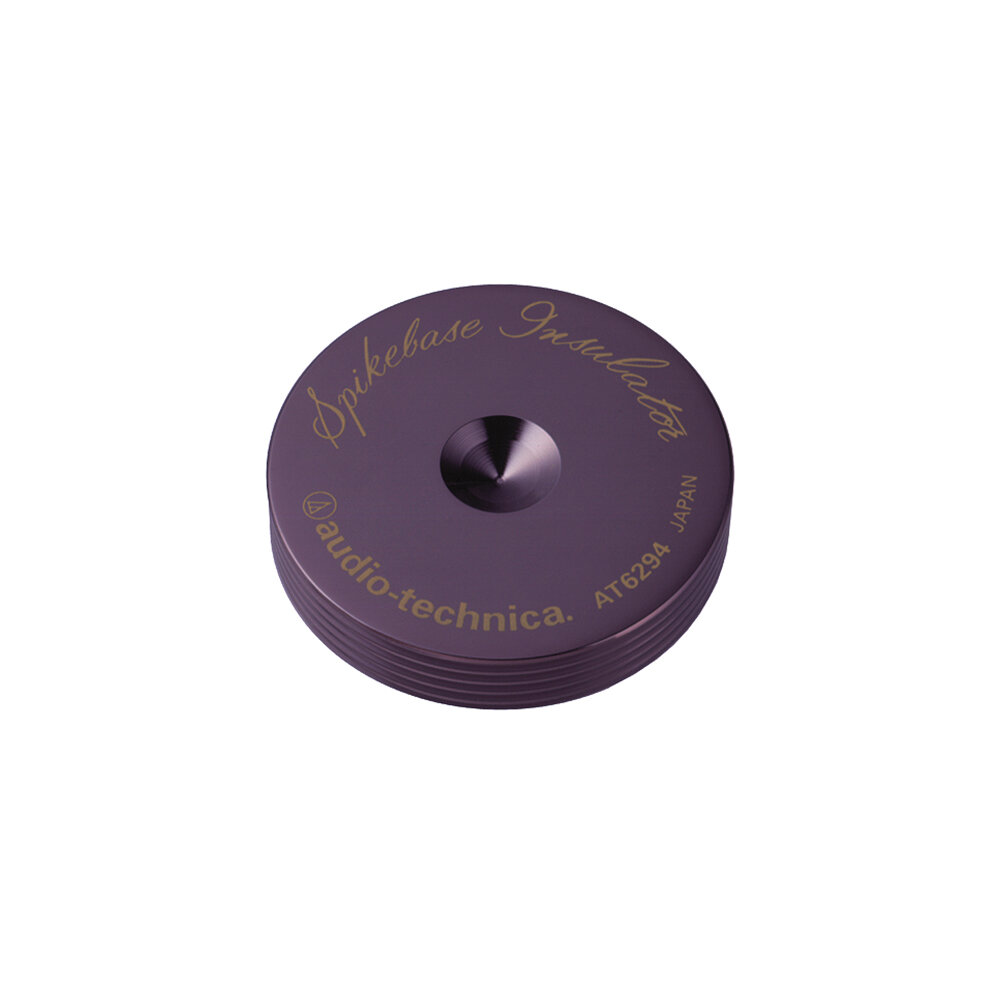
※ AT6089FT, AT6087, and AT6091 were already discontinued earlier, around 2018.
The Mission audio-technica Had Long Taken Upon Itself
The insulators now discontinued were remarkable products. Their machining precision, surface finishing, plating, and hybrid construction — combining hard materials with soft ones such as Sorbothane, Hanenite, and cork — gave them a build quality that exceeded what their price would suggest, along with a clear and appealing sonic character that was evidently the result of thorough listening tests. They held their own against high-end insulators costing several times the price in terms of the degree of sonic change they delivered. Part of this was no doubt due to economies of scale that smaller accessory makers cannot match. Supported for many years by entry-level to mid-range Hi-Fi enthusiasts, I myself own most of the models in the range and am still using them actively today. In a sense these products also served as a kind of litmus test for the Hi-Fi enthusiast — those who judge products by price rather than quality tended to look down on audio-technica products and avoid them, which rather said something about those people.
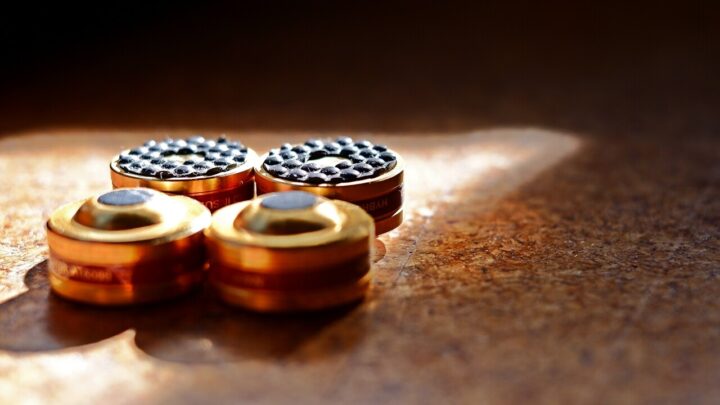
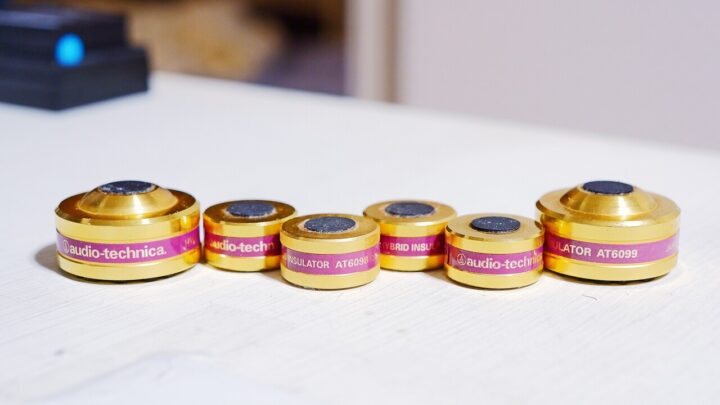
Whether Hi-Fi accessories such as insulators actually make any real difference is a question that has been endlessly debated — and never quite resolved — in and around the Hi-Fi world. But the fact that audio-technica’s insulators, with their clearly defined sonic character, were available everywhere and priced within reach of anyone, made them the ideal first step for those still on the fence: a way to discover what Hi-Fi accessories can do for a small outlay, and a gateway into deeper involvement with the hobby. Equally, for those who could not hear any difference, the modest price meant that the experiment need not cost much. It is precisely because the pricing was so conscientious — allowing anyone to try and, if need be, walk away without much loss — that these insulators were embraced for so long as a standard product by enthusiasts of all levels, from complete beginners to seasoned veterans. Or so I think.
Could a Price Increase Not Have Sufficed?
In fact, audio-technica’s insulators had already been through several rounds of price increases over the years. Compared to the early 2000s, the street price of the AT6099 in particular had risen considerably — from the mid-¥2,000s per set to around ¥4,000 more recently. Even so, they remained relatively affordable compared to insulators from other manufacturers. The AT6089CK, which is personally my favourite of the range in terms of sound, was still going for around ¥2,000 for a pack of eight until quite recently — very good value indeed — and when word came a while back that it was being discontinued, I went out and bought some extra stock.
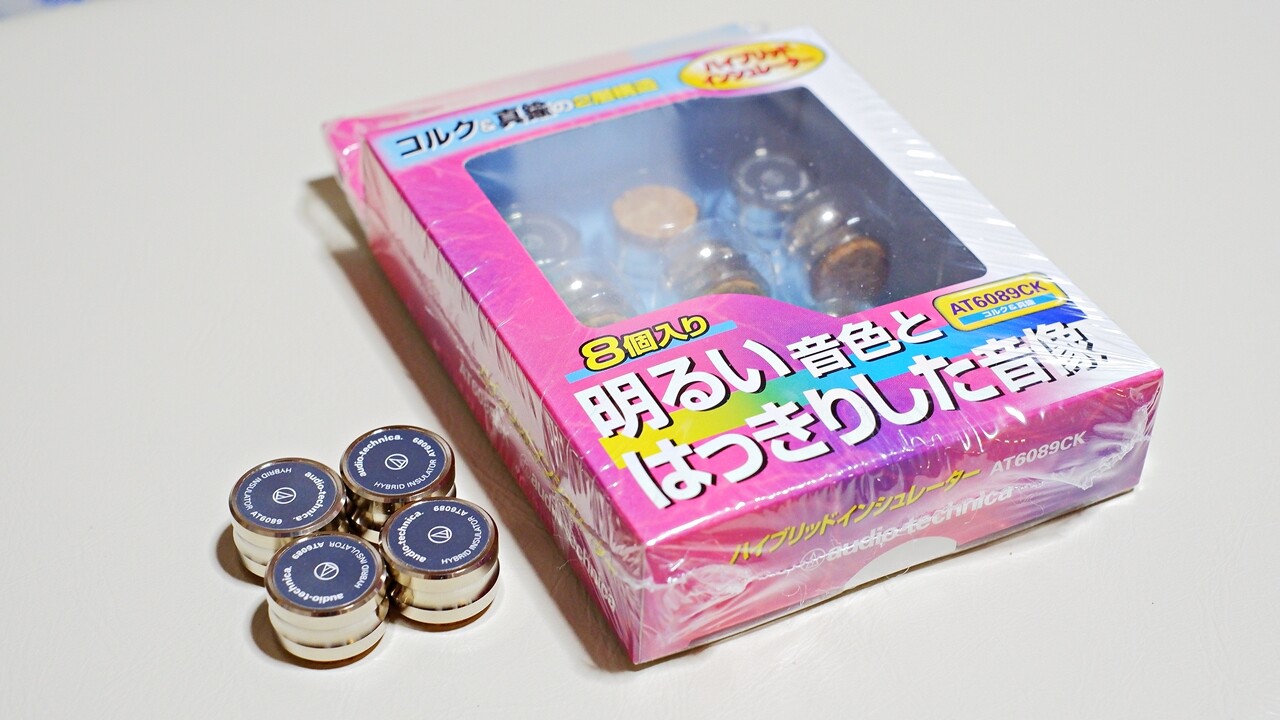
Rising metal prices compounded by a weak yen may well mean that manufacturing costs can no longer be covered at current prices and sales volumes — but honestly, my genuine feeling as the author of this little corner of the internet called AUDIO STYLE is that I would have preferred them to carry on selling these products even if it meant another price increase. audio-technica’s insulators have long been a domestic staple in Japan, yet they are not particularly well known overseas, and you rarely see them sold abroad. It is deeply frustrating to think that expanding into international markets might have allowed them to continue manufacturing and selling these products as before.


 ポチップ
ポチップ
audio-technica Steers Towards the High End
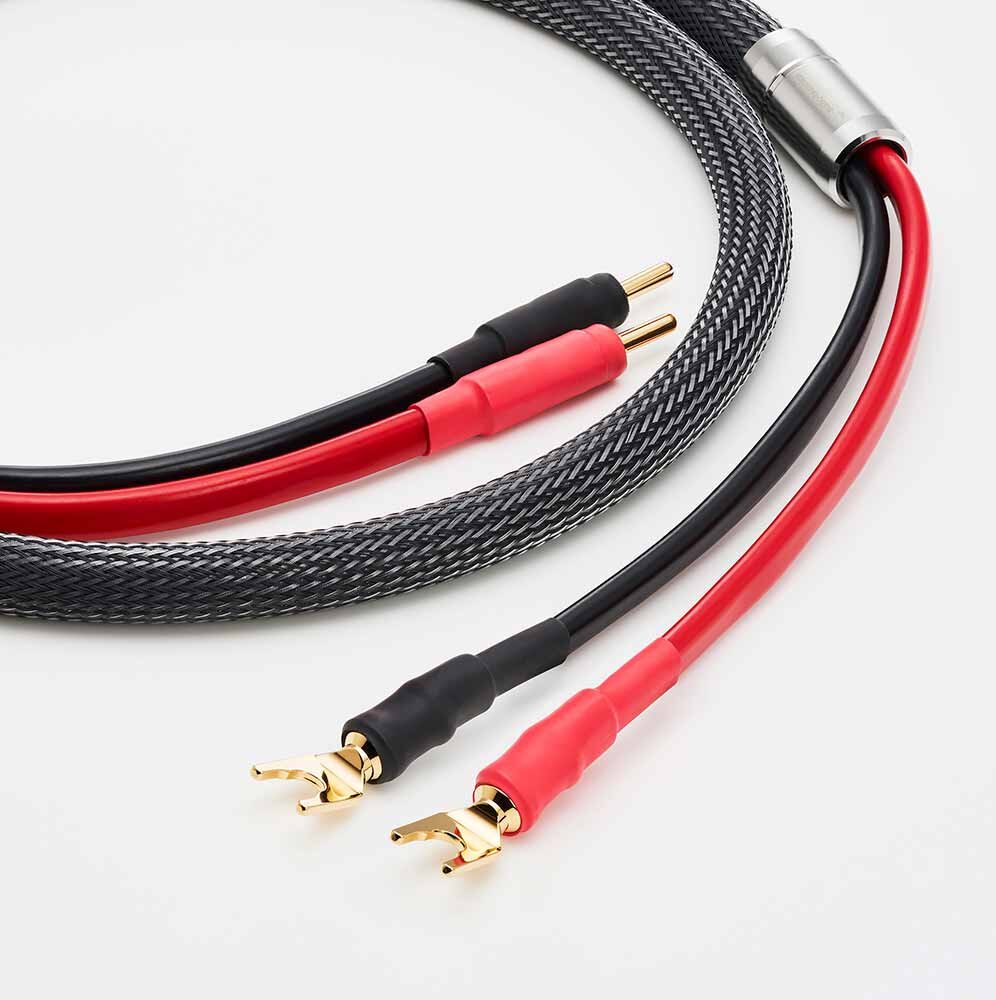
audio-technica had long made a considerable contribution to the Hi-Fi world by deliberately keeping prices low — spreading awareness of what accessories can do and broadening the base of the enthusiast community. Yet in recent years the company has abruptly leapfrogged the mid-range entirely, launching a new series called “FLAUT” that includes speaker cables and signal cables priced at over ¥100,000 — a quite astonishing figure — with models such as the AT-SC700, AT-SC1000, AT-IC1000, AT-IC700, and AT-AC700 making it plain that the company has clearly set its course towards the high end.
 ポチップ
ポチップ
Frankly, once prices climb this high, someone like me — who openly declares a preference for budget Hi-Fi — loses interest the moment I see the price tag. When a Japanese audio manufacturer that has never been associated with the high end starts releasing so-called high-value-added products that command enormously high prices even if the raw material costs are not especially great — well, I find myself with rather mixed feelings. Is this a positive response to changing times? A distortion produced by an increasingly unequal society? Has the pride that comes from building a reputation through offering genuine value simply disappeared? And looking ahead, will audio-technica’s long-established brand image as a purveyor of affordable products actually be shed so easily by a sudden shift to high prices? Personally, I rather think they are setting off down a thorny road.
OTAI AUDIO‘s video gave me the impression that it’s very much in the audio-technica vein — high resolution and wide range, exactly as one might expect. 15:25~ Wireworld Mini Eclipse 8 | 18:20~ audio-technica AT-SC1000
New Insulators: AT6900BR / AT6901BR / AT6901ST / AT6902BR / AT6902ST
In place of the long-running old insulator range that has now been discontinued all at once, a new range of newly designed hybrid insulators, spikes, and spike bases has been released ahead of them. These, too, come at considerably higher prices.
 ポチップ
ポチップ
Looking at the new products, the hybrid insulator AT6900BR has a diameter of Φ25mm. That is 5mm smaller in diameter than the Φ30mm AT6099, though it is larger than the previous AT6098 and AT6089. Structurally it is essentially a scaled-up AT6098, so if you ask whether it can serve as a substitute for the AT6099, I think it is more accurate to regard it as a new insulator with its own distinct sonic character rather than a like-for-like replacement.
 ポチップ
ポチップ
The spike AT6901ST and spike base AT6902ST both have a diameter of φ25mm, and when stacked together the combined height is designed to be 17mm. The spike base thickness of 7.5mm is the same as the old AT6294, but the fact that it is a single material and has shrunk in size from the old φ39mm to the new φ25mm does make it feel somewhat poor value. That said, the addition from this generation onwards of a stainless steel option (suffix ST) alongside the existing brass (suffix BR) is a welcome expansion of choice.
 ポチップ
ポチップ
The real question, however, is how the new insulators sound — including in combination with the new spikes above and below. The character of an insulator is not something that can be reduced to a simple question of good or bad, or indeed of price; it is always a matter of whether a particular insulator suits a particular system and the particular equipment involved. Simply swapping old for new will not necessarily result in better sound, and that is something to bear particularly in mind. Also, for the small to ultra-small bookshelf speakers that the author favours, an insulator 18mm tall and Φ25mm across feels rather tall and conspicuous; the proportions of the old AT6089 (Φ18mm) and AT6098 (Φ20mm) were unobtrusive and neat-looking. And of course, larger does not automatically mean better-sounding either. Taking all of that into account, the honest truth is that rather than simply releasing new products, I would have preferred them to continue selling the entire old range alongside — even if that meant raising the prices.
How to Obtain the AT6099, AT6098, AT6089CK, and AT6294 Going Forward
Listings showing these as discontinued are already becoming conspicuous, but as of July 2022, searching around will confirm that some remaining stock can still be found at certain retailers. From autumn onwards it will probably mean hunting through Yahoo Auctions, Mercari, and second-hand Hi-Fi dealers — but given the sheer volume of units sold over the years, it is hard to imagine used examples drying up entirely for some time yet.
 【PR】Search for insulators at Soundhouse

Are There Any Insulator Brands That Can Replace audio-technica?
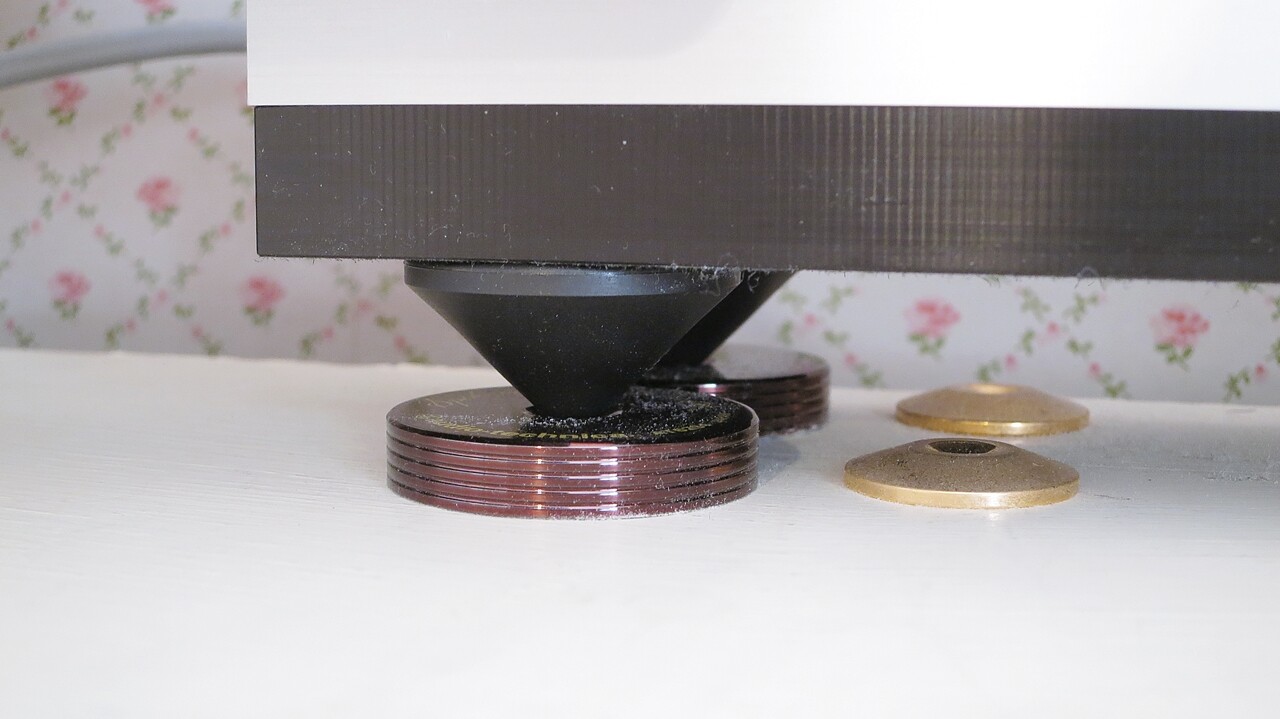
The value of audio-technica’s insulators lay above all in their low price — accessible even to beginners and budget-conscious enthusiasts — and in how easy they were to obtain. Now that the entire range has been discontinued, if you ask whether there are alternative brands to turn to, the ones that come to mind straight away are “AET“, “Oyaide“, and “J1 project“. These three Japanese brands all have insulators in their ranges priced at under ¥5,000 per set that are perfectly usable, and in particular I have tried most of the products from AET — which uses brass and aluminium as its base materials — and J1 project — which uses special resins — and I use various models from both brands in different places throughout my system.
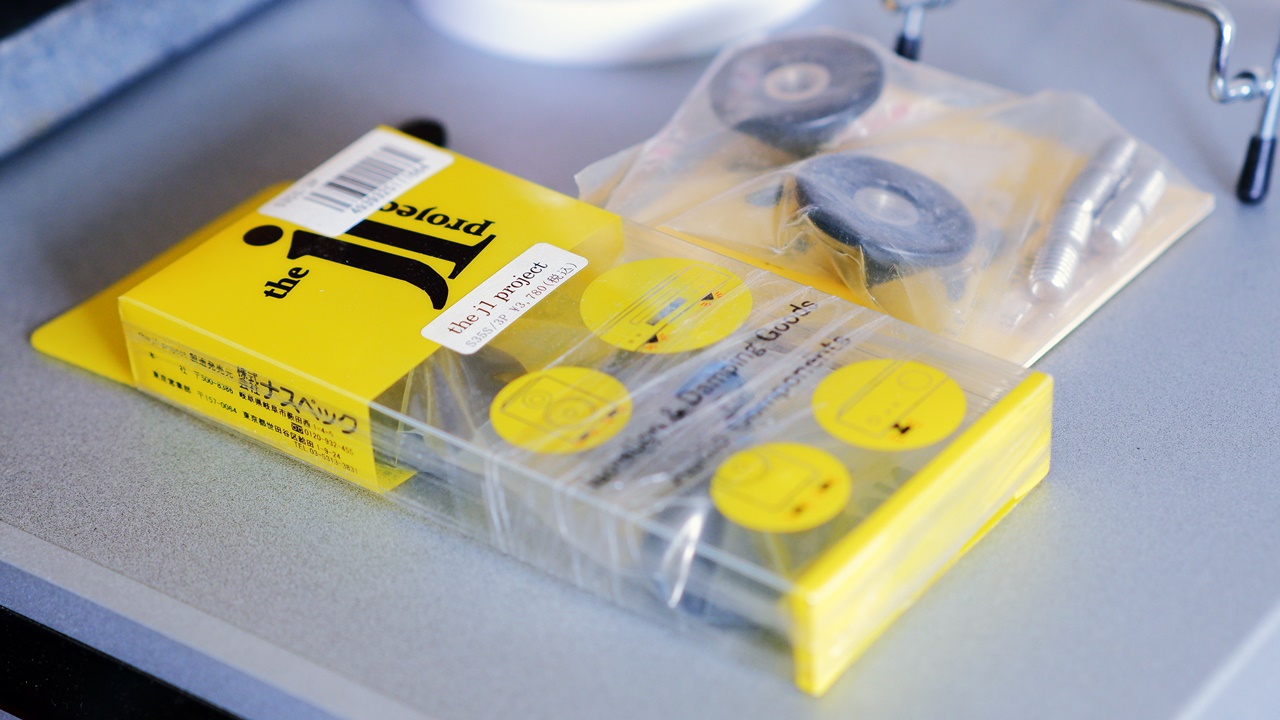
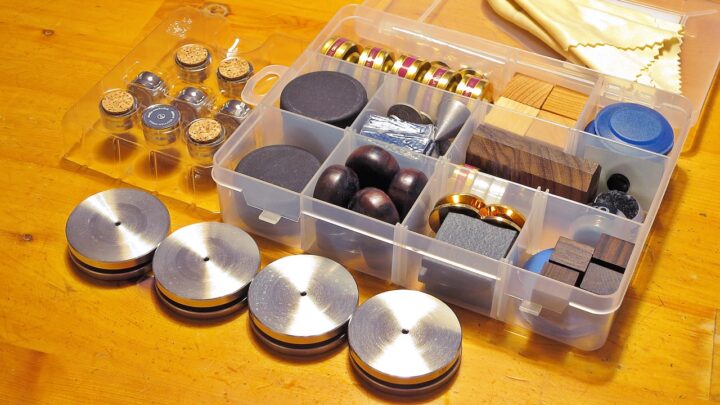
That said, in terms of versatility and the balance between effect and cost, the old audio-technica products were in a league of their own. By comparison, the insulators from AET, Oyaide, and J1 project are, sonically speaking, products aimed more squarely at the committed Hi-Fi enthusiast — products that are, in a sense, more demanding of the user. In terms of availability too, these brands tend to be limited to the specialist Hi-Fi sections of certain electronics retailers and dedicated Hi-Fi shops, which means they are nothing like as easy to get hold of as audio-technica products were. Taking all of this into account, the simultaneous discontinuation of audio-technica’s entire insulator range feels to me like it will further narrow the already rather unwelcoming entrance to the world of Hi-Fi — a significant loss both for enthusiasts and for the industry as a whole, and one I find genuinely worrying.
 Category: Other Hi-Fi AccessoriesCategory: audio-technica
【audio-technica Hi-Fi Insulators】
AT6099|AT6098|Discontinued


Auto Translated by CS4.6