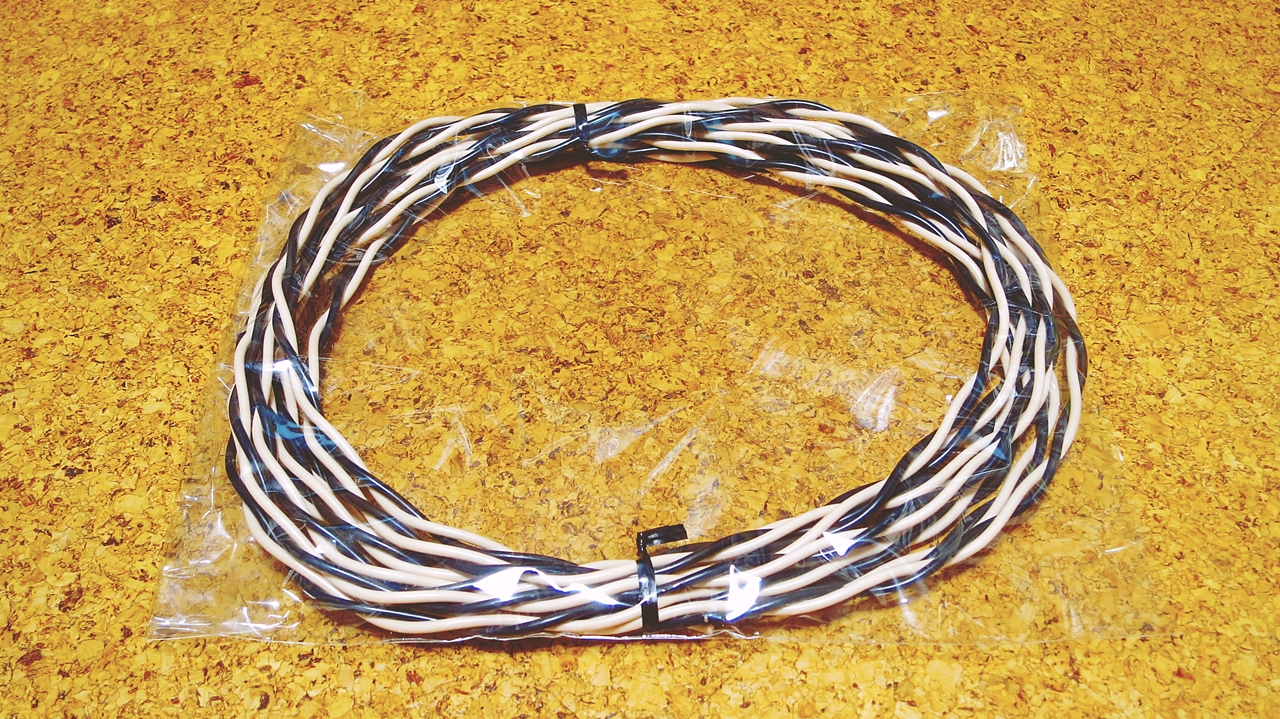
The BELDEN 8470 and Belden 8460 introduced here are black-and-white, American-made speaker cables that have, in recent years, become a staple of budget audio — partly thanks to the influence of a certain well-known shop in the low-end audio scene. They are fossil-like cables that have existed since time immemorial as rugged, professional-use speaker cables for broadcasting and recording studios in the United States, but how do they actually sound from the perspective of this AUDIO STYLE author, who pursues comfortable, music-centred listening in a compact home audio setup spanning the affordable to mid-range price bracket? I’d like to offer a review, late as it may be.
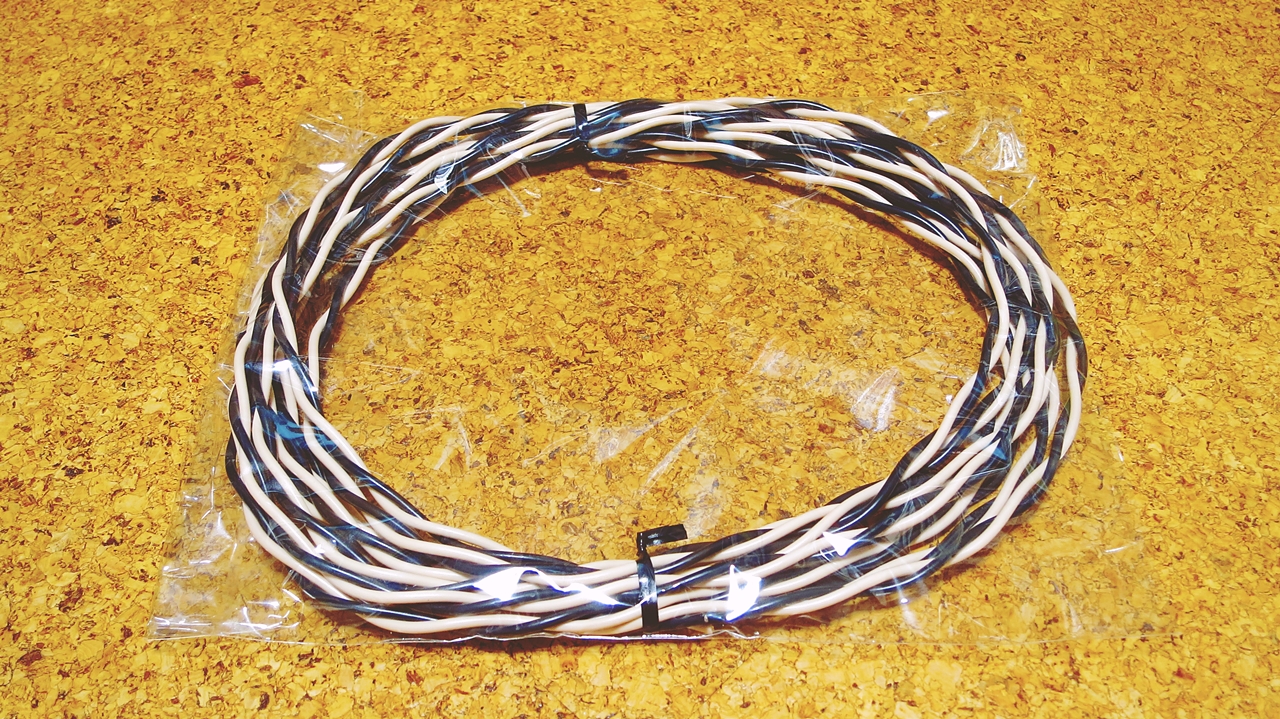
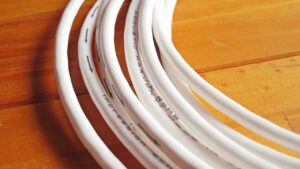
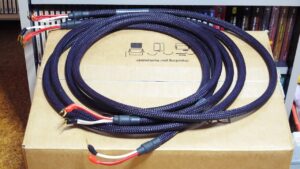
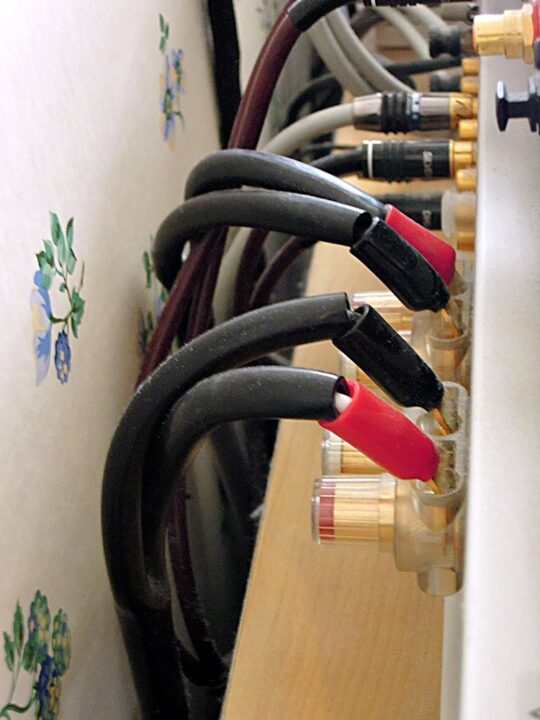
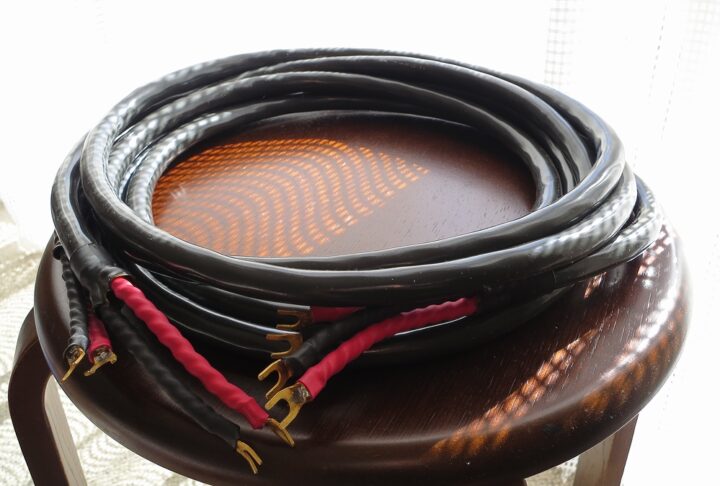
I prepared 2.5 metres per channel. The BELDEN 8470 spec is ETP high-conductivity tinned copper stranded wire, 5.33mm / 16AWG, 1.31SQ, with a PVC jacket in black and white. The BELDEN 8460, which uses the same material in the same black-and-white configuration, is thinner at 4.57mm / 18AWG, 0.82SQ. The general rule of thumb is that the 8470 is for those prioritising bass and the 8460 for treble, but both are quite slim as speaker cable conductors go — when compared relative to various audio speaker cables, the 8470 might reasonably be considered treble-leaning, and the 8460 even more so.


 ポチップ
ポチップ
Real or fake? About the BELDEN 8470 I purchased
According to rumours going around, the BELDEN 8470/8460 is known as a speaker cable plagued by a persistent real-or-fake debate, with considerable variation in finish between manufacturing lots despite its low price. That said, if you purchase from Soundhouse — arguably the most trustworthy retailer in the music industry for audio equipment mail order — the pricing is fair and they source from a major importer, so the chances of ending up with a counterfeit are effectively nil. Partly due to their competitive pricing, I tend to turn to Soundhouse whenever I’m unsure about professional audio equipment.
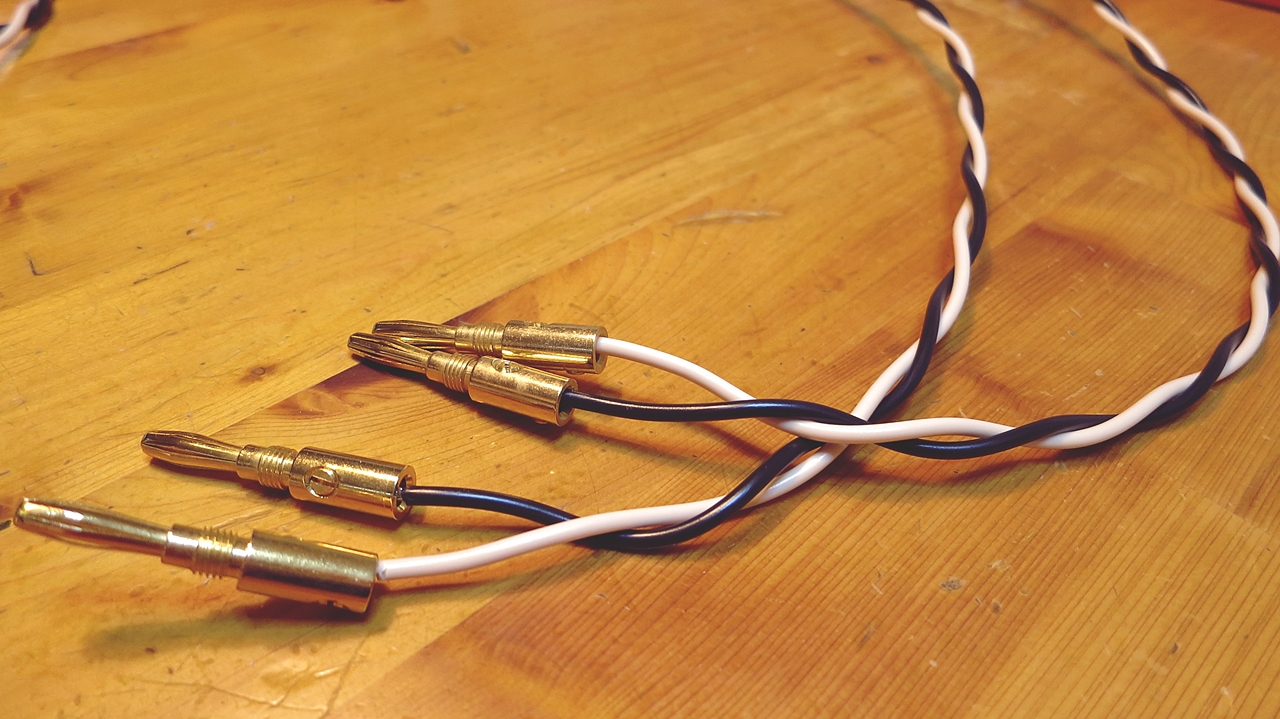
Incidentally, since the BELDEN 8470 has no directional markings or printing, I made sure to mark the cable before cutting it into two stereo lengths, so that the manufacturing direction would not end up reversed between channels. Stripping the insulation is extremely easy — with scissors or the blade of an electrician’s crimping tool (1.25sq). When you handle it, you notice the black and white (beige) jackets differ slightly in firmness, but as the conductors have a rather stiff, almost solid-wire quality, I deliberately chose to wire the slightly more yielding and softer white (beige) to the positive (red) terminals on both the speaker and amplifier sides. ※ This was based on experience — I was wary of the sound becoming overly rigid.
 ポチップ
ポチップ

BELDEN 8470 Sound Quality Review
There is a distinctive clarity and definition to the sound, and one’s attention is immediately caught by the crisp, hard-edged, open quality across the full range. There is little musical suppleness in the presentation; the midrange feels somewhat rough-hewn, with a grinding, gritty attack, and there is a sense of energy and a masculine, rock-oriented character to the sound. On the other hand, it struggles with softer expression, and with classical music or female vocals it comes across as quite stiff in terms of nuance.
The treble is sharp and incisive, on the harsh side but clear, and separation of overtones is good. There is a surprisingly high level of information and resolution, but the detail tends to be rough and somewhat ragged, so it never achieves a beautiful tonal quality, and at the level of fine detail the sound has a certain coarseness that smells of tough-pitch copper. For that reason, if tonal beauty is a priority, this would not be the best choice. Then again, it might actually suit mini systems with poor openness, or older bubble-era audio equipment whose characteristics have deteriorated over time.
The upper midrange of the piano comes across as shrill, and the emphasis feels somewhat skewed towards the mid-high frequencies. The bass is tight and direct, though the sheer quantity may feel a little wanting. The overall tonal character is hard and gutsy, and if there is anything it resembles, it is the sonic character of a granite audio board. In the early days after installation, distortion and hardness dominate and listening fatigue sets in fairly quickly, but in my experience, continuing to use the cable over several weeks should reduce the treble harshness and bring out at least a modest degree of softness and smoothness. … Though waiting that long is, honestly, rather trying.
~ Summary ~
In my case, having grown accustomed to speaker cables made from high-purity materials costing several times to several tens of times more, when I pick nits on a qualitative level, the sense of sluggishness and distortion in the detail — stemming from the lower purity of the tinned copper used for the conductors — is strong, and to be honest, it falls below my acceptable threshold for sound quality.
That said, this only becomes apparent once a system has reached a certain level of quality, and with entry-level or lower equipment, older speakers, or speakers bundled with mini systems, these drawbacks may not necessarily manifest to the same degree. On the whole, it might well be effective for waking up a murky, congested budget mini system, or a piece of junk bubble-era audio equipment whose characteristics have degraded over time into congestion and a narrow frequency range — clearing away the fog and improving openness. I would imagine it pairs surprisingly well with the junk and old Hi-Fi (deliberately not calling it vintage) that turns up at HARD OFF, or with speakers whose characteristics have deteriorated.
 ポチップ
ポチップ
However, when it comes to speaker cables designed for audio use by dedicated audio manufacturers, available at a few hundred yen per metre, I will say plainly: as far as I know, there is not a single one that is straightforwardly worse-sounding than the BELDEN 8470. Questions of component matching and personal preference aside, even with affordable audio equipment — provided there are no issues with the quality of the components themselves (including age-related deterioration) or with the setup, and sufficient transparency has been secured in a pure audio or audio-visual environment — choosing a speaker cable that a dedicated audio manufacturer has developed through repeated listening trials will bring you closer to the Hi-Fi sound that was originally intended, and more faithfully serve the intentions behind the recording.

Auto Translated by CS4.6

List of comments (1)
はじめまして。
最近こちらのブログを知り、楽しく拝見しています。
私もひとつの機器に20万以上かけないスタイルでブックシェルフばかり取っ替え引っ替えしているのですが、このベルデンのケーブルに関しては同感です。
システムはCDプレーヤーがケンウッドDPK1000N、アンプにatoll IN100、スピーカーがマイクロピュアのAP5001で、主に静かめのジャズやプログレを聴いています。
部屋のクセが強く低域を諦めた経緯があり、中域の張り出しとサワサワした高域、比較的元気で時に耳障りな音を出すような感じに仕上げています。
ドラムをやっていることもあり、あまりまとまった音は苦手で、ドンっとアクセントがついた時などに少し歪むところにスリルを感じたいタイプなので、オーディオ的にはあまりよろしくないとは思います。
このベルデンのケーブル、至る所で激賞されているため導入したことがありますが、全体的に表情が乏しく、私の好みとは大分違いました。適材適所とは思うものの、ちょっと使えないなというのが正直な感想です。ギターアンプの配線とかには向いているかも、とは思いましたが。
長くなりましたがこれからもパステルさん流のオーディオ話、読ませていただきます。