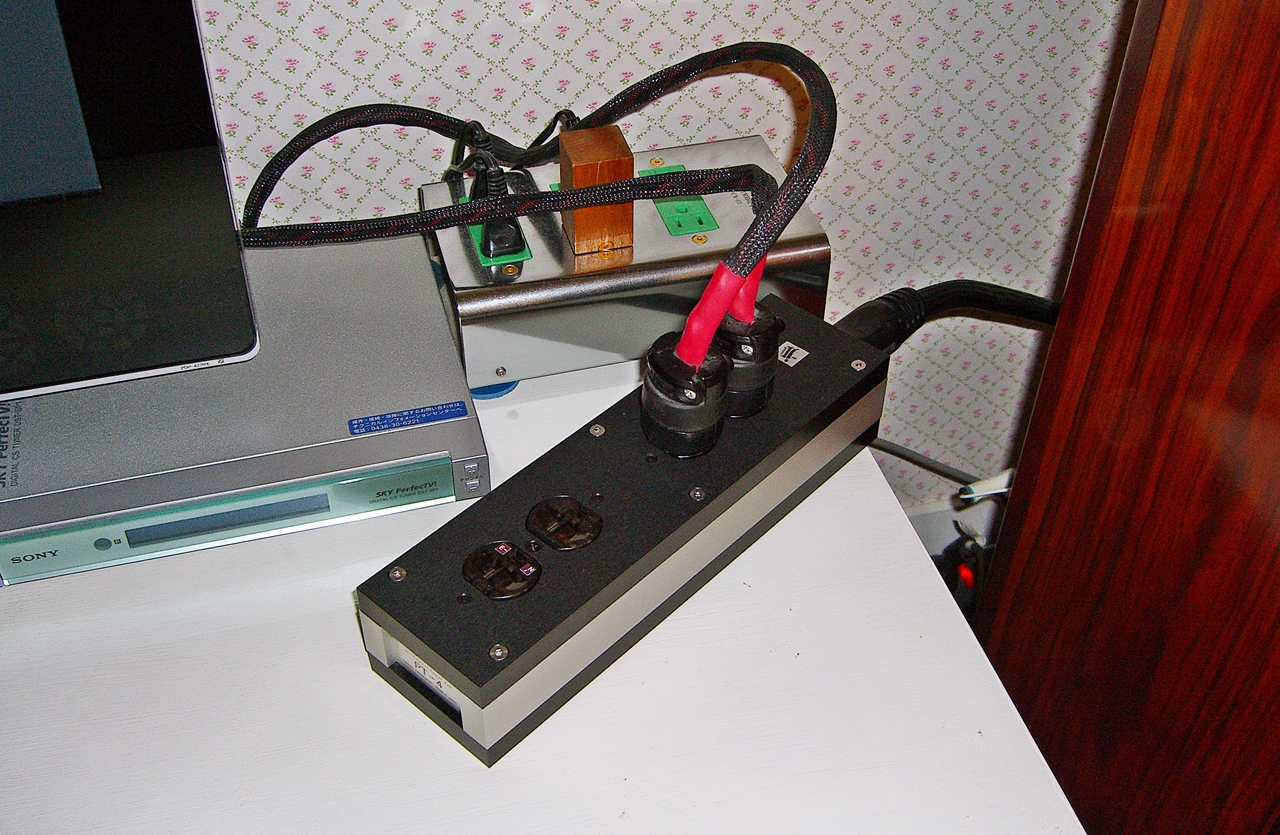
The J1 Project PT-4, an American audio accessory brand, was being cleared at a model change — a limited-quantity 40% discount at a specialist retailer. The PT-4 was a high-grade audio power distribution block I had long wanted but could never quite afford; I used to stand in front of the shop window just staring at it, and when I saw the price, I found myself clicking “buy” before I knew it.
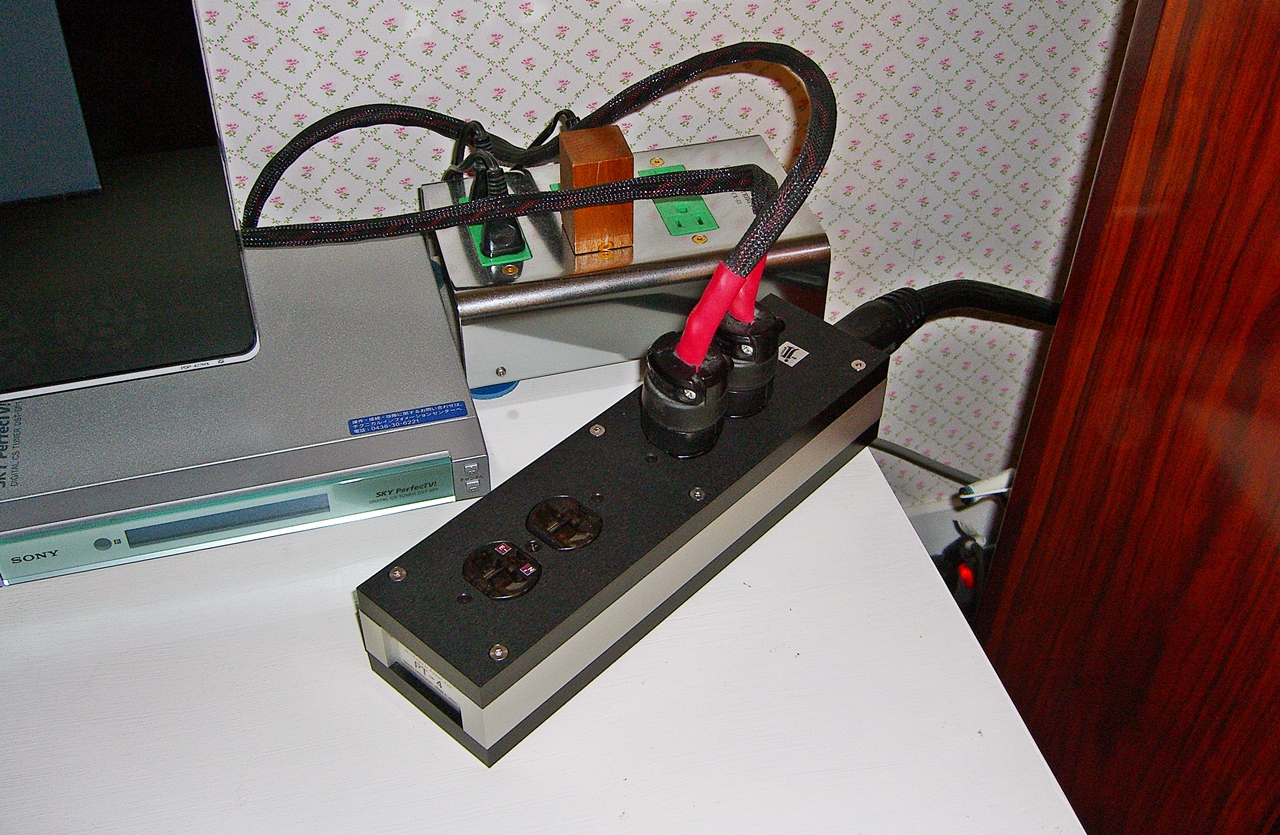
It was a limited-quantity sale running from 18 January 2008, and I held off writing about it beforehand out of concern that stock would sell out before I had mine. Today the item arrived safely, so I’ll get straight into a report. Looking again now, three days ago there were 10 units of the PT-4 and 5 of the PT6MFC, and already more than half are gone… it really was first come, first served.
Overview of the J1 Project PT-4 Power Distribution Block
 What I purchased this time is the smaller four-outlet PT-4-SP. Well, in my case the larger PT6MFC would be a struggle to place anywhere, and when you divide the price out per outlet the PT-4 actually works out cheaper than the PT6MFC-SP — a rather mean-spirited piece of reasoning, I admit. In terms of sound quality provisions and outlet grade, the PT6MFC sits higher, with an MFC sheet electromagnetic-absorption material laid inside, and the outlets and IEC inlet also differ: the PT-4 uses FURUTECH’s gold-plated FP-15A(G), while the PT6MFC uses the same model in rhodium-plated FP-15A(R), both cryogenically treated.
FURUTECH offers several upgrades in similar form factors, such as the FPX series in unplated, gold-plated, and rhodium-plated finishes, including newer models and 20A-rated variants. Other manufacturers’ outlets of comparable width are also available, and it is possible — at your own risk — to swap in a different outlet.


 ポチップ
ポチップ
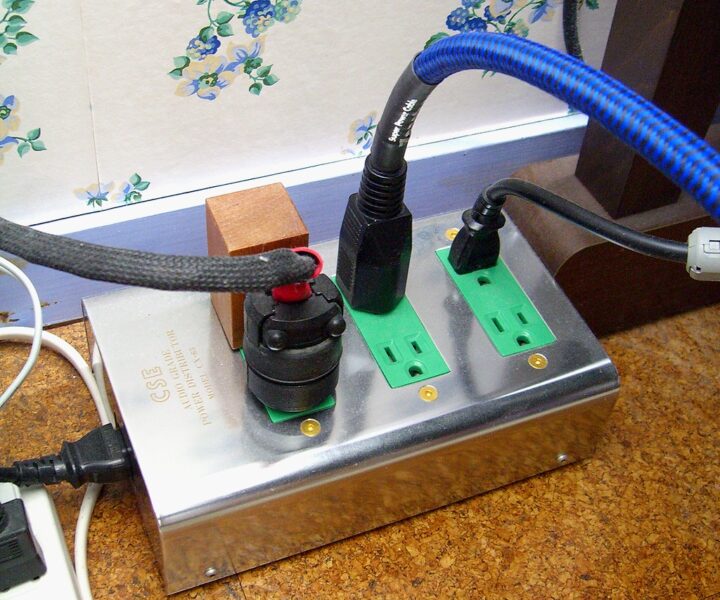
The PT-4 arrived, and it is… quite solidly heavy. And built to a quite extraordinary standard of fit and finish. The edges and surfaces are beautifully done, with a real sense of quality. Looking more closely, I noticed the box says “Made in Japan”… so it isn’t American-made after all.

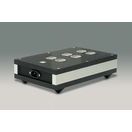 I had always thought of J1 Project as an American audio accessory manufacturer using high-polymer materials — developed originally for military use — called IDS Composite (blue) and ICP Composite (black), releasing a well-regarded range of vibration-control accessories such as insulators and audio boards. But it seems that at some point, production quietly shifted to Japan. There was criticism for a while that the change of manufacturing country altered the sound character — but what is the reality of it?
I went straight ahead and connected the power cables of the main system’s second-generation CD player, the CEC TL51Z, and integrated amplifier, the TAG McLaren 60i — previously connected to the CSE CX-63A — to the J1 Project PT-4. (The power cables for both are the Kharma KPL Reference/1a.) The wall outlet (PAD CRYOMAG) and the PT-4 are connected via the PS Audio Prelude XPD/1.8 MkII. The power cable plugs were cleaned with solvent. Everything else — apart from the CSE CX-63A and the Audio Spice ACC18 plugged into it — remains exactly as normal.
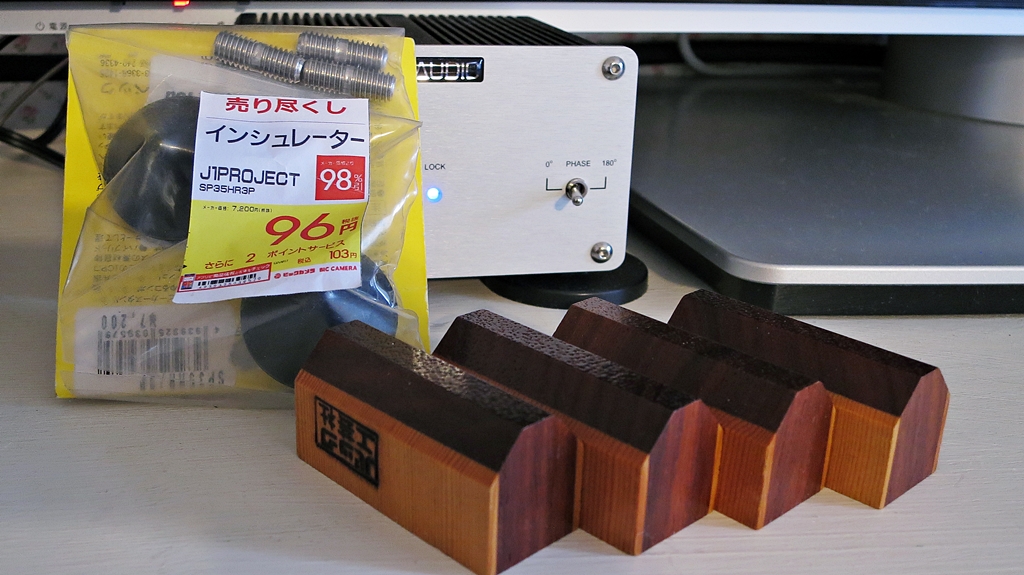
The PT-4 has four large 8mm threaded holes in its base plate for attaching J1 Project ICP cone spikes, but unfortunately the spike unit SP35HR is sold separately and not included. As I haven’t purchased spikes this time around, for now the unit sits directly on the Wakatuki audio rack. The higher-model PT6MFC comes with the SP35HR already included in the price, so when you think about it that’s actually rather good value. It seems the SP35HR was also half-price for a limited time, but it had already sold out and I completely missed it. The regular price is just too high. ※ Note added 2016: The SP35HR has since been updated to the S35HR-J.
In the end, I purchased the “S35HR” additionally from Bic Camera.
 ポチップ
ポチップ
J1 Project PT-4 Sound Quality Review
And now for the all-important sound quality impressions. To cut straight to it: buying this was absolutely the right decision. Given that I was already coming from the CSE CX-63A — itself a more than capable power distribution block — I wasn’t expecting a dramatic improvement, yet the sound quality leap was frankly astonishing, even to me.
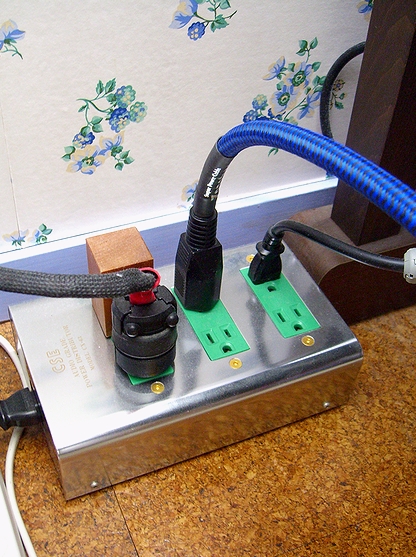
The first thing you notice is an extraordinarily quiet background — the perceived S/N ratio improves dramatically. The enclosure is a composite of aluminium and IPC Composite, but there is absolutely none of the metallic-sounding coloration one associates with the CX-63A. Does that mean the sound is thin and dry? Not at all — it is rather fluid and agreeably moist in tone, with exceptional density in the direct sound in particular. What is this sound that reminds me of a high-grade analogue turntable? The sense of reverberation is that it separates cleanly and clearly from the direct sound, rather than clinging to it as coloration. The soundstage is deep and full of quiet, with a very composed atmosphere, yet there is also a lift in the rhythmic tension of the music that brings out a pleasing nimbleness — none of the impression, common with products of this type, that musicality is being smothered by damping. The soundstage is highly transparent and the frequency response is relatively flat. Bass quantity is on a par with the CX-63A, though the definition of lower pitches feels even more distinct.

The high frequencies extend further with the PT-4, yet there is absolutely no accompanying harshness, and while clarity is high, the sense of distortion is greatly reduced. This reduction in distortion is quite a significant point. Even at higher volumes, it is far less fatiguing than before. The range opens up both ways, but the transient attack itself has a slightly rounded quality and an easy, gentle tone. The real attraction is the clear, densely textured midrange. The background sinks into a much deeper silence, the musical contrasts sharpen, and the three-dimensionality of the soundstage and dynamic range seem to expand considerably. From what one would never have expected — an angular hybrid of metal and resin — comes a natural, low-distortion sound that nonetheless draws a clear distinction between piano and strings. It possesses a highly capable, genuinely Hi-Fi character, while also being very much the type that brings a real improvement in musicality.
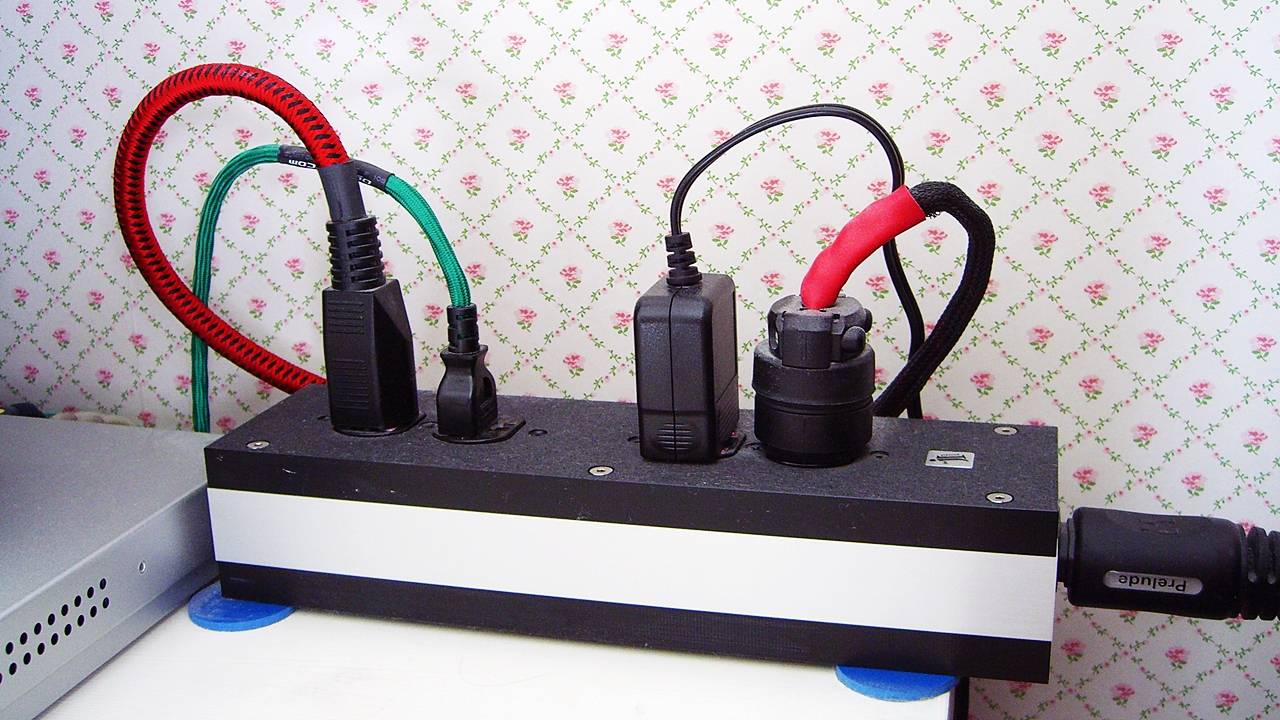
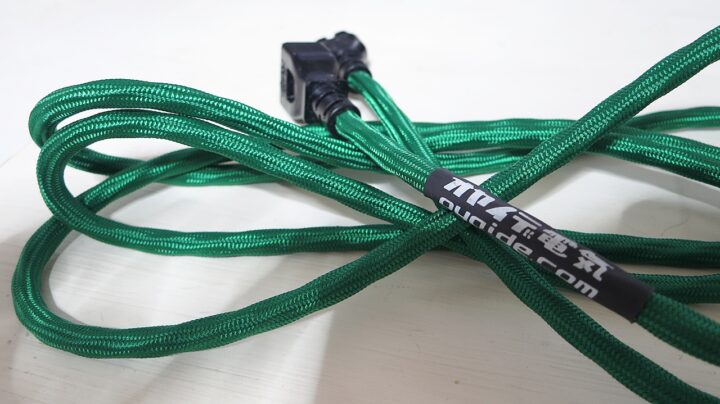
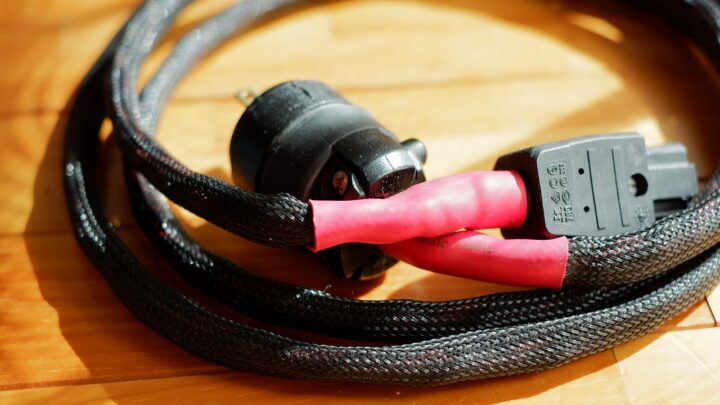
If I were to identify any shortcomings… well, at this point I can think of very few. But if one were comparing against high-end power distribution blocks from other manufacturers at the same level or above — Chikuma, for instance — and one were looking for sharpness of transient attack, brilliance, brightness, the sense of extension that comes with metallic high-frequency resonance, or fine-grained resolution of detail, I think the J1 Project PT-4 might feel insufficient. It is not the type that amplifies micro-information carried on high-resolution metallic coloration to fill the soundstage — rather, the detail is gathered and neatly ordered, as if converging into silence. This is not to say it is lacking in information, but that it does not exaggerate the edges of images in a show-offy manner.
 ポチップ
ポチップ
Also, if you are looking for a bloated, full-bodied bass, or a character with excessive colouration — extremely warm or extremely cold — this probably won’t suit you either. In the bass region the tendency is towards flatness and improved resolution. The vibration of a piano’s bass strings and the sound of the pedalling become considerably clearer. There is also a slight sense of tautness, so if you prefer a relaxed, open quality, the focus and centripetal force may feel a touch too strong… though of course a live performance that was that relaxed would be rather peculiar. The sound has a dense, weighty presence, but the tonal character itself is a subtly understated, dark type with just a hint of warmth.
~ Summary ~
I am truly glad to have added the J1 Project PT-4 to my main system. If anything, I’d love to get another unit for the study… (Note added later: I did end up buying a second one.) As for the successor models — the PT4P, PT6MFC, PT6PL, and PT2PDG — the dimensions remain the same but the machined aluminium side panels have been discontinued, with the entire enclosure now in ICP Composite resin in black. The outlets have also changed from the FURUTECH FP-15R series to J1 Project’s own-brand JPC2-15R/JPC2-15, based on the American Electric 7110GD — a product well regarded for its sound despite its modest price — adopting phosphor bronze blades and J1 Composite resin. ※ Note added later: I purchased JPCK2-15R (formerly JPC2-15R) as the replacement outlet for the second PT-4.

Beyond the genuine cone spikes S35HR-J mentioned above, as long as the thread pitch matches (there are also various 8mm adapter screws available), it should be possible to enjoy sound changes from other screw-type spikes or spike insulators intended for loudspeakers — trying various options to suit one’s system could be quite enjoyable. Even without spikes the sound quality is already quite remarkable, so they are by no means essential, but having fitted the genuine SP35HR, my impression is that adding spikes and spike receivers absolutely draws out more of what the PT-4 is truly capable of.
I wrote above that the sound quality of the J1 Project PT-4 calls to mind a fine analogue turntable, and I think it is very well suited in tonal character to CEC’s belt-drive CD players. It would be interesting to put J1 Project ICP cone spikes under the TL5100Z and TL51Z as well — but what I’d really love is for J1 Project to make a disc stabiliser for belt-drive players! In ICP Composite and metal as a composite material, naturally — the composite aspect being the key point. The reason the PT-4 sounds as good as it does is probably, I suspect, precisely because of that composite sandwich structure of aluminium alloy and composite polymer with sufficient mass — with composite polymer alone the sound would, I think, become more rounded and dominated by a softer character. If the same direction of sound tuning as this power strip could be applied, the result would surely be more attractive than the CEC genuine stabiliser. Honestly, I have a feeling I’m about to become rather taken with the sound that J1 Project’s composite of materials and metal creates.
Further Notes on the J1 Project PT-4
The J1 Project PT-4 power strip that arrived yesterday — after 24 hours of connection, I started to notice that the balance was slightly subdued in the high frequencies. The tonal character is a touch on the matte side. With a new component, the burn-in progressing and the highs settling down is a standard pattern for audio accessories, so this is probably something to compensate for elsewhere.
The Kharma KPL Reference/1a on the equipment side uses silver-coated conductors and has a lustrous, vivid tonal quality, but the PS Audio Prelude XPD/1.8 MkII on the source side tends toward a monitor-type, coolly restrained tone. Combined with the PT-4, it seems likely that the darker quality is being reinforced.
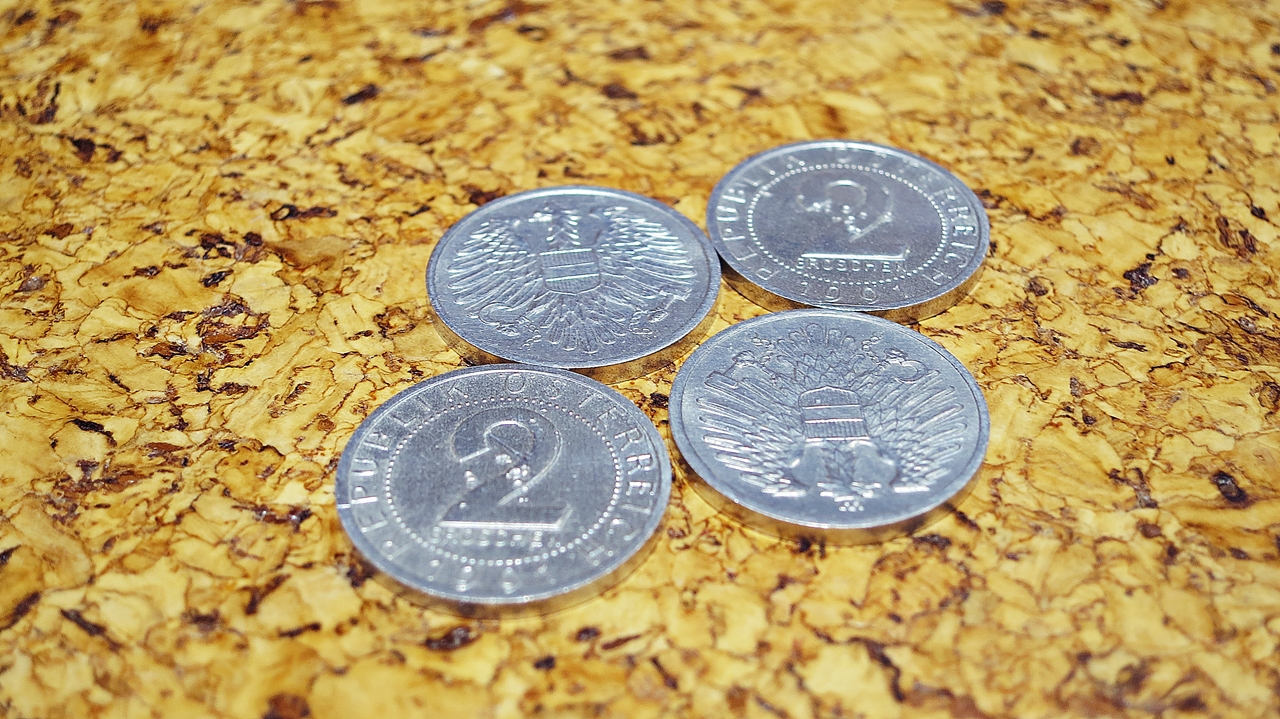
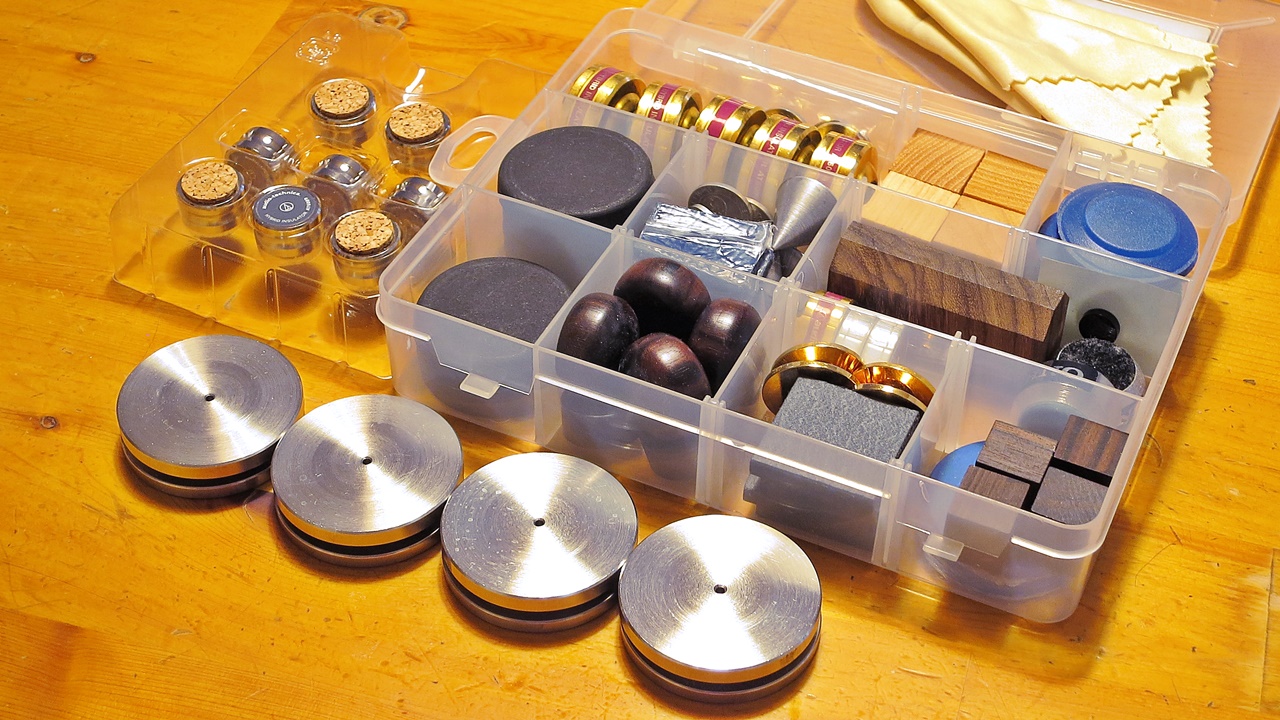
For now I’d like to add a moderate degree of gloss and brightness to the upper-midrange and treble, so I’m giving it some thought. Trying Austrian 2-schilling coins as insulators under the four corners of the PT-4 brightened things up slightly in the high frequencies. The character of these coins is, to put it one way, like an imported CD. ※ Not because they’re Austrian, to be clear — it’s the resonance of the material. On the downside, the bass becomes lighter and the overall impression slightly cheaper-feeling. For adjustments in this direction, I suspect 500-yen coins used as spacers might work better — but I didn’t have four of them to hand, so that idea was shelved. Tonal fine-tuning aside, ever since switching to this power distribution block the music has been flowing with a real sense of energy and enjoyment. The separation between individual instruments is excellent, and the musical intention of each line becomes more clearly defined — the sound carries a greater sense of purpose.
Oh, and there appears to have been dust accumulating on the audio rack — the base plate of the PT-4 was covered in it, and quite stuck on at that. The J1 Project power distribution block has a black fibrous material on both the bottom and top surfaces — presumably for damping or electromagnetic shielding of some kind — and it attracts dust ferociously. When I wiped it with a microfibre duster, the dust just clung on worse than before and made things terrible. In the end I used the vacuum cleaner with a brush attachment, but it didn’t come off very cleanly either. Perhaps a lint roller would actually be the thing to use.

Auto Translated by CS4.6
List of comments (2)
こんにちは。
昨日はコメントを頂いてありがとうございました。
2通目を読んでコメント自体の削除依頼かと思い非公開にしてしまったのですが、よく読んでみるとKuniあてのコメントにもとれます。
うちのはしばやんさんのようなシステムではないお手軽なものなのでデジカメ画像を希望とは全然考えなかったのです。
コメントの削除で良かったのかお知らせください。
先月末の「激安iPodと超高級マークレビンソンの音質対決」やオンキヨーのPC用USBサウンドデバイスについての記載は昨年私が色々試していた内容に近くて、大変興味深かったです。
遅レスすみませんです~m(__)m
kuniさんのシステムは以前に画像を見たことがあったので~と思ったらタイムドメインスピーカーなどでかなり変更しているんですね。詳細はそちらへレスします~♪