I have multiple Hi-Fi systems set up in each room, which means I’m constantly swapping components around, changing RCA cables, digital cables, and speaker cables, or temporarily disconnecting power cables from components to clean inside the audio rack. And every time I do, there is something that never fails to strike me as curious: the moment an audio cable is connected, its character seems to come through most strongly of all. This applies whether the cable is brand new or one that has been in use for years. Even simply unplugging something and plugging it back in — just that, nothing more — and yet there it is.
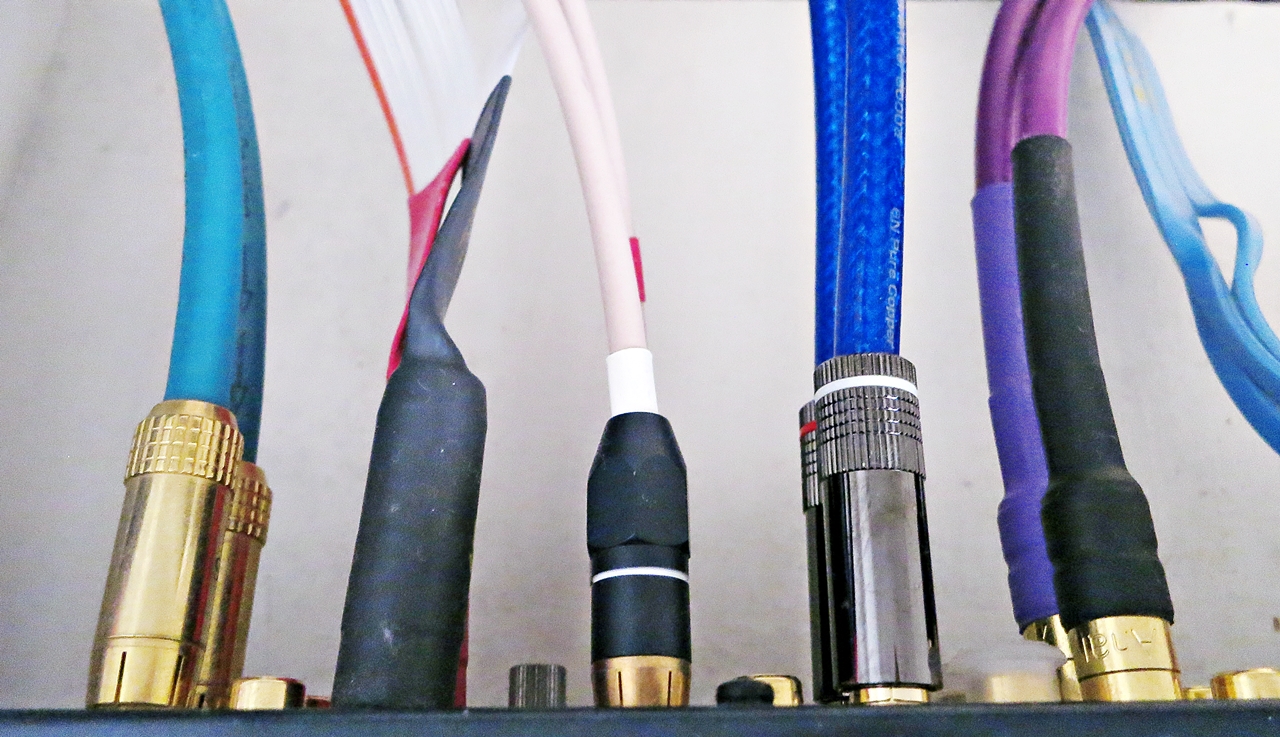
What is interesting is that simply disconnecting a cable and reconnecting it exactly as it was before seems to revive each cable’s particular character in a way that is almost uncanny. You can clean the connectors at that point if you like, but the sound changes even without that. Right after connecting, the cable’s character can come through so strongly that the overall balance feels off, or the sound quality seems to have taken a turn for the worse. If the character happens to suit your taste, you may find yourself convinced the sound is better than it actually is — but after roughly two or three days, things settle down and a balance between the cable’s character and overall sound quality begins to establish itself. Incidentally, this impression of change playing out along a time axis seems to be more or less consistent across speaker cables, interconnect cables, digital cables, and power cables alike — and why that should be so is not something a placebo effect alone can easily explain, is it?
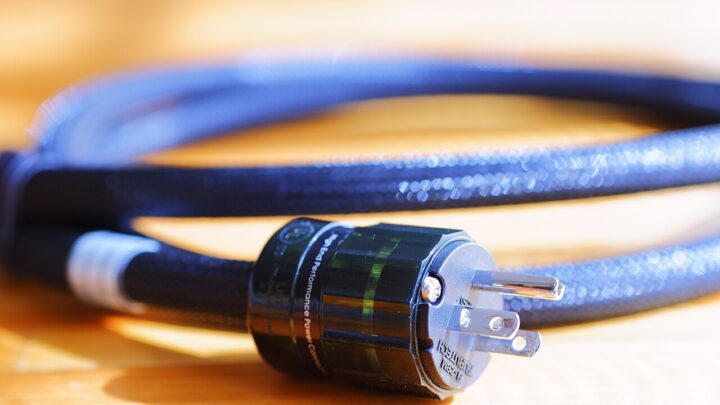
Exactly where the subjective peak in sound quality falls varies from case to case, but the period a few days after connection tends to be when the accessory’s effect is most palpable and the sound is at its most rewarding. Once past that point, the cable’s presence gradually and gently fades away over the course of several days. You might say the ear simply grows accustomed to the cable’s tonal character and personality, and there is certainly something to that — but it cannot fully account for why that character revives the moment you unplug and reconnect the same cable. And after several months, the sound becomes as though the cable were barely there at all. In practice, even at the stage when burn-in has well and truly progressed, there are still differences in tonal colour — in terms of range, detail, and the absence of distortion — depending on which cable is in use, but the tonal personality that you were once so conscious of as a defining character seems to have vanished almost entirely, somewhere along the way.
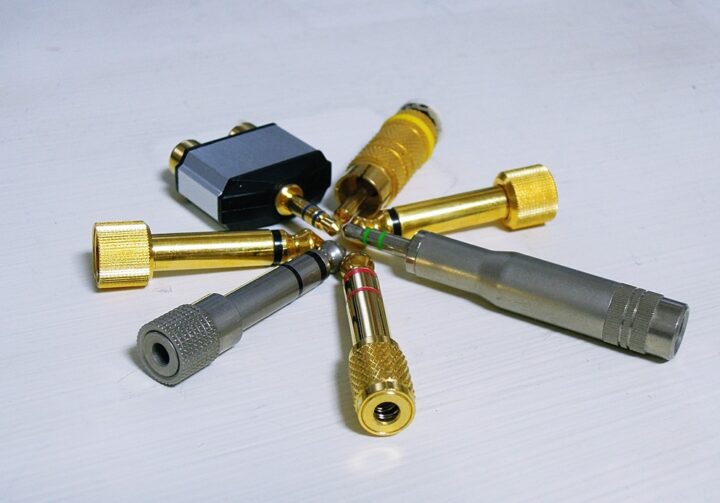
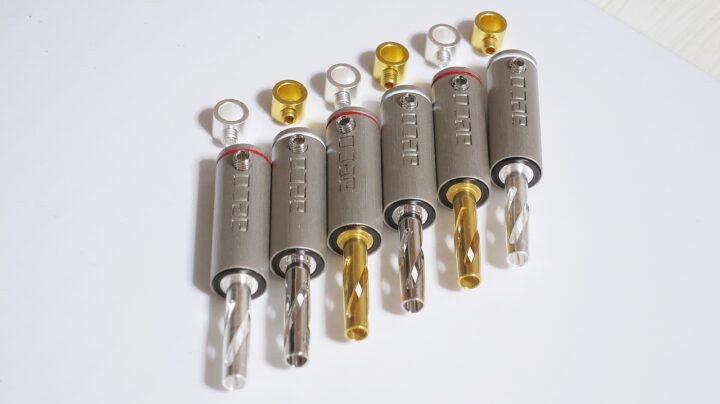
This is particularly easy to observe with pure silver wire and silver-plated wire. Immediately after connection, the high frequencies in particular have a dazzling, bright quality, and a distinctively beautiful resonance — or rather, a colouration — clings thickly to the sound, and with certain high-end cables especially, the character can be so powerfully seductive as to mask the inherent tonal quality of the amplifier or CD player itself. (The Dutch SILTECH speaker cables and the Kharma power cable KPL Reference/1a that I use in my main system are cases in point…) Yet if you leave the system as it is and simply keep using it, before you know it, the luminous quality you had been perceiving as the silver wire’s defining character quietly withdraws, the distinctive bloom and warmth also thin out, and what remains — in a tonal colour that has become neutral — is only the aspect of sound quality that exists apart from character: the sense of range, the amount of detail, the freedom from distortion.
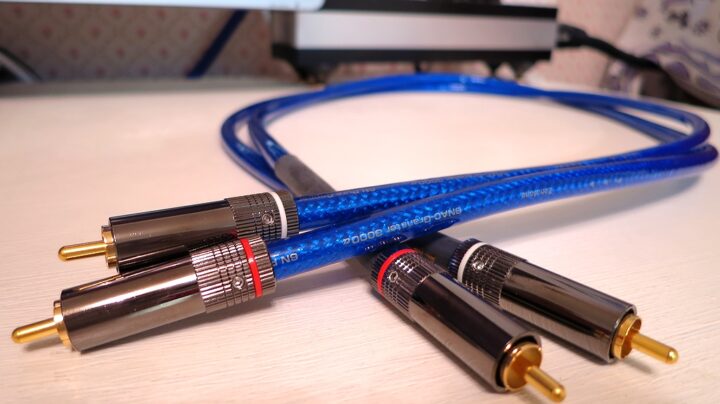
Once things reach this stage, it is the blended tonal colour of each component rather than any colour added by the cable that comes through to the ear as the dominant quality, and so you begin to wonder what the point of using silver wire was in the first place. Or perhaps the sound simply starts to feel dull and uninteresting. And yet — even so — if you try swapping in a cheap OFC or 6N cable out of curiosity, you find that the spatial transparency, the detail, the harshness in the high frequencies, and the weight in the low frequencies are all noticeably different, and you are left feeling rather deflated. Then the moment you put the original expensive cable back, the distinctive tonal character you had quite forgotten revives itself once more. The only trouble is that compared to before the cable was first removed, the focus has softened, the detail has thinned, and everything feels somewhat half-formed — as though the whole sound has been coated in the cable’s character, rather overdone, like too much make-up. And getting back to the clean, clear sound quality from before will take another few days to a few weeks.
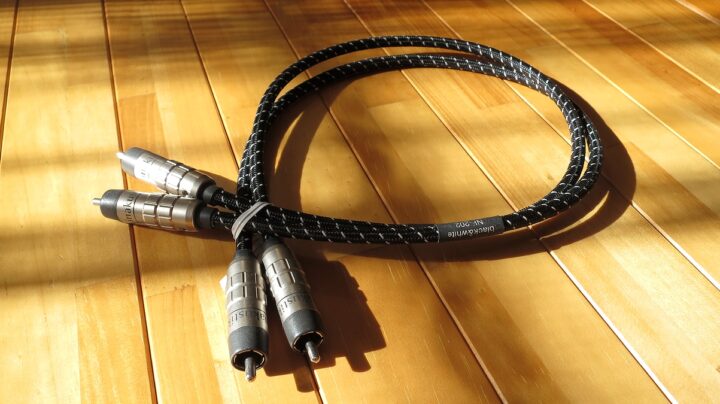
Well, even just unplugging a cable and putting it back again is done by hand and not with any great precision, so it seems reasonable to assume that the contact resistance, the way electrons flow through the cable, and the way various vibrations travel through it all change to some degree — which makes me think there are probably many instances where what one is responding to as the cable’s attractively vivid character is in fact the sound of mechanical stress and resistance, a sound with a high resistance value, so to speak (note: that is an impressionistic description, not a technical one). And then, as time passes, burn-in progresses, and the little elves inside presumably start flowing more naturally. You get the same thing with musical instruments, don’t you — the difference between right after tuning and some time later. With time, the flow naturally optimises, the stress from conducted vibration is released and stabilises, and the process gradually moves in the direction of eliminating the cable’s character — the colouration that had been generated by resistance. Something like that, perhaps? This is all very much impressionistic, mind you.
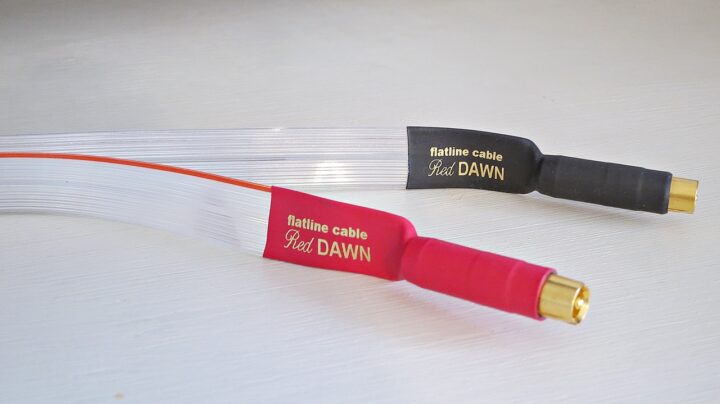
The practical lesson I have drawn from all of this is that no matter how interesting a tonal character a cable might have, if the reason you connected it was that you liked the colouration — that it suited your taste — that colouration will eventually disappear with continued use. What remains after the time has passed is something else entirely: the cable’s sound quality in the more fundamental sense. With expensive cables, even after reaching that point, the detail, the sense of range, the low distortion, and the tonal weight tend to differ quite noticeably from cheap cables, so a vivid character only at the start does not mean the expensive cable is pointless. But among high-end cables there are more than a few that are simply heavily coloured without actually sounding all that good on closer listening, and if you happen to end up with one of those, the charm may fade with time and what is left could be a rather unpleasant bare sound. And the person using it will likely be slow to notice that things have quietly deteriorated to that point… or something like that.


 ポチップ
ポチップ
I myself have a tendency to gravitate towards novelty cables with obvious, easy-to-hear changes in sound quality, so I am writing this partly as a caution to myself — but when it comes to choosing Hi-Fi cables, what one really ought to be doing, I think, is not being seduced by the tonal appeal of that very first moment of connection, but rather listening past it to discern and evaluate the fundamental sound quality that will still be there after time has passed and everything has settled in. That, at any rate, is where my thoughts have been sitting lately.


Auto Translated by CS4.6


List of comments (5)
最近、オーディオ雑誌みたいなプログが多くなって評論家みたいな人が多くなったけど、メーカーが作る電化製品なんだからそんなに宣伝しなくてもいいんじゃないかなあ。個人で友達同士でいろいろ評論するのならいいけれど、情報を発信する以上、いろんな人が見て影響を与えるだけにアイテムの評論は慎重にすべきだと思う。外国には商品紹介と個人敵な主観評価を混同した評論家みたいな人の存在はあまり聞かない。いつのまにか本当にほしいオーディオが無くなって、末端のアクセサリーアイテムばかりが出回る。閉鎖的な村社会が進むはずだと思いますね。
貴重なご意見ありがとうございます。
宣伝がお嫌なのでしたら、こちらではなく宣伝を一切していないサイトを選んでご参考になされては如何でしょうか?私は音楽ファンの皆さんにとって、オーディオ関連製品の購入や使いこなしについて、手助けになるようなブログ作りが出来ればいいと思っております。結果的にお買い物情報サイトである側面を否定するつもりはございませんし、今後ともよりお役に立てるように力を入れていきたいと思います。
失礼いたしました。ぜひ今後も真の音楽愛好家の為の情報を期待しています。私のようなユーザーにとってこうしたプログは大切な情報源です。できれば、こんな商品はいらない。なくていい。真の音楽愛好家のユーザーのためにご提案されることも切に希望致します。念のため、私は、このプログを参考にオーディオを買い替えましたことを追記させて頂きます。
>できれば、こんな商品はいらない。なくていい。
私個人の中での製品の好き嫌いや、必要性を感じない商品は沢山あります。しかし、何かについてネット上で語る場合、ある程度の言論の自由の中であっても、基本的なマナーとしてその製品を作った人、販売している人、そしてその製品を既に購入して使っているユーザーの皆さんへの心理的な配慮を欠いてはいけないと思うのです。
必要性があるか無いか、価値があるか無いかというのはそれこそ主観的なものであり、どう感じるかは人それぞれです。購入した製品に感動して大喜びする人もいれば、同じ製品にがっかりして直ぐに手放す人もいます。
いらない、無くて良いという意見は、裏を返せば作り手やその製品に納得しているユーザーを否定することでもあります。ですから、個人で情報発信をするといっても、積極的に出来ることは○○はとても良い、○○を気に入りました。という個人的で主観的な感想を述べることが基本になります。何かに疑問を感じていても、その点への記述は遠回しな表現に為らざるを得ません。それでも私はこのブログで、○○製品の○部分は良いけれど反面○○は弱点かもしれませんとか、この環境の中では○○よりは○○が良さそう、程度までは突っ込んで書くようにしています。
>オーディオアクセサリーについて。
こりは誤解の無いように書いておきますが、ブログ上でも何度も注記している通り、私はオーディオアクセサリーの存在価値を認めています。自分でも色々なアクセサリを試して上手くいったり失敗したりの試行錯誤を繰り返していますし、オカルト的な側面も受け入れています。アクセサリによる小さな変化の積み重ねがシステムトータルの最終的な音質へかなり影響を与えると思っていますし、楽器と一緒で僅かなチューニングの違いが音を生かしたり殺したりする経験もしています。こと音楽を主軸に置く限りこれはとても無視したり否定できることではありません。証明不十分だったり、理屈は分からないけれど結果的に音が変化する現象を体感出来た場合、私は論より実を取ります。これは”技術理論よりも音楽が大切”というここのスタンスに基づきます。
>このプログを参考にオーディオを買い替えましたことを追記させて頂きます。
お差し支えありませんでしたらお買い換えされた機種&ご不満な点を教えて下さいませ。もしかしたら使いこなし等で何かしらアイデアが出せるかも知れません♪