
Even so, looking at the Japanese Hi-Fi market, what always strikes me is the sheer scale of the price gap between Japan and the rest of the world, and just how few brands are available here, owing to that heavy bias towards high-end gear. Many well-known, affordable European and American brands that are sold as a matter of course in countries such as the UK, the US, Taiwan, Hong Kong, and Korea simply are not available in Japan for some reason. Every time I look into a foreign Hi-Fi shop with row upon row of affordable equipment, I can’t help feeling genuinely envious.

Around the bubble era in the 1990s, the strong yen meant that many overseas products were imported into Japan at prices ordinary people could actually afford. That was precisely the period when I first became interested in hi-fi, and I was able to pick up all manner of wonderful imported audio equipment at prices that seem almost unbelievable today — integrated amplifiers such as the CREEK 4240 (¥66,000), the Musical Fidelity A1 Junior (¥90,000), and the ARCAM Alpha 5 Plus CD player (¥85,000) — the figures in brackets being the prices I actually paid at the time.
After that, a prolonged recession — severe enough to drive even domestic manufacturers to shut down their hi-fi divisions — caused the majority of affordable imported brands to withdraw from the Japanese market, taking their distributors with them. Then came the double blow of a strong euro and a weak yen. For high-end equipment, those of us who know the local prices abroad have watched in disbelief as markups have been piled on again and again. The result is that the Japanese hi-fi market as a whole has become heavily skewed towards expensive, high-value-added products. Pure hi-fi listening has consequently been pushed into the domain of high earners, making it harder and harder for younger people to discover it as a hobby, which only intensifies its image as the preserve of a narrow, privileged few — leaving the market in a closed-off and deeply lopsided state, or so it feels to me.
Some of you will already know this, but many of the budget Hi-Fi brands that were sold in Japan towards the end of the bubble era are still very much alive in their home countries, and as I mentioned above, they continue to be sold quite normally in other parts of the world outside Japan. To give a few examples from the British brands I am particularly fond of: NAD, Cyrus, audiolab (formerly TAG McLaren), Cambridge Audio, Mordaunt Short, Wharfedale, Mission, EPOS, ROKSAN — these are not merely available elsewhere as a matter of course; you will often find them being sold at jaw-droppingly low prices, whether at UK or US home-market prices or at their Asian retail prices.
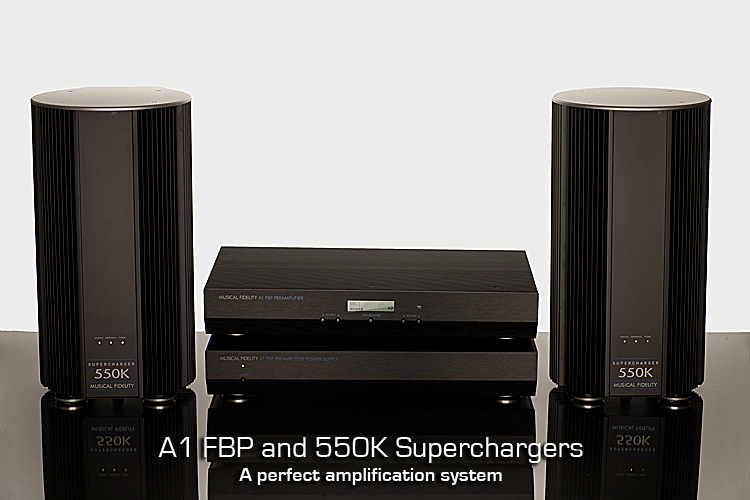
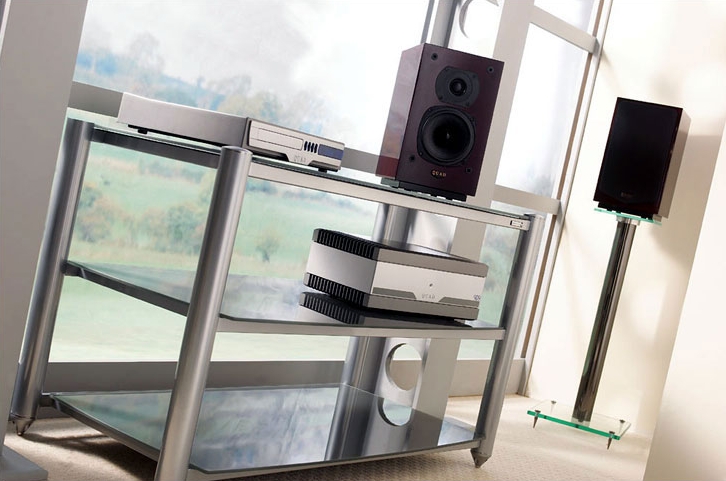
Beyond those, there are brands such as NAIM, Rega, Musical Fidelity, MYRYAD, Audio Refinement (YBA’s second brand), and NHT — all of which do have Japanese distributors, but either because the product range and distribution network are small-scale, or because the profit margins on these are lower than on high-end gear, there are quite a few brands that appear on the distributor’s website yet are never actually seen in a shop. When you think it through, the only British brands you can genuinely buy with any ease in Japan are perhaps CREEK and QUAD, and that is about it…


Even this year, DENON — which had been acting as the Japanese distributor for ARCAM, the UK’s largest audio manufacturer, and the American speaker brand INFINITY — announced it was dropping both brands, and the sense I get is that the Hi-Fi market is not recovering at all but contracting and wearing itself out, slowly but steadily. One can only hope that someone picks up ARCAM’s distribution — though what will actually happen remains to be seen. DENON, perhaps out of a sense of corporate responsibility, had been selling ARCAM and Danish brand DALI at prices comparable to — sometimes even below — their overseas retail prices. If a small independent distributor takes over, maintaining those prices will be extremely difficult, and if that happens, ARCAM’s versatile but somewhat characterless products will lose even more of their competitive edge. I really did not want DENON to walk away — they ought to have stayed on, with a sense of responsibility towards the culture and perhaps some honest reflection on their own products, rather than worrying too much about profit margins…
What I personally consider to be the single biggest problem with the Japanese Hi-Fi market, compared to overseas, is the wholesale absence of the kind of affordable imported products that ordinary people can actually reach. Even where distribution does exist, products that convert to under ¥100,000 at their overseas or foreign-market prices often jump to the mid-price bracket in Japan — somewhere between ¥100,000 and ¥300,000 at street price — except at the handful of distributors with a genuine conscience. Whatever one thinks of sound quality or sonic character, it is plain that on a cost-performance basis these products simply cannot compete with Japanese-made audio equipment, which is excellent as a manufactured product in its own right.
Of course, one cannot deny that the costs bouncing back from Japan’s unique challenges — business overheads and taxes related to importing, PSE compliance, custom power supply specifications, after-sales service and warranty that customers here expect as a given, stock risk, the need for rapid parts supply, and users who demand replacements over the slightest issue — are considerably greater than in other countries. On top of all that, because the sales volumes are so implausibly low, the per-unit overhead that has to be passed on becomes unavoidably large.
And yet the people who will buy imported products despite all this are, I suspect, the somewhat eccentric minority among Hi-Fi enthusiasts — the sort who visit this blog. Or perhaps devotees of foreign brands, design purists, or those who have realised that excellence as a manufactured product does not necessarily equal high sound quality. That said, affordable imported Hi-Fi products receive little advertising, are barely known to the public, and are naturally sold in tiny numbers through only a handful of dealers. Even among dedicated Hi-Fi enthusiasts, most will never have seen many of these products in the flesh outside of magazines or the internet. This makes life commercially very hard for distributors who have taken on the risk. To keep going, the only viable options may be to hold minimal stock and raise prices further, or to shift focus towards high-end products with a higher per-unit profit margin aimed at wealthier customers.

 ポチップ
ポチップ
What sets Japan’s market sharply apart from other countries is that it is home to companies with the manufacturing scale and technological capability to mass-produce some of the world’s finest industrial products. Because domestically made products are so accomplished as engineered goods and so competitive on price, the majority of newcomers entering hi-fi at the affordable end will have their first real audio experience with a Japanese brand. I must admit I was exactly the same — I started out by blindly trusting the best-buy recommendations in Stereo Sound and dutifully assembled a set of Sony and Onkyo products. But as I wrote at the outset, in those days there were plenty of imported products at the same price level — products well suited to catching the newcomers who had begun to question their magazine-endorsed Japanese gear — whereas today that entire layer of imported product has simply vanished.
Another factor is that consumers in the Japanese market are, compared to those in other countries, relatively affluent. While the prolonged recession has certainly reduced the number of people who can afford to buy Hi-Fi equipment, there has nonetheless been, since the bubble era, a steady segment of wealthy buyers who continue to purchase high-end gear. Furthermore, the generation of baby boomers and older are retiring with lump-sum payouts and pensions, and their appetite for high-end products is if anything greater than before — albeit for a limited period.
Those who have drifted away from Hi-Fi as a result of the prolonged recession are the working-age middle class — squeezed by stagnant wages — and younger people. These are individuals who, unlike their parents’ generation, simply cannot afford to spend freely on cars and other luxuries, let alone audio equipment. The upshot is that a certain wealthy and elderly segment clusters around high-end gear, while younger people and the non-affluent middle-aged either abandon pure hi-fi altogether in the face of financial and domestic constraints, or gravitate towards rock-bottom home cinema, PC audio — cheap and with plenty of room for tinkering — or headphones and portable music players, which deliver genuine sound quality in a small-footprint form that works even in cramped living conditions. In a market like this, the mid-range and popular-price products that were once best-sellers and the stalwarts of the range simply do not sell, which means that for domestic manufacturers and importers alike, entering that price bracket with any confidence is no longer a straightforward proposition.
The result, I believe, is that Japan — which, judging by Hi-Fi equipment sales figures and annual record sales, ought to have the second largest population of audio enthusiasts and music lovers in the world after the United States — has seen the middle of its consumer Hi-Fi market hollow out and go cold, with everything except a narrow band of high-end products left out in the cold.
 Looking at the European and American markets, one finds that music lovers and Hi-Fi enthusiasts there are not necessarily wealthier than their Japanese counterparts in relative terms. The Japanese products that win awards in overseas Hi-Fi magazines year after year tend to be, almost without exception, the bottom-rung entry-level models in each manufacturer’s range; and if you set aside the handful of genuine high-end brands, the products made by British and American home audio manufacturers are mostly inexpensive items that sit in direct quality and price comparison with low-cost Japanese equipment.
  Overseas, if prices were not kept that low, nobody could afford to buy in the first place — so manufacturers each carve out their own distinct character and release a wide variety of audio products within a price range that any enthusiast, if sufficiently interested, can realistically access, allowing people to experiment and find what works for them.
 ポチップ
ポチップ
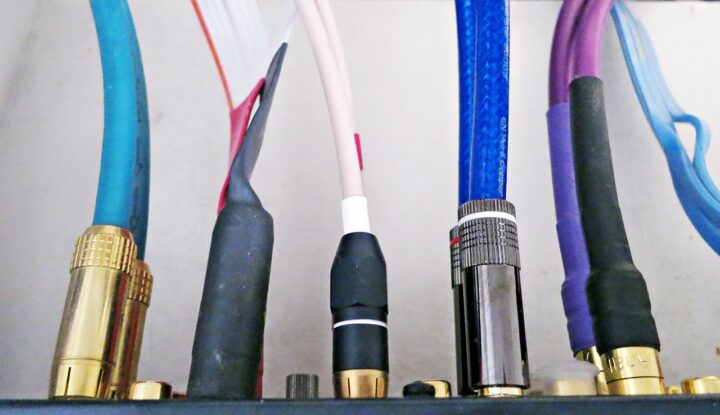
The same applies to Hi-Fi accessories and audio cables.
Before we even get to debates about the occult or placebo effects, the situation in Japan is this: buying a decent-sounding RCA interconnect costs at least one ¥10,000 note even for something cheap. To gain any real experience through comparison, you end up swapping cables costing tens of thousands of yen apiece. And because import prices have been inflated to such extraordinary levels, domestic manufacturers cheerfully attach similarly ambitious price tags of their own, which means that genuinely enjoyable, characterful accessories at a low price are simply nowhere to be found. The magazines, too, review and celebrate only expensive items. There is none of the consumer-minded approach you find in European and American Hi-Fi publications — where well-made budget products receive recommendations while reviews grow more demanding as prices rise.
In America or Britain, the equivalent of ¥1,000 to ¥5,000 will buy you the exact same cable as a foreign-branded product that sells for ¥10,000 to ¥30,000 in Japan. At that point it is actually cheaper than making your own. And the variety is extraordinary — you are spoilt for choice — so if the mood takes you, you can spend pocket-money amounts trying out all sorts of different sonic characters, swapping freely as you go. Because nothing costs much, the damage from a wrong choice is small. For a modest outlay you can genuinely learn about cable-and-component compatibility, your own preferences, and how fussy you actually want to be.
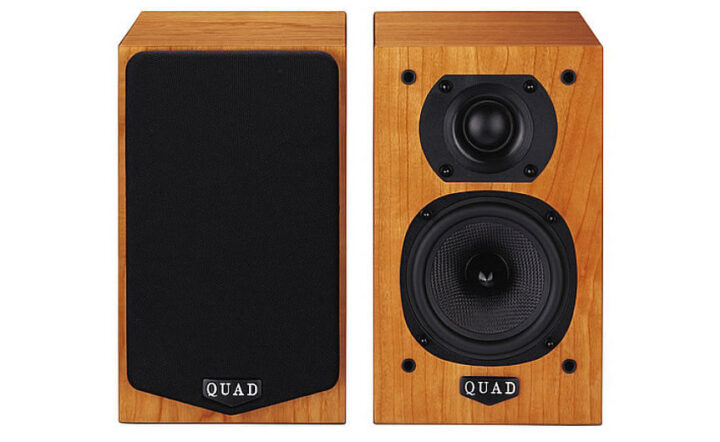
The world, in short, is awash with affordable audio equipment — compact bookshelf speakers, floorstanders of every description, budget Hi-Fi accessories of all kinds. In recent years China has begun to take pure hi-fi seriously, and while the results are mixed, a variety of attractive, inexpensive products are emerging. Yet the majority of these never reach Japan, and even those that do are often handled by only a handful of dealers or have been marked up to prices so inexplicable that they can no longer honestly be called budget Hi-Fi at all.
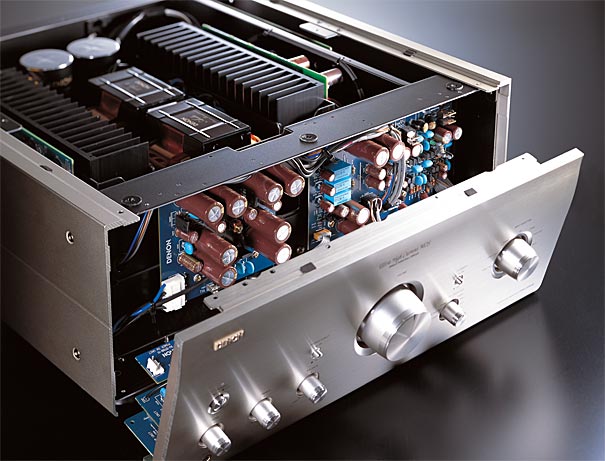 The Japanese consumer market is not what it once was. What sells now is high-end gear aimed squarely at high earners — special playthings for a select few, like Goldmund. Meanwhile, the buyers who used to happily reach for large, heavy mid-priced components in the bubble era have long since lost that purchasing power. Younger people with lower incomes have even less. On top of that, the affordable end of the market — where ordinary people might buy something with their own money for the pleasure of it — is dominated by safe, unexciting domestic products with little real choice, and the number of imported products with any genuine enthusiast appeal that actually make it here is tiny. In these conditions, the chances of a return to the good times when big, heavy, mid-range, mid-priced pure hi-fi was king are extremely remote. It is worth thinking rationally about what music actually needs. The truth is that a rabbit hutch has no use for a tank.
Younger people, with little spare purchasing power, have already shifted their hobby interests towards PC audio and portable music players. For many, headphone listening has become the first choice, driven by the realities of where they live. Compressed audio is still the mainstream, and the reference point for quality is still relatively low, so the sound still falls short of a proper separates hi-fi system — but these are fields where large numbers of people can participate, experiment, and modify to their heart’s content. As digital file sizes grow and digital amplification matures, the day will surely come when this world catches up with and surpasses conventional pure hi-fi. Japan’s audio industry must, like its overseas counterparts, cultivate a market environment that opens up new pleasures and a genuine hobby dimension in audio life — encompassing budget Hi-Fi, and linking where appropriate with PC audio and devices like the iPod — or a revival of pure hi-fi simply will not happen.
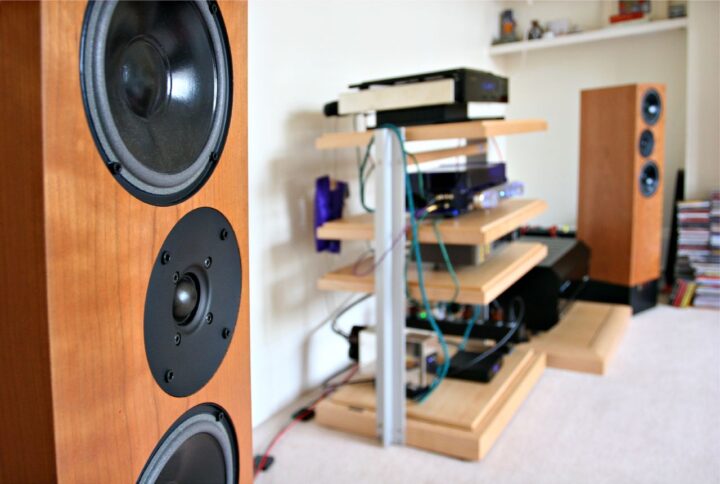
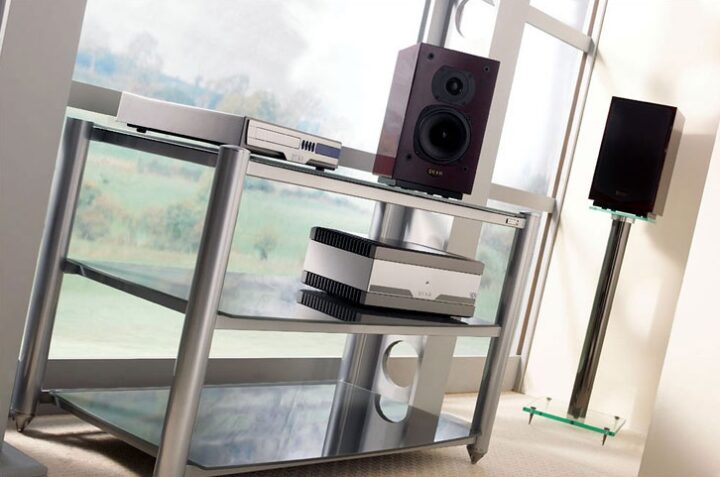
In today’s Japanese market — skewed towards expensive high-end audio, and starved of attractive affordable products and reasonably priced accessories — many music fans and young people have already lost any sense of hope or excitement about pure hi-fi. To win back the customers who ought, by rights, to be seeking out better sound and developing real convictions about their equipment — to draw them back towards the high quality sound and good music that only pure hi-fi can truly offer — what is needed is not the exclusivity of high-end audio but its opposite: a low barrier to entry that anyone can cross, audio products at accessible prices that convey a genuine seriousness about music, a greater variety of affordable sound-quality accessories, and, from the dealers and distributors who handle them in any number, a commitment to honest pricing in line with international norms. That, I believe, is the attitude that a depleted and depopulated Japanese Hi-Fi market needs if it is ever to breathe again.

Auto Translated by CS4.6


List of comments (16)
うちはフランスはプジョーの車乗っているんですが、ほぼ同じ現象を感じます。
106は概ねマーチやヴィッツと競合する車です。しかし106に相当するシトロエンのサクソは売れませんでした。106のほうはプジョーが工夫して、マーチの車格に1600cc、革張りシートその他超豪華装備の高価格車106S16一本にしてニッチを掴みある程度成功しました。「普通の」車が売れないんです。日本の「味気も無い」車のほうが、おかいもののための足としては費用対効果高いですから。サクソはとてもいいのに売れず、後に106S16に相当する車に集中することになりました。正直S16はバランスを失った車で、フランス車の優れた点を活かしたとはいいがたい面があります。メチャクチャおもしろいですが。
結果もっとも普及ラインに「車の愉しさを教えてくれる車」「毛色の違った車」が締め出されているのかなと感じます。
また、アクセサリーに相当するオイルやケミカルなどの内外価格差も恐るべきものです。自分が好むエンジンオイル、Motul 300Vはずばり倍。国内では超高級品扱いですがあっちでは充分日常使用できるオイルなんです。
また、パーツの内外価格差もすさまじいものがあります。ラジエターなんぞは国内5万円、海外1万円とかだったりします。あっちじゃラジエターなんぞ傷んだらホイホイ交換してしまうらしい。もちろん、そういう思想の車を輸入して日本車的に乗れば故障しますし、金もかかります。
ただ、これに風穴を開けるような現象も起こり始めてきました。並行輸入でとても安く部品が手に入るという知識が少しずつ広まり、対抗して正規品が値下がりする傾向を感じます。
オーディオについても、もっと「安くておもしろいものがある」という事実をみなに広めることが大切なのかと思います。
あと、アクセサリーなどのオカルト・ぼったくりを排除し、外から見た「怪しげ感」を減らすべきだと思います。ぶっちゃけアコリバとかイルンゴとかゴールドムンドはもっと糾弾されるべきだと思います。
で、手始めにL-Centre輸入してくれませんかロッキーインターナショナル様。
99シリーズ輸入したのはとても偉いけど。
106乗りさんでしたか。
フランス車は日本人に向いてないみたいですね。まず販売網が極度に少ない。うちは横浜ですのでけっこうそこらへんで走ってますけど、ディーラー網がない地方に行ったら修理の問題とかで怖くて買えないと思います。
ちなみに私が今一番欲しい車がシトロエンC4。こういうご時世なので、本来のディーゼルエンジン車が出ない限り本気で検討しませんけど。プジョー308も魅力的ですが、Cセグメントのくせに車幅が凄いのと値段を見てちよっと震えた…。
マーチやヴィッツと競合するクラスとなると、A・Bセグメント、プジョーの1007やルノーのカングーは非常に魅力的な車だと思います。運動性能も良いし、小さくてなんだか楽しそう♪ ただ、くるまってのはオーディオとは比較にならないほどインポーターの保証負担、税金、輸送費用などが必要になる。結果として、一番売れ筋のCセグメント(C4が240万)に対して、ヴィッツやマーチと同格のC2やC3、1007の価格は200万前後。諸費用混みで大差なくなってしまう。1007や207の上位車種はC4や307と殆ど同じ値段。これでは、車格に対してお買い得感が無く、余程惚れ込んだニッチユーザーにしか売れないですよね。
>Motul 300V
コンプレックスエステルでしたっけ。並行輸入品を一度入れたことがありますが、エンジンからオイルダダ漏れを起こしたので止めました。シーリングと相性あるみたい。今はelfの100%化学合成油を使っています。カー用品店はともかく、最近はYahoo!や楽天、ヤフオクを利用すれば何を買うにしても安くなりましたので、自分で車弄りが出来る人は重宝すると思います。
>アクセサリーなどのオカルト・ぼったくりを排除
>アコリバとかイルンゴとかゴールドムンドはもっと糾弾されるべきだと思います。
叩いて良くなるなら叩きますけど、本気で市場の健全化を望むなら叩くとマーケット全体の疲弊と顧客離れを加速させるだけで逆効果です。良い部分にスポットライトを当てる事で、自然にイロモノはイロモノとしての役割位置に落ち着くようにする。それが一番では無いでしょうか。それと、オカルト問題とぼったくり問題はとりあえず混ぜるな危険♪別の事だと考えてます。
アコリバについてはアイデア勝負の小さなメーカーですので、検証が不十分な物を商品化してしまうのは事実ですし、そこへまた宣伝目的で変な理論を持ってくるから叩かれるんだろうとは思いますが、それでもアコリバ製品にはよい物が沢山あると思っています。しっかりしたスピーカースタンド、電源ボックス(最近のモデルは高すぎるけどw)、そして私が愛用しているディスク消磁器なんてオカルト以外の何ものでもありませんが、実際音が変わりますし、傾向を把握して使いこなせると手放せなかったりします。
https://www.audiostyle.net/archives/23980268.html
ちなみに、こういうオカルトグッズって、日本だけでなく世界中で売ってるんですよね。SHAKTIとかQuantumとか理論はデムパ飛ばしまくりですし、アコリバのディスク消磁器も、アメリカから来るオーディオショップのメルマガに載ってたりして。オーディオとオカルトに親和性があるのは世界中一緒みたい。
http://blog.livedoor.jp/jazzaudiofan/archives/51334870.html
まぁ私はオカルトには寛容で、体感効果(変化)があれば、そこにある音楽の前に理屈はどうでも良い人です。音楽自体が永遠に定量化できない主観でオカルトみたいなものですし、その辺りは、今そこにある音楽より理論が大事というscientismな人達とは相容れません。ただまぁ、オカルト製品は適正価格が見出しにくいので、ぼったくり問題に戻って無限ループし続けるんだろうなぁとは思います(滝汗)
>L-Centre
ロッキーインターナショナルさんはボッタクリではないので虐めないでください(^^; L-CentreというかL2 CENTERって本国定価では£350。日本円換算で8万くらいです。送料や関税入れたら個人輸入でも一歩間違うと10万近くなります。センタースピーカーとしてはかなり高いですので、これはなかなか難しいんじゃないかしら。反面、L-iteの5.1chセットの方はとてもお買い得。私ならL-iteシリーズしか目に入らないですw
眠い頭で作ったエントリなので、今読み返したら無駄に長いというか、同じコトをだらだら繰り返し書いてますね、うぐぅ。推敲する気力もないし、さて、F1が始まるまで寝よっと…。
pastel_pianoさんはどんな車乗られているのでしたっけ。今はフランス車よりもフィアットのチンクチェントの新型やアルファのMiToなども気になっていますが、買い換える気はありません。
オイルについては、300Vでなくても漏れる・消費すること、メーターパネルにオイルの残量計がついていること(本当)から、あまり気にしていません。フィーリングはとても良いです。
さて、オーディオの話ですが、L-ite Centreがあったのですね。これでいいから輸入してくださいロッキーインターナショナル様。お値段がよくわからないけど。
アコリバですが、こんなことをやってます。
http://www8.atwiki.jp/acousticrevive/
要するにデジタルデータをデジタル転送するとき自社アイテムを使ったら音が変わった、というんですね。で、自社製品使用のトラックはレベルを0.5db上げたものだった。つまり微妙に音が大きくなっていた。これを「音がよくなった」と聞き違えるのは当然でしょう。
まさかデジタルのループバックで音量向上がされるわけもなく、大騒ぎになりましたが、phile webの掲示板はこの話題を禁止。音元と広告主メーカーのどす黒い繋がりがほの見えます。
アコリバが作っているものが全てダメだとは言いませんが、今回の件に関してはやはりまず過ぎると思います。
なかなかの熱筆で、軽く感動を覚えました^^
家電量販店で3万円くらいで買えるような、ミニコンポを3台ほど所有してますが、アンプもスピーカーも、つかえねえ!
って感じですね^^;
じゃあ?何を買えばいいのよ??
って、地方都市じゃ、オーディオショップさえ無いのが現状で、、、。
金沢のような地方都市でも、昔はオーディオ専門店がいくつもあったんです。
私も、マイクロの糸ドライブのターンテーブルに、TRIOの40万ほどのセパレートアンプ、ALTECの同軸2WAYという構成で楽しんでいました。
ALTECがぶっ飛んで、アンプも壊れて、コンコルドは交換針も手に入らず、もう一度買い直す余裕もなく、、、、。
泣く泣くオーディオは卒業しました。
そんな私を、再びオーディオに目覚めさせてくれたのは、iTunesであり、デジタルアンプであり、オーディオインターフェースであり、お手ごろ価格の新素材フルレンジユニットですね。
デジタルアンプ+フルレンジ一発の音の良さは、BOSEのM3が実証していると思います。
あれだけの音が5万円で手にはいるなら、安いなと、、、、。
自分自身は、既にがらくたにそれ以上の投資をしてますんで^^;
今乗っている車ですが、ここでは控えさせてくださいm(__)m 過去にWRCで優勝経験のある日本車です。
>L-ite Centreがあったのですね
QUADの取り扱いがあって値引率の大きなイギリスの某販売店に日本で売っていないQUAD 9L2を、VAT抜いて送って貰えませんか?とかメール送ってみたのですが、We do not ship internationally…な返事(^^; 定価で売ってる店では、なんだかねぇ。Liteは5.1chセットなら、今の時期どこも何故か半額みたいなのですが、セットは重いよウーファーとかセンターいらないよ送料アホみたいに高いよです。こんな感じでは日本で買った方がずっと良いですね。9L2も日本で取り扱ってくれると良いのですけど、結局他社製品よりもL-iteと11Lと競合してしまうので、色々辛い部分がありそう。
で、色々英国やアメリカのショップをぐるぐる回ってたら、他に欲しいスピーカーが色々出てきちゃって……。
>アコースティックリバイブ問題
ま~あんまり燃料投下したくないので、この話題は今はスルーがベストかと。
そのうちみんなが忘れた頃に、前にこんな事あったよねくらいは書くかもですが。
Phile-webの方はアカウント持ってますので、事の発端と削除の経緯は見てました。一つ云えるのは雑誌の企画が無理すぎたというか、アナログ段経由での音質変化をDA/AD記録するならともかく、デジタルデータはデータとしては完全なる再構築が可能なわけで、それでもデジタル転送で音が変化するのは、再生側にリアルタイムで関わるジッターなど別の要因があるからで、その変化をリアルタイムでない(時間軸という概念から切断された)CDやUSBメモリに記録することは不可能。私みたいな口からデムパ垂れ流しのオカルト肯定派でも首をかしげるような事をやってしまっているなと。たぶん、企画に携わった人達がデジタル転送の仕組みや問題点を実は良く解ってなかったんじゃないかなぁ。PC系の住人には信じられないことかも知れませんが、案外その程度のオチだと。
>でくのさん
>なかなかの熱筆で、軽く感動を覚えました^^
恐縮です。要点が散漫でへんちくりんな文章なので恥ずかしいのですが。。。
>ミニコンポ
コストダウンと見かけ倒しの酷い音質垂れ流しのミニコンポが、コンシューマーオーディオ市場全体の95%以上を占めてるのも日本の大きな問題点かもですね。海外では例えばNADやケンブリッジオーディオの安いバラコンポが、ミニコンと同価格帯から色々出ていたりします。5万未満でミニコンしか買えないという状況ではなく、ちょっとこだわるなら、同じ予算でピュアオーディオの3点セット一式も如何?って入口があるんですよね。
>地方都市じゃ、オーディオショップさえ無いのが現状で、、、。
地方に行くと凄いショップが多いですよね。実質会員制みたいな、ハイエンド買わないお客はお断りみたいな。。。お客様が店主の存在を感じさせず、店員に必要以上に気を使わずに商品を眺めたり音出しできるようなお店が…良く考えると都会でもあんまり無いですね(^^; あっても家電量販店なので、周りがうるさくて音楽聴けないよって感じですし。
pastel_pianoさん、こんばんは。
victorのウッドコーンスピーカーを検索していてここにたどり着きました。私にとっては始めて聞く海外メーカ名などが沢山出てきて、大変おもしろく読まさせて戴きましたが、特にpastel_pianoさんのオーディオに対する考え方にいたく共感致しました。
昔からハイエンドには縁がなかったのですが、以前はトリオ、ケンウッドの単品コンポを中心に中の下くらいのシステムで楽しんでいました。それらも忙しくて聞かなくなり、最近ようやく時間的ゆとりができたので気分一新、新しい機械に買い換えようと思ったらミドルクラスの機械はオンキヨー、denonぐらいしか近くの電気屋さんにはありません。あとは、いかにもチープな感じのデジタルオーディオ用のラジカセから進化しましたと言わんばかりの安いミニコン?が並んでいます。ハイエンドは確かに厳然と存在しますが、購買力を失いつつある世代ですので、はなから無理です(^_^;)。
ほどほどhifiの層がずいぶんやせ細っているみたいな印象ですね。PC接続も視野に入れて、そこそこの値段でがんばっているのはオンキヨーぐらいでしょうか。
あ、victorのコンポですが、ウッドコーンスピーカーの潤いのある音が好きで、いっそのことこれだけにしちゃおうと思っているところです。MDデッキとカセットデッキを残してあとは全部処分して、部屋を広くしてその分ゆっくり音楽を楽しもうかと思っています。是非またウッドコーンのお話でもお願い致します。
ちょっと低レベルのお話で済みません。
buruwan