【Black Cat Cable Silverstar!75 Digital Cable — Introduction】
Part 1|Part 2
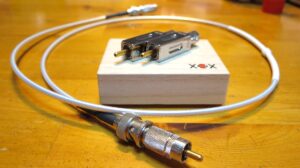
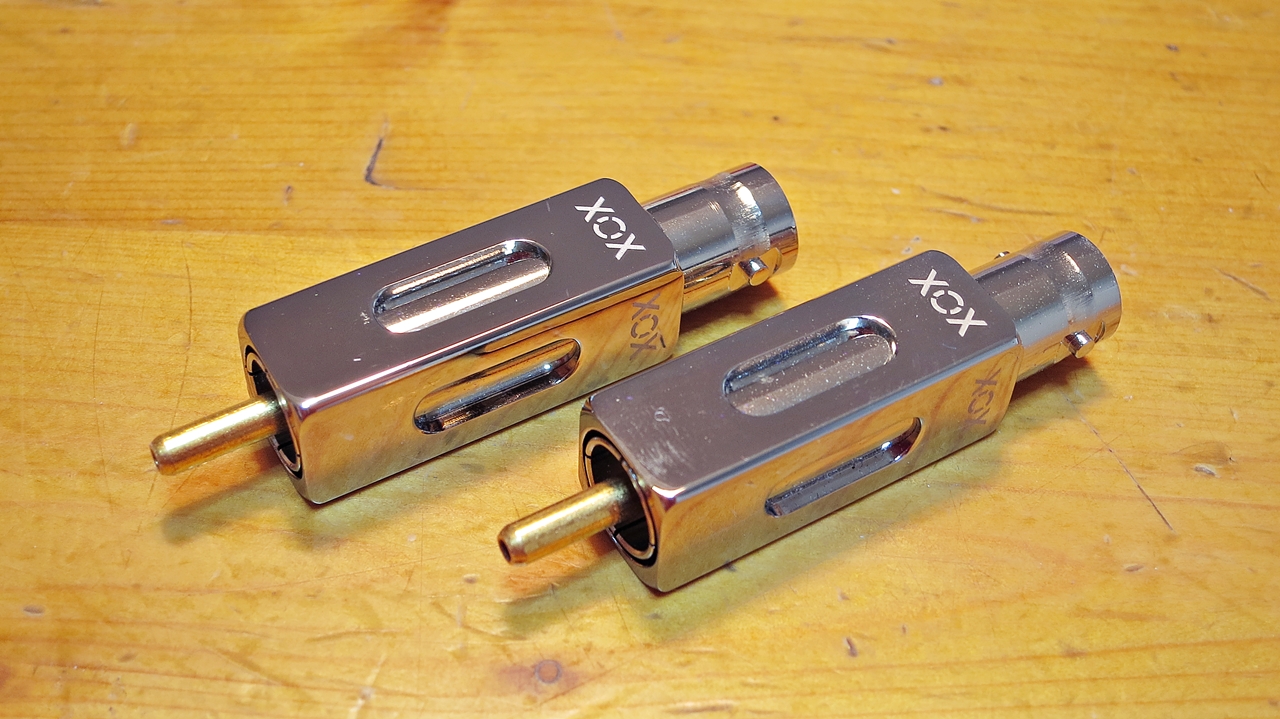
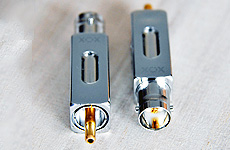
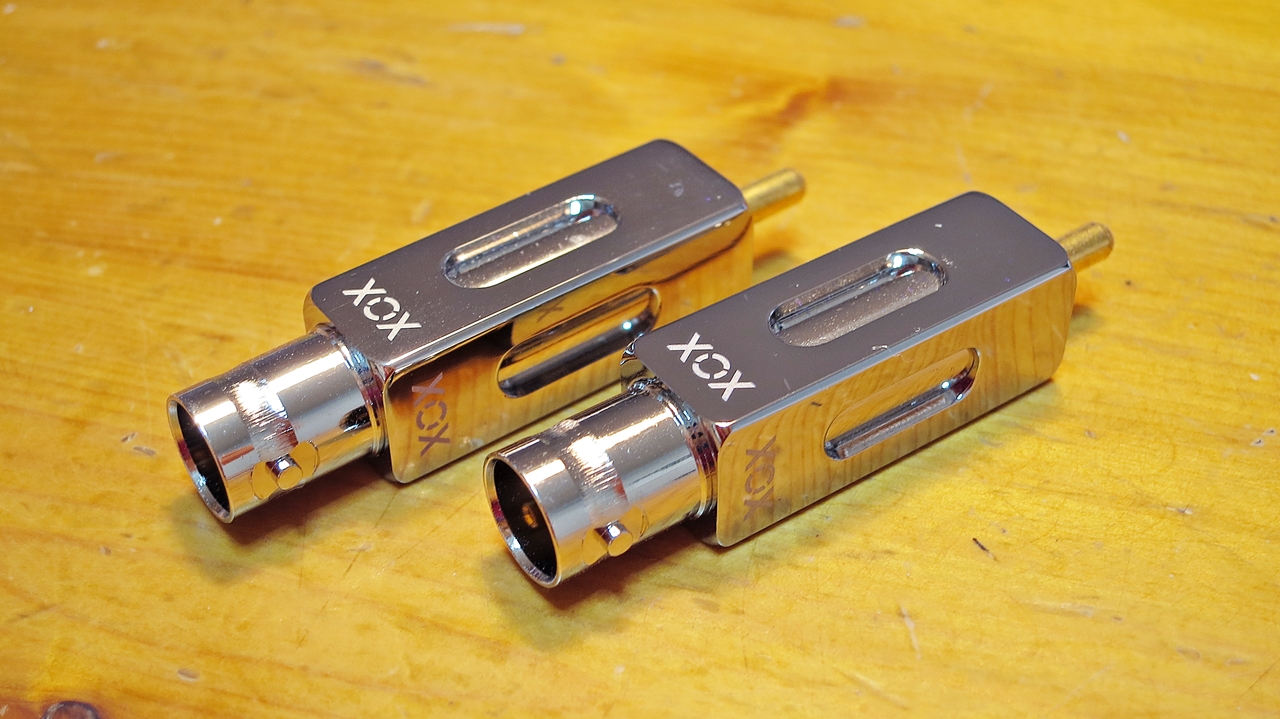
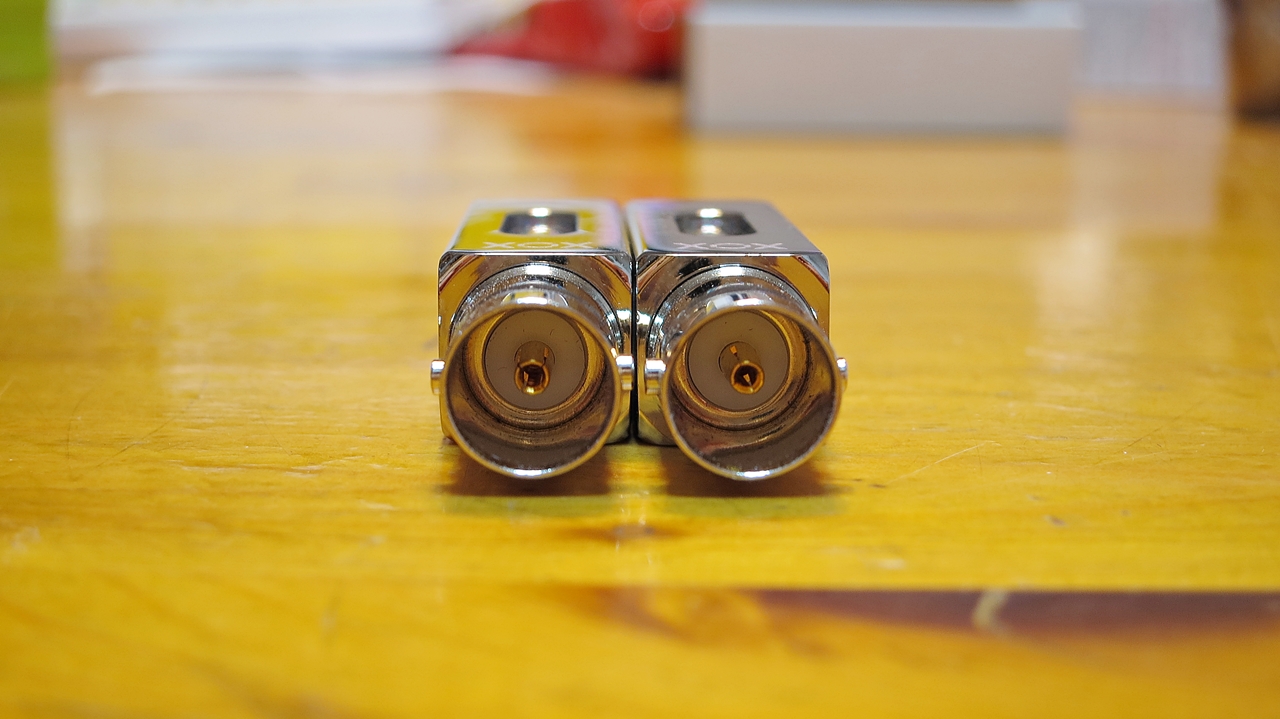
The Black Cat Cable XOX75 is a high-quality BNC-to-RCA adaptor, original to Black Cat Cable, designed specifically for S/PDIF coaxial digital cables and rated at a precise 75Ω. It comes as standard with the higher-end digital cable models — the Digit75 and the Tron Reference, which retails at something like ¥300,000 — but unfortunately it is not included with the entry-level Silverstar!75. The adaptor alone carries a list price of ¥15,000 (excluding tax), so one can understand why it would be difficult to bundle it in on cost grounds. If you add the XOX75 and the Silverstar!75 together, the total exceeds ¥40,000, which puts it well outside the accessible price range that ordinary Hi-Fi enthusiasts can realistically reach.
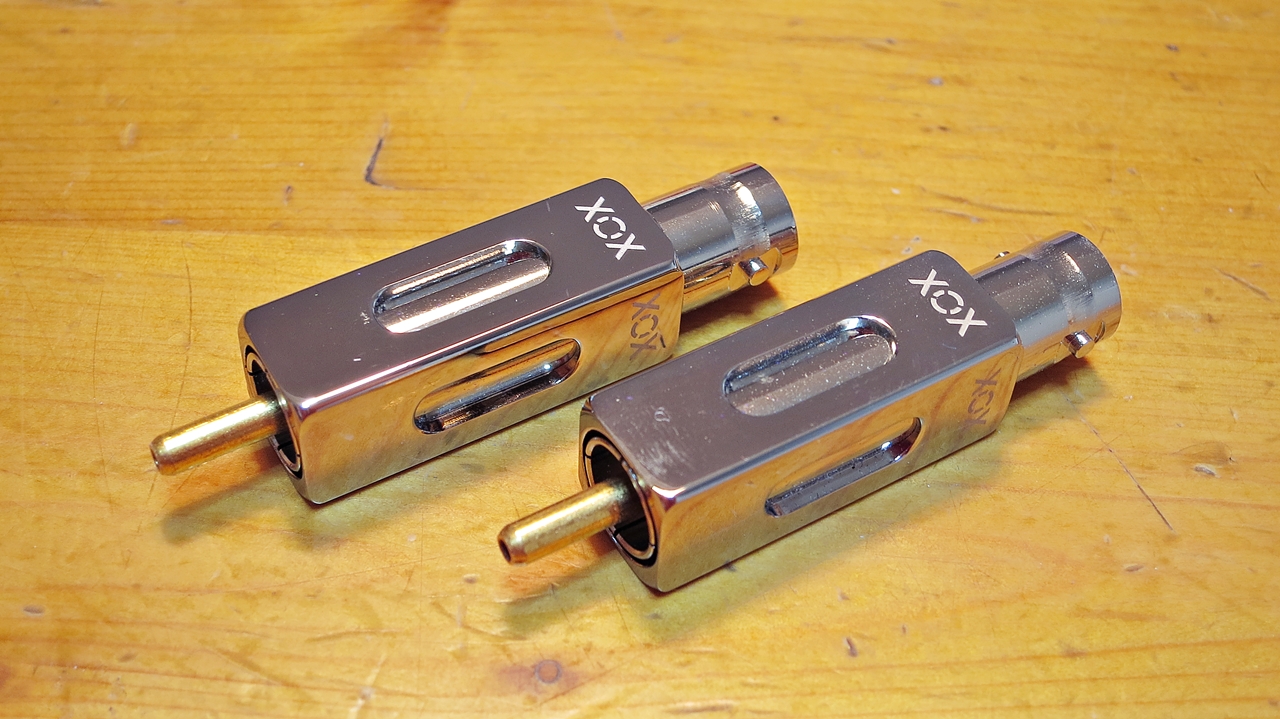
Going by the distributor’s website, it does not appear to be discontinued yet, but judging by the grain pattern on the box of the one I got hold of, it seems it may well have been the very last unit that came into Audio Union — the one that had been mentioned on Twitter. After that, the Union has remained out of stock ever since, and I do hope they restock it, though one wonders what will happen going forward. It seems to continue being included with the Digit75 MKⅡ and the Tron, but the single-unit listing has disappeared from Black Cat Cable’s own website back in the United States.
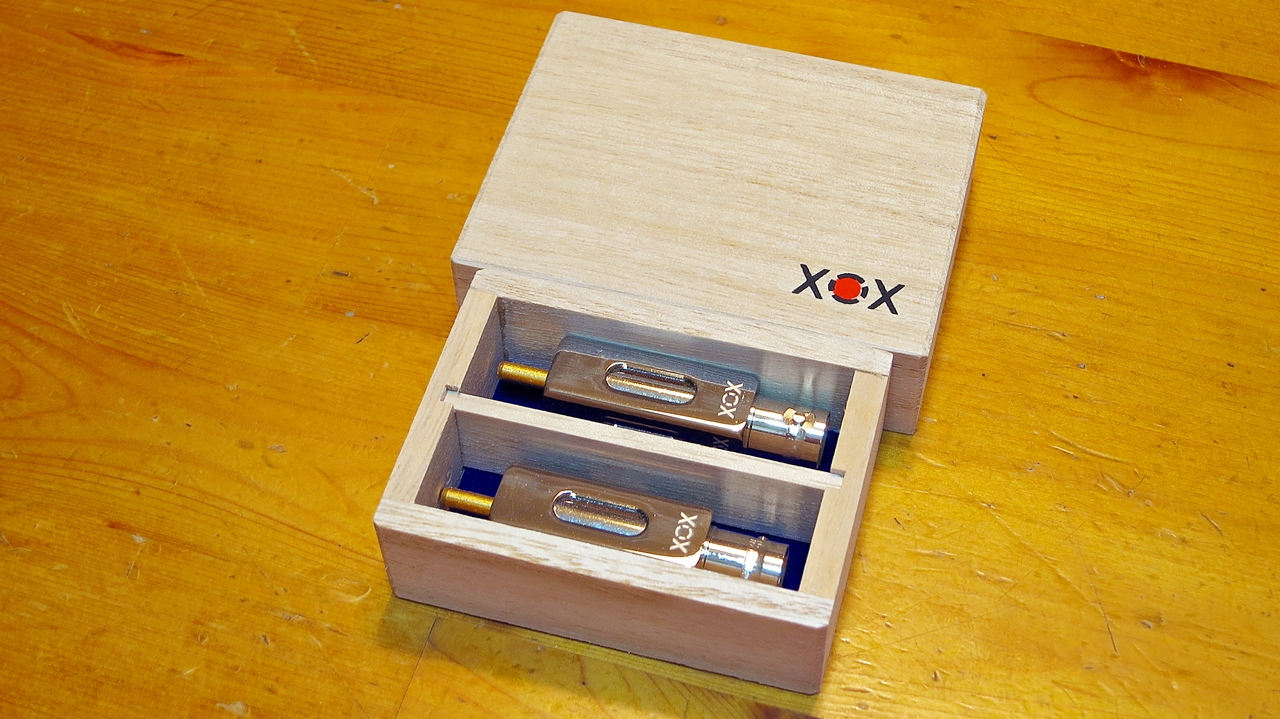
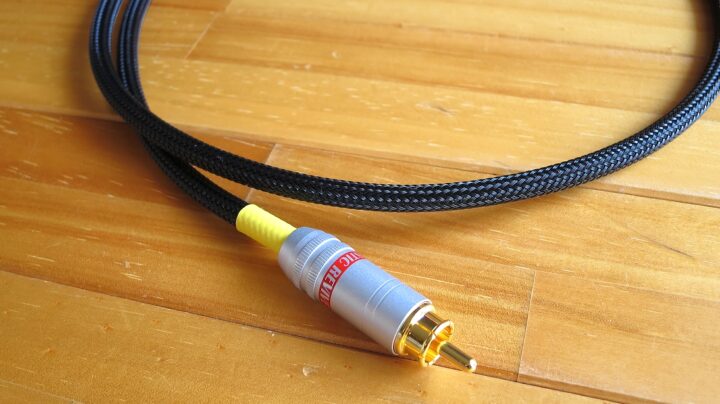
The BNC-to-RCA adaptor that comes included with the Silverstar!75 was, for some reason, so loose it would practically fall off on its own, but the fit of the XOX75 is, well, perfectly normal. It comes in a small wooden box and looks tremendously luxurious. It is also heavy. The conductive parts are pure copper with gold plating. The gold plating is perhaps a little questionable in its lustre — it may be that there is no nickel underplating beneath it. The square body is machined from solid brass.
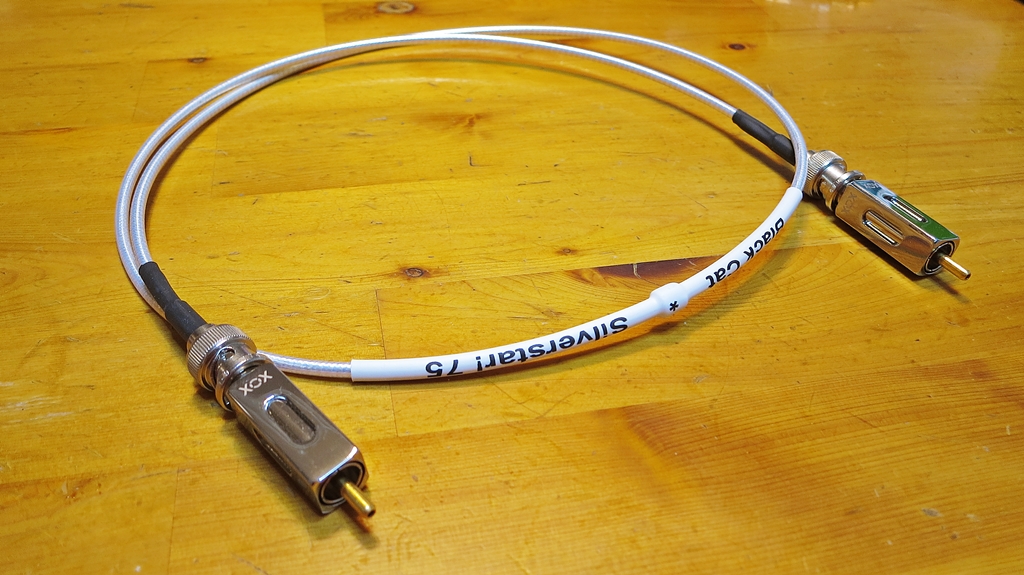
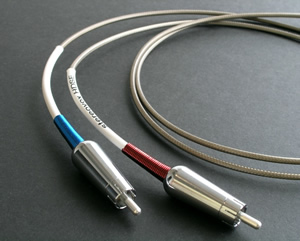
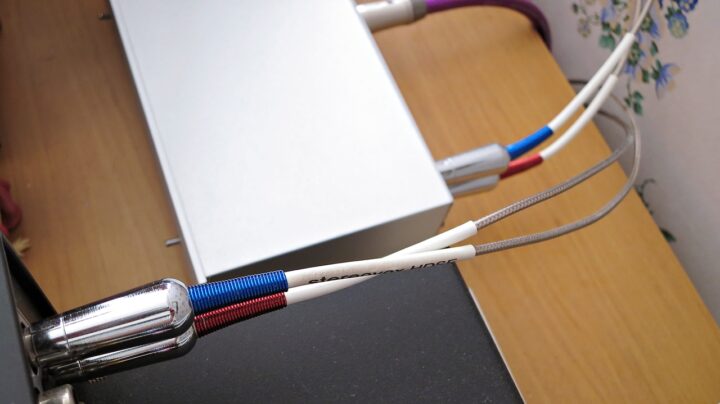
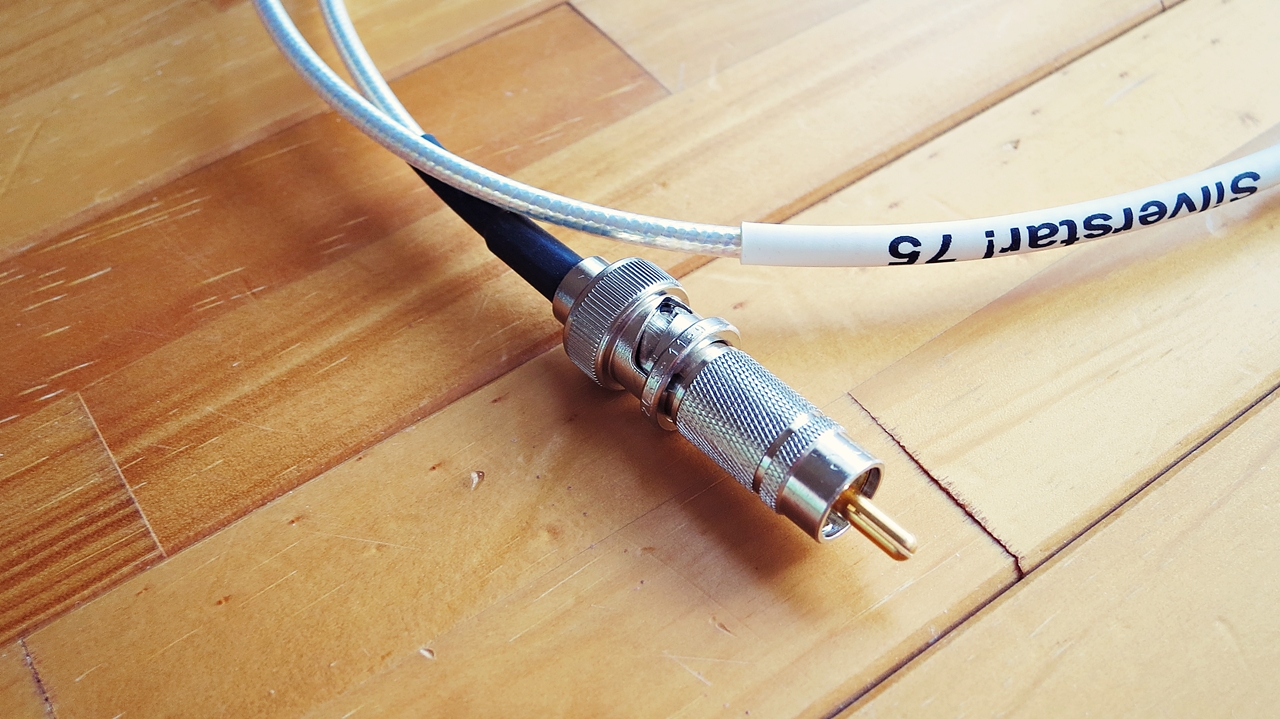
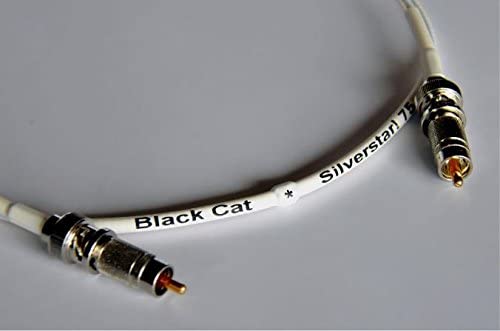
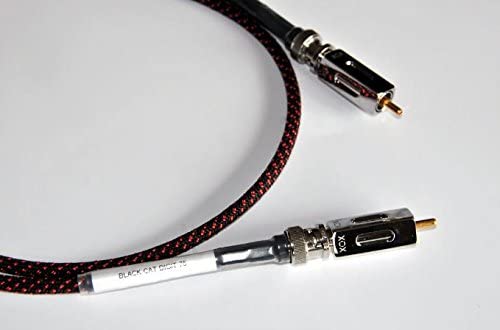
This is what it looks like fitted to the Silverstar!75. The cable itself is thin and light, whereas the connector is quite heavy, so some care is needed in handling. As a low-budget, entry-level enthusiast, a digital cable retailing at close to ¥50,000 is normally the sort of thing that simply passes out of my field of vision entirely, but in this case, because the adaptor was sold separately and the purchase ended up happening in two steps, it seems I somehow managed to get my hands on a level of sound quality that would ordinarily have been beyond my reach.
Sound quality: RCA-to-BNC adaptor XOX75 + Silverstar!75
Compared to the adaptor included with the Silverstar!75 (※ direct sales single-unit price: $14.95), resolution improves across the board, and the sound transforms in one go into something carrying the luxurious quality one associates with high-end audio. The bass fills out into a pyramid-shaped tonal balance. A marked improvement in perceived S/N. There is a faint metallic sheen — characteristic of metal plugs — but the texture is smooth and never harsh. There is not the slightest trace of brassiness or roughness. The soundstage expands considerably compared to stock, but because the centre of gravity shifts downward, one does get a slight sense of restraint in the upward sense of openness, and ideally one would want that to open up a little more. Orchestral music has a pleasing depth and transparency of space — particularly a deep rearward dimension, with excellent placement of wind instruments. The fact that the outline of individual instruments is not emphasised is also a point in its favour. The impression is one that settles deeply and stably downward rather than spreading upward. The cable already had good phase coherence to begin with, and the addition of the XOX75 improves this sense of phase even further.
Treble
High transparency; extension improves but remains exceptionally smooth and never fatiguing; refined and beautiful-sounding. No sense of distortion. One finds oneself captivated by the lingering decay of a moist, resonant quality. The resonance that hangs in the air is almost too beautiful — which does make one wonder whether this might be a form of added coloration particular to high-end accessories…
Midrange
Smooth, with smooth outlines. High transparency.
Definition is slightly reduced. Expression has depth, but there are moments where the sense of pace feels a little lacking, giving a slightly ponderous quality.
Bass
Impressed by the depth of bass extension and sense of weight. Deep notes emerge with conviction. A slightly fluid, yielding touch. Whether owing to the combination with the belt-drive CD player and its unhurried character, there is a somewhat slow-paced impression overall.
To offer an overall assessment of the XOX75: while the soundstage opens up in a natural, life-sized way and the sense of space improves considerably, the image — which with the stock adaptor was pinpoint and tight — does become relatively slightly larger by comparison. The sheer quantity of detail does not increase as such, but as a result of the improvement in spatial transparency, the finer nuances of a performance and the decay of resonances become much more audible. The tonal temperature drops very slightly, and with it there is a slight reduction in a sense of forward drive. Rather than rhythmic energy, one’s attention is drawn to musical depth and the subtle detail of movement, which suggests this is better suited to classical music. Orchestral sound takes on a greater ease, and at high volumes things remain composed without distortion or breakdown. True to its character as a heavy metal plug, it does seem to absorb a small amount of energy — the suppression of resonance appears to come at the cost of a slight reduction in drive and dynamism — but since the Silverstar!75 conductor itself has that quality of liveliness, the overall musical balance ends up feeling well resolved.
With the combination of the Silverstar!75 conductor and the XOX75 plug, the tug-of-war between musicality and pure sound quality holds its ground, and the music does not seem to lose its vitality. In a system like my main system — a box-pure setup biased towards delicacy and running somewhat underpowered — finding the right balance is a challenge, but for systems with higher power or a normal level of drive capability, I do not think it would be much of a problem at all. The XOX75 exerts an extremely strong influence on the overall sound — it may well be that using it on just one end would be sufficient. To put it plainly, the XOX75 is more dominant than the Silverstar!75 cable itself, to the point where one gets the impression that the plug is really the main component here. Since this is originally the RCA plug adopted for the higher-end Digit75 and the Tron Reference, one does wonder whether using the XOX75 with another manufacturer’s BNC-terminated digital cable might also yield quite a dramatic improvement in sound quality. I was initially rather hesitant about spending over ¥10,000 on what is, after all, just an adaptor, but taking into account its versatility and future potential, this turned out to be quite a find.
The greatest benefit I personally feel is that the high quality and fullness of the bass resonance brings out a deep, spiritually felt quality of sound. For me, one of the most important things in reproducing classical music is precisely this — whether or not that depth in the lower register actually comes through. The strange roughness in the treble that was noticeable with the standard plug is also completely eliminated. Compared to the stock plug, the frequency range extends substantially in both directions, and the veil-like sense of reduced transparency and poor S/N is almost entirely dispelled. At this point I had been thinking of trying a Nakamura Seisakusho Amormet Core, but with the S/N having improved this much, it seems an addition of that kind would be unnecessary.
Depending on circumstances, it might also be worth fitting the XOX75 to one end only, and using the HDXV or Silverstar!75’s normal stock plug — or perhaps a Canare or other third-party BNC-to-RCA adaptor with a decent reputation — on the other end. To compensate for the slight loss of drive, it might also be worth sticking a small piece cut from a J1 Project IDS Composite Material T Damping Sheet T-2010J on. (Some time later, I tried attaching an Acoustic Revive QR-8.)
If I were to point to a drawback of the XOX75 — though personally I do not really experience it as a drawback — it would be that the overall system sound, which was already not particularly fast to begin with, has taken on an even more unhurried atmosphere. The rhythmic gait of the Vienna Acoustics MOZART T-2 (which has something of a Vienna Philharmonic pulse to it), combined with the antique belt-drive first-generation CD player CEC TL5100Z and the integrated amplifier TAG McLaren 60i — a trio of classically unhurried, gently swaying devices — seems to have come fully into its own.
A fresh look at the Silverstar!75
Based on my impressions from reviewing the older Stereovox HDXV, I had expected something similar in character to the HDSE I already owned. But whereas the HDSE — a design of roughly the same generation as the HDXV — has a sound with a faint metallic edge and a direct, unadorned quality reminiscent of live monitoring, the Silverstar!75 adds a subtle sense of resilience and carries a suggestion of the beautiful-toned presentation one associates with high-end audio, though that quality remains within the bounds of tasteful restraint, a light touch of makeup rather than anything heavy.

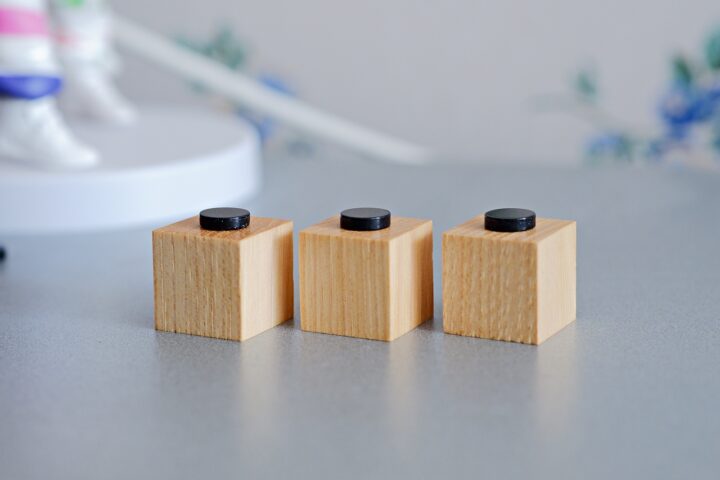
After several weeks of burn-in, the slight softness in resolution and the somewhat sluggish sense of pace that were noticeable fresh out of the box have gradually improved. After two weeks the amount of detail had already increased, so based on experience, I suspect that after six months or so it will have reached a point where neither is any concern at all. (Note: Now that five months have passed, I would actually describe it as a cable with finely graded gradations in each individual note and a high level of detail.) Initially, when first connected with the XOX75, the material character of the plug provided a masking effect that compensated for the somewhat dry side of the Silverstar!75’s resonance, but as the XOX75 settled in with burn-in, the slightly hazy texture on the conductor side became mildly noticeable again. So I dug out the quartz resonator Acoustic Revive QR-8 and tried applying just one to the XOX75 on the DAC side, which improved the perceived S/N while adding a pleasing moistness and refinement — a nicely balanced outcome. The review of the Acoustic Revive QR-8 is here.
Getting the most out of the Silverstar!75
I think the Silverstar!75 is a fairly demanding digital cable to work with. Because it does not exaggerate any particular frequency band or sonic quality, anyone expecting the kind of edgy, high-resolution, high-speed Hi-Fi sound that audio enthusiasts tend to find immediately impressive will be thoroughly disappointed. Conversely, if the system is not up to a sufficient standard, it will simply produce a dull, listless sound. I think this applies to Black Cat Cable products in general: it is a digital cable that reveals its true worth only in a well-resolved system that has been carefully refined by ear, and only to a listener who is prepared to sit with the music patiently — making it something of a cable for seasoned Hi-Fi enthusiasts. Its approach strips away the kind of artifice associated with audio presentation, and speaks instead with a conviction aimed at music lovers, so I would not recommend it to anyone whose engagement with digital audio is primarily technical rather than musical. Fifteen years ago, I would not have appreciated the Silverstar!75, just as I was not fully able to understand the qualities of the Stereovox HDSE when I bought it at the time.
Beyond each owner’s own orientation towards the art of reproduction, it also matters whether the sonic vision of one’s particular DAC or digital transport is compatible with the world that Black Cat Cable inhabits. I think this is a cable for someone whose S/N — including the power supply — is already sufficiently sorted elsewhere, who has no further need to bolster perceived S/N on the digital cable side, and who has genuinely moved beyond any lingering attachment to exaggerated, Hi-Fi-spectacular sound. In my own system, the question of how to maintain background S/N after introducing the Silverstar!75 has been an ongoing challenge, and one solution that came to mind was to run it suspended in mid-air. This cable noticeably worsens in perceived S/N the moment it makes contact with the wallpaper on the rear wall or a wooden rack.
My main system does not have sufficient space behind the audio rack, and the Silverstar!75 is also 1 metre long — slightly on the longer side — so a fully suspended run is difficult. When routed normally, it inevitably ends up touching the rear wall or some part of the back of the rack somewhere. The approach I came up with was to allow contact at one single point only, and to make the material at that contact point metal. Initially, to avoid contact with the wall, I tried clamping a polycarbonate clothes peg to the back of the rack and hooking the cable over it, which did give a better sense of S/N than letting the cable rest against the rack or rear wall, but the cheap, plasticky resonance of the polycarbonate was noticeable and slightly bothersome.
 Surprised by the difference that made, I next picked up a stainless steel clothes pegs from a hundred-yen shop and swapped them in — and these sounded considerably better. They are the kind of thin stainless steel pegs that one would expect to resonate readily, and there is indeed a slight metallic jangle to them, but it is tolerable. The reason I chose stainless steel specifically is that Black Cat Cable’s own cable lifter, the XOX “CABLE CARS” (inexplicably not sold in Japan), is made of stainless steel. There are of course various material options for cable lifters, but personally I feel that for Black Cat Cable — with its natural, finely textured, unadorned quality — adding a touch of resonance via a metal cable lifter such as stainless steel actually produces a more balanced result.
What I am now considering is to screw a tassel holder — a curtain tieback holder — made of bronze or stainless steel or some other metal, with a smoother resonance and less tendency to vibrate, onto the back of the audio rack, and try resting the cable on it at a single point of contact.
On the new Black Cat Cable Silverstar!75 MKⅡ
What I actually feel using the original Silverstar!75 in practice is a natural spatial presentation free from any electrical distortion, and a level of musical information and musicality that never overstates itself — but to state the weakness plainly, the perceived S/N is not entirely satisfying. With the stock BNC-to-RCA adaptor, it is honestly at a level one notices. Even in combination with the XOX75, the S/N remains within acceptable limits but cannot quite be called excellent. The Acoustic Revive DIGITAL-1.0R-TripleC-FM that it replaced had a Finemet multi-noise suppressor built in and was an exceptionally S/N-capable digital cable, so in that regard the Silverstar!75 does inevitably seem to come off second best.

However, in the newly released Silverstar!75 MKⅡ, a secondary shield of pure copper and a braided jacket have been added, along with a simplified version of the RFI/EMI rejection material that was introduced earlier in the higher-end Digit75. The details are unclear, but I find myself speculating that it might be something along the lines of Finemet or Amormet. The external diameter has also increased, and the impression overall is that the model change has tackled the S/N issue head-on — giving a strong sense that the problems noted with the original Silverstar!75 above have been thoroughly resolved in the MKⅡ. That said, a proliferation of shielding and noise-absorbing cores does tend to involve some trade-off against the natural openness of the soundstage and the organic texture of instrumental timbre, even as it improves S/N and general sound quality, so as someone who specifically rushed out to buy the original Silverstar!75 before it disappeared, I do find myself curious about where that balance has landed.
Not the Silverstar!75, but over on the Audio Union Ochanomizu Accessories blog,
“Moist and smooth. An exquisitely fine texture. A rich, heady fragrance hangs in the air, and yet the image instability one often encounters with cables of this kind is entirely absent from Black Cat’s cables.”
Reading that made a great many things fall into place. The Lupo MK2 is out of reach for me, but its younger sibling — the Lupino RCA, also single-core pure silver, released not long ago — is something I would like to get hold of one day.
I have also wondered whether to go further and try the Silverstar!75 MKⅡ or the higher-end Digit75, but what I find myself actually wanting — if the opportunity ever arises — is to go back to the origins of Chris Sommovigo’s design work and get hold of the KimberCable D-60, designed in the 1990s. (In fact, I have wanted one ever since then.) It is a digital cable that has continued as a long-seller for over twenty years without a model change, so it might well be dismissed as hopelessly out of date, but I am genuinely not chasing the latest trends in sound quality — if anything, what I am after is something that evokes the spirit of a good old American sound from a bygone era.
~ Summary ~
【Black Cat Cable Silverstar!75 Digital Cable — Introduction】
Part 1|Part 2

Auto Translated by CS4.6