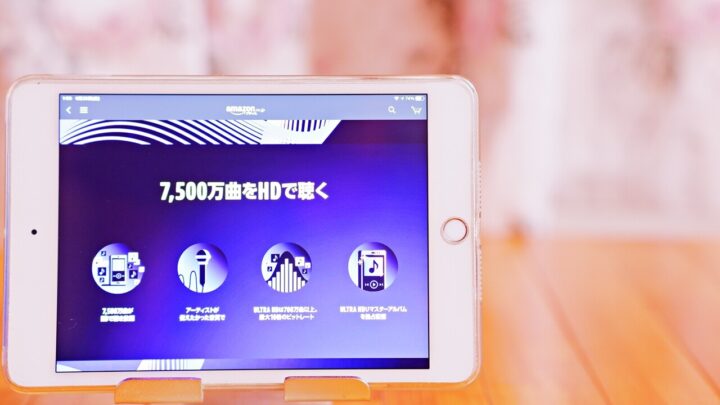
From June 2021, Apple Music has added lossless audio at no extra charge! — quite the hot topic in music circles these days. The entire catalogue of 75 million tracks will be available to download in ALAC (Apple Lossless Audio Codec), namely Apple Lossless at 48kHz/24-bit, with support also announced for the higher-tier format of 192kHz/24-bit “Hi-Resolution Lossless”. ※ In addition, there is new support for Spatial Audio with Dolby Atmos — this can be experienced by playing Dolby Atmos albums through AirPods and Beats headphones equipped with the H1/W1 chip, as well as through the built-in speakers of iPhone, iPad, and Mac.
What on earth is Hi-Res audio? For those unfamiliar, a simple analogy: think of it as the audio equivalent of high-definition broadcast picture quality compared to the analogue image of an old cathode-ray tube television. In terms of audio quality standards, analogue records, ordinary CDs, MiniDiscs, cassette tapes and the like are all non-Hi-Res. And even digital formats from the PC era onwards, if they use lossy compression to reduce file size, are also generally non-Hi-Res. Now, when it comes to picture quality, most people can instantly spot the dramatic difference in resolution between old and new standards — but when it comes to sound, to audio quality, how does that actually hold up in practice…?
To truly experience Hi-Res audio, a high-calibre playback system is, in fact, essential
The “perceptible difference in sound quality” between CD-quality WAV 16-bit/44.1kHz or FLAC, Apple Lossless 48kHz/24-bit lossless sources, AAC/MP3 lossy compressed sources, and Hi-Res sources with their greater information density and wider frequency range — this, I genuinely believe, varies enormously depending on what playback system you use as your reference. Because the differences can be confirmed on paper, in the data — “the differences are huge!” can be stated with complete confidence — even in cases where it’s rather questionable whether anyone is actually hearing a meaningful advantage, people seem to go around wearing smug expressions, giving off a vague air of: “I can do a proper listening test, which makes me rather special” — a kind of snobbery where the superiority of Hi-Res is discussed in somewhat nebulous terms… or am I simply overthinking this?
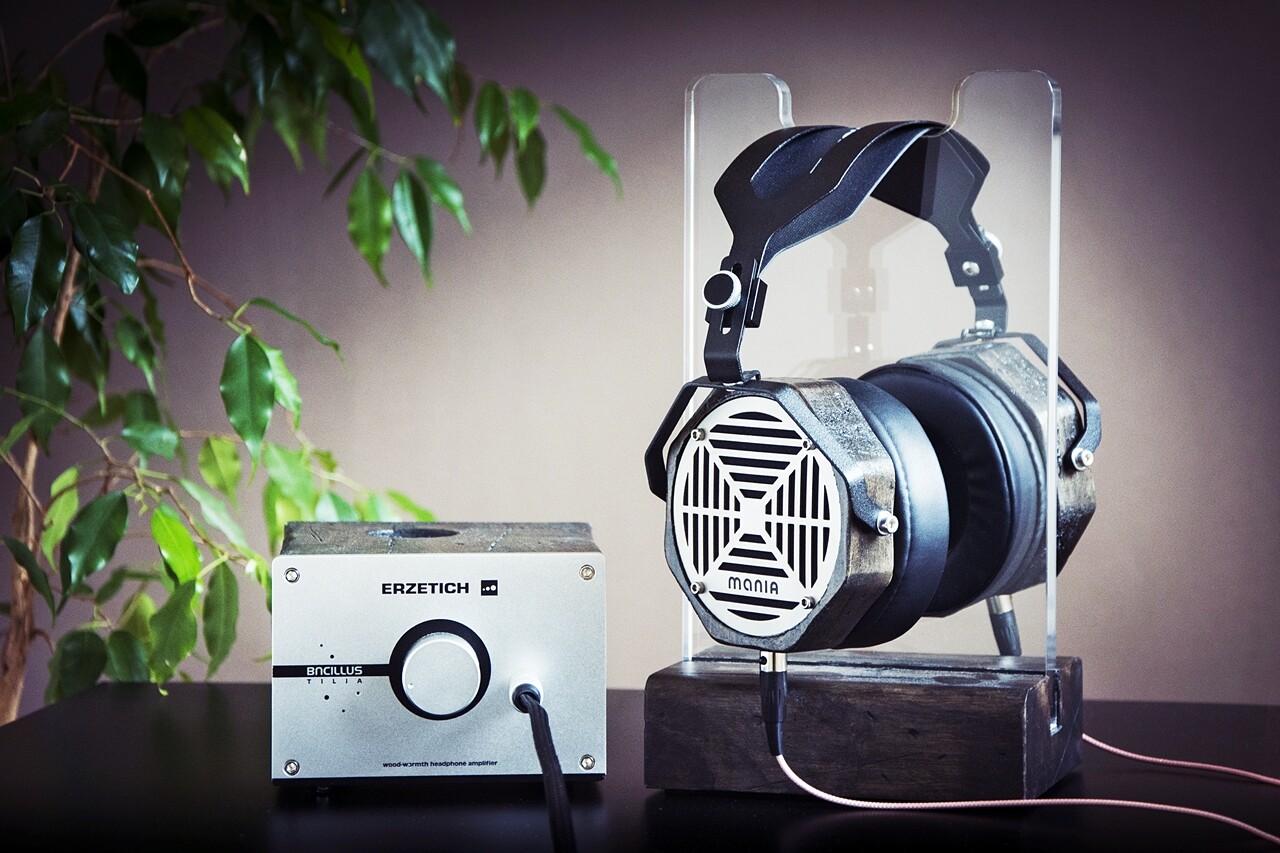
This is purely an impression drawn from my own personal experience, but the kind of standalone Hi-Fi system, or headphone-and-earphone-plus-headphone-amplifier combination, that can vividly render the difference between Hi-Res and compressed audio — not as a subtle distinction, but as something you can picture clearly in your mind — seems to me to be limited to either genuinely high-end Hi-Fi systems where considerable cost has gone into the quality and precision of the components, or to exceptionally specialist audio equipment designed with careful attention to simple, straight signal paths.
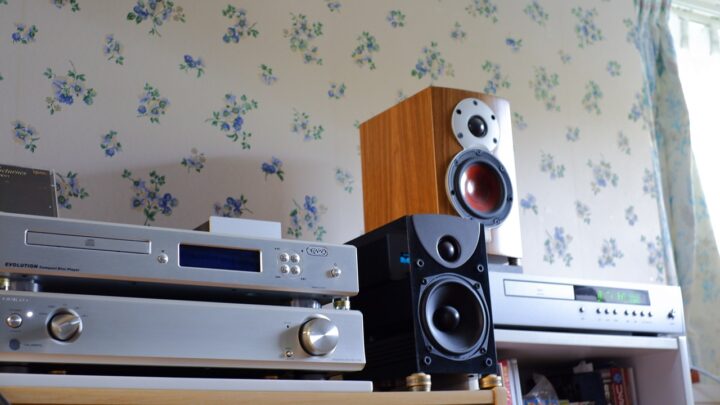
As for the countless cheap mini systems and PC audio setups that flood the market — the sort where artists sound as though they’re singing half-asleep, slack-jawed and bleary — in those cases, a hyperacute Hi-Fi enthusiast with a well-trained ear for microscopic detail might just about manage to tell the difference “by force of habit,” but honestly, isn’t the truth that there’s barely any meaningful practical advantage for actually enjoying the music? — there, I’ve said it. ※ Incidentally, regarding the high-definition broadcasting analogy I used at the start — audio-wise, it is compressed almost to its limit with high-frequency roll-off applied, and is unfortunately not of Hi-Res quality.
Technical definitions and specifications: Hi-Res, lossless, and compressed audio
Higher quality (higher bitrate / higher sample rate)
↑
Hi-Res = 192kHz/24-bit, SACD (DSD), Blu-ray Audio, DVD-Audio, 384kHz/32-bit, etc.
※ High-quality audio data with expanded frequency range and dynamic range
↑
Hi-Res = 96kHz/24-bit and above ※Japan Audio Society
⇅ Apple Lossless (ALAC), FLAC, AAL, WMA Lossless, etc. ※Lossless refers to lossless compression
↑
Primarily 44.1kHz/16-bit = traditional Linear PCM (LPCM), CD standard, uncompressed WAV, AIFF, and other previously standard bitrates
↓
Lossy compression formats such as MP3, MP4, AAC, WMA, ATRAC, etc.
※ Existing downloaded or streamed music not claiming Hi-Res status, digital audio in broadcast signals, MiniDisc, DCC, etc.
↓
Lower quality (lower bitrate). ※ Apple Lossless 48kHz/24-bit is classified as non-Hi-Res under the Japan Audio Society definition, but qualifies as Hi-Res under the JEITA definition.
The perceptible difference between Hi-Res and non-Hi-Res is more demanding than you might expect
There is also something I have long felt: even if the amount of information and the fineness of sound quality do differ with bitrate, is it really only me who finds that, on the great majority of audio equipment at the commonly available level, the difference does not sound nearly as large as it is made out to be in words? Even with the high-end Hi-Fi separates that many visitors to this site own, if the mains quality is poor, the room acoustics are bad, or the setup is cramped and far from ideal, the difference still does not come through as clearly as people claim — (and I’ll leave it at that) isn’t that the reality of it? Even in audition environments at shops selling mid-to-high-end audio equipment, in large consumer electronics chains the listening conditions are often so dreadful that you cannot hear even 20% (purely my subjective estimate) of what the equipment is genuinely capable of…
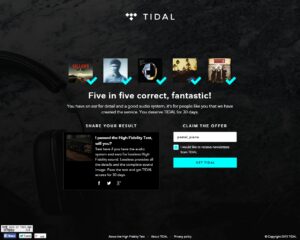
For those of you who are not familiar with Hi-Fi separates and are wondering about the TIDAL listening test linked above — the answer is simply whether or not you know from experience where to listen. The feeling is this: within what is largely the same tonal character, if you pay close attention to fineness of texture and the sense of distortion, the surface — the “feel” — of the sound, its gradation, sounds different. What an uninitiated listener might assume sounds “high quality” — vivid, clear-cut, and in a sense brilliantly crisp — is actually the lower-bitrate version. The more information there is, the more the harshness and distortion in the upper frequencies recedes, and in a sense the whole picture becomes quieter, the outlines thinner, more natural, more finely textured. You might say the density of information increases. On systems that lack the capacity to reproduce all that information naturally, this very abundance can cause an overflow of sorts, resulting instead in a smeared quality, a muddying of the three-dimensional boundaries between soundstage and image, and an overall lack of clarity. This happens quite often, in fact.

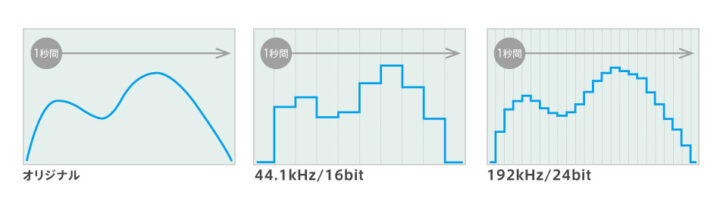
↑ So much sound is missing just from compression… this is really quite remarkable, isn’t it.
The world of Hi-Fi separates, where the difference Hi-Res makes is clearly felt
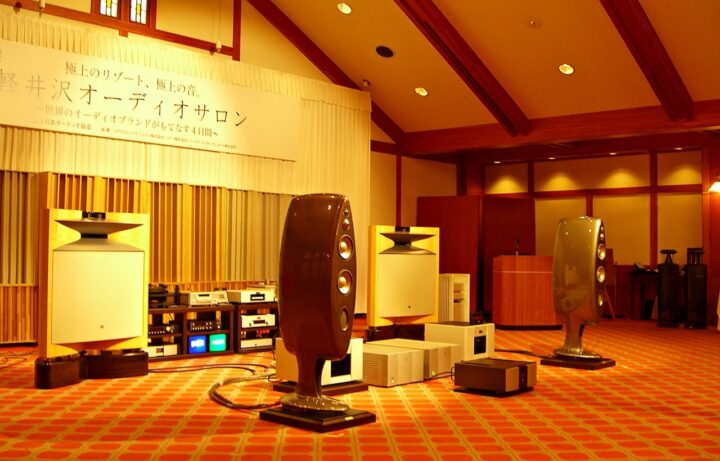
With Hi-Fi equipment of high quality — the kind where a life-sized, three-dimensional sound field opens up broadly around you, above, below, to either side, and behind — particularly with mid-range and above high-end Hi-Fi systems, things like the perceived width and depth of the soundstage, the realism of imaging and instrumental localisation, the richness of reverberation and reflected sound, and the tonal character and number of treble instruments one can hear all become quite different.
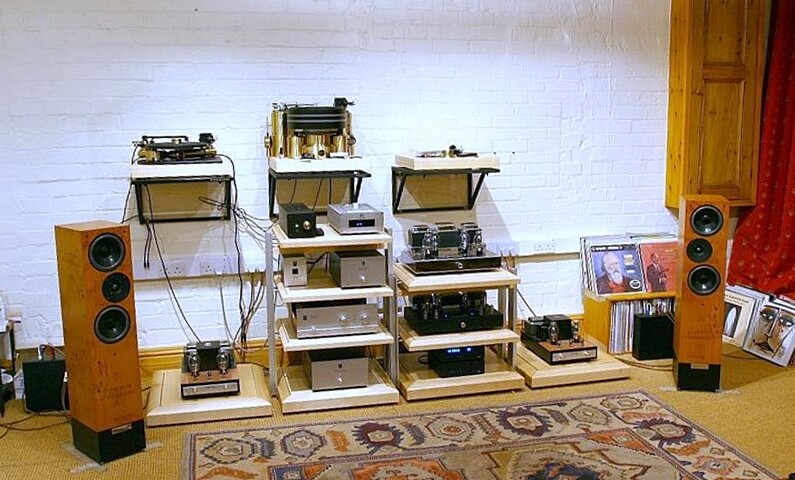
Once system quality reaches this level, most people become able to recognise the differences in bitrate almost visually — the gradations of sound become finer, and with that, the expressiveness of the performance deepens and grows richer. At this point, one imagines most people can genuinely and deeply appreciate the benefits of Hi-Res sources. That said, being able to experience this is limited to a small number of specialist Hi-Fi dealers and the listening rooms of dedicated enthusiasts. For the average music lover who simply enjoys music, or for those in the budget portable audio or PC audio camps, actually receiving the full benefit of “Hi-Res” is, I suspect, rather a tall order in practice.
When all is said and done, SACD is what I’d recommend for getting the most from Hi-Res
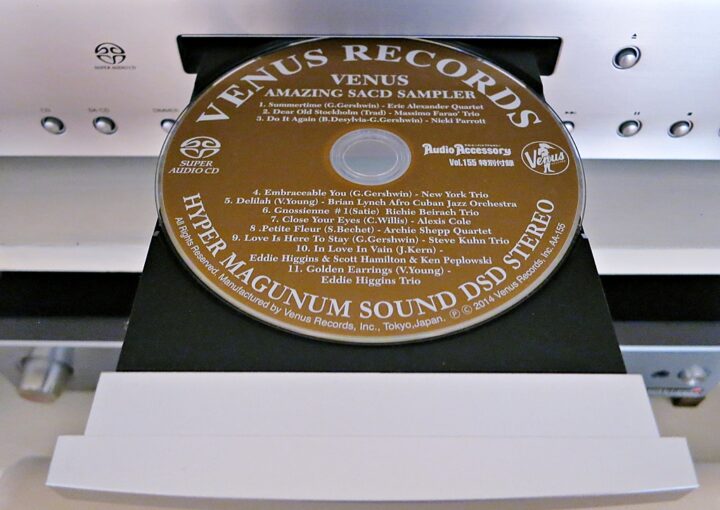
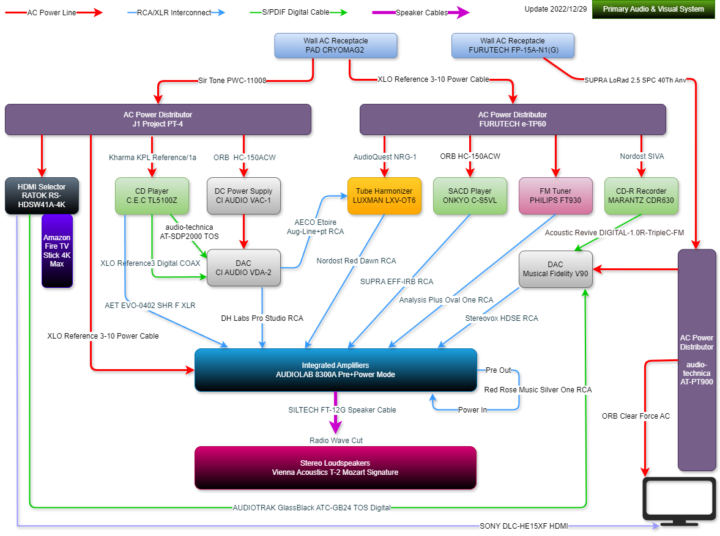
Incidentally, the DSD format used by SACD has its own distinctive character inherent to the bitstream approach, which makes the difference in sound quality compared to CD/WAV relatively easy to hear. If you switch back and forth between the CD layer and DSD layer of an SACD Hybrid disc a number of times, you will naturally start to get a feel for how to tell them apart. Of course, this does presuppose using an SACD player of sufficient quality — one capable of DSD direct D/A conversion without routing through an internal PCM conversion stage. (The ONKYO C-S5VL that I use is, I think, roughly the minimum threshold for meeting the conditions necessary to render the differences with any real clarity.)


 ポチップ
ポチップ
When it comes to getting the most from Hi-Res, I tend to recommend SACD above all else. The reason is that SACD players developed specifically for music playback (universal players excluded) have generally only been released in mid-to-upper-tier models by each manufacturer, which means whichever one you choose, a certain baseline of sound quality is assured from the player itself. From a recording standpoint as well, SACD discs recorded in DSD tend to be of considerably high quality, with an average sound quality level that is a step above CD releases.
 ポチップ
ポチップ
Even so, at the end of the day, the original recording quality and the influence of mastering processing contribute far more to sound quality than bitrate alone — of that I have no doubt. Furthermore, the difference in sound quality between different CD/SACD player models is perceptibly far greater than the difference between the CD layer and SACD layer on the same player; and in PC playback too, the differences in sound quality and character between different music player applications are audibly far more pronounced than differences in bitrate within the same application — a rather awkward dilemma, that.
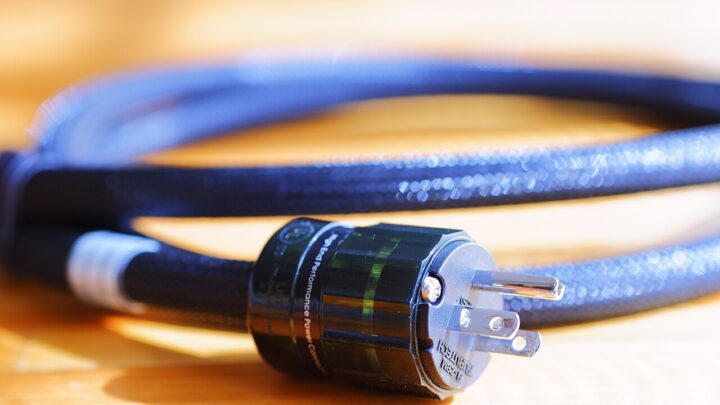
Could cable differences actually have a greater effect on sound quality than bitrate?
And here, if I may drop something of a bombshell: the difference in sound quality one perceives when swapping Hi-Fi accessories — things like speaker cables, RCA cables, or mains cables, accessories that have long been dismissed in many quarters as pure placebo — is, at least to my ears, overwhelmingly more often perceptibly far greater than any difference in bitrate. (Note: of course, the degree of difference varies considerably depending on the listening environment and the particular accessories being compared, and since the nature of what changes is somewhat different, this is perhaps a rather rough comparison.)
Differences in bitrate and compression ratio are backed by verifiable, concrete data, so I don’t think anyone would dismiss Hi-Res as occult nonsense regardless of whether they can actually hear the difference. Audio accessories, however, are in many cases — depending on how you look at it — frequently derided as occult products lacking any theoretical basis, or as mere placebo.

Yet as a practical matter for those of us who are Hi-Fi enthusiasts, if cable changes and similar accessories produce a perceptibly greater audible difference than compression ratios do, then by the same token — those of you with such golden ears that you can discern even the subtle sonic differences produced by varying compression ratios should, one would think, almost certainly and far more easily be able to perceive the differences that audio cables introduce: things like frequency balance, sense of energy, tonal colour, warmth, and the visual quality of soundstage and imaging. And surely the reverse must also hold…
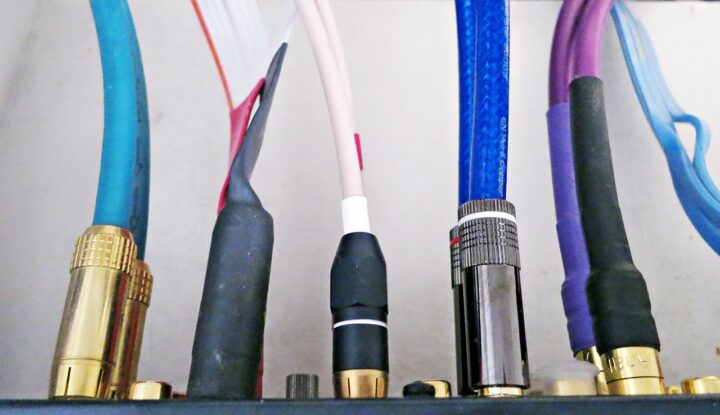
If anyone out there genuinely cannot hear any difference from cables, yet can clearly distinguish differences from compression ratios, I must confess that would rather surprise me. Though I’m sure such people exist in the world, and there is nothing strange about that — in which case they must possess ears so transcendently golden that they can correctly perceive differences backed by verified, theoretical data, whilst remaining entirely unmoved by sonic differences that cannot be scientifically proven (and are therefore, on that basis, presumed not to exist) — a level of discernment utterly beyond the reach of a rambling audio obsessive like me, with his head perpetually buzzing with radio waves.

~ Summary ~
Does this mean I couldn’t care less about compression? Absolutely not — I genuinely loathe lossy compression, and I harbour feelings strong enough that I could happily time-leap back to around 198x, assault the people who developed MiniDisc with psychic cosmic rays, and blast them off the planet with eye beams… And at present I am quietly — or rather, steadily — devoting my life to building a collection of SACD software and Hi-Res sources. That said, this only makes sense because I have, after considerable effort, managed to put together an audio system that can at least convey the advantages of SACD and Hi-Res masters in a way that feels genuinely rewarding. Without that, there would be no point in pursuing it at all.
But bearing in mind that the overwhelming majority of music listening environments in the world are far from that standard, to evangelise Hi-Res audio as some supremely superior format even to people who have no means of actually benefiting from it seems, to me, like it creates a pressure to affect a knowing expression and perform the role of “someone who can tell the difference” even when one cannot. I do find myself wondering whether lossless and Hi-Res as a business proposition is rather cynically exploiting that very human psychology — and whether that is really quite right.
And so this has turned into the usual self-deprecating ramble where I’m not entirely sure what point I was trying to make — but in short, by setting out in advance to discourage potential rivals from awakening to the pleasures and discoveries of Hi-Res listening, I am eliminating, one by one, the chances of future competitors getting their hands on the SACD discs I intend to collect. A cunning calculation, rooted in an elaborate long-term plan.
Conclusion. Hi-Res audio sources are wonderful, but to receive their true benefits with any real clarity, you do need an audio system that is technically and qualitatively up to a certain standard — wide bandwidth, good transient response, and well made. And since I am rather deficient in the brain department, I simply cannot stop writing sentences that go on far too long. So please don’t be unkind to me.

Auto Translated by CS4.6



List of comments (3)
管理人様
ハイレゾの音源ですが、確実に違いが有ります。実は、先日 192Hz 24bitの音源を聴きました。スピーカーのとこらへんに楽器が有る様に感じました。これは、耳が良いとか悪いとかの話ではなく誰でも感じられるものです。
以前、音響研究所の人が言われていました。また、一般の人もテストに参加し納得されていました。それは、人間は音を体で感じていると言われていました。
その通りで、私も実感出来ました。良く出まわているハイレゾ音源は、殆ど録音が良くないのが多いです。だから、その感じを掴めないのです。また、音響システムにも影響すると思います。
是非録音の良いハイレゾを聴いて確かめて下さい。
よたっぺ様こんばんは。コメントありがとうございます。
この記事は、オーディオマニア且つクラシック音楽のSACDコレクターで、普段から数多くのハイレゾ音源に触れて慣れ親しんでいる僕自身の視点から、ハイレゾのによる音質差の度合い(vs 16bit/44.1kHz)は、システムクオリティに大きく依存するため、世間一般の大半の再生装置では、ハイレゾの音質的メリットを十分の享受出来ないのでは?という趣旨で書いたものです。
現代オーディオで再生する世界とは、ステレオスピーカーの周囲から上下左右後方へ広がる三次元立体音響になり、ハイレゾ録音も2ch/マルチサラウンド問わず基本的にそれに準じて製作されています。スピーカー間の距離と部屋サイズの影響は受けますが、上質なオーディオ機器で制約無くセッティングが出来れば、空間サイズの限界を超えるような等身大の立体音響が生まれます。
この様なシステムで体験するハイレゾの詳細な情報量は素晴らしいものですが、反面、その有意差はシステムのスケールと再現精度の高さに強く依存するため、部屋が狭く機材のセッティングの制約が強かったり、オーディオシステムのグレードが下がるほど、CDフォーマットとの聴感上の違いは僅かなものになります。
これはハイブリッドSACDで、「完全同一音源」でのCD層とSACD層の音質差を明確に描き分けられるマニアックなオーディオシステムが、実際にはそれほど多くないことから明らかです。違いが認知出来たとしても、プアーな再生環境では、それほど劇的には変わらないという意味です。
とても言いたいことがわかります。
ハイレゾの特性を生かしたソフトになればなるほどオーオタでも相当神経を研ぎ澄ました環境構築をしないと出てくる音がオーバーフローしてしまいますね。
この辺りの難しさを関係者はわかっているくせに知らんぷりで機材を売ろうとすればそりゃオカルト扱いされますね。