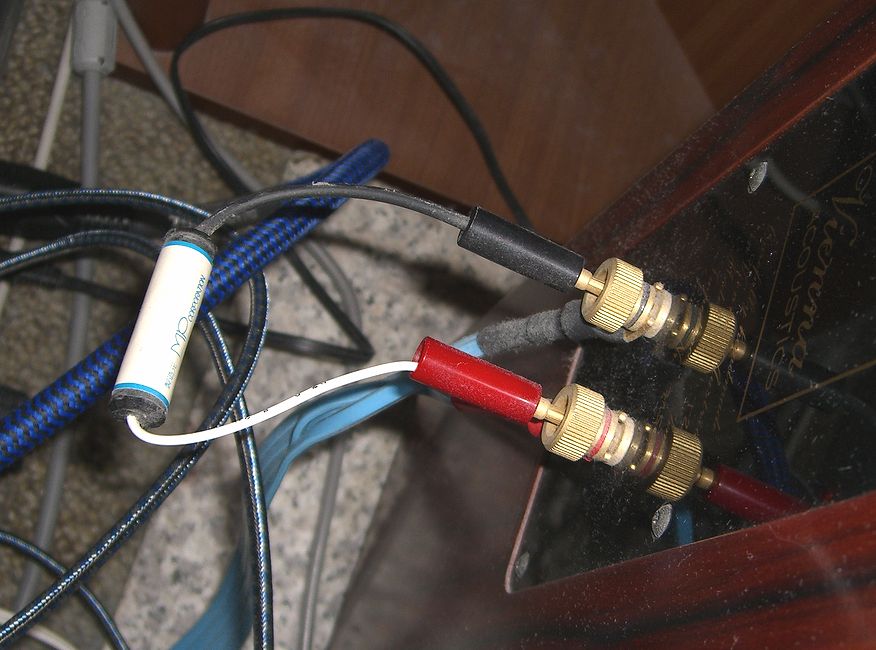
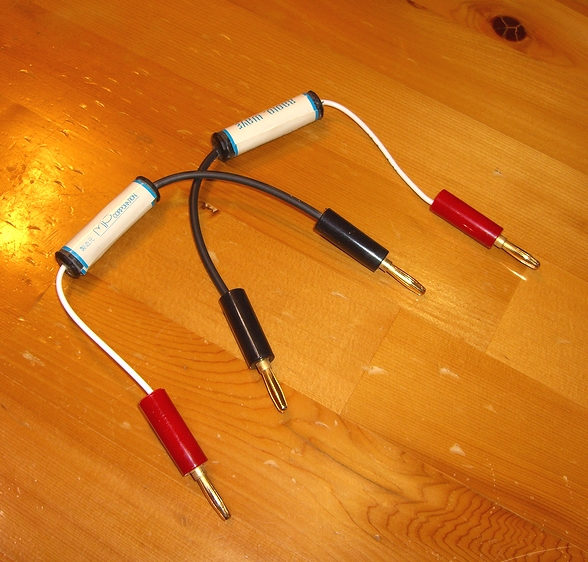
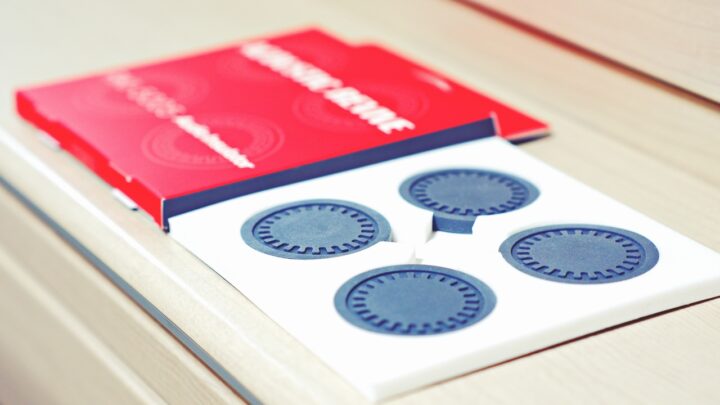
This time I’d like to introduce the radio.wave.cut from MP Corporation. The radio.wave.cut is a tuning accessory that connects in parallel with the SP cable at the speaker terminals. The claimed benefit is that it cuts noise in the radio wave band and guides the amplifier towards correct operation, etc… — I’ll leave the detailed explanation to the retailer, Goto Sogo Onkyo (now closed). Products of this type have been commercially available for some years now, but of everything I have personally tried, the radio.wave.cut was the one that seemed to produce the greatest effect, and with the fewest audible side effects.
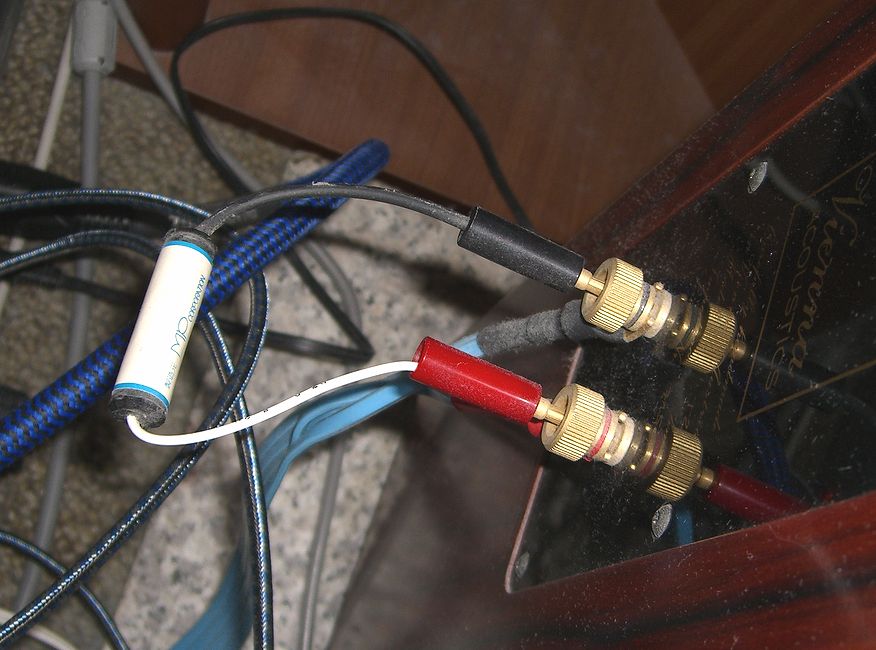
As for the effect of fitting the radio.wave.cut: the speaker’s behaviour becomes wider in range from bass to treble, and one gains a deeper low-end extension, a smoother treble reach, and a more full-bodied resonance that simply wasn’t there without it. On top of that, the high frequencies take on a cleanly transparent quality, and the sense of distortion is, quite literally, greatly reduced — making this an extremely effective accessory for cases where your speaker’s tweeter is nervous and sharp-sounding in a way that fatigues the ear.
In particular, one very significant advantage of the radio.wave.cut is that the sound quality becomes such that you can keep listening for long periods without fatigue. If, after growing accustomed to having it connected, you try removing it as an experiment, the perceived range narrows to a midrange-centred band, and the soundstage that had spread so broadly seems to cling to the speakers — it becomes quite difficult to listen to. Without it connected, the sound is noticeably more closed-in compared to when it is in place. If one takes the retailer’s claims at face value, the implication is that using the radio.wave.cut reduces losses in the amplifier and allows the speaker to be driven properly… With other parallel-connection accessories of this kind, a common side effect is that the sound becomes dark and heavy and loses its sense of energy — but with the radio.wave.cut, the tendency is rather the opposite.
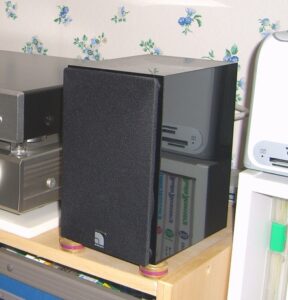
The dramatic effect of the radio.wave.cut is not limited to the audiopro Image11 used in this test — it works equally well on the larger Vienna Acoustics MOZART T-2, and from what I have tried in the past, my impression is that it works effectively with many other speakers too. That said, as is typical with Hi-Fi accessories, there will apparently be cases where it does not match well depending on the combination of speaker and amplifier. In fact, I can recall being quite startled when I attached it to a brand-new audiopro Image11 that had not yet been run in — the sound became oddly distorted. However, after running the speakers in for about two weeks and then trying it again, the result with the radio.wave.cut fitted was a wide-range, richly textured sound with much less sense of distortion. Reading between the lines, I suspect there may also be cases where it simply does not suit products that are not in particularly good condition to begin with, or speakers that are excessively prone to distortion.
Also, perhaps because silver-coated wire is used for the conductors in the radio.wave.cut, the tonal character it adds is slightly silver-wire-like — fresh, bright, and crisp. So if you prefer a darker, more recessed sound, or a dry tonal quality, there is a possibility that the character of the sound itself may not suit your taste. Conversely, if you prefer a brighter tonality, one could say it has the effect of brightening a dark tone, as though wiping away a layer of grime that had been clinging to the sound. For a European-style, carefully scaled Hi-Fi system paired with a refined-sounding compact speaker, it should be a good match in most cases — so if you find yourself experiencing listening fatigue, or feel dissatisfied with the sense of range or the overall sonic direction and want to push things just one step further, I think the radio.wave.cut is well worth trying.
(Note: this review is based on impressions of the budget standard model of the radio.wave.cut, priced at ¥8,900. The higher-tier upper models are said to offer better performance.)


Auto Translated by CS4.6
List of comments (10)
出張で名古屋に行く機会があったので、ゴトウ総合音響さんを訪ねてみました。B&W Nautilus 805でのradio.wave.cutの実演には本当に驚きました。今使っているQUAD 11LとSharp Auvi SD-SG40の組み合わせで高音域のキンキン感が気になっていたので、ゴトウさんのお勧めに従ってradio.wave.cutを導入する事にしました。正直言って驚くべき効果です。デジタルアンプはradio.wave.cutの効果が良く出るとの事でしたが、QUAD 11Lも効果が出易いのではと思いました。ゴトウさん推奨のB&Wと良く似た音質だからでしょうか?
毎度遅レス失礼しますです~m(__)m
効果があったみたいで嬉しいです♪実は、
後藤総合音響さんには残念ながら一度も行ったことがないのですが、
radio.wave.cutは私もお気に入りです。ちなみに高い方をご使用でしょうか?
うちの場合、デジタルアンプのA-1VLとImage11の組み合わせの場合は
あまり使う必要を感じないのですが、他の組み合わせやVienna AcousticsT-2では
使った方が歪みが少なくレンジ感も格段に広がります。
それにしても、11LとAuviの組み合わせになるとモニター調の音が出るんですね。
ちょっと意外でした。それだけポテンシャルが高いことの裏付けでしょう。
でも、pastel_pianoの場合は敢えて英国レトロ調に振りたくなるかも。
お返事頂き、ありがとうございました。
radio.wave.cutは、どうせ1セット持っておくなら、と言うことで高い方です。
上級のA-1VLは高域まで質感が高く、歪み感がないのでしょうか?
Auviでは(SG40でも)とてもそこまでは、と言う事なのでしょうね。
SD40との組み合わせで、11Lはハイスピード&ワイドレンジのポテンシャル
が高いことに気が付き、正直言って驚きました。4330との組み合わせでは、
とても英国調でしたから。
でも、そのうち疲れて来たら、英国レトロ調に戻りそうな気がしています。^^);
追伸)
4330との組み合わせではキンキンは感じず、
radio,wave.cutを付ける必要はありませんでした。
あくまでも英国風に礼儀正しい振る舞いです。
A-1VLがデジタルアンプだという事は忘れた方が良いかも…。
変な歪み感とかは無いですね。ライバルのMARANTZ機等もそうですが、
国産メーカーの主力機ですので音質面での基本スペックは優秀です。
Auviは店頭でミニコンセットとして試聴した範囲では歪み感は感じませんでした。
あと、ディナウディオとの組み合わせでも感じませんでした。
ある意味、透明で味気ない音だなーとは思いましたが、
お手頃価格の一体型としては良い物ですね。
んでも、4330で歪まないのでしたら、
4330の音楽性を生かしてあげたいところです。
CreekやMusical Fidelityを色々使われているufugi0331さんでしたら、
私の書く音楽性の意味はよくご存じかと思いますが、
私のスタンスとしては、いくら音質が良くても音楽が聞こえないと
意味がない。オーディオはあくまで音楽のためのツールだからと考えます。
高音質だけれどキンキンして疲れるってのは、
ある意味、音楽から遠くなってしまっているではないでしょうか?
いつもお返事頂き、ありがとうございます。
Auviの音には、ご指摘の様に無味乾燥なところがあります。しかし、11Lとの組み
合わせは大変ワイドレンジで、また、解像度が高くベールが一枚取れた様な見通しの
良さがあります。例えば、オーケストラの各パーツの掛け合いは4330と比べると、
格段に明瞭に聴き取ることが出来ます。
先日、FMで放送された小澤征爾&N響&マーカス・ロバーツ・トリオのガーシュウ
ィンのピアノ協奏曲を聴くチャンスがありましたが、ジャズトリオとオケの各パーツの
掛け合いが明瞭に聴き取れるのは大変な醍醐味でした。また私が大好きな五嶋みどり
&アバド・BPOのチャイコフスキーVnコンのライブも大変リアルな臨場感があります。
私の説明が悪かったのですが、Auvi&11Lの組み合わせではキンキンと言うほど高域に
困っている訳ではなく、折角高い実力があるのに少々高域が硬いのが玉に瑕だなあ、
と言う訳で、radio.wave.cut等の組み合わせで改善できないか、と質問した次第です。
しかし、昔のウィーンフィルのメンバー・バリリ四重奏団のモーツァルトやベートー
ベンの室内楽を聴くと、4330の持ついぶし銀の音色が何とも言えない味を出します。
4330&11Lはとても捨てがたい組み合わせなのです。これは、別の見方をすれば、
11Lが広い対応力を持つと言えるのでしょうか?
今回の11Lの特集は大変なインパクトでした。これからも内容の深いレビューをお願い
いたします。
4330は小編成のクラシックやジャズ向きですから~。
出力や筐体の小ささからも想像できるとおり、
リラックスして静かに音楽を愉しむ為の大人のオーディオだと思います。
欲を云えばクリークのような音楽性の高さと、
Auviや他の国産最新鋭機のような優れた音質を両立できればいいのですが、
普及+αくらい迄の価格帯の製品では、多くの場合、
音楽性を取るか?音質を取るか?の二者択一になってしまうことが多いようです。
音楽性と音質をそれなりに両立したければ、ハイエンドの世界でという事でしょう。
私はいつもこの音楽性と音質追求の狭間で苦しんでいます…(滝汗)
基本的には音楽性最重視の筈ですが、オーディオマニアの気質が
どうしても音質追求に走るので、バランスが取れずに迷走することもしばしば…。
結局、システム複数組めばなんとかなるさ、という泥沼型です。
気に入った音になるまで手間がかかるので、結局複数システムで行かないと
途中でギブアップしちゃうんです。
このスレッドの最後にradio.wave.cutについて一言。
これ、耳を保護するのに良いんです。多少の音調の好き嫌いはあるでしょうが
(生楽器では絶対に感じない)オーディオ独特の電気的な歪み感軽減に
確実に効きますから、耳の健康のためにも、皆さんに取り付けをおすすめします。
初めまして、2週間程前、B&WのCM1を試聴せず購入致しました。上位の805と比べると解像感は似ていますが、805特有の立体的音場は、残念ながら到達していませんでした。しかしながら、値段の割には満足しております。現在、パナのデジタルアンプ(XR-55)とバイアンプ接続しております。
そこで質問ですが、高域が少しキンキンかなと思います。
”radio.wave.cut”を付けると、そんなに良くなるのでしょうか?
教えて頂ければ幸いにおもいます。