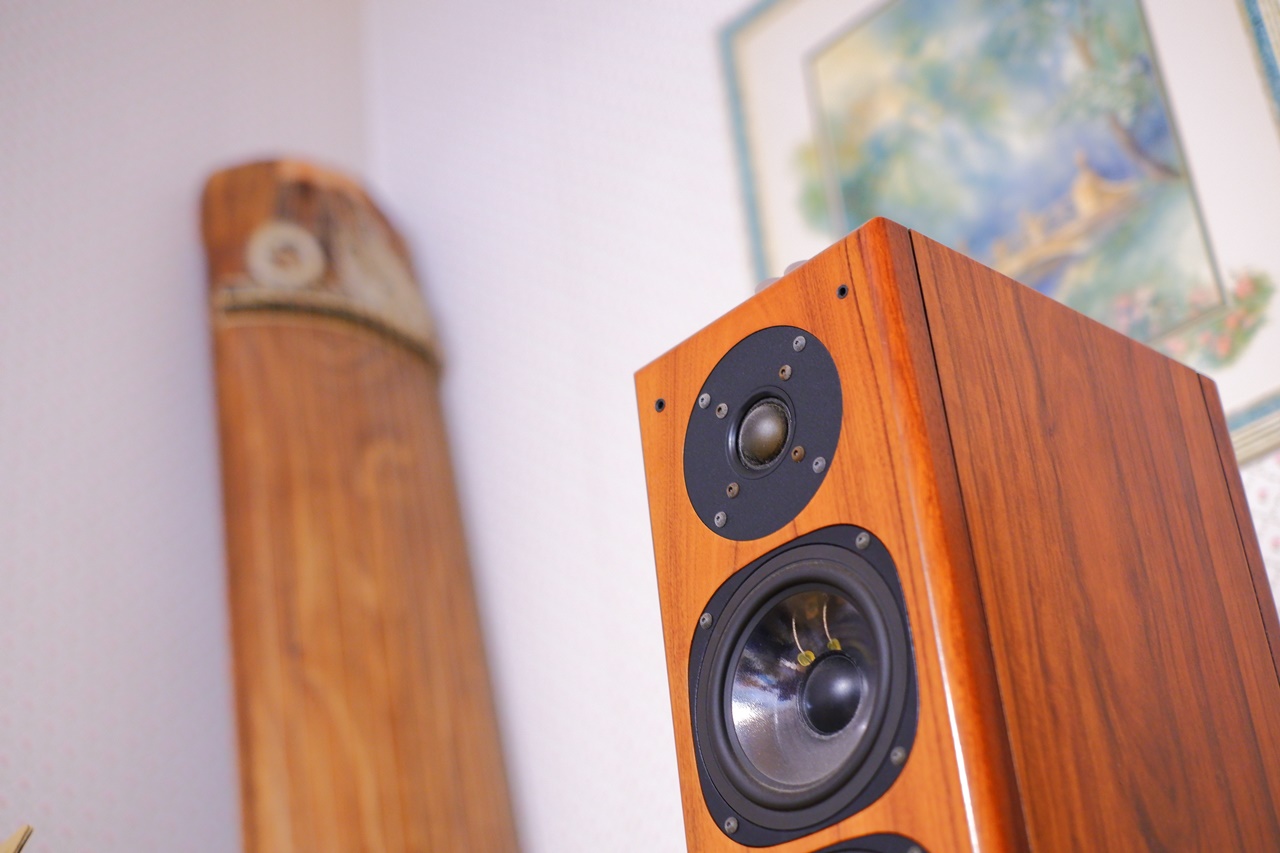
Good evening ♪ I’ve had a bit to drink. Drinking wine from a wedding favour. I give alcohol as gifts quite often, but I feel like I rarely receive it myself… A white wine. The person is from Iwate, so apparently it’s Kuzumaki Wine from Iwate. How many years has it been since I last drank Japanese wine… It’s sweet, almost like juice. But there’s nothing quite like free drink, is it. When it’s free, anything goes, really…
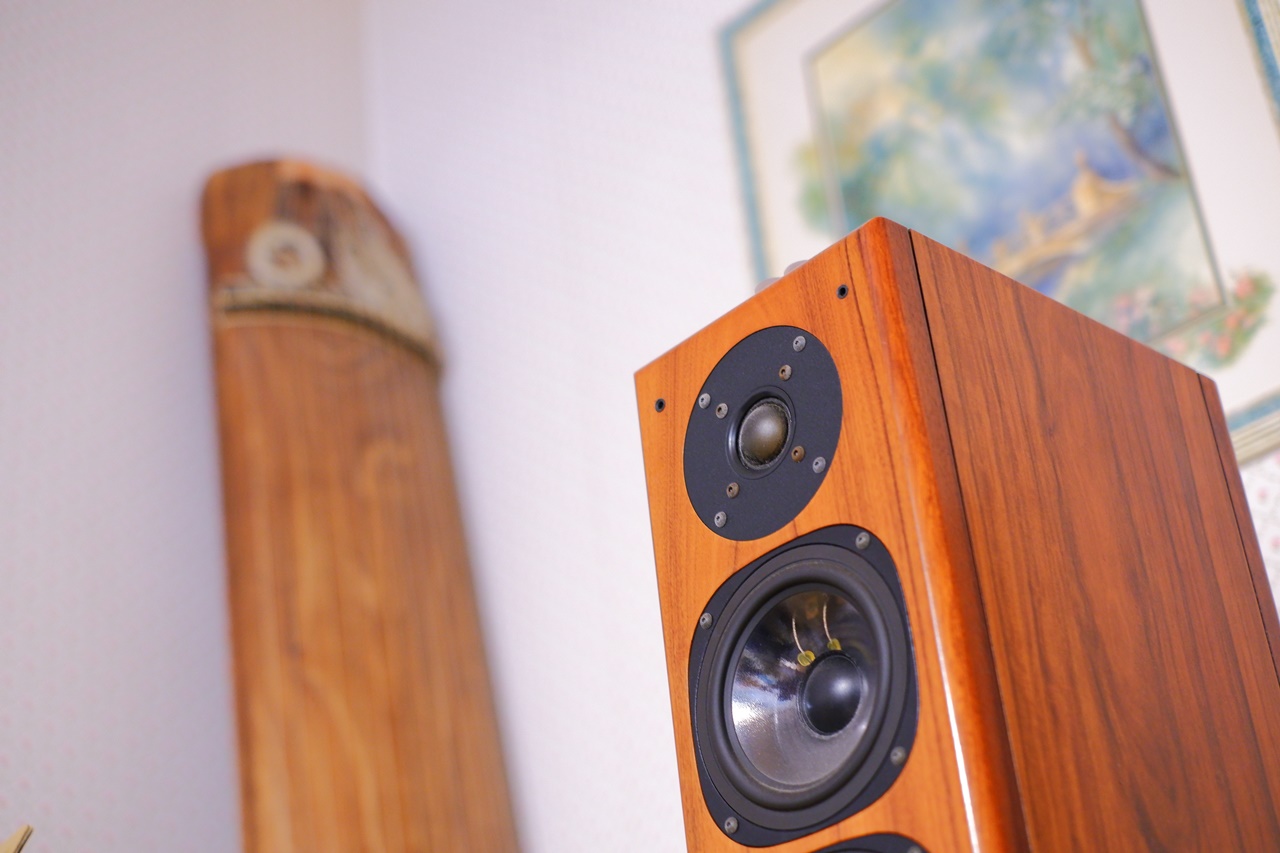
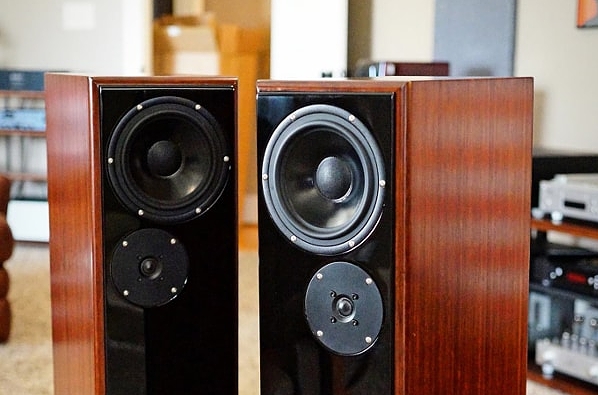
The Main System Speaker: Vienna Acoustics Mozart Signature T-2
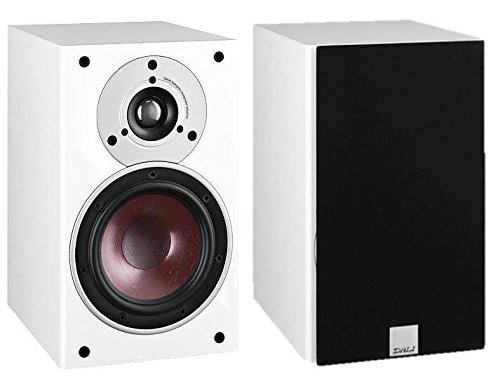
Now, back to the subject at hand. It has been nearly five hard years since I acquired the Vienna Acoustics Mozart T-2. This month, it has finally begun to play music at what I would call 80% satisfaction — my own personal passing grade. …It really has taken a long time.
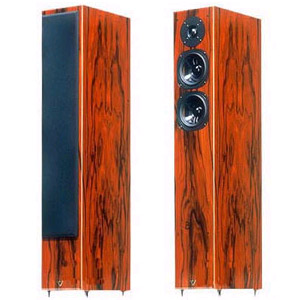
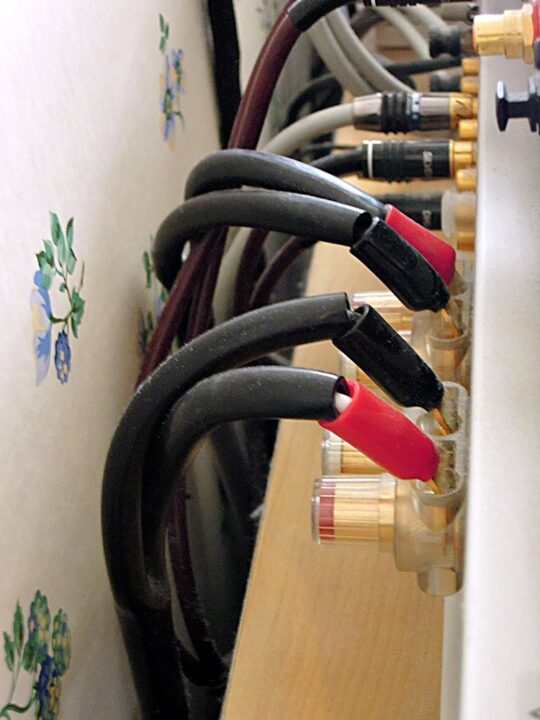
Honestly, I had very nearly given up on getting this speaker to sing properly. If it were the sort of speaker that sounded reasonably good simply by placing it in position, there would be no problem at all. My secondary speaker, the Audio Pro Image 11, for instance, is not particularly fussy about placement, and with a bit of accessory tweaking it will produce a splendid sound without much fuss. But this wilful young lady from Vienna Acoustics is not so easily won over. The partnering components, ancillary accessories, cables, power supply — and further still, the genre of music being played, the arrangement of the room’s furnishings, and ultimately even the owner’s own mindset and way of life — all of it, without exception, she demands to be of the highest quality and most refined taste. That is the Mozart T-2. This Austrian girl, placed without ceremony into a Japanese home, naturally throws a homesick tantrum and sulks, and will absolutely not sing with anything like her true, wonderful voice. She will offer a glimpse of that dangerously musical, Viennese-scented sound — but left as she is, she is like a Bösendorfer Imperial that has not been tuned in years: unbalanced, uncontrollable in every sense, and riddled with chaos. Time passed without my ever managing to properly regulate and tune things, and eventually I began to feel utterly wretched, as though I were being looked down upon by the speaker itself, suffering a kind of discrimination…orz
Someone like me, who never had the means to casually swap out high-end accessories on a daily basis, had ended up paired with a partner far beyond my station — the result being that even the spending necessary to maintain a certain standard of dignity did not proceed as I wished, and this fine speaker had gradually been reduced to nothing more than a wallflower, a decorative object serving only to set off a vaguely pseudo-British Victorian aesthetic.


 ポチップ
ポチップ
How I Came to Purchase the Vienna Acoustics T-2
My first encounter with the Vienna Acoustics T-2 was in 1999, in a listening room at Audio Union in Kanagawa, if I recall correctly. The speakers I owned at the time — a Wharfedale and a JVC Woodcone — were well suited to small-ensemble music, but lacked the muscle for large-scale works such as classical orchestral repertoire. I was searching for overseas speakers in a slightly larger size, with a budget of around 100,000 yen, making the rounds of various shops in pursuit of models with exceptional “musicality” — and that was when I came across it.
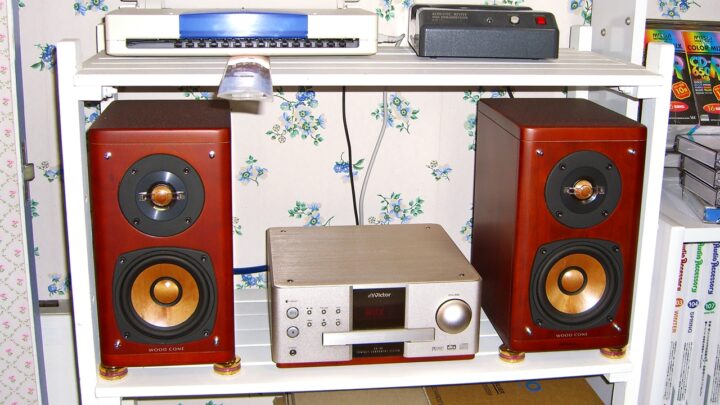
My usual approach to auditioning speakers in a shop is to concentrate entirely on “musicality,” working through every speaker connected to the selector in turn — from the smallest to the largest — without prejudice, switching between them one by one. Going through ten or twenty speakers in this way, one generally finds two or three models that carry something special within them, a genuinely superior musicality. From that shortlist, I then take a more careful look — trying different combinations, examining factors beyond musicality, scrutinising the sound quality more broadly — before narrowing things down to a final purchase candidate.
Casting my mind back to that occasion, the speakers that remained as candidates from whatever happened to be in the shop were a French JM Lab and a small Swiss Acustik-lab, while on the equipment side, the standouts were amplifiers and players from the old Marantz/Philips era, along with amplifiers and DACs from Cambridge Audio.
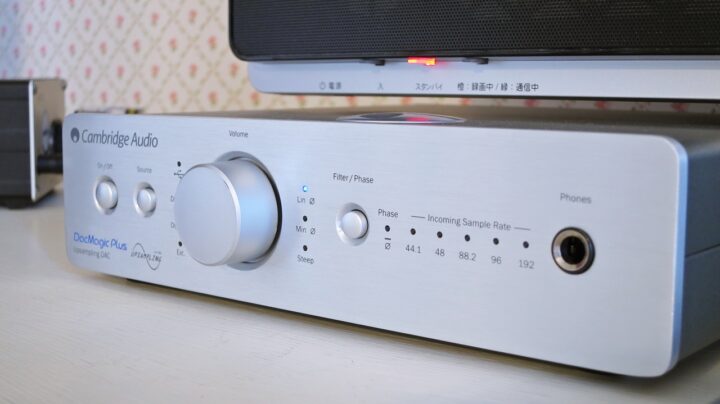
And of all those speakers, the one that left every other utterly in the shade — in terms of sheer musicality — was the Vienna Acoustics T-2. My budget at the time, however, was a matter of tens of thousands of yen. To buy the T-2, I would have needed roughly three times that. In the end I had no choice but to compromise within my budget, and I purchased the Acustik-lab bookshelf model, the SYSTEM 1.2. On the way home, standing at the station, I quietly swore to myself that one day I would own that T-2…
Purchasing the Acustik-Lab SYSTEM 1.2…
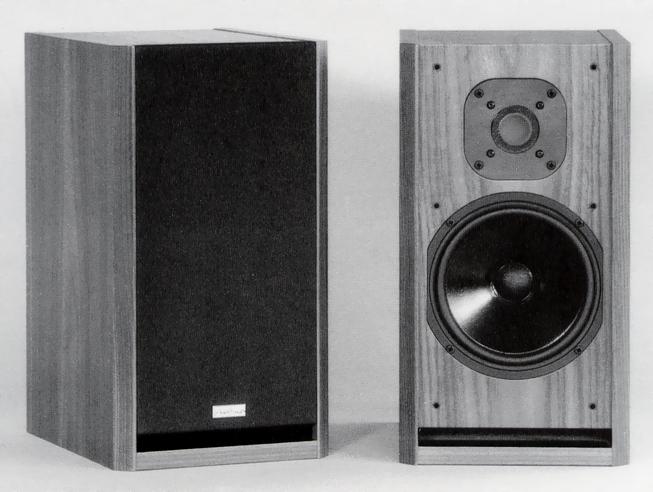
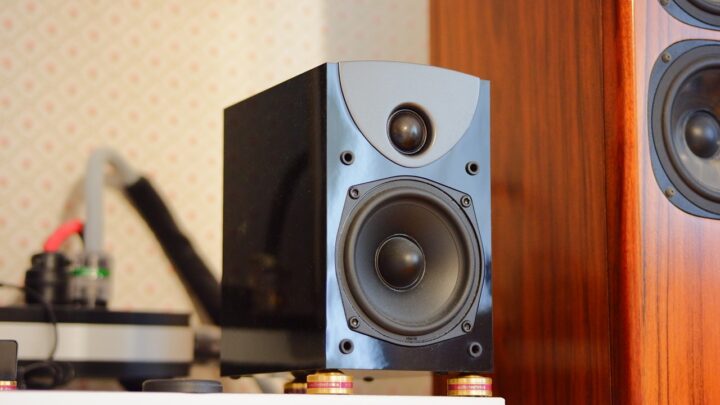
So, enraptured as I was by the magnificent musicality of the Vienna Acoustics T-2, financial reality prevailed, and I ended up purchasing the Acustik-lab SYSTEM 1.2 with the 50,000 yen I had to hand (plus a trade-in of my Victor SX-A103). In appearance it is virtually identical to the company’s hugely successful Bolero and Bolero Piccolo. It is a lower-tier model, but because it houses a 16 cm woofer it is physically larger — 38 cm tall, making it on the bigger side for a bookshelf speaker. In terms of finish, it forgoes Acustik-lab’s characteristic high-gloss variety of options in favour of a plain walnut woodgrain only; the reasoning, it seems, was to introduce the appeal of Acustik-lab to as many listeners as possible by stripping away costly embellishments, with the result that the price was kept remarkably low relative to its build quality and sound — a rather conscientious speaker overall.
Sonically, it inherits from the Bolero a clear, sharp tonal character suggestive of cool Swiss mountain air — a sound that is thoroughly refined, delicate, and refreshing, with highly responsive, high-efficiency drive units projecting a light, unconstrained sound with complete directness, rather like headphones in terms of responsiveness. The construction makes good use of cabinet resonance without putting undue strain on the drivers, and there is absolutely nothing forced about the way the sound is produced. Compared to the Bolero, the SYSTEM 1.2 has a different cabinet coloration — it falls a step behind the Bolero series in polished lustre and jewel-like tonal purity, but in its place offers a warmer, more naturally acoustic timbre, along with a somewhat larger-scale sound commensurate with the bigger cabinet and woofer. In the upper frequencies in particular, resolution was exceptionally high, and the sheer quantity of fine detail I believe was among the best in its class.
Its weakness was an almost hopeless lack of bass. Below 100 Hz, the front port produced what I can only describe as a wisp of a sound image and a gentle hint of air — more of a token gesture than a genuine low end — and the overall frequency balance struck me as tilted rather too far towards the treble. Looking back now, part of the problem may have been that I never found an amplifier with a genuinely compatible drive characteristic; but the Focal (French/JM Lab) inverted hard-dome tweeter used by Acustik-lab was so responsive that with too powerful an amplifier it produced a sharp, aggressive sound that stabbed at the ears, while conversely, if the driving power (8 Ω / 89 dB) was insufficient, the 16 cm woofer produced nothing but a hollow, empty sound, and the already insufficient bass became even more so. After exhausting amounts of trial and error, I eventually gave up without ever finding a satisfactory match. (In the end, the Vienna Acoustics T-2 that replaced it would give me far more grief still…)
In short, I should have persisted from the very beginning and thoroughly auditioned the speaker with compatible amplifiers at the shop until I was satisfied. If you don’t listen until you’ve well and truly had your fill, you end up in precisely this sort of trouble later on. That said, I can still recall with vivid clarity the astonishing freshness of the midrange through treble, the impulsive responsiveness, the spine-tingling transparency, and the wealth of fine detail that this speaker possessed. It left such a strong impression — and for all its high-resolution character, it sang beautifully and musically. When I think about it carefully, I wonder whether I really needed to let it go at all, and there’s a small part of me that still feels a little stung by that.
Acustik-Lab Stella Melody & Stella Harmony
That said, it is the higher-end models from Acustik-lab that are truly compelling. The Stella series lacks the aggressive treble push that characterised the company’s earlier speakers; the overall phase is neatly aligned, and unlike the Bolero — which could at times sound superficial in its tonal character — the Stella maintains that same beautiful sound while achieving a considerably greater depth of expression. Piano in particular is simply extraordinary. The enchanting resonance of a Steinway is somehow conjured back to life, including aspects that never quite made it onto the recording…
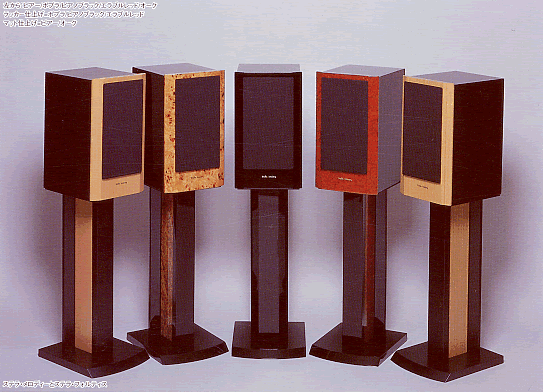
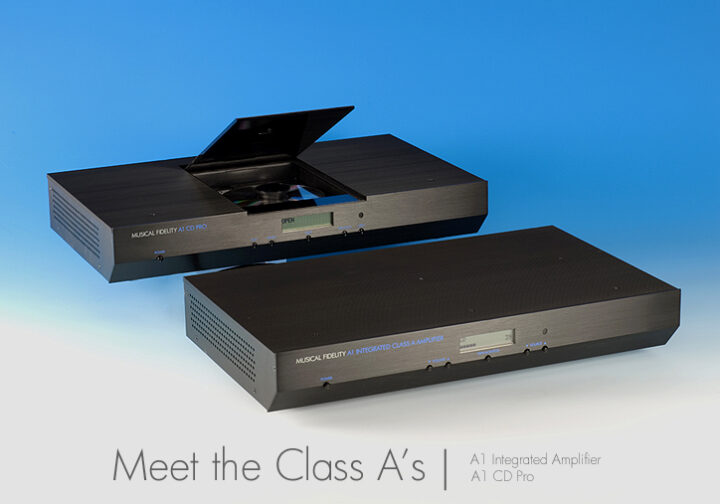
When it came to choosing what to move on to from the SYSTEM 1.2 + Musical Fidelity A1 Junior, the question was: the Vienna Acoustics T-2 + TAG McLaren 60i, or the Stella Harmony + Aura VA200 Stingray? Both options were enormously appealing to me, and I spent a great deal of time agonising over it.
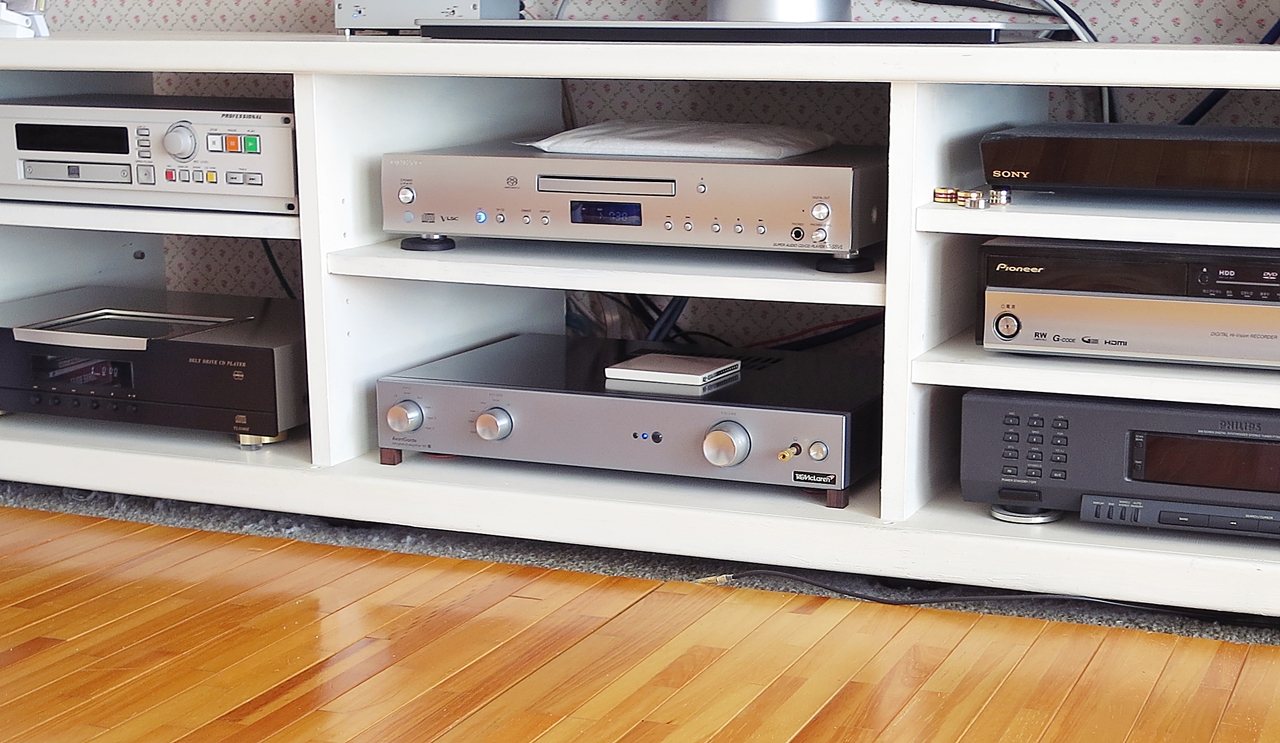
Quietly enjoying classical piano or a female voice in the stillness of a fading evening… in moments like those, Acustik-lab would surely be the finest of companions. On the other hand, large-scale sources are not really its strong suit. These are not speakers one turns to for power and impact. When it comes to reproducing orchestral music, one really wants a Vienna Acoustics T-2 or something above it. That was part of why I eventually acquired the T-2 — and yet, if I’m honest, my attachment to Acustik-lab has never quite gone away.
If Acustik-lab speakers were available to buy new again today… I would want a Bolero Piccolo (in blue ♪). Personally, I prefer the clean simplicity of the old Bolero series bookshelf design over the Stella series, which is perhaps a touch too elegantly beautiful for my taste. Why is it that Acustik-lab no longer makes the Bolero or Bolero Piccolo… Just as HARBETH reissued the HL-P3ES, I do wish Acustik-lab would bring the Bolero series back — am I really alone in thinking that? With a design and sound quality like that, I have a feeling it would keep selling steadily even in modest production volumes…


Auto Translated by CS4.6
List of comments (3)
お久しぶりです。
ほんと、わがままなオーディオっておおいですよね。
僕も、わがままなスピーカーと付き合ってますがいまだにどの程度まで引き出せてるのか…正直わからないですね。
個人的には、いい線まできてるようなつもりなんですけどね。
情報量の多い良いスピーカーほど全てにシビアに反応して使いこなしが難しいと思います。
逆に、情報量が少ないスピーカーはキャラで鳴らせてしまう感じでしょうか。
その「こだわり感」がとてもいいですね。