【iPod vs USB Audio Device vs Mark Levinson: Sound Quality Showdown】
Blind Listening Test|First Harf|Second Harf
Original ITmedia News article: Do Expensive Cables Sound Better? We Let Audiophiles Listen and Decide ※ A translation of an article originally published in the Wall Street Journal. Lee Gomes, “If You’re Not Insane About Sound, Maybe You Can Just Go Crazy,” The Wall Street Journal, January 16, 2008.
There was this entry over at Dekunobo Press, and since I found it rather interesting, I thought I’d go ahead and share my own thoughts here as well.
This sort of topic has a way of immediately splitting people into believers and sceptics, and before long the conversation turns to placebo effects and double-blind testing — degenerating into the same tiresome argument it always does. Even so, the idea of holding a test at an audio show in Las Vegas (HES, not CES) and asking attendees to participate does strike me as rather interesting.
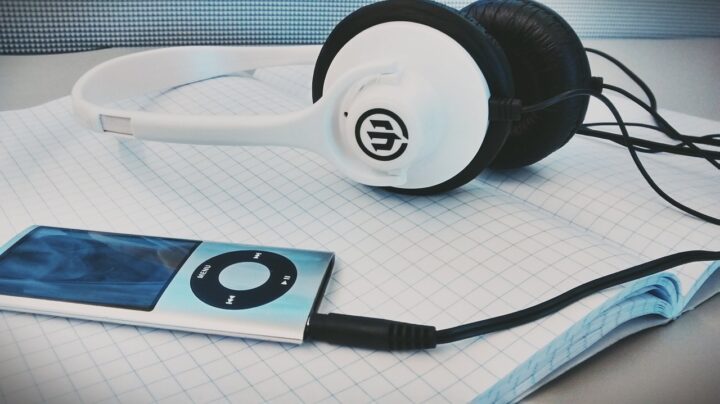
One of the tests compared a MP3 file from an iPod with a CD on a $3,000 player. Three-quarters of the 24 people taking this test preferred the CD.
This will of course depend on what playback equipment was used and the conditions of the venue (for example: I’d expect the accuracy rate to drop significantly if the room was too large, the acoustics too dead, or too many people were participating at once), but given that the test was conducted with people who consider themselves audiophiles, and wasn’t especially rigorous — well, as a gut feeling, this is roughly the kind of result one might expect, I suppose? If they were going to go to the trouble, I’d have liked to see something rather less middling than a $3,000 player — something like Goldmund’s EIDOS 36 or EIDOS 20A, or a  CD player costing over a million yen — but there we are.
 ポチップ
ポチップ
That was no surprise. However, when I played .wav files on the iPod –these are digital but uncompressed files; I was connecting the headphone jack to the amplifier — 52% of the 21 who took this test preferred the iPod. That made me smile, not because snooty audiophiles got the “wrong” answer, but because it suggests great sound can come from popular, cheap gear.
Hmm, what to make of this interpretation? The responses were split almost exactly down the middle, which means even random guessing would produce the same result.
That said, when it comes to digital audio players specifically, the honest answer may be that the difference in actual sound quality between a portable device and a dedicated stationary player designed for high-end Hi-Fi use is not really commensurate with the gap in price, physical size, or perceived prestige. Listen carefully over time, and yes — there are sonic differences between individual products “not large, but not something a true audiophile or music lover can simply dismiss” — yet compared to the visual and size extremes involved, the absolute magnitude of those differences is modest next to what speakers and amplifiers can do.
Which is why, when putting together a Hi-Fi system on a limited budget, the conventional wisdom is to keep in mind that speakers and amplifiers exert a far greater influence over the final sound than the digital player does, and to allocate your budget accordingly.
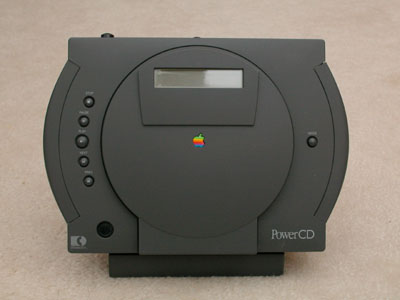 Incidentally, the portable digital audio player that I have owned which I found to have the finest sound quality (note: meaning the highest degree of musical expression) was not an iPod at all, but the Apple PowerCD — a portable CD-ROM drive for the Mac that belonged to an acquaintance of mine (designed by Philips, and fitted with their Bitstream DAC). The PowerCD running on battery power had an extraordinarily rich and musical sound — easily the equal, I felt, of the LHH700, which was one of Philips’ top high-end models of the day.
And then there was the Philips portable CD player AZ6829/06 (made in Austria, with an original retail price of ¥55,000) — somewhat behind the Apple PowerCD in scale, but with a very similar warm and sensuous character and a remarkable musicality all of its own. This was, in fact, the very CD player that drew me into the rabbit hole of Hi-Fi, and until I passed it on to an acquaintance, it sat at the heart of my own modest little system, paired with a Creek 4240 integrated amplifier and Wharfedale Diamond V speakers.
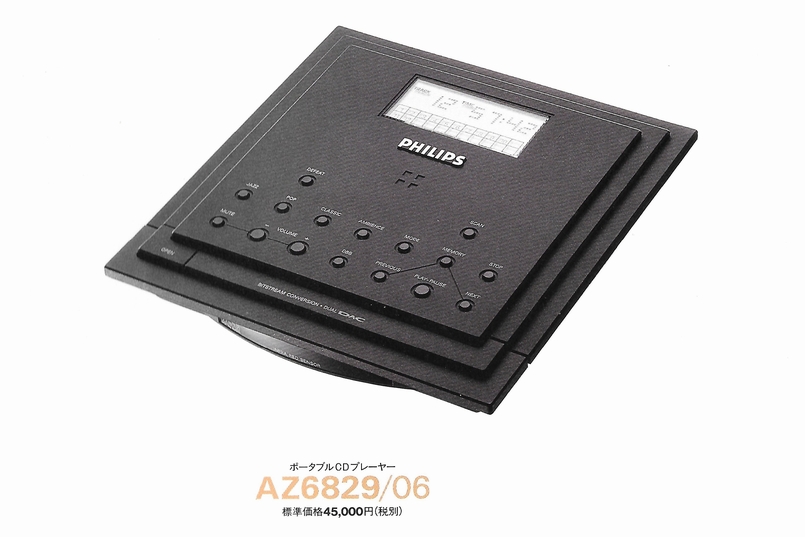
For all that it was a portable CD player weighing around 550g, it comfortably surpassed the Sony CDP-X555ES stationary CD player I owned at the time — which weighed a full 13kg — along with the highly regarded CEC CH-5000R, the Arcam Alpha 5 Plus, and several others. It has been well over fifteen years since either model was released, yet both of these portable CD players have by now become something of a legend among a certain circle of audiophiles.
So it really is true that there is something mysterious about the performance of digital players — something that cannot be judged by looks or price. I imagine iPods also vary in sound quality from model to model, and I sometimes wonder whether there might be one or two models out there with surprisingly exceptional sound. If anyone happens to know, I’d very much like to hear about it.
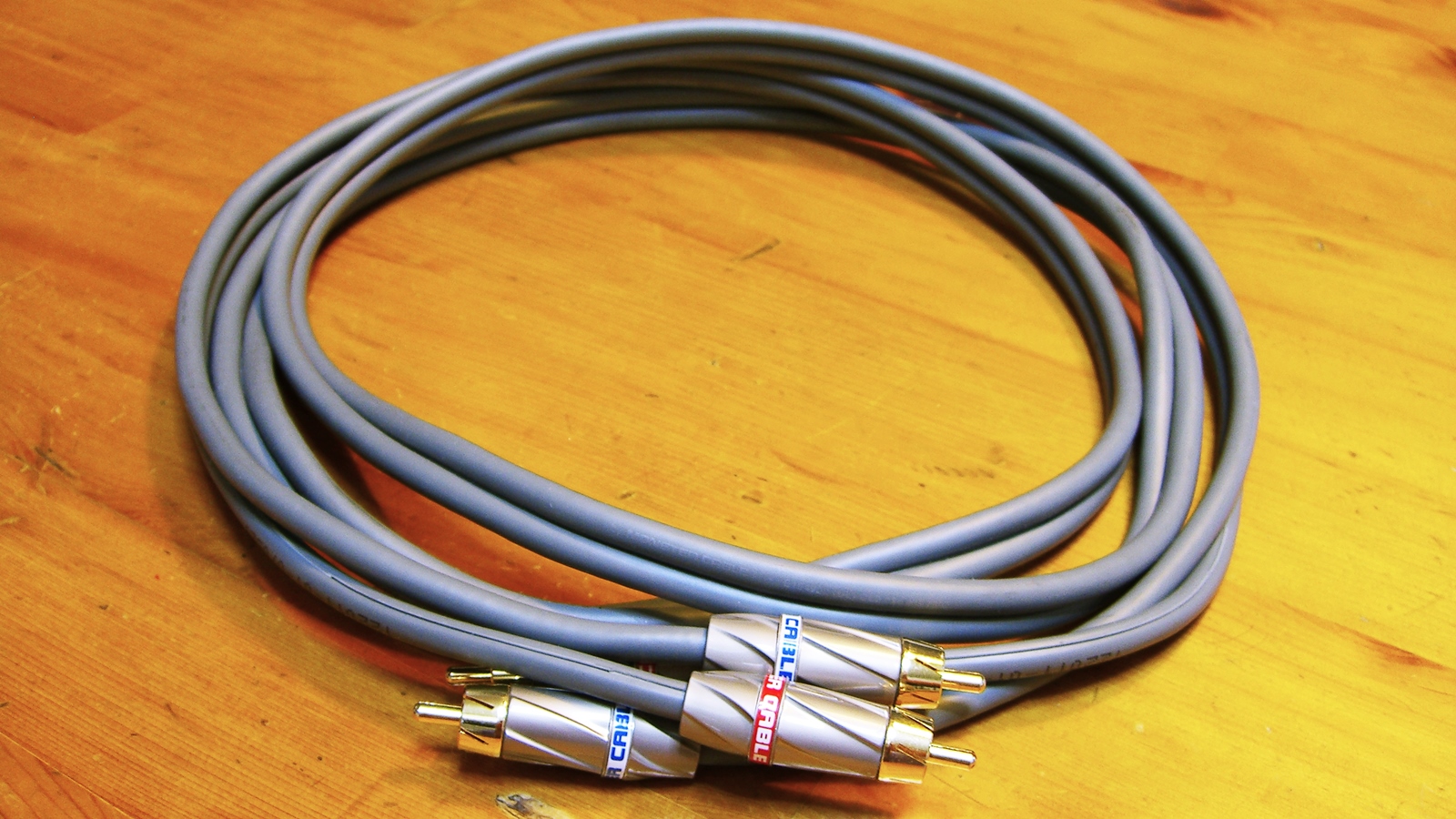
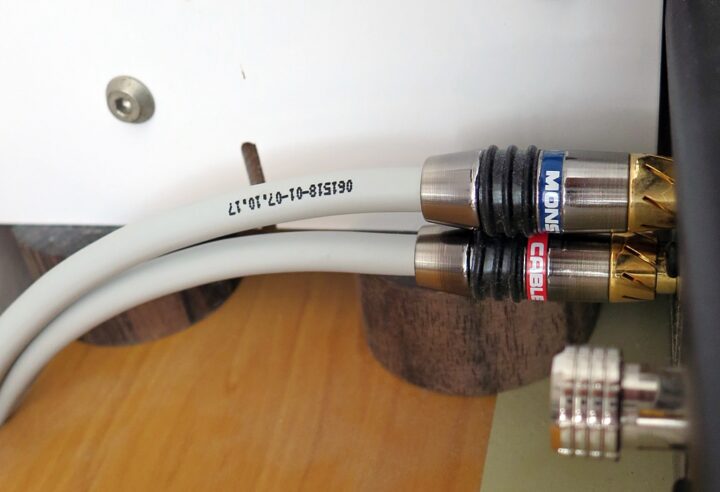
Using two identical CD players, I tested a $2,000, eight-foot pair of Sigma Retro Gold cables from Monster Cable, which are as thick as your thumb, against 14-gauge, hardware-store speaker cable. Many audiophiles say they are equally good. I couldn’t hear a difference and was a wee bit suspicious that anyone else could. But of the 39 people who took this test, 61% said they preferred the expensive cable. That may not be much of a margin for two products with such drastically different prices, but I was struck by how the best-informed people at the show — like John Atkinson and Michael Fremer of Stereophile Magazine — easily picked the expensive cable.
Going by the product line-up, the Monster Cable in question was probably the XPHP or something similar. From the context it appears to have been a speaker cable test, which makes me wonder why two identical CD players were needed — but setting that aside, the expensive cable did come out slightly ahead here. ※ In my own experience, even two units of the same CD player model will often differ in sound quality to a degree that cannot be ignored — so I must confess I find this sort of comparison method not entirely satisfactory.
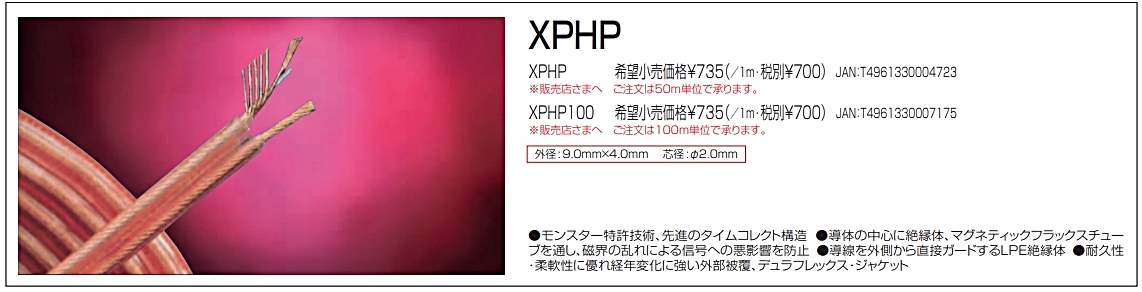


Assuming it was indeed the XPHP, I don’t think it would be at all strange for a fair number of people to prefer the XPHP’s relatively bass-heavy, slightly bloomy, warm-sounding character over the Monster Cable SRGS (Sigma Retro Gold), which I would expect to be a cleaner, more refined sound. That is precisely how subjective Hi-Fi is — how large a role personal taste plays.  Depending on the speakers in the system, assessments could easily diverge, or even reverse entirely. And since both cables are Monster Cable, there may be a difference in grade within the range, but there will also be a shared character and tonal direction — so if the point was really to demonstrate audible differences, it would have been more instructive to compare against a cable from an entirely different manufacturer with a clearly contrasting sonic signature, such as Nordost or Wireworld — regardless of which one you might prefer.
Overall verdict: as a concept it is interesting, but this kind of test can have its results steered quite easily depending on how it is conducted. My personal expectation would be that if you gathered a group of people with genuine Hi-Fi experience and confidence in their ears, provided an adequate monitoring environment — good room acoustics, clean power, quality equipment — along with software the participants know well, and ran a simple swap test between CD players with clearly different sonic characters, or between speaker cables of clearly different grades, you would get a reasonably high rate of consistent responses — not 100%, but enough to be meaningful. Conversely, if you became too fixated on scientific rigour and adopted test methods such as double-blind protocols that make fine distinctions harder to perceive, it becomes quite easy to mask the participants’ ability to distinguish differences, or to muddle their responses altogether.
There is something else worth adding: whilst some people are remarkably sensitive to differences in sound (and individual variation is enormous), human beings are creatures who, within the continuously shifting states of brain and body across time, cannot always accurately recognise that “no difference = sameness” — and this physiological weakness can be exploited with ease. This is one reason I find myself personally sceptical of blind tests that seem to deliberately weave in such tricks so as to steer participants towards incorrect answers.
Human beings are capable of perceiving subtle differences that a simple measuring instrument cannot detect — yet when it comes to confirming “sameness” that a measuring instrument could identify without difficulty, we are poor at sustaining accurate identification over time. When someone does manage to identify something as the same, it is likely either because the difference, even if present, falls below the threshold of their perception, or because their judgement is based on an inference from similarity, drawn from prior experience.
What I always find myself thinking is this: if you believe that differences in Hi-Fi components and accessories produce changes in sound that you can perceive, that is perfectly fine; and if you cannot tell them apart, that is equally fine. This is, in the end, a hobby — and whether either side is right or wrong, arguing about it seems entirely futile and a waste of time. Human beings are not measuring instruments, and ultimately, what truly matters for the listener — for the music lover — is not the price of the equipment, nor whether everything adds up neatly in theory, but simply whether the music brings you joy.
 ポチップ
ポチップ
Something just occurred to me: there are several well-known musicians with visual impairments who come to mind immediately — Nobuyuki Tsujii, Narimichi Kawabata, Takeyuki Hashigo, among others — or, for that matter, any visually impaired person for whom Hi-Fi and music are a passion. Their hearing is far more acute than that of sighted people, and they are free from the visual biases that colour so much of our judgement. I find myself genuinely curious: how do people like that perceive the question of whether Hi-Fi equipment actually changes the sound? That, I think, would require a rather different kind of investigation.
【iPod vs USB Audio Device vs Mark Levinson: Sound Quality Showdown】
Blind Listening Test|First Harf|Second Harf

Auto Translated by CS4.6

List of comments (2)
>100万円以上するCDプレーヤーを比較に持ち出して欲しいところですけど♪
http://trendy.nikkeibp.co.jp/article/tokushu/gen/20050930/113716/
↑実際にやってますよw
この記事がなければ、デスクトップHiFiなんてやろうとは思いませんでした^^;
(ちょっと旧いネタで済みません^^;)
コメントしようとしたら感想がズルズル長文化(悪い癖)してしまいましたので、こちらへ新規に記事にしました。
https://www.audiostyle.net/archives/51237602.html
既に内容は全くでくのさんへのコメントじゃなくなってます…。記事の内容にはやや疑問を持ったのですが、それとは別にポータブル機器やPC等も連携し、デスクトップHi-Fiを極める事自体は大賛成ですので、その辺は今後私もスキルを伸ばしていきたいなぁと思っています。