【BOSE Computer Micro Music Monitor M3 Review】
M3 vs M2|vs Wave Music System & 125 Westborough |M3 Discontinued|M3 Limited Return
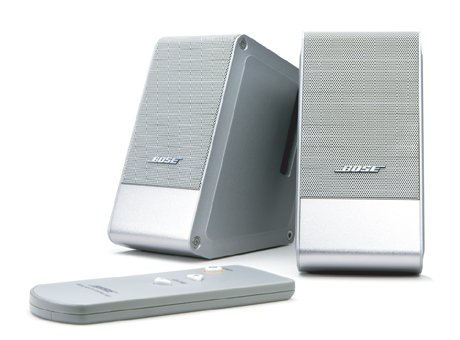
Now, regarding the BOSE Micro Music Monitor (M3) — setting aside the M2, and setting aside cheap powered PC speakers costing a few thousand yen, how does it actually stand in terms of sound quality when compared against other, more expensive BOSE products, against the kind of mini systems available on the high street, or against the compact separates-class pure audio systems and pure audio speakers that I advocate? That, I imagine, is what many of you are curious about.

 ポチップ
ポチップ
Micro Music Monitor M3 vs 125 Westborough WBS-1EXIV
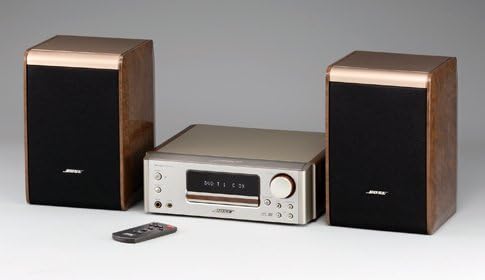
The first product that comes to mind for a comparison within the BOSE range is the WestBorough WBS-1EX IV. Even among BOSE products, this is clearly one aimed at the adult listener — designed with senior pure audio enthusiasts in mind, both in its sound tuning and its aesthetic. It received a full model change last year, with a revised DVD receiver design that became more compact in depth and gained a more refined, premium appearance. Functionally it has also evolved, adding a front-panel input terminal for portable digital audio players such as the iPod, catering to newer ways of enjoying music.
The first product that comes to mind for a comparison within the BOSE range is the WestBorough WBS-1EX IV. Even among BOSE products, this is clearly one aimed at the adult listener — designed with senior pure audio enthusiasts in mind, both in its sound tuning and its aesthetic. It received a full model change last year, with a revised DVD receiver design that became more compact in depth and gained a more refined, premium appearance. Functionally it has also evolved, adding a front-panel input terminal for portable digital audio players such as the iPod, catering to newer ways of enjoying music.
The speaker is the 125 WestBorough, fitted with BOSE’s traditional 11.5 cm full-range driver. It has been updated from the long-selling and well-regarded 121V to the WestBorough 125, with a reported improvement in sound quality as well (note: opinions are divided). It uses a front bass-reflex design with an acoustic waveguide, making it easy to position, and the side panels finished in bird’s-eye maple with UV lacquer are shared with the WBS-1EX IV. Remove the brown grille and the paper cone of the full-range driver reveals itself — a texture and design that speaks of a golden era of audio, and which is more than enough on its own to stir the heart of any enthusiast.
 ポチップ
ポチップ
Despite its classic outward appearance, the internals have been substantially refined. In addition to the adoption of the Crystal Driver discussed below, the enclosure material has been changed from MDF (medium-density fibreboard — note: the material used in most conventional wooden speakers) to a composite of aluminium and resin, representing a decidedly modern approach, which is also a notable characteristic of this speaker.
In terms of sound, it does inherit the tonal character of its predecessor, the WestBorough WBS-1EX III — warm, easy on the ear, with a generous, unhurried sense of body in the midrange and lower registers that belies its size. Without having compared them directly, my impression is that the lower frequencies feel even more plentiful and relaxed than the previous model, with a reduction in the occasional roughness in the upper-mid range (something that could be noticeable in vocal passages). Stylistically, it seems most at home with classical music, slightly older jazz, and older analogue-era rock and pop recordings. Without a tweeter, there will be some dissatisfaction if you are after high-frequency resolution, speed, attack, and modern hi-fi transparency — but as a product designed for long, relaxed music listening, I think it is very thoughtfully realised.
Now, comparing this WestBorough WBS-1EX IV with the Micro Music Monitor (M3) … at the risk of causing some raised eyebrows, if I am to be honest: in terms of sound quality, the M3 is far superior. Of course, the larger 125 has considerably more ease and space in its sound, and when you factor in the sophistication of its pure audio tuning and its affinity with an analogue sound, the WBS-1EX IV system is unquestionably the deeper, more grown-up listen. That said, in the modern sense — hi-fi transparency, clarity, resolution, transient speed, richness of decay — the M3 wins outright. The 125 carries on, in the best possible sense, the American sound that has always been at the heart of the BOSE WestBorough series. The M3, on the other hand, is entirely future-oriented — a new-generation sound. I’ll go ahead and say it: the sound quality it possesses is in a completely different dimension from the sonic character one would normally associate with the existing BOSE brand image.
The 125 WestBorough features a newly developed full-range driver called the Crystal Driver. With an aluminium edgewise-wound voice coil, an aluminium centre cap, and an aluminium frame, it is considerably lighter than a conventional driver built with steel components. The long-stroke excursion has also been increased by approximately 40% compared to the 121V — something that I feel contributes to that sense of ease and spaciousness. Of this Crystal Driver, BOSE says:
Designed from the ground up — materials and construction reviewed entirely anew — to realise a “crystal-clear, pure sound” worthy of the name, while building on BOSE’s traditional 11.5 cm full-range driver.
That is the marketing copy — but as for realising a crystal-clear, pure sound, one might argue it is the M3 or the Computer Music Monitor M2, rather than the acoustically warm 125 with its rounded, gentle transients, that actually delivers on that promise.
BOSE Micro Music Monitor M3 vs 55WER Comparative Review
Next, what about the BOSE 55WER, paired with a MARANTZ integrated amplifier PM4001 and CD player CD5001?
 ポチップ
ポチップ
This is a product of an entirely different concept from the WestBorough 125 discussed above. Its aluminium enclosure means it shares a similar sonic direction with the Micro Music Monitor M3. The cabinet is extremely slim — barely the size of a business card and a half — yet as a tower design it has considerably more enclosure volume than the M3, and in addition to the mid-high driver it carries two woofer units top and bottom, four drivers in total, giving it a completely different sense of sonic ease. That said, the pair-price hovers around ¥100,000 — twice that of the M3 — and the amplifier is sold separately. The sound is clear and bright, but it strikes me less as being oriented towards pure audio and more as a visually-led speaker designed to sit either side of a slim widescreen television for multi-channel home theatre use. It is a different kind of appeal from the spacious soundstaging and the ability to render both hard and soft acoustic textures that you would expect from a pure audio speaker in the same price bracket.
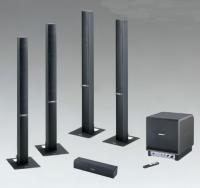
The sense of surprise that comes from the Micro Music Monitor (M3) — that gap between its cute little size and the wide-range, clear sound it produces — is naturally absent here. You might say this is a clear, refined sound that looks exactly as it sounds, if that makes sense. Perhaps the frank, open quality of this kind of metal enclosure speaker is all the more striking precisely because the M3 achieves it in such an astonishingly compact body at such an attractive price.
 ポチップ
ポチップ
Personally, I found myself far more interested in the sound quality of the PM4001 and CD5001 that the speaker was connected to than in the speaker itself. Because this combination costs less than a mini system, yet the difference in sound quality is like chalk and cheese. I was genuinely tempted — just slightly — to buy one on the spot. This is Marantz’s most affordable entry-level pairing, yet it has a proper pure audio character and musical expressiveness tucked within it, delivering a lively, enjoyable sound that lets you get genuinely absorbed in music, even through the BOSE 55WER.
 ポチップ
ポチップ
BOSE Micro Music Monitor vs Wave Music System
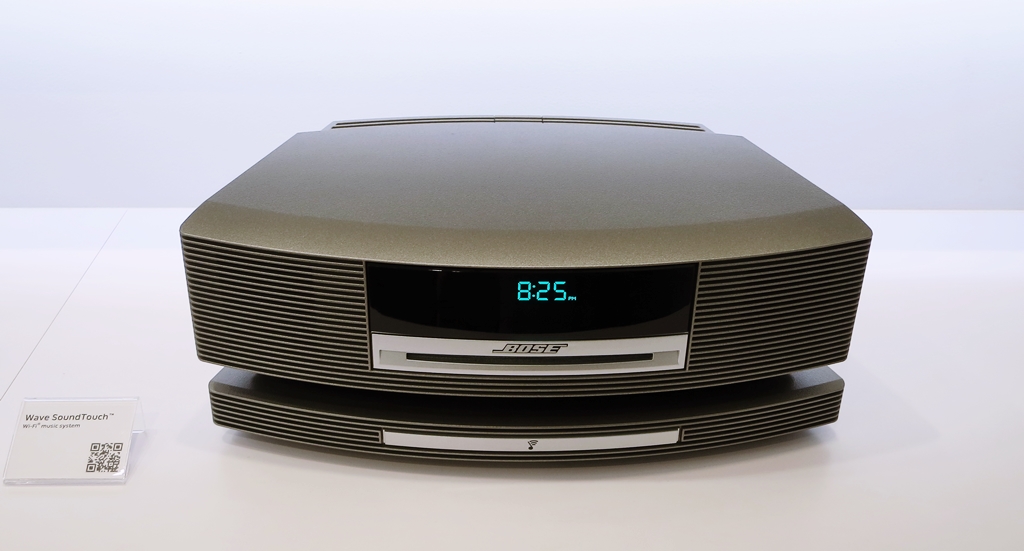
How does the Micro Music Monitor M3 fare against the Acoustic Wave Music System II and the Wave Music System, both of which I have written about previously on this blog? This, too, is no contest. The M3 is the least expensive of the three, yet in terms of pure sound quality alone, setting aside features, it easily surpasses the other two. The Acoustic Wave Music System is, for better or worse, what you might call a BOSE sound that exists as an extension of the radio-cassette player lineage. You do get a curious sense of soundstage generated by the resonance tube and acoustic waveguide, and a fullness in the bass that you would never imagine from its remarkably compact body (note: it is actually much smaller than an ordinary radio-cassette player) — yet because the speaker cabinet and resonance tube are made of plastic, the colouration of the reverb inevitably sounds lightweight, and you find yourself becoming aware that this lively, resonant quality is simply the box-resonance of a plastic enclosure.
 ポチップ
ポチップ
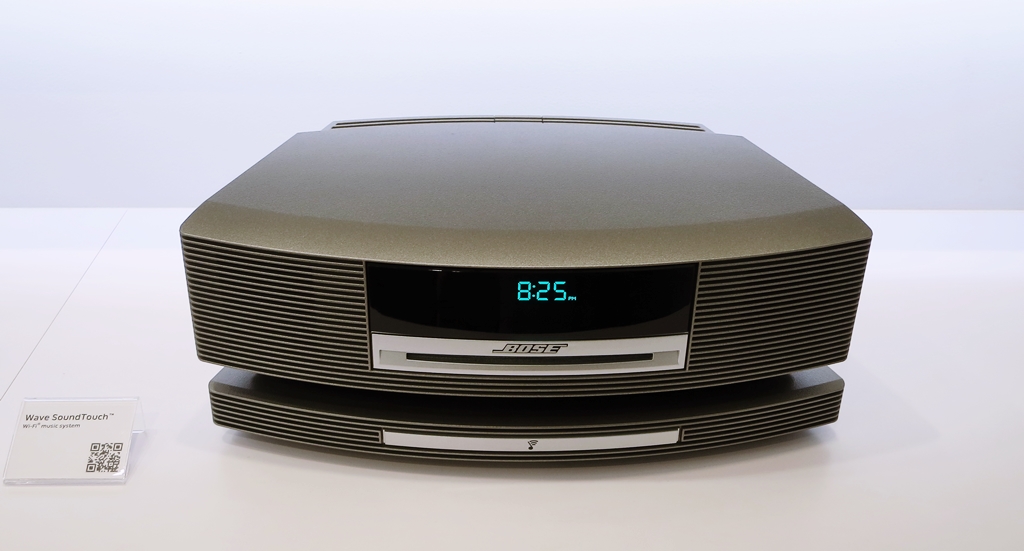
This is, of course, partly because I have spent so long listening to pure audio speakers in wooden or metal enclosures. An ordinary listener more familiar with the sound of plastic-cabinet radio-cassette players, mini systems, or built-in television speakers, and with less experience of pure audio sound, may well not feel any such dissonance. But if someone asks me which sounds best, I will say: the Micro Music Monitor M3, or the BOSE Computer Music Monitor M2 — either of those is considerably better.
 ポチップ
ポチップ
~ Summary ~
To come to the point (note: I have not listened to every model in the range…) — at the risk of causing some controversy, I will go ahead and write it: the Micro Music Monitor M3 has the highest sound quality of any small domestic speaker or integrated system in the BOSE lineup. This is, of course, with the caveat that I am speaking of a typical Japanese home — desktop or PC audio use in a six-tatami room, at sensible listening volumes — and not in the sense of professional or PA use, or the kind of powerful, large-scale sound you might want from a full-size audio system or home theatre in a living room where you can really turn the volume up. Please do not misread me on that point. Within those limited-space conditions, however, I believe the M3 comfortably outperforms in sound quality virtually every PC speaker sold for under ¥50,000, as well as almost every consumer-brand mini system bundled with much larger speakers.
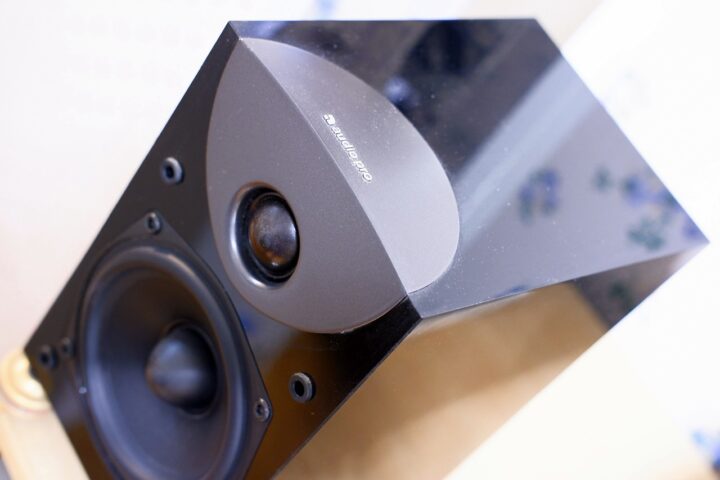
But if you then ask how it fares against the compact pure audio systems I advocate on this site — well, that is where I cannot concede ground. You might say it is obvious, given that they cost considerably more, but I do believe that a combination of the kind of small speakers and audio components I normally write about here — provided the pairing is not unreasonable — should be able to surpass the M3’s sound quality. Not in every case, but broadly speaking… most of the time, I think.
 ポチップ
ポチップ
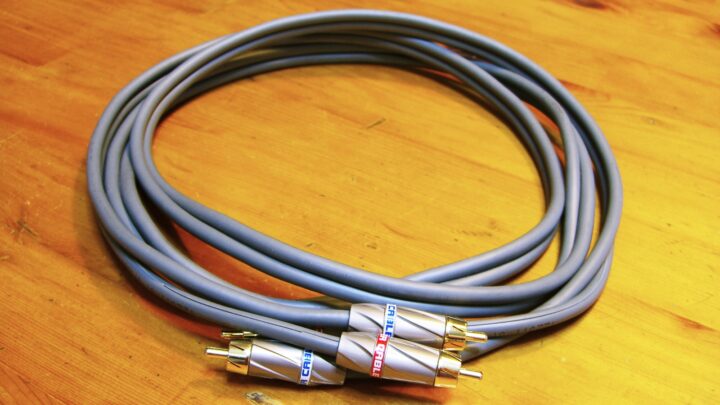
The Micro Music Monitor M3 and the Computer Music Monitor M2 are, in a good sense, self-contained, finished products. You cannot swap the speaker cables, and the digital amplifier is built in, so from a separates-audio perspective there is really nowhere to intervene beyond how you position the speakers — which does make for rather limited customisation enjoyment, it has to be said. (You can enjoy some degree of sound variation through the choice of source player and, for example, a high-quality RCA-to-stereo mini plug cable such as the Monster iCable for iPod.) Furthermore, an active speaker with a built-in amplifier — where the amplifier sits inside the enclosure that is most susceptible to vibration — is, from a pure audio standpoint, theoretically unorthodox.
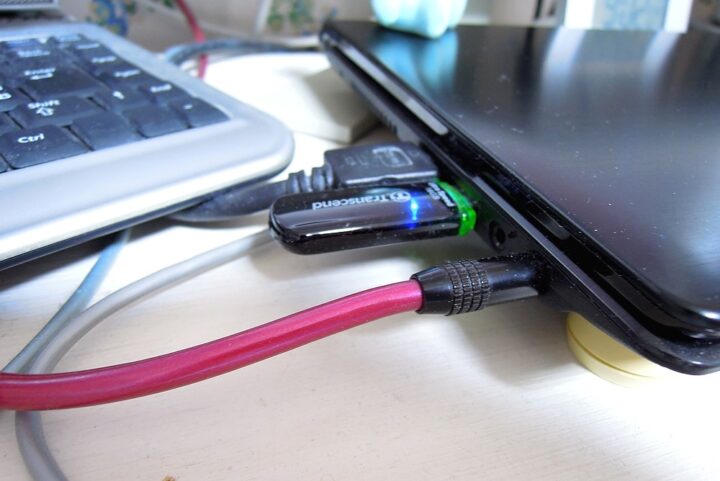
And yet — if you set yourself a budget of ¥50,000 and a height restriction of under 20 cm, and try to find a separate desktop PC speaker and amplifier combination that surpasses the M3 in sound quality, you will find it next to impossible; you should be prepared for quite a struggle. The dedicated amplifier, designed by a skilled and perceptive engineer within those very constraints, can overturn the limitations of size and cost and surpass what even a decent general-purpose amplifier pairing can achieve — and the Micro Music Monitor (M3) is a fine example of exactly that.
ポチップ
That said, I am, after all, a committed pure audio enthusiast. No matter how good a BOSE PC speaker sounds, I cannot simply throw up my hands and declare that pure audio has lost. Achieving high-quality PC audio is one of my goals for this year, and so with “beat the BOSE M3” as my rallying cry, I want to put together a higher-level PC audio system through selections made with a pure audio enthusiast’s eye — and as it happens, I have already quietly acquired a number of items and am steadily preparing for battle.
【BOSE Computer Micro Music Monitor M3 Review】
M3 vs M2|vs Wave Music System & 125 Westborough |M3 Discontinued|M3 Limited Return
Auto Translated by CS4.6