
【Recommended Ultrasonic Cleaner Usage Reports】
Part 1|Part 2|Part 3|GT SONIC|Oolong Tea
Once again, this is a topic I, the perpetual ghost member who only ever lurks, picked up from the Phile-web community. Over in the comments section of Hakoniwa Pure Audio, someone brought up the idea that cleaning CDs with oolong tea improves the sound quality!? — so I decided to give it a go straight away and see what it was all about. The original article written by Silurian-san is linked below.

Having stepped on every landmine imaginable over the years with various CD cleaners and “sound-improving?” coating agents and the like, I find myself somehow unable to resist getting involved whenever this sort of topic comes up — ahem. And so, in that same spirit, I’d like to put things to the test once more.
Below Is a Summary of the AUDIO STYLE Comments Section
25. Posted by Mogu
Hello. I spotted an article on Phile-web about cleaning CDs with oolong tea improving sound quality, and I couldn’t help but react to it. I’m thinking of giving it a try. In your cotton swab article, I noticed you avoided chitosan swabs — what do you think of the idea of soaking a tissue in oolong tea and using it to wipe away dirt from a CD? I’ve also been thinking an ultrasonic cleaner might be nice, but cost-wise, the oolong tea approach does seem appealing. It’s simple, too. Cheap and easy. I suppose I am a little concerned about residue left behind by the oolong tea, though.
26. Posted by pastel_piano
Hello, Mogu-san.
>>What do you think of the idea of soaking a tissue in oolong tea and using it to wipe away dirt from a CD?
I had a look at the article in question. First of all, I think the sound will appear to change no matter what you use — oolong tea, green tea, mineral water, plain tap water, washing-up liquid, alcohol, anything. Whether that change is for the better is entirely subjective, so if it suits your taste, then by all means give it a go at your own risk.
It seems unlikely that oolong tea contains anything that would cause serious harm to polycarbonate, but speaking for my own preferences — whether it’s equipment terminals, CDs, or any other component — applying something that leaves residue behind goes against my personal principles. Even if there is an audibly favourable effect in the short term. And if you use a tissue, you’ll also be leaving behind a considerable amount of fine paper fibre. Even if a factory-pressed CD has traces of machine oil or similar on it, I would think the microscopic contamination introduced by wiping it — despite one’s best intentions — far exceeds that, so nothing should beat a brand-new disc straight out of its wrapping for sheer cleanliness.
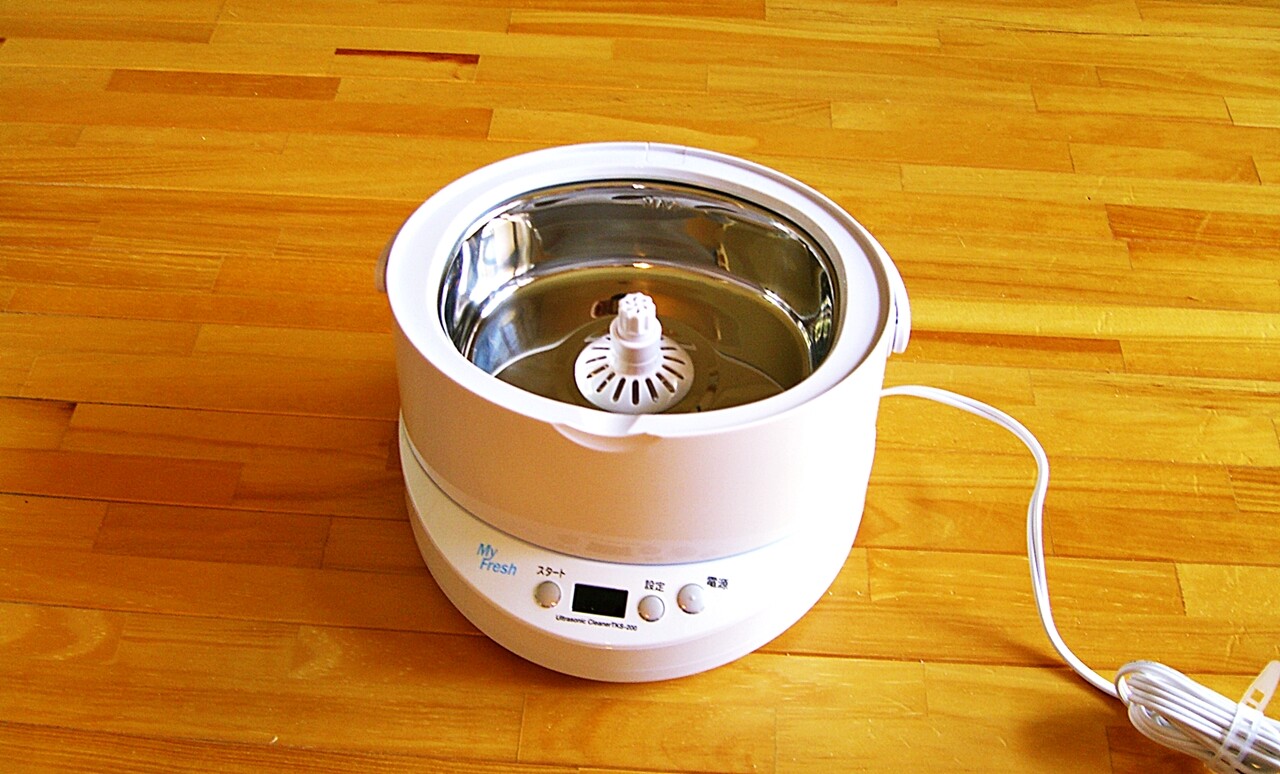
With that said, what personally interests me most is the ultrasonic cleaner you mentioned. Among those, the Sanwa Direct 200-CD037 (formerly TOSHIBA TKS-200/TKS-210) looks particularly handy since it comes with a dedicated stand for cleaning CDs and DVDs. I’ve actually been going back and forth about buying one since spring. That said, there’s still the rather significant problem of how to dry the disc afterwards without scratching it — would a fan work, I wonder?
……Well, there’s no point getting too neurotic about it all, so let’s just treat it as a bit of fun.
27. Posted by Mogu
You’re right, I do have reservations about wiping after cleaning. I suppose dirt will find its way on regardless, unless you’re working in a clean room, so perhaps there’s no need to be overly fussy about it. The Toshiba ultrasonic cleaner — what about using a hair dryer on the cool setting to dry the disc? I hadn’t really looked at Phile-web much before, but everyone there is sharing all sorts of interesting ideas. It’s quite fun. Aside from the oolong tea, there’s apparently someone who wrapped charcoal sheets from the 100-yen shop around their power cables and got better sound. I’m the type who tends to jump at low-cost ideas, to be honest. I know the sensible thing is to research and buy proper accessories, but somehow I ended up at the 100-yen shop again today. I’ve already wrapped the charcoal sheets around the power cables of my CD player, amplifier, and PS3, and I’m seeing how it goes. P.S. I tried the oolong tea CD cleaning on just one disc. It did seem to sound better somehow…
28. Posted by Nakata
Oolong tea is known for dissolving grease — there’s even a tip about using it as windscreen washer fluid (though you’d have to use it before it goes off, otherwise it’s a disaster) — so academically speaking, there is a certain logic to it. The real issue, though, is that the transport jitter really shouldn’t be leaping across to the DAC like that…
*********************Thank You for the Comments*********************


 ポチップ
Cleaning CD Disc Surfaces with Oolong Tea — Plus a Comparison with Neutral Detergent
First, regarding oolong tea — as Nakata-san mentioned, it apparently has the effect of lifting oil films from glass surfaces and the like. You can sort of sense this from the dry, almost astringent feeling you get when the liquid touches your hands. It’s probably not as powerful a degreaser as a surfactant-based cleaner, but by that same token, it may well be gentler on disc surfaces and on the body than some of the harsher chemical cleaners out there.
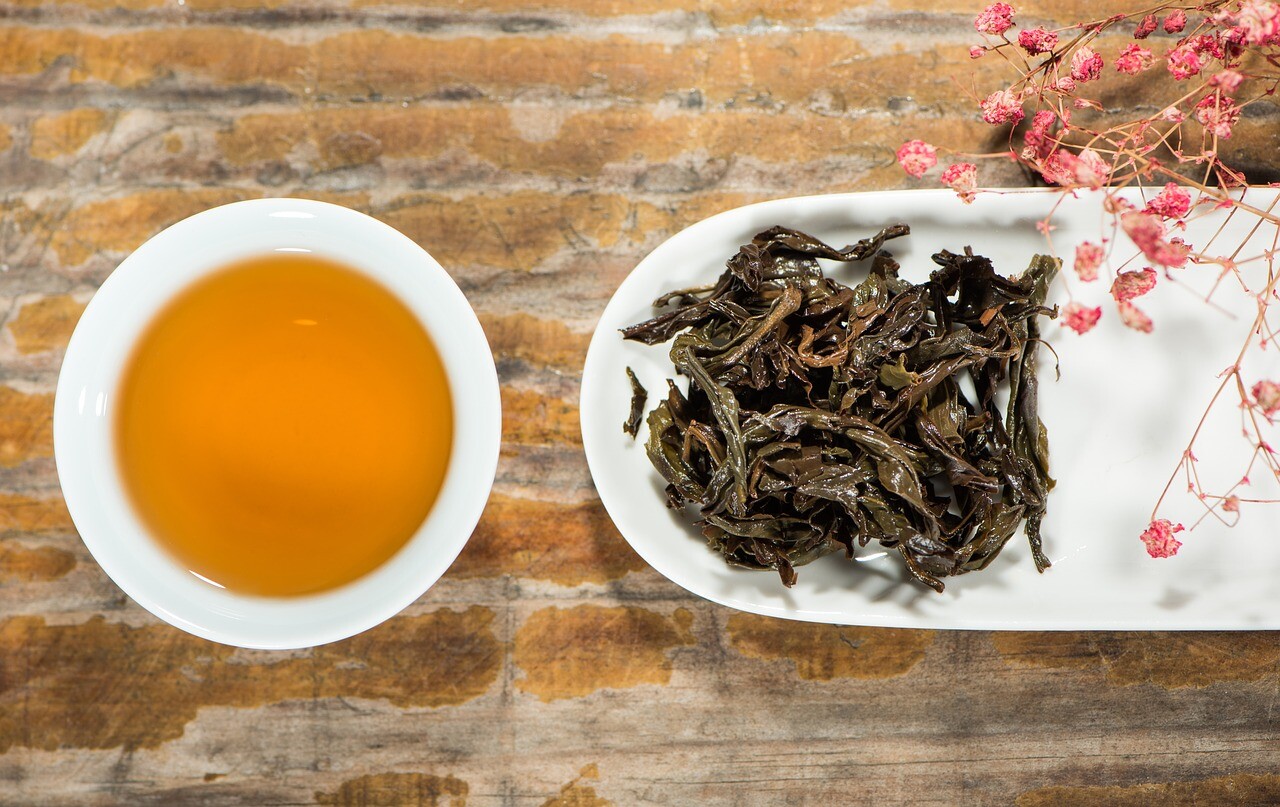
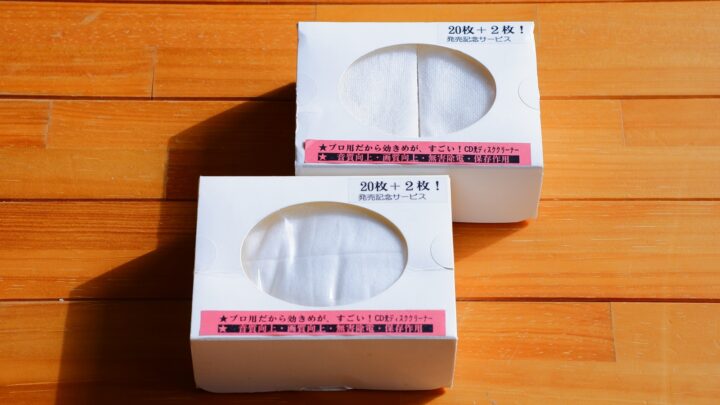
Well, it costs nothing and there’s no harm in trying — so I opened a two-litre PET bottle of oolong tea (Itoen, 2L) that happened to be in the house, and soaked some soft Silcot — a high-quality cosmetic tissue (to avoid scratching the disc surface) — with it. The reason for Itoen rather than anything else is simply that it was the cheapest option. Suntory’s oolong tea might well produce better sound — after all, they do have Suntory Hall.
 ポチップ
When I soak the Silcot with the oolong tea, it turns quite a deep brown. The disc surface won’t actually be stained by this, but at the microscopic level there does seem to be a fair amount of residue… It might affect reflectivity by a fraction of a percent or so. CDs that have developed a whitish oil film from sitting unused for a long time, or ones with mould and other grime on them, will come up looking pristine after a wipe with this. ※Just to be clear, though — wiping with tap water will also produce the same result.
 ポチップ
The CDs I treated were classical discs on the London label, purchased in the late 1980s — Ashkenazy’s Mozart piano concertos, and Radu Lupu’s Beethoven piano sonatas. Since I have import box sets containing the same recordings, these are essentially duplicate copies where it wouldn’t be too painful if something went wrong. Both are superb performances and essential listening for any classical music devotee. Over the course of twenty-odd years, they had been cleaned several times each with whatever CD cleaning fluid was available at the time. My earlier article on the LEIQUA Balance Washer is linked below.
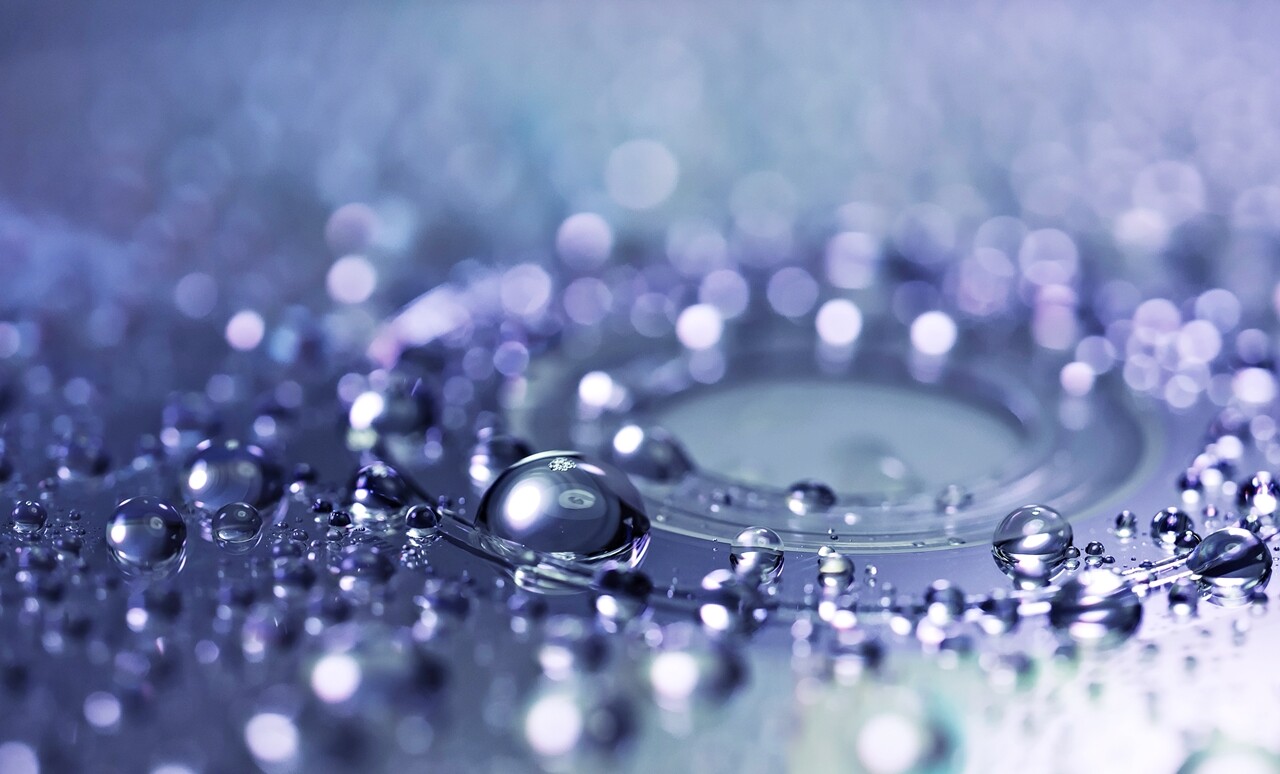
After leaving the discs on the shelf for a while (with a clearly visible white oil film on the surface) and listening through them casually, I cleaned them with oolong tea soaked into a Silcot as described above. Alternatively, I first cleaned them with neutral detergent and tap water, listened through them, and then treated them again with the oolong tea.
 ポチップ
I tried blowing the water droplets off the disc surface with a fan, but they just wouldn’t budge… In the end, waiting for natural evaporation was too much trouble, so I went ahead and gently wiped them dry with a Silcot as usual. Cosmetic cotton pads are highly recommended for this — they don’t scratch the disc surface at all, and cause far fewer scratches than certain expensive dedicated CD-wiping cloths. Having gone through all of that, I played back the same track and had a listen.
It goes without saying that CDs cleaned by any method will sound clearer than ones coated in an oil film or airborne mould — but the real question is how the oolong-tea-cleaned disc compares to one washed with neutral detergent (washing-up liquid containing surfactants) diluted in tap water. The oolong-tea-cleaned disc had a subtly different character — a quieter, more subdued quality, with less of a sense of distortion. It might suit CDs with a harsh, digitally-edged top end… On the other hand, there was a feeling — perhaps — that the sense of reverberation and the way the sound lingered in the air had diminished slightly, and the tonal colour seemed just a touch duller. That’s roughly the extent of the difference.
My go-to is Ecover Zero, a Belgian-made, fragrance-free, colourless, mildly acidic washing-up liquid
 ポチップ
Not quite satisfied, I re-washed the oolong-tea-treated CDs under running tap water with a neutral kitchen detergent (surfactant-based) and a urethane sponge, and had another listen — and to my ear, the neutral detergent gave a fresher, more natural sound with less colouration than the oolong tea treatment. Of course, whether diluted neutral detergent will have any long-term effect on the disc surface is hard to say, so I can’t recommend it without reservation — but in terms of sheer cleanliness, it should come out ahead.
~ Summary ~
Even with the various liquids I’ve applied to CD surfaces over the years, while the sound has sometimes shifted in a subtle way, there haven’t actually been many instances where I’d say it genuinely improved — and oolong tea feels like more of the same, really. Depending on the disc, depending on the system, it might just click for someone… It’s certainly far better than the oil-based CD cleaners that used to be sold here and there some years back — but then again, oil-based coatings, even those marketed specifically for CD and DVD use, can soften or otherwise damage the polycarbonate surface, so I would strongly advise against using them.
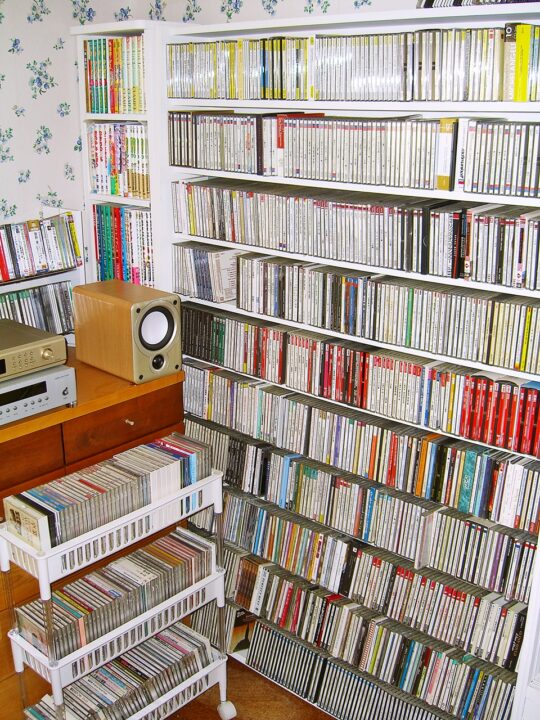
As I also wrote in the comments above, when it comes to personal preference — whether it’s CD surfaces, vinyl records, or various terminals — leaving no residue behind, adding nothing at all after cleaning, is probably the best approach in the long run. I myself have a CD collection running well into the thousands and beyond any sensible count, and depending on where they’ve been stored, some have developed a whitish film, or even — I must confess — proper mould with what look like little legs growing on them (tears). For cleaning old, dirty CDs like those properly, I do think the best approach is to use an ultrasonic cleaner with a small amount of surfactant added to warm water. The microscopic cleaning power of an ultrasonic cleaner is something else entirely, and since it’s essentially just water (warm water), it should be gentle on the discs too — and it comes highly recommended over at PLUTON-san’s site as well. With all that in mind, I’m planning to pick up the TOSHIBA TKS-200 before the year is out. ⇒TOSHIBA TKS-200 Ultrasonic Cleaner Purchase Review
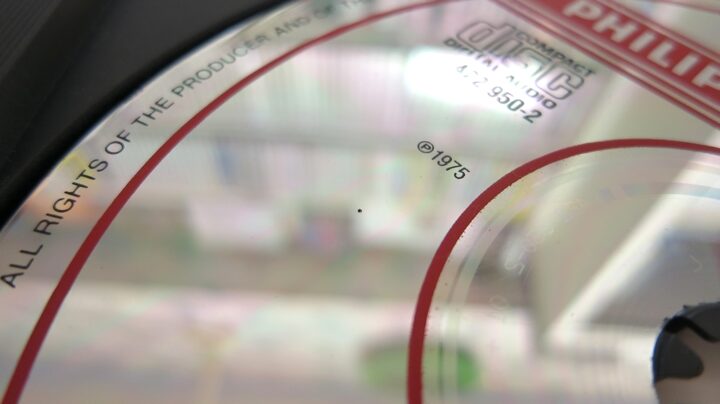
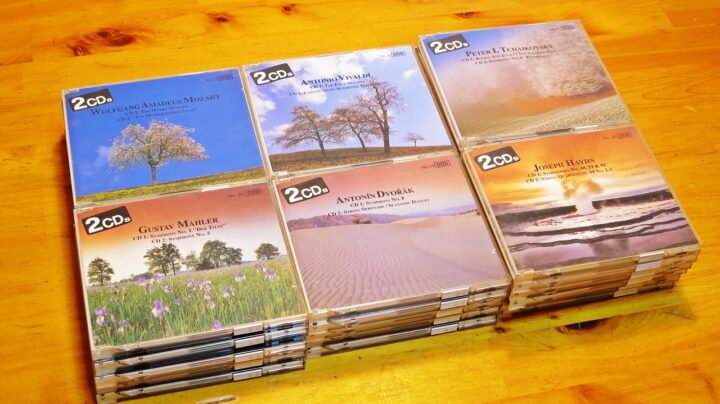
Either way, the fact that such a tiny difference in disc surface reflectivity can have this much audible impact says rather a lot about the rather sorry state of the CD format and its real-time S/PDIF digital transfer standard — it really is quite dismal when you think about it. I find myself in full and fervent agreement with the comment that the transport jitter really shouldn’t be leaping across to the DAC like that… When you get right down to it, with hi-res download files — where there is no physical container to begin with — perhaps one could be freed from this sort of absurd predicament. ⇐ Though of course, that brings its own entirely separate set of problems, one after another…

【Recommended Ultrasonic Cleaner Usage Reports】
Part 1|Part 2|Part 3|GT SONIC|Oolong Tea


Auto Translated by CS4.6

List of comments (15)
烏龍茶処理したあとに東レのトレシーで拭き取りしたらどうでしょうね?
もとが眼鏡ふきですからかなりの不純物はトラップできると思いますが。
あ、トレシーは眼鏡屋のより楽器屋の馬鹿でかいのがお勧めです。うちは水で絞って車の窓ガラス拭いてます。
トレシーですか、そういえばピアノ磨き用のがそこらへんに放り投げてあるわ。。。
トレシーの繊維自体は十分柔らかいのですけれど、拭き取るという動作自体が盤面に傷を付ける原因になるんですよねぇ。。。作業をしている間にたぶん繊維と盤面の間に結局ゴミか何かが絡まって、それを引きずるために傷が入るんだと思います。これは他の拭き取りクロスでも一緒で、拭き取る以上注意していても避けられないです。
ティッシュペーパーの場合は拭き取り動作がいりません。洗浄後に振って水気を切った後、残った水滴をティッシュを軽く当てて吸い取らせるのです。私の知る限り今のところこれが一番楽に水分を飛ばす方法。冬場は洗浄水に人肌のぬるま湯を使うと揮発性が高くなって更に短時間で作業が出来ます。ついでに水道水には塩素が含まれていて、場合によっては盤面に白く残りますから、うちでは浄水器(トレビーノ)を通した水を使っています。トレビーノはお湯禁止なんですけど。
ちょい長いですけどジッタに関してはこんなおページがありまして
http://www3.coara.or.jp/~tomoyaz/higa9905.html#990523
http://www3.coara.or.jp/~tomoyaz/higa9906.html#990615
具体的に実験をされた方がいます。CD-RとCDの音質差の検証などもやっているので今回の立哨もほぼこれでビンゴでしょう。
実験している機械がポータブルであることもありますが、後半になるとCDの偏心などの影響がアナログの電源ラインに飛びつきノイズを引き起こすことなどの記述があります。うーんやっぱトランスポート+DACか。実際DENONなんかは電源トランスをデジタル系とアナログ系の2個用意していたりしますね。
リンクありがとうございます。結構古い記事なんですね、全然知りませんでした。文系脳では大まかにしか理解できませんでしたが、測定できないからプラセボと叩かれている聴感上の変化を、やろうと思えば測定検証出来るんですね。
ピックアップサーボのジッタについて、ドライブメカの筐体を叩いての測定がありましたが、オーディオをされている方なら、スピーカーから発音される音楽がオーディオ機器にもたらす震動が、この方が書かれるめざましい巨大音でなくとも、中~小音量でもかなりの連続震動が伝達していることが経験上判ると思います。
初めまして!
phile-webに烏龍茶でCDを綺麗にするという記事を書いた者です!
根拠は無いのですが、帯磁したディスクを除電する効果もあるそうです。
私はあまり深く考えずに実行しましたがその変化が好ましいものだったので紹介してみただけでした。
実際にディスクの汚れなのかそれとも除電した事による変化なのかは解りません。
それでも、この件で反響があり嬉しく思います!
シルリアさんはじめまして♪(*^-^*)
勝手に記事をお借りしてしまい大変恐縮ですが、
元ネタを提供してくださり感謝しておりますm(__)m
https://www.audiostyle.net/archives/51389886.html#comments
この記事の最後の方のコメントでも書いたのですが、時に私が書く記事の方向性が元記事のライターさんと異なっていることがあるため、今回の場合、もしシルリアさんがお気を悪くされていらっしゃいましたらと思い、内心ビクついていたところでした。わざわざこちらの方へコメントを戴けて大変有り難く思います。
帯磁は色々な要素が絡むのでまだ良くわからないことが多いですが、ご指摘のように静電気などの除電効果は確かにあると思います。烏龍茶のメリットは、CD特有のエッジの立ったデジタル臭さが取れ、落ち着いた深い音(音場)になることだと感じます。水道水+中性洗剤の場合、よりCDらしい明るくクリアな音ですが、烏龍茶で感じられるCDの音質的な弱点を打ち消す方向性ではありません。
こちらのPhile-webのアカウントは開店休業状態ですが、毎日来る新着記事メールで記事の更新は拝見しております。またコメント等お気軽に戴けると嬉しいです♪ あと、もしお差し支えありませんでしたら、この記事の冒頭部分を、直接シルリアさんのブログ記事を紹介する形で書き直したいのですが、いかがでしょうか?
pastel pianoさん
レスを下さり感謝しております。
全く怒ったりとかしてないです!
人それぞれ感じ方が違って当然なので、逆に嬉しいと思っています。
CDの洗浄による変化に対して私と似た印象だったのでやはり、気のせいやオカルトでは無い!と確信が持てました。
私の記事を採りあげて下さるのは構いませんので気を遣わずにあなたの意見で記事を仕上げて下さい!
phile-webの方でもこのCDの洗浄について私も+αの要素を含めた記事を書きますが、その時にpastel pianoさんのブログも軽く紹介したいと思います。
今後とも宜しくお願いします。
pastel pianoさん
私の事は気にしないで下さい。
CD洗浄による変化が私以外にも感じる方がいた事がとても嬉しいのです!
私の記事を採りあげて下さるのは構いませんので気を遣わずにあなたの意見で記事を仕上げて下さい!
私の方でもphile-webの方にpastel pianoさんの紹介も併せた+αの内容の記事を書きます。
今後とも宜しくお願いします。(^O^)
pastel pianoさん
私は全く不快に思ったりとかしていません。
CDの洗浄後の音の変化が自分以外にも確認された事が嬉しいと感じています。
私の記事を採りあげたいとの事ですが、私は構いませんので私に気を遣ったりせずに自分の意見で書いて下さい!
私もphile-webの方でpastel pianoさんの紹介も兼ねて+αの記事を作成しますので今後とも宜しくお願いいたします!(^v^)
>>シルリアさん
暖かいお言葉ありがとうございます。早速リンクを掲載させていただきました。 今回に限らず、こちらの記事へのリンクも、お気軽にどんどん載せて下さって構いませんd(^_-) こちらこそ、今後とも宜しく御願いしますです♪
こんばんは。今更ではありますが、カフェインかカテキンのどちらかが油脂を分解する働きを備えているので、烏龍茶だけでなく煎茶でも紅茶でも油膜はとれます。出涸らしの茶殻で食後のお皿を拭うと油脂が綺麗にとれます。洗剤を使用できないキャンプ場でよく用いられる手法です。但し、ポリカーボネイトは加水分解するものと聞いたことがあるので、お茶や水で洗うと盤の寿命が縮むと思います。
洗浄後の拭き取りには繊維が残留しない工業用ティッシュペーパー「キムワイプ」が便利ですよ。機械工具店や電子部品店で小売しています。
水については短時間の洗浄であればほぼ問題にならないと思います。たぶんホントは中性洗剤の攻撃性の方が不味いかと。
https://detail.chiebukuro.yahoo.co.jp/qa/question_detail/q13116285408
CDの白化は空気中の水分による加水分解が一因だそうですね。
https://www.audiostyle.net/archives/deteriorationdiscs.html
キムワイプですか・・・その発想は無かったです。大きいから使いやすいかな?超音波洗浄器が面倒くさい事も多いので、トレシーやカメラで使う光学レンズ拭き取り用の使い捨てペーパーを使ったりしますが、拭き取る動作が入るとしばしばキズが入ってしまうんですよね。素材よりも何度も拭き続けている間に元の盤面にあったゴミが咬んで、それを引きずってしまうのが原因ですけれど。超音波洗浄器+水分だけ吸わせる方法でしたらとりあえず引きずってキズを入れてしまう心配は無いかな~と。昔、米国製の回転式で水分を高速回転で30秒くらいで弾き飛ばすCDグッズを持っていたのですが、行方不明になってしまって。あれがあれば最初から最後まで非接触で済むので完璧でした。
加水分解についてご存知だったのですね。熟読しないままコメントしてしまい失礼しました。
水分を高速回転で弾き飛ばすとは、画期的な装置ですね。キムワイプを薦めはしましたが、紙の繊維は見た目より遥かに硬いので、傷を発生させやすいです。それでもキムワイプはかなり柔らかい部類なので推薦したのですが、そのような機械は、まさに完璧ですね。非接触ならばエアブラシ(塗装工具)とコンプレッサーの組み合わせが使えそうですが、水分まで吹っ飛ばすとなると相当な大出力を要しそうです。アナログレコードの管理の難しさは年配の方から聞いたことがありますが、CDもなかなか大変なものですね。しかし消磁機はレンタルCD店でも使用されていますし、本ブログを参考に、昔購入したCDをアルコール洗浄したら音が明瞭になったという体験もありましたので、拘る甲斐はありそうですね。
大量にまとめて洗浄する機会が無いのでしたら、普通にイソプロピルアルコールとトレシーで慎重に拭き取れば良いかと思います。
クリーニングマシンは画期的というか、CDをケース内の軸にセットして蓋を閉め、スイッチオンでスピンアップ後タイマーで止まるだけのオモチャです。軸にマブチモーターが入っているだけという簡単なもので、はじけ飛んだ水分はプラスチックのケース内で自然に下に溜まる仕組みです。うろ覚えですが元々は専用クリーナーと水を入れて、低速泡クリーニングした後、逆高速回転で乾燥する仕組みでした。2千円くらいで市販品を作れそうです。←audio-technicaあたりに作って欲しい。レンタルやBOOKOFFで業務用のCD研磨機を置いているところはたまにありますけれど、消磁器使うお店もあるのですか・・・オカルト~っ♪
クリーニングマシンは良い感じですね。動作が単純なだけに故障も少なそうです。
消磁機については、商品管理がしっかりしていることのアピールも兼ねているのでしょうが、奇特な店主だと思います。借りる側も少し良い気分になれます。