【SACD Player ONKYO C-S5VL Detailed Review】
Announcement|Purchase|Part 1|Part 2|Part 3|Part 4|Part 5|Part 6|Part 7
The ONKYO C-S5VL has a proprietary feature not commonly found on other CD or SACD players: the ability to switch between different digital filter characteristics. It’s called a digital filter, but essentially I suppose it refers to an LPF (low-pass filter) that filters the analogue signal waveform immediately after D/A conversion — switching the high-frequency roll-off characteristics and so on according to the user’s preference, which is said to yield audibly different sound qualities. Wait — wouldn’t that make it an analogue filter? I’m not technically minded, so please do correct me if I’m wrong.
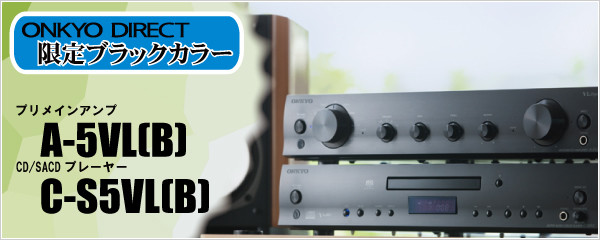
In the case of the C-S5VL, there are 5 patterns for PCM input and 4 patterns plus bypass (DSD DIRECT) for DSD input, meaning 5 different characteristics can be applied separately for CD(Note: 1) and SACD respectively. Incidentally, since this digital filter is applied to the analogue signal immediately after D/A conversion, it is said to be entirely unrelated to the external digital output side — that is, when using the C-S5VL as a transport and extracting an S/PDIF signal via coaxial digital or optical TOSLINK. (Note: I thought this contradicted the explanation in the owner’s manual, so I rang up to confirm, and that was the answer I received.)


 ポチップ
ポチップ
As for this digital filter switching function — the changes are quite subtle, I must say, and I suspect quite a few people would not be able to hear any difference at all. To be honest, it’s the sort of thing that makes one begin to lose confidence as an audiophile, and it may be less a matter of play than of being confronted with the very reason for pure audio’s existence. It’s not like distinguishing between wines of different labels — it’s more like trying to identify the vintage year within the same label. That level of severity. It puts me in a rather solemn frame of mind, thinking that the people inside audio manufacturers listen to such minute differences one by one as they select component values and parts. In any case, I’ve tried to summarise the perceptible changes produced by this digital filter as best I can. I haven’t listened particularly carefully, so I may revise this later, but the impression I have at present is roughly as follows. This is purely a matter of listening impression and does not correspond to frequency response or ripple characteristic charts, so please bear that in mind.
| PCM Filter 1 | Onkyo’s default setting. A balanced type. It brings the CD sound closer to SACD in terms of balance, but there’s a strange quality to it — the surface of the sound image is, to put it kindly, finely textured, and to put it unkindly, rather hazy, with an odd sort of fragrance to the tone. Honestly, this sound isn’t quite to my taste. |
| PCM Filter 2 | A gently soft sound with loose definition. With vocal music it brings out extension and warmth, which I find preferable — delicate and nuanced. Natural and understated. Low distortion. |
| PCM Filter 3 | Well-defined with a crisp sound image, slightly bright-tilted. Wide range with a tendency to exaggerate the front-to-back soundstage. Bright and lively. High resolution yet musically engaging. Can be a touch sharp depending on the source. |
| PCM Filter 4 | Flat balance — relatively the most bass-prominent filter. A matt, composed, warm tone, somewhat reminiscent of CREEK, though lower in musicality. |
| PCM Filter 5 | A lively, charming sound with a mid-forward, kamaboko-shaped tonal emphasis. However, the perceived frequency range narrows. Information density is high. Perhaps suited to small speakers? |
| Note: 1 — The PCM filter applies to normal CDs, the CD layer of Hybrid SACDs, and the DSD layer of SACDs that have been converted from DSD to PCM. | |
| DSD FILTER 1 | |
| DSD FILTER 2 | The sound image becomes crisper; the lines grow thinner and there is a slight metallic quality. |
| DSD FILTER 3 | |
| DSD FILTER 4 | |
| DSD DIRECT | Refined and richly resonant, with an exceptionally high level of fine spatial detail. For the vast majority of SACDs, Direct mode is overwhelmingly the best-sounding option. |
| The DSD filters are analogous to running a signal through a tone control on an amplifier. Whichever one you use, the ambient component of the sound diminishes. With DSD, bypassing the filter altogether is essential — otherwise the appeal drops dramatically. |
Apologies for the roughness of that. The gap between DSD DIRECT and the filtered options is so large that I couldn’t quite bring myself to listen carefully to the filtered sounds. There may be a small number of SACD discs where the sound quality is poor enough in Direct mode to be genuinely difficult to listen to, and where applying a filter becomes necessary — but for the vast majority of discs, DSD DIRECT will surely be the best choice.
Also, when DSD DIRECT is selected, the PCM FILTER ought to have nothing to do with it — yet for reasons I cannot explain, the PCM FILTER selection appears to interfere ever so slightly with the sound quality of DSD DIRECT as well. It is extremely subtle, and certainly not the kind of clear difference you’d hear during CD playback, but…
Writing it out this poetically might give the impression that the differences in sound quality are fairly significant, but in reality the gaps are extremely small. I wouldn’t trust myself to identify them reliably in a blind test, and the impressions noted above were written down rather as a way of putting something into words — I’m genuinely uncertain whether they’re accurate at all. The perceived differences seem like the sort of thing that would change entirely depending on the system, and experientially speaking, a cable swap produces differences that are ten times easier to hear. Or to put it another way — anyone who can’t normally tell the difference between audio cables will almost certainly not be able to hear the difference between DIGITAL FILTER settings either (even if the differences can be explained logically).
So while the digital filter characteristic changes are extremely subtle, it is precisely that subtlety that has a way of pulling Hi-Fi enthusiasts into a rabbit hole. In fact — odd as it sounds — I feel that this switching function alone gives the ONKYO C-S5VL a strong reason to exist. It’s ultimately like a secret ingredient in cooking, and while the differences may seem tiny at first, it is also true that after extended listening, the impression change turns out to be surprisingly non-trivial.
Personally, I initially thought the C-S5VL’s default sound quality (CD/PCM: Filter 1) wasn’t really to my taste — but once I started using FILTER 3 as my main setting, I found myself genuinely satisfied with the sound quality. The impressions described earlier in this review were also written almost entirely with FILTER 3 in use. That said, this is purely in the context of the main system; on Sub-System A I kept it fixed on FILTER 5, and for female vocal anime songs and pop music I used FILTER 2. I also have a feeling that FILTER 4 will appeal to quite a number of people. For getting any semblance of low-frequency weight out of the C-S5VL — which is inherently on the lighter side in the bass — FILTER 4 would be the best choice. ※ In the end, I’ve started switching between Filters 2 through 5 depending on the sound quality of each CD and SACD source.
One important point to note when playing SACDs on the C-S5VL: the C-S5VL can, remarkably, output a digital signal via S/PDIF (optical/coaxial) during SACD playback. Just to be clear, this does not mean it is reading the SACD layer and the CD layer simultaneously. There is a mechanism at work: when the external DIGITAL OUT switch is turned ON, the DSD signal is first converted from DSD to PCM at 16-bit/44.1kHz before being output digitally. Furthermore, since this is 16-bit/44.1kHz CD quality, it is not the 24-bit/176.4kHz hi-res LPCM output found on the original PS3.
Furthermore, when the DIGITAL OUT switch is left ON, D/A conversion cannot be performed directly from DSD, which means that the data being converted internally in real time is also the 16-bit/44.1kHz LPCM described above rather than DSD. This means the analogue output from the C-S5VL itself is no longer of SACD quality. Therefore, in order to hear the sound of native DSD data being fed directly into the DAC — the Wolfson WM8742 — with all of its superb sound quality and wide bandwidth, DIGITAL OUT must be kept OFF without exception. And in that case, it is recommended to set the DSD FILTER to DIRECT mode, bypassing the filter altogether.
Note also that when DIGITAL OUT is turned ON, the PCM FILTER on the CD layer side ceases to function, meaning that during CD playback, the sound bypasses the PCM FILTER switching entirely. It’s not quite the same thing technically, but it resembles a kind of PCM DIRECT (default filter?) mode. This sound is raw and unpolished but the most energetic of all the options, so if you find the tonal characters of PCM FILTERs 1 through 5 a little too tame, it may be worth trying.
So as you can see, from a single Hybrid SACD disc, the C-S5VL can deliver:
1) DSD from the SACD layer
2) DSD-to-PCM real-time conversion
3) PCM from the CD layer
— three distinct sound qualities from a single disc, making it a three-for-one SACD player of sorts, and on top of that, there are 10 filter characteristics plus 1 additional option (DIGITAL OUT ON) to choose from, making this an SACD/CD player that can be finely customised to a remarkable degree according to the user’s preferences. Even someone like me, who remains rather fuzzy on the differences between filters, can surely tell the difference between DSD and PCM sound quality. There really aren’t many other CD players or DACs packed with such interesting features, and in that sense the C-S5VL feels genuinely distinctive.
Even so — just how good must the ears of the ONKYO engineers who designed this feature be! I felt like flipping a table. There is nothing to do but raise the white flag in full and take my hat off to them. So if you have confidence in your own ears, by all means take up the challenge of the C-S5VL’s digital filter comparison. I’d wager roughly half the challengers will be soundly defeated.
※ Postscript: Immediately after purchase, the differences between filters felt extremely small — but once you get used to it, funny how the human ear works, I’ve now reached the point where I simply can’t rest unless I switch the DIGITAL FILTER for every source depending on its sound quality. I’ve become rather high-maintenance.
Other user reviews of the C-S5VL can be found here 【[PR]】 Amazon.co.jp Customer Reviews
※ An entry on the ONKYO DAC-1000 is planned to follow.
【SACD Player ONKYO C-S5VL Detailed Review】
Announcement|Purchase|Part 1|Part 2|Part 3|Part 4|Part 5|Part 6|Part 7


Auto Translated by CS4.6
List of comments (2)
オーディオ関連が好きにも関わらず、予算の関係上深入りも出来ず。
よくよく考えてみたら、機器よりもCDなどの、もとい
言い換えます。音楽が好きで(ジャンルの偏見ナシ)そこそこ
良い音で聴けたら満足な自分(///^^///)
SACDも聴ける機種で 全体的外観の調和を考えブラックの外観~♪
plorogue oneの横に置いても違和感なしなら、この機種欲しい!!
うぅぅ、妄想が膨らんでくる罪な記事の連載です><
こ~んば~んわ♪
6万円以下で買えるSACDプレーヤーでしたら今はC-S5VL一択じゃないかな~と個人的には思います。実売10万円以下になるとPD-D9MK2とか、DCD-CX3も視野に入ってきますので、そこら辺を納得するまで比較しつつ聴いてみないと・・・となってしまいますが。。。
デザインについてはMARANTZ CD6002はプロローグ1と同じフラットパネル。それと比べると統一感では落ちるかな?純正Njoe Tjoeb 4000と同じですし。C-S5VLも黒いのでそんなに目立たないとは思いますが。
音質的にはCD6002とC-S5VLはかなり別方向です。入れ替えというより、両方重ねると違う音が聴けますよ~って感じ。ソフトによって相性が変わるというか、たぶんMARANTZの方がよりアナログ的。あと、プロローグ1は元気が良いので、C-S5VLと合わせると、女性的なニュアンスの豊かさと繊細な優しい感じで太さが中和されると思います。透明度の高さは相乗効果で良い感じになりそう・・・グラスサウンドってイメージかも。気になるとしたら低域の微妙な軽さかな~。比較対象がCD6002でしたら大丈夫かもですけれど。NT4000も私の耳には軽かったですし。
とりあえずハイブリッドSACDを30~50枚くらい集めてしまったら、専用プレーヤー導入を検討しても良いんじゃないかな~と。