【Comparative Listening: 23 Compact Speaker Models】
Part 1|Part 2
Here is the second part of my walkabout listening notes on compact speakers. I won’t pretend a lot of these were anything more than casual drop-in auditions, and I do sometimes wonder whether it’s really quite right to go posting unsolicited reviews on the internet when I haven’t actually bought the things — but I do at least pick up an accessory or two even on days when I don’t purchase any big-ticket items, so that counts for something. …Well, and you do need to buy something to get the parking validated… Though if you’re a younger visitor who comes away empty-handed, shops really ought to cut you some slack.
Let me say once more, as I did in Part One: the star ratings here are not objective recommendations — they reflect how much I personally wanted each speaker for myself, and are heavily coloured by the sonic preferences of this particular small-room Hi-Fi enthusiast. Please do bear that in mind; this is not meant to be an objective quality assessment.
QUAD L-ite2
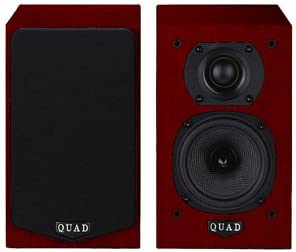
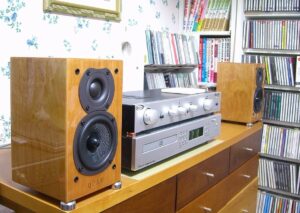
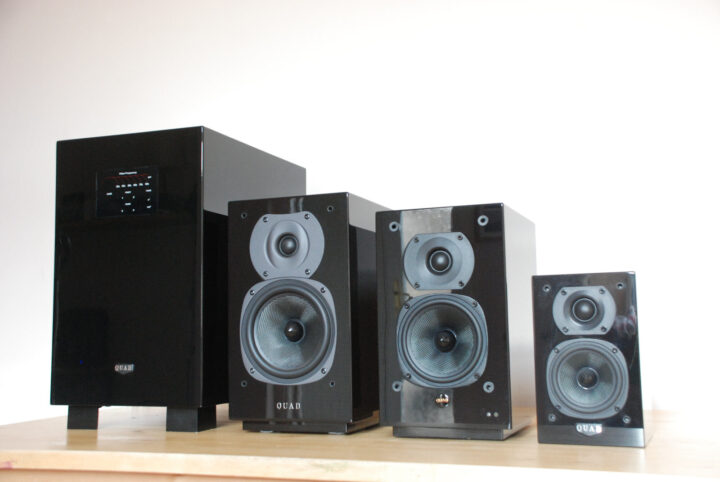
A tiny satellite speaker from the British brand QUAD. I’ve been living with the QUAD L-ite2 as part of a secondary system at home for so long that I’ve grown accustomed to it — flaws included, that slightly cheap quality to its tonal texture among them — and my general attitude has drifted towards “well, that’s just how it is.” But hearing it in a direct comparison like this, away from home, it was a reminder: yes, the frequency range is the narrowest here, as you’d expect from the smallest cabinet, yet in terms of musicality it came out near the top of everything I heard today. The point-source advantage is part of it, but there’s also a fine sense of rhythm — it gets along with the music rather than standing apart from it. A natural-sounding speaker, and quite a bright one. It was genuinely pleasing to rediscover that it’s rather better than I’d been giving it credit for. Since I already own one, no stars. Purchase review here.
QUAD 11L Classic Signature
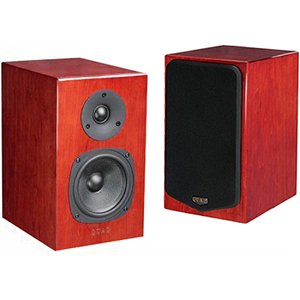

★★★★ The impression here is of the L-ite2’s sound properly refined and given two sizes’ worth of extra breathing room. There’s no sense of a restricted frequency range, and the soundstage opens up considerably in both depth and width. The slightly cheap, peek-a-boo quality of the woofer unit is much reduced. It has a relaxed, unhurried character, yet the musicality is excellent. The harshness I remember from the original first-generation 11L — that brittle, thin edge — appears to have been entirely resolved in the Classic Signature. In outright sound quality it sits a notch below the B&W CM1 S2, which is roughly the same size, but the natural, traditionally British elegance of the 11L Classic Signature is very much more to my personal taste.
B&W 686S2

 ポチップ
ポチップ
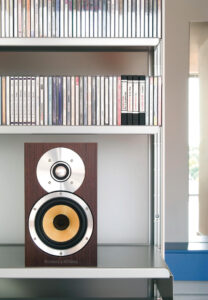
★ Among everything I heard today, this one has a startlingly loud tweeter… Perhaps the demo unit hasn’t been run in yet. The 685S2 already had a fairly sharp top end, but this one, being smaller, tips the balance even further upward. In generous terms: sharp, direct, clean as a whistle — an ultra-dry lager of a sound. As I’d feared, the box colouration is noticeable, and the price rise that came with the S2 update makes the appearance feel cheap for the money. It’s quite a pronounced V-shaped sound, and to me it feels aimed more at home cinema — a big, splashy audio-visual experience — than at serious two-channel listening. It’s a flashy sound tailored to listeners who haven’t yet gone deep into Hi-Fi, so those who enjoy a strong V-shaped response with contemporary rock and pop may actually find it rather appealing.
B&W CM1S2
 ポチップ
ポチップ
★★★ A monitor-type character, though with a reasonable degree of musicality as well. Compared with the original CM1 I reviewed some time ago, the sound has moved towards a higher-speed, sharper, more accurate presentation — something of a high-resolution feel, with a slightly wire-like quality to it. It’s closer to the Nautilus line than the original was, and the overall impression is of a studio-monitor upgrade in terms of resolution. In exchange, what’s been lost is the slight, not-quite-in-focus moistness of the original CM1’s tweeter, and that woody, acoustic warmth it had. The Kevlar woofer, tonally dry in the overall balance, also feels a touch constrained. And yet — for a B&W — this one and the CM5S2 above it are not fatiguing to listen to. If you ask whether I want one: I’d still rather have the original CM1.
B&W CM5S2
 ポチップ
ポチップ
★★★★ The CM5S2 shares its basic tonal character with the CM1S2, but the larger cabinet gives it considerably more room to breathe. As was said of the previous CM5 as well, the overall balance is clearly superior to the CM1S2. A three-dimensional, life-sized soundstage opens up around you, and I think this would genuinely serve as a monitor reference. That said, for my miniature-garden sensibility, the cabinet is frankly a little large for a six-tatami room… This is a speaker that deserves to be set up as the main system in a living room, with proper clearance on all sides and behind. If I set aside the cabinet size and judged purely on sound quality, it would be ★★★★★. For the price, for the value against the competition, and for an ease of use that the Nautilus line doesn’t offer — the CM5S2 is the only current B&W model I’d feel happy recommending broadly. And as long as you don’t factor in the separately sold speaker stands B&W FSCMS2, this level of quality at this price is genuinely good value. The demo unit was in a matte rosé nut finish, but the piano black version will almost certainly sound better, as the reflective surface helps with resonance.
B&W CM6S2
 ポチップ
ポチップ
★ Hmm? This is supposed to be a step above the CM5S2, and yet… the tweeter is too aggressive — it’s fatiguing. From the CM6S2 upwards, B&W adopts the top-mounted tweeter-on-top arrangement like the higher Nautilus models, but to my ears the CM5S2 — the same physical size — has a more balanced and sensible sound. Listening to the CM6S2, I couldn’t entirely shake the thought that B&W, with its change of engineering personnel, might be losing its way. The street price is about 1.5 times that of the CM5S2, yet in quality terms I’d put it on the same level as the CM5S2 and CM1S2. And this costs more than the old Nautilus 805 — before its minor revisions and price increases — which gives me pause. With the integrated amplifier used for this audition, the ATOLL IN100SE, it yelped rather uncomfortably — it may simply need a mid-range separate amplifier with more drive and lower distortion to perform at its best.
Monitor Audio Silver 2

★★ The impression is of Monitor Audio’s traditional aluminium-driver brightness — that airy, dry clarity — carried forward and refined at a higher level of quality. The balance is well judged, and in a brief audition it’s hard to find much to fault. But for my small-room concept, the cabinet is simply too large; I’d have liked to hear the smaller Silver 1 properly — which, for some reason, the shop didn’t have in stock. ※ I did subsequently hear the Silver 1. Slightly lacking in depth perhaps, but bright and open with a good sense of musicality — a very favourable impression. If I were choosing between this and a current B&W, I think I’d go for the Monitor Audio. ★4.
ELAC BS192
 ポチップ
ポチップ
★★ Feels like a straightforward step down from the BS263. Put alongside the higher model, it lacks a little lustre.
ELAC BS263
ポチップ
★★★ The tonal balance is well sorted. The sound brings together the appeal of the BS312’s ribbon JET tweeter with the reassurance of a wooden cabinet. The woofer has its own particular coloration — an idiosyncratic shimmer — but it’s a beautiful sound, and this is the model that best captures what ELAC is about while also having the broadest appeal.
ELAC BS312
 ポチップ
ポチップ
★★★★★ A speaker with an aluminium enclosure, chosen for its resistance to tonal variation with changes in temperature and humidity. I’ve always had a soft spot for the BS312 line going back to the BS310, and that hasn’t changed. It pairs extraordinarily well with the ONKYO A-1VL. It’s close to a point source, and the dynamic range in the midrange isn’t especially wide, yet the transient response is excellent, the resolution is high, and there’s a distinctly wet, resonant quality to the way the soundstage spreads — a kind of real presence. The one caveat: because the enclosure is aluminium rather than MDF, there’s no warmth of wood in the sound. The tonal palette can feel monochrome.
DALI MENTOR MENUET SE
 ポチップ
ポチップ
★★★★★ The MENTOR MENUET SE — a Japan-only 30th Anniversary Special Edition of the musically gifted MENTOR MENUET. The SE upgrades include a fibreboard crossover board, SCR capacitors, CORDIAL III internal wiring, and a large speaker terminal. At the time I was fully intending to buy one, but DENON, the Japanese distributor, kindly raised the price to a point where I can no longer afford it. You could buy two of the standard non-SE MENTOR MENUETs at the old price for the same money. The standard original, for its part, has a woody, warm, bright concert-hall-like resonance and a slightly forward, gently distorted soundstage that gives it a distinctive kind of realism — with small-ensemble classical music, female vocals, voice, and woodwind, it sounds so lifelike you could almost faint.
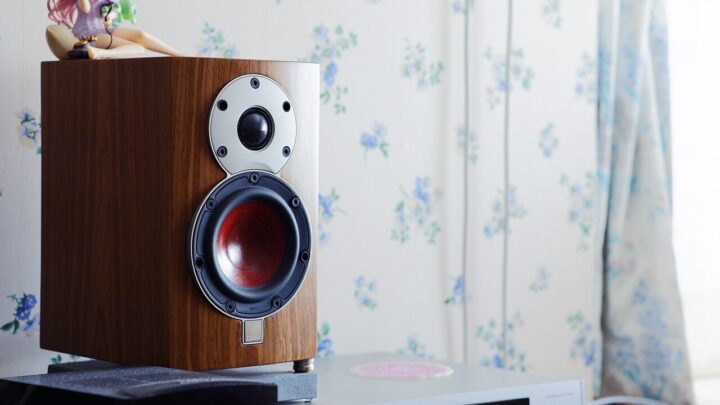
It’s not a direct comparison, but the SE seems to have been polished up into something with higher resolution and sharper definition — though I wonder whether a speaker whose appeal was partly its idiosyncratic frequency response hasn’t become rather too flat in the SE version? It’s hard to say when the shop is different. And in exchange, the warmth and musical spontaneity of the standard version feel as though they’ve taken half a step back — the impression is slightly cooler, more detached.
Also — am I odd for being rather flustered by the matte striped Ruby Macassar finish? If I’m choosing, I’d want the original in white. ←Not available in Japan. The SE isn’t available outside Japan either. That bears repeating. The SE is not sold in the UK or EU. And here we are in Japan… As of autumn 2015, the standard model had already disappeared from shelves before the limited edition did. I’ve been working hard to convince myself that the normal version was actually fine all along — since I can’t have the SE — which may be pushing it slightly, but I do think there’s something in the idea that the SE’s Japan-market exclusivity reflects the fact that the modest reduction in musicality that comes with its sonic trade-offs may simply be harder for the European market to accept. Post-publication note: Shortly afterwards, a successor model was released — the plain DALI MENUET, without the MENTOR name. Unlike the SE’s Japan-specific crossover arrangement, it returns to the original MENTOR MENUET as its basis, but with a cabinet finished in the same style as the higher-end RUBICON series.
Vienna Acoustics Haydn Grand SE Symphony Edition
 ポチップ
ポチップ
★★★★★ The Vienna Acoustics Haydn Grand SE. With classical music and female vocals, the sheer quality is overwhelming. A soft, wide, deeply layered soundstage, and an utterly real harmonic richness from the strings — no distortion, just presence. Setting aside questions of scale that come with the cabinet size, both the tweeter and the spider cone are clearly superior in character to my 1999 first-generation T-2 Mozart Signature. Infuriating. The brittleness of the early S-1 Haydn — that tendency to harden up and become bright depending on the amplifier — is gone entirely, and what remains is a refined, deeply musical sound that sits quite comfortably in high-end territory. The large price increase in Japan makes it genuinely hard to feel enthusiastic about buying one (note: the distributor is now asking roughly what CEC used to charge for the Mozart Model T-2G), but if price alone is set aside, I think it still considerably surpasses anything else in its price range for classical music listeners. The fact that even at 250,000 yen it feels like good value makes me reflect, with a certain wistfulness, on how extraordinary a bargain the older Haydn was in the days when it sold for around 120,000 to 130,000 yen on the street. Of everything I heard today, the Vienna Acoustics Haydn Grand SE is my personal best buy.
— Summary —
Having listened to them all, I’m struck by how, within this class of compact bookshelf speaker, there are essentially two ways of sounding — regardless of cabinet size. Entry-level models tend to have an accented tweeter while the woofer does its best, but the sense of soundstage feels tacked-on or vague: the classic V-shaped sound of a two-way done on a budget, or at worst something a bit toy-like, without much slack in the presentation. Mid-range and above is a different matter entirely — the way the woofer supports the soundstage from beneath changes completely, and you get an easy, settled solidity, a smooth integration with the tweeter, and a proper, authoritative sound in the best Hi-Fi tradition. The depth of the soundstage, the textural quality, and the overall refinement are simply in another league. Because the flavoured distortion in the tweeter is reduced, these speakers may actually sound less immediately exciting in a shop compared with cheaper ones. This feels to me like something that goes beyond the physical constraints of cabinet size — it’s about the quality of the drive units and crossover components, and the design philosophy behind them. After all, the quality of amplifier that different classes of customer are likely to pair with their speakers inevitably varies.
The qualitative boundary where that perceptible gap opens up seems to sit somewhere around the mid-range of the 100,000-yen bracket in street pricing. Among what I heard today, the speakers that carried a genuinely high-end quality — rather than entry-level — were, from Part One, the Spendor S3/5R2, Stirling Broadcast LS3/5a V2, and DYNAUDIO DM2/6, and from the second half, the B&W CM series, the ELAC BS312, and the Vienna Acoustics Haydn Grand Symphony Edition (the KEF LS50 Standard and SOULNOTE SS1.0 were impossible to assess fairly in today’s listening conditions).

Everything else had some degree of entry-level charm and cheapness showing through somewhere. The outlier in all of this is the DALI MENTOR MENUET (SE included). The sound itself falls within what you’d call entry-level territory, but the musicality is high and the way it flatters music is very skilful — it’s simply a pleasure to listen to. That’s partly why the speaker I most want in a realistic, practical sense for my small-room system is the DALI MENTOR MENUET SE, or the original standard MENTOR MENUET. After that, budget notwithstanding, the Vienna Acoustics Haydn Grand SE and the Stirling Broadcast LS3/5a V2. If either of those were within reach, my musical life would surely be richer than it already is — such are the thoughts that occur to me as I stare into my wallet and contemplate my hands.
【Comparative Listening: 23 Compact Speaker Models】
Part 1|Part 2
Auto Translated by CS4.6
List of comments (12)
こんばんは。金剛山です。一人でこれだけの機器を批評してくれている方は少ないので、とてもためになります。
さて、先月Image11改3を一生使うと宣言した舌の根も乾かぬ内にメヌエット2015年版を購入しました。「正確な音しか出さない」Image11改とは毛色が違いますが、すごいスピーカーですね。設置後先ず「ライムライト―テリーのテーマ―」(マントバーニ指揮)を聴きました。チャップリンの哲学の深さとそれを具現化したマントバーニの凄味を思い知らされました。こうした感じがPastel Pianoさんの仰る音楽性なのでしょうか。まだ慣らし中なので今後が楽しみです。尚。Image11改はサブシステムで活用しています。
DALI MINUET御購入ですか~゜゜(´▽`。)°゜。良かったですね♪
マイナーチェンジした無印MINUETが先代MENTOR MINUETからどう変わったのか?外装の仕上げ以外何も変わってないのか?直接比較できないのですっごく気になってたりしますけれども、出来れば私も1~2年内に手に入れたいスピーカーです。MENTOR MINUET SEは中古でも新品時と変わらないくらいお高いので、人気がありすぎるのもなんだか・・・(苦笑)
>音楽性
そうですね。箱ピュアで一番重視しているのが音楽性なので、Image11やImage12も単にクリアで素直な音という訳では無く、実は音楽性の高いスピーカーなのですが、KAIになると私が主張する音楽性とはやや方向性がズレてくる気がします。逸品館さんは機器選び於いて古くから音楽性の重要性について深く理解されている数少ないお店だと思うのですが、AIRBOWになると素材の持ち味を活かした底上げより作り手の好みという別の思惑が絡んでいる気がするんですよね。
日本向けMENTOR MINUET SEも無印とは音質と音楽性が少なからずトレードオフになっている気がしたので、私の場合、たぶんそこをどう対策すべきか悩むと思います。音質と音楽性の両方を良くする事も出来る筈なのですが。
こんにちは。中古でも高価とはA-1VLのようですね。
私も旧型との比較は出来なかったのですが、上新電機一番館の店員氏によると、内部ゆにっともヘリコンの技術を応用しているので音質はかなり向上したそうです。
音楽性についても、Pastel Pianoさんのご嗜好に合うのではと推測しています。明るい曲はより明るく、深淵な曲はより深淵に表現してくれるように感じます。一例を挙げますと、スコット・ジョプリンの「ザ・エンターティナー」(奏者失念)は、けったいな喩えですが釣り上げたばかりの魚の跳ねるような感じを受けて、とても楽しく聴けました。
総じて娯楽・リラックス用途にも芸術鑑賞用途にも耐え得る懐の深いスピーカーだと思います。(逸品館社長は除くとして)娯楽・リラックス用途には不向きなImage11改より適応幅は広いと感じました。
余談ながら、Menuet2015年型購入に踏み切った理由の一つが、代理店のしっかりしている点だったのですが、トライオードがスペンドールの代理店を務めているのを知っていたら、スペンドール製品も購入候補に入れていたのにと歯噛みしています。Menuet2015年型も良いお気に入りなので、「いつかはクラウン」ならぬ「いつかはスペンドール」を目標に貯金に励みます。
新型無印MINUETのユニットが前と違うのは存じ上げませんでした(特にDALIからもDENONからもリリースされてないので)。チューニングが微妙に違うっぽいとの噂はありますけど、元々SPってけっこう個体差がある上に、エージングでも大きく変わるので古いのと新品を比べても既に同じ音ではないでしょうし。
Spendorについては、Spendorに手が出るようになるとHARBETHなど他のスピーカーも視野に入ってくるのでそこが悩みどころかもです(^o^;)
こんばんは。
ハーベスにも憧れています。逸品館等の批評を読むと、やや暗めのスペンドールに対しハーベスの方が明るい傾向だそうで、こちらの方が楽しそうな予感がします。幸いなことにMenuet2015年型がかなり好みに合っているようなので、高額スピーカーに向けてじっくり貯金に励めそうです。ウィーンアコースティック製品は自室六畳間には大きすぎるのが無念です。
Menuet2015年型は明るくて上品なスピーカーですね。t購入された際のレビューを楽しみにしております。
>やや暗めのスペンドールに対しハーベスの方が明るい傾向
たしかにそんな感じです。趣味性と人気はHARBETHのHL-P3ESRに軍配が上がりそうですけれど、HARBETHはあんまり抑揚とかメリハリは控えめなので、肩肘張らずにリラックスして聴くためのスピーカーなのかなと。Vienna Acoustics Haydnはこの2つよりも更に上のクオリティになると思いますが、確かに少し大きいかもですね。まぁ、それぞれ良い意味で個性的なので好みというか、自分は全部欲しいくらいの逸品です(^o^;)。
こんにちは。金剛山です。一年間の貯金を経てHaydn Grand SEを購入しました。
メヌエット2015年型もとても高性能かつ表現豊かですが、ハイドンはもう、値段が値段だけに別世界の表現力ですね。ポップスの伴奏でも、情感を込めて演奏しているか、ただ楽譜をなぞっているだけなのか感じ取れるレベルです。
試聴もままならない博打買いでしたが、本記事のおかげで思い切ることができました。これからますますクラシック音楽鑑賞にのめりこみそうです。
はじめまして。京ともうます。メヌエット2015年型無印と、BS312 とで悩んでいます。
価格差と同じくらい性能差があるのか、それともそれほど差はなくてあとは好みの問題とかのレベルでしょうか?
BS263は、ツイーターがBS312と同じとのことですが、音質は312の方がかなり良いという声が多いのですが、
箱とウーファーユニットの差でしょうか?
よろしくお願いいたします。
>>8
京さんこんにちは。
DALI MENUETとELAC BS312は全く違う傾向のスピーカーです。BS312はモニター使用にも耐えうる正統派の高音質サウンドで、実売価格の2~3倍のスピーカーにも音質的には引けを取りません。弱点はほぼ完全にアルミ金属素材のスピーカーですので、どうしても温もりが少なく無機的になりがちな点です。但し、音質的には同価格帯の他モデルを突き放すレベルで素晴らしいです。今、1台リファレンススピーカーを選ぶ場合は、BS312かB&Wの707S2、706S2、705S2、KEF LS50あたりかと思います。
DALI MENUET 無印は個人的にサブシステムで愛用していますが、音質を追求したスピーカーと云うより、楽器的な温もりと音楽的な楽しさを追求したスピーカーです。音質的には価格相応~せいぜい10万円前後のクオリティだと思います。また、無印MENUETをを選ぶなら、今でしたら上位機のDALI MENUET SEの方が音質的にも表現力的にも上です。但しDALI製品は今年大幅に値上げされたため、音質的な意味でのコスパはMENUET 無印もMENUET SEもやや微妙といわざるを得ません。あくまで唯一無二の個性、キャラクターを味わうスピーカーです。また、これ1台で全ての音楽をそつなくこなせるスピーカーでは無く、音源を選ぶタイプのスピーカーです。
ELAC BS263は両機の中間でややBS312寄りですが、BS312ほど音質面で尖ったところが無く、中庸且つ穏やかに纏められたホームユース向けのスピーカーだと思います。ELAC BS312を上手に鳴らすテクニックが無い場合はBS263が無難かも知れません。
管理人様
お忙しいところお返事いただきありがとうございます。
DALI menuetは基本性能はそれほど高くないとのことで承知しました。
現在は、DYNAUDIO EXCITE X14 を使っています。
周りに視聴できる環境がないのですが、DALI MENUETは、以前視聴した感じですと、スピーカーの前にヴェールやカーテンが一枚あるような印象がありました。
ただ、独特な雰囲気のあるスピーカーだと思いました。コスパはよくないのですね。確かにSNだけで考えれば、10万あればもっとよさそうなスピーカーはありそうです。
聴き疲れはあまりない感じでしたので、そこも良かったです。
BS312は聴き疲れがないといいのですが、KEF LS50も調べたら良さそうでした。
今のところ、使っているスピーカーの価格帯が低いせいか、鳴らなかったことはないのですが、BS312はよほどなりにくいのですね。
BS263も検討してみようと思います。ありがとうございます。
管理人様
何度もすみません。
BS312とKEF LS50は、音質的な差はかなり大きいでしょうか?
よろしくお願いいたします。
>>10
あけましておめでとうございます。それと遅レス失礼しますm(__)m
DYNAUDIO EXCITE X14と比べた場合、DALI MENUETは音質的には明確にグレードダウン、音楽表現力が好みに合う場合は、サブシステム用としてはありかも知れません。自分もあくまでサブシステム用として購入しています。
ELAC BS312は特に鳴らしにくいと云うより、潜在ポテンシャルが高いので、接続機器や使いこなし次第での上限がかなり高いスピーカーだと思います。その意味で価格を遙かに超えるCPだとおもっています。
KEF LS50には解像度の高さなどポテンシャルを感じますが、量販店店頭でまともに鳴っているのを残念ながら聞いたことがありません。所有している方の話として、上手く鳴らせればかなりポテンシャルが高いそうです。色々と工夫が要りそうですが腕に覚えがあるオーディオマニアでしたらチャレンジするのも面白そうです。
どちらにしてもELAC BS312とKEF LS50については、ややドライな傾向のDYNAUDIO EXCITE X14とは全く違った、メタリックで響きの多い傾向になると思います。