【On the Lifespan and Durability of Optical Disc Media】
CD-R|Pressed CD/DVD|I Still Love Discs After All
33 years have passed (40 years as of 2022) since the CD first appeared in 1982. For a while after its release, it was whispered with great authority that a CD’s lifespan was about 30 years — but as things turned out, and as everyone now knows, even early-1980s pressed CDs mostly show nothing wrong at all… that was the answer. Even on Yahoo! Auctions, early-1980s classical and jazz pressings still fetch high prices as “high-quality sound” discs, which suggests that most people have come to accept, as a matter of empirical experience, that there’s essentially no problem.
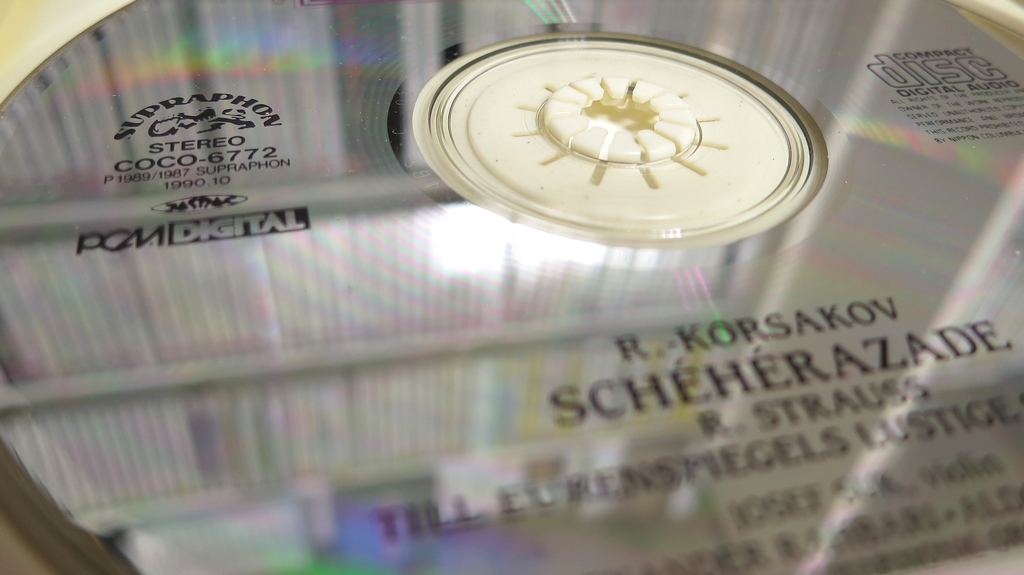
When CDs first came out in the 1980s, there was some slight variation in manufacturing quality, and a very small number of discs did suffer from the polycarbonate layer degrading, causing the aluminium reflective layer to corrode and become unplayable. However, when this sort of problem occurs, it doesn’t take 30 years — visible corrosion or bronze discolouration begins within just a few years of manufacture. So if a CD shows no obvious problems after 30-plus years, it will surely last another 30 years with ease, provided storage conditions aren’t especially bad. In conclusion, the rate of degradation over time is extremely slow, and I’ve come to think that pressed CDs may in fact be, for all practical purposes, semi-permanently storable.

Degradation of pressed discs over time depends on storage conditions
Ultimately, the degradation of factory-pressed CD-DAs and DVD-ROMs over time comes down to how well they’ve been stored. Kept normally indoors, they shouldn’t deteriorate so easily — but even so, the way to keep a CD in good condition over decades comes down to:
1) Not placing it somewhere hot and humid
2) Not exposing it to UV light
3) Not treating it with chemicals
4) Not letting it grow mould
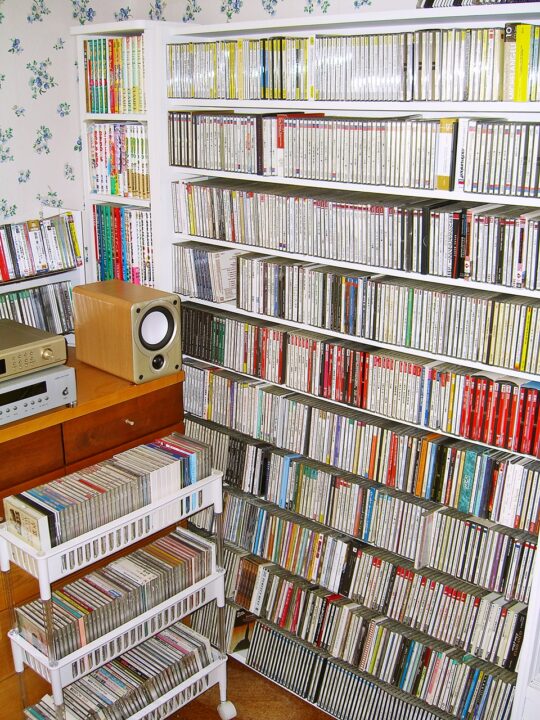
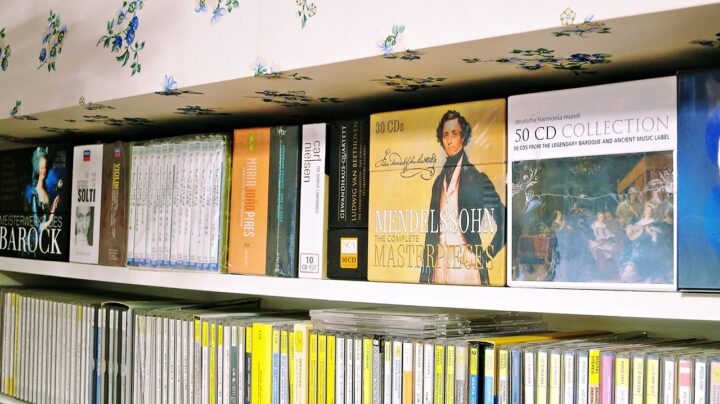
From experience, I believe these four points are the key. If a disc is kept out of direct sunlight, in a sealed or well-ventilated space at room temperature and low humidity, and if the outer edge join and label surface aren’t scratched, and provided it isn’t a manufacturing defect in the first place — then most discs will probably last 100 years. That’s the view of the author of Hakoniwa Pure Audio, having collected over 6,000 pressed CDs from the 1980s through to today. Storing pressed CDs, CD-ROMs, and DVD/Blu-ray discs doesn’t require any particularly special environment, but if one is additionally left unopened in its original shrink wrap, then I think semi-permanent preservation becomes all the more likely.
White mould appearing on the disc surface
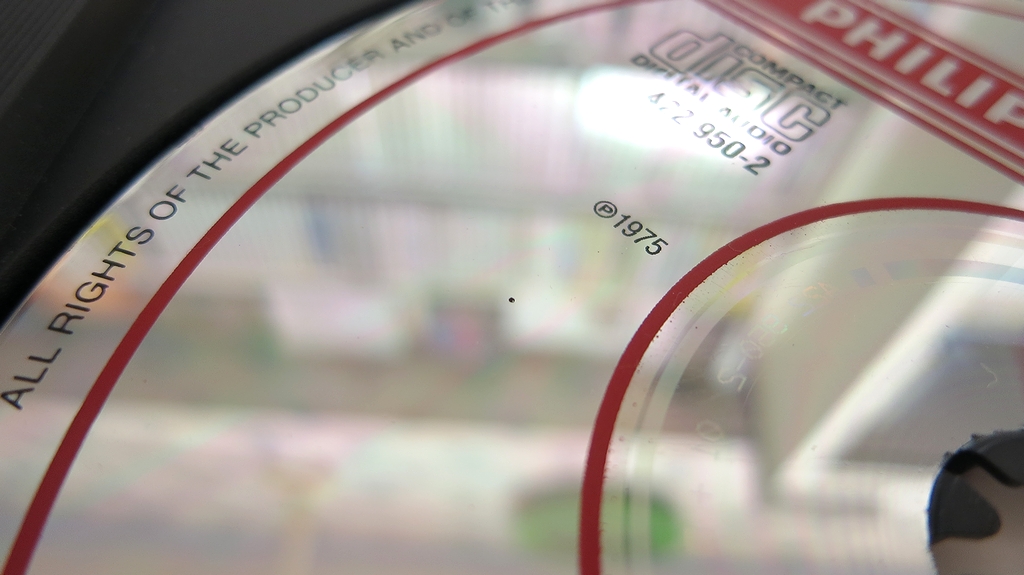
You occasionally hear stories of discs eroded by humidity after being stored somewhere prone to condensation for a long time — but of course any plastic will corrode if treated like that. That said, even at fairly ordinary storage temperatures, if humidity is a bit on the high side and ventilation is poor, white mould can sometimes appear on both sides of a CD, either in scattered spots or covering the surface densely. European pressings from the 1980s in particular seem vulnerable to humidity and mould — perhaps due to differences in the chemicals used in their polycarbonate — and I’ve had two or three discs in the past where leaving mould untreated actually resulted in pinholes forming. What’s interesting is that, as in the image below, even when a pinhole is clearly visible to the naked eye, the disc still doesn’t skip during playback — presumably falling within the CD player’s error-correction range.
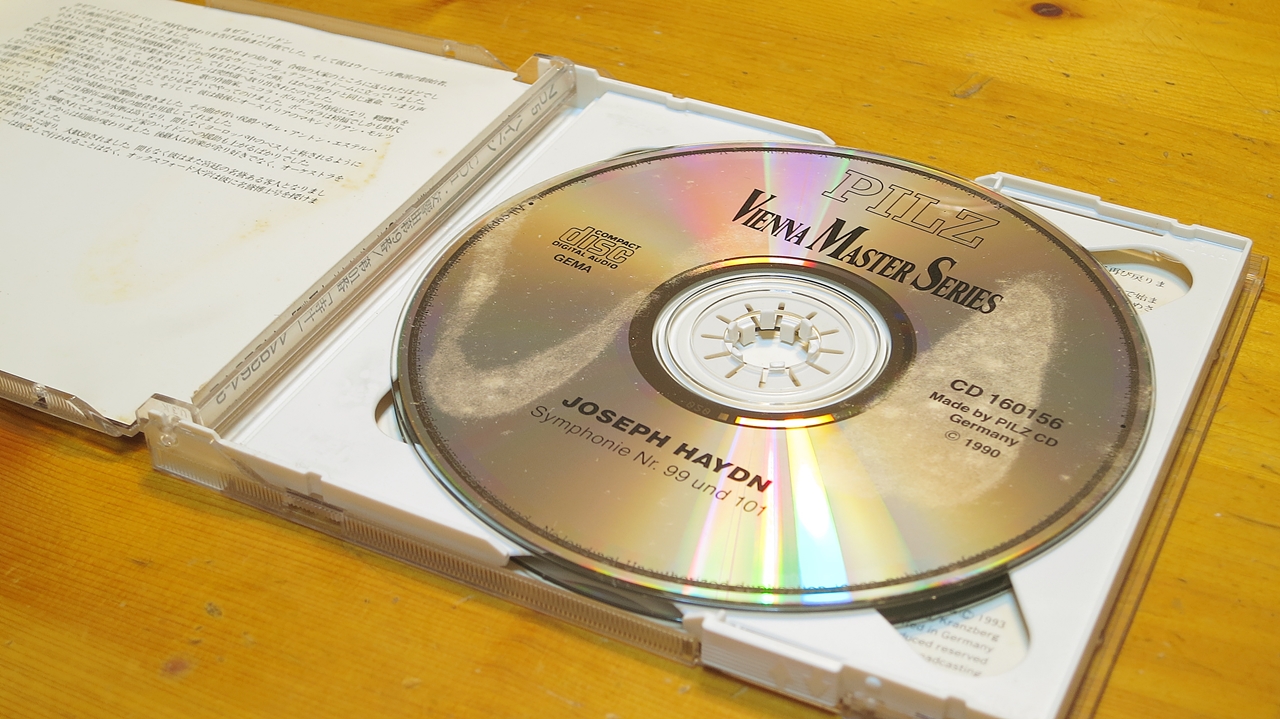
When you’re storing thousands of CDs, the ones you rarely listen to end up pushed to the back or bottom of a shelf or closet, and when you open them up after twenty years, you’re shocked to find them covered in white mould! Actually, to tell you the truth, I have literally something like a hundred CDs sitting there mouldy, which I’ve never got round to cleaning because it’s such a hassle. Every now and then I nervously open one up to check, and while it looks completely mould-covered at a glance, once cleaned in an ultrasonic cleaner it comes out looking as good as new — in most cases, the disc surface itself shows no visible sign of corrosion having actually progressed at all.
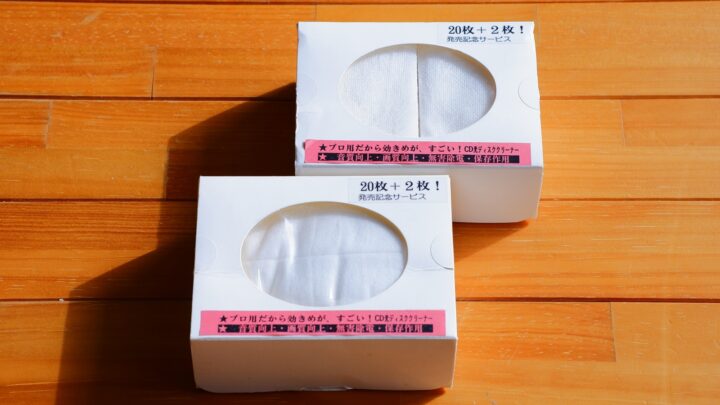
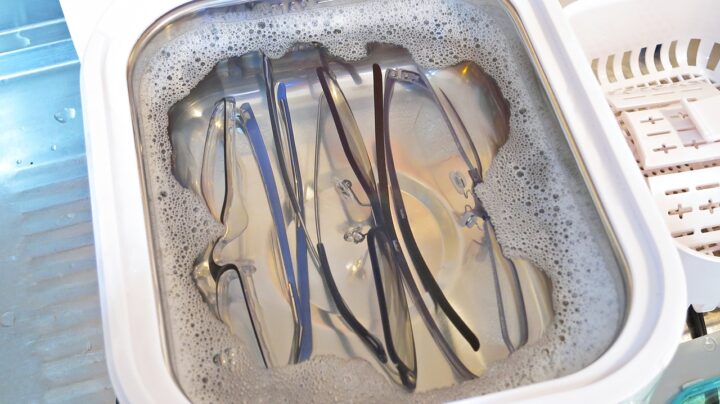
Mould on the polycarbonate surface comes off easily enough with lukewarm water and neutral detergent applied with a sponge, or with gentle cleaning in an ultrasonic cleaner. The real problem, rather, is when the liner notes and spine grow mouldy and leave brown stains that won’t come out. As for stains on the sleeve, I looked into how libraries deal with mouldy books, and it seems wiping with rubbing alcohol or anhydrous ethanol to disinfect is the best approach. I’ve long used this same method myself: spraying rubbing alcohol quite generously — to the point of being properly damp — onto the mouldy spine or liner notes, then wiping in one direction with a Silcot cloth. Unlike water, alcohol evaporates quickly, so the paper doesn’t get too soggy — though do be careful, as some inks can run.

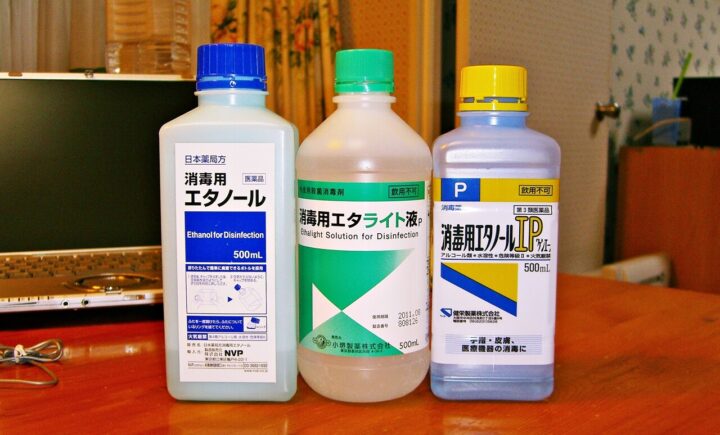
That said, the main purpose of this alcohol-based disinfection wipe is to remove the rough texture caused by surface mould and to sterilise it so it doesn’t progress any further — once mould has soaked into the paper and turned it brown, the paper won’t return to white again. Incidentally, whenever I start cleaning mould off CDs, liner notes, or plastic cases, I — being someone with eczema — find it gets fairly rough on me, so if you’re prone to allergies, I’d recommend working in a well-ventilated space and wearing a mask.

Clouding caused by hydrolysis of the polycarbonate
In putting together this article, I did some random checks on CDs that had been shoved away in what I believe is the worst-storage-condition spot in my home for years, to look into the claim that polycarbonate clouds up from absorbing moisture. There were indeed occasional discs, regardless of manufacturing era, that seemed to have gone somewhat cloudy — though not enough to cause any problem reading the recorded surface. On the other hand, some discs manufactured over 30 years ago looked as good as new, and even old, mouldy discs — apart from the mould itself — had reflectivity that was, visually, still bright and shiny, coming out looking brand new once cleaned. Oddly enough, I couldn’t really detect much correlation between the clouding and the manufacturing period.
As for this apparent clouding caused by moisture absorption, it does seem to occur more often with domestic Japanese pressings than imports — which might be down to the quality of the raw materials used by the manufacturer — but personally, I can’t help suspecting it may also have something to do with CD cleaners or coating agents I used in the past. It does seem that discs played many times, listened to repeatedly, or carried around a lot — in other words, discs cleaned more often — tend more towards clouding. I suspect that’s probably the answer, nine times out of ten.
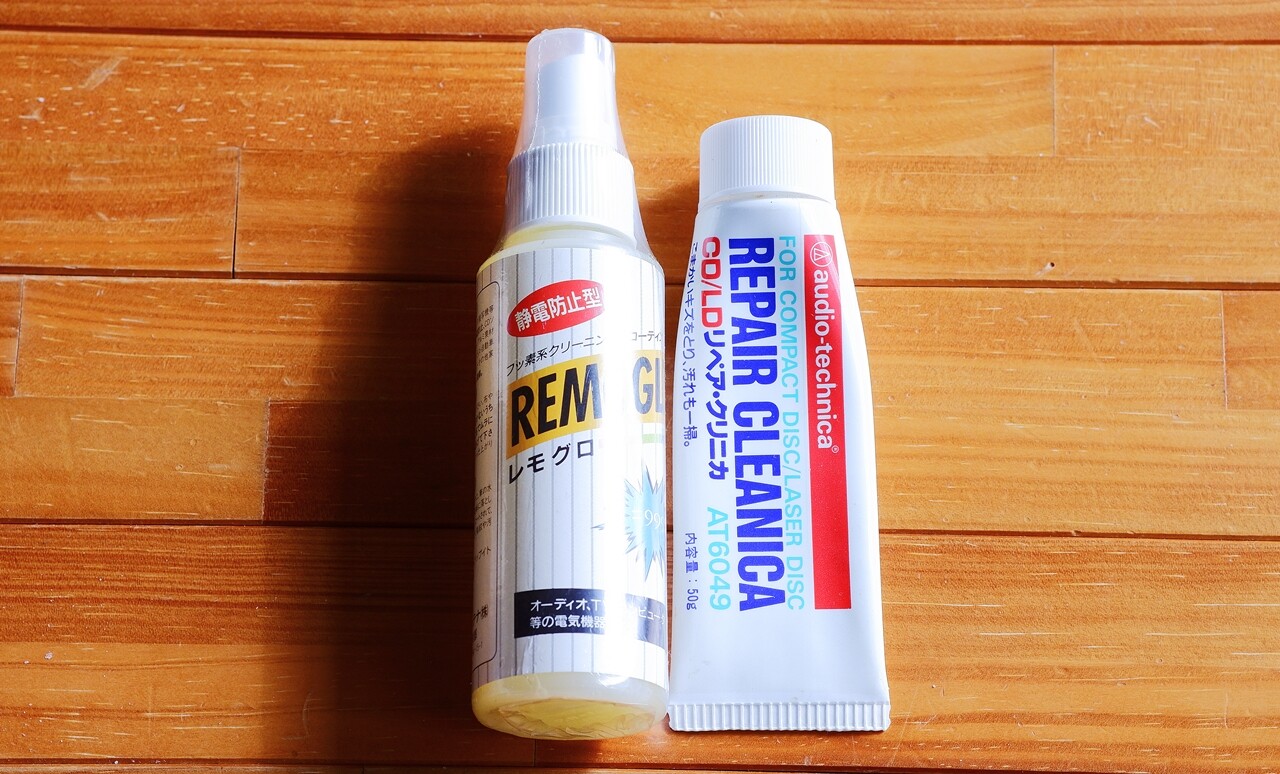
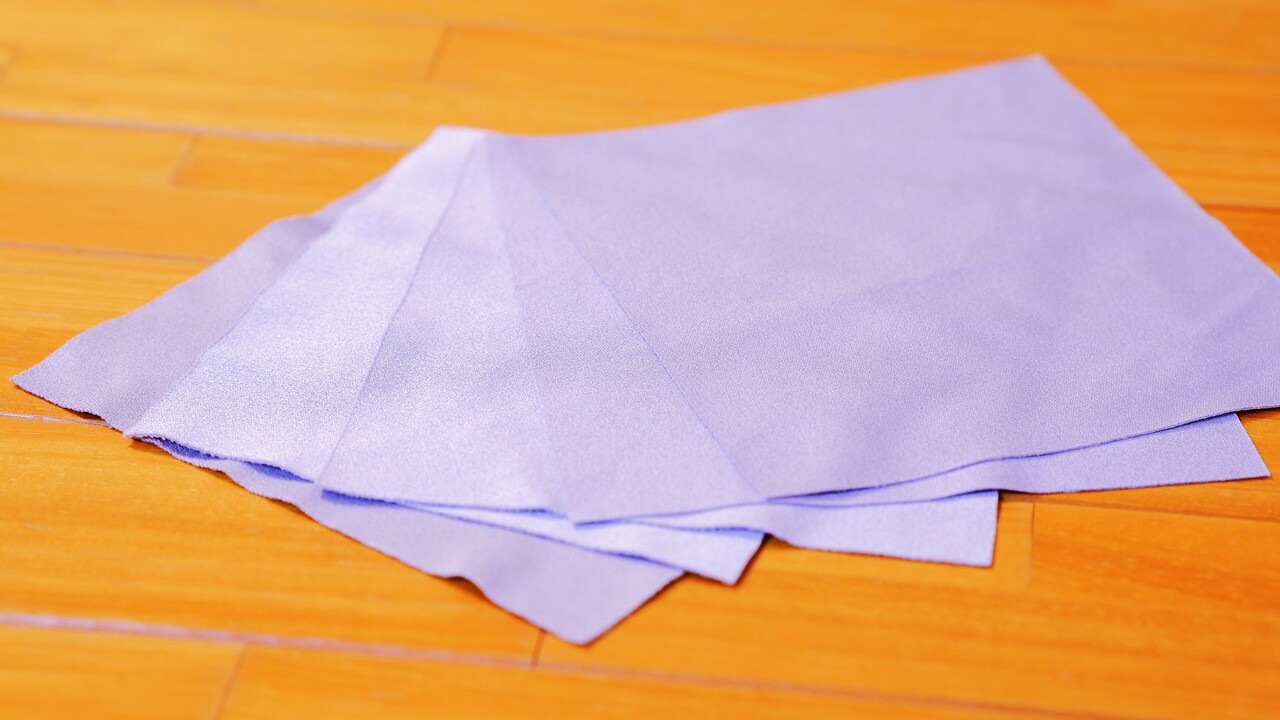
After all, I’m a die-hard occult-audio enthusiast, so ever since my student days I’ve tried, one after another, every liquid CD cleaner claiming to improve sound quality or “fill in scratches” — and blown myself up in the process, so to speak. This clouding sometimes appears faint and patchy, and in such cases spraying isopropyl alcohol (or disinfectant ethanol if that’s not on hand) and wiping with a lens cloth often removes it quite easily. Note that mild clouding doesn’t interfere with data reading, but in the realm of pure-audio sound quality — that is, sensory evaluation — it can sometimes sound different.


 ポチップ
ポチップ
These days, above all else, the priority is not letting discs get dirty in the first place. For dust alone, I use either the Tamiya anti-static cleaning brush or a blast from an air duster. Only for stubborn fingerprints or mould that won’t come off do I spray isopropyl alcohol (or anhydrous ethanol if not available) and wipe with a lens cloth; if the stain is really noticeable, I use lukewarm water plus neutral detergent plus an ultrasonic cleaner plus a Silcot cloth, giving it a light pat-pat and shake, and just soaking up whatever water droplets don’t come off. Though I do wonder whether the neutral detergent — I use the kitchen detergent Ecover Zero — is actually fine to use.
A mildly acidic, fragrance-free, dye-free washing-up liquid made in Belgium
 ポチップ
ポチップ
I’ve written before about the safety of anhydrous ethanol in an earlier article, but for what it’s worth, expensive IPA (isopropyl alcohol) is the safer choice in terms of resistance against polycarbonate. Ethanol has slight corrosive properties if exposed at high temperature over a long period, but in chemical resistance charts it still seems to fall within the “safe” category.
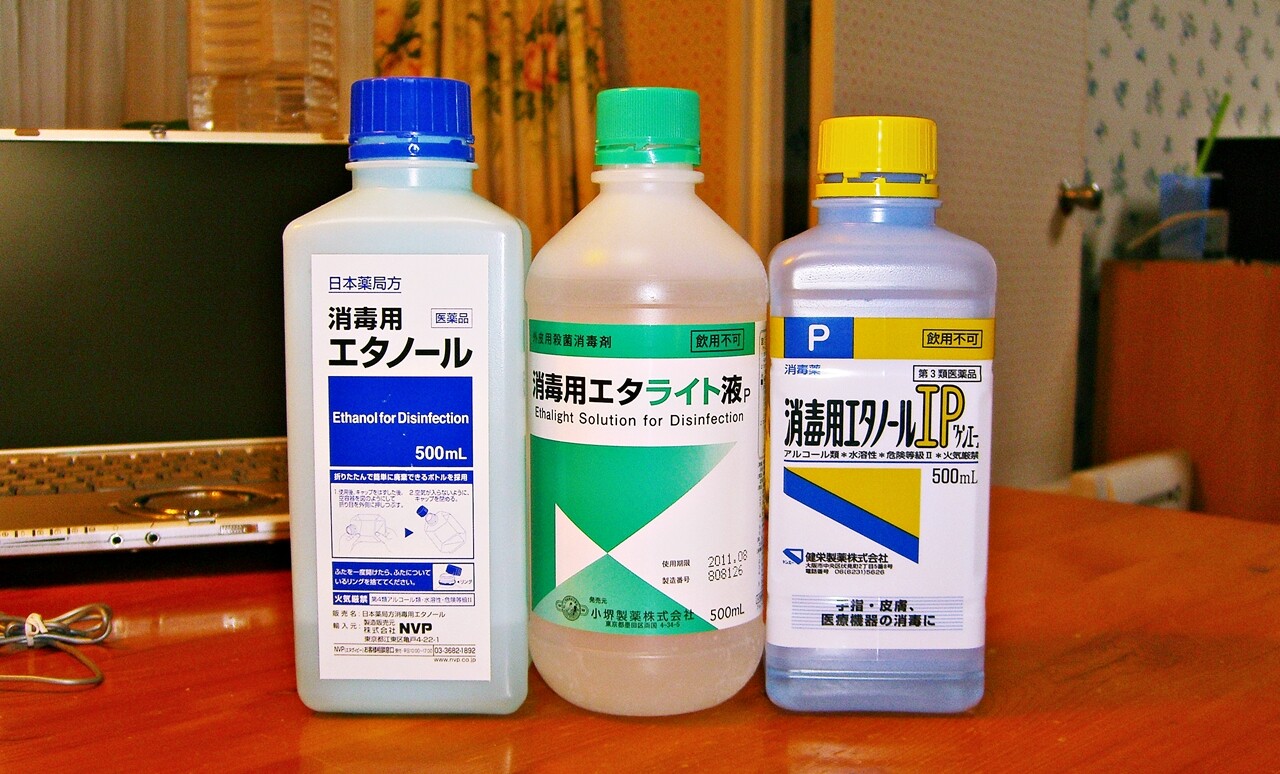
When used for CD cleaning, it evaporates without leaving residue within a matter of seconds, so I think it’s essentially not a problem — but in principle, I’d recommend using IPA, isopropyl alcohol, the same substance found in commercially available CD cleaners.
 ポチップ
ポチップ
Interestingly, I’ve never once seen a polystyrene plastic case go cloudy. That said, if not stored away from light, these cases often gradually yellow from UV exposure, and as they age the hinges on the opening flap tend to snap easily, the white plastic tray inside can turn quite noticeably yellow, and a mysterious sooty grime from air pollution can build up. But the pressed CD inside is far more durable than its case — I’ve never once seen a disc rot or turn yellow with age the way a case does. As for grime on plastic cases, this too polishes up easily with rubbing alcohol and tissue paper and so on, but there’s nothing to be done about yellowing or plastic degradation itself, so personally, once I start noticing a CD case has degraded, I simply swap it for a new plastic case.
 ポチップ
ポチップ
Take care with old imported pressings corroding from the outer edge
Separate from mild clouding on the polycarbonate surface, there are cases seen in some domestic Japanese pressings from around 1990 where the signal surface whitens to the point of becoming unreadable, and likewise cases among UK imports such as Hyperion, produced in the late 1980s to early 1990s, where a phenomenon called “bronzing” — a brown discolouration — renders the disc unplayable. Both of these, it seems, stem from manufacturing defects.
As mentioned earlier, polycarbonate is surprisingly vulnerable to chemicals, and I think it’s entirely plausible that cleaners or coating agents carelessly used to “improve sound quality” have accelerated long-term degradation in some cases. There’s also the fact that hand oils, or oily residue from ointments or cosmetics left on the fingers, can adhere to the outer edge of the disc, from where corrosion begins working its way inward toward the signal surface — and with old European pressings in particular, second-hand CDs quite often show corrosion starting to develop from the outer edge in this way.
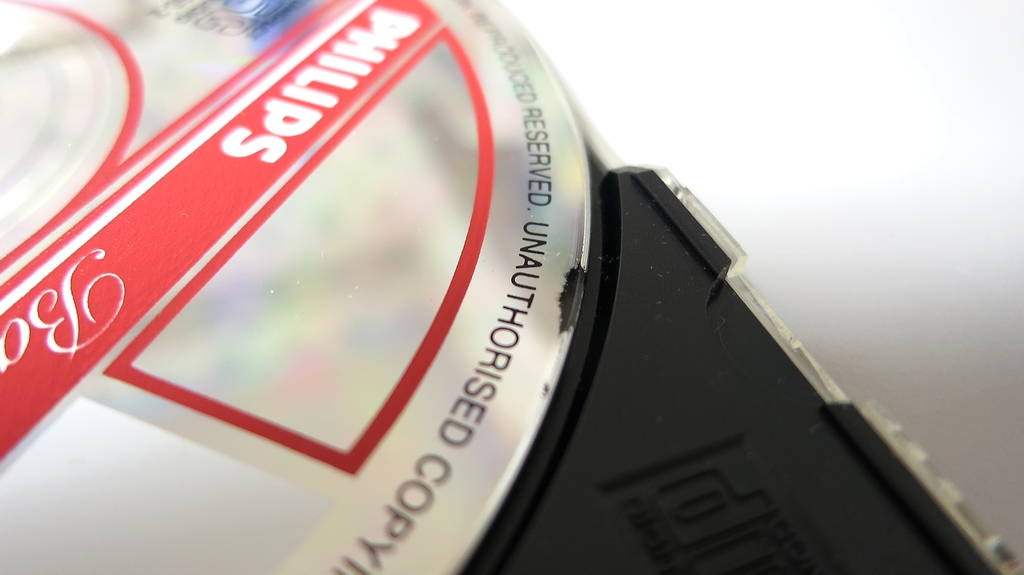
That said, I’ve also found from experience that once you clean this kind of corrosion and get the storage method properly sorted, it stops progressing any further. Back in the 1990s, I experienced this on several German-pressed classical CDs from the 1980s, where outer-edge corrosion was, I believe, caused by hand oils — and ever since then, I’ve stopped handling CDs bare-handed except when my fingers were clearly dry. Incidentally, with domestic Japanese pressings, which tend to have good manufacturing quality, you basically don’t need to worry this much. Though before we even get to that — compared with West German or EU pressings, the sound quality of domestic pressings is, well… let’s just leave that thought hanging.
 ポチップ
ポチップ
For the reasons above, whenever I handle optical discs like CDs, DVDs, or Blu-rays, I basically put on cotton gloves before taking them out, putting them away, or setting them into a player. I’m something of a clean freak, you see, so I’m the type to put on gloves every single time I touch a piece of Hi-Fi equipment too. (There are always cotton gloves sitting by each system in every room.) With wiping using IPA/isopropyl alcohol or ethanol, and with brief ultrasonic cleaning using water and neutral detergent, I can actually feel that the cleaning removes a micron-thin veil of what’s presumably machine oil left over from the pressing process — which, come to think of it, might not actually be a good thing for long-term storage! Though perhaps, before too long, some sort of anti-degradation coating agent designed to boost the polycarbonate’s durability with a protective film will come onto the market.

Actually, I’m more worried about the future availability of CD drive mechanisms than about disc degradation itself
More than the degradation of pressed CDs over time, what actually worries me far more, as a pure-audio enthusiast, is the mechanical lifespan of dedicated CD playback machines… Unlike an analogue turntable, where things can work out fine as long as somebody, somewhere, keeps making pickup drive mechanisms, the number of newly manufactured units of existing high-quality standalone CD players and SACD players has fallen off — and honestly, I find myself genuinely anxious about how many more years we Hi-Fi enthusiasts will be able to keep them going. Including super-multi drives made for PCs, generic multi-drives simply capable of reading data off a CD and ripping it are unlikely to go extinct any time soon, so CD/SACD players built around general-purpose super-multi drives will likely, one way or another, keep being made going forward.
 ポチップ
ポチップ
However, in the pure-audio world, whether or not a “high-quality, constant-speed drive mechanism” designed specifically for CD-DA or SACD exists has had a huge bearing on playback quality. When PHILIPS’ swing-arm die-cast mechanism disappeared in the early 2000s, about the only domestically-made product remaining dedicated to constant-speed CD playback for audio purposes was the rather unusual C.E.C. belt drive. Among combined CD/SACD units, it seems that the merged DENON and MARANTZ, along with Accuphase, LUXMAN, YAMAHA, and TEAC/ESOTERIC’s VRDS mechanism, are still just about being produced even into the 2010s and 2020s (including cases where custom drive mechanisms are outsourced to other subcontracted manufacturers).
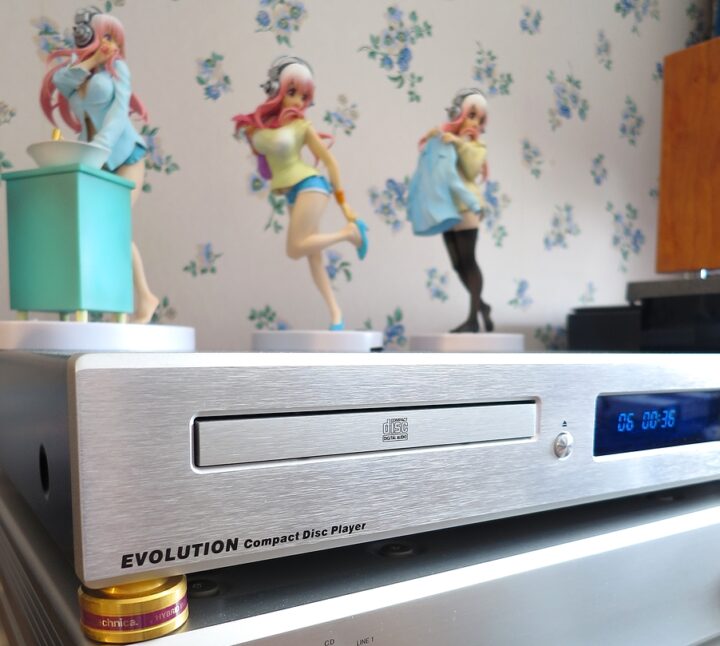

However, because reading via a rotating mechanism and an optical laser pickup has an inherent mechanical lifespan, once production of these expensive audio-grade constant-speed drive mechanisms dries up, CD/SACD players built with such heavy investment will inevitably fall out of action within a few years to a decade or so. Even if vast numbers of pressed CDs survive, the hobby loses half its appeal if we can no longer play them back in high quality. I can’t help feeling that, in the not-too-distant future, whether Hi-Fi enthusiasts who also collect CDs manage to survive as such may well hinge on whether some technology emerges to maintain and revive the drive mechanisms of the excellent dedicated CD players made in the past.


【On the Lifespan and Durability of Optical Disc Media】
CD-R|Pressed CD/DVD|I Still Love Discs After All

Auto Translated by CS5