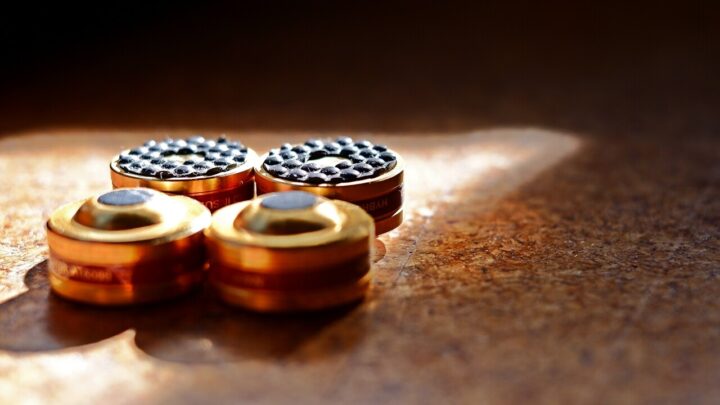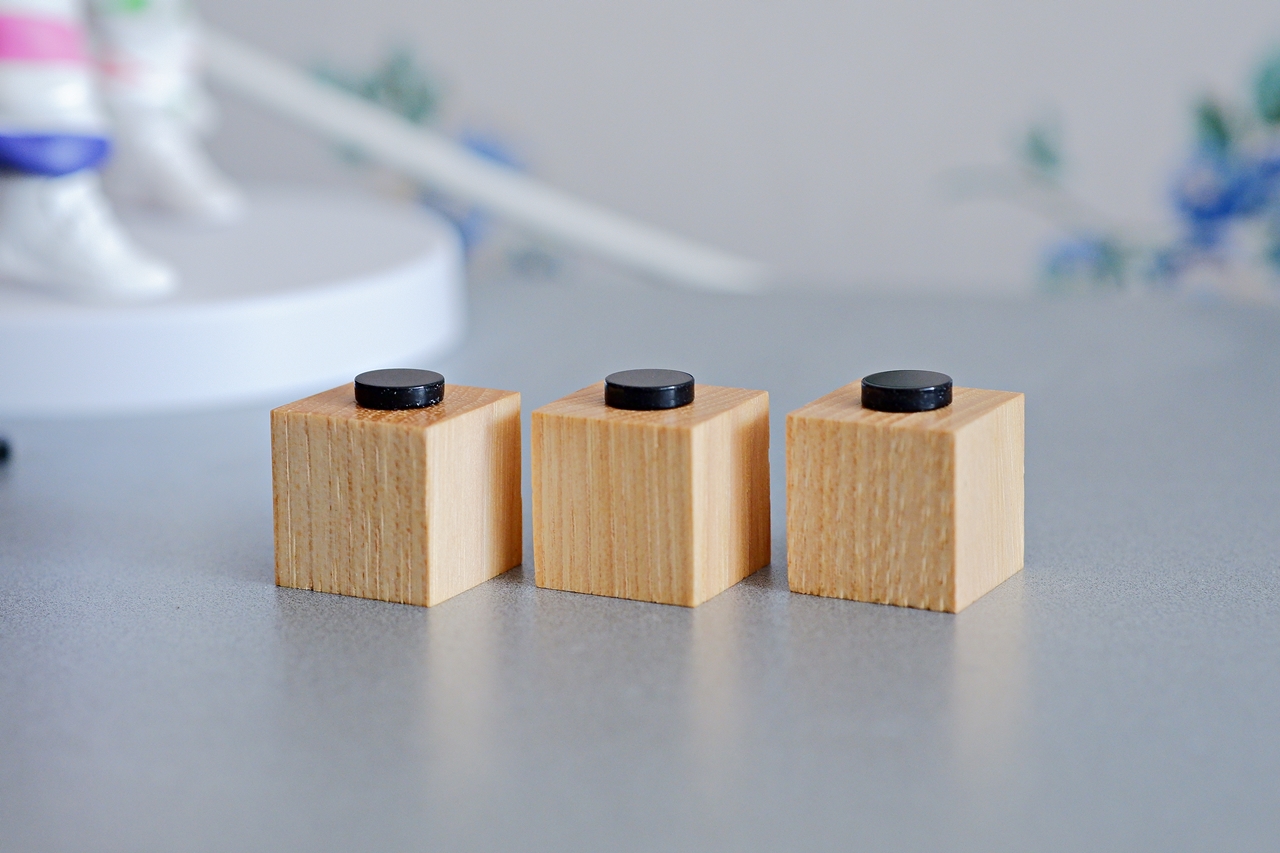
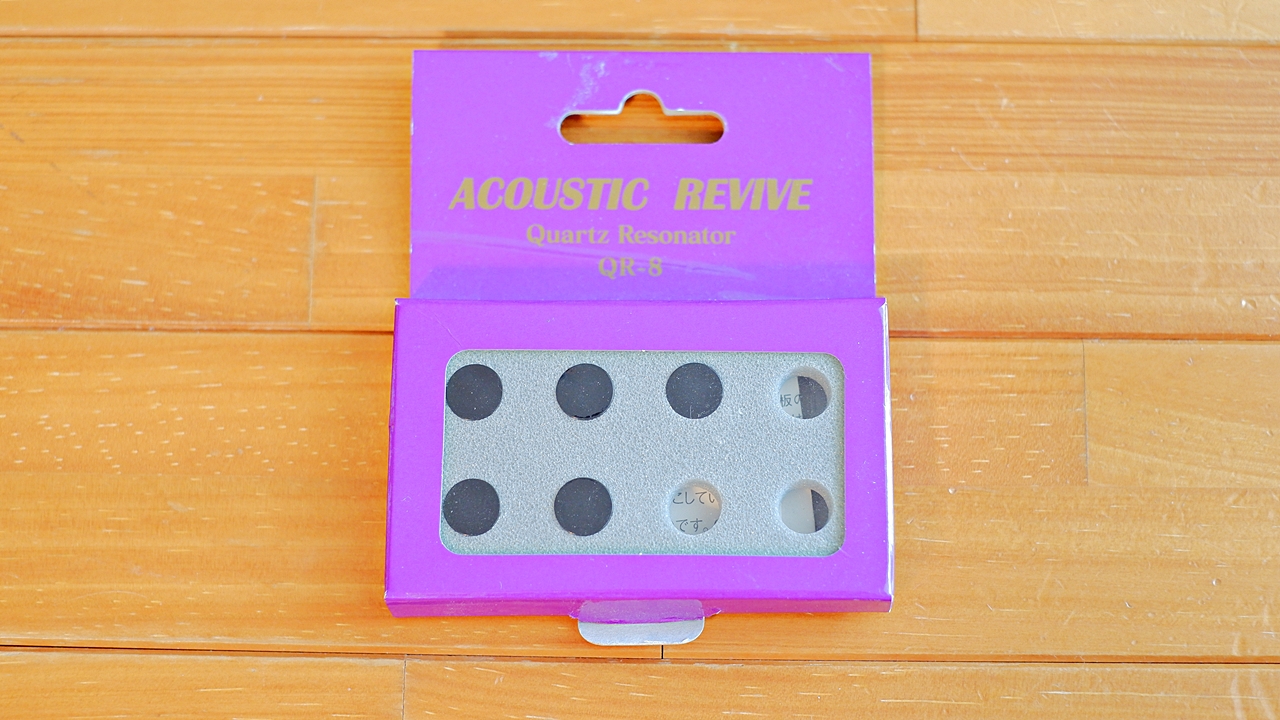
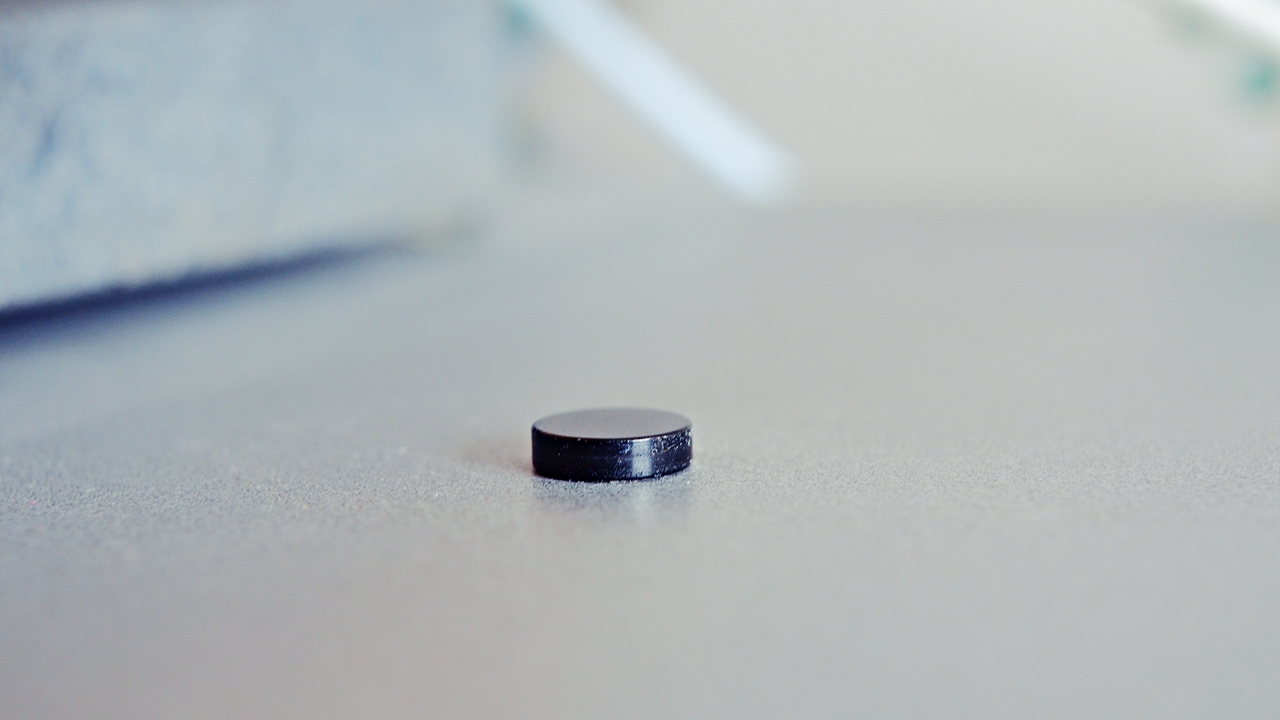
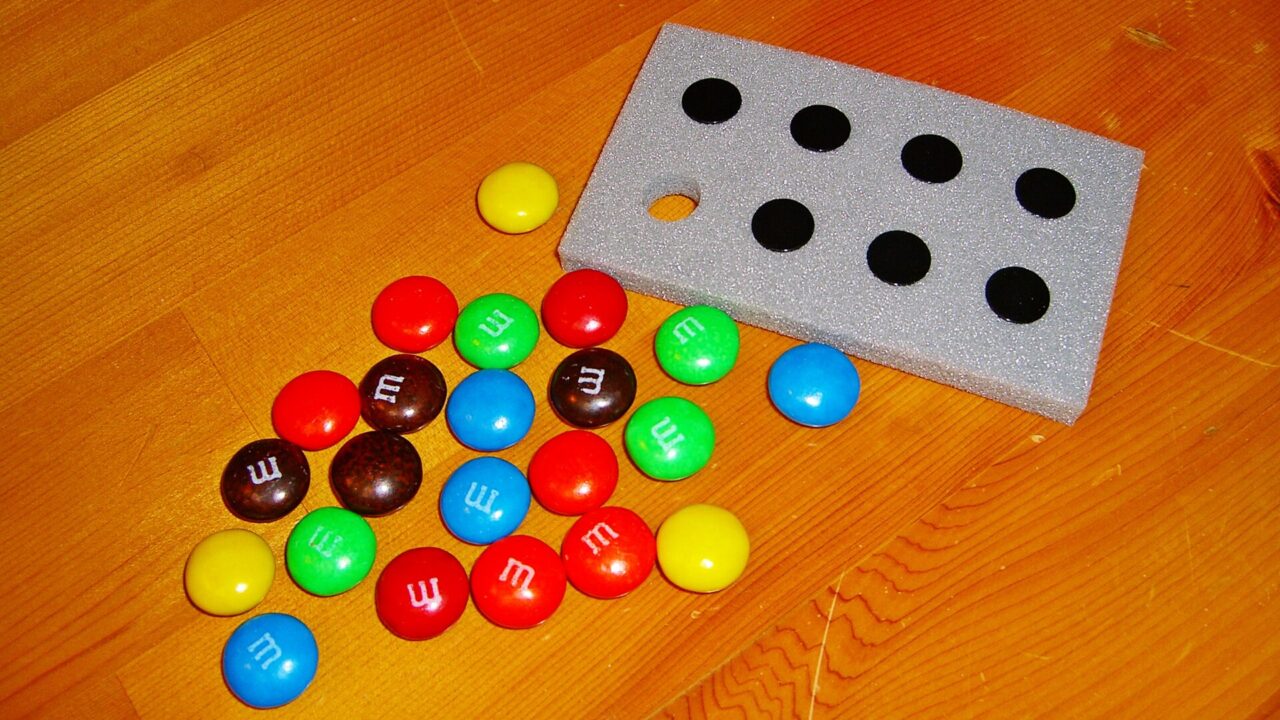
In this article I introduce two sound-quality accessories from Acoustic Revive: the “QR-8” and the “Hickory Cube HQ-4” insulators. The QR-8 is, as its name — Natural Quartz Resonator — suggests, a small chip of translucent smoky quartz, a mere 6mm in diameter and 1mm thick. The claim is that simply sticking one of these tiny quartz chips onto any spot on your audio equipment will change the sound — quite a proposition!? As names like “damping chip” and “resonator” imply, it is an audio accessory designed to control vibration in a favourable way and bring out a pleasing tonal character.


 ポチップ
ポチップ
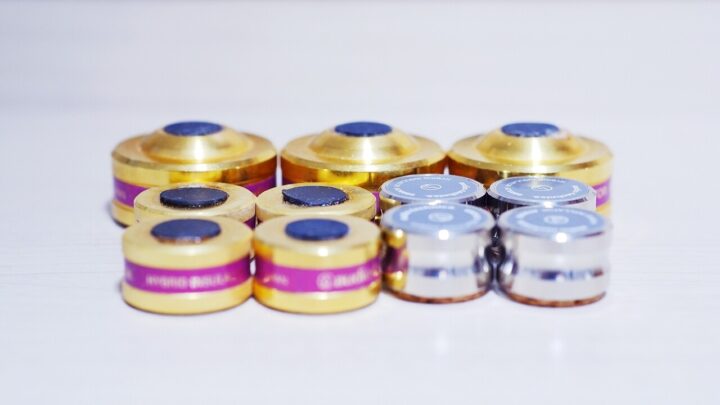
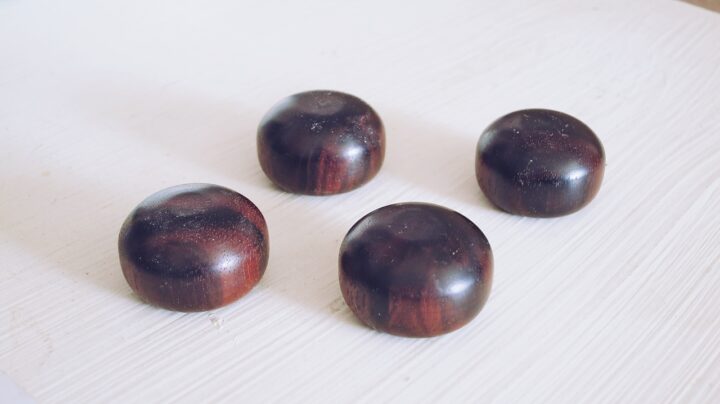
The Hickory Cube, by contrast, is a 2cm-square block of hickory wood that looks entirely unremarkable — frankly, it looks like something you could pick up at a DIY shop for a few tens of yen… Incidentally, hickory’s Japanese name is sawa-gurumi (swamp walnut). It is the tree that produces pecan nuts, and as a material for musical instruments it is commonly used for things like drumsticks.

The HQ-4 has a natural beeswax finish, though it does not look particularly glossy and you would barely notice it at a glance. Product photos often show it looking fairly dark in colour, but whether due to batch variation or something else, the cube I own is quite a light shade. Being a natural material, I have a feeling the sound might vary slightly depending on the batch or colour… Incidentally, when I bought mine I deliberately chose from the shop’s stock the piece that had the least colour variation and was the brightest (closest to white).
 ポチップ
ポチップ
Acoustic Revive QR-8 — Sound Quality Review
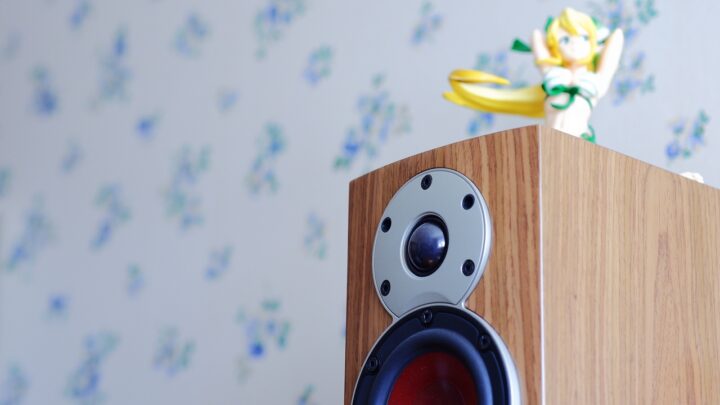
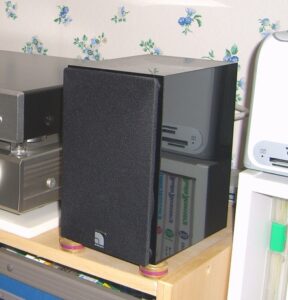
First, I try attaching the QR-8 to several spots where it seems likely to have an effect: the centre of the rear panel of the speaker audiopro Image11, the centre of the top panel of the CD player ARCAM CD72T, and also the top or rear panel of the DAC707, among other places. The adhesive seal is not particularly strong, so it can be repositioned a number of times, and there is virtually no risk of damaging the equipment surface when peeling it off. Apparently the adhesive seal is made from Japanese washi paper and has been chosen with sound quality in mind; if the seal deteriorates from repeated repositioning, it can be replaced with the spare double-sided tape included in the package, and it seems you can also order replacement seals directly from Acoustic Revive. ※ When I purchased mine over ten years ago, no spare adhesive seals were included in the package, but presumably due to high demand, replacement adhesive seals now come bundled with the product from the outset.
What strikes the ear first is a moist, smooth tonal character. In terms of overall tone, there is a slightly darker, languid, composed quality — rather grown-up in feel. The high frequencies become easier on the ear, as though the harsh metallic distortion has been carefully removed. True to Acoustic Revive’s character, the upper-mid range of the musical frequency band feels ever so slightly brought forward. The midrange gains a sense of resonance, and the vocal range takes on a faintly sweet, full-bodied, organic, living quality.
On the other hand, the sound shifts from a V-shaped tendency towards a more natural balance, and with that, the sense of extension at the frequency extremes becomes somewhat reduced. There is also a degree of ambiguity in the separation of indirect sound, and the distinction between different piano touches and the ringing of the piano strings tends to become submerged in the reverberant decay — ※ this was particularly noticeable in the early stages after fitting. The overall image feels as though the listening position has shifted from somewhere close to the stage to several rows further back in a concert hall. The low-frequency reach becomes very slightly shallower.
On the whole, the impression is that indirect sound increases relative to direct sound, and the density of the sound is accordingly somewhat reduced; however, the benefits appear to be that harsh distortion is removed, the sound settles into a greater sense of calm, the background drops noticeably, and the perceived S/N ratio improves.
Where the Acoustic Revive QR-8 seems best suited
The above is roughly where the author found it effective within the range tested. (Note: the analogue player section has not been tested personally, so that is second-hand information.) Rather than placing a single piece on a large, flat surface like a top panel, it seems easier to hear the effect on narrow, cluttered spots such as rear panels and plug terminals where resonance is likely to be uneven — and, in terms of equipment, on flimsy chassis with thin panels prone to vibration, rather than on rigid, solid enclosures.
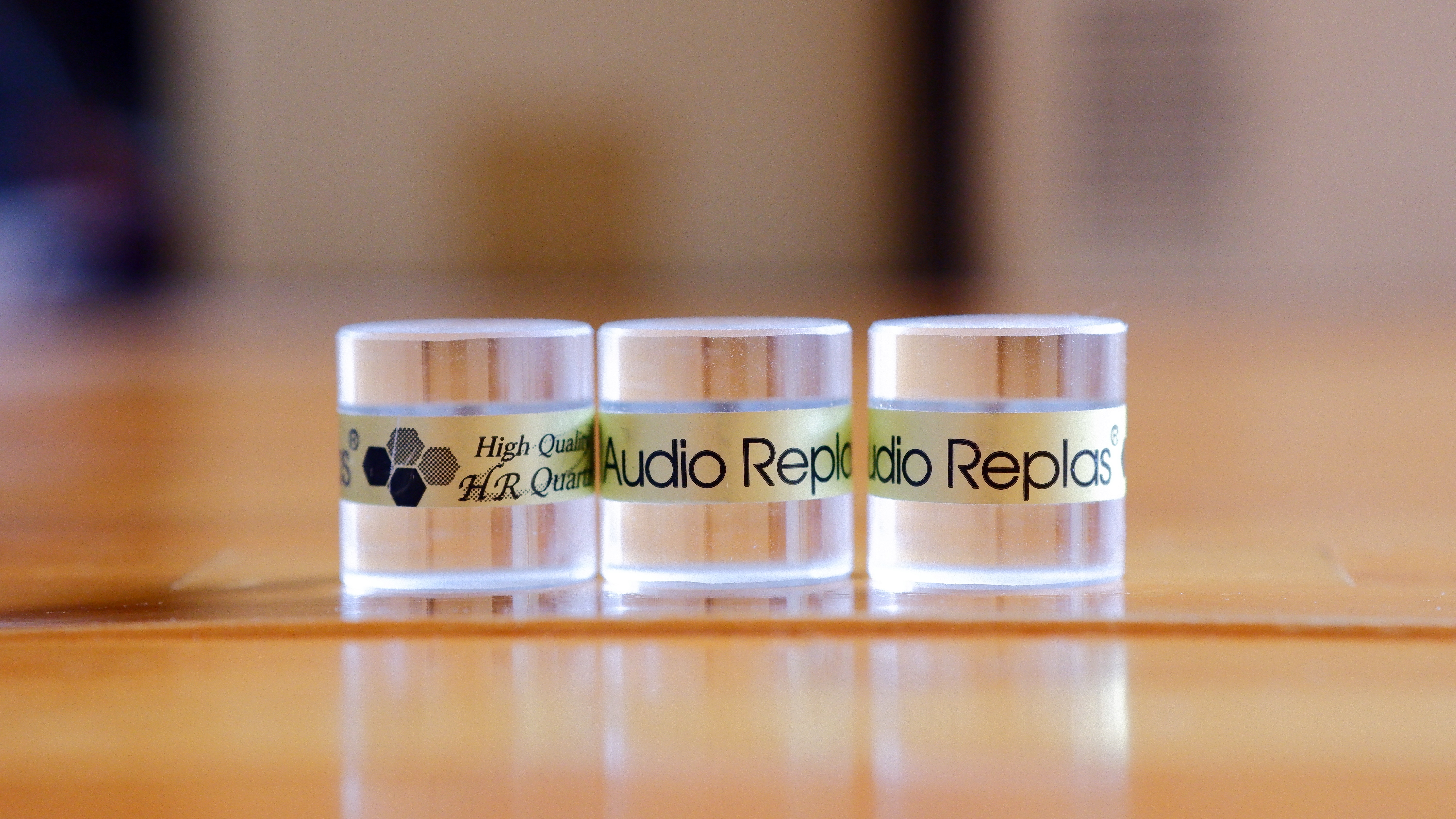
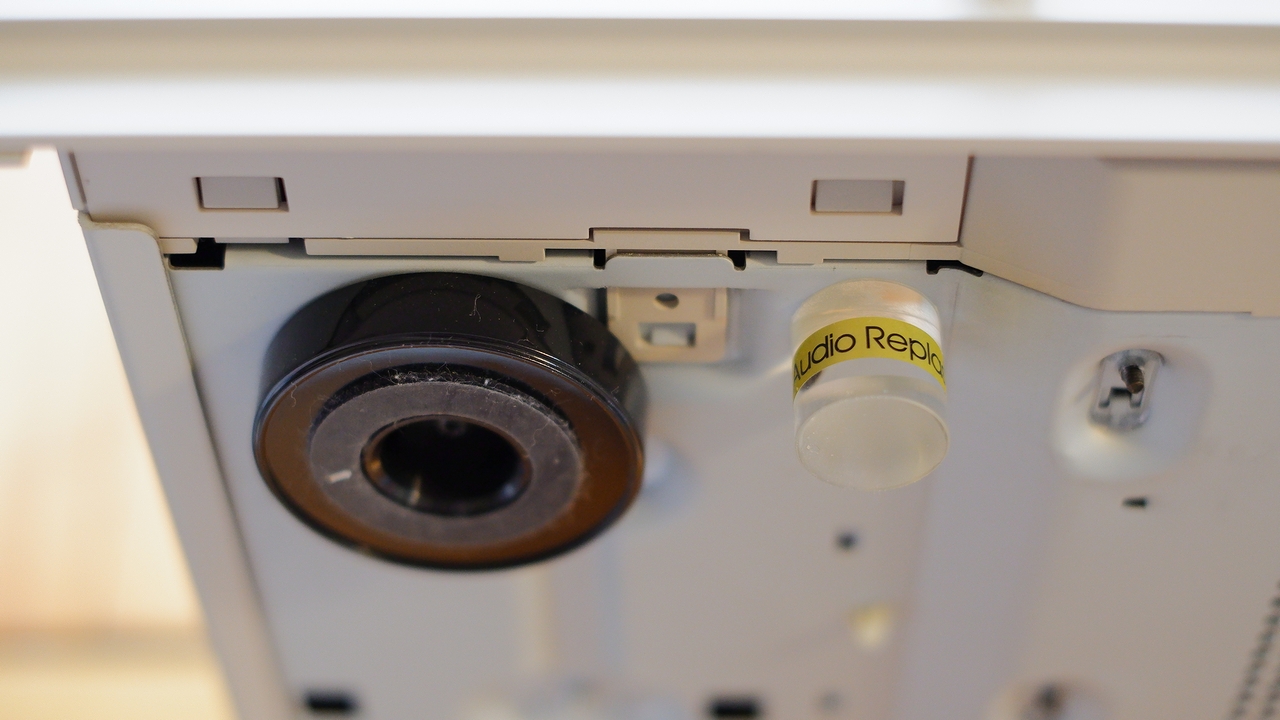
Personally, I feel that crystal-based Hi-Fi insulators such as those from Audio Replas are a particularly good match for digital components like CD players and DACs. The Acoustic Revive QR-8 strikes me as similar in that respect — for some reason it also seems well suited to removing the high-frequency distortion characteristic of digital sources.
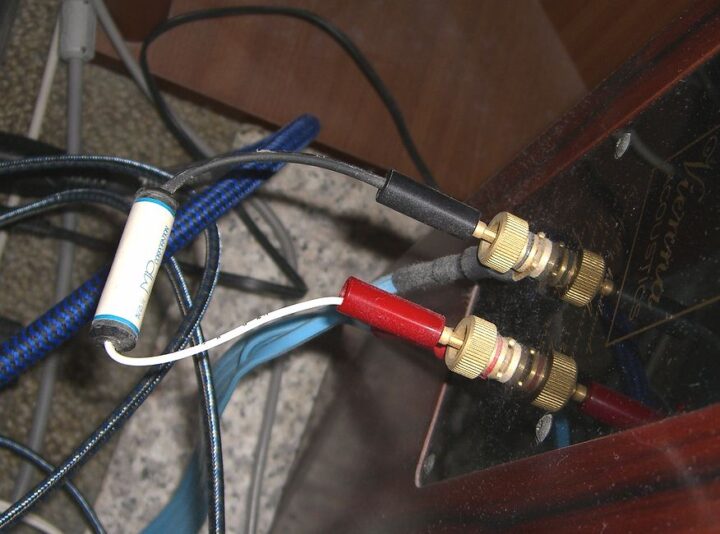
Tried it on the RCA⇔BNC conversion plug of the Black Cat Cable XOX75
After trying various positions, one of the best spots turned out to be the conversion plug on a digital cable. Ordinary RCA plugs are round, so the sheet won’t stick properly, but the Black Cat Cable XOX75 has an unusually square-shaped plug, so I tried placing one there.
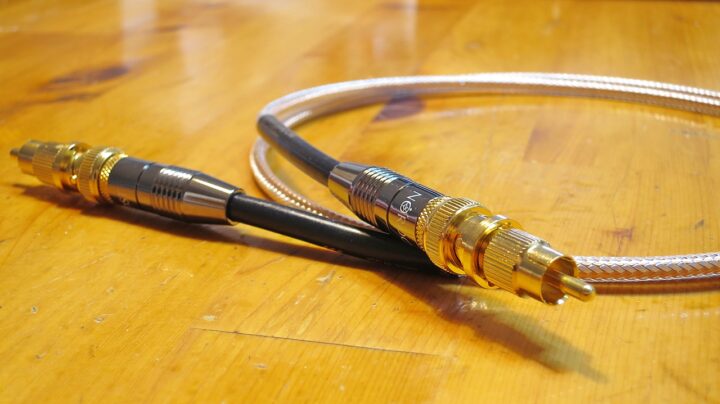
Simply placing a single sheet on one side at the DAC end gives the impression that the XOX75 BNC-RCA’s character — both its strengths and its weaknesses — recedes by around thirty per cent. The weight of the bass’s downward reach is reduced, while the sluggishness in speed improves. The somewhat large-scale imaging draws in slightly, with density thinning out and a mild tendency to push back in depth. The sense of luxury and lustrous beauty that the XOX75 added on top of the Silverstar! 75 becomes a little more subdued, and in its place comes the smooth, slightly dark quality of the QR-8.
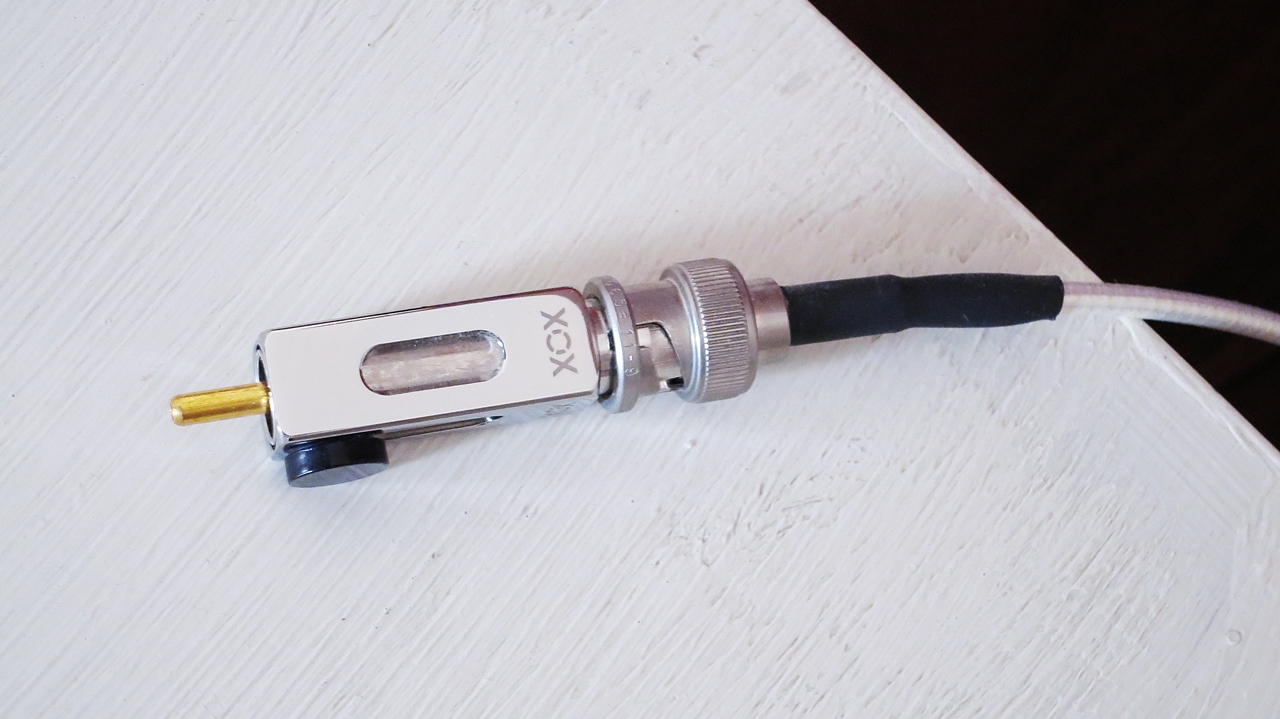
The XOX75 BNC-RCA has a richness that reaches deeper into the low frequencies, but the QR-8 brings out a different kind of moisture altogether, and the biggest benefit is that the dry impression in the upper frequencies that had been a concern with the Silverstar!75 digital cable itself is now almost entirely gone. The transparency of the soundstage remains high, but the extension at both ends of the frequency range and the resolution of touch are gently reined in, and if there is a downside, it may be that the space — which had tended to feel life-sized — becomes a size smaller. The listening fatigue that used to linger after extended sessions is considerably reduced since everything becomes easier on the ear, but for better or worse the high-end-ish beautiful tone and the expansive spatial presentation that the XOX75 delivers are both held back, so the tendency is for the soundstage to settle into something that feels like an ordinary digital cable. At first I was bothered by how piano touch and the growl of strings tended to be buried in the reverb, but two or three days after fitting it, the separation and clarity improved to within acceptable limits.
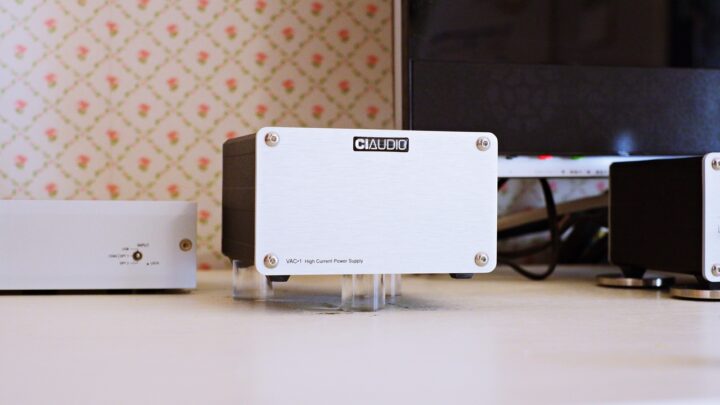
Having stuck a QR-8 on the DAC side of the XOX75 connected to the CI AUDIO VDA-2 DAC with mostly good results, I was feeling encouraged and decided to add another one to the digital output side of the CD transport C.E.C TL500Z as well — only this time the midrange thinned out to almost nothing, the frequency range narrowed, the whole presentation collapsed into a rear-heavy affair, and within a matter of tens of minutes I was listening to a flat, listless sound I simply could not bear… This was not a sound I even felt motivated to sit with and wait out until it settled in. When I removed the QR-8, the wide frequency extension and tonal variety properly returned. Since this rather defeats the point of going to the trouble of fitting the XOX75 in the first place, it does seem that too much of a good thing is no good thing at all.
Review of the Hickory Cube HQ-4
This applies not only to the Hickory Cube HQ-4, but as a small detail worth attending to when using wooden insulators, it is not simply a matter of placing them however one likes — as a basic principle, the grain should be aligned in the vertical direction. Strictly speaking, it is preferable to match the top and bottom orientation so that it corresponds to the direction in which the wood (the branch) was growing, following the spread of the fibres, though with some pieces of wood this may be difficult to determine. I also position them so that the growth rings run vertically rather than horizontally when viewed from the front. In this area, there may well be cases where placing them sideways or upside down actually works better, so this is very much a case-by-case matter…
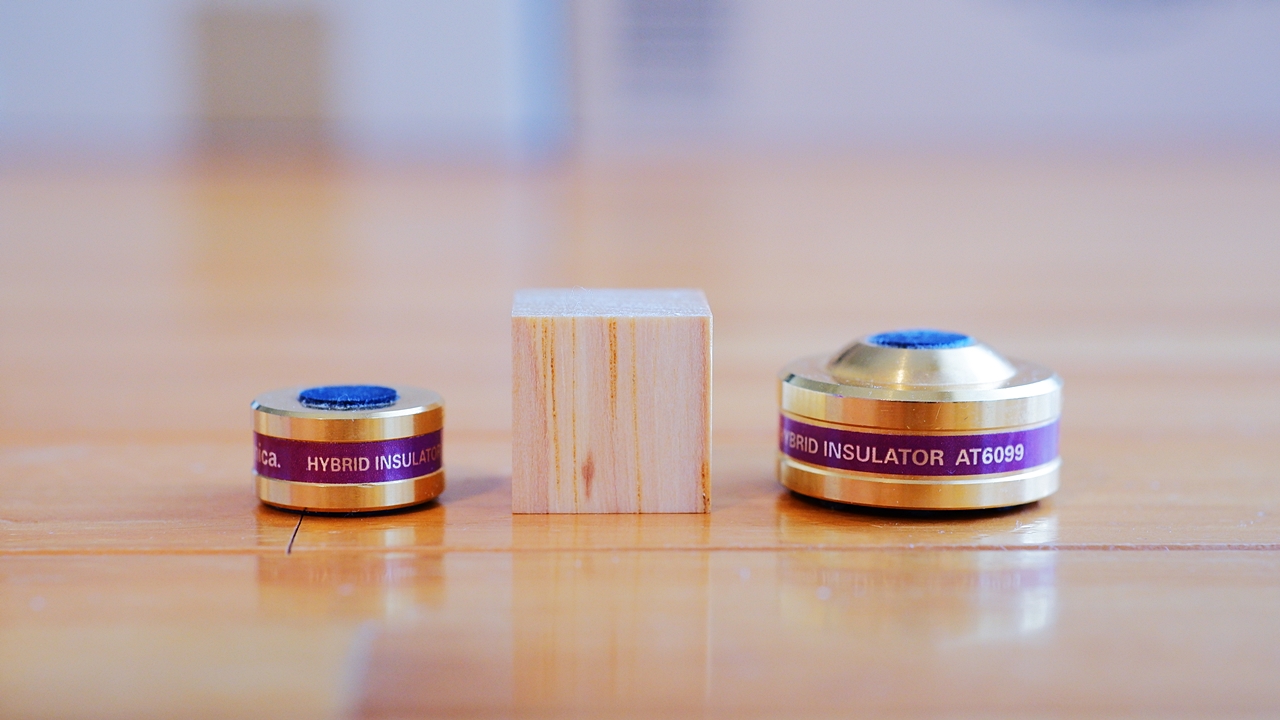
First, I try placing them under the integrated amplifier TAG McLaren 60i. Switching to the Hickory Cube HQ-4, the sound becomes bright and soft in texture — warm, organic, and highly musical. Vocals are natural. There is a slight tendency towards a matt quality with reduced transparency in the soundstage, though for wood it is actually fairly transparent, I think. The sense of edge emphasis disappears, and there is a concert-hall-like coloration; piano in particular has a very realistic woody quality. As a combination, it suits systems where the timbre is excessively metallic or hard-edged, adding an organic softness — but if used with a system that already has a naturally soft sound, the HQ-4 may well make things a little too soft…
ポチップ
This is not a criticism unique to the HQ-4, but there is something a little frustrating about the way that using a plain piece of wood as an insulator tends to result in a sound that settles into a rounded, middle-of-the-road Hi-Fi mediocrity — leaving an impression of compromise on the sonic front. In this position I normally use an inexpensive African ebony 12mm cube purchased from Keio Atman, and with the TAG McLaren 60i, that African ebony cube actually proved a better sonic match — natural in character, yet with a hardness in the best sense of the word.
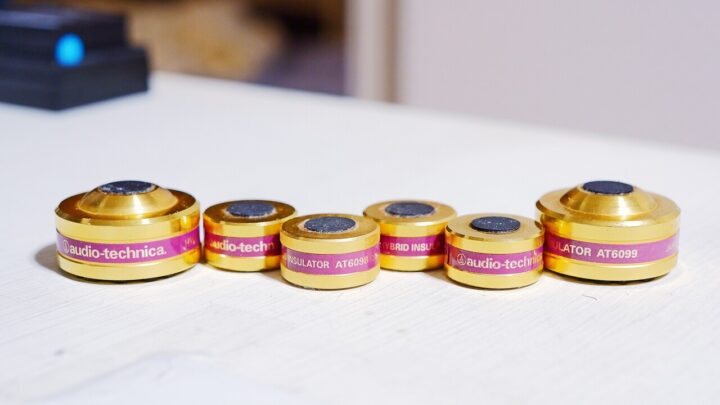
Testing with the Simaudio Moon Neo 220i Integrated Amplifier
Next, I test with the Moon Neo 220i in the sub-system.
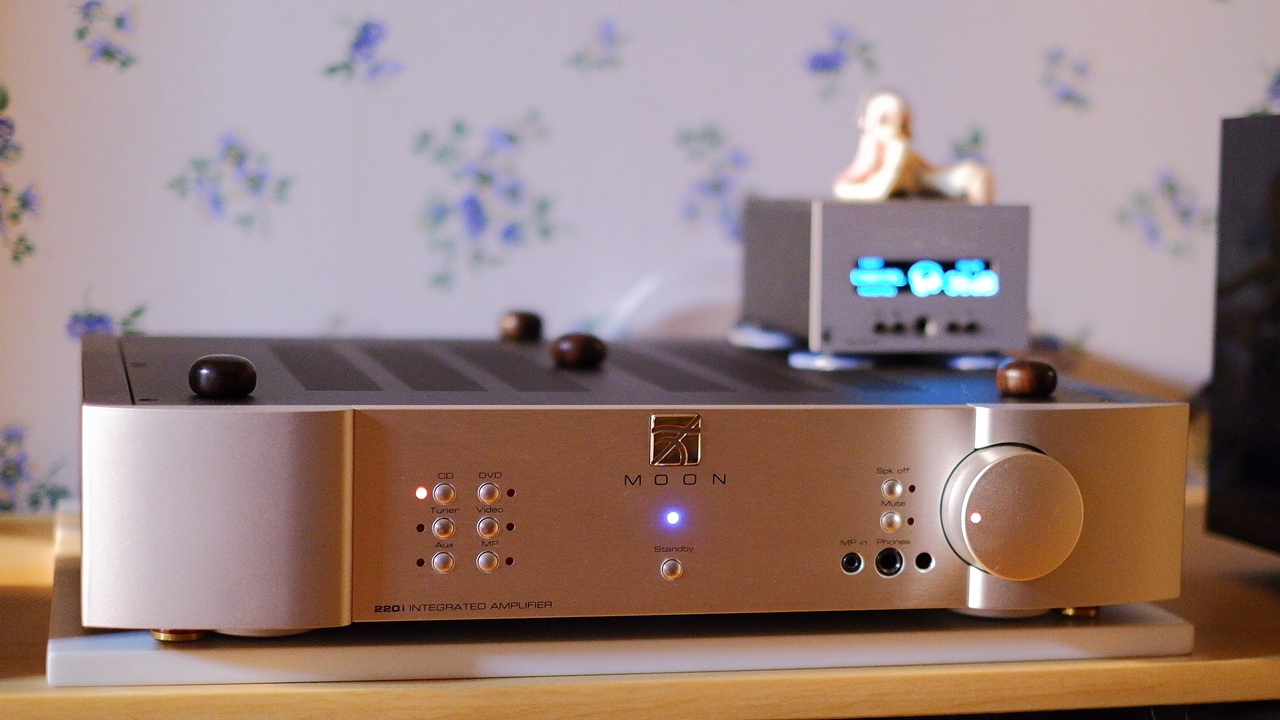
Three-point support on the HQ-4, placed on top of Ippinkan’s artificial Corian board. I was convinced this combination could never work — but, wait… actually, could this be rather good? The brightness, fullness, and organic mellowness characteristic of the Hickory Cube moderates the Moon Neo 220i’s tendency towards darkness and severity to a just-right degree, resulting in an unexpectedly appealing sonic character. The frequency balance is kamaboko-shaped — thin at the top and bottom, with the midrange pushed slightly forward. The sound itself, however, is appropriately full-bodied and cheerful, with an acoustic quality that evokes a kind of Italian colour and liveliness. Piano timbre is woody and highly realistic. The surface of the resonance leans slightly dry. Being wood, I expected the high frequencies to become dead, but that is not especially the case — the Moon Neo 220i’s characteristic tendency towards high-frequency congestion does seem to remain, though.
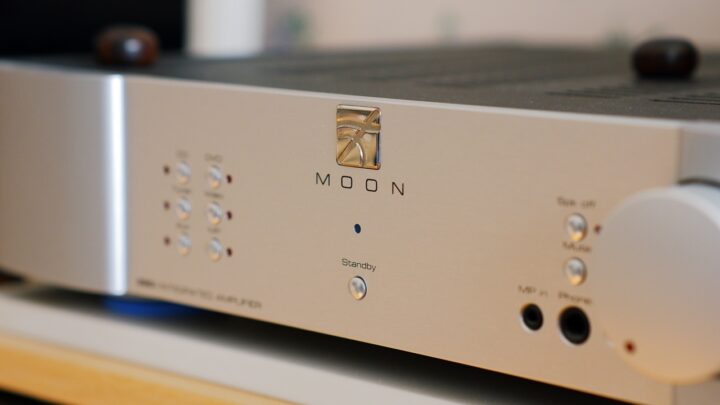
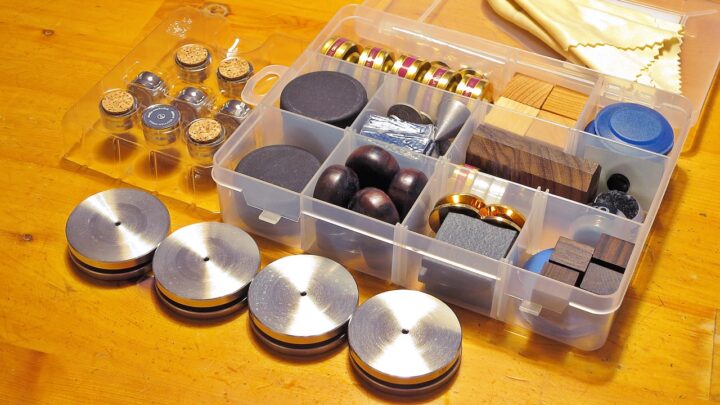
With Moon by Simaudio, the inorganic, sterile quality of the chassis material is dominant, and the tonal character is far removed from any woody sweetness, so it may well be better to deliberately incorporate natural materials in order to neutralise that inorganic quality.
Smoky Quartz QR-8 and Hickory Cube HQ-4 in Combination
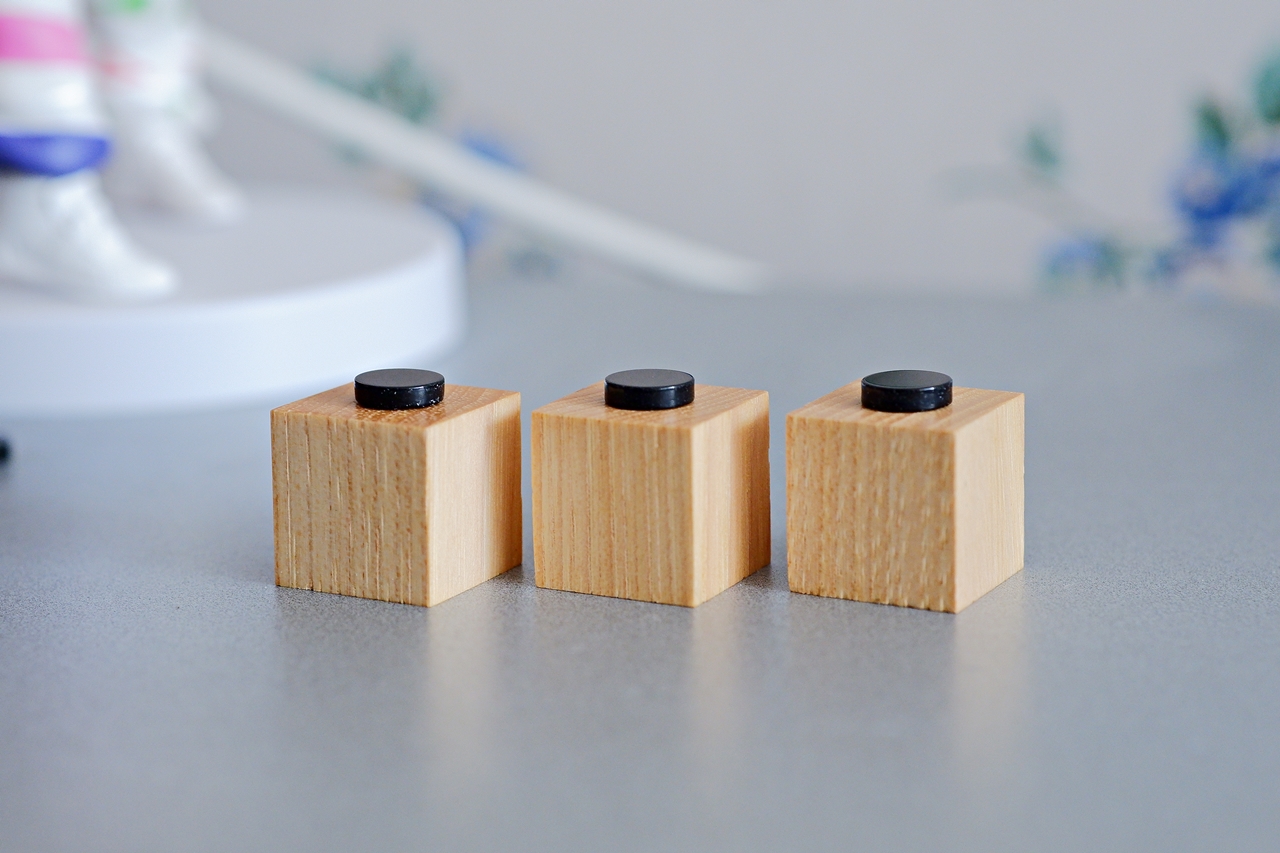
This is the configuration also shown on the Acoustic Revive website: QR-8 chips cut and placed on top of Hickory Cube HQ-4 units, turning them into insulators.
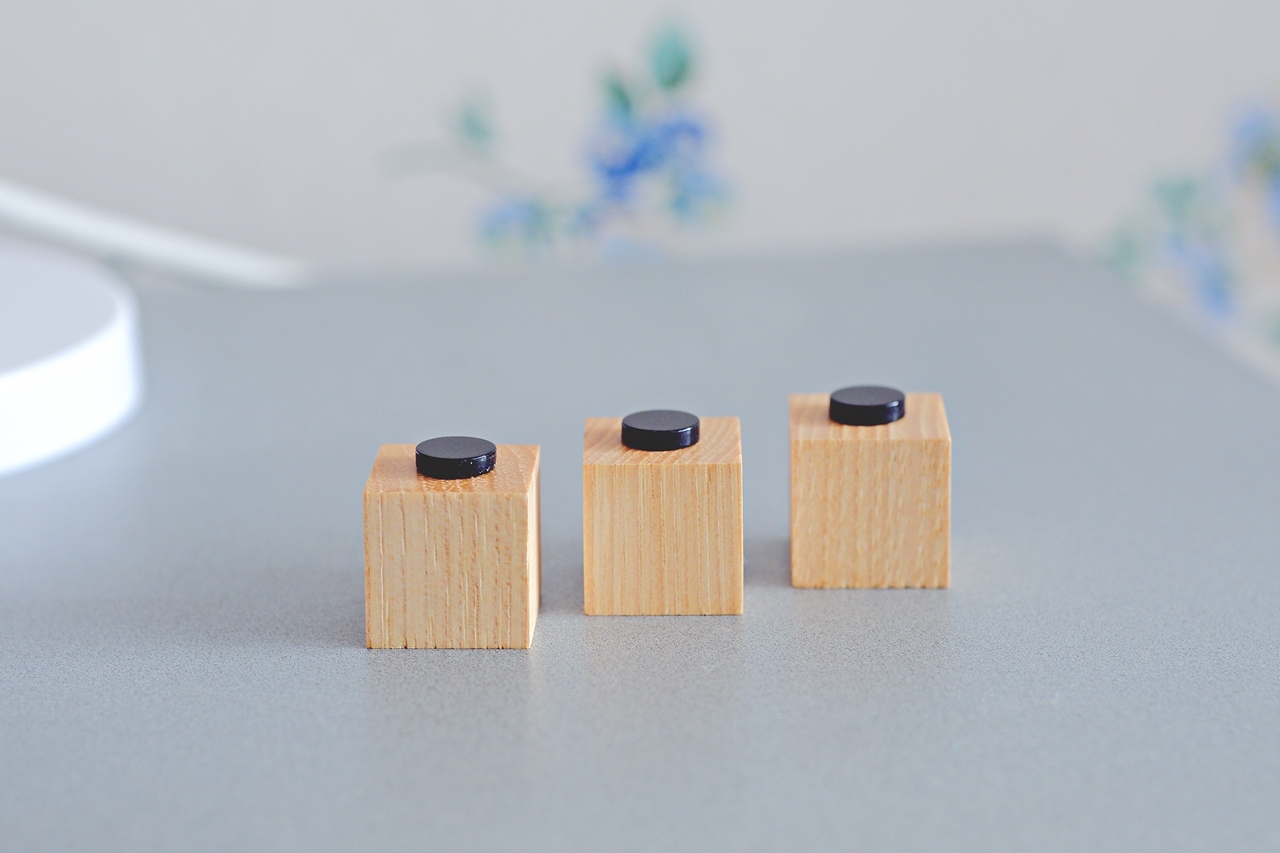
This is quite a fascinating combination in terms of tonal character — it retains the strengths of both the QR-8 and HQ-4 while cancelling out the weaknesses one feels with each unit on its own. The character of the quartz chips is fundamentally dominant, but the darkness of the QR-8 and the brightness of the HQ-4 cancel each other out, and what emerges is a refined, moist resonance alongside a light, charming musicality. For something with a tendency towards a high-frequency balance, the latent sense of distortion in the treble is more restrained than with the HQ-4 alone, the mid-range push-forward quality disappears as well, and the overall balance is very good.
In terms of musicality too, the QR-8 can become overly passive depending on where it is placed, and the HQ-4 alone can at times feel a touch heavy and enka-ish, but combining the two yields a natural musicality — like a stream flowing gently under warm sunlight. The weaknesses would be that the low end feels slightly light and the balance tilts a little upward, and that the crisp, airy quality attributable to the HQ-4 side tends to linger in the ear the longer you listen. This kind of sound balance gives the impression that it would work effectively as a corrective measure when the system itself, or the speakers placed on top, are too ponderous or bass-heavy.
In terms of sound quality, the combination is clearly a step above the Hickory Cube HQ-4 on its own, though whether it is the right match for the Moon Neo 220i is a more nuanced question. Even so, the sound of QR-8 × HQ-4 is tremendously appealing, and it is the kind of sound quality I would always want somewhere in my system.
What you get by combining these two is, one might say, not addition but multiplication — compared to either the QR-8 or HQ-4 alone. The problem is that you need a minimum of six units for a stereo speaker setup, meaning one set of QR-8 plus two packs of HQ-4… and the, the price… orz
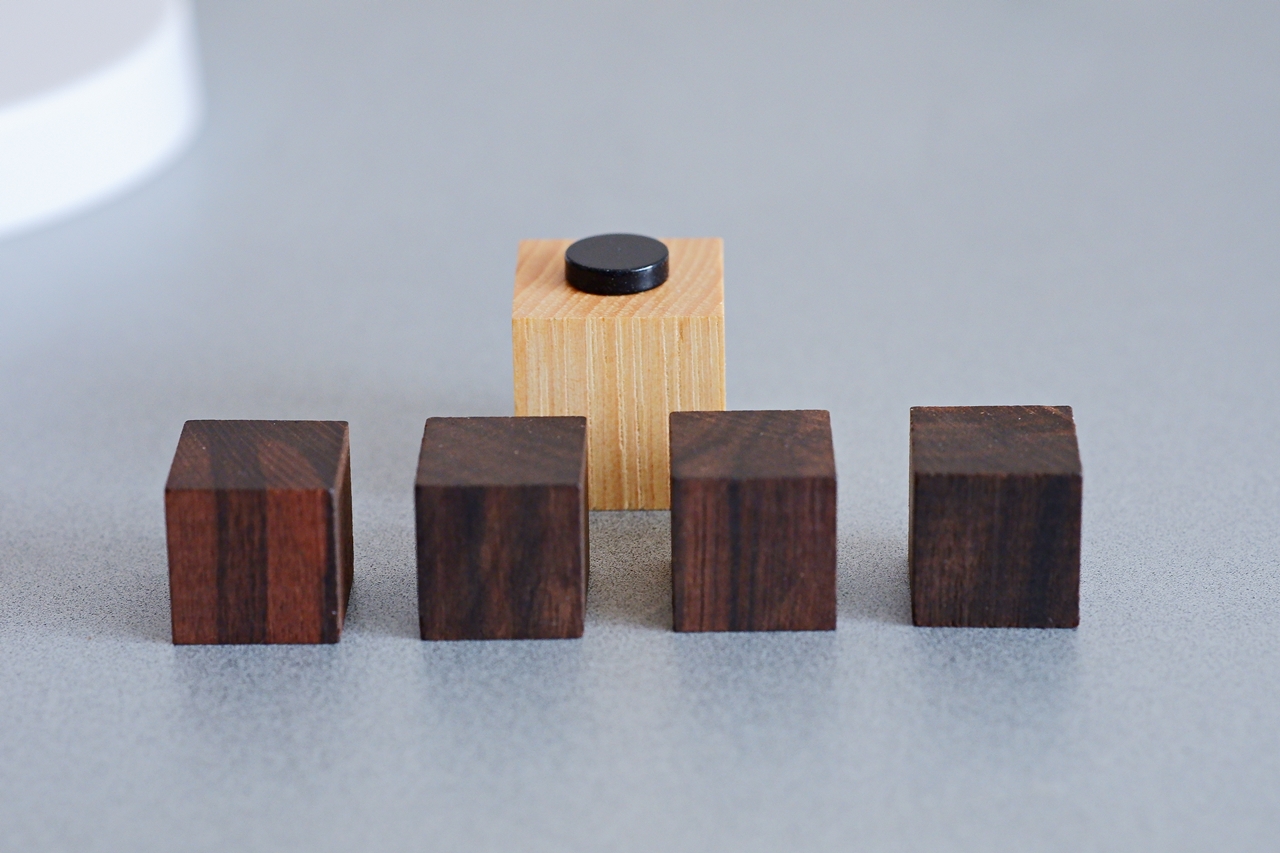
Come to think of it, one of the QR-8s has gone missing — I can’t remember where I stuck it…
~ Summary ~
In the sound quality review above, I wrote that the QR-8 has a somewhat dark, languid, settled, adult-like character — but I do feel that tonal preference and compatibility with one’s equipment play a fairly significant role. Applied to a position that is more or less meaningless, you will get only the sort of change that could easily be put down to imagination; and if you stick it somewhere ill-chosen, it can rob the music of its groove. For anyone who has not developed an intuitive grasp of the relationship between sound and vibration, I think this falls into the category of accessory that is rather difficult to use well.
With the Acoustic Revive QR-8, there are positions where applying it raises the musicality and works in an organic way, and positions where it suppresses vibration too effectively, sapping the sense of energy and bringing the musicality down. Being drawn to spots where the effect seemed likely to be most dramatic, I first tried it on the centre of the rear panel of the Audio Pro Image11 speakers — but applying it directly to the speaker itself, while certainly producing unmistakably drastic results, carries a considerable risk of making the sound settle down to the point of becoming dull.
ポチップ
There is, then, a certain balance of merits and drawbacks — a character, if you will — to the way this device shapes the sound, and I think it is an item for the trained, advanced enthusiast: someone who understands that the essence of Hi-Fi lies in managing vibration, and who is capable not merely of hearing the differences but of identifying the right positions from the overall sound the system produces. Applying many of them to spots where they have little effect will only leave you questioning the value for money, but in the places where they do work, even a single application can have an effect on the whole system’s sound — benefits and drawbacks alike — that cannot simply be overlooked. It is not a case of more being better.
ポチップ
With vibration-control accessories of this kind, one tends to fall into an investment bias of thinking that the more you use them, the better — applying them everywhere without a second thought. However, if you get the placement wrong — and the right spots vary enormously depending on the system — the effect can easily be counterproductive and degrade the sound, so if you are not confident in your own judgement on that front, it is probably safer to steer clear. It is easy to be drawn in by improvements in smoothness and reverberation, but I think particular caution is warranted on a few points: the range of the direct sound tends to narrow both above and below, the sense of energy and physical presence of the sound is reduced, and the tonal character can easily fall into the kind of flat, monochromatic rendering that is characteristic of smoky quartz.


Auto Translated by CS4.6