Recently the sound from the main system in the living room has been dull and the high frequencies have been sounding a little rough… Hmm, something’s not right, I thought, and I’d been living with that nagging feeling — but today, on something of a whim, I swapped out the Zonotone 6NPS-3.5 Meister power cable I’d been using on the integrated amplifier TAG McLaren 60i (under construction) for the Ortofon PSC-3500XG Silver I’d had in there before, and it was fixed in an instant. Good grief — so the culprit was the Zonotone 6NPS-3.5 Meister I’d put in around autumn…
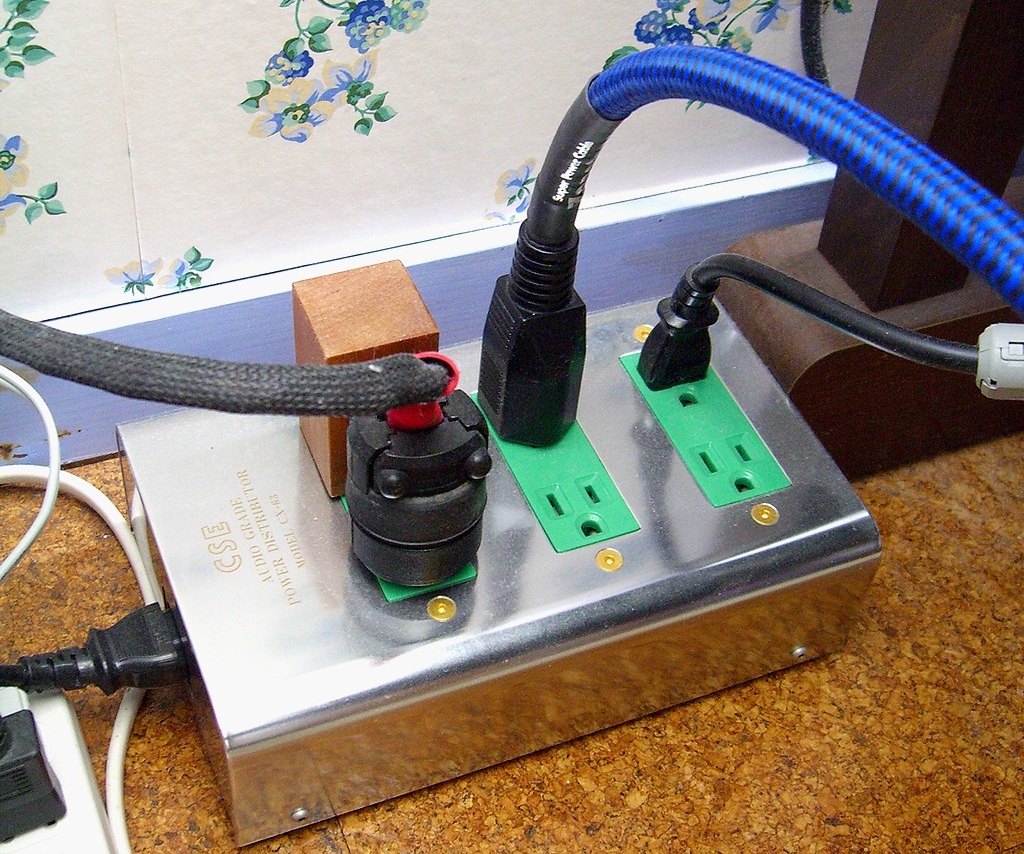
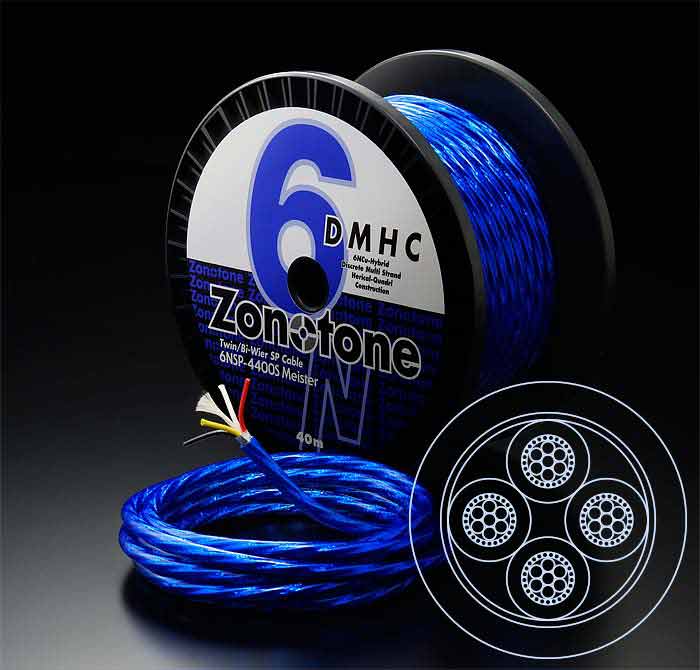
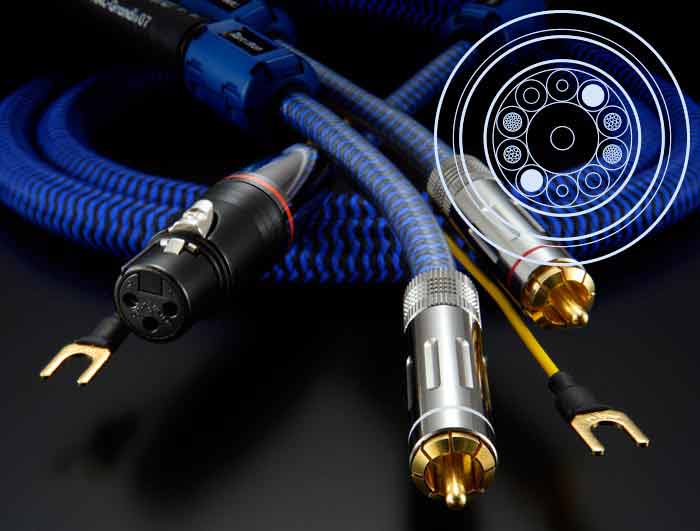
This autumn and winter season I had been using the 6NPS-3.5 Meister on the TAG McLaren 60i, but it seems that this wasn’t quite aligned with the direction the main system needed. I had purchased the 6NPS-3.5 Meister after auditioning in a shop the Zonotone speaker cable 6NPS-4400S Meister and RCA interconnect cable 7NAC-GRANDIO07 from the same Zonotone range, and concluded that a power cable from the same manufacturer would likely follow much the same sonic tendency.



 ポチップ
ポチップ
The brand Zonotone was founded by former president Mr. Maezono — who for many years had been in charge of audio cable development at Ortofon Japan — after leaving Ortofon Japan, with the support of Triode. It is a new brand by the very person who had been shaping the sound of Ortofon cables, and moreover the manufacturer is the same — Dowa Mining. The new Zonotone cables are an extension of Ortofon’s hybrid conductor structure and helical round multi-conductor configuration, with new Zonotone-specific innovations applied to things such as the combination of conductors.
 ポチップ
ポチップ
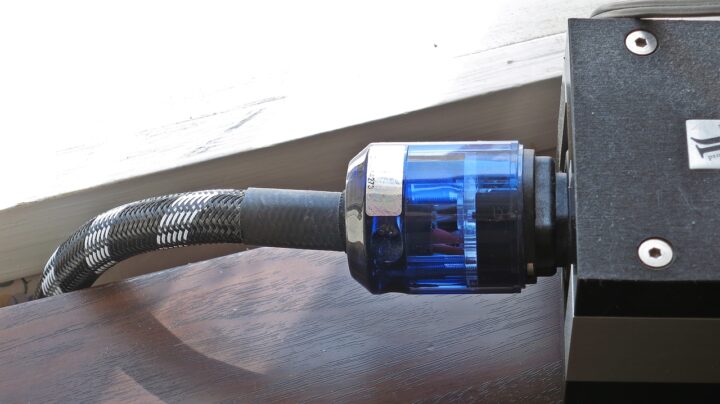
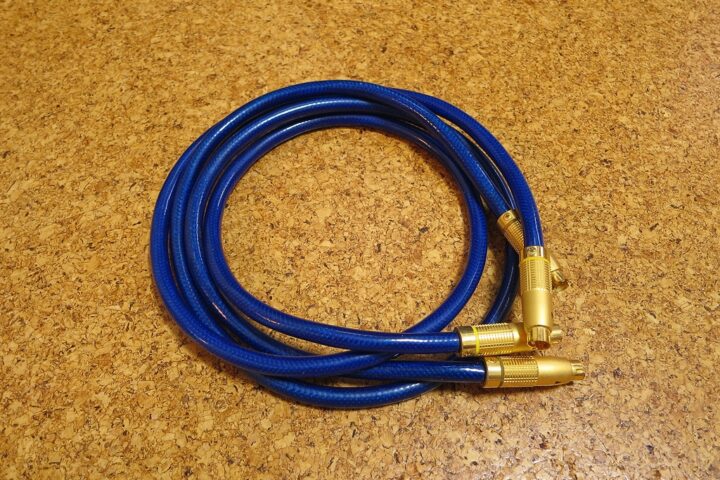
The outward appearance of the various cables is almost identical to the existing Ortofon cables. The most visible difference is perhaps that where Ortofon used red as its base colour, Zonotone has changed the jacket colour to blue… Given all of the above background, from a user’s perspective, Zonotone cables might reasonably be regarded as essentially new products in the Ortofon cable lineage.
ポチップ
As for the sonic character of the Zonotone 6NPS-3.5 Meister power cable — to sum it up in a word, it is an extremely musically well-grounded sound. The image I have always had of traditional Ortofon — and this is purely a personal impression — is of an analogue, warm, dynamic, European tone with a certain body and slight muddiness to the sound… it is a bit odd to describe something made by Japanese people as “European,” but in terms of classical recordings, it is perhaps closest in feel to the old Philips label. With models that use silver or silver-coated conductors, there is additionally a brightness, lustre, and moistness added in the upper frequencies.
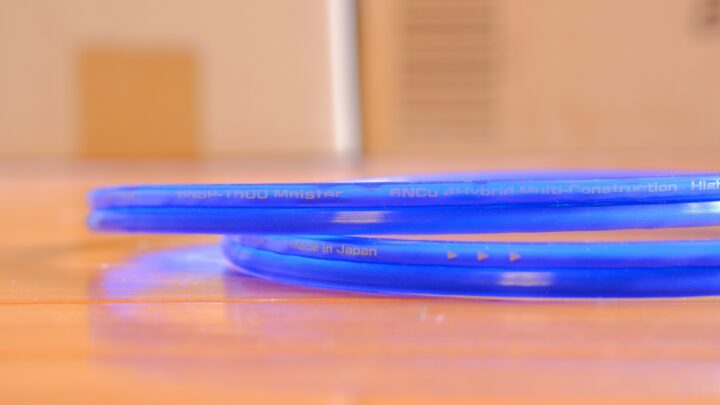
Against that Ortofon character, the new Zonotone lineup has shifted towards a more composed sound whilst retaining the same analogue-like tone as before. Rather than a bright, dynamic timbre, it felt as though the sound had been tuned to a shadowy, chic, and mature quality — one that naturally draws the ear inward towards the music. Because the expressive character has become more inward and quiet, there is also a sense that the temperature has dropped somewhat compared to the warm Ortofon sound of old. Note: this is all very much within the range of what are fundamentally similar, analogue-type sounds, mind you…
 ポチップ
ポチップ
And across the speaker cable 6NPS-4400S Meister and RCA interconnect cable 7NAC-GRANDIO07 as well, the new Zonotone cables seemed to have paid attention to the perceived phase, and the three-dimensional visual unfolding of the soundstage was what left the strongest impression during the audition. With a solid, present midrange and bass as the foundation, a chic and natural treble with little sense of distortion positioned itself three-dimensionally in depth — not pushing forward, yet carrying ample information. The transients were reasonably crisp while the surface of the sound remained analogue-like and natural. It is a convincing approach to sound-making, with no connection to anything digitally obvious or overtly high-resolution, and no contouring of outlines.
If you are looking for a metallic, glittering sound with the kind of spatial transparency associated with hi-res or Hi-Fi, you may well find yourself asking what on earth this is. Also, whilst the tonal quality does have a certain refinement to it, I would not describe it as a polished “beautiful sound” type. Strings sound real and convincing, but the brightness and brilliance of piano and brass is to some degree suppressed.
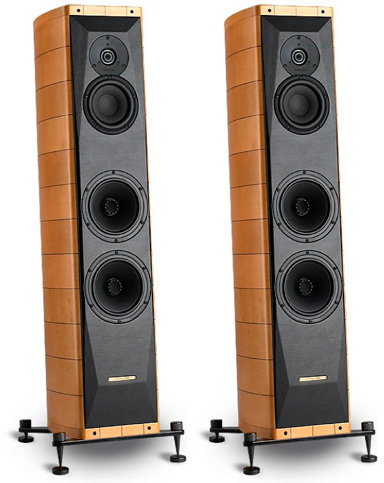
One thing that concerns me is how sibilants stand out in speech and vocals. In a main system used for both audio and video, this is particularly painful. It may be a matter of system compatibility, but whereas the Sonus Faber Cremona M used as the monitor when auditioning the RCA cable and speaker cable in the shop had no such issue, on my Vienna Acoustics Mozart T-2 at home, even the power cable alone makes the sibilants noticeably harsh. This may be unavoidable given the difference in speaker class, but the edge on speech and female vocals becomes sharply dry, and that is the source of the dissatisfaction I mentioned at the outset.
As for connecting it to the sub-system integrated amplifier — I didn’t bother testing it with the ONKYO A-1VL, as the sonic tendencies clearly seemed incompatible. With the CREEK/EMF Sequel2, the distortion character the amplifier has (note: the supplied cable is not great) disappears almost entirely, which is rather pleasing in that respect — however, for a compact system occupying just one metre of width, the granular sound becomes somewhat overwhelming in terms of information density. There is a desire to simplify and organise the sound, so to speak; I felt that a larger system that can straightforwardly make use of the 6NPS-3.5 Meister’s inherent resolution would be better placed to bring out what this power cable does best. That said, I think I’ll try it on the CREEK/EMF Sequel2 for a while…

Zonotone also offers derivative models of the 6NPS-3.5 Meister: the 6N2P-3.5 Blue MEGANE, which uses a figure-of-eight inlet connector on the IEC side, and the 6N2P-3.5 Blue Power, which uses a 2-pin AC plug. The plug shape differs, but the plug materials and rhodium-plated contacts appear to be essentially the same quality as the Meister, so the sonic character should be very much in line with the Meister as well. The 6N2P-3.5 Blue MEGANE with its figure-of-eight connector in particular seems like it would be a welcome find as a premium figure-of-eight power cable one class above the norm, useful for improving the picture and sound quality of DVD recorders and DVD players.
Having tried the 6NPS-3.5 Meister as the power cable for a plasma display, picture quality, noise levels, and colour richness all stepped up a notch — so using Zonotone power cables for picture quality improvement as well as for audio might well be worth considering.
 ポチップ
ポチップ
Regarding 3-pin plugs — simply replacing the wall socket with at minimum a 3-pin medical-grade outlet such as the Panasonic WN1318 can be expected to yield a substantial improvement in quality, so personally I have mixed feelings about the relevance of a 2-pin plug in an audio-grade context. However, for households where wall socket replacement is simply not possible, it may well be a welcome option.
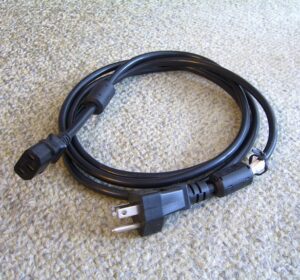
Compared to my Ortofon PSC-3500XG Silver, the appearance — plugs included — is completely identical apart from the colour. However, to the touch, the outer sheath material of the 6NPS-3.5 Meister feels somewhat smoother.
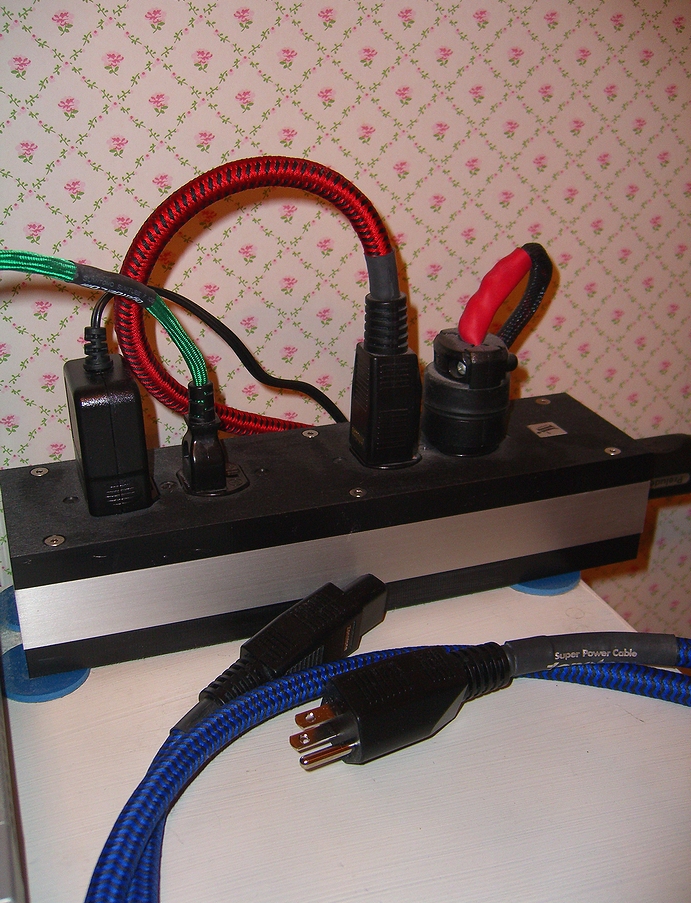
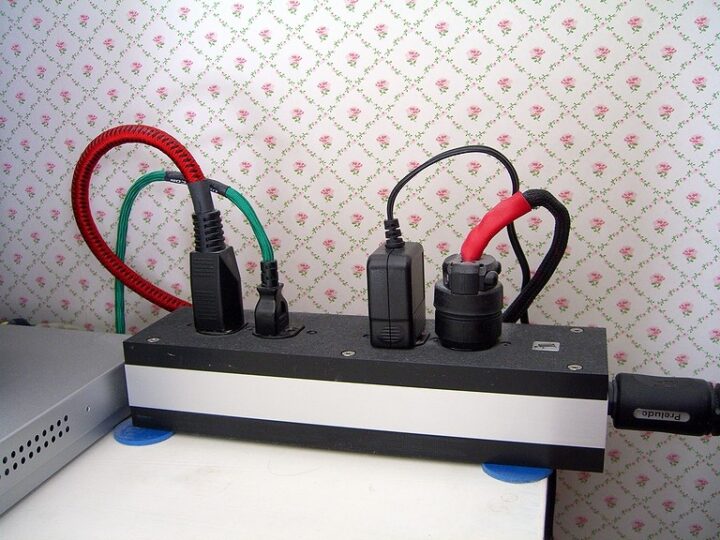
In any case, the TAG McLaren 60i in the main system currently has the Ortofon PSC-3500XG Silver in it. Speaking purely from personal preference, the PSC-3500XG Silver is bright, vivid, and dynamic — it has a somewhat gimmicky flamboyance and a rounded, warm attack on piano, and I do at times wonder if it isn’t rather a novelty cable… Yet in terms of a musically well-grounded sound, free of objective sonic colouration and artifice, the Zonotone 6NPS-3.5 Meister has the edge. The two cables look almost identical yet have clearly distinct sonic characters, so the best approach would seem to be careful coordination to determine which is the better match depending on the equipment being used.
For those who like to build their own, buying it by the metre could be interesting. Combined with quality power plugs from FURUTECH or Oyaide, you might even surpass the original’s sound quality.
 ポチップ
ポチップ
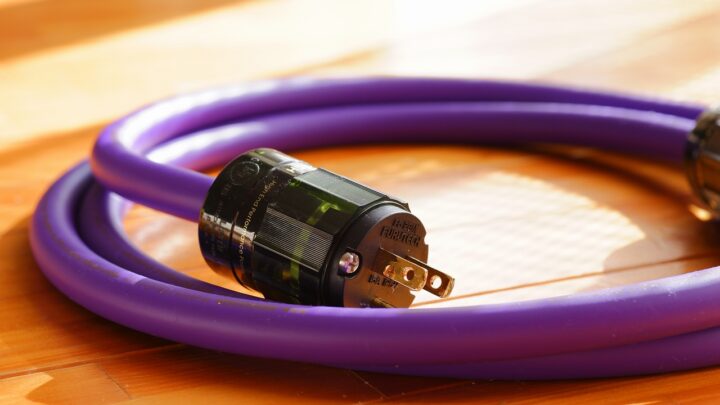
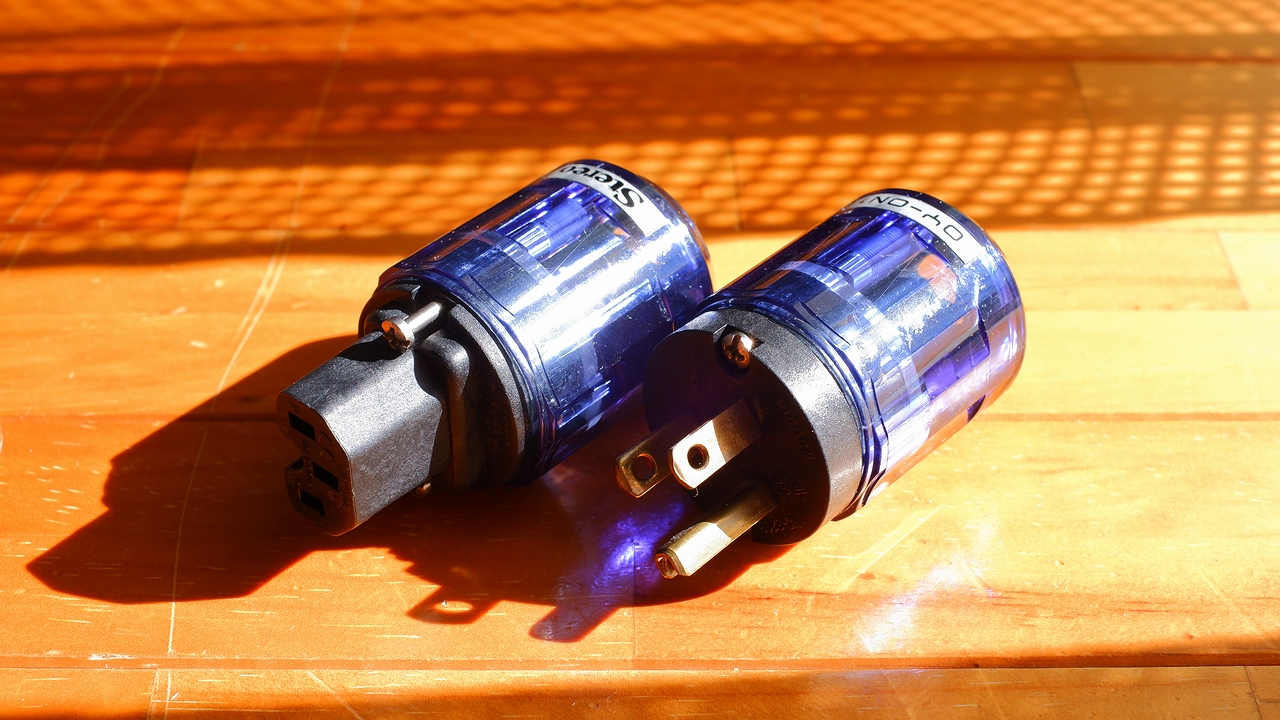
Added 1 September 2015: I received a comment in a members-only community that I had been dismissing Zonotone cables, and since this entry did contain some expressions that could give readers a mistaken impression, I am adding my personal thoughts here (※ edited repost).
Hello everyone. This is pastel_piano, your occasional ghost member. First, let me say something in Zonotone’s defence: I do not think the Zonotone cables — power cables and RCA cables alike — are in any way poor sounding.
The 6NPS-3.5 Meister power cable I use is a step above the ZONOTONE 6N2P-3.0 MEISTER that was apparently criticised there, featuring a conductor gauge increase from 3 sq mm to 3.5 sq mm, and the addition of silver-coated OFC wire to the hybrid conductor arrangement. Having used and auditioned a variety of power cables in this price bracket (around ¥20,000 at retail), and setting aside personal taste regarding Zonotone’s particular character, I have no impression that it is notably inferior in performance to others in its class.
When putting the sound into words subjectively, the description “becomes mono-like” was not something that came to mind when listening to the 6NPS-3.5 Meister — though there is an impression that the sense of image presence comes to the fore ahead of three-dimensional spatial expression. I suspect that the 3.5 model, with its silver-coated wire in the mix, has a somewhat less flat quality compared to the 3.0, and is more capable in soundstage presentation; and I would expect transparency and three-dimensional spatial localisation to improve further still as you move to the more complex hybrid conductors in the higher models.
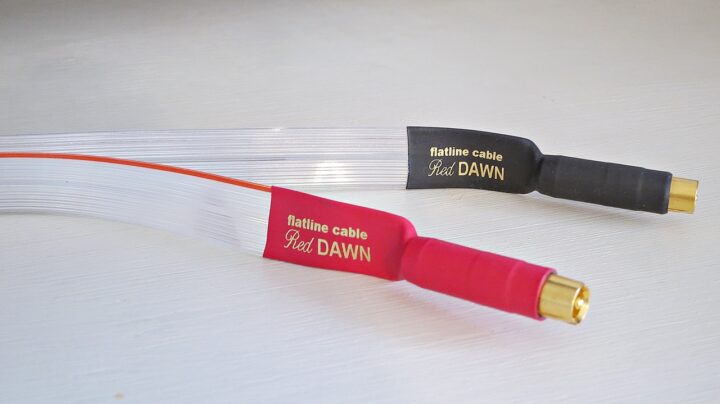
It is true that the 6NPS-3.5 Meister suits plasma displays well, but this was developed as an audio product, and using it for video equipment is an irregular combination. Incidentally, I am currently using it as the power cable for an older belt-drive CD player, the CEC TL5100Z. It feels like a rather good match — a pairing of a natural-sounding, analogue-like player with an analogue-like power cable. In this combination, however, to suppress the slight coarseness the power cable introduces, I pair it with NORDOST Red Dawn — a silver-coated solid-core cable — for the RCA interconnects.
Zonotone’s sound quality probably has a clear character — a clear direction, one might say — and I feel it is a sound that pursues what one might call “musical integrity,” grounded in a natural warmth and density and a physical, flesh-and-blood expressive quality that resonates with those who love older jazz and vinyl. Put the other way around, there is perhaps also something of an anti-thesis to sound-quality absolutism — a certain spirit that sets itself apart from the modern sense of transparency and hi-res hi-fi.
I am primarily a classical listener rather than a jazz one, but the older the recording, the less well a modern-sounding Hi-Fi system with a wide, highly transparent soundstage tends to suit it. At those times, using Zonotone cables makes not only jazz classics but also older classical recordings — and even newer recordings of baroque violin or harpsichord where things can go shrilly over-wide-range in early music — far more pleasant to listen to. And so I find myself glad to have one in my collection, for exactly that kind of music.
I am particularly someone who has always had a fondness for belt-drive CEC players as well as old Philips CD players and the sound of Ortofon cables — so it is to those people who build their systems along a similar vector, not one of transparency but of a different kind of musical engagement, and who are less Hi-Fi enthusiasts in the obsessive sense and more long-standing music lovers with a love of analogue records, that I would most warmly recommend Zonotone cables.

Auto Translated by CS4.6
List of comments (4)
一度個人輸入のお勧めアドレスとか特集していただけませんか。
ステラボックスのDACが欲しいのにゃあ。
http://www.yomiuri.co.jp/atmoney/rate/
今日もなかなか良い感じに為替が動いてます。今現在1$89円…ちなみに私は近日中に80円を視野に入れてます。英£が130円、ユーロが本格的に落ちてきて118円。平静を装いつつなんかもう輸入品が安いとか小躍りしている場合じゃない訳ですけど。。。
>ステラボックスのDACが欲しいのにゃあ。
GOLDMUND/STELLAVOX DIGIN STEREO/MONO ですか~。
日本で買うと25万。海外では…自分がちょくちょく覗いている海外のお店はGOLDMUNDなんて扱ってないのであります。YBAも米国仕様を通販で扱ってる店が見つからなくて難儀してます。こっちはロビン企画で買えますが。韓国のネット通販では凄まじく安いんですけれど…直接行って物を引き渡して貰わないと怖くて買えません…。
>一度個人輸入のお勧めアドレス
え゛~それをやってしまうと色々不都合な種明かしになってしまいましてよ…。
冗談はともかく、個人輸入はスキルによってはトラブルが付きものですから安易にお奨めしにくいのです。変にうちのブログの安心お奨めみたいに思われると困りますから。例のDACやデジタルアンプの件も、最初のオーダー受けた店員になんだかんだと放置プレイされ、直接社長に突いてやっとこさ即発送でしたし。。。無かったはずのDAC同梱されてるのは良いけど、どうみても箱無し説明書無しの展示品っぽいし(滝汗)
いや狙いはこれです。
http://www.stellavox.com/st2.html
と思ったらALIZE7積んだ新型が出るんですね……
JOB相当のアンプも出しているようで、うまくすれば晴れて自分もゴールドムンドオーナー。だったのですが。
http://audio-heritage.jp/GOLDMUND/etc/st2-96-24.html
30万もする製品は箱ピュアブログの対象外です(だって買えないし…w) ステラヴォックスのST2ってBIRDLANDのOdeon-liteがライバルだったんですね。2000年頃だと思いますがバードランドのオデオンライトはしっかり視聴しました。小さくて手ごろな価格と云うことで、オーディオショウでも良さそうな音を出していましたから。
http://www.phileweb.com/ec/index.php?p=15754
当時、TAG McLarenのCD20Rに繋げて内蔵DACと比較しましたが、個人的にはアップサンプリングが気になりあまり好みじゃなかったです。なんというかクラシックCDでありがちなリマスター盤の音を彷彿とさせました。情報量はあるのですが。。。アップサンプリングを切ったらこのDACを使う意義が薄れそうですし、音の潤いや時間軸方向への音楽的表現力など、TAGマクラーレンCD20R単体の方が私の耳には勝ってました。
というか、近日中にDACのレポしますけど、10万以上のDACは箱ピュア管理人の脳内では存在しないことになってます!むきーっ!。