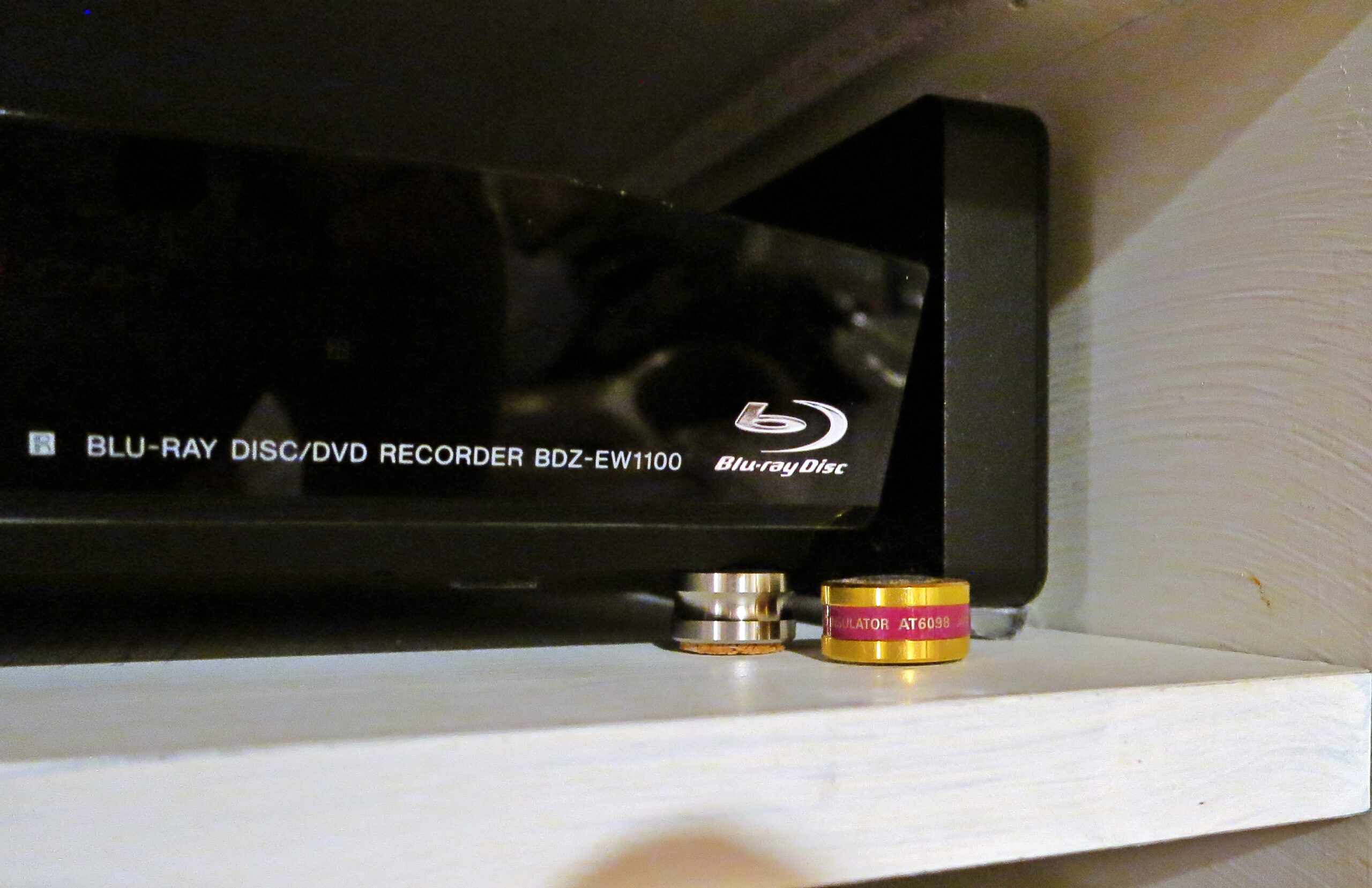
A bonus instalment in the SONY BDZ-EW1100 review series. In the main entries I deliberately held back from writing harshly about picture and sound quality from an audiovisual enthusiast’s perspective — this time, I’m going to be rather more blunt about it.



 ポチップ
ポチップ
Thoughts on Picture Quality…
The picture quality of the SONY BDZ-EW1100 is inferior to that of the higher-grade triple-tuner models BDZ-ET1100 and BDZ-ET1200, which are equipped with the “CREAS 5” and “Super Bit Mapping for Video” high-quality image processing circuits. I actually only noticed this after buying it. At the time of purchase the price difference was less than ¥10,000, and I assumed the only distinction was the number of tuners — so I went with the cheaper one, only to discover that the image and sound circuits are different too. This is what happens when you don’t read the catalogue properly… orz.
 ポチップ
ポチップ
There are circuit-level differences, no doubt, but the BDZ-EW1100’s picture tuning is not the kind that inspires any particular excitement. The colour temperature runs high, giving a cold, washed-out, flat impression. I had been using a PIONEER plasma television with the Pioneer SuguReco DVR-DT100, which was optimised for PDP reference, so the spatial rendering — depth and three-dimensionality — is, I’m sorry to say, in a completely different league. I suspect this is something of an inevitable fate for BD players designed in the LCD era: once you tune the picture to a LCD BRAVIA standard, no matter how many pixels you add — 4K or whatever — it’s always going to end up looking flat. On the other hand, noise levels and resolution are far superior to PDP, so there is that.
The handling of luminance information is also not quite right. The BDZ-EW1100 has a noticeably strong emphasis on brightness — a kind of blown-out quality that makes things seem oddly dazzling. It is more glaringly bright than any recorder or player I have used before. And that white has a faint greyish muddiness to it. Unlike the BDZ-ET1100/ET2100, there are no contrast remaster or brightness adjustment options, and in my subjective view you really have to push the television’s settings hard to get the picture to where you want it. Because PureVision has a fairly extensive range of picture adjustments I was able to bring it within a tolerable range, but I can’t help feeling that — quite apart from the circuit differences — the picture quality has been deliberately held back in software to differentiate it from the higher-end models…
The successor BDR-EW1200 series does add contrast and brightness adjustment options, so even though “CREAS 5” and “Super Bit Mapping for Video” are still absent from that model, the odd glare may at least be somewhat mitigated through adjustment.
Sound Quality Is Decent, but Lacks That Extra Musicality
Again, this is strictly speaking from a pure Hi-Fi perspective, but while the digital output sounds reasonably respectable for a video recorder, viewed purely as a playback machine it is not in the same conversation as a dedicated CD player of Hi-Fi quality, and I suspect it would lose on both picture and sound to a decent stand-alone BD player built with some care. The musical expression is too earnest and lacks drawing power, and the video too has a somehow artificial feeling — it lacks realism, a certain vitality.
 ポチップ
ポチップ
Of course, if you’re going to complain about that, the answer is simply: buy the BDZ-EX3000 or the Panasonic DIGA DMR-BZT9600, or one of the higher-end models to begin with — so complaining like this about a budget model that simply cannot accommodate the kind of analogue-grade build quality is rather beside the point. I found myself oddly moved, in a quiet sort of way, by just how present the gap in society can feel even in something like this…
Incidentally, regarding the BDZ-EW1100’s sound quality as a CD player (note: used as a digital transport): contrary to what one might expect from SONY given the PS3’s reputation, it is not wide-range or high-resolution. Rather, it has a smooth, cohesive surface centred on the midrange, with a certain moistness to the sound. Somewhat dark and on the warm side. The attack is soft… or perhaps “plasticky” is more accurate. Detail retrieval is not generous, even if one is being generous in one’s assessment. It sounds like coffee jelly taken out of the fridge and left to come back to room temperature — make of that what you will. It does not reach for wide dynamic range, but on the other hand it never produces harsh or unpleasant highs, so in terms of easy listenability, when paired with low-grade combinations such as built-in TV speakers or an inexpensive multi-channel surround system, it might actually suit the purpose better than a pure Hi-Fi CD player.
When I connected the ONKYO C-S5VL simultaneously to the Musical Fidelity V90-DAC external DAC via optical digital cable and compared the same CD playing on both, the difference in soundstage, freshness, and sheer information retrieval was enough to make me reel back in astonishment. The SACD player ONKYO C-S5VL is, incidentally, less expensive than the BDZ-EW1100…
※ That said, with AAC-compressed broadcast audio — terrestrial digital, BS, SKY PerfecTV! and so on — things actually sound somewhat hi-res-ish (ahem), and the overall tonal balance and listening impression improve noticeably. The BDZ-EW1100’s true calling is as a domestic AV appliance, after all.
 ポチップ
ポチップ
The BDZ-EW1100 sits at the lower end of SONY’s BD recorder range in terms of circuitry, and it is of course not the sort of premium machine that audiovisual enthusiasts reach for — so one has to accept a certain degree of compromise on sound and picture quality. It feels as though something that speaks to the senses is missing, and I find myself idly wondering whether the textural differences have been deliberately introduced as a kind of digital flavouring, to make the higher-end models look good by contrast. But then, a recorder this capable for ¥40,000–50,000 — the cost-cutting has to land somewhere, and that’s simply unavoidable.
The current Blu-ray disc recorder market seems to have polarised into either under ¥50,000 or over ¥200,000, and the middle ground — those ¥100,000-ish machines that carried on the video deck tradition of cutting-edge features combined with genuinely refined picture and sound quality — has virtually ceased to exist.
 ポチップ
ポチップ
Even at budget price points, SONY machines keep picture and sound quality firmly under control in the specification-level sense, and someone who has never experienced a high-end system, a projector, or the large-screen display of an upper-tier model probably wouldn’t be able to tell what was different. But the truly arresting HD picture and sound quality that the engineers inside that company must be using as their reference — what they consider actually worth showing off — surely isn’t anything like this…
Being a Hi-Fi and audiovisual enthusiast who cannot leave anything alone, I was well aware that the SONY BDZ-EW1100 is temperamentally the sort of machine that won’t change much no matter what you lavish on it — and yet I tried anyway. Here is a rundown of the audiovisual accessories I used to customise it. The further down the list, the better the cost-to-benefit ratio.
Hi-Fi Insulators
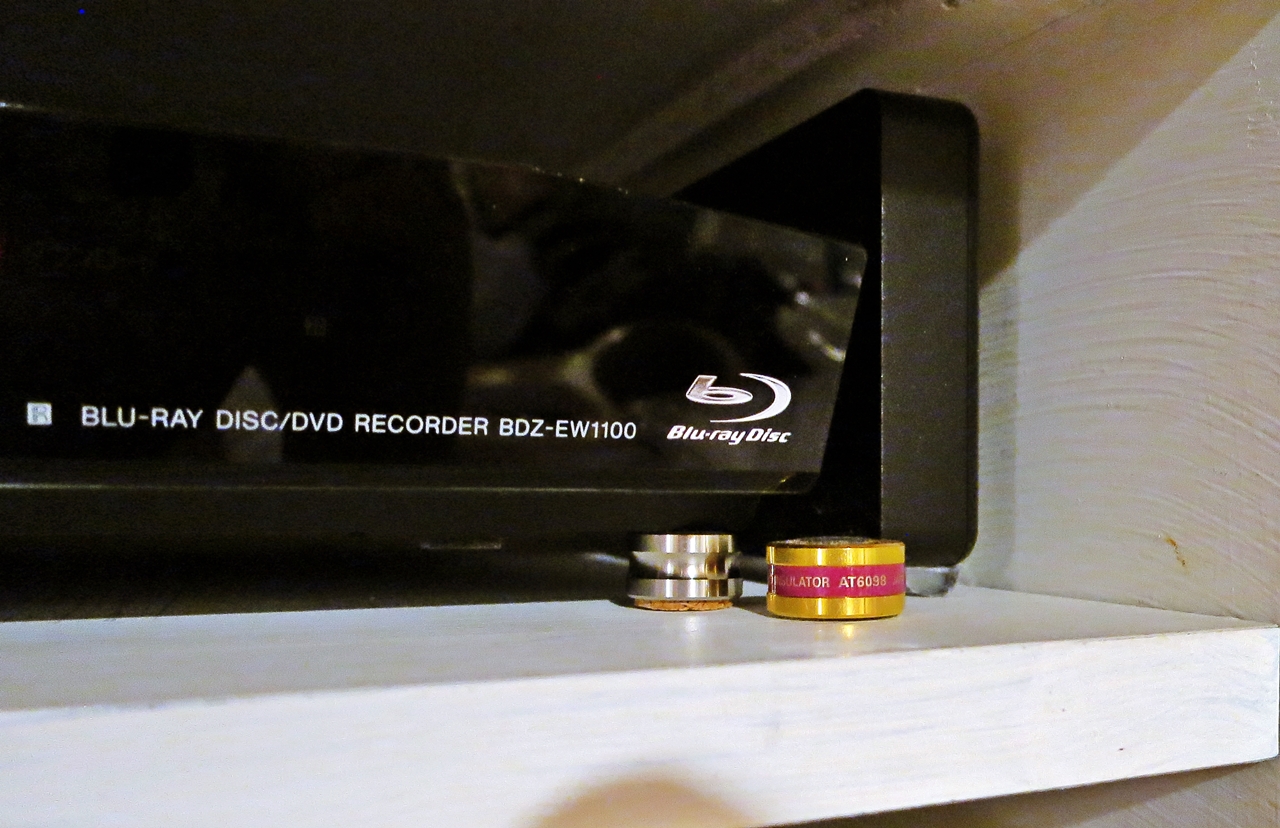
The aim here was primarily vibration control and heat dissipation, rather than actively improving the sound character. In the previous entry where I wrote briefly about the heat dissipation case for insulators, the photo shows the audio-technica AT6098 in use — with the AT6098, the midrange takes on a fleshy softness and the soundstage opens up with more depth; with the audio-technica AT6089CK shown in the image, the balance shifts slightly, the sound comes a touch more forward, dialogue frequencies (voice acting, that is) become a little more prominent, and there is a smoothness and clarity across the full range that gives a more Hi-Fi impression overall.
 ポチップ
ポチップ
※ Both of these are brass-based. As for whether the  AT6089FT, which pushes the bass further, or either of the other two would be the better match will depend on the combination of other equipment — but I believe rubber-based or wood-based insulators, which tend to be inferior in transparency and sharpness, do not suit the SONY BDZ-series BD recorders. The insulators are placed in a three-point support configuration: centre-rear and left-right. Please do not make the mistake of placing them under the original rubber feet. I’m planning to try insulators made from high-rigidity 2000-series alloy (aluminium), the AET SH2007A, before long — when I do, I’ll update this section.
Mains Noise Filter: PS Audio Noise Harvester
The PS Audio Noise Harvester. Still experimenting — putting it in, taking it out. When plugged into the socket next to the BDZ-EW1100 on the power strip, the soundstage broadens, the range widens, and the separation and rendering of sound effects becomes cleaner and more distinct — however, the tonal character becomes very slightly cheaper-sounding, and the definition of dialogue — which is really what matters — softens a little, which is a somewhat awkward trade-off…
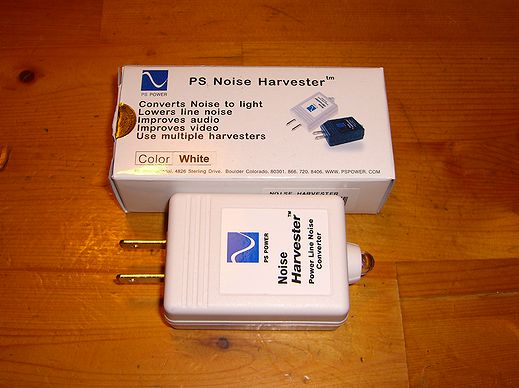
I wrote a review of the Noise Harvester previously, and in a pure Hi-Fi context the tonal side effects I mentioned there bother me personally more than the benefits justify — but with AV equipment at this grade, the quality improvements seem to clearly outweigh the drawbacks.
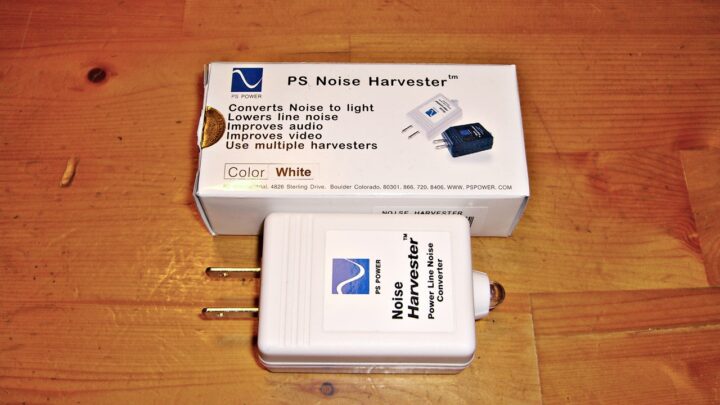
Figure-8 Mains Cable
Current SONY BD recorders use a detachable mains cable with a figure-8 (C7) inlet. I deliberated between the Oyaide L/i15dpc, which has a natural character and a classically flavoured quality that I find appealing, and ultimately settled on the AudioQuest NRG-1 (under construction). The thought was that AudioQuest’s characteristic metallic, tight, and sharp sound — typical of their solid-core cable designs — might actually be a good pairing with SONY’s BD recorder.
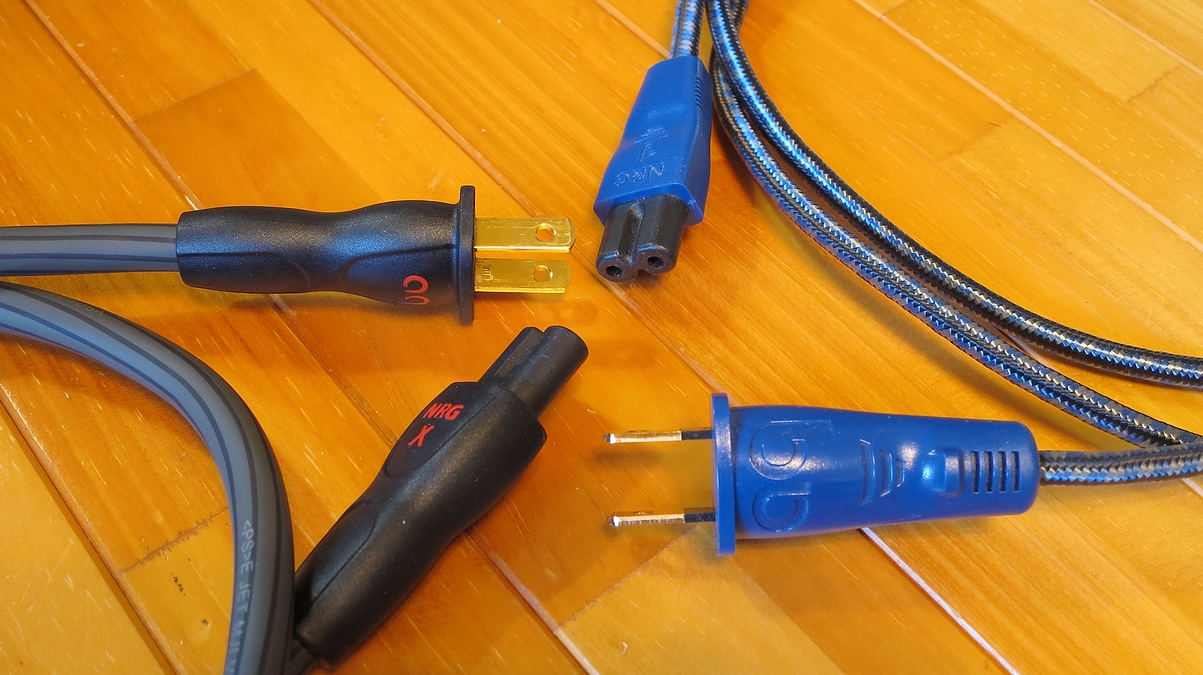
A recorder with low musicality paired with a mains cable of questionable musicality — just between us, the sound became magnificently dull, sonic quality aside… Further upgrades, including DIY options, would be welcome, but the trouble with figure-8 inlet mains cables is that there are precious few affordable and genuinely rewarding choices — and at the end of the day, when you remind yourself that this is a figure-8 application, it starts to feel disproportionately expensive relative to the machine it’s plugged into…
HDMI Cable
I replaced the audio-technica AT-HMZ with the SONY DLC-HE10XF. A full impression will follow on a separate page (under construction). If you are using a SONY BD recorder with a large screen, the minimum recommendation would be a SONY flat HDMI cable (not the round type). Among HDMI cables available for around ¥3,000 per metre at retailers such as Kakaku.com, the SONY flat cable DLC-HE series currently seems to offer the highest picture and sound quality.
 ポチップ
ポチップ
Simply swapping in the SONY DLC-HE10XF as the matched first-party HDMI cable produced a significant improvement in the blown-out brightness issue I complained so much about in the previous entry — so the audio-technica AT-HMZ was apparently just not a good visual match for the BDZ-EW1100.
Optical Digital Cable
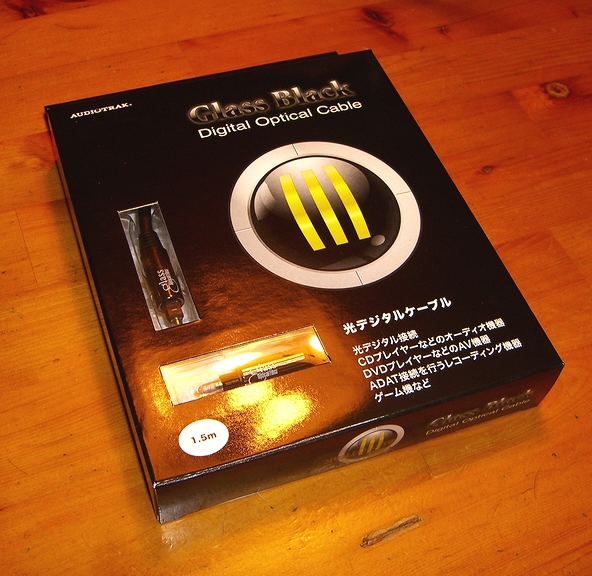
I had initially been using the audio-technica AT-SDP2000/1.3 (under construction), which turned out — for reasons I cannot entirely explain — to be a strikingly poor match, and I eventually ended up with the AUDIOTRAK GlassBlack. The compatibility between the GlassBlack 2plus — which delivers hi-res-like resolution and information density in tonal terms — and SONY equipment is, I think, excellent. With this in place the digital output sound quality seems to jump up several notches, and when optical digital output is the only option available and the signal is going into an external DAC of reasonable quality, the GlassBlack has become my personal first choice.

Upgrading the Mains Strip and Power Block
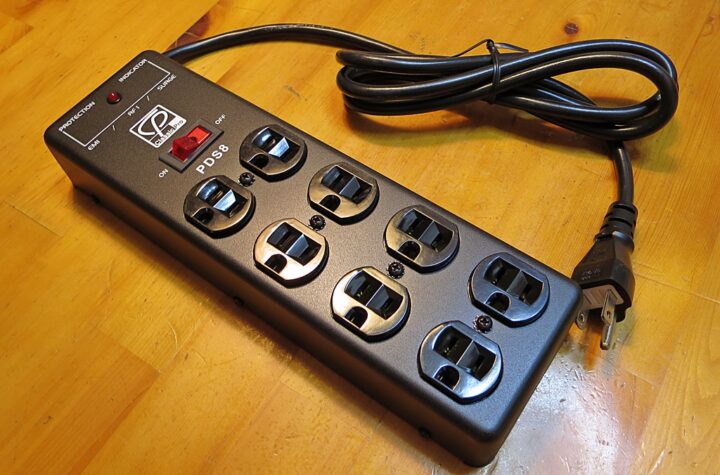
When all is said and done, this is what makes the biggest difference to sound quality. Swapping out my old audio-technica noise-filtered mains strip AT-NF34 for the Soundhouse CLASSIC PRO PDS8 brought the sound’s centre of gravity down from where it had been floating and sounding lightweight, and the imaging tightened up with a sharper, more incisive quality. As for picture quality — I swapped this in at the same time as making changes to the PIONEER PDP-427HX plasma display, so this is a combined assessment of both monitor and recorder together — image noise decreased and colours became more vivid, though the reds in particular shifted towards a gaudy vermilion, and yellows and greens were accentuated in a way that didn’t really suit my taste…
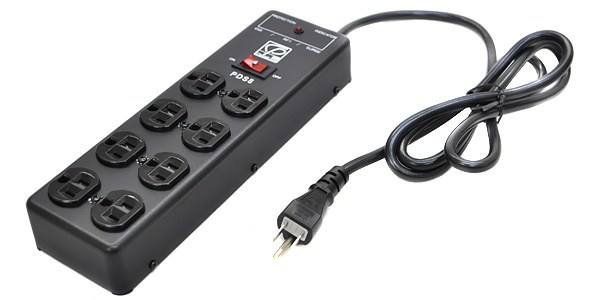
That said, plugging into a high-quality power block is clearly more effective on the ear than a simple parallel AC noise filter or an entry-level figure-8 AC cable, and when cost-effectiveness matters, the CLASSICPRO PDS8 — with its integrated mains cable — is not to be underestimated. When it comes to the mains side of things, I believe the power block itself is what to address first, before cables or noise filters.
Now, after all of that, one would love to declare that the picture and sound quality have been transformed beyond recognition, practically rivalling the higher-end ET series — but while the sound is one thing, I honestly believe no amount of tweaking will overcome the gap in picture rendering between the “CREAS4 14bit” and “CREAS5 16bit” image engines. The sound will certainly become acceptably listenable, but please do not expect it to reach the level of a SONY BDZ-EX3000 — after all, applying the same approach to a higher-end machine would simply push it further still.
To be honest — perhaps because of the lightweight chassis, or perhaps because the internals are closer to a PC than an audio component — the response is sluggish compared to proper Hi-Fi-grade equipment; it doesn’t change dramatically. Each individual tweak is more “better than nothing” than “night and day”, though the cumulative effect does eventually produce something noticeably different from where you started. The one caveat, however, is that if you add it all up carelessly, you might end up having spent enough to buy another unit of the machine itself…
That said, for those of you using a decent large display along with an external DAC or AV amplifier — I would at least encourage you to try, in addition to a high-quality HDMI cable with proper noise shielding and good parts quality, a glass fibre or quartz-clad optical digital cable such as the GlassBlack 2plus. That one, personally, produces a difference in sound quality that I simply cannot overlook.
Auto Translated by CS4.6

List of comments (1)
お久しぶりです。
>メガネ型インレットの電源ケーブルってリーズナブルで美味しい選択肢が少ない
ソニーのレコーダー場合、
BDZ-X100,BDZ-EX200までは、いわゆるメガネ電源ケーブルなので、
これらのケーブルを部品扱いで量販店で取り寄せる手があります。
見た目はこんな感じ(他者様フォトレビュー)です。
http://digital-baka.at.webry.info/201001/article_11.html
私が現物を使ったのはX100用電源ケーブルですが、
実は、部品番号がDVD時代のRDZ-D90と同じでした。
http://www.sony.jp/CorporateCruise/Press/200509/05-0912/
BD用に新部品を持たずに、あるパーツでチューンしたようです。
私がこのX100用電源ケーブルを使っているのが、
同時期のBDZ-T75です。
この機種、アナログ音声出力の質はそれなりですが、
性能的には出し切れない、間接音の類の雰囲気を出す性格があり、
AAC音声や各種振動
(背面デュアルファンなので、冷えるが振動源は多い)による
荒れを意識させない意図があるようです。
光SPDIFに接続を変えたのは最近で、
アンプ自体SA-907FXへストリーム形式
(AACやDDのまま伝送。
少なくとも5.1ch音声のダウンミックスではAVアンプデコーダーが有利)に変えているので、
現状では変な音ではないだろうという段階です。